Brad Goh and Sanjif Saga share 10 years of trading knowledge, focusing on mindset, timeframes, and trade management in this 60-minute session.
Key Takeaways
- Use a top-down approach with multiple timeframes to develop a clear trade bias and entry strategy.
- Align your trading style with your personality, lifestyle, and goals for better consistency.
- Focus on price action and market structure to identify who controls the market—buyers or sellers.
- Managing fear and ego is crucial; the mind is not naturally designed to help make money, so mindset work is essential.
- Risk management and emotional control lead to greater longevity and success in trading.
What the video covers
- Brad Goh and Sanjif Saga discuss different trading styles and the importance of aligning trading strategies with personality and goals.
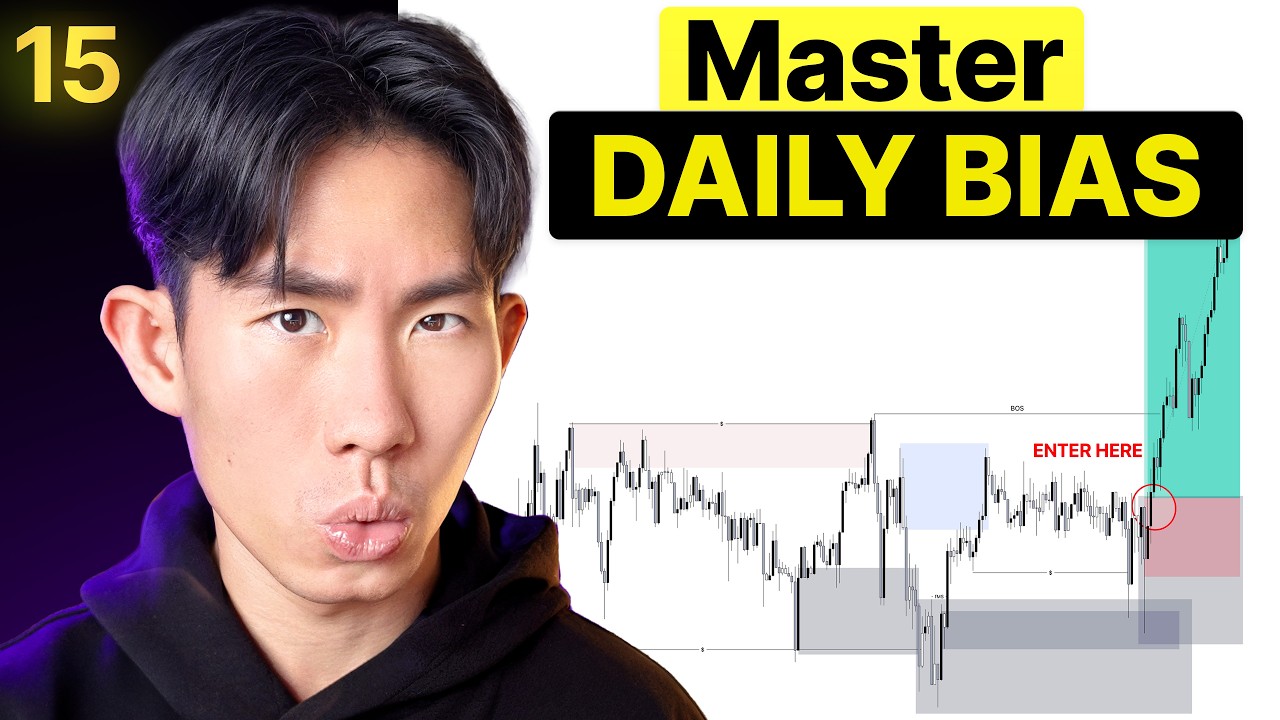
- The video emphasizes the use of multiple timeframes for top-down market analysis: higher timeframes for trend direction, medium for trade location, and lower for entry confirmation.
- They explain fractal market theory and how price action on lower timeframes forms the higher timeframe structure.
- Detailed walkthrough of analyzing the NQ market using 4-hour, 1-hour, and lower timeframes to identify demand zones and market shifts.
- Discussion on the psychological aspects of trading, including managing fear, ego, and the importance of mindset in trade decision-making.
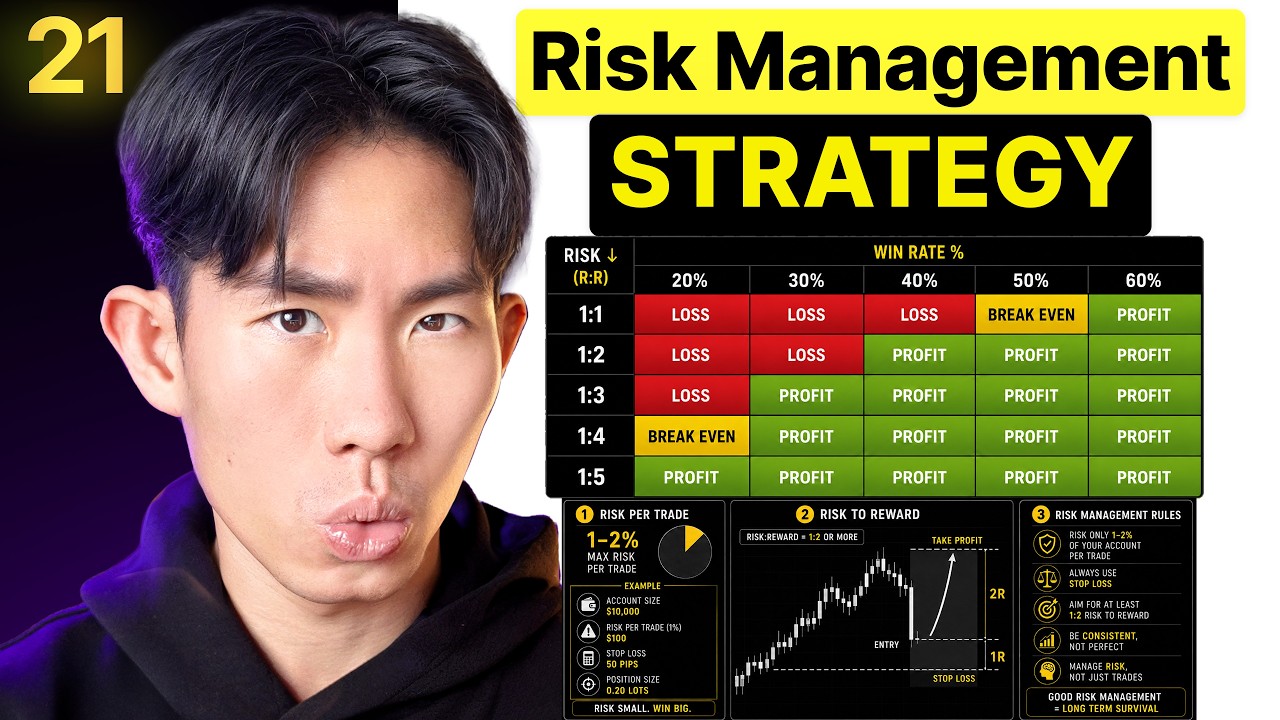
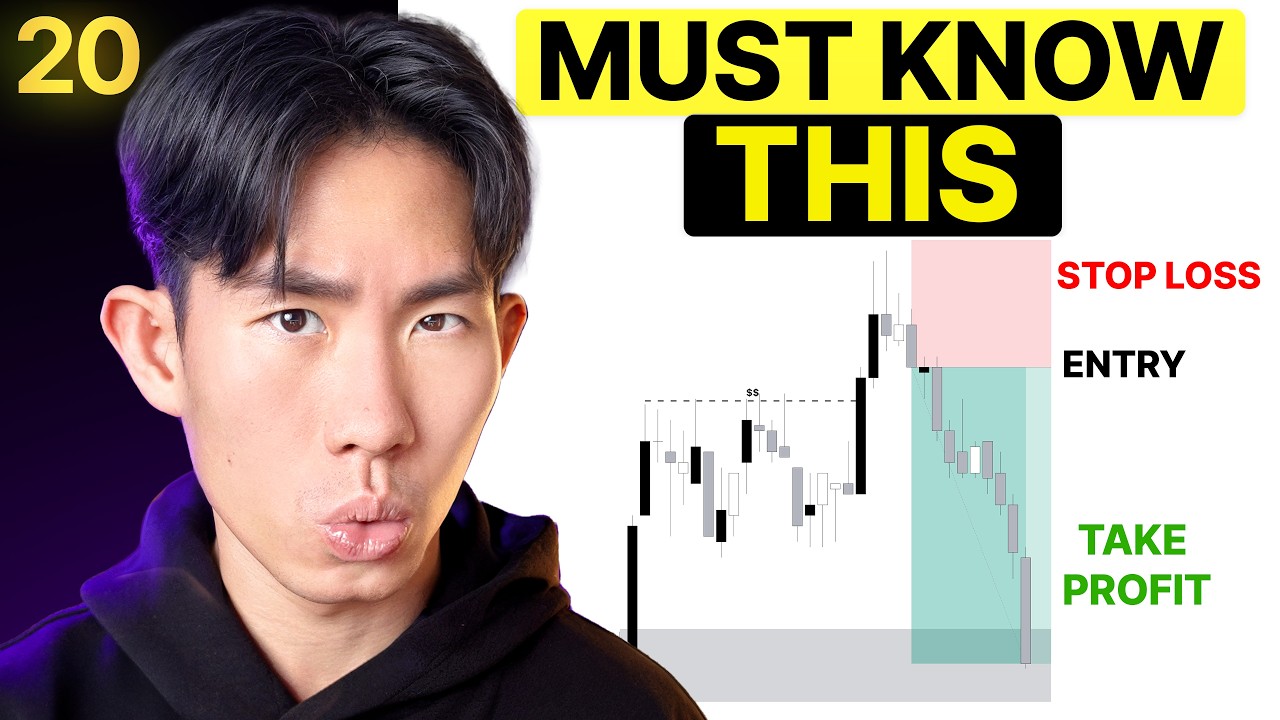
- Insights into risk management, including setting stop losses and understanding the impact of losses on trader psychology.
- The importance of trading only when the market confirms the trader’s idea and avoiding trades against the current price action.
- Use of statistical concepts like ME (Maximum Adverse Excursion) and MFE (Maximum Favorable Excursion) to evaluate trade performance.
- Encouragement to reflect on trading data and practice in non-live environments to improve without emotional pressure.
- The session includes live trading examples, mentorship insights, and practical advice for developing longevity and scalability in trading.
Chapters
- 00:00Introduction and Live Trading Setup
- 07:38Purpose of Different Timeframes in Trading
- 10:33Comparing Trading Styles: Intraday vs Swing Trading
- 12:47Top-Down Market Analysis and Fractal Price Action
- 15:07Identifying Demand Zones and Market Structure
- 17:32Trade Entry Considerations and Market Control
- 21:36Psychology of Trading: Fear, Ego, and Mindset
- 25:40Risk Management and Trade Performance Metrics
- 27:40Reflection, Practice, and Longevity in Trading
- 37:18Closing Thoughts and Viewer Engagement
Full Transcript — Download SRT & Markdown
Speaker A
So Sanji, if you want to enter for a sale or buy, it's a tough one, huh?
Speaker A
I know, man. Um, I would probably go for a buy.
Speaker A
Buy? Yeah.
Speaker A
All right, let's go for a sale.
Speaker A
[laughter] How are you?
Speaker A
Hey, I love your content.
Speaker A
Really?
Speaker A
We are actually creating content right now.
Speaker A
Beautiful place.
Speaker A
The mentorship series.
Speaker A
Yeah, game changing.
Speaker A
That's good stuff.
Speaker A
The chart that we're looking at at the moment, if [music] this started going towards our stop loss, I would ask myself, if I wasn't already in this trade,
Speaker A
would I want to get in right now?
Speaker A
And if the answer is no, then...
Speaker A
Oh.
Speaker A
Oh.
Speaker A
Yo, that just happened live.
Speaker A
That's, uh, we just smashed TV.
Speaker A
That's CPIP.
Speaker A
That's CPI.
Speaker A
Oh my god, bro.
Speaker A
We just inflation figures.
Speaker A
All right.
Speaker A
What's up, guys?
Speaker A
Today I'm joined with my fellow trading performance coach from the 1% club, Sanjif Saga.
Speaker A
What's up, guys?
Speaker A
So he's an absolute monster when it comes to trading psychology.
Speaker A
I believe that he's the modern MC Douglas.
Speaker A
Yeah, I appreciate it.
Speaker A
[laughter]
Speaker A
He's the Tony Robbins of trading.
Speaker A
But yeah, today what I'm going to do is that I'm going to do some trading myself, and I'm going to walk you guys through our thought processes, right?
Speaker A
How I personally see the market and how a trading performance coach approaches the market.
Speaker A
You guys will be able to see our mindset and how we think, how we manage a particular trade itself, and Sanjie will probably expose some psychological
Speaker A
patterns that I don't even notice myself.
Speaker A
I'll be looking out for them.
Speaker A
I'll be looking out for them.
Speaker A
Yeah, it'll be interesting to see.
Speaker A
Let's get into it.
Speaker A
Let's do it.
Speaker A
So today we are trading NQ, and when I look at a blank chart just like this, the first thing I want to do is do like a top-down analysis just so that I
Speaker A
can develop like a proper trade bias so that I can determine the trend direction, so that I can know whether I should buy or sell and where exactly am I looking for the trade itself.
Speaker A
Yeah.
Speaker A
So now I'm just going to quickly walk you guys through my top analysis and then going to try to take a trade, and then Sanjief and I will be walking you guys through the thought process throughout that one trade itself.
Speaker A
I believe that every single time frame should serve a different purpose, like the higher time frame should be there to allow you to identify the trend direction.
Speaker A
The medium time frame should be there to allow you to identify the point of interest, the
Speaker A
location in which you should identify your trade ideal.
Speaker A
And then the lower time frame is purely there for you to look for your entry confirmation, to look for your entry triggers.
Speaker A
So every single time frame serves a different purpose.
Speaker A
So you must use all three time frames.
Speaker A
So the first thing is I like to do more of like an intraday and sort of like scalping sort of trading style.
Speaker A
But it's different for Sanjif.
Speaker A
Yeah, I'm more of a swing trader.
Speaker A
Most of my decisions are made from the daily time frame or above.
Speaker A
So this is all going to be a lot of price action for me to consume in a short amount of time.
Speaker A
So the time frames that you use is going to be different from me.
Speaker A
Yeah.
Speaker A
For me personally, my top-down analysis involves the daily, the 4-hour as the higher time frame, the 1-hour, the 50-minute as the medium time frame, the 5-minute and the 1-minute as the lower
Speaker A
time frame.
Speaker A
What about you?
Speaker A
So for me, a higher time frame I would consider like a weekly or a monthly chart.
Speaker A
All of my day-to-day, so maybe you would call it like the medium-term time frame.
Speaker A
I guess that would be like my daily chart.
Speaker A
And then execution would come from areas that I've identified from an hourly and a 4-hour.
Speaker A
But I would spend 80, 90% of my time basically on a daily chart at the
Speaker A
daily close.
Speaker A
Love that.
Speaker A
Love that.
Speaker A
So yeah, different trading style.
Speaker A
Sanjie was saying this on our other podcast the other day.
Speaker A
You just got to develop a trading style that fits your personality, your lifestyle, your goals.
Speaker A
Yeah.
Speaker A
All right.
Speaker A
Now that you guys have understood the time frames that we use for our individual trading style, it's time for me to like show you how it's done, right?
Speaker A
It's time for me to actually showcase how you should be
Speaker A
doing your top-down analysis.
Speaker A
The first thing you must understand is the fact that the market is fractal, price is fractal, which means that whatever patterns that you see on the higher time frame, you will see them on the lower
Speaker A
time frame as well.
Speaker A
And this also means that the lower time frame price action pretty much forms the higher time frame price action.
Speaker A
So that's the first logic you must understand.
Speaker A
So right now we're going to be using the 4-hour time frame
Speaker A
as the higher time frame.
Speaker A
And this is the time frame where I'm using it to identify the trend direction, to determine who is in control of price, buyers or sellers.
Speaker A
And if I look at the price action that we have right now,
Speaker A
obviously we got a bullish break of structure right here, which means that right now the buyers are in control of price.
Speaker A
And then there's also a swing low right here.
Speaker A
And this would be the swing high.
Speaker A
So this is the 4-hour swing range
Speaker A
that we are trading right now.
Speaker A
And this is very useful because it allows you to like just focus on what price is doing right now rather than all of this messy price action that we have in the past
Speaker A
right here.
Speaker A
So once that's done, this is where you might even want to use the medium time frame to actually identify your point of interest, right?
Speaker A
To, you know, determine the location because I believe that in order for you to profit
Speaker A
from trading, you need to develop the right trade ideal at the right place at the right time.
Speaker A
So the right trade ideal is a combination of the different market mechanics concepts, but the right location requires you to enter at a very
Speaker A
specific institutional zone, right? Like a supply and demand zone, order block, a flip zone.
Speaker A
So before I jump down to the medium time frame, the 1-hour time frame, this is where I'm also interested to be mapping out the higher time frame zones
Speaker A
as well.
Speaker A
So that is obviously a higher time frame demand zone right here.
Speaker A
I always start off from the extreme, and then there's another one right here, and then there's another one right here.
Speaker A
And then sometimes what I like to do is to
Speaker A
use like the premium and discount too just to find out like where's the premium range and where's the discount range because in an uptrend just like this ideally we want to look for longs at demand zones that is within the
Speaker A
discount range itself.
Speaker A
Yeah.
Speaker A
So in this case, I'm not going to be doing anything until price comes down to either one of my demand zones right here.
Speaker A
And then I will also further refine the zone on the 1-hour time frame.
Speaker A
This is where I'm also interested in mapping out the internal structure.
Speaker A
Right?
Speaker A
So you apply the same concept because once again the market is fractal onto the 1-hour time frame itself.
Speaker A
So this is where perhaps you will see this as the last break of
Speaker A
structure, and then we got a market shift right here, which tells us that the internal structure has shifted bearish, and then we got another break of structure right here.
Speaker A
But since the candlestick body did not close below this low, it is more of like a wick
Speaker A
break.
Speaker A
I would not really call this as like a proper break of structure, which means that this is still the internal high, and this right here is the internal low.
Speaker A
So this is the internal range that we are trading within right now.
Speaker A
And if you look at the trend direction that we have going on right here, higher time frame was obviously bullish.
Speaker A
But if you look at the medium time frame, we have recently just shifted bearish because we got a market shift right here.
Speaker A
And right now it seems like sellers are in control of price.
Speaker A
So maybe this is something that I can ask Sanjief about, right?
Speaker A
Like for me personally, as much as possible I want to focus on what price is doing right now.
Speaker A
So there's this conventional advice which says that you should trade with the trend direction or especially the higher time frame trend
Speaker A
direction.
Speaker A
But the reason why I disagree with that is because of the fact that I...
Speaker A
management is just set and forget. It's like at this point of time, I'm not micromanaging the trade. I'm not staring at the charts whatsoever. I'm away from the charts doing my own thing, you know, either working out or spending time in
Speaker A
nature or spending time with loved ones and I'm just going to let the trade breathe, right? If it hits stop loss, it is what it is. If you hit take profit, it is what it is. I'm like completely
Speaker A
detached from the trade outcome. And this allows me to, you know, not get too sucked in into the little pullback that actually happens when price is moving to the TB.
Speaker A
Yeah, I like that. Do you ever use alerts in your trading? I do like I actually prefer to do that rather than manually scan for the trading opportunities. So like during my pre-market routine, I will just set alerts at a price point on the enter
Speaker A
and then once price get to the alert, I would not enter the trade straight away, but I will actually just use it to see whether my entry confirmation is present in the market. Then I'll mentally enter.
Speaker A
Do you ever use it after you've executed a trade to get out of the trade?
Speaker A
Well, as in exe. So, if you've got an approach that's based around the idea of set and forget, would you ever set an alert at an area where you would want to check price and therefore you don't need to check it
Speaker A
unless you get an alert? I never tried it, but that's a good idea. I should totally try it. I I just find it's it's one, it's more efficient. You don't have to keep coming back to the chart every hour just to see
Speaker A
where price is, right? The way I would do it is I would set an alert at like a structural level of importance um to just kind of give me an indication that price is doing something of interest. And I know I I think what a
Speaker A
lot of people experience psychologically is they want to check the chart because they are uncertain about what the market is doing. If I know I have a price alert in and if I check my phone and I'm away
Speaker A
from my computer and I don't have a price alert, I know that price is within one of these two parameters and therefore that gives me some kind of clarity about what the market is doing.
Speaker A
I know that there's nothing that has happened that's significant for me to have to check the charts. M.
Speaker A
So, it's kind of just a way to stay with that level of detachment, but also be there when you know that something is going down.
Speaker A
So, I think price alerts both work both ways. If you check the charts and you see that the trade is going against you, Mhm.
Speaker A
what would you do? I So, I would have a price alert at a significant point that tells me I need to do something here.
Speaker A
So, again, it's because I trade a little bit differently. My stop losses are generally quite wide.
Speaker A
And the intention for me is that in a lot of cases my idea will be invalid before it hits my stop loss and then I can manually cut my trade. My stop loss for me is like a worst case
Speaker A
scenario. has hit the fan like Trump would tweet for example, right? That in you know depending on the volatility I would have very little control over.
Speaker A
But that's like my absolute worst case scenario. But the reason I use wide stops is generally because I didn't like the idea of being stopped out of a trade and then watching it go in my favor. So I I like
Speaker A
having breathing room in my trade. Um and I compensate for that by scaling in and having a larger position size on my winning positions.
Speaker A
Okay. So basically like if the trade ideal is no longer going as planned, you would just re-evaluate the market to see whether it still makes sense.
Speaker A
So I I have a I have a philosophy. So I again I only check these at the end of every daily close. You could do this on a 1 hour chart, a 5 minute chart. But if let's say for example like the chart
Speaker A
that we're looking at at the moment if this started going towards our stop loss I would ask myself if I wasn't already in this trade would I want to get in right now?
Speaker A
And if the answer is no then why the am I still in the trade?
Speaker A
I should be looking to exit. And if the answer is yes then it's a better entry.
Speaker A
I'm not saying to double down on it but I'm saying it should be a confirmation that you should stick with that idea.
Speaker A
So I I only want to stay in the market when the market is doing what I think it's doing. If it's not moving in my direction, if the market's going against me, that's the market not confirming my idea. And I want to be looking for some
Speaker A
type of exit. Whether it's getting out immediately, whether it's trailing my stop loss closer, it could be a variety of different ways, but it's all centered around the idea of risk management. I I find a lot of people, they lose a lot of objectivity
Speaker A
when money gets involved. And so, I teach a lot of people like, ask yourself that question. If you weren't already in this, would you get in right here? And if the answer is no, you should be questioning why you're sticking with the
Speaker A
trade. Because if it's if it does if the trade idea doesn't make sense anymore, it's just your ego.
Speaker A
Exactly. Yeah. Just a need to be right. Exactly. Right. So, I also have like a weird sort of like philosophy when it comes to trade management. Obviously, I'm very like mechanical when it comes to the set and forget approach, but from time to
Speaker A
time I do move my stop loss. Okay, now this is like a weird one cuz like a lot of like the conventional advice is like just don't move your stop loss, right? Just stick to it. But same thing
Speaker A
to you. I freaking hate getting stopped out just to see price go in my way.
Speaker A
And what I've realized over time is that 80% of the time you should stick to a stop loss. And in order for you to not get stopped out, you should place your stop loss at a point that makes sense,
Speaker A
right? Like a point like a protected low or high where you know price is most likely not going to go there. But that being said, we don't know for sure, right? Like price might still go down there. So the other 20% of the time
Speaker A
requires a little bit of discretion which is something that I have learned to trade with in like the past two years it's like if I realize that there's an updated information in the market right like something has fundamentally changed
Speaker A
or based on the technicals I see that hey price is most likely going to come down even further to sweep more liquidity before going back to the take profit. I personally feel like it would be really stupid for me to like just get
Speaker A
stopped out even though I kind of know based on my gut feeling, which is really just like my subconscious pattern recognition skill, okay, that like price will most likely return after I get stopped out. So in those like scenarios, I personally would just
Speaker A
move the stop loss a little bit just so that I can see price go back up. But I'm also like fully okay with the fact that I might lose a little bit more money if the trade still end up not going in my
Speaker A
way. Right. Right. Yeah. like that was that's a risk I'm willing to take as long as it's within your I would say one your risk management protocol like you've accepted from the get- go this isn't something you're doing impulsively
Speaker A
you've accepted that there is going to be a level of discretion sometimes but then secondly as long as it's within your risk tolerance now I think that's going to be a big thing for people at home like if your if your risk tolerance
Speaker A
is I'm willing to lose x amount of dollars and [clears throat] you start off the trade by risking that amount and then you lose more yeah that's going to hurt and that's going to have an impact on the
Speaker A
psychology so I think if You give yourself that buffer. If you if you say, "All right, my risk tolerance is, I don't know, $1,000, but your opening position size is like $500." Mhm.
Speaker A
You know, you've got a $500 buffer. I'm not saying you should or I I'm advocating for people to move their stop loss, but I'm saying if you did, you're still within your acceptable parameters where it doesn't screw with your
Speaker A
strategy in the long run. That makes sense. So, it's ultimately up to the individual.
Speaker A
Yeah. Yeah. So I think like this is where maybe an advice that we can give you guys is to question the conventional retail trading advice. Don't just stick to it because your favorite trading guru say so. Don't just stick to it because
Speaker A
we say so. Right. Like figure things out based on your own data, based on your own experience and find the strategy and the style that works the best for you.
Speaker A
100%. Yeah, I would agree with that. Right. Okay. So right now uh we are kind of price is moving a little bit slow.
Speaker A
This is like to me it's just the market testing my patience. Yeah. I mean it's it's a little bit of an awkward time to be trading as well.
Speaker A
So maybe we're going to be expecting this. Yeah. But it do you ever get moments like this where you're trading and the market just goes sideways?
Speaker A
Yeah. Freaking like Okay. I wouldn't say all the time because like I've learned the art of like trading at the right time which is like before London open before New York open you know just preparing my charts and just getting in.
Speaker A
ideally before the liquidity starts surging. Okay. So that when London session open, price usually go to my TP, you know, like a decently speed, right?
Speaker A
But there's times where that just doesn't happen, right? The market might be a little bit quiet. The condition might not be ideal for that day.
Speaker A
Yeah. Yeah. So like it's like this. What's what's your most like frustrating moment with trading at the moment? Like do you have anything that specifically triggers you that makes you angry or greedy or fearful?
Speaker A
That's a good question. I think like my biggest weakness right now is like letting my winners run high.
Speaker A
Okay. Right. It's like for example in this scenario right here, let's say price starts going up here and starts going to my TP.
Speaker A
Mhm. It might be like three pips away from my TP and I try to be as mechanical as possible. I try to like just, you know, continue holding the trade until it hits TB. But the downside to that is
Speaker A
sometimes price just reverse near the TB, right? So this is also another place where I like to use a little bit of discretion. If like price is five pips away from TP and price show me like bearish momentum. You know the entire
Speaker A
market is about to crash. Obviously I'm getting out. I'm not like sacrificing this addition for like this additional five pips.
Speaker A
Yeah. Yeah. And another thing that I have is uh like for example this is like a two hour trade but then I want it to be like a five hour trade. Okay.
Speaker A
Right. And I'm trying to learn how to do that. But the thing is I'm very conservative. I'm very pessimistic when it comes to my TP because I know like hey this is where price is going to go.
Speaker A
So there is no guarantee that price will come up here. So if you go to do that is it you trading your ego or are you actually trading price?
Speaker A
Yeah. What what are you doing to try and get better at improving holding for your final targets? I would say I'm trying to milk that that trade more because a lot of times like I realize that right after
Speaker A
I get out of the trade price just continue blasting right through it. Yeah. What what makes you want to hold for one to five instead of one to three in like an example like this or one to two?
Speaker A
Is there a specific like set of criteria? Is it based on a gut instinct?
Speaker A
Now I wouldn't say it's grit but I would say it's more of like gut instinct and also a little bit of technicals as well because I know that hey over here if price starts giving me a lot of bullish
Speaker A
momentum right the candlestick starts getting like bigger and bigger then I kind of know price is most likely going to come up here but the thing is I've also seen instances where this happens but it doesn't go up there right so it just
Speaker A
pause right here then starts reversing this is where like if I was talking to a trader that was battling with this idea Right.
Speaker A
I would say I think the thing that you need is a little bit of either clarity or certainty behind what you're doing.
Speaker A
And obviously we never really know for certain what's going to happen in the outcome of the next trade.
Speaker A
But we can start to gather a probabilistic idea of what will happen over a larger sample size. So something if if you're not already tracking it, one thing that I would suggest starting to track in your post trade analysis is
Speaker A
like how far did things actually run. So there's a couple of there's a couple of statistics that I I like to use a lot. Right? So we call them ME and MFE.
Speaker A
So MFE, the one that you would want to be focusing on is maximum favorable excursion, right? Um how far the trade went in your direction maybe after you already exited. And if you can build up this idea to say like, look, I have a
Speaker A
mechanical way to say I get out at 1 to two or the next sweep of liquidity or however you frame it, you could say, all right, after I'm out of the trade, based on maybe the end of the trading day or the end of the
Speaker A
trading week, what was the maximum that this trade actually ran after I was already out?
Speaker A
Okay. And if you see over a large sample size that there's a gap between where you're exiting and the potential of the trade, that data can start to give you confirmation to say, "Okay, this is not just a gut feeling anymore. This is now
Speaker A
I'm getting confirmation that there's there's there's a gap, right? There's there's something in there where I could be taking more from the market than I actually am." That fills the void of uncertainty. And you can start either completely
Speaker A
switching your uh trading plan to go for those higher targets or you could start giving yourself a little bit of confirmation by saying look this is where I would normally get out but here on this occasion I'm only going to take
Speaker A
90% of my profit and I'm going to leave 10% to run to the target and if it does you get that boost of confirmation and that it goes from to secure profit.
Speaker A
Exactly. Right. So you can start off at 9010 you can then go 8020. you can then go I'm going to take 50% here and leave the 50% to run and over time you can start moving towards a trade management
Speaker A
plan which has evolved into something that's better refined for your edge. I think that makes a lot of sense and I think the reason why I didn't really try to do that even though I'm aware that you can potentially do that like you
Speaker A
need more data to justify you know you actually having like a much further TP is because I'm comfortable with my current approach. It's like I know that hey this is the thing that works for me and honestly I'm kind of afraid to step
Speaker A
outside of my comfort zone to try to you know like it's like I don't know how it's going to work out you know and I think this might be a something that a lot of traders feel as well.
Speaker A
It's like they don't want to put themselves out there because hey this strategy is already working so I'm just going to stick to what works but that could also be quite limiting because it's preventing them from taking their trading to the next level.
Speaker A
100%. The the way I always see it is your comfort zone is designed to be comfortable.
Speaker A
You don't grow inside of your comfort zone. So unless you're feeling a certain level of discomfort in what you're doing, you should expect that there is no growth ahead for you.
Speaker A
So unless you're doing something that makes you feel a little bit uncomfortable. And I this is why I always say like you don't have to do it in live markets. It could be done with reflecting over data.
Speaker A
And that could be your your proof to say that there is something in this. But you have to be willing to try it. I'm I'm I'm not a believer of the idea that something will always work forever. I
Speaker A
think as traders, we have to be adaptable and we have to be constantly open to the idea that either my plan maybe tomorrow could stop working if not that I need to be open to constantly improving it because
Speaker A
the version from you from 2 3 4 years ago wouldn't have been able to do what you do today.
Speaker A
I agree. If you want to be a different version of you 2 3 4 years from now, you have to be willing to do things that the version of you today is not willing to do.
Speaker A
Right? So that's I think the philosophy that I would always focus on to like keep that growth mindset and not stay in the comfort zone.
Speaker A
I'm with you on that and I think maybe this could be like the missing piece of you know we're like really just taking my trading to the next level and I really appreciate you sharing that because I kind of know the theory part. It's
Speaker A
like I know that hey the market is a living breeding organism. I know that you got to adapt your strategy but I think a lot of times we need to be reminded rather than to be taught right.
Speaker A
It's like, yeah, the way I always see it is we are always most blind to our own And I think every coach needs a coach, like a blind spot.
Speaker A
Yeah, 100%. 100%. So, I I think having these conversations with other like-minded people, either people that are above you or below you or at the same level as you, will always give you a new perspective.
Speaker A
And that perspective, if you're open-minded enough to to hear it out, it will always give you something to test, to try, to move out of your comfort zone a little bit. There's a there's an amazing video of Elon Musk
Speaker A
and he's being interviewed by someone and they ask him something about one of his rockets and there it went into like this viral meme where he turned around and he said we don't do that but we should and he made this change and it
Speaker A
completely transformed the way that their company was working and it all came from an interviewer that knew very little about it asking him a question and so that for me was like a great moment at like an entrepreneur obviously
Speaker A
not trading related but an entrepreneur looking at a scenario but being open-minded enough to hear somebody else's perspective and actually try it out and it turned into something amazing.
Speaker A
He's willing to take feedback in 100%. Okay. Yeah. Once again, appreciate you sharing that because I feel like this sort of session is very valuable for me, right? And I'm pretty sure it's going to be valuable for a lot of you guys as
Speaker A
well. And let us know down in the comments if you guys want us to do more of this. But yeah, like this was honestly like a eye openening session for me because I get to know, you know, my blind spots. I get to know what are
Speaker A
the things that I'm actually I need to work on rather than the the my my own limited view of my own trading.
Speaker A
Well, I think the the moment I knew the conversation would expand is the moment you said the words like fear, right? Anytime there's an emotion present to me, that's not a problem.
Speaker A
It's a signal. It's a signal of something that's happening beneath the surface. So, we can use that word all day long. And when we're talking to ourselves, it might mean nothing.
Speaker A
But the moment I hear it in somebody else, again, we're blind to our own I have to be able to spot that and say, "Okay, what's actually going on beneath the surface?" And then you talk about the idea that you kind of got
Speaker A
comfortable in the place that you're in. What you're doing is already working. But to go to that next level, you got to step outside.
Speaker A
100% 100%. All right. I heard this quote. It says like the magic is in is outside the comfort zone or something.
Speaker A
Yeah. Which is really really true. Yeah. So speaking of like fear, while we are waiting for the trade to run, the trade is still there is in the exact same place where we entered. Once again, this just goes to show that
Speaker A
timing is so important. I think a lot of people just underestimate timing and they just strive for like the perfect trade ideal.
Speaker A
That's only one piece of the entire puzzle, right? Timing, liquidity, volatility, all of these are factors that you need to take into account.
Speaker A
Quick break. This video is sponsored by Edge Flow, the all-in-one trading super app that I built to help traders become more disciplined. Let me show you one of my favorite features.
Speaker A
Wait, I literally can't take this trade. Oh, it's because I already hit my max loss for the day. So, Edgeflow blocked me from taking another trade. That's because before I start trading, I can set guard rails around how much money to
Speaker A
risk for the day, how many trades I'm allowed to take for the day, how much can I lose or make in a day, what are the trading hours I should be trading, and whether or not I can even trade high
Speaker A
impact news. So when emotions kick in and I want to revenge trade or overtrade or violate my trading rules, edge flow literally wound at me because sometimes the biggest risk to your trading account isn't the market, [music] it's you. So if discipline is
Speaker A
your biggest problem when trading, check out Edge Flow link in the description and use code TTG10 for 10% off.
Speaker A
Yo, what's up? How you doing, man? Nice to meet you, bro. How are you? Hey, I love your content.
Speaker A
Really? We are actually creating a content right now. Beautiful place. The mentorship series. Yeah. Game changing.
Speaker A
That's good stuff. Nice. Good to see that you got some value out of it, man.
Speaker A
What are you guys doing? We are doing like a live trading session right now.
Speaker A
That's awesome. Yeah. With my trading psychology coach. What's up, man? What? 1% club. Yeah.
Speaker A
To say hi, man. Love your stuff. Have a good one, man. Take care. Keep putting it out.
Speaker A
All right. That's dope. So, that was a crazy experience. I do not like actually expect anybody to recognize me here. It's crazy.
Speaker A
That's mad. And he saw one of the market mechanics mentorship series videos. Yeah. So, goes to show that that playlist that free 33-day mentorship is really changing some life out there, man. Okay. So, right now you can see the position is
Speaker A
going to the red, right? It's going to a little bit of draw down. And I think this is where a lot of traders panic. So for me personally, like I said, I try to ensure that I don't put myself in
Speaker A
situations where I would get out of a good position by just not looking at it at all. Right? And another thing that I like to do is to just jump back up to the higher time frame, which is
Speaker A
something that helps me out a lot. It's like once you have entered into the position, do not stay on the same time frame which you enter the trade on. Get out to the higher time frame. Go back up
Speaker A
to the 15 minute, the 1 hour time frame. Because when you do this, the price action is a little bit more slower. And when the price action is a little bit more slower, you have more time to react. You feel a little bit more calmer
Speaker A
as well. And you are able to be more logical and rational. I agree. Any tips to that?
Speaker A
I mean, there's a lot of psychology behind what you say. There's uh something that I talk about quite a lot.
Speaker A
There's a great book called Thinking Fast and Slow uh by Daniel Conorman and he talks about this idea that the mind has two modes of operation. Right? System one is fairly impulsive. It's emotionally driven.
Speaker A
System two is our logical mind and it's the rational one. It's the one that generally makes good decisions.
Speaker A
Neither one of them is good or bad, but generally the thing that separates system one and system two is time. And this is why I think for a lot of new traders, zooming out, staying on higher time frames can be somewhat easier to
Speaker A
trade mentally because you have more time to make decisions. Sometimes, you know, figuring out what to do, what we're on a one minute chart at the moment. M I mean trying to figure out how do I want to manage my money between one
Speaker A
minute to another can be a very difficult thing. You've got P&L floating on the screen.
Speaker A
You know you've got loads of thoughts in your mind. You've got fear. You've got some adrenaline running. You got cortisol running through your system.
Speaker A
It's a lot of decisions and a lot of things to manage in a very short period of time. But like you said, if you zoom out, if you decided that, hey, actually this idea is framed from, I don't know,
Speaker A
my medium time frame for example, then only I'm now only going to look at a 1 hour chart to determine what to do next.
Speaker A
I've accepted the downside. I've accepted the upside. Everything else in between is maybe just going to be a little bit of noise. The best thing I could do for myself mentally is filter out that noise, zoom out, go up a higher time frame, which is
Speaker A
exactly why I went to a daily chart. I I found when I when I stayed on the lower time frames, I was very erratic.
Speaker A
The moment I gave myself almost 24 hours between making the next decision, I was usually completely calm. And so now I'm not saying I'm perfect by any means, but 80 90% of the time I stick with what my plan says. And it's usually
Speaker A
because by the time I get back to the charts, I'm at a mental equilibrium.
Speaker A
I wanted to get into fear, right? Because I think the reason why a lot of people are scared of losing or scared of losses in general is because they over catastrophize the field, right? Like right here, if they think that they lose
Speaker A
a trade, they're going to blow their account, they're gonna fail a funding challenge, they suck at trading, you know, like their trading strategy doesn't work. So like they tend to make the situation much worse than it actually is.
Speaker A
And there's this [clears throat] quote by Senica who says that we suffer more in our imagination than in reality. And I think that's something a lot of traders encounter, right? And that's a problem that a lot of traders have. They
Speaker A
have fear of looking stupid, fear of uncertainty, uh fear of you know like just embarrassment and maybe that's why they don't start trading or even if they do start the trading they try to avoid losses but the very act of avoiding
Speaker A
losses cause them to incur more losses. Y so how do you actually go about combating fear concurring fear? So I I say to most people the first thing you want to understand is your mind is not there to help you to make money from
Speaker A
trading right your mind was evolved from a much older stage but it was purely built on survival right and so to survive you have to feel certain you have to feel safe you have to feel a certain level of comfort
Speaker A
like the hunter gatherers so this is this is what your mind is always seeking the moment it experiences some kind of threat or danger or potential pain it goes into survival modem kicks your fight or flight system into response.
Speaker A
Your cortisol drives up. It wants to make you reactive because it's trying to essentially keep you alive. It doesn't understand the difference between losing money here and and [laughter] correct. Right?
Speaker A
So I I always say to people firstly understand that your mind for most people is naturally going to work against you.
Speaker A
Right? So expect that that's going to be the case. The second thing you want to understand is you want to unpack the fear itself because fear can manifest from a variety of different reasons. There's no oneizefits all.
Speaker A
Generally, the two categories that I break it down into for most people is I say most traders either fear being wrong and what that means about themselves or their future path or they fear the actual money itself.
Speaker A
Depending on where you are in your journey, you might experience one, you could experience both.
Speaker A
But you have to understand which one is driving the bad behavior. It could be for different reasons. And this is why I think general trading psychology is not applicable to most people. Because you'll hear a lot of people online, for example, that will
Speaker A
say, "Yeah, just breathe. Lower your position size." If you're not scared of losing money and you're scared of being wrong, you could trade with $10 at risk and you will still have that fear of being wrong because you're afraid of what it means
Speaker A
about you as a person. It doesn't address the root cause of Exactly. Exactly. So, I think the the inner work has to be done. For people that are working on their trading psychology and they're struggling with it, I would say you have to look beneath
Speaker A
the surface and ask yourself, what am I actually afraid of? Fear is, yes, it's great to be able to start to identify it, but you need to know what the fear is rooted in. Once you understand the root, you can start to pluck that away.
Speaker A
You can start to actually work on the right things so that either one of two things will happen. Fear will actually entirely disappear or it will become at a manageable level where you can execute through it. And I
Speaker A
would say you want to find a little bit of a comfort level with this because I think if you operate at a level where no fear exists, you're probably leaving untapped potential in there.
Speaker A
If you're operating at a level where fear is too high, you'll almost be too anxious to do anything.
Speaker A
And so I'd say you need the like kind of the right amount to know that you're continually growing and it will continually improve like your risk tolerance. Um it will help you to manage that ego over time, but you don't want
Speaker A
to do it to too much. And this is why trading psychology is is deeply independent. There's no one-sizefits-all. It's it very much takes that work to be able to sit down with someone that kind of knows what they're talking about um or for someone
Speaker A
that's been through enough pain uh to actually do that deep work to figure out what's going on. So, I wish I had some magical words that would cure it for a lot of people, but the fix is in the
Speaker A
deep work. It's it's about looking in the mirror and seeing what's sitting beneath the surface. And I think the more people avoid that, the more you will continue living in a circle, right? So, I define fear as like false
Speaker A
evidence appearing real, right? That's what the letters stand for to me. And a tip that I often give traders is to just play out the fear.
Speaker A
It's like what's the worst thing that can possibly happen if you end up losing this trade, it's not the end of the world. You know, you're not going to go homeless and hungry or some At most, if you stick to your proper risk
Speaker A
parameters, you just lose 1%. Right? So I think that's a very tactical advice is to not just really solve and try to identify the symptom of the problem but really address the root cause of the problem 100%. You I mean look you can that is
Speaker A
just the the kind of start that's the deep work packaging when you start applying that with a good framework. So like building on that and I I won't get into too many complexities but you build on that one one coaching call
Speaker A
right [laughter] not so much the cost but you dropping the whole play you can um you can help people to develop the right expectations by understanding their data right so I I think one of the most important things
Speaker A
people should understand over a large sample size is your expected win rate your expected win rate will give you a rough idea of roughly how many losses you are likely to experience in a row so let's say for example someone decides
Speaker A
I have a fear of losing money and they say, "Okay, cool. I'm going to start by risking $100." But your strategy determines that somewhere over the next, I don't know, 500 trades. If you got a 50% win rate, you're likely to
Speaker A
experience nine losses in a row. At $100 risk, if you're not comfortable losing $900, you're setting yourself up on a path at some point in the future that you're mentally going to break down.
Speaker A
That's going to cause your actions to break down. That's going to screw over your approach. So I say once you have done the deep work you can then add on to this the kind of the strategic elements the data managing the right
Speaker A
expectations and then you find a good balance across everything. Uh so it's it's a very systematic way of looking at it. Um and I think a lot of people just they don't really think about it that way. Uh they think about
Speaker A
it of you know I need to just cut out fear. I need to not experience it. Again not experiencing not understanding that it's a symptom. It's not an issue in and of itself.
Speaker A
What you resist persists. The more you try to overcome the fear, the more it shows up in your trading%.
Speaker A
So I really like the point of like really just working on the inner operating system, right? Okay. Actually, right now I will you can see this is what happens, man. If you trust the process, price goes back into the green,
Speaker A
[laughter] man. As simple as that, guys. But anyways, uh I really like the mindset of like just focusing on changing the inner operating system first rather than the strategy. Have you heard of the be do have paradigm?
Speaker A
No. So a lot of people have success backwards. They think that I I have to have this then I can do this then I can be this way. But in reality is backwards. It's like you have to become
Speaker A
the person first. You have to be the professional trader then you can do all the things that professionals does on a daily basis like journaling and reviewing then you can be profitable right and then you can have the the freedom
Speaker A
the lifestyle the money that you want. So yeah, like really just taking more time to remove the limiting belief, right? To really confront your inner demons, to really identify the root causes of all the emotions that you're facing right now. And I think that's
Speaker A
something that a lot of people don't want to do, right? It's like the reason, okay, maybe I can get your thoughts on this. I personally feel like a lot of people don't want to do the inner work because they afraid to confront the
Speaker A
inner demons. It's not because like they are ignorant or they don't know how important it is but it's because of the fact that they are scared right once again tying back to the comfort zone thing you know they don't want to go out
Speaker A
of the barber itself as a result they are much more better off staying in the comfort zone doing the same like revenge trading overtrading and all that stuff because maybe they are trading for excitement or maybe they just don't want
Speaker A
to change because it's difficult and uncomfortable to change so what would you say to that guy right like was afraid of doing like the inner work.
Speaker A
Yeah. I I mean the philosophy that I have is nothing will change in your life until the discomfort of your present life outweighs the discomfort for change.
Speaker A
And so I I like to root a lot of things in pain. I think naturally going back to what we said earlier, the mind is rooted to avoid pain and seek pleasure. M so what I would always say to most
Speaker A
people that are avoiding the deep work is until you get so uncomfortable with the present conditions of your own life will change and so there are a lot of reframing and perspective techniques that you can do to essentially make you
Speaker A
more uncomfortable with your present life like simple things that you can look at is basically taking out the position that you're in today and understanding that if nothing changes where will you be in 1 5 or 10 years from now and if
Speaker A
you don't like that future version of yourself. Something has to change today, right? It's not going to change just because it, you know, it happens to work out that way. You have to be very conscious about that process,
Speaker A
but it has to come from, I always think a great motivator for a lot of people is pain.
Speaker A
Because we are naturally hardwired to want to avoid pain. So where most people are controlled by it either consciously or subconsciously what you can do is start to use pain in your favor to actually move you towards the life that
Speaker A
you want instead of staying on autopilot and getting a life that you don't want.
Speaker A
Either way you will suffer pain anyways. This is I mean my my infamous philosophy is you have to choose your right?
Speaker A
There's in everything that you experience, right? There's always those cliche sayings like you choose the the pain of discipline or the pain of regret, right? It's one ways, one ways. Yeah. Right. So regardless of what path you take, there
Speaker A
is pain to be accepted. You just have to decide, am I willing to accept this pain? If you're not, you got to do something different.
Speaker A
So I like to say that in trading, you can either suffer the pain of boredom or the pain of blowing up.
Speaker A
Right? But like if you don't consciously choose one, you will suffer the other one 100%.
Speaker A
Right? So back to the charts. So we talk about how you go about managing a trade if it goes into a draw down like our thought process when price is going against us, when we are in the red. But
Speaker A
right now price is in the TP. Price is going near the TP. And I think this is where a lot of traders they start to feel like hey I should take profits right now. Once again coming back to the
Speaker A
concept of they just are afraid of uncertainty right. So maybe they want to take profit right now to just offset the little sense of uncertainty to to just you know like get out right here. Or maybe they could be attached to the
Speaker A
previous trade outcome. Like for example, they have lost $500 in the previous trade and right now they're up like let's say $700. And this is where somewhere within their psyche is convincing them to get out of this trade
Speaker A
so that they can like kind of offset the loss that they've incurred rather than like just being present and just letting this trade run.
Speaker A
How should a trader like fix that in your opinion? So in my eyes, the issue is actually nothing to do with the thought process and management of this trade.
Speaker A
It's how you feel about the last trade, right? Because the issue is that you're carrying the emotions from the previous experience into the current one. So what I would say is why do the emotions exist from the last trade? So in the example
Speaker A
that you gave, you said the person had lost $500 in the last position. I would ask why does the $500 loss actually matter to you? Why does it hurt you? Why is it painful?
Speaker A
Oh Oh Yo, that just happened live. That's we just smashed TV. That's CPI. That's CPI.
Speaker A
CPI. Oh my god, bro. Oh, we just made 2.68 inflation figures. [laughter] Okay, but yeah, back to what Sanjiv was saying, but that was a that was a I did not expect that, man. [laughter] C really just came out like just
Speaker A
All right. Oh, it's still going up. We should have just freaking like, you know, full pot that You said you wanted to hold to the higher target.
Speaker A
That's what I'm [laughter] saying. They got it live as well. Man, this is crazy. Okay, but uh back to what you were saying.
Speaker A
You mentioned the example of somebody being uncomfortable with the $500 loss that they had previously taken. The question that I would ask is why is the $500 loss a problem?
Speaker A
Is it mentally you're not understanding and accept the probabilistic nature of the market? Is it the $500 loss actually meant something to you?
Speaker A
I think if you do the deeper work of fixing the $500 loss that you actually experienced, then actually there would be no emotion to actually carry over. So I don't think it's uh I I think what we're talking
Speaker A
about here is a reactive. I'm feeling uneasy from holding this trade. But that's the emotions already present. I think a lot of this can be fixed by understanding where the emotion actually came from. So in that example, I I would
Speaker A
say if like you know $500 bothered that person because they're not comfortable losing $500, then I would say maybe you should actually drop your risk. Maybe you should only lose $250. Then if you take that loss and the money doesn't mean as
Speaker A
as much to you in that scenario, you'll go into the next trade not carrying that same baggage and therefore the emotion never exists to begin with. So again, it all goes back to not necessarily what you do on the charts in that moment, but
Speaker A
why the actual emotion appeared to begin with. Wow. Wow. Damn. [laughter] I was just like I was just like trying to process that, bro. I was like I was like, "Okay, how can I apply this in my trading like
Speaker A
tomorrow?" You [laughter] know what I'm saying? Iense the thing is a lot of traders don't like the idea of dropping their position size because naturally get their mind prioritizes the positive and they say well when I win instead of
Speaker A
making like $1,000 I'm only going to make like $500. And I say that's fine. There's nothing wrong with making a th00and but if you don't have the ability to keep it during the moments where it counts, what's the
Speaker A
point? If you reduced your position size, yes, your gains would be smaller, but you would have more consistency in how you trade. And therefore, in the long run, you would actually make far more money. So, it slows down the
Speaker A
process, but actually it gives you much more longevity in this game and much more scalability to the upside.
Speaker A
It's all about playing the long game 100%. So, this will be like my final question since we have closed the trade and we pretty much managed to I Okay, honestly, I didn't expect us to close the trade. [laughter]
Speaker A
Like, I was like this thing is going forever. you're just like freaking going sideways. Maybe we should end the recording be because like Sanjif has the head on the coaching call. But I did right and it was a pretty decent result.
Speaker A
But yeah, result doesn't matter. What matters is you guys actually implement all the advice that we have been giving you guys for like the past 1 hour or so.
Speaker A
But anyways, last question. Uh but before I do that once again just to emphasize the importance of playing the long game. So same philosophy with Sanjief. I believe that before you can think about thriving in the markets, you
Speaker A
should think about how to survive. Because if you cannot survive in the market, if you lose all the chips, you literally cannot play, right? You can't play the game. So, it's all about capital preservation. It's all about surviving long enough in this game for
Speaker A
you to win consistently in the long run. So this might be advice for the beginner traders out there, right? Who is not seeing any success right now or is blowing accounts or is funding failing funding challenges or is just not seeing
Speaker A
the results that they want is to like just keep going because understand that no trade is wasted, right? Every single trade in my opinion is a vote for the trader that you want to become. Every single trade that you take in accordance
Speaker A
with your trade plan is you voting casting a vote that you are going to be a disciplined trader and you might win it might lose but what tends to happen is that you reinforce the behavior and you reinforce the identity that you want
Speaker A
to adopt which once again allow you to become profitable in the long run. I mean like that's how we are sitting here in freaking Santorini in this amazing view. It's all because of the fact that we played the long game. We didn't get
Speaker A
here in one year, two years, 5 years. Hell, Sanjiv got here in 14 years.
Speaker A
Took me a long time. 14 years. That's like twice of how long that I trade. So, seven years, 14 years.
Speaker A
And that really goes to show that play the long game, man. It's like most of the trading results uh will really start to be more significant. It will start to compound. Your progress will compound, your results will compound, and it's
Speaker A
usually not a linear growth, but an exponential growth. So, with that being said, I'm going to ask you this uh just to give the audience like one final piece of advice. If everything that you have thoughts gets deleted on the internet today,
Speaker A
what would your final piece of advice be for the internet or for the people watching this?
Speaker A
Yeah. So, I think the advice that I would give most people is understanding that this doesn't have to happen for them overnight, right? It kind of encompasses everything that you've just said, but I think most traders are struggling and failing because they are
Speaker A
trying to speed up the process, but it's actually setting them back. Exactly. In any other skill, in any endeavor, a doctor, a lawyer, an engineer, there is a foundation that has to be built. And the same is true of
Speaker A
trading. And that foundation is partly [music] strategic and it's partly psychological. You have to understand which your weak point is and work to build in those areas before you can hope to make those dreams and wishes come true. And they don't have to be huge
Speaker A
dreams. Whatever they are personal for you, align them with what you really want. Work on the right things and just think with that long-term perspective. And I think as long as you have that philosophy of improving every day,
Speaker A
you'll probably do okay. You will get there with enough time. All right. So yeah, thank you for being here Sanj.
Speaker A
Appreciate it. I really appreciate you guys. You dropping your wisdom, you know, like kiss our philosophical trading psychology wise men in the 1% club. So today I hope you guys have enjoyed this session because Aisha has held it. I
Speaker A
feel really like a student of the markets. That's me and I believe that's Sanjiv as well. We don't claim to be master. We don't claim to be uh people who have figured things out. We are here learning still, right? Every single day
Speaker A
we are learning something new about the market. No matter how experienced or how profitable we are and to me, I feel like this is a session that I personally needed, right? Because I think it's very difficult from me or even other trader
Speaker A
to find someone like a coach who can just keep them accountable and just like throw the towel back at them when they feel like quitting when they feel like uh like you know staying in the comfort zone like like like for me personally.
Speaker A
Mhm. So yeah once again want to thank you for being here. Thank you for your grace and presence today and because we really learned a lot a lot today.
Speaker A
I appreciate it man. I'm honestly honored to be here and thankful to uh to share the time.
Speaker A
All right. Thank you.
Topics:trading psychologytop-down analysismultiple timeframesprice actionrisk managementmarket structuresupply and demand zonestrade mindsetNQ tradingtrading performance coaching