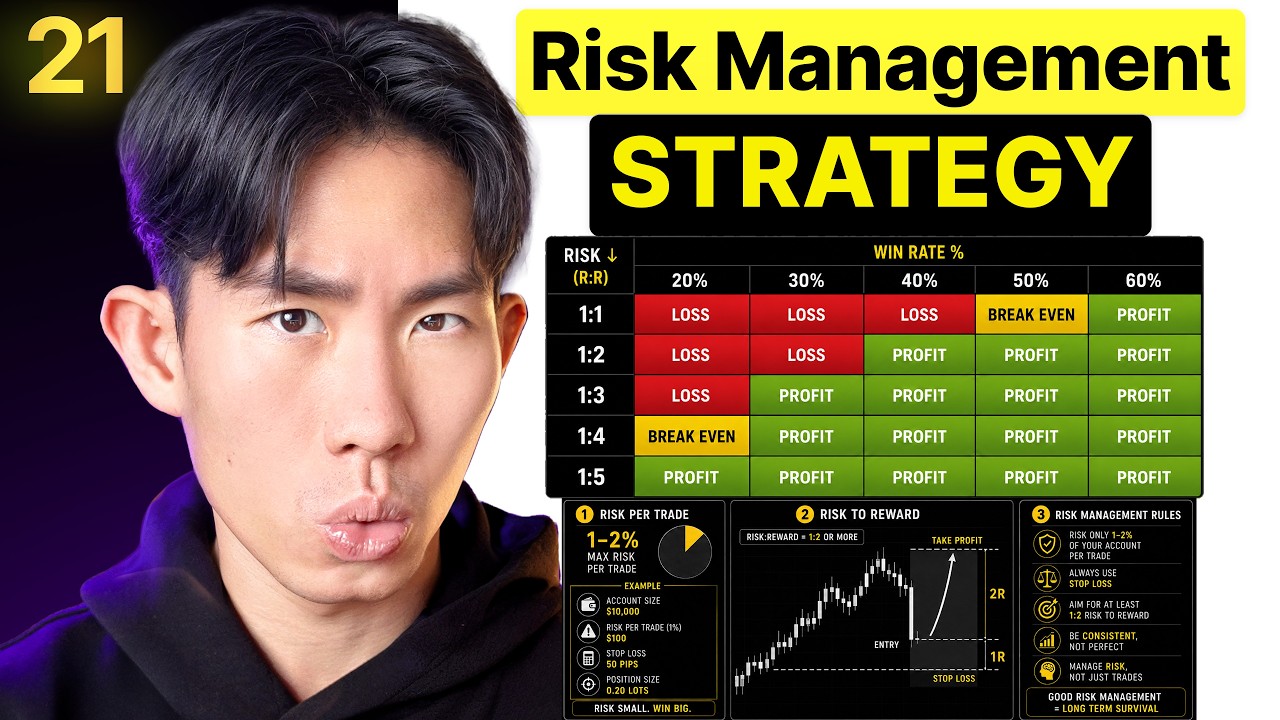
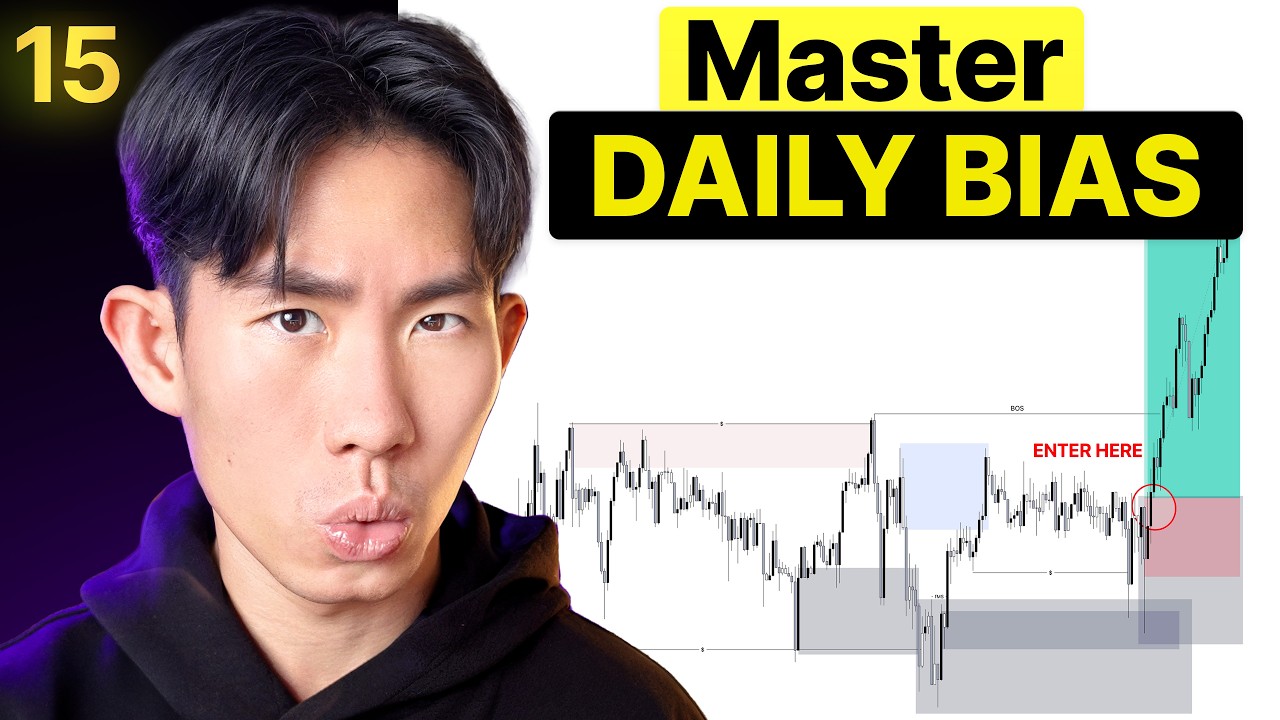
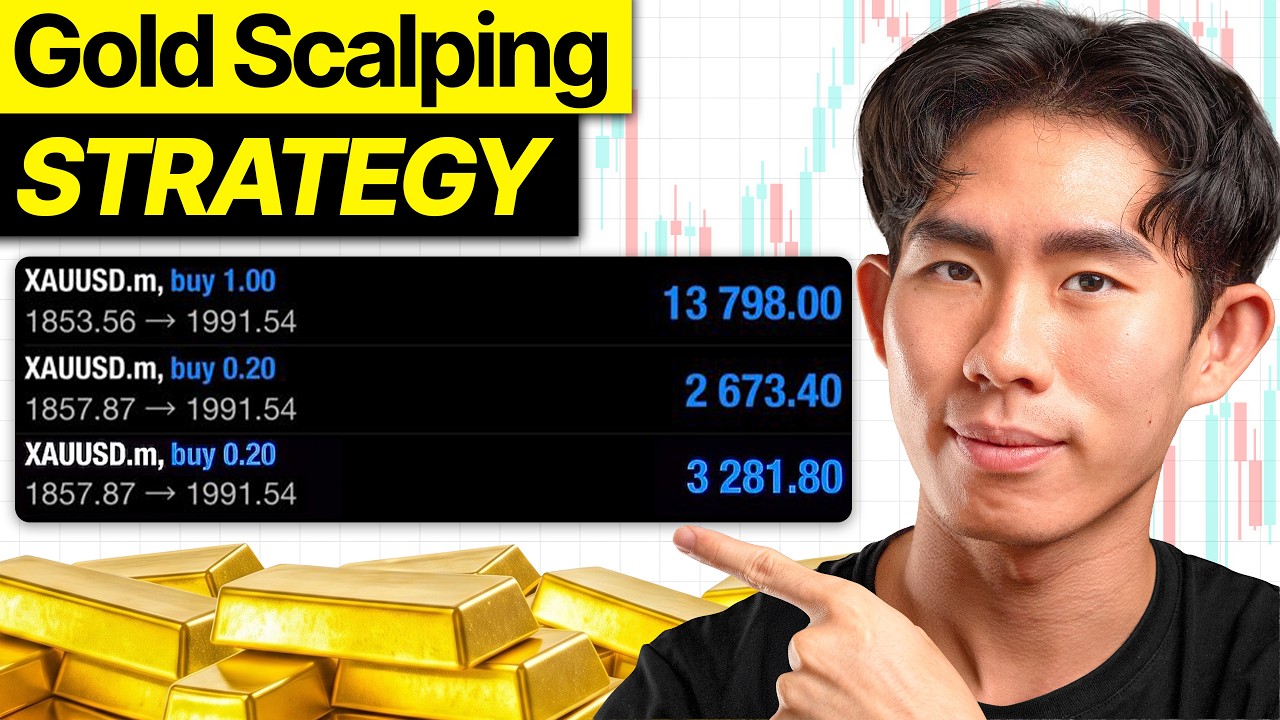
Learn how to properly place stop loss and take profit orders and manage trades emotionally and structurally in this detailed trading lesson.
Key Takeaways
- Exits, not entries, determine trading profitability.
- Always align stop loss and take profit with market structure and order flow.
- Manage expectations especially when trading countertrend or scalping.
- Use multiple timeframes for confirmation of entries and exits.
- Trade management should be systematic and unemotional.
What the video covers
- Traders often focus too much on entry points and neglect trade management, which is crucial for profitability.
- Professional traders prioritize exit strategies, including stop loss and take profit placement.
- Trade management should be structured and unemotional to avoid losses despite good entries.
- Price action that is most obvious to the trader is often the most beneficial and high probability.
- Beginners should trade with the internal and higher timeframe order flow, avoiding countertrend trades.
- Intermediate and advanced traders can scalp countertrend moves but must manage expectations carefully.
- Stop loss placement should be just above or below key supply/demand zones or fractal highs/lows.
- Take profit targets should align with the next relevant supply or demand zone on the same timeframe as the trade entry.
- Waiting for confirmation such as internal breaks of structure or fractal market shifts improves entry timing.
- Trade management must never be based on emotional reactions but on predefined rules and market structure.
Chapters
- 00:00Importance of Trade Management Over Entries
- 01:02Example of a Trade Taken in April
- 02:03Price Action and High Probability Trades
- 02:57Focus on Exits: Stop Loss and Take Profit
- 04:01Scalping and Intraday Trade Setup
- 05:03Demand Zones and Market Gravity
- 06:11Long-Term Bullish vs Short-Term Bearish Bias
- 07:12Fractal Lows and Market Shifts for Entry Confirmation
- 08:00Placing Stop Loss Above Supply Zones
- 12:33Setting Take Profit Based on Market Structure
Full Transcript — Download SRT & Markdown
Speaker A
A lot of traders spend so much time learning how to enter, but almost no time learning how to manage the trade once they're actually in.
Speaker A
And that is a huge mistake, because amateur traders obsess over entries and professional traders obsess over exits.
Speaker A
A good entry alone does not make you profitable. It's just half of the equation.
Speaker A
If your stop loss is in the wrong place, your take profit makes no sense, or your trade management is emotional, then you can have the best entry in the world, but you will still fail. So, in this lesson, I want to break down how to
Speaker A
actually manage your position properly, including where to place your stop loss, where to place your take profit, and how to think about trade management in a way that is structured instead of emotional.
Speaker A
So, with that being said, let's go on to the charts and talk about where to place your stop loss and your take profit. For context, this was the first trade I've taken in April.
Speaker A
Yeah, this was the first trade I've taken in April, right here. Uh, and I think we got about, yeah, almost three hours on this trade itself.
Speaker A
So, let me quickly walk you guys through the thought process for this.
Speaker A
Once again, from entries to exits. Okay? So, like everything, and I'm just going to give you guys extra tips while I'm going through that. So, if you look at this right here, internal structure is bullish, swing structure is also
Speaker A
bullish. So, if you're looking for shorts right here, you must really manage your expectation, which means you can't swing for the fences and try to target like all the way down here. It just doesn't make sense. Because, once again, you are
Speaker A
already going counter against everything. So, first of all, do not do this. Do not try this at home if you are a beginner. If you're a beginner, stay away from this trade. I would not advise you to trade against the internal order
Speaker A
flow and also against the higher time frame order flow. Basically, just trade the price action, which is the most obvious to you.
Speaker A
Because most often than not, the price action, which is the most obvious to you, is also the most beneficial to you.
Speaker A
Okay, so write this down somewhere. The price action that's the most obvious to you, it's often also the most, uh, it's also the most beneficial to you, right? It's also the one that is like the most high probability, right? So, in this case, as
Speaker A
much as possible, if I were you and I'm a beginner, I'm going to try to look for longs, which means I'm going to look for longs at all of these demand zones right here to trade with this internal
Speaker A
structure. Number two, for the intermediate traders, for the advanced traders who want to, you know, take advantage of the counter trend, right? Get scalps just like this.
Speaker A
And bear in mind, if you are trading against everything, you want to manage your expectation.
Speaker A
It's very important for you to know exactly where to get out if you are wrong, and also where to get out if you are right.
Speaker A
This is something that I like to nail on. Is that amateur traders focus on entries, professionals focus on exits.
Speaker A
Because exits is what make you the money or cause you to lose a little bit of money.
Speaker A
So exits is the hard part, right? Which means that if you don't manage your expectation, you try to target like here or here or here or some random place that you think price will go, there's a very high chance that you're
Speaker A
going to get stopped out sooner or later, and you're going to like kick yourself in the balls, right? Just because you place your exit at the wrong place. So, second tip, if you are trading this sort
Speaker A
of setups, manage your expectation. All right, manage your expectation. Now, let me just go through the entry, right? So, why would I enter for a sell right here, even though it's counter against everything?
Speaker A
It's because if I'm scalping right here, this is actually pro internal order flow for me, right? So, I'm actually trading with the internal order flow. It's just that I'm looking at it from the lens of a scalper. I'm looking at price
Speaker A
on the 1-minute time frame. So, yeah, super duper aggressive scalp. This is a scalp. This is a mixture of scalp and an intraday trade, right?
Speaker A
So, once again, let's take it one step back first. If you look at a structure, bullish. Internal structure shifted bullish right here. Fractal market shift, internal breaker structure, everything is bullish right here.
Speaker A
And just by doing this alone, I know that this is my swing low and this is my swing high. Right? So, this is the range that we are trading within.
Speaker A
And right now, when I see price being super extended just like this, like you guys, like I told you guys a thousand times, I don't ever take FOMO trades. This is a lesson I've learned the hard way from
Speaker A
losing a lot, a lot, a lot, a lot of money. I don't ever look for long positions when price has already made a significant move just like this.
Speaker A
So, if I'm not looking for longs and I want to look to scalp this move right here, what I want to do is to play the counter trend, right? I want to play the pullback to like each one of these
Speaker A
demand zones right here. Because like I said, because of gravity, price will eventually start pulling back. It could pull back to this demand zone or this demand zone. Whichever demand zone that is within this discount pricing. That's just how the market fundamentally moves,
Speaker A
right? That's just why price moves. Okay, like that's it. So, if that's the case, then I know with a high degree of certainty that price will make a pullback to at least this demand zone.
Speaker A
At least this one. I don't know whether price is going to pull back to this one, but I know for a fact that it's going to pull back to this one. Because of the fact that we got this overextended move
Speaker A
to the upside. And this is the nearest 5-minute demand zone. So, if at some point in time, price starts running out of buying momentum and buying pressure right here, guess what? It's going to come back to this gas station right here at this next
Speaker A
5-minute demand zone to get more fuel before it continues pushing to the upside.
Speaker A
And if there's not enough fuel at this gas station, then it's going to continue going down to the next gas station, which is this demand zone, to get more fuel and then move to the upside.
Speaker A
So, long-term wise, higher time frame bias wise, I'm still bullish. No doubts about that. But short-term, I'm bearish because I know for a fact that price is going to start pulling back. And if I know that, why don't I play this move to
Speaker A
the downside? Since I'm a scalper, right? I'm looking to get in and out within a few minutes, within a few hours. I'm not interested in holding this trade for long. Right?
Speaker A
So, this is where I'm thinking to myself, okay, I'm trying to play this pullback right here.
Speaker A
But now, the next question becomes, where is the optimum point of entry? Because it's very difficult to try to predict the top of the market. If you enter for a sell right here, there's a chance that price will just make a tiny
Speaker A
pullback and just continue going up. And then you'll get stopped out. Right? So, you want to make sure that you wait for extra confirmation. So, once again, I'm approaching this from a scalping standpoint. And since on a 5-minute time frame, I don't see any
Speaker A
fractal low right here. The most recent fractal low I can see is right here.
Speaker A
Okay, so if price takes out this fractal low, then yes, price is going to pull back to this area right here.
Speaker A
But what about right now? If I don't see a fractal low right here, then my next natural approach is to go down to my 1-minute time frame and try to identify my fractal market shift over here.
Speaker A
So, this is where you can see. This is the last 1-minute fractal market shift.
Speaker A
So, the minute price takes out this low, we know for a fact that price is going to pull back to this area right here, this next demand zone right here.
Speaker A
And if I get an internal break of structure to the downside to validate this market shift, then boom, I'm going to
Speaker A
Because this is where I know for sure, right, the pullback has officially occurred and it's going to come down to this area that I have down here.
Speaker A
So, in this case, this is 3:30 p.m., right? So, this is like when London session actually opened, 30 minutes into London session.
Speaker A
And over here, I was very patient, you know, not doing anything. In fact, I literally just came back from the gym after doing like a push day, and I saw the price action like right here. I remember I remember
Speaker A
pulling up the charts and I saw price like somewhere around here. And I was just looking for my entry over here. I was just being very patient, just waiting for the market to come to me.
Speaker A
Once again, another tip, write this down somewhere. Never ever chase price. Whatever you chase runs away. Same thing as money, same thing as whatever, right?
Speaker A
That's just the fundamental law of the universe, right? Whatever you chase runs away. And the worst part about chasing is that you get a entry. If you chase price, you get a bad entry.
Speaker A
If you chase price, you enter for a sell right here, you have to place a stop loss above this high, you got a entry. So, never ever chase price. Let price comes to you, right? So, do your analysis, do your chart markups, you
Speaker A
will know that since we just got a I boss, validate this fractal market shift, internal structure shifted bearish, and now I'm looking for short because once again, internal structure has shifted bearish.
Speaker A
And I'm still trading with the internal structure, right? Because I'm approaching this from the lens of a scalper.
Speaker A
So, in this case, very patiently doing nothing right here, still doing nothing, right? Price has made this bearish candlestick right here.
Speaker A
A lot, 90% of the retail traders, including myself last time, would enter for a sell right here.
Speaker A
But now I understand liquidity, it's a different story. Now I'm like, "Okay, cool. Let me try to identify the liquidity points." Because another thing that Brett has said repeatedly in all of his lessons is that no liquidity, no no
Speaker A
entry. No liquidity sweep, no entry. So in this case, price does this, I'm not going to enter for the trade.
Speaker A
Because there is no liquidity sweep. Like where's the liquidity? Well, there's liquidity above this high.
Speaker A
And now price has just created a new high right here, which means there's also liquidity being built up above that high.
Speaker A
So I'm waiting there very patiently waiting for that to get swept out. And also most importantly, I'm waiting for price to come up to my point of interest.
Speaker A
Like I said, you don't chase price. You wait for price to come to you. And you wait for price to come to your point of interest.
Speaker A
So in this case, price over here haven't mitigated my supply zone. So chill. The minute price mitigated my supply zone, boom, now I'm interested.
Speaker A
So now I'm looking for the aggressive entry in this particular situation. Why the aggressive entry? Because internal structure is on my side.
Speaker A
And this is where we can also see the push and pull inducements being swept.
Speaker A
So this is actually a high probability scenario. If the internal structure is not on my side, then I'm looking for the conservative entry. Right? If the market situation is just telling me that huh it's like it's like hmm I don't know
Speaker A
whether I'll enter for aggressive more entry model right here, then I'll probably go for the conservative entry model. But in this case, because I'm so confident that the internal structure is really good bearish and we are in this
Speaker A
high probability scenario where there's all the liquidity in the world has been swept, I'm more than happy to deploy the aggressive version of the entry model.
Speaker A
So the minute price went up there, swept the high right here, swept the high on the left-hand side, right? We got both liquidity push pull inducement being swept. Price comes up to this supply zone, internal structure of bearish.
Speaker A
All the stars in the entire universe is literally lighting up for me to actually enter for the trade. This right here is a A setup. I wouldn't call this a A+ setup, but I'll call this as a A setup.
Speaker A
So, I pretty much waited for price to, you know, give me like a bearish confirmation just like this on the mini price mitigated this zone, and then this is where I look for shorts, and I place my stop loss above this supply zone.
Speaker A
Now, the next part I want to talk about is the exits. Let me give you a tip. All right, let me give you a tip. Often too greedy with my exit. That's the problem right there. Let me give you guys a tip.
Speaker A
When it comes to your exit, you basically just want to exit at the price point in which, based on your research, price is most likely going to get to.
Speaker A
That's it. I don't think anyone has explained to me in that manner before, but that's it.
Speaker A
And the key word here is based on your research where the market is going to hit towards next, not where you think it will hit towards next, based on where the market is heading towards next.
Speaker A
So, first thing is let's talk about the take profit, right? Which is where to exit if the trade goes well.
Speaker A
Well, a lot of people, they they're looking at this trade right here, and they're going to place their take profit like all the way down here.
Speaker A
You know, they convince themselves, "Oh, price is just going to go down here." Right? Or what they tend to do is that they maybe they place it down here, or maybe they place like somewhere around here in the middle of nowhere.
Speaker A
But like I said, this is not where the market is going to hit towards next.
Speaker A
You want to ask yourself right now, where is the market going to hit towards next for sure? What is the internal structure telling us? What is the price action telling us? If I'm entering for a short right here,
Speaker A
bare minimum, price is going to come down here. Okay? Absolutely no doubt because this is the next 5-minute supply zone.
Speaker A
I know, 5-minute demand zone. Okay, this is the next 5-minute demand zone. Now, if I'm a scalper, as much as possible, if I'm entering the trade on the 1-minute time frame, I'm placing my take profit at either the next 1-minute
Speaker A
demand zone or supply zone or the next 5-minute supply demand zone. But, I won't try to target the next 1-hour supply or demand zone.
Speaker A
There's a time frame misalignment. There's a mis- alignment of expectations there. Right? Because you can't be Okay, like you can if you're like really, really good in terms of like, you know, identifying the structure.
Speaker A
But, majority of the times, you cannot try to target where you would target as a swing trader if you're entering as a scalper.
Speaker A
Once again, only caveat here is that you can if you really understand what you're doing. Then this is where you capture those sniper entries, 1:50 R trade, whatever, which is incredibly, incredibly rare.
Speaker A
Majority of the times, you just want to manage your expectation and just place a take profit on the time frame that you enter the trade on.
Speaker A
So, if you're entering the trade on the 1-minute time frame, you place a take profit based on the 1-minute time frame structure.
Speaker A
If you're entering the trade on the 5-minute time frame, you place a take profit based on the next 5-minute structural high or low or the next 5-minute supply demand zone.
Speaker A
Trust me. Just by doing this one change to your entire trading plan, you will reduce the amount of unnecessary losses.
Speaker A
You will increase the frequency of you hitting TP. Because this is something that fundamentally just changed the way that I trade.
Speaker A
It's to just manage my expectation and just be a little bit pessimistic when it comes to my TP.
Speaker A
So, in this case right here if you are super duper conservative, right? Next 1-minute demand zone, this one right here. You can just place a take profit right here. 1:2 are good enough, right? You get out right there.
Speaker A
But, if you're a little bit more confident, you can place it at the next 5-minute demand zone, right? Which in this case it's going to be like somewhere around here. This is the next 5-minute demand zone right here. Because
Speaker A
you can see this exact demand zone on the 5-minute time frame as well. Right?
Speaker A
So, this is the next 5-minute demand zone. Now, if price were to take out that 5-minute demand zone, then there's a chance that it's going to go to the next 5-minute demand zone, which is this one right here. All right? Which is this
Speaker A
other obvious 5-minute demand zone right here. Right right here. So, that's my best tip for you guys when it comes to your take profit.
Speaker A
Is to just place your take profit at the next opposing supply and demand zone or the next structural low or high that is either on the same time frame that you make your entry on or just one time frame above your entry time frame.
Speaker A
Now, that's for the take profit. Now, for the stop loss bro, very simple. Like I always say, you just want to place it at a price point which invalidate your trade idea.
Speaker A
So, it's like what is the price point that if price gets to prove that your trade idea is wrong.
Speaker A
Prove that your hypothesis is wrong. That is the question that I always ask myself before I enter for a trade.
Speaker A
Before I actually press the buy and sell button, I need to know exactly where I'm getting out if I'm wrong.
Speaker A
So, in this case, where's that price point? Well, it needs to be at some form of protected high.
Speaker A
Right? It needs to be at a high that swept liquidity. Because that's the institutional level where price is most likely going to respect.
Speaker A
And if price take out that level, then there's a chance that either a next liquidity sweep is going to happen or the entire structure is just going to shift bullish and my trade idea is wrong.
Speaker A
So, it needs to be at some protected high or protected low. And another thing is is it at like ideally I want to place it a few pips above the supply demand zone that I entered the trade on. Right? So, in this
Speaker A
case this is the supply zone that I entered the trade on. I'll place it a few pips above it. I wouldn't place it right above it because there's a chance for price to make a pullback and when it does you're going
Speaker A
to get wicked out. You're going to get stopped out. Later on price will go down in a way. In this case using that that two logic in mind, right? Your protected high and low and also your supply zone.
Speaker A
First of all, protected high. Right? This right here becomes the new protected high. Before this high has been established, before it swept the liquidity, where is the next protected high? It's going to be this one right here.
Speaker A
Because this is where price went up there, swept the liquidity and then started going down. So, this is the protected high.
Speaker A
So, if this haven't been formed, I will probably if I enter somewhere around here or here, I'm placing my stop loss above this protected high since that's the highest point that swept liquidity.
Speaker A
But right now since price has already swept liquidity above this high and above this high, this becomes the new protected high.
Speaker A
Which means that I can place my stop loss a few pips above this high right here.
Speaker A
All right, just a few pips above this high. And then for my take profit, uh no, and then for for the second part which is the supply zone, right? So, in this case this is the supply zone that I'm
Speaker A
entering the trade on. So, as much as possible, I want to give you a little bit of breathing room if I'm actually placing my stop loss based on a supply zone.
Speaker A
So, this could be like the worst-case scenario, right? If there is no protected high right here. Let's say price did not sweep the liquidity right here and it's just a normal high.
Speaker A
And in this case I got two choice. I can either place my stop loss above the protected high right here or I can place it a few pips above the supply zone.
Speaker A
And if I place it a few pips above this supply zone, this will give me a much better risk-to-reward ratio compared to placing it above this protected high.
Speaker A
So, that is where I will go to the latter option and just place it above this high right here. So, the rule is if there is a protected high, place it right there.
Speaker A
If there is no protected high, place it at either the nearest protected high that was formed in the past or a few pips above a supply zone if you're selling or few pips below a demand zone if you're buying.
Speaker A
Whichever one that is nearer, right? Whichever one that offers you a better risk-to-reward ratio. So, hopefully after this lesson, you can see that position management is not just something that you figure out after you enter for the trade. It should already
Speaker A
be part of your plan before you even take the trade. Like I said, a good trade is not just about finding the right entry.
Speaker A
It's also about knowing where the trade is going to go wrong and where the trade is most likely to react and how to manage it without letting emotion take over.
Speaker A
That is why your stop loss should never be random. It shouldn't be based on where you feel you should be placing it at. Same thing as a take profit. It should never be based on hope. Okay, I'm hoping price is going to go up there, so
Speaker A
I'm going to place my take profit there. No. And your trade management should never be based on how you feel in the moment.
Speaker A
It should all come from structure, logic, data, and the story the market is telling you.
Speaker A
Okay, so remember, protect your downside, give your trade enough room to breathe, and make sure your exits actually make sense.
Speaker A
Because that is how you stop turning good profitable setups into bad outcomes. And when you combine a strong entry with smart risk management and a clear exit logic, that is when your trading starts to become so much more consistent.
Speaker A
So, with that being said, I'm looking forward to teach you guys more concepts in the next lesson. And as always, remember you're just one trade away.
Topics:stop losstake profittrade managementscalpingorder flowprice actiontrading psychologymarket structuresupply and demand zonestrading strategy