Transcription6 min read
What 27,852 YouTube transcripts show: languages, lengths, topics
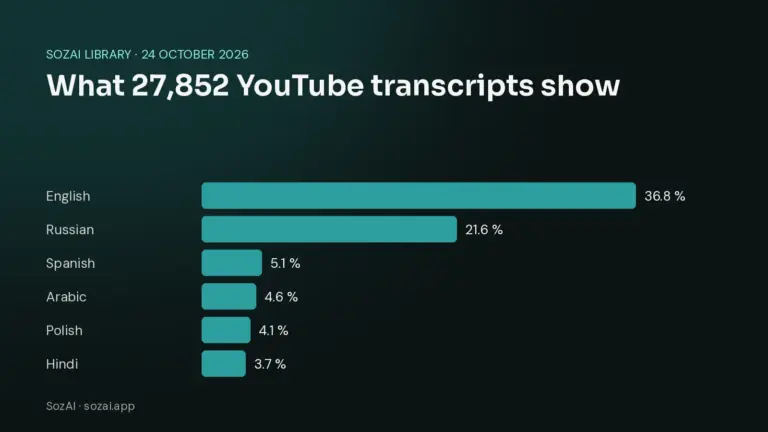
A snapshot of the public SozAI transcript library on 24 October 2026: which languages, how long, which topics and channels.
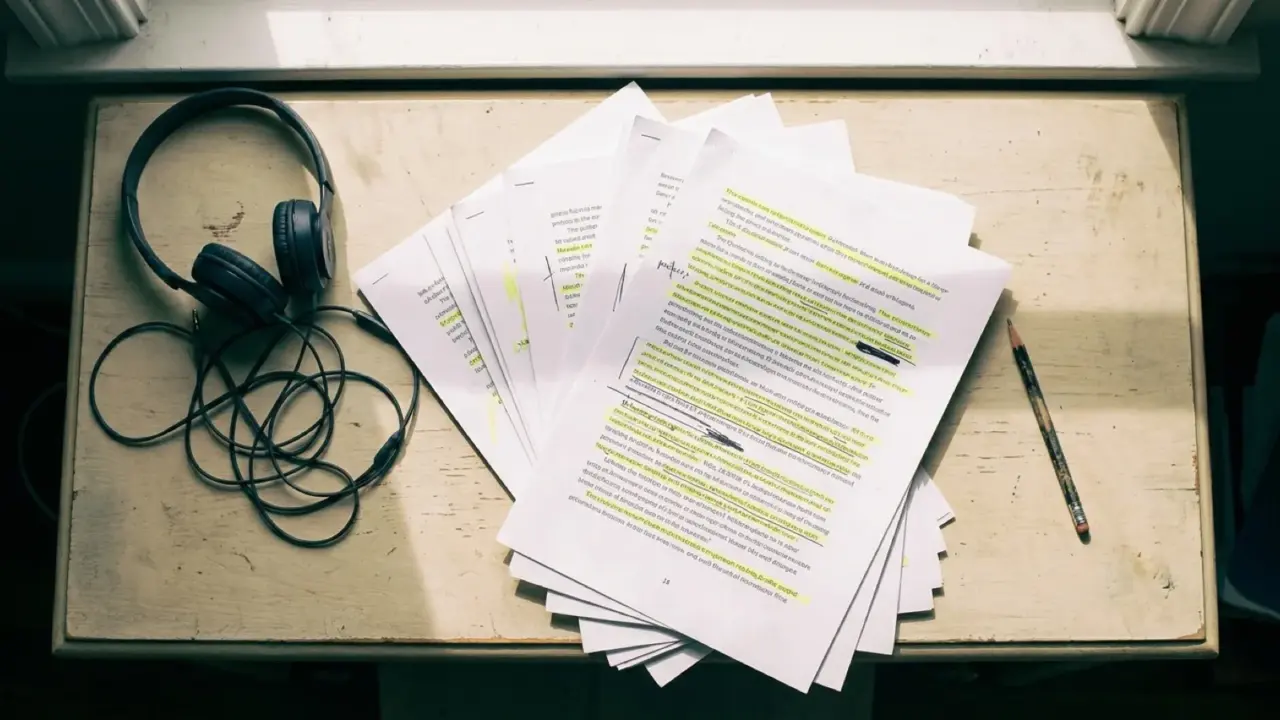
Turning audio and video into text: methods, accuracy, cost, and what to expect from AI compared with a person.
A snapshot of the public SozAI transcript library on 24 October 2026: which languages, how long, which topics and channels.
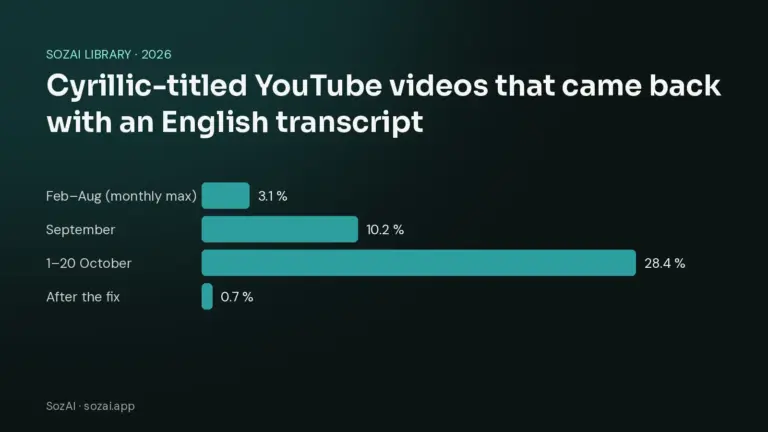
How YouTube auto-dubbing put English captions on Russian videos, how often it happened in the SozAI library and how we fixed it.
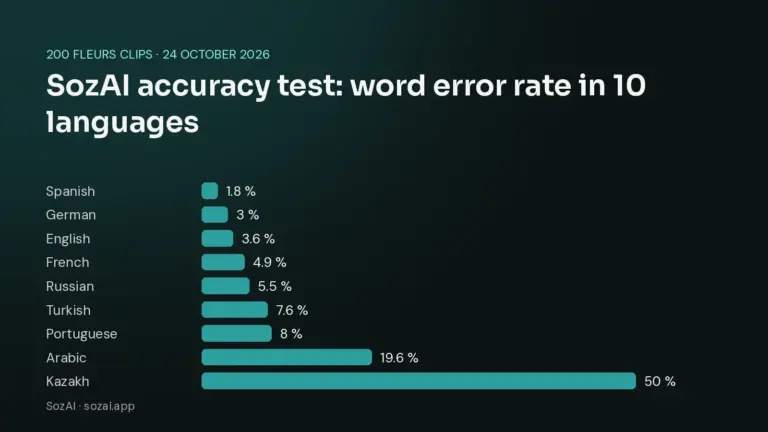
Word error rate of SozAI transcription in ten languages, measured on 200 open FLEURS clips, with the weak languages explained and all per-file results published.
A practical guide to choosing a verbatim level, labeling speakers and marking pauses, with real timing estimates and an engine's output checked against a public recording.
The transcript button goes missing for two very different reasons, and only one of them can be fixed by looking harder. Here is how to tell them apart and get the text.
A three-hour video does not have to cost you three hours — or ninety minutes at double speed — if you treat it as something to read instead of watch.
Speaker separation is a different task from recognising words, and it succeeds or fails almost entirely based on how the recording was made.
For students who catch two thirds of a lecture live, the fix isn't more vocabulary but a way to slow the lecture down after it happens.
Where Teams, Google Meet and Zoom actually put a meeting recording, what their own transcripts cover, and why downloading the file is the route that always works.
A straight answer on whether transcription can happen without your audio leaving the device, what encryption in transit actually covers, and the questions that separate real answers from marketing.