A Henan-based commentator argues via a dialectical framework that Taiwan matters greatly to mainland China and urges reunification as completing the Chinese nation's unity.
Key Takeaways
- Taiwan is strategically important to mainland China, primarily for breaking the first island chain and reaching the Pacific.
- The U.S. commitment to Taiwan is portrayed as informal and dispensable, weakening its importance to Washington relative to Beijing.
- Shared Chinese cultural identity is presented as the basis for reunification as a national imperative.
- Critics of reunification are framed as misguided or manipulated, and the piece urges viewers to reach a 'third level' of understanding.
- The video reflects a PRC-aligned nationalist perspective on cross-strait relations and should be weighed with that framing in mind.
What the video covers
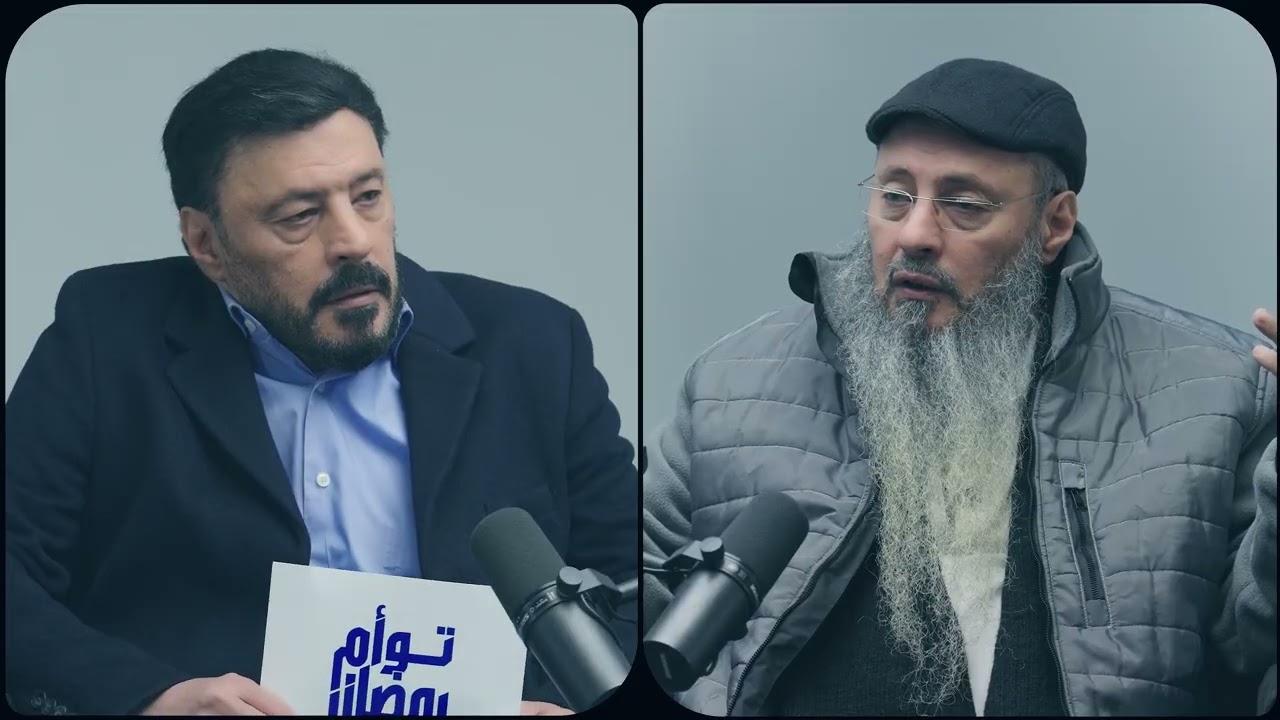
- The host interviews a self-described pragmatic, non-hardline Chinese viewer from Henan about why cross-strait reunification matters today.
- The speaker applies a dialectical method (affirm, negate, negate the negation) to assess Taiwan's strategic importance.
- Affirmation: TSMC's dominance in advanced chips, Taiwan as a Western democratic outpost, and its role as a gateway in the first island chain.
- Negation: alternative chip production in China, Japan and South Korea, modern long-range warfare making geography less decisive, and the U.S. lacking formal diplomatic or defense commitments.
- Negation of the negation: Taiwan is claimed to be vital to China as the only route to the deep ocean and as a means to undermine U.S. credibility with regional allies.
- A micro-level analysis argues Taiwan's people matter, yet mainland living standards are said to be largely independent of Taiwan, and cross-strait discourse is described as internally draining.
- Shared Han culture, ancestry, and language are presented as grounds for unity, with the issue framed as an unhealed scar of modern Chinese history.
- The speaker characterizes the pro-independence 'Green camp' as self-deceived and status-quo supporters as unwilling to make a choice.
- Opponents of unification are described as brainwashed, with the speaker framing them as victims of political manipulation rather than legitimate counterparts.
- The video promotes a 'layered cognition' model in which only the highest level reveals when force versus peace is appropriate.
Chapters
- 00:00Introduction and Speaker Background
- 00:51Pragmatic Stance on Reunification
- 01:42Dialectical Analysis of Taiwan's Strategic Importance
- 03:38Taiwan's Value to the Mainland and the U.S. Commitment
- 04:41Micro-Level Perspective and Costs of Cross-Strait Discourse
- 05:35Shared Culture, Historical Scars, and Levels of Cognition
- 07:48Critiques of Political Camps and Closing Arguments
Full Transcript — Download SRT & Markdown
Speaker A
Welcome, "Three Sentences to Stun." Ha. Hello, "Three Sentences to Stun." How are you? How old are you, and where are you from? 30, from Henan.
Speaker A
Okay, friend from Henan, what would you like to say? I didn't finish what I wanted to say last time regarding the peace award.
Speaker A
I'd like to discuss the significance of reunification today. Go ahead. Let me state my position briefly: I am just an ordinary Chinese citizen.
Speaker A
I am not a hardline unificationist; I am a pragmatist. The timing of reunification is not important to me.
Speaker A
Mm. People on both sides have lives to lead, so give our Taiwan compatriots room to maneuver.
Speaker A
Rather than forcing them into direct confrontation and desperate resistance, that is my stance. Mm.
Speaker A
Some say I'm faking it. That's fine; many people have no concept of cognition and vision, I understand. Just assume I'm an operative sent by the Taiwan Affairs Office; I won't blame you. Let me give you the conclusion first.
Speaker A
Mm. According to the materialism we learned in high school, human cognition can be divided into three layers.
Speaker A
Mm. I want to play two simple dialectical games regarding Taiwan. Mm. The first topic: Is Taiwan actually important or not?
Speaker A
Mm. I will use the dialectics of affirmation, negation, and negation of the negation. First, affirm the importance of Taiwan. First, TSMC controls over 90% of global advanced chips; without Taiwan, global technology and industry would be paralyzed. Second, Taiwan is the forward outpost for the Western democratic camp in East Asia. Mm. Taiwan determines the geopolitical credibility of the West. Third, Taiwan is the "unsinkable aircraft carrier" of the first island chain. It is also a key passage for control over the South China Sea. These all prove that Taiwan is very important.
Speaker A
Mm. Now, the second step: negate the first step. First, the U.S. is forcing TSMC to build plants, while mainland China, Japan, and South Korea are chasing semiconductor tech. When the "indispensable" attribute is diluted, the value of Taiwan's semiconductors becomes less significant.
Speaker A
Mm. Second, modern warfare relies on long-range firepower and saturation strikes on carrier groups. There is no longer a traditional front or rear; if China and the U.S. conflict, must they cross Taiwan? Mm. As long as your weapons are advanced enough, the whole world is a battlefield. The idea of being "choked" by a single island doesn't exist.
Speaker A
Geopolitically, the Philippines actually has more strategic value than Taiwan; whether the U.S. deploys weapons or troops there, China cannot interfere.
Speaker A
Its strategic value is higher. Mm. Third, the third point. Look at the actual actions of the United States. No diplomatic relations, no defense treaty, no official commitments whatsoever.
Speaker A
Private statements by lawmakers or individuals are all performances that don't need to be taken seriously. In terms of diplomatic and legal standing, everything is merely a personal opinion. Once a price needs to be paid, Washington only needs to say, "This does not represent the United States," and that suffices. Alright, let's move to the third step and negate the second.
Speaker A
Hmm. First. Taiwan is the only gateway for China to reach the deep ocean. Hmm.
Speaker A
For the mainland, reunification with Taiwan isn't for defense, but to completely break the first island chain, allowing the Chinese Navy to face the Pacific directly. That is the true geographic value of Taiwan. Once Taiwan is reunified, Japan, South Korea, and Southeast Asian nations will see their trust in U.S. security guarantees collapse. Their credibility will crumble; this is the strategic value of Taiwan to China.
Speaker A
Hmm. Second point. Taiwan's semiconductor production capacity can be replicated, but combining it with the mainland's industrial system, we remain the strongest. Taiwan is a crucial piece for China's semiconductor industry to reach the pinnacle. Third point: completing reunification for the Chinese nation represents the definitive end of a century of humiliation, a symbol of national unity, and the beginning of our unified stance toward the outside world.
Speaker A
Hmm. So, the conclusion is that Taiwan is very important, but not to the U.S. It is important to mainland China.
Speaker A
Hmm. This is the debate on Taiwan's importance from a macro perspective. If you stay at the first level, you think Taiwan is the center of the universe.
Speaker A
If you stay at the second level, you think the U.S. cannot do without Taiwan. Only when you reach the third level do you realize that the U.S. is just a factor in Taiwan's importance to China.
Speaker A
We can also look at Taiwan's importance from a micro perspective. The first step is still to affirm the importance of Taiwan.
Speaker A
Hmm. For 23 million people, Taiwan is not an unsinkable aircraft carrier; it is a land where they live and work in peace.
Speaker A
Growing up, falling in love, and working all happen here. From ancient times to the present, a group of people has lived on this island, and the value of their lives is its greatest value.
Speaker A
That's correct. For us mainland compatriots, Taiwan is important because we believe both sides of the strait share the same roots and are as close as flesh and blood. It stems from the most basic national sentiment that both sides should stand together. Then, the second step negates the first, proving that Taiwan is not that important to the mainland. For the mainland, Taiwan does not determine our living conditions. Whether ordinary people on the mainland live well has no direct, causal relationship with the situation in Taiwan.
Speaker A
Hmm. Second, to cope with geopolitical games, the diplomatic, military, and public opinion costs we invest essentially consume mainland resources. Third, many mainland compatriots and overseas Chinese now focus their attention and public discourse on cross-strait issues, leading us to consume ourselves internally due to differing views. When we offer attention and goodwill, what we get in return is Taiwan's indifference and hostility.
Speaker A
Hmm. For mainland compatriots, this kind of emotional investment is also a form of depletion. If we only look at this step, we might conclude that living our separate lives is the best choice.
Speaker A
For our compatriots on the mainland, it's like saying "hurry up and reunify by force" or "who cares," but our third step will overturn the conclusion of living apart. First, no matter how polarized the public opinion gets, or how ugly the rhetoric becomes, Taiwan uses the Han system, honors the same ancestors, speaks Southern Min, and values propriety and integrity; essentially, we are all running the underlying code of Chinese civilization; we are one and the same. Second, the Taiwan issue didn't arise out of thin air; it is a scar left from China's modern history. Whether you call it the interference of five nations or the remnants of the Chinese Civil War, if this scar doesn't heal, the rejuvenation of our civilization will always remain incomplete.
Speaker A
Mm. Third, regarding Taiwan, what we mainland compatriots and overseas Chinese truly safeguard are the assets of Chinese civilization. We will not allow the Taiwan authorities to "de-sinicize," nor will we allow them to cut ties with the mainland. If Taiwan's people are brainwashed, we ignore that. Even if our goodwill is hurt, what we are safeguarding is the confidence and integrity of Chinese civilization.
Speaker A
Cognition and vision have levels. The level at which you reach a conclusion determines the level of your understanding.
Speaker A
Mm. The "Green camp" is on the first level, deceiving themselves. "Maintaining the status quo" is between the first and second levels; many people see the second level but don't want to make a choice. Because once you reach the second level, you must confront the contradictions—this is the beginning of the divide. Some support reunification by force, some support peaceful reunification, and some support independence. Only by reaching the third level can you truly understand under what conditions to use force and under what conditions to pursue peace.
Speaker A
situation in Taiwan. Hmm. Second, to cope with geopolitical games , the diplomatic, military, and public opinion costs we invest essentially consume mainland resources. Third, many mainland compatriots and overseas Chinese now focus their attention and public discourse on cross-strait issues
Speaker A
, leading us to consume ourselves internally due to differing views. When we offer attention and goodwill, what we get in return is Taiwan's indifference and hostility.
Speaker A
Hmm. For mainland compatriots, this kind of emotional investment is also a form of depletion. If we only look at this step , we might conclude that living our separate lives is the best choice.
Speaker A
For our compatriots on the mainland, it’s like saying "hurry up and reunify by force" or "who cares," but our third step will overturn the conclusion of living apart. First, no matter how polarized the public opinion gets, or how ugly the rhetoric becomes.
Speaker A
Taiwan uses the Han system, honors the same ancestors, speaks Southern Min, and values propriety and integrity; essentially, we are all running the underlying code of Chinese civilization ; we are one and the same. Second, the Taiwan issue didn't arise out of thin
Speaker A
air; it is a scar left from China's modern history. Whether you call it the interference of five nations or the remnants of the Chinese Civil War, if this scar doesn't heal, the rejuvenation of our civilization will always remain incomplete.
Speaker A
Mm. Third, regarding Taiwan, what we mainland compatriots and overseas Chinese truly safeguard are the assets of Chinese civilization. We will not allow the Taiwan authorities to " de-sinicize," nor will we allow them to cut ties with the mainland. If Taiwan's
Speaker A
people are brainwashed, we ignore that. Even if our goodwill is hurt, what we are safeguarding is the confidence and integrity of Chinese civilization.
Speaker A
Cognition and vision have levels. The level at which you reach a conclusion determines the level of your understanding.
Speaker A
Mm. The "Green camp" is on the first level, deceiving themselves. "Maintaining the status quo" is between the first and second levels; many people see the second level but don't want to make a choice. Because once you reach the
Speaker A
second level, you must confront the contradictions—this is the beginning of the divide. Some support reunification by force, some support peaceful reunification, and some support independence. Only by reaching the third level can you truly understand under what conditions to use
Speaker A
force and under what conditions to pursue peace. Mm. If you dare to declare independence, I will strike; if you maintain exchanges, I will maintain them, and I will keep that window for dialogue open. This is something that can only be seen once
Speaker A
you reach the third level. Reunification by force on the second level is fueled by anger. Reunification by force on the third level is a bottom line. For those who don't understand the CCP's position on reunification, they just see it as war.
Speaker A
Mm. If you are on the first level, you think Taiwan is Taiwan and has nothing to do with the mainland; on the second level, you just argue with each other; only on the third level do you know where the future lies, where Taiwan's
Speaker A
future is, and where the mainland's bottom line is. Mm. If you don't understand, it's because you haven't reached this level of cognition. Alright, let me use one last analogy. In materialism, there is a saying: "See a mountain as a mountain,
Speaker A
and see a mountain as still a mountain. " Mm. Do you know it? I don't.
Speaker A
The first stage: See Taiwan as Taiwan. Initially, we saw Taiwan through textbooks, getting to know Taiwan, Sun Moon Lake, and our Taiwan compatriots.
Speaker A
Mm. The second stage: "seeing the mountain as not the mountain." Many people went abroad or bypassed the firewall, saw pro-independence rhetoric and online smears, and their perception of Taiwanese people collapsed; they became angry, thinking of Taiwan as a "rogue
Speaker A
island." This is the second stage, where people start making choices; some try to reason with them, others just say senseless things.
Speaker A
Mm. The third stage regarding Taiwan: " seeing the mountain as the mountain again." When we clearly see the issues left by history, the ordinary people's anxiety over safety amidst the international landscape, and the political trajectory of Taiwan over the
Speaker A
past decades. That is the reshaping of everyone's perception through education ; we realize that those 23 million people are just like us, facing the daily grind of survival, mortgages, and retirement; their defensive behavior is often born of ignorance and fear. Once
Speaker A
you see the root cause, you won't be angry anymore; you start to understand things rationally. It’s the same land and the same people of shared roots, just in need of help.
Speaker A
Mm. Your first layer is a beautiful fantasy about Taiwan; your second layer is anger toward the Taiwanese people.
Speaker A
The third layer is the understanding that pierces through that anger. OK. Mm. The anger of the second layer remains, but at the third level, it shifts toward Taiwan's ruling party. In the view of the third layer, it is the
Speaker A
ruling party and the powers behind them ; the brainwashed are merely patients, and we know who the real enemy is.
Speaker A
Would the CPC target a group of brainwashed patients? Mm. The backbone of Taiwan independence is the United States behind it. We have a term, "pulling the firewood from under the cauldron," surely the CPC understands that?
Speaker A
The China-US confrontation is a grand game of chess. The cross-strait situation is just a corner of this chessboard, and the DPP and KMT are merely pieces in that corner. Forcing the opposing player to abandon this corner is the goal;
Speaker A
ordinary people aren't even on the CPC's menu of targets. Mm. Why does the CPC insist on cross-strait exchanges? Because cognition is irreversible. If you are at the second layer supporting unification by force, peaceful unification, or independence.
Speaker A
Trying to make you go back to the first layer is impossible. No one can do it; communication is what opens up perception.
Speaker A
This is the result that independent media creators like Jack can produce with their shows.
Speaker A
Mm. I’ll say it again: where you look is where your perception lies; for those at the first level, the mainland wants to destroy Taiwan; you can ask them a different question, and they will still be stuck in that same
Speaker A
mindset. I can only say they are beyond saving; they're just losers we don't need to worry about. I am only discussing this for those who can see the third layer or are stuck at the second. Many people can see the third
Speaker A
layer; they know about the "greater cause of the nation" and "one China," but they don't understand why it's necessary or why the third layer holds true.
Speaker A
Yeah. After all, from the second layer's perspective, the "greater cause of the nation" seems too hollow. Many have no concept of it, leading to two extremes: one supports the CCP blindly, accepting whatever the state proposes. They just don't know why it's correct. The other
Speaker A
group opposes China, thinking this slogan of national interest is just hypocritical. They think it's all empty rhetoric. So, what is the significance of reunification? Only through unification can the Chinese nation move forward together. We must create a civilization that is more inclusive,
Speaker A
more dynamic, and better at taking care of every individual than the traditional Western model.
Speaker A
Only by resolving our internal contradictions can we forge a path the West has never taken. This is the conclusion reached when looking from the third layer toward the fourth. I have no worship for any political party , but the Communist Party proposed a "
Speaker A
Community with a Shared Future for Mankind," which has been recognized by the UN. The "Community with a Shared Future for Mankind" is the fourth layer . For China to realize this, it must prioritize Chinese civilization and the Chinese nation to carve out a new path
Speaker A
of development to influence the world. Yeah. You see, in...... the midst of racial confrontation, the "greater cause of the nation" is not empty. It can be transformed into a tangible means of confrontation. Yeah.
Speaker A
Therefore, one must stand on the third layer to understand the fourth. Cognition improves level by level. If many can't grasp that, there's nothing I can do. Without unification, all subsequent visions are empty. The fourth layer has nothing to do with us
Speaker A
directly; it requires the state to promote it. That is the state's vision. China is contemplating how to survive beyond Earth, while the US is still asking if you're putting cannons on the moon. In terms of national scale, the
Speaker A
fifth layer is something that requires history to drive. The PRC might be gone , but the Chinese nation and the Chinese people will remain.
Speaker A
Yeah. Vision is vision, but the reality of China-US issues must still be treated seriously, right?
Speaker A
Yeah. If you only talk about the macro and ignore the micro, you will become like PUMA Shen's endless spinning webs. It's all reasonable nonsense.
Speaker A
Yeah. If you only talk about the micro and ignore the macro, you become very shortsighted. You only care about what you can get, whether you can earn an extra ten thousand, and you might even cast your vote just because someone
Speaker A
gives you a little emotional validation . Yeah, and unfortunately, these two problems are very common in Taiwan.
Speaker A
Yeah. If you want to know if a policy is right or wrong, you must understand both issues, and you must understand China-US relations. Solving problems is a very complex process. One last thing I want to say, Taiwan has never been an
Speaker A
adversary that needs to be forcibly eliminated. It is an essential piece of the puzzle for the Chinese nation as it explores the development of its own civilization. Hmm.
Speaker A
Alright, thank you, Jack. Right, okay, good, thanks, thank you, okay, alright, bye-bye. Surprise, it's commercial time now. I want to recommend that my YouTube channel has just launched a new membership tier called Platinum. What are the perks of being a Platinum
Speaker A
member? By joining as a Platinum member , you can occasionally watch my exclusive private videos and join my Discord server as a senior member. As for what those private videos are and what perks senior members get, you'll find out once you join. What are you
Speaker A
waiting for?
Topics:Taiwan reunificationcross-strait relationsTSMCfirst island chainChinese nationalismdialecticsUS-China rivalryTaiwan strategic valueHan identityHenan