Skip to content
Get App

what is…”healthy”?

David Achu explores what health means, from WHO's definition of complete well-being to weight stigma, childhood dieting, and GLP-1 drugs, questioning how body size shapes health judgments.

Key Takeaways

  • Health is more than the absence of disease; it includes physical, mental, and social well-being.
  • Weight is a frequently misused proxy for health, and it is tangled with identity and emotion.
  • Diet culture and weight-focused messaging in media and family life can harm children's relationship with their bodies.
  • Self-acceptance and mental health are closely connected to physical health outcomes.
  • Access, cost, and stigma complicate debates about weight-loss treatments such as GLP-1 drugs.

What the video covers

  • Opens by asking what health means, contrasting a neutral view (absence of illness) with a positive view (living fully), citing the 1946 WHO definition of health as complete physical, mental, and social well-being.
  • Argues that judging health by appearance is unreliable, since many aspects of health are invisible.
  • Identifies weight as the aspect most often used to make health prejudgments, and notes how volatile the topic is in discussion.
  • Reflects on growing up in the 2000s, when diet culture dominated television, magazines, and billboards.
  • Shares personal childhood experiences: being a heavier kid, family pressure about weight, and a dieting attempt (the military diet).
  • Cites Common Sense Media statistics showing early body dissatisfaction and dieting behavior among children and teens.
  • Discusses the health risks associated with childhood type 2 diabetes and the link between weight stigma and self-acceptance.
  • Argues that weight is simultaneously a health issue and an identity issue, and that self-acceptance and mental health matter for physical health.
  • Critiques compliments and framing that tie personality and worth to weight, and discusses the history of fat acceptance (NAFA).
  • Examines GLP-1 medications like Ozempic, including cost, misuse by wealthy people, and stigma toward overweight users.

Answers

Questions about this video

How does the video define health?

It contrasts a neutral definition (not being ill) with a positive one, and cites the 1946 WHO definition of health as complete physical, mental, and social well-being. Medical historian Henry Sigerist's view of health as a joyful, positive attitude toward life is also discussed.

Why does David Achu argue that weight is both a health and identity issue?

He says weight is a health issue based on facts, but it is also an identity issue based on feelings. He connects how people feel about their bodies to how they treat them, suggesting self-acceptance can support better health.

What childhood experiences does the video share?

David describes being a heavier kid, family members commenting on his weight, wanting to look muscular after seeing Taylor Lautner on TV, and trying the military diet as a child. He uses these stories to illustrate how early messaging about weight shapes body image.

Full Transcript — Download SRT & Markdown

00:00
Speaker A
If I were to ask you what health looked like, what would you say? Do you think of an apple, a therapist? Personally, I think of that one biracial couple on TikTok that looks like a dictionary definition of the word people. But what
00:10
Speaker A
does it mean for a person to be healthy? What do you imagine? Well, you could imagine health as a neutral state of being. Like if we're in a hospital, everyone in the waiting room is comparatively healthy to everyone in
00:21
Speaker A
actual hospital rooms. So, health is just the state of not being ill. Or do you view health as more of a positive state? It's more than just not being sick, it's living to the fullest and most optimal degree. Well, in 1946, the
00:32
Speaker A
World Health Organization defined health as a state of complete physical, mental, and social well-being, and not merely the absence of disease or infirmity.
00:39
Speaker A
Going deeper, Henry Sigerist, a medical historian whose work influenced that definition, once wrote, "Health is therefore not simply the absence of disease, it is something positive, a joyful attitude towards life, and a cheerful acceptance of the responsibility that life puts upon the
00:52
Speaker A
individual." So, at the risk of oversimplifying it, it seems that it may be said that health is to feel alive.
00:57
Speaker A
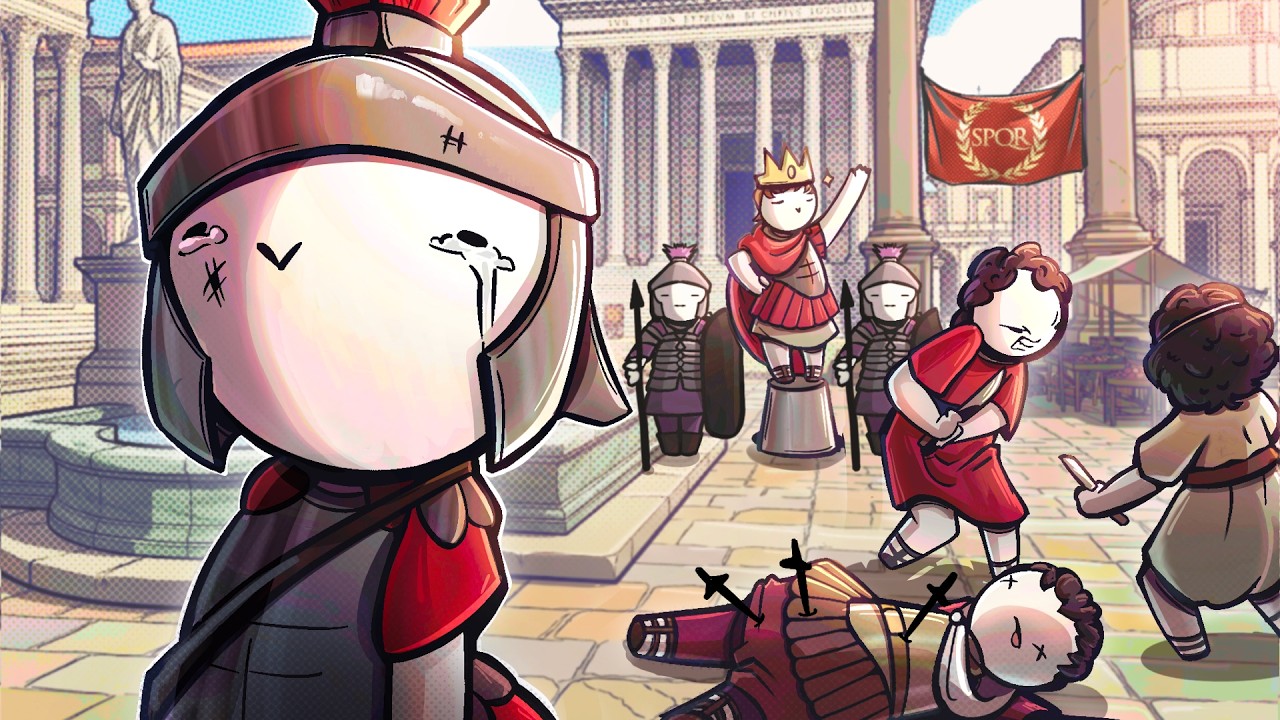
Health is truly living. By this big definition that I just came up with, it would be hard to simply look at a population and judge health. Looking around here, who would you say is healthy?
01:08
Speaker A
Is this person healthy? Is she? That guy's on the floor, he's probably not doing so hot.
01:12
Speaker A
We tend to think too much is if we don't have a disease, [music] we're healthy, and that's just not the case. Cuz health is something that is so precious. Once we lose it, we regret it. He with his
01:22
Speaker A
health has a thousand wishes. He without his health only has one. But while many aspects of health are invisible to the naked eye, there is one aspect that has persistently caused health prejudgements time and time again, weight.
01:37
Speaker A
Which one of these dolls is statistically more likely to suffer from a heart attack? It's this one. She's a little heftier, I don't know if you can tell. I bought this special, it did This is a stupid joke. As I'm sure no one
01:46
Speaker A
needed me to buy several children's toys in order to explain, weight and lack thereof are an extremely volatile topic of discussion. Both in person and online, the topic can be a very uncomfortable discussion about preferences laziness guilt blame
01:58
Speaker A
etc. What I want to understand is why. What's the big deal with being fat?
02:02
Speaker A
Hey David, don't say fat. That's insensitive. Yeah, I thought it sounded kind of harsh, too. But apparently, to some people, it's the preferred term.
02:10
Speaker A
what word do you you guys feel comfortable with? We've been using fat for 57 years, so Fat's okay to use?
02:16
Speaker A
Okay. Yes. But see, okay, but how many people are fat? You guys wait, such a touchy subject.
02:21
Speaker A
How does our view of fatness affect our health for the better or for the worse?
02:24
Speaker A
And can everyone have a healthy body, by the way? And before you ask, no, I'm not at all concerned about discussing this highly volatile topic.
02:33
Speaker A
Let's get started. Why do I have a pervasive feeling with you that no matter what I do or what I say, it's not going to matter? You have the ability to shut up and focus and do the work.
02:49
Speaker A
If you grew up in the 2000s, then you remember what it was like to feel fat, no matter what size you were. It seemed that losing weight and diets were the only thing that people could talk about on television. Now, did that have to do
02:58
Speaker A
with the fact that it was cheaper to make reality TV in a housing crisis? It may have been, but that's a separate discussion. They were in commercials, the magazines, the billboards. Do you remember that one episode from your
03:07
Speaker A
favorite show growing up where one of the main character girls felt like she was fat and then they fixed body dysmorphia in about 30 minutes or less?
03:13
Speaker A
This isn't the 2000s, but I will never forget that one episode of Full House where DJ, who was 13 at the time, was trying to fit into this swimsuit for a pool party she was going to and almost
03:23
Speaker A
died. Of course, none of this started in the 2000s, but that's roughly the generation that I and most of my audience grew up in. And it's a lot easier for me to do my research if I choose to believe that old people don't
03:32
Speaker A
exist. Speaking of growing up, I'm sure we had our own weird relationship with health and wellness as kids. I was a fat kid growing up, a fact that pretty much every immigrant adult I interacted with from the ages of 5 to 13 was happy to
03:42
Speaker A
remind me of. What are you insecure about, mijo? You can tell me anything. I wish I wasn't fat.
03:47
Speaker A
I'm going to call you gordito. That's your nickname forever now. That means fat in Spanish, by the way. I loved food.
03:55
Speaker A
It was really good. Plus my mom was the type to be watching Dr. Oz when I came back from school, and she would try to convince me that you could replace French fries with burnt oily sweet potato sticks, and no,
04:04
Speaker A
obviously you can't do that. It's basically the same thing. No, it wasn't. It will never be the same thing, and I am so glad that that doctor got sued or indicted or jailed. I don't know. I don't know what happened. All I know is
04:15
Speaker A
he got into some sort of legal trouble with the show, and I choose to believe that it was because he tried to convince people that you could replace ice cream with Greek yogurt and honey.
04:21
Speaker A
My parents used to get on me about weight all the time growing up. I remember vividly one time I was like maybe 8 years old, and I was watching TV and Taylor Lautner was on the screen, and my dad walked in and aggressively
04:33
Speaker A
started pointing at the screen and telling me he wanted me to look like that. It was a very confusing moment in my childhood. But I agreed with him though. I wanted to be fit and muscular.
04:41
Speaker A
I remember about that time it was my dream to work out like crazy during the summer and then come back to school super jacked, not understanding that as a fourth grader there's only so much level of jacked you can get, but
04:50
Speaker A
I I dreamed about it. It was like a real fantasy of mine. Oh David, you're the most muscular fourth grader I ever saw. Just look at your arms. I mean, can I can I feel it?
04:58
Speaker A
That's really impressive. What would you call that muscle? It's like the left It's the centermost part of your arm. I don't really know what it's called because we wouldn't know that much about human anatomy yet because we're 10 years
05:07
Speaker A
old. I just know that it's cool. That's very nice of you, Sally. Well, of course in real life the name of my childhood crush was Oluwafunmi, but if I don't give you a stereotypical white girl name, the audiences aren't going to
05:15
Speaker A
understand that I'm making reference to the fact that we were extremely young at the time.
05:19
Speaker A
making meta commentary. It's so much easier than coming up with actual jokes. You just did it again.
05:23
Speaker A
You really get me. Sense Media report from 2015 found that a third of 5-6 year olds choose a body size they think is thinner than they are currently as their ideal body type. By age 7, one in four kids has done some
05:35
Speaker A
kind of dieting behavior, and that 48% of 13-17 year old girls wish they were as skinny as models they saw in fashion magazines.
05:42
Speaker A
to try a lot of random diets when I was a kid back when I didn't understand that you can't lose 10 lb in 3 days. For example, for a very brief period, I tried something called the military diet. Hands down the worst 36 hours of
05:53
Speaker A
my life. Boy, am I hungry. I can't wait to eat my lunch for the day.
05:58
Speaker A
[crying] [laughter] Just imagine I'm 11 in this skit, by the way. But there was good reason behind this anti-fat messaging from parents and media. Granted, much of it was due to aesthetics, but again, it is a health issue.
06:16
Speaker A
So, we know that the risk of type 2 diabetes is increased in overweight children. We know from a study that the life expectancy of a child who has type 2 diabetes is dramatically decreased by probably something in the order of 15
06:28
Speaker A
years, and they'll experience severe complications by the time they reach their 40s. This is not something you would wish on any child.
06:35
Speaker A
so happens that's what happened for me. My eating habits from childhood carried on into my teenage years, and then thanks in part to the pandemic, at my heaviest, I think when I was 18, I was about 240 lb. I was considered medically
06:45
Speaker A
obese, and I was diagnosed with pre-diabetes. Thankfully, I took the warning seriously, started going to the gym, ate better. I'm doing much better today.
06:51
Speaker A
Now, while that is the end goal, to get a kid who's not making the right decisions to start making better ones, it's a delicate path. It's not as simple as trying to make being fat look bad and dumb and lazy. In fact, that can
07:03
Speaker A
backfire. One paper found that when you show overweight and obese women weight stigmatized television and movie clips, they'll consume more snack foods. It requires a gentle touch to broach this topic, and frankly, I don't necessarily know what the exact right way to do that
07:15
Speaker A
is. However, I have a pretty decent idea of ways maybe not to do it.
07:19
Speaker A
Sister name was Denise. She died of obesity at 25. She had a heart attack.
07:24
Speaker A
I was so fat and nasty. I would eat anything. I was like 345 lb. A quart of ice cream every hour. I had so much self-hate when I was like that. I just wanted to kill myself. [music] That is the funniest ad that has ever
07:36
Speaker A
been made. If you want the public to stop doing a bad health thing, a tried and true method is to make that thing look bad. I can't remember which video it was, but I've talked about it before, those truth
07:45
Speaker A
ads that they used to put on Nickelodeon about smoking. I don't remember a single statistic from any of those ads. All I remember is that's metal in your lungs.
07:53
Speaker A
I guess it worked. So, you try the same thing. If you want people to stop being overweight, just make being overweight look bad. But, I think the reason you can do this effectively with something like smoking and not as effectively with
08:03
Speaker A
something like weight is because smoking is something you do, but your weight is something you are. It's nice to think that if I just stop being the way that I am that I would be healthier. But, to stop myself from looking the way that I
08:14
Speaker A
have looked my entire life up to this point. Now, that's a nice idea in theory, but it sounds so scary and frankly just seemed impossible. less like an attack of an action, it feels more like an attack on me. And while
08:26
Speaker A
this should primarily be a health issue wanting to see ourselves and others enjoy living, it's become so much more than that. And not just for people who specifically grew up in the 2000s, it's for all people.
08:36
Speaker A
Emma McClendon, an associate curator of the Fashion Institute of Technology in New York commented on how whenever people would look at their exhibit of historical fashion, no matter what period it was, guests always wanted to know what size
08:47
Speaker A
the outfit would be in today's terms. She acknowledges that as a society and a culture, we have tied our size to our identities as people.
08:54
Speaker A
Yes, while on paper this should only be a health issue based on facts, it is simultaneously an identity issue based on feelings. And while there is much, much, much that can be said about adults today who grew up in that generation and
09:06
Speaker A
now fear being fat because it's the worst thing you can be and if you're not skinny, that means you're lazy and stupid and dumb and less than a person.
09:12
Speaker A
That's a whole different category. I didn't research that. I want to discuss what happens at the complete opposite end of that spectrum. When someone who grows up in that environment now says, "Yeah, being fat is awesome." You've probably heard the phrase body
09:29
Speaker A
positivity and if you're anything like me, you've probably heard that phrase shortly followed up by an angry man in a gym outfit who stitched a video on on topic and is now about to yell about how it's not real. At its core, the idea is
09:39
Speaker A
sound that you should appreciate the body you live in no matter what shape, size, or type it may be currently. This approach could lead to increased self-esteem, better confidence, better mental health. And it can make it easier for a person to pursue a healthier
09:50
Speaker A
lifestyle if they do so from a place of love and not just hating their body and themselves. You may also be familiar with the term healthy at every size or HAES, the idea that a person can pursue health without the sole purpose being to
10:02
Speaker A
lose weight or it being weight driven in any way. any person of any size can reach out to improve their health in any number of other ways.
10:09
Speaker A
Again, the decreased stress of a person hating their bodies combined with the fact that an approach like this could limit someone's chances of developing an eating disorder. Now, those benefits cannot be easily dismissed.
10:19
Speaker A
There are a number of misconceptions. One of them would be that the movement is saying anyone can be healthy at any size. And it's really not saying that.
10:27
Speaker A
The big idea is that we can pursue health by means other than weight loss.
10:33
Speaker A
You know, it's really not promoting anybody changing at all. If that happens, it happens. If we hate our bodies, we typically don't [music] treat them very well. So, usually if we have more self-acceptance, we do tend to have
10:47
Speaker A
better self-care habits, and that really just promotes our health in general. However, to be clear, neither of those concepts are actually saying it's possible to be considered healthy at any size. It's kind of implying it if you don't think about it too hard, but it
11:01
Speaker A
they never explicitly say it. You can both be pursuing health while not being healthy. It's like if a person that vapes goes on the occasional jog, it's not like one cancels the other. Both things are true at the same time. This
11:13
Speaker A
is where I think things get murky because I think we can all agree that a fat person is still a person. And if you don't, I I'm I can't save you from that.
11:22
Speaker A
But where this discussion gets most interesting to me is when someone is complaining about body positivity or fat activists or healthy at any size or anything in that category. When you're trying to make someone seem healthy and perfectly fine no matter what size they
11:34
Speaker A
are. And I think this point was perfectly put on display with that Cosmopolitan cover from a few years ago.
11:39
Speaker A
Cosmo ran this story a few years back about 11 women with an unconventional fitness background, and they did covers with all of them, and it included the infamous tagline, "This is healthy." Not, "This is pursuing health." Not, "This is trying to be healthier." This
11:52
Speaker A
is healthy. And it received concern and backlash from a lot of people. issue of Cosmopolitan has been branded horrifying and shameful. I think it is irresponsible to be celebrating obesity in the middle of a pandemic where we know obesity can kill you.
12:08
Speaker A
What's interesting to me is that in defense of this cover, really on this topic of coinciding fatness and health in general, the answers given seem to avoid the heart of the question.
12:17
Speaker A
Because you describe yourself as bigger, I don't know, would you fall into the obese category? Right.
12:22
Speaker A
And guess what? I mentally, I'm much more healthy, I'm happy, I'm confident in myself, and mental health is imperative as well.
12:30
Speaker A
We'll come back to that point in a second, but first I want to discuss the names thing again. Why exactly shouldn't I say obese?
12:37
Speaker A
I'm going to do my best to not use the O word because I find it pretty offensive, so I'm going to use fat-bodied. Do you understand why people find it harmful and triggering?
12:46
Speaker A
Overweight and obese is literally just having too much body fat. It has nothing to do with the quality of the person.
12:52
Speaker A
interesting is that those in the fat community prefer the term fat because it can be used in a neutral way, but a lot of them don't like the term obese because it's offensive. In fact, on more than one occasion while reading articles
13:05
Speaker A
on this, I saw the word obese like asterisked out or blurred like it was a swear word in a 1950s cartoon. And it's not just adults. A study from the UConn Rudd Center for Food Policy and Health found that young people don't like for
13:16
Speaker A
their parents and other adults to use words like fat, large, and extremely obese while discussing weight. Which is ridiculous to me because you needed a study to figure that out? It was someone's full-time job to find an answer to that burning question. But
13:29
Speaker A
that's not all. Apparently, they also found that kids don't like phrases like mega fat fatty, gargantuan, chubbers McChubbs. That research grant money's being well spent, I see. Good work, gentlemen. And I get it. When I was younger and I was fat, I didn't like for
13:40
Speaker A
adults to refer to my weight just any kind of way. And it also didn't make me feel good when adults would try and wash away all my pain caused by other people making fun of me with one catchy slogan.
13:49
Speaker A
Remember, sweetie, "Sticks and stones may break my bones, but words will never hurt me." Mom, are you stupid?
13:55
Speaker A
But why is that? Why do you have to dance around the subject with a cacophony of words?
13:59
Speaker A
Because most people think the original word is fat, but that seems kind of rude, so you try and come up with something gentler like overweight, then obese, then plus size, then heavy, then large, then big. Or you can take the
14:08
Speaker A
approach of the Obesity Society, which insists on the use of person-first language at their events. So, instead of saying an obese person, you would say a person living with obesity. That's a mouthful right?
14:16
Speaker A
Like I get the definition, the reason you do it. They're people first. Yeah, but like in practice, it feels like coddling at best and mocking at worst.
14:24
Speaker A
Like I get that on a stage or in an official document, but if I was walking on the street and I was talking to a stranger and they used the phrase a person living with obesity, in my mind I
14:33
Speaker A
would just be thinking, "Wow, you're an annoying person, Archie." Why does it seem like the most correct and polite word to use is always a slightly different one?
14:41
Speaker A
it's an example of what happens to almost every word describing a touchy subject. Let Them Talk TV has a great video explaining this concept.
14:47
Speaker A
But nowadays, you would never call somebody with a disability as lame. Over time, the word lame acquired negative connotations. So, in the early 19th century, they came up with a kinder, more respectful way to describe a person with a disability. [ __ ] [ __ ]
15:05
Speaker A
became taboo, so they coined a new, kinder word, handicap. Handicapped fell out of favor to be replaced by disabled.
15:13
Speaker A
This is a perfect example of the euphemism treadmill. Steven Pinker coined the term in his 1994 New York Times article all about the politics of names. In addition, he pointed out how most people forget where a word specifically derives from and
15:27
Speaker A
only think about it in terms of the thing it symbolizes. For example, when you think of the word breakfast, you're probably thinking about the foods you eat in the morning and not about how you're breaking a fast of the past 8
15:36
Speaker A
hours that you didn't eat during sleep. So too with fat or obese or overweight or a person with obesity or chunky or lumpy or whatever word is going to be next. The problem isn't the word, it's the stigma the word will get because of
15:48
Speaker A
what it's representing. And because of that, you get changes to terms need to be changed and that sometimes the people being described by that term, they don't want it to change. Steven Pinker pointed out in his article about
15:59
Speaker A
how at the time there were some who felt the term should be changed to individuals who cannot hear instead of deaf people and how some deaf people didn't like that. It's not the word, it's the connotation of the thing being
16:10
Speaker A
described. And so what exactly is the connotation of the thing being described in this case? Generally speaking, bad. You're an adult, you know. I mean, they could be considered to be too lazy, lacking ambition, not disciplined enough. There's a laundry list of things
16:24
Speaker A
you can put there. Of course, it would be absurd to say that just because a person is overweight or fat, he is automatically these things, but it's still there. It's a nature versus nurture discussion. What makes a person
16:34
Speaker A
fat? Is it a moral failing? Do they not have the self-control, the willpower to get their life in order? Or is it the environment of calorically dense, cheap, processed food combined with the pressures and stresses of daily life
16:43
Speaker A
that force people to be fat? In some ways, yeah. A 2015 study revealed that people are 10% heavier today even if they eat and exercise the same amount as people did in the '80s.
16:57
Speaker A
The reason it was easier for people to be skinny in the 1980s is because of several hidden factors, chemicals, pesticides, flame retardants, types of drugs [music] that we're taking, the microbiome changing.
17:07
Speaker A
However, it seems that no matter what the actual reason, even if it is valid, the connotation is always there. And you know it is because it seems like everyone is trying to avoid the word.
17:15
Speaker A
Samantha makes the point that she might technically be in the obese category, but she exercises regularly.
17:21
Speaker A
You consider me obese? I wouldn't say that you're obese, but it's like like medically I've been medically obese since I was like 12 and I was not obese.
17:27
Speaker A
If you look at me, you would be like, "Oh, she's a little plus-size." But I am technically considered obese.
17:32
Speaker A
You're not exactly slim yourself, right? Well, okay, I'm 220 lb and I'm 6'1", right? You're 5'4" and you're 380 lb.
17:37
Speaker A
So, there is a difference. I'm not morbidly obese. Right, but you're still fat, too.
17:40
Speaker A
As if the term was synonymous with bad, people try to qualify it as they explain it.
17:45
Speaker A
Yeah, I'm technically obese, but I can still do XYZ. And technically, I did that earlier when I explained how when I was overweight, I was considered medically obese as if to say like, "Yeah, on paper, yeah, technically the
17:57
Speaker A
doctor said I was obese, but like in real life, you wouldn't have said that about me." Even people with the best of intentions who try to make fat people feel better about their weight still put a spotlight on the weight itself. In
18:06
Speaker A
their kindness, they're perpetuating the idea that fat is obviously something inherently bad, and you need the positive comments of strangers in order to feel better about yourself.
18:15
Speaker A
Like, it's kind of a joke now, but people leaving comments of healthy body, by the way, "You're so brave for posting this." I'm glad to see the comments are being nice.
18:22
Speaker A
you smell really good. All of these compliments have an air of like, "Yeah, you're still fat and nasty, but at least you have all these other appealing qualities about you." I also love when people give historical references as if it changes anything
18:33
Speaker A
about living in present time. You know, Cathy, there's no reason for you to feel bad about your weight. Did you know thousands of years ago the Greeks used to worship goddesses who [music] looked just like you?
18:41
Speaker A
I don't live there. Well, yeah, but if we did, then people would actually like the way you look instead of, you know, right now, the time period we live in currently.
18:50
Speaker A
You're just substituting for the regular school counselor, right? No, I'm actually full-time now cuz um funny story about that other guy, he died. I just [laughter] I swooped in, I took his job. I don't know. It's I'll tell you, man, life on the big blue
19:04
Speaker A
marble it's Hey, you and the Earth, you got that in common. That we're both wearing blue?
19:09
Speaker A
Guess again. Another thing that complicates the issue is that beyond it being already a health and an emotional matter, it's also a civil one.
19:17
Speaker A
Would you say that it should be against the law to discriminate against people based on their body size?
19:21
Speaker A
Unquestionably. So, why don't we see more fitness and wellness advocates asking for that? That woman is Tigress Osborn, executive director of the National Association for the Advancement of Fat People, also known as NAFA. No, I also didn't know
19:33
Speaker A
that was a thing before I started this video. Fun fact, NAFA was founded in the '60s by a New Yorker named Bill Fabrey because he was angry about how people would treat his wife due to her weight.
19:41
Speaker A
Society tries in every way possible to make you feel like an outcast. And at this convention, you're with people of the same size and smaller who at least treat you in a humane manner, and you feel like a part of a community.
19:56
Speaker A
This is great. Now, if you want to look into the history of NAFA, I wouldn't. I didn't get far, but where I did get was unsettling, and it was a great reminder that sunlight is all around us, and
20:06
Speaker A
maybe I need to feel that on my skin a little bit more than I do. Dicey history aside, the main thing you need to know about NAFA is one of the wacky ideas that they stand for is that fat people
20:15
Speaker A
should be considered people, which is like, yeah. Okay, in all seriousness, the basic idea of NAFA isn't crazy. Of course, fat people, man, it feels really weird to keep saying that. Fat people deserve to be treated like human beings.
20:26
Speaker A
And they shouldn't be mistreated just because of their size. But it always seems to come back to that idea that being unhealthy makes a person a bad person. Like respect as a human being should be considered an independent
20:37
Speaker A
issue from that. But the problem is when it goes beyond respect, and it starts to downplay the adverse health effects that come from being in that condition. And for me, that's perfectly symbolized in the NAFA annual convention, Fat Con.
20:49
Speaker A
That's the official name. Hi, everyone. It's Tamra Lamise, your favorite social media director of NAFA, the National Association to Advance Fat Acceptance. And we're here live at Fat Con 2026.
21:11
Speaker A
[music] Look, I don't know if I was fat enough to be in the club before. I know I certainly don't qualify now. But as someone who grew up with meat on my bones and I was the fattest kid in my
21:22
Speaker A
family and I constantly felt insecure about my weight, I can say definitively this would have been terrible for me.
21:28
Speaker A
Because I already felt that being fat was part of my identity and that I couldn't change. And if I was 18 years old and at my heaviest and I chose to just believe that that was the case and
21:36
Speaker A
there was nothing I can do. Even if I did that with a positive spin, I would have never changed and I would be a diabetic today. To be clear, I also think it would be extremely weird if there was such a thing as skinny con.
21:47
Speaker A
Because what would you be congregating over? What is there to celebrate? I just find it odd to tie so much of your personality to your weight. Whether you're doing so positively or negatively because you're underweight, overweight, or average weight. Because this isn't a
22:00
Speaker A
culture, it's a health concern. Anything beyond that should be secondary at best or irrelevant. And I'm sure many of the people who attend, they probably have low metabolism or underlying health conditions or bad genetics. I'm not saying anything on those things. I just
22:15
Speaker A
think the optics of this are less than favorable. However, there's only so much you can discern through a screen. And I'm thoroughly dedicated to the pursuit of truth and navigating our strange world. So I, David So, am going to get a
22:26
Speaker A
ticket to 2027 Fat Con and see this live and in person for myself. These tickets are up to a thousand dollars? I'm not going to that.
22:36
Speaker A
GLP-1 stands for glucagon-like peptide 1. It's meant to mimic a hormone your body naturally has and then it does some science stuff that helps with the process of how your body breaks down carbs and uses sugar for energy. Of
22:46
Speaker A
course, none of that matters because most people just know it as the magic skinny potion. It was originally marketed as a diabetes treatment, but it was later observed how it could help with weight. In addition to both of
22:54
Speaker A
those things, the FDA says it could be useful for people with cardiovascular issues. And even more than that, it just seems to be good at everything. One of the really interesting impacts they have is a profound effect on any kind of
23:07
Speaker A
compulsive behavior. A lot of people who take these drugs report that they lose interest [music] in things like drinking, smoking cigarettes, gambling.
23:14
Speaker A
They basically stopped binge eating sugar overnight. But I essentially also reduced all of my other bad habits.
23:19
Speaker A
Pretty much universally, I've never heard someone have a negative experience with them. Does it make you fly, too?
23:24
Speaker A
Regarding weight loss though, GLP-1 seem to have a weird air to them. There is more than enough discourse about rich people abusing the drug for purely cosmetic purposes. But there's also a weird vibe about overweight people using it sometimes. For some people,
23:37
Speaker A
it kind of feels like cheating. Cuz I guess like we talked about earlier, being overweight kind of has an aura of laziness to it. Because the only way an overweight person could become that way is because they were too gluttonous or
23:46
Speaker A
they lacked the self-control to stop eating so much. And that they're too lazy to exercise and that now they're taking this drug to just solve their problems instead of pulling themselves up by the bootstraps or something. I don't know. Obesity is bad for health.
23:56
Speaker A
You are more likely to be diagnosed with diabetes at every age if you are obese.
24:00
Speaker A
If all the adverse effects of being overweight came from a drug, we would all agree that that drug should be off the market, kept away from kids, and everything should be done in our power to help people to get off of that
24:12
Speaker A
substance. But you turn it back into a weight issue and all of a sudden for a lot of people have like an old-timey pioneer attitude about it.
24:18
Speaker A
whether a population of people has more deaths in it than it has. GLP-1 seem to be the first easy weight solution that could turn the tide on American obesity.
24:27
Speaker A
Is there something a bit off-putting that the only way we can make the population healthier is if we give them more drugs?
24:33
Speaker A
Well, sure. But we're well past the point of having ethics about creating a potentially dystopian society. Why stop now?
24:38
Speaker A
But this does not make it a miracle cure that solves all our problems. Because a person has to consider, "Am I going to have to stay on these drugs forever?" And they're not cheap, especially without insurance. And obesity is a disproportionately poor
24:49
Speaker A
person problem. Would it be worth it to pay thousands of dollars out of pocket for a drug that I may need to use for an indefinite amount of time? Does Ozempic have a theme song? This was a line I'm
24:58
Speaker A
sure I meant to finish in the script and I never did. The only thing I can think of oh oh oh Ozempic. That doesn't sound right. Isn't that Humana though? Nothing is everything.
25:09
Speaker A
Oh oh oh oh Riley auto parts [music] To be clear, I do not think skinny is always healthy and should be the goal for everyone. I had a whole segment in this video where I was going to talk
25:23
Speaker A
about the opposite side of the spectrum and about how being skinny online kind of like has a cult-like presence. I was going to make a bunch of references.
25:29
Speaker A
We're going to talk about skinny talk and all that. But I've tried to write this video several different times and I can't do it anymore. I'm tired. I have stared at the script for hours and I just I've not been able to get it to
25:42
Speaker A
work. What I'm learning about this topic and others like it is that they have to do with some really deep emotions. The definition of specific words and phrases and the meanings of arguments you use, they don't matter as much as they feel.
25:54
Speaker A
On both sides of the spectrum, it seems to be more of a discussion of preferences and opinions instead of true health and wellness. And it just gets dumbed down to you're on this side or you're on this side. Back to the intro
26:04
Speaker A
of health and defining it and stuff. I think health is a metaphor for maturity in life. Because it's private and it's not about how it looks to other people.
26:12
Speaker A
It's about the quality of life that you get to live and you do it for nobody else except yourself. It's about [music] being able to spend time with your loved ones and being able to have experiences that only a healthy person can have.
26:22
Speaker A
When done well, health isn't something that you need to prove and it's not a summation of whether or not a person is good or bad. Health is about living and it's not something that we can avoid.
26:32
Speaker A
It's something we can ignore, but at the end of the day, who we are and the life we get to live is in great part determined by the health that we have.
26:40
Speaker A
We are our health. So to be obese, to be skinny, to be completely dedicated to your own desires and your own preferences and to be completely dedicated to the desires and preferences of the people around you. But both of
26:52
Speaker A
these extremes can lead to health problems and in some very unfortunate cases untimely death. So, it comes down to asking what do we want? What matters the most?
27:02
Speaker A
What is health? Your answer to that question may just determine what kind of life you have. Also, there was an alarming amount of people who have just a terrible level of fitness. How highly do you think you could score on the pacer test right now?
27:16
Speaker A
I feel like everyone should be able to do at least a 10 and if you can't, that's probably bad. You know what else is good for your health? Finding a quality razor.
27:25
Speaker A
Shut up. I've never done an end roll ad before. ages of 14 to 19, no matter what I did, every time I shaved, I messed up my neck. Bumps, cuts, rashes, the plague. Every single time, no matter what I bought, aftershaves, creams,
27:37
Speaker A
balms, mysterious green liquids, all of them, they didn't do that much. And I got so frustrated that by the time I turned 20, I just decided I'm giving up.
27:43
Speaker A
I'm just going to grow out my beard, which turned out to be an amazing idea because this is a much better look for me. Nevertheless, I was very turned off from the idea of trying to shave or clean up my beard at home because I just
27:53
Speaker A
didn't want to irritate my face. But then it occurred to me that yes, my skin is sensitive, but also it probably doesn't help that I keep buying a multi-blade plastic razor from the dollar store in a 100 pack. You see, for
28:01
Speaker A
many people, that irritation is a result of poor design. A lot of modern razors use springs and flexible blade mounts.
28:06
Speaker A
It's convenient, but this can cause the blade angle to change mid-stroke. And while it may accomplish the role of removing hair from face, it does so unevenly and unpredictably. And as we mentioned, it causes irritation for many men. Now, you can get around this by a
28:17
Speaker A
number of quick fixes, but if you really want to get to the heart of the issue, you have to solve the main problem, the design. The best solution is a razor design that keeps the blade rigidly supported and at a consistent angle,
28:28
Speaker A
which is why I was very interested in trying out today's sponsor, Henson Shaving. It's a single blade razor designed by aerospace machinist who engineered it to be at just the right angle for cutting. While the blade itself is flexible, the way it should
28:37
Speaker A
be, the razor holding it is designed to be rigid and sturdy. The blade is fully supported and exposed the exact right amount. Now, I'll be honest, when I was first looking into Henson, they kept emphasizing how this cutting angle is
28:46
Speaker A
like really good for you and even I thought it was a bit overblown, but then I actually used it. I completely get it.
28:51
Speaker A
Because I was also worried I was going to cut myself because, you know, razor blade. But the way it's designed, it easily removes hair, it's so smooth across your face, and it would take a lot of effort, I think,
29:01
Speaker A
to find a way to cut yourself with this razor. It's a solid build, a comfortable shape, and never once did I fear I was going to carve a chunk out of my face, which is a very important thing to me
29:09
Speaker A
when I'm holding a razor close to my neck. If you want to try out Henson today, go to hensonshaving.com/davidajew or use code davidajew to get 100 free blades. That's 2 years worth of replacements for free with the purchase
29:19
Speaker A
of a razor. It's the end now. Usually, there's more video to go through, but it's like over.
29:24
Speaker A
This is weird. Wasn't this such a worthwhile purchase? I purchased $100 worth of dolls so I could make this video. Yes, and it clearly paid off because these jokes are definitely worth the money, time, and investment into making them. I'm so glad we changed the
29:37
Speaker A
script heavily so I didn't get to utilize all the dolls I purchased to their fullest potential. And it's totally normal that I'm a grown man that just owns this many Barbie dolls now with no use for them. I too am glad at
29:47
Speaker A
this wise financial decision. I don't know if you guys can tell, but I wasn't joking about that last part.
Topics:healthweight stigmafat acceptancediet culturebody imagechildhood obesitytype 2 diabetesGLP-1OzempicWHO health definition

Get More with the SozAI App

Transcribe recordings, audio files, and YouTube videos — with AI summaries and speaker detection. 30 minutes free.

Or transcribe another YouTube video here →