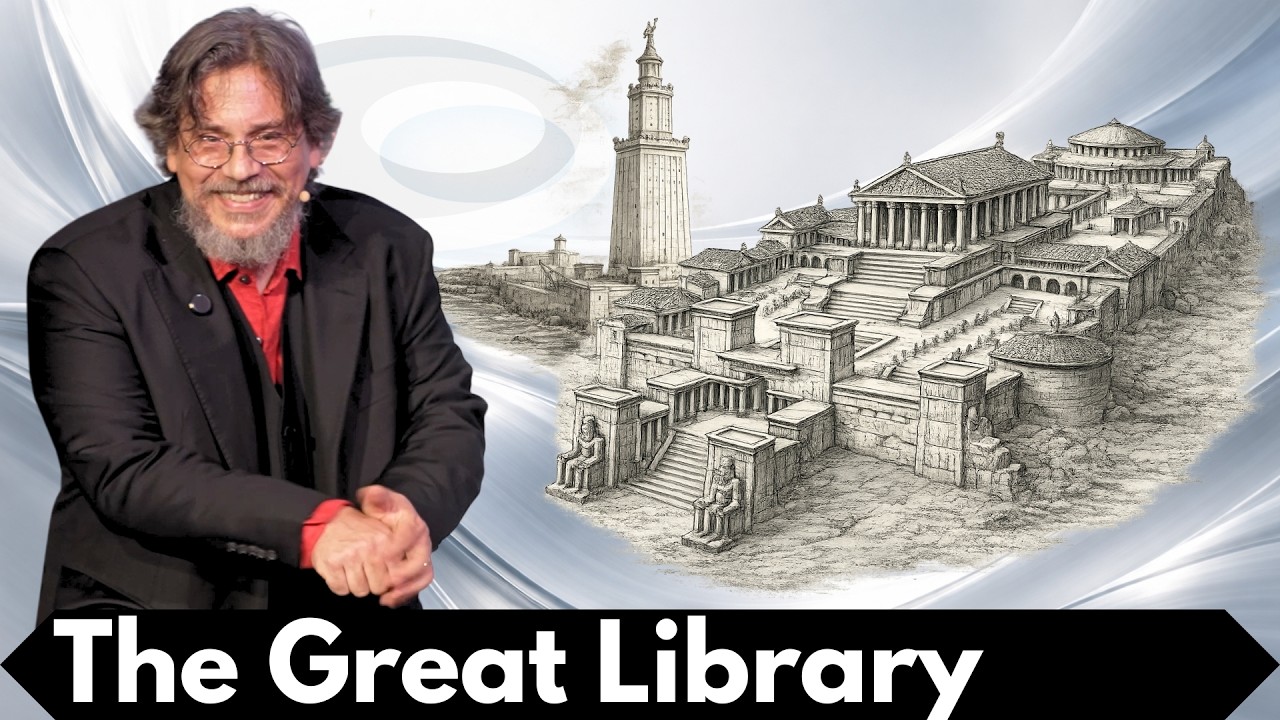
Jay Dyer discusses his journey from Baptist to Catholic to Orthodox Christianity, the neglected first millennium of Church history, and Byzantine civilization, with Tucker-style conversation on Wester
Key Takeaways
- Orthodox Christianity is presented as the most authentic continuation of the first millennium Church.
- Western education neglects the first thousand years of Christian and Byzantine history.
- Medieval institutions and science are undervalued in mainstream narratives.
- Christian doctrinal foundations (Trinity, Christology) shape civilization's character.
What the video covers
- Jay Dyer explains his path from a Baptist upbringing through traditional Roman Catholicism to Eastern Orthodoxy, a journey taking roughly 8-10 years.
- He argues the first thousand years of Christianity are largely overlooked in American education, which he characterizes as a 'black hole' in modern Christian understanding.
- Dyer praises the Byzantine Empire as highly successful and explicitly Christian, while noting it still fell to usury, degeneracy, and nationalism.
- He contends that medieval contributions such as universities, hospitals, and early science are commonly misattributed to the post-Enlightenment period.
- Dyer describes reading Eastern Church Fathers (Cappadocians, Maximus the Confessor, John of Damascus) after focusing on Latin fathers like Augustine and Jerome.
- The discussion emphasizes the Trinity and Christology as foundational doctrines that shape society and Christian practice.
- Dyer contrasts Orthodox worship (Eucharistic offering) with Protestant views and touches on Calvinism and the Scripture canon's formation.
- Segments explore broader geopolitical and historical themes, including banking families, media, and Cold War propaganda, reflecting a conspiratorial framing.
- The conversation is an interview format with Tucker-style questioning, with the host seeking Dyer's perspective on religion and history.
- Content mixes historical and theological commentary with speculative claims presented without rigorous sourcing.
Chapters
- 00:00Introduction and Journey to Orthodoxy
- 06:00First Millennium and Church Fathers
- 12:00Byzantine Empire and Western Education
- 20:00Orthodox vs. Protestant Worship and Scripture
- 30:00Historical Power Structures and Banking Families
- 40:00Media, Culture, and Cold War Propaganda
- 55:00Esoteric Movements and Counterculture
- 65:00Logismoi and Spiritual Discernment
Full Transcript — Download SRT & Markdown
Speaker A
Jire, thank you very much for doing this. I have a lot of questions to ask you, but I want to begin with orthodoxy. You are one of the most visible and maybe effective evangelists for orthodoxy, Christian orthodoxy, certainly in your age cohort, maybe in
Speaker A
the country. You're Orthodox. Why are you Orthodox? What is Orthodoxy? I am Orthodox because I went through a long journey trying to figure out what authentic Christianity is. And so I was raised Baptist that took me eventually into Catholicism when I was about 20 21.
Speaker A
I think I read St. Augustine City of God. I read a bunch of his other works and I thought, well, Baptist isn't right because I'm finding in the church fathers all these teachings that are not Baptist. And so that kind of gradually
Speaker A
took me in the realm of traditional Roman Catholicism. I did that for a long time. And as you get into, I think, the more recent problems of Vatican 2, post Vatican 2 theology, that led me to the question of how do I reconcile this with
Speaker A
what I know the first thousand years of Christianity teaches. So long story short, it took me about eight or 10 years. I finally came to the Orthodox Church about 10 years ago. So that's the simplest, quickest reason is cuz I think
Speaker A
first thousand years of Christianity, I think to most modern Christians, certainly American Christians, that's like a black hole. What does that even mean? The first thousand years of Christianity.
Speaker A
It's an area that we're not taught. I know that when I went to college, the only thing that we talked about from that whole period was like Augustine's confessions and maybe maybe one other book or two.
Speaker A
Then we have something called the dark ages and nothing happens. Nothing about Bzantium. [laughter] didn't even exist. And then like these people called the Medici make a ton of money in Italy and start funding beautiful art and that's the beginning
Speaker A
of civilization. So I and and I remember at college I was like pressing the department like why don't we study some medieval stuff some Byzantine stuff and they were like why should we? We don't care about that Christian stuff. So yeah I think there's
Speaker A
probably a little bit of an intentional desire to suppress that for I mean American education I think is pretty much brainwashing. So, so but one sentence this might take between Constantine in the 4th century and the Renaissance you had
Speaker A
Christian civilization. The most successful empire in history is the Byzantine Empire from Constantine all the way up until you know the fall of Bzantium to to the Muslims. So why why do you say it's the most successful? That's a common sort of
Speaker A
academic assessment just in terms of their they flourished on a gold standard for a really long time. They started clipping the gold money clipping like the Roman Empire in the west had done before them and other empires. So they
Speaker A
they fell prey to usery as well. Yeah. So they fell to a lot of the same issues that empires tend to fall to human weakness and weakness like recognizable stuff degeneracy all of that. Also, rabid nationalism had a tendency to break down
Speaker A
empires as well. Um, I like Spangler and I think if you read Oswald Spangler, he talks about how there's kind of a life cycle, but I think the unique aspect of the business empire was that it was explicitly Christian based on Orthodox
Speaker A
Christianity. And so, in many metrics of what it is to be successful or flourishing, it flourished. But it did fall. I think again I'm not trying to measure Christianity just on worldly success, but I do think it does play out
Speaker A
in that way at times, right? If you're if you're really based around Christ, if you're if your theology or civilization is logoscentric, then it's going to play out that way. You're just going to prosper because you're aligned with
Speaker A
what's true. You're aligned with that transcendent source. So anyway, for me, that journey ended up being eventually Orthodox Christianity.
Speaker A
So, but just really quick back to the Byzantine Empire. Did you know it existed before or aware that there was a Byzantine Empire and know anything about its outlines?
Speaker A
Not many people in the West. Again, there is a very clear especially if you take humanities courses, you know, the way they're constructed in in college and in and maybe even younger private type schools like you go from you you do
Speaker A
the prescratics, you do Plato and Aristotle, and then you do Augustine, maybe a Stoic or two, and then you jump to Decart. So you skip that whole period and and not just to say Bzantium but also you know the Latin West was you
Speaker A
know explicitly Christian as well. I think that's it's intentionally overlooked. They don't want people reading what brilliant thinkers were doing in the middle ages because that's this where we get universities.
Speaker A
Universities come out of Bzantium. They come out of the west. So do hospitals. So some of these very fund science itself actually comes out of that whole period. So, but we are taught we think that no, these are all post
Speaker A
enlightenment, you know, post-scientific revolution developments. They're not. They're medieval developments. So, a lot of that suppressed. A lot of that I had to kind of just read and learn on my own.
Speaker A
I mean, medieval is an adjective, but also an epithet that's medieval by design, quartering somebody. The dark ages, they were dark. Like, that's all voltater that's all sort of an atheistic French revolutionary attack on what came before by design.
Speaker A
When did you learn that? Well, I was really interested in medieval thought, scholastic theology in college in my 20s. And so I was reading Aquinus and reading all these guys as I had all these atheist professors who were constantly debating with them. I
Speaker A
even did a I did a public debate my sophomore year with the atheist professor. So I would be reading all those guys, studying philosophy and history and then debating with those guys and then coming to, you know, my
Speaker A
own conclusions about that stuff through just reading. So interesting. I I keep interrupting your So that led you to orthodoxy?
Speaker A
Long story short, yeah, roundabout way, I went from traditional Catholicism in my 20s to eventually I took about 8 to 10 years to study orthodox stuff pretty intensely. So that would be because I'd put a lot of time into reading the the
Speaker A
Latin church fathers. So I was reading Jerome and Ambrose and a lot of Augustine's works and then I realized I've never actually read the Eastern Church Fathers. And if you get into church history in that first millennium that you talked about, you realize that
Speaker A
all the seven/8 ecumenical councils of that first millennium, they're actually all had in the east. They're all called by the the emperors, the Byzantine, they're not called by the pope.
Speaker A
Certainly the pope was either there or had liage there. So the west was represented but it was in its ethos. It was essentially eastern and eastern in its orthodox theology. So I I just decided to go on a long reading track of
Speaker A
reading all of those guys as best I could for many many years. So that would be like the capidosians that would be basil the two gregaries st of Alexandria St. Maximus confessor St. John of Damascus. Those are some of the key
Speaker A
figures in that millu of the first thousand years that set the tone of all of Christianity in terms of its most fundamental doctrines. The trinity and Christologology, right? That's that's what Christianity is. Those two doctrines are the key sort of lynch pin
Speaker A
that it all hangs on. So the first thousand years is dominated by those topics. And that in a roundabout way, a lot of people don't realize this either, that actually conditions what type of Christianity you're going to have, how
Speaker A
it's going to affect society, how it's going to affect your life. So, for example, if you have a very truncated version of say evangelicalism that's only based around just how you're saved, right? It's not going to affect society.
Speaker A
And so, those types of Christianities or I would say deviations, they're also very susceptible to being used by other groups. I know you just had a you had a guy on talking about evangelical Zionism and dispensational theology because that theology is sort of based
Speaker A
around an imminent, you know, end of the world type scenario. You sort of retreat and you're not able to create a vibrant cultural effect of Christianity. That's by design. People figured that out. They were very cunning a few centuries ago.
Speaker A
They realized that that's a kind of Christianity that could be useful. So that theology, which I'm not an expert in, but have heard a lot about in the last couple of years, is so totally incompatible with what the New
Speaker A
Testament actually says that it makes you wonder like what kind of church could fall for that. And it would be a church with a pretty thin theology and Exactly.
Speaker A
Right. And a structure that couldn't do anything about apostasy. And it's also antithetical to the Christianity of the first thousand years. And the reason I keep saying the first thousand years is that that's not just where we get these doctrines of the
Speaker A
Trinity and who Jesus is formulated, but we also get the Bible, the Bible itself comes out of decisions of church fathers centuries after the apostles.
Speaker A
Yes. So if we're going to have a church or a religion based on the Bible, we really already truncate Christianity because the Bible itself in our ethos is a lurggical document. It's actually part of a liturgy. It's not a personal
Speaker A
devotional book primarily. So to divorce it from that context, divorce it from the community that produced it is what produces sort of aberant truncated versions of the religion that make it susceptible to princes, foreign governments, NOS's, think tanks,
Speaker A
foundations. They become essentially tools of soft power, which is what I think much of the evangelical Protestant world today. Not indicting the individuals, but the groups, the denominations, they're very easily bought off. For example, very wealthy families in the
Speaker A
West about 100 years ago were able to buy off many of the mainline Protestant denominations and turn them into effectually NOS's.
Speaker A
just one example, the Rockefellers, and they're not the only family, but they're one of the families that invested very heavily in not just the UN, but also the World Council of Churches to create a sort of a supra international version of
Speaker A
the UN that would be for religions. And they were very explicit in their biographies about how this was to basically make it kind of an NGO. So make Christianity into kind of a form of soft power for American interests,
Speaker A
really oligarchical interests. And that's one of the one of the weak points I would say of Protestant theology, evangelical theology is that it's very susceptible to that. Not to say that the Roman Catholic Church or even amongst the Orthodox church, there aren't people
Speaker A
that are susceptible to the same types of subversion, but I think it's a lot more difficult when you have an ancient historic type of church that has certain structural structural integrity and normativity to it, right? that, you know, Billy Bob's
Speaker A
strip mall church, right, doesn't have. Because unlike Billy Bob's strip mall church, the 2,000-year-old church can say, "Wait a second, we've never believed this. We've never done this.
Speaker A
Why would we be changing?" There is a sense of continuity. There is. There's also you like if you have the attitude of a standard sort of Protestant evangelical person, there's nothing in history settled because every generation kind of has to reinvent the
Speaker A
wheel. They have to redo all the same controversies and crises all over again because they could have all been wrong.
Speaker A
Nothing is settled, right? Because for Protestant evangelical Christianity, the Bible and the apostles are kind of like the end. I know that a lot of Protestants would say, "Well, we like Athanasius. be like, you know, St.
Speaker A
Augustine or whoever, but when you actually go and read them, [clears throat] they have bishops, they have relics, they have the Eucharist, they have all these elements that don't align with the Protestant Reformation.
Speaker A
So, I was an avid Calvinist. I was super into John Calvin and all that stuff when I was a younger guy. And it was unsettling, you know, to read these guys and realize, well, they don't teach Calvinism, so what am I going to do
Speaker A
here? e either not be a Christian or I can align myself with whatever the first thousand years of Christianity actually is. And I say the first thousand years too because Catholics and Orthodox share that that first thousand years. So we both have
Speaker A
that in common. So I think that narrows it down. It's either going to be Roman Catholicism or it's going to be orthodoxy cuz but what about [snorts] um orthodoxy struck you as non-calvinist? Like what are the differences the big differences? So you
Speaker A
know Calvinism is not just predestination and and the sort of strict sotiology or salvation doctrines.
Speaker A
It's also iconocclasm which ends up I think affecting one's view of art and aesthetics.
Speaker A
Idol smashing. Correct. And I was a very avid sort of iconoclastic Calvinist when I was young.
Speaker A
It's also very rigid in terms of its view of social structure, church and state. The more I read the church fathers, the more I got into that kind of a theology, I realized that like Calvinistic sort of republicanism doesn't really match up
Speaker A
with Byzantine imperialism or monarchy, you know, the the traditional views of the church's take on governance.
Speaker A
The Byzantine Empire is a theocracy. Yeah. Well, yeah, pretty much. What's interesting is that there are spheres, right? So you have basically if you think about the Byzantine double-headed eagle that symbol is one body of the people but church and state as two
Speaker A
separate heads. So there's spheres of authority but one body that they share which is the people. So and in the west to a degree had this until the middle ages when you get sort of a rise of the 11th century papacy
Speaker A
which becomes also the state. So you get a papal state dictatis poppy is the famous document that says the church is also a state now. But until that time, the norm was church and state sort of working in unison. Symphonyia is what
Speaker A
it's called in the Greek. So that's what I had to to grapple with. But Calvinism really doesn't see it that way. It's a lot it's more like a um [clears throat] it more it favors republicanism. There were there were famous battles between
Speaker A
in England, for example, the Presbyterians and the the monarchists. So they actually had a huge fight within the history of the English Reformation as to whether they would be Anglican sort of monarchists or whether they would be Presbyterian Republican
Speaker A
Calvinists. So that was a famous you know reformation battle. But long story short again like you know Calvinism I think is just it's antithetical to the first thousand years of Christianity not so much because of those aesthetic or
Speaker A
cultural issues. It's also christoologgically errant in that the whole idea of what salvation is is ultimately one's legal standing in terms of what's called justification by faith alone or penal substitutionary atonement. This idea that you're justified by God through a sort of
Speaker A
notional acceptance of a set of ideas and then God's attitude towards you changes. So it's dispositional but it's not focused on an actual onlogical change in the person. Orthodox theology is very different. God's disposition is based not on purely a legal stance but
Speaker A
on your actual onlogical change. So a metaphysical change in you versus a dispositional attitude. So I don't maybe we don't get too heavy into philosophy but I I do want to because what's the difference between the two?
Speaker A
Basically there's an idea in the middle ages called nominalism. Have you heard of that?
Speaker A
Yes. Okay. So nominalism is the idea that there are only names to things, not essences. So there's no human nature.
Speaker A
There's no dog nature. When we talk about natures or classes or sets of things, we're not giving a an onlogical metaphysical status. We're just simply classing things together linguistically in a set. The middle ages in the ancient world, the time of Paul or the, you
Speaker A
know, church fathers, they thought very differently. They thought that things have natures. They have essences. And so the words aren't just terms or nominal nameism. They actually describe what's really there in them metaphysically.
Speaker A
Okay. So there is human nature. And in Orthodox theology, Christ assumes who would deny that in the middle ages it begins with people like William of Aam. So Aam is the first nominalist and the man with the razor.
Speaker A
The exactly he's known for that. And he challenges some kind of established ideas of like essential it's called essentialism that things have essences.
Speaker A
And so he also goes up against this idea of universals that there's no such thing as a universal class or essence of a thing. And that had been kind of the norm since Plato and Aristotle as well.
Speaker A
But so you get a denial of essentialism and essences and then then you get another guy named Gabriel Bile and he's very influential on Martin Luther. And so when the reformation kicks off, there's this debate about how could you
Speaker A
be called righteous if you're not in fact righteous. So if as a human being you are, you know, menstrual rags as Isaiah says, as the reformers said, then how could God call you righteous without being a liar? Well, enter in nominalism.
Speaker A
And nominalism is able to say, "Ah, because things don't have actually have essences. They just have names." And so if God calls you that, you are that legally. even though in actual fact you're wicked. So that was yeah that was
Speaker A
and Luther was very happy to utilize that nominalistic approach and by the way this is not just my theory this there's famous Lutheran scholars there's a book called harvest of medieval theology by Haiko Oberman and the whole thesis of that book by a Lutheran is
Speaker A
that yeah Luther had to use nominalism so so we're also though moving away not [clears throat] just from theological squables but the idea that things have natures and that's this is how we get to David Hume and Kant and these these
Speaker A
enlightenment figures which give us the you know scientific revolution supposedly. This is how we get to there's no male and female. So you can see kind of the logical train here. If things don't have essences well then they don't actually have genders right
Speaker A
objectively because everything is just a name. So I can just name myself he him or z it. Right? I'm not trying to go too fast or too far in the sense of like theology, but I'm saying there's there
Speaker A
is an ideological sort of progression that you can get from nominalism to where we are now with postmodernism and then with essentially you know it's interesting that an adult could believe in something like that. I mean having lived your life known people
Speaker A
known animals seen nature and arrive at the conclusion that nothing has in essence everything is just what we call it like that that flies in the face of your experience it has to right what's that saying that you have to be
Speaker A
an academic to be really stupid I mean I guess that's right yeah to be indoctrinated into believing some sort I remember Terrence McKenna you remember the psychonaut Terence McKenna I remember reading him one time and and uh he said something Like this is
Speaker A
all just magical thinking. You know this if you take the shroom you're going to see that things don't have essences that things just have names and you just change the name. And I'm like that's the gender idea right there.
Speaker A
Yeah. And that's just its kind of apogee. You know the you know the gender insanity is just the most obvious.
Speaker A
But it has a precedent in this theology this theology debate which amazing. I've never heard that before.
Speaker A
Huh. I'm sorry to hear that about Luther, who I've always loved. There's a lot to love about Luther, my character, for sure. Um, quite he would actually chase the devil away with farts, which I think is great.
Speaker A
Quite a robust man and a happy family life and everything about him I like, but that is impossible to defend on. It just flies in the face of reality.
Speaker A
Yeah. And even modern scholarship in the Protestant world. There's a great book by Alistister McGrath out of England. I think he's Anglican. It's called Eustaceia Day. and his book was kind of a landmark in Protestants coming to the
Speaker A
table and saying okay look Luther's doctrine of salvation is not in the first 1500 years unfortunately so so this the understanding of salvation that preceded the reformation was that people had to be changed on in their essence in order to be saved
Speaker A
yes so there's an actual participation in what orthodox theology calls the uncreated energies so we believe that God has infinite divine energies and operations attributes as it's called in the west and for orthodox theology and this is the petristic teaching as well. We
Speaker A
participate in that. So we're not just changing a legal status. We're actually participating in the life of God himself which when you go back and you read the New Testament you're like oh actually well that makes more sense because Jesus
Speaker A
says in John 17 that he came to give us a share in the glory that he had with the father before the foundation of the world. So divine glory can't be a creature. And so Jesus is equating grace
Speaker A
with divine glory. So unless you think God has created parts, which would be polytheism or some form of idolatry, uncreated grace has to be a reality that's a participable thing.
Speaker A
Well, Jesus promises that the Holy Spirit will flow into people and change them, right?
Speaker A
And that happens. Spirit's not a creature because then you would be anti-trinitarian. So absolutely. This is why Peter says in his epistle, right, that we become partakers of the divine nature. So very strong language in in the New Testament
Speaker A
in the epistles for what we call theosis in the Orthodox church. Paul says, for example, in Thessalonians that it is the dunamis or the power of God that is at work in him. So the actual power of God
Speaker A
which can't be a created thing or a created grace which unfortunately even in Latin Roman Catholic Church in the middle ages created grace becomes a normative thing where what you're getting is just another form of created the Orthodox church saying no no no the
Speaker A
incarnation itself tells us that the unccreated united itself to human nature and incarnation and that Jesus deified the human nature that he assumed with his own immortality.
Speaker A
grace and uncreated energy. The role of the Bible um in the Protestant world versus the Orthodox world. You described it this way. I think you said in Protestant Christianity, the Bible is seen as like a a tool as a what's a
Speaker A
guide, of course, the guide, the only guide really, and it is a a devotional.
Speaker A
Yeah. But in the Orthodox uh church, it's a lurggical document. Correct. What does that what does that mean?
Speaker A
Lorgos has to do with the Greek word of offering or offering of thanks, offering of praise. But it's also in the Hebrew tradition, we think that that was protochristianity, the ancient Hebrew texts. It was part of, for example,
Speaker A
David's psalms. Those were psalms that David wrote to be sung at the temple liturgy, right? So liturgy is a sort of structured form of worship that Orthodox uh you know Roman Catholics, Anglicans, Episcopalians, they have a very structured form of worship that is
Speaker A
called liturgy. But originally it just means sort of offering. And even in Pauline epistles like the book of Hebrews, you know, towards the end of it in chapter 13, Paul talks about Christians have an altar that they eat
Speaker A
from that the Jews that serve at the tabernacle have no right to eat from because our altar is the true altar, which is thus a lurggical alt. That very chapter he discusses the lurggical thanks and offering at that altar. So
Speaker A
from the earliest days, Christianity had this sort of altar-based form of worship. Again, another reformation distinctive is that they begin to move away from the idea of an altar towards a table, right? So, you have sort of a
Speaker A
desacralizing of the worship space to not be a eucharistic offering, but a shared meal, which and we're not totally opposed to the idea of it being a shared meal, but it's first and foremost a a worship offering. If you go back to
Speaker A
Abraham, Abraham built an altar. God has always worshiped at an altar, at least the biblical God. So for us the reformation then represents a form of turning away from that. It's a form of sort of Judaizing. It's a form of
Speaker A
rebbitical theology. And many of the reformers were actually very influenced by rabbitic theology by the talmet even.
Speaker A
So the reformation has a stream of influences. Renaissance humanism all those things play into that. And it's just very Well, Luther was not in that category though. No, he was not interested in rabbitic theology, but he was influenced by a
Speaker A
text called the theologia Germanmonica, which was a neoplatonic text. There's also some evidence that scholars have pulled up that suggest that Luther might have had an interest in hermeticism. I'm not saying that that dominates his idea, but more so with Calvin and some of the
Speaker A
Swiss reformers. They were a little more directly influenced by rebbitic theology and talism, but not so much Luther. No, Luther was very anti I mean, he didn't even like Moses. He said, "I like to punch Moses' teeth out." So, so Luther
Speaker A
didn't even like the Old Testament at times, but again, he's a boisterous sort of, you know, he certainly was satire satirical character at times. So, it's hard to know exactly the most hilarious theologian in history.
Speaker A
He was very hilarious. So, it's hard to know exactly when he's always being literal. He might just be joking around, but no, I don't mean to mischaracter because I know Luther wrote about the Jews and their lives. That's a famous
Speaker A
text that he wrote. So, I'm aware of that. But just in terms of the general, you know, trends of the reformation outside of Luther with Calvin Zwingley, Meenan, even later Lutheran were very involved in the founding of Rosacrianism. Johan Andre is believed by
Speaker A
some scholars to be the author of the Rosacrian manifesto. I forget what exactly what it's called. So that is there and a lot of that has to do with with cobalistic ideas.
Speaker A
What who are the Rosacruians? This was an enlightenment era secret society of sorts which in the 1600s 1700s there there was a lot of these that were popping up everywhere because you still had in Protestant countries you had certain laws that would for and
Speaker A
in Catholic countries as well they would forbid participation in secret societies. They would forbid you know practicing of the occult in varying various ways. But you also had court alchemists and people that would kind of uh like John D. he was the, you know,
Speaker A
court astrologer to to the queen. So they would kind of do these things in on in the on the down low secretly. And so you get a rise of these secret societies. This is where some of the first speculative Masonic lodges start
Speaker A
to pop up in the 1500s, 1600s in Europe. But you also had a very interesting confluence of hermetic and cobalistic groups that were popping up particularly Spanish rabbis that were very popular in Spain seem to be involved in some of the
Speaker A
the rise of coalistic influence in the west and that I think contributes in part to the Rosacrruian who according to there's a great book by Dame Francis Yates called uh Roseian enlightenment she actually argues that the enlightenment itself was heavily
Speaker A
influenced by rosacrian ideology ology. So they were neoplatanists. They were into magic, alchemy. So they were really interested in the idea of transmuting metals, you know, into the philosopher stone, which some people thought was a real thing you could do. And others
Speaker A
thought well that's just an allegory for how to undergo transformation into your better self or to become God in a literal sense not in the sense of orthodox theology but so all of these the sort of different strains and
Speaker A
strands uh basically heratic world witchcraft yeah you could say that yeah huh a form of it but again that's all very diverse I mean I think in the case of John D for example he's the first 007 did you know
Speaker A
No. Yeah. So the the 007 which is two balls and a cane which is two bull cane.
Speaker A
That's how John D would sign his secret letters to the queen because he was one of the influences on James Bond. So that's where we get 007 from. That's and and Ian Fleming consciously took that from John D. But my thesis, and other
Speaker A
people think this as well, is that when he created this sort of magical angel language that he called Eninoian after Enoch, it was just a way to do spy codes and ciphers, wasn't I mean, he might have actually done some rituals, but it
Speaker A
was also very useful as a tool for sending messages to Elizabeth that other people couldn't decode.
Speaker A
So, in the Orthodox uh tradition, in the church, the the Bible is read aloud.
Speaker A
Yeah. Are Orthodox encouraged to read the Bible on their own? Sure. I mean St. John Chrysstm actually said famously that the ley have more need of reading the scriptures than even the monks or the priests because monks and priests live in the liturgy which
Speaker A
for those that don't know in the Orthodox church basically every aspect of the liturgy and the lurggical calendar is Bible. It is scripture constantly. It's like every aspect of it. And so Chrysum's argument was lady need to be in the Bible more than they
Speaker A
do because they live it. So if you're not in the liturgy all the time like those people are the best substitute is the little church which Chris calls the house. So the household is in the orthodox idea kind of a little mini
Speaker A
church. So absolutely we got to be in the Bible all the time. And that shows that we're not anti-bible like a lot of sort of Protestant evangelical saint. So the cath one of the reasons there was a reformation in the first place is
Speaker A
because the Catholic Church over time began to hide the Bible from Christians and not it was not published in the vern in the local language in Europe. It was in Latin. It was the Vulgate and Luther's great breakthrough was to
Speaker A
publish it in German to translate it himself into German. Did the Orthodox church do the same?
Speaker A
Yes. In fact, this is one of the differences between the prevatican 2 roman church and the orthodox church is that the orthodox always put in the vernacular. Everything the liturgy, the homalies are supposed to be in the vernacular of the people.
Speaker A
In fact, the vulgate itself was originally the vulgar Bible. It was the Bible of the people. And so yeah, I think there was an element to where the Latin church, the Roman church had just sort of solidified into a kind of a
Speaker A
tradition that and this it's not inherently wrong to maintain that linguistic heritage. But it's it's also possible to put it in the vernacular for the people. I mean that's the whole idea behind translating the Bible into you know the languages of the people so that
Speaker A
they can understand it. But that is one of the differences prevatican 2. that interestingly after Vatican 2 there were both Protestant and Orthodox influences on the reforms of the Roman Catholic Church and thus Rome began to emphasize the vernacular after Vatican 2.
Speaker A
What is you said you're an iconic last a smasher of idols orthodoxy famously incorporates icons paintings on wood uh into its worship.
Speaker A
What is that? This is again a huge misunderstanding that we would argue we believe is part of protochristianity. It's part of Hebrew protochristianity. So when you go back to the book of Kings, when you go to the book of Exodus and you see the
Speaker A
way that the tabernacle and then later the temple are described, they are tremendously ornate. You've got gold images of angels and you've got the ark of the covenant with, you know, angelic imagery on it. So we don't believe that
Speaker A
real Old Testament Christianity or Old Testament Judaism, you could say not rabbitic Judaism, we think that's something different that developed in the fourth and fifth century.
Speaker A
It is something different. Yeah. But protoChristianity or or the Hebrew tradition was not iconoclastic.
Speaker A
They were against idols but not all imagery. In fact, and this is something that really changed my mind when I was Calvinist. If you think about it, the Bible is a book, but words are just iconographic versions of images. They're
Speaker A
a type of image, of course. And so, the more I thought about written word. Yeah.
Speaker A
The more I thought about that, it's like, well, you can't actually say all images are bad because capital F A T H E R. That's a type of an image. In the Orthodox Church, we don't typically image God the Father. We think
Speaker A
that as Jesus says in in the book of John to the Pharisees, he says, "No one has seen the father at any time." And he's quizzing the Pharisees there because he's saying, "So, who do you think Moses was interacting with on
Speaker A
Mount Si if no one saw the father?" Because it says Moses saw God face to face. Jesus is basically saying, "I was talking to Moses. I'm God." That's why the Pharisees want to stone him in that chapter because he's saying he's the
Speaker A
face of God that was interacting with Moses. This is why the book of Colossians, the book of Hebrews call Jesus the icon I ko n in the Greek the image of the father. This enrages the Pharisees. So we think that iconography
Speaker A
directly flows out of the incarnation. The son being the image of the father. Thus throughout the early church you have the development of the liturgy even in the first and second century. And this has been shown through archaeological evidence through people
Speaker A
who study liturgy. They're called liturgists. Even Protestant Anglican liturgists note that the early church had altars. They had imagery. Even synagogues in the first and second century, one of the famous cases is the do Europo synagogue in Syria. I think
Speaker A
it's from the early 200s. It's lined with images, paintings of old testament scenes and imagery. So the Orthodox church, if you look at the D ropo synagogue, is the most natural development of if Christianity was going to open up to the Gentiles and it was
Speaker A
coming out of the temple and synagogue lurggical system is exactly what it would look like. It would look like an Orthodox church. And lo and behold, that's what Orthodox churches look like.
Speaker A
And by the way, I remember at 2023 my my priest who's a a great Russian Orthodox priest, uh, Father Vladimir, he took us on a pilgrimage to Italy. And I was like, why are we going to Italy?
Speaker A
That's not Rome. Well, there's a thousand years of Christianity, you know, prior to the rise of the medieval papacy in Italy. And there's tons of Orthodox places that you could go to, right, in in Italy. And so, we went to
Speaker A
the catacombs in Rome. And lo and behold, when the Christians were persecuted and they're underground in the catacombs in the first, second, third century, by the way, you can never see all the catacombs. Like we spent a whole day just in one of the catacombs
Speaker A
in Rome. There's altars, there's images that they painted in the first, second, and third century. So even the catacomb church had liturgy, had imagery. Plenty examples of this. The church fathers also write about it as well. So those
Speaker A
are huge, I would say, differences between. And remember the people couldn't read back then. most most of the Roman Empire was illiterate.
Speaker A
So when they would go to these services in the catacombs wherever they would be hearing the word of God that's why Peter says this is the word of God which was preached to you. Paul says to Timothy pass on all the things that you heard
Speaker A
from me in the presence of many witnesses. So that oral teaching that oral hearing of the lurggical worship was the norm. And then one of the things that really cracked it for me as a Protestant when I left Protestantism was
Speaker A
when I learned that by the way I learned this from evangelical scholars. One of the things that developed the canon of the scripture itself in terms of like how the church decided what books go in which ones don't was what's
Speaker A
called the lectionaries. Lectionaries are the daily lurggical readings in the churches. So when the church fathers were having these councils and they were meeting and the can of scripture doesn't actually get solidified at least for the orthodox church until the sixth and
Speaker A
seventh century they would say okay which ones do we have a tradition that says Paul wrote or Matthew wrote which ones are in the daily lectionaries and if you're a Protestant you believe in solar scriptura the idea that liturgy
Speaker A
and lurgical tradition play this huge role in the determination of the canon make it very difficult to say that you were based on scripture alone, soul scripture.
Speaker A
So, Orthodoxy is not based on just the Bible. No, we would we would say the Orthodox Church is based on the idea of apostolic succession that the apostles appointed successors in various bishops and seas throughout the Roman Empire. It's based
Speaker A
on the tradition which could include the lives of the saints. It could include a liturgy. It could include all kinds of rights of the church fathers, cannons of the councils. Those are traditions and the Bible. So all all of those elements
Speaker A
go into what the basis of the Orthodox Church is. Whereas you know in the Protestant world, you you have elected elders or something like that. But you don't have this sort of three tiered stool of apostolic succession, tradition, and Bible altogether.
Speaker A
What are the practical differences as in an Orthodox church? How is that different from being a Catholic or Protestant?
Speaker A
Well, certainly we would have more similarities to a Roman Catholic than most Protestants or evangelicals. You know, there might be a a high church Protestant or Anglican communion that would have some similarities with Orthodox church. But I think, you know,
Speaker A
for the Orthodox world, fasting is a is a lot more integrated into what we do than most people.
Speaker A
Fasting. Yeah, there's there's a lot of fasting days in the Orthodox church calendar. What does that mean for you?
Speaker A
Oh, just abstaining from certain foods. Lent is a little more rigorous for the Orthodox than it is for Why fasting?
Speaker A
Well, we think that Jesus and the apostles and people like John the Baptist kind of set the tone for retaining an element of aseticism in the church. So, obviously, some people could take that to the extreme. We're not
Speaker A
Hindu yogis, you know, sitting out under a tree trying to, you know, roll around and poop or whatever, but Uh we do think there is virtue in training the body to be subject to the will so that the body's desires and
Speaker A
passions don't control us. So that's why fasting has an important role. Basically learning to control the passions is is what that's part of.
Speaker A
How often do you fast? I am not the best at fasting because I have a really weird gut biome issues.
Speaker A
So, I don't fast as much as I should. It's very challenging. But there's also people that there's nuances for medical issues. But the Orthodox church fast quite a bit usually from various meats and stuff like that. But it's not just
Speaker A
fasting that's different. I think for the Orthodox church, it's not just about food. Fasting is also almsgiving because you're sort of it's self-denial that's not just about diet. It's also you for example during Lent it would be appropriate to confess
Speaker A
more. Uh it would be appropriate to give more than you normally would. So we make a pretty big deal about things like almsgiving whereas and I'm not saying that other groups don't give but I think that's stressed a lot more in the
Speaker A
Orthodox church than it is perhaps in Protestant churches or other domains but I mean these are just kind of there's immense differences I would say between just just the u I mean communion is a lot more serious in the Orthodox church.
Speaker A
You don't commune unless you're Orthodox. You can't like we don't have what's called open communion. So Roman Catholic can't come or Protestant can't come and just commune. Most churches are way more open about that.
Speaker A
It's very strict in the Orthodox church in terms of communion. Usually within the liturgy the priest says, you know, all who are baptized Christians who have prepared themselves through confession may approach the table because we take it very seriously.
Speaker A
We think it is actually, you know, the body, blood, soul, and uncreated energy of Christ. So we don't we don't want to treat that lightly. And I'm not saying that Protestants don't have a reverence for their version of the sacrament, but
Speaker A
it's it's it's just a lot more serious, I think, in the Orthodox church than it is elsewhere.
Speaker A
But we do have some of the sacramental principles like confession to a priest that Protestants don't have. So again, there's there's a whole millu of wide scope of differences between.
Speaker A
How is it since the religion you describe was originally tethered to a government, an empire? How has becoming orthodox changed your view of government and its role?
Speaker A
That's an interesting question. I, you know, I was, when I was a Calvinist, I was more like a sort of a libertarian, you know, get the state out of everything type.
Speaker A
It is the religion of libertarianism, isn't it? But as I got more into historic Christianity, I started to realize that, well, maybe republicanism isn't like the highest form of of government. Like maybe it's not necessarily the best. And
Speaker A
I'd never read any critiques of, you know, Republican governance and whatnot, but it turns out there had been, you know, quite a few people, especially after uh scientific revolution. There were there were conservatives and right-wingers who were writing pretty, I
Speaker A
would say, substantial critiques of Republicanism. I think even members of royal families were writing pretty good critiques of Well, naturally, yeah, they have a vested interest probably, right? But I mean, no, but there were liberal in the best
Speaker A
sense-minded people, people who believed in inalienable rights who argued that a republican form of government, self-government, democracy would devolve into tyranny.
Speaker A
True. I Plato wrote even back in his day that and he was of course a proponent of republicanism, but he wrote that the more decentralized in the sense of democracy, he didn't like democracy at all. He thought that that would
Speaker A
eventually lead to mobocracy and the rule of the passions because the oligarch in that type of a democratic setting has the incentive to appeal to the biggest number at the lowest basis, lowest common denominator and then it becomes incumbent upon him
Speaker A
to really play on the passions of the mob. So why not debase the people because they're easier to control the mob. So there's an incentive that even Plato noticed back then. I think he I think he writes in the Republic if this
Speaker A
happens they're going to legalize weed. [laughter] They're going to legalize everything to do with butt stuff so it becomes fake and gay.
Speaker A
So he sought I think in various ways even as a as a pagan philosopher to try to figure out some way to have a society based on sort of objective almost mathematical principles. By the end of the Republic, it's sort of like
Speaker A
you get the impression that he thinks that you need to go study mathematics on the top of a mountain for 20 years and then you come back and then you sort of instantiate mathematical forms into into the society. And it's interesting
Speaker A
because later on by the end of his life he seems to progress towards more of like a secret society type of governance because he has this I think it's I'm going for memory maybe the symposium or the other one but he he he argues that
Speaker A
there's this council of night in IGT which is a governance board of like spy chiefs.
Speaker A
Yep. And so they meet at night because the public's too stupid to know what's going on. So, which is just weird cuz it reminds me of like I remember reading something about Kissinger talking about the wise men and like it's like like
Speaker A
he's Plato's talking about like Henry Kissinger's form of like secret like secret guy. Then we devolve to the level of Jeffrey Epstein from Exactly. Coney Island.
Speaker A
Exactly. Yeah. But it's all the same thing. It's just a I mean Jeffrey Epstein was an idiot which no one wants to say but he was obviously when you read his writing and so it's sort of our version of of
Speaker A
that. So I notice that the enthusiasm for liberal democracy whatever that is but the our system of government that has produced our culture the enthusiasm is waning for that like I don't know many people who I don't know anybody who
Speaker A
wants dictatorship just to be clear but I don't know anybody I literally don't know anybody who thinks the current system is working so that suggests it probably won't last. So what comes next and what should come next? Yeah, there's no easy answer to
Speaker A
that. I mean, I think again when you look at Christian history, even in the West or in the Orthodox East, you have a pretty normative tradition of kings and queens, preferably kings, but and that happens through a semi-sacramental service
Speaker A
called a coronation service. So, you know, the Orthodox Church always coronated emperors, Zars, kings, some of the most famous, you know, kings in the history of the Orthodox Church, you know, fought massive battles. They they went to war. So I think one thing that
Speaker A
ties into this idea of a dechristianizing of the state which is part and parcel with that sort of tendency in the Calvinist you know libertarian type of tradition the classical liberal ethos is there was a famous Russian statesman of Pabanatia
Speaker A
who wrote a book uh reflections of a Russian statesman around 1890s and he said when you dechristianize the state you don't get liberty you get another cult that runs the state.
Speaker A
Exactly. And he noticed that when before I have too before the Bolsh before the Bolshevixs, right? Yeah. He had looked at the French Revolution and prior examples and he said you just get another cult that steps in and and runs things.
Speaker A
You're always going to be governed by religious fanatics. So the question is which religion?
Speaker A
You want some good ones or at least some nicer ones or Yeah. I've noticed that just from knowing people who run countries like they're all deeply religious people. Most won't admit it.
Speaker A
Mcronone is not religious. So he's very religious. It's just not your religion. Some other luciferian. I don't know what. Yeah. So yeah, I think the the reformation whether it intended to or not ultimately kind of severed the relationship that the church had already
Speaker A
sort of normalized between church and state that symphonia that we talked about. And it's a confluence of interest. It's not just ideologues like Martin Luther or whatever. In fact, many of the reformers had very powerful like for example, Luther's reformation
Speaker A
wouldn't have succeeded without the German princes being behind it. So he of course they were resentful because they didn't want to spend the money.
Speaker A
They didn't want and they didn't want to be under the pope. They were tired of the course and Germany was emerging as as the great power in Europe and like why would you want to be ruled by Italy?
Speaker A
Exactly. So there was a lot of resentment papal stuff going on. Same with Henry VII. He didn't want to you know be under the pope's rules about his ladies. So those combinations of interests and by the way there's also a
Speaker A
Jewish influence on the reformation as well. In fact there were according to Carol Quigley even Protestant and Jewish banking interests funded the French Revolution massively. And he's got he's got a great chapter on the rise of the party boss system in France which is the
Speaker A
Rothschild banking system. And then I just read in the Roshel's biography the fact that they had a long-term vendetta with the Tsarist attitudes towards Russians uh towards Russian Jews.
Speaker A
Well, I think the Bullshik revolution was ideological, but I think it was also ethnic conflict to some extent.
Speaker A
Obviously, the Lord Roel said that. He said, "We've got to we will make the the Russian Christians pay for what they did for many centuries in his mind." Yep. Well, and they did. They made him pay. Uh the no one's paid more dearly
Speaker A
actually. So Orthodoxy I mean a lot you just said I didn't know because I know so little about orthodoxy. I knew nothing about it three or four years ago. Now it it seems I don't know ascendant but it certainly
Speaker A
seems popular. Why is that? The internet you know has an interesting positive and negative effect it can have on all these domains. So I think in one way what you know I started looking at apologetic stuff around 20201 and back
Speaker A
then it was you would listen to people's cassette tapes you would listen to an little MP3 on Windows media amp or whatever but now it's everywhere you know the debate sphere which is something that kind of grew not just
Speaker A
from me but I mean other people like you know Crowder used to go do the sort of come convince me debate people and then Ben Shapiro would go debate the, you know, college kids, the purple-haired weirdos. So, that's a lot of low hanging
Speaker A
fruit that like Ben Shapiro would do. But there also sort of accidentally almost came about a pretty intense 10 years or so of online religious debating, which again, it just sort of happened. It wasn't something that I planned to do or anyone planned.
Speaker A
It was just I remember years ago somebody said, "Hey, would you debate this atheist guy?" He was a libertarian guy. Yeah, sure. So we did it on a whim.
Speaker A
Then another guy, hey, would you debate this other, you know, French Canadian ate this guy? Yeah, sure. And then it sort of snowballs into, you know, a pretty regular thing of doing online religious political debates. It's gotten very popular throughout many outlets.
Speaker A
And I think that is a huge contributor because especially if you're a young guy who's interested in ideas, you want to debate your ideas. You want to have them challenged. you want to know if your position is solid or if it's weak.
Speaker A
The older you get, the less you want to do that tend people tend to be, you know, sort of solidified into their views. But younger guys are more interested in that. So I think that's when you buy a cable package
Speaker A
[laughter] and but I think that it's it's very natural, I think, to people in the west to do that, to debate their ideas. It's it's not a feature necessarily of every other society to debate their ideas.
Speaker A
That's for sure. And increasingly, it's not a feature of our society. Exactly. We were talking at breakfast.
Speaker A
You were a debate participant champion in school. Mhm. I was too. That was normal. It was normal, but it wasn't we as weird.
Speaker A
It wasn't seen as weird. Yeah. No. Now I don't even know that that exists. I don't It exists on the internet.
Speaker A
[clears throat] So people are going to kids in schools are not encouraged to debate right?
Speaker A
No. In fact, I think I remember years ago when I was doing undergrad and then grad school, they were already sort of trying to phase that out because we had a debate team when I was in undergrad and then by the time I was in grad
Speaker A
school, there was no debate team anymore. It didn't exist. Right. Because the premium was on obedience at that point.
Speaker A
Yeah. Because they don't want you critically thinking through your positions because then you might notice patterns which are not amendable to the status quo.
Speaker A
Nicely put. That's absolutely right. So, but but people have been on the internet debating religion and Orthodox has gotten a hearing for the first time maybe ever in American history.
Speaker A
Yeah. And the result is I mean it's not the only contributor, but it did play a huge role in the rise of Orthodox converts in the last 5, six, seven years for sure. And again, it just all of that I would I guess is
Speaker A
providential because again, nobody in our sphere, our circles plan to do this. We thought it would be fun to do. I do a lot of different things. I don't just debate. So, it's just sort of one of the
Speaker A
side things I enjoyed to do at times. Um, and that ended up for whatever reason being being a lot more popular than I would have expected. So, you know, we've debated many of the top atheists, Muslims. Jews are not huge on
Speaker A
doing apologetics. It's not they don't evangelize. So, there's only been a few Jewish guys that even won to debate.
Speaker A
We've done a lot of political debates, feminist debates that have been pretty pretty big. I mean, in terms of viewership. So I think that who are the most fun if you had to pick a Muslim, atheist, feminist.
Speaker A
They actually have a lot of similarities, believe it or not, between Muslims are not very fun to debate. I wouldn't say that that they're the most fun. I mean, atheists can be fun because they get really triggered with certain
Speaker A
entailments, but probably the funnest debates are some of the more idiotic cult types of people. They actually end up being very comedic. So, I do a lot of comedic stuff. So, when we debate cult leaders, which we've debated
Speaker A
several, those tend to be really funny. So, they're the most entertaining. Are there any atheists left in the United States? Is that there was a new heism movie that was very popular in 2000s and I kind of think they ran out of steam
Speaker A
as the worse things got in the west the less appealing atheism was because it has no explanatory power. So when people start especially after COVID and all that sigh up like people noticed okay there's some really evil going on
Speaker A
in the world. Yeah, I mean like we need some explanation and these guys are basically saying there is no explanation. Nothing means anything, right? So atheism kind of loses steam. A lot of the YouTube atheists that were big YouTubers just kind of petered out.
Speaker A
One of them was sticking bananas in his butt and they they just like who cares?
Speaker A
That's gross. Weird stuff. So and then other ones end up like marrying dudes that are women. So people begin to see like this has nothing to offer. I remember vividly someone telling me that Sam Harris, the famous atheist, was like really really smart.
Speaker A
He's really smart. And I listen to Sam Harris once. I thought that he's not smart at all. Like if that's your ver like our standards, I think have changed maybe. And I think they've gotten higher.
Speaker A
Yeah. Remember when people said Sam Harris was smart? Oh yeah. In fact, I mean, I think the the tail end of that period was those debates with Jordan Peterson and and Peterson was really critiquing atheist presuppositions. I think I felt
Speaker A
like he could have even gone harder on those guys because they were already sort of losing the ground publicly. But even Jordan Peterson's just sort of simple lines of questioning. Well, how do you know that? What what's that mean?
Speaker A
you know, even even that wasn't enough [laughter] really to like help like the atheists didn't have even enough response to sort of basic internal critiques, which is a very effective way of debating and doing doing worldview debates is to do an
Speaker A
internal critique where you show the the fundamental contradictions within another person's worldview. Yes, that is one of the most devastating ways to go about debates. And I think Peterson was was aware enough to do that with those guys,
Speaker A
whether it's Sam Harris or Matt Dillons or any of the atheists that that was kind of the nail in the coffin for the atheist. Then we had co and then people were just like, "All right, we need an
Speaker A
explanation for freaking demons." Yeah. These guys say there aren't demons. Obviously, there's Epstein demonic level going on, so probably God exists, right? Is it more like I think that's literally the path for a lot of people.
Speaker A
I don't think I mean I think that's actually what happened for a lot of people.
Speaker A
And isn't it interesting that some of these highlevel so-called atheists are flying with Jeffrey Epstein and going to for sure and have religious level devotion to all kinds of stupid causes.
Speaker A
So like they're the most religious people of all. Exactly. But I also I even wonder at times like are they even atheists? Maybe they have other kinds of commitments.
Speaker A
Of course not. I mean, I don't I look at Sam Harris infrequently, but whenever I run across Sam Harris, he seems like a full-blown religious fanatic to me. His religion is whatever it is, humanism or Zionism or whatever, but his commitment
Speaker A
to it is is instantly recognizable as religious faith to me. Mhm. Right. Yeah. I think the approach that I take to a lot of those debates is worldview based. And that what that means is that it's not primarily
Speaker A
one side stacking up evidences versus the other side stacking evidences and which one you know way. It's more so analyzing our fundamental commitments or our paradigm through which we interpret the world. That's a lot more effective if you can destroy the person's paradigm
Speaker A
for getting them to actually change their mind. Right. So one of the threads that connects everything you're well first I would say you've been thinking about faith in a serious way, much longer than most people your age. I think this was a
Speaker A
pretty secular country or I thought it was. Um, but you were thinking about this stuff early and maybe that's why you have an advantage over a lot of us. But, um, I've now concluded that like everything is a manifestation of
Speaker A
religious faith and it just goes by different names and so we we missed it. We thought we lived in a secular country. We actually live like all countries, it's a very religious country. You wrote a book on called esoteric Hollywood which is
Speaker A
basically revealing analyzing and revealing the religious symbolism within popular art. Yes. Why? What is Tell me the thesis. Tell me why you wrote it and give me some examples.
Speaker A
Well, when I was doing undergrad grad work, I had multiple interests, not just philosophy and, you know, religious stuff, but also I've always been interested in film, love movies. Um, grew up in a small town, so we didn't
Speaker A
have much to do other than drugs and movies. So, so I always gravitated towards that, towards the arts. I enjoy, you know, performing, doing comedic type stuff.
Speaker A
Always wanted to be involved in some way in media. So it was only natural I think to also take a lot of film classes, study a lot of lit and then you know sort of bring them all together,
Speaker A
synthesize all these ideas and just for a long time I was just blogging for fun as I was doing undergrad grad school. I would blog about movies I was watching and I was also studying like propaganda, psychological warfare,
Speaker A
how that overlaps with intelligence agencies and how that overlaps with Hollywood. So the book ended up being the product of just a lot of college and grad school research, particularly about figures like Ian Fleming, how he would take sort of his own personal
Speaker A
experiences in black ops and intelligence and then put that into the character of James Bond. I mean, he's not the only influence, but he's one of the main influences on his character.
Speaker A
and then how Bond was such a powerful iconographic image to do cold war propaganda. So I just always found that relationship fascinating between all these domains.
Speaker A
You've got literature, you've got movies, you've got intelligence stuff and all kind of playing together and how they use that as a kind of tool of Western propaganda during what I think is a dialectical, you know, false cold war dialectic. But
Speaker A
it's very instructive on many levels how you know we were talking about icons earlier. A Bond is a kind of icon of sort of western nihilistic uh you know Nichi and Uberman right that was used in the cold war to contrast against Soviet
Speaker A
ideas of the collective man the new man the uh you know versus the individual man. You've got capitalistic sort of self-gratification on one side and then over here you've got this idea that you are a property of the state. Both of these are dialectical
Speaker A
opposites, right? And usually the way dialectics work in terms of big term strategy is to synthesize these. So I was also studying Hegel and Hegelian dialectics in college and how that that's and he does say that there's thesis and synthesis. There's a good
Speaker A
academic research which I think demonstrates that Hegel was also influenced by cobalistic ideas. So you have the two pillars of mercy and severity and you have the synthesis of those two extremes that can be a way of managing and controlling. People have
Speaker A
got this down to a science. It's not just my speculation. You can read like global elite writers like Jacqu Katali.
Speaker A
will talk about cold war being two pillars of two two sides of the dialectic that you sort of manage the the middle ground and you can synthesize and bring them together. So essentially what I argue in that book is just
Speaker A
through a lot of different essays that I wrote analyzing Kubric and Spielberg and David Lynch and uh Hitchcock a lot of different directors uh in the first book not all negative just sort of doing analysis. I'm not saying that
Speaker A
everybody's involved in a grand conspiracy. It's more of concentrated essays on different themes and topics relating to sex cult and symbology and film and how powerful at least in the last century Hollywood was for giving us our religiosity whether we knew it or
Speaker A
not. You know we mentioned mythmaking and we mentioned Plato and you know Plato talking about the noble lie in the republic. We thought we were in a secular society. We were actually given an entire religious mythology through Hollywood. You know, Edward Bernay said,
Speaker A
"Hollywood is the greatest engine of propaganda the world had ever seen, at least up until that time." And that was obvious to me even as a child in the 70s. What was not obvious was that it was religious propaganda.
Speaker A
Yeah. I didn't realize this was our religion. I mean, maybe not overt, but it's there, right? It's it's a subtle way to indoctrinate people into various types of basically just anti-Christian ideology. I mean, the book is not just like a low tier thing
Speaker A
saying that Hollywood's evil and it's anti-Christian. Everybody knows that. This is more of an analysis of like, you know, was Eyes Wide Shut perhaps a window into something like Epstein before we knew about Epstein? That kind of stuff. I think that that's
Speaker A
fascinating to me. I'm not saying that that was Kubrick's intention. Um but sometimes the arts this is really really crucial with like dosiovki like the arts can predict things even ahead of time with such recurring frequency that you
Speaker A
think is this what is this this is almost a kind of a prophetic spirit almost.
Speaker A
Yes. Or it you know it suggests that like we're just acting in a drama whose script has been written. I don't I don't know. I I mean I have literally no idea.
Speaker A
I but it's outside just a statistical matter. It's outside the realm of chance. for example, how many times the Simpsons predicted coming events. Like what is that?
Speaker A
I have known writers on the Simp Simpsons. They're not yogis. They're not mystical figure.
Speaker A
[clears throat] I mean, I don't I I have no idea what that is, but I just noticed that it's it's happened.
Speaker A
It does happen. Two different phenomena that for one, like if you read Dosioski in some of his novels, he would write almost with precision. I think not because he was in on it, but because he was actually kind of a genius, like he
Speaker A
would write about he was a genius. He would write about years before what the revolution would do and what the socialists would do in Russia and almost with accuracy in terms of like the number of skulls that would be
Speaker A
mounted up. That I think is prophetic. In the case of a lot of what went on in Hollywood in the last, you know, several decades, that's more so propaganda that's intentionally conditioning us, especially with a lot of like tech
Speaker A
gadgetry. You know, the Bond films actually introduced a lot of people to sort of spy world gadgetry that would then become day-to-day normal American living, right? Right. I mean, even cell phones, like the internet itself is just old school cold war cryptography that
Speaker A
turned into everybody's form of communication, you know, a lot of the spy surveillance gadgetry or whatever you see going on in James Bond, this begins to be a thing that conditions people to getting used to, you know, being surveiled, getting used to having
Speaker A
all their lives on the internet live streamed. I'm saying that there's broader components to these types of stories that do condition us. I don't mean to go full skits over here. I'm not saying that like everything Hollywood is
Speaker A
playing. I'm just saying that the deeper that you go into it, you do realize, for example, that the CIA has consulted on movies forever, forever. Like all the way back to even before you had famous actors and actresses that were spies. I
Speaker A
mean, a lot of people don't know this stuff. That's just kind of level one of this stuff. But it even gets more sophisticated into like [snorts] studying the effects of early slasher films that it had on people. It would
Speaker A
put people in like a catatonic state to make them more suggestible. Everybody's probably heard about subliminals. Like all of that is related to or adjacent to the type of things that we're discussing here. Like this is it's a very niche but
Speaker A
wellstudied branch of how to use fiction to condition people. And one element that might be a little more accessible to people is that if you go back to the turn of the century, last century in in the UK,
Speaker A
especially as they eventually had the official secrets act, you couldn't say what you did when you worked for British intelligence or whatever, but you could write fiction novels that kind of loosely told those stories. And so a lot
Speaker A
of British authors that are now famous, you know, formerly wrote or formerly worked in British intelligence and then like William Summerr Mahome and these different characters.
Speaker A
Graham Green. Graham Green. Exactly. They would go on. Then of course Ian Fleming, they would they would write into the stories what they' actually been up to.
Speaker A
You could write our man in Havana, but you couldn't actually write what you did in Havana.
Speaker A
Exactly. And you'll find these fascinating nuggets. you know, Joseph Conrad's the secret agent, which was one of the first uh there was one revolutionary era spy story. I forget the name of it, but his is sort of the
Speaker A
most well-known, the secret agent. I mean, you've got like the states using anarchists. There's a false flag event.
Speaker A
Like, you've got these principles in these fiction stories which seem to match up to reality. So, I just found that fascinating that that you would have all this in fiction and it sort of blurs the line between reality and
Speaker A
fiction sometimes intentionally because audiences will watch things and it will sort of embed in the subconscious.
Speaker A
And I'm not trying to be again I'm not being skitso about it like you're getting programmed whether you know it or not but I don't think all plays in fiction are bad. I'm just saying people don't go to Argo to
Speaker A
realize they're watching propaganda, but they're watching propaganda. Does that make sense? Of course. And that's why it's effective.
Speaker A
So, uh, one question that appears in fiction and raises speculation in real life, and it's a very specific question, and you may know the answer. Is there evidence that intelligence agencies of any country have used or criminal organizations in any country have ever
Speaker A
successfully carried out assassinations using crazy or suggestible people who don't know they're participating in it?
Speaker A
Which is to say like lone gunman shoots public figure. Lone gunman is actually a tool of some other organization. Doesn't know he's a tool of the organization. He committed the murder but he did so maybe unbeknownst to him at the urging of some
Speaker A
other group. Sirhan Sirhan for example, is there any evidence? Do we know that's actually happened ever?
Speaker A
I think it's very obvious that it has happened. I don't know what the standard of evidences would be to say with absolute certainty in a specific case.
Speaker A
You know, people talk about Marius Vender Lube that he was used, you know, for the right. We people talk about, as you said, Sir Hon, I mean, you could say Oswald perhaps was There is such a thing as false flag
Speaker A
recruitment, which is where people are recruited into thinking that they're working for this group, but they're actually working for this other group.
Speaker A
Right. That's correct. So, that does occur. And I think that if you study assassinations and how they're conducted, they don't happen often, but they do tend to use, you know, crazy people or or people that are very suggestible. So, I think that's
Speaker A
definitely probably 100% goes on. I mean we had what was Shinszo Abbe was one of the most recent other than Charlie Kirk obviously you know assassinations that there was some weird weird things with that in terms of usually political
Speaker A
ideologues or religious ideologues are very useful for these types of of operations. Yeah, I think I think especially with JFK even, you've got significant evidence. If you look at the person of Angleton and if you look at what came
Speaker A
out in the JFK files, like he was literally just passing all kinds of information to the MSAD. It was it's in the JFK files. There's like four four pages were about his secret relationship with the MSAD. I think there was a
Speaker A
confluence of interests as you said with organized crime CIA and Israeli interests all sort of had the motive in regard to JFK but I think that's a recurring pattern is to absolutely contract it out to either organize crime
Speaker A
I mean Murder Inc. began as a Jewish assassination squad that was used by not just Sicilian mafia but also at times the US would contract out and use these people for operation. If you want to get rid of somebody, just use the gangsters.
Speaker A
You're not going to do it yourself. So, yeah, that's that's well known. I think if you look at Operation Underworld, where the CIA was using organized crime for many years, how much evidence is that the CIA do you
Speaker A
think has an active role in American politics? Now, my research has mostly been past decades of that relationship. So I'm not the most uptoate on president, but I would imagine past his prologue. How certain are we that the United States US politics has
Speaker A
been influenced by intellect? I mean, I think when people talk about the deep state, we're talking about a sort of breakaway national security apparatus that has a tremendous amount of influence and control on domestic and foreign policy. Absolutely, 100%. I
Speaker A
think that super structure that is international that is you know people talk about the five eyes and all that kind of stuff I think that that they do coordinate I think it's very clearly when you get up into that level even
Speaker A
above intelligence and CIA when you get up into that level of like steering committees and the CFR the trilaterals like it's not accidental that Epstein was literally David Rockefeller's legate on the trilateral commission he was a commissioner for it I mean that's that
Speaker A
they created that for Bzinski right it was Kissinger He went to Dave Rocker and said we do have this guy Bruinski will be great for trilateral. They created it for him. And so for Epstein to essentially be at that level which is no
Speaker A
I don't think we knew that until that you know Bannon interview came out and Jeffrey said yeah I was on the commission up there with David Rockefeller.
Speaker A
[laughter] Yeah, that's one of those details that's I mean, do you ever suspect that the sex the sexual components of the Epstein story, which I don't want to minimize because they're awful, but do you ever suspect that maybe they're also a
Speaker A
distraction from bigger? It's much bigger than that. Yeah. I mean, in a lot of those emails and text messages and things that came out, you've got like there's so many crazy examples like you've got I mean, you got high level
Speaker A
finance, money laundering is part of that. You've got weapons trafficking is a huge part of that because if you read Whitney Webb's book, right? Like it's the Adnan Kosogible operation which also included like filming people on that yacht. That becomes kind of a pattern
Speaker A
for also the way that Epstein would do his stuff. So you've got weapons trafficking, you've got the high level blackmail, you've got human trafficking, you've got money and finance, and you've also got planned chaos in certain areas that you move money to prior to the
Speaker A
chaos to benefit from the destruction, which is something that Ian Fleming had Spectre doing all the time. So I suspect Ian Fleming was talking about the sort of Epstein level, Rothchild level gaming of different markets because that's a
Speaker A
huge part of what they were doing where he's basically emailing Archel and he's saying there's going to be a huge conflict over here, move in early, buy up resources, etc. Because the conflicts, the the chaos is coming. They
Speaker A
did it about Somalia. There was emails about how to do this with the Greek debt crisis when that happened to buy up after it collapsed. Right? So that's a huge component and we know that that's nothing new because the Rothschild's
Speaker A
biography that I just finished reading by Morton brags about how they did the same thing at Waterlue. They they crashed the London stock market on the basis of false information and then bought it up when it crashed when they
Speaker A
figured out that the information was false. So that's exactly what the same thing that Jeffrey Epstein was doing in the emails with Arian Dorado.
Speaker A
It's funny that they called the, you know, the thousand years after the fall of Rome the dark ages as compared to this. [laughter] It's also crazy too that we think that there's no religious component to the world today when we seem to have all
Speaker A
kinds of very demonic activities going on which suggest, you know, secret societies, cults, you name it. So I think that the world really operates in this way versus the sort of secular mythology that we were taught.
Speaker A
Yeah. I mean I I don't see anything secular happening really in the United States at all. And if you I mean I first noticed this on the the LGBTQ I can barely pronounce it agenda question where the commitment to that
Speaker A
was like more than just you know compassion for you know discriminated against gays. It was like this religious fervor.
Speaker A
Yeah. And that was the first sign to me that actually I think we're dealing with a faith here.
Speaker A
Yeah. You know, you find elements of these types of ideas in various talmudic texts. For example, the idea of aliens.
Speaker A
I'm not saying that there might not be unexplained phenomena. I think there is. I think there's a demonic component to it. But the idea specifically of there's one of the tractates that discusses the 18,000 worlds. So it's it's an older
Speaker A
talmetic idea that there are these other life forms and I think that this you know recent films like Disclosure Day, Spielberg's ethos that kind of I think that plays into that idea that no there's not demonic stuff because if you
Speaker A
watch that movie the whole thing was like no they're actually your friends there sort of alien savior disclosure day makes that case.
Speaker A
Yeah. It's kind of like don't think it's demonic. This is more of a salvific type of thing. So I think that's propaganda in my opinion. We welcome our new alien overlords.
Speaker A
Mhm. Much like Childhood Zen. And if you've read Childhood Zen, you know that Arthur C. Clark, who is butt buddies with Crowley, right? They're actually promoting this idea that Karellin, who's this, he looks like a demon, right? But
Speaker A
he's our alien savior. And he comes to Earth and gives like medical advances and technological advances. And then he says, "Oh, by the way, I need your first generation, your of your children." And then he takes them off and nukes Earth.
Speaker A
So it's like I'm going to save you by taking your kids and destroying the rest of you because you're all going to kill yourselves if we just let you be. And I'm just giving that as one example like
Speaker A
famous you know propaganda in sci-fi. H2 Wells was a huge propagandist about the same this stuff too. He was a highle he described himself as a luciferian. He says in his book God the invisible king.
Speaker A
He says you might think that in the coming technocracy brave new world you're going to be atheist. No no no no.
Speaker A
So we have a different deity. His name is Lucifer. He will be the deity of the future. So he's a Prometheian, you could say, but he was also like one of the chief propagandists for the sort of Rothschild Milner Fabian circles that
Speaker A
were promoting socialism and technocracy back, you know, in the 1800s, late 1800s, early 1900s.
Speaker A
What are the consistent lies that this propaganda tells? Like what connects all of the one of them I'll just start by saying one of them one of the main lies that they're committed to convincing you of is that all this is secular. It's all
Speaker A
science-based. It's it's materialism. Like nothing. There's no spooky supernatural. Like I noticed that. Yeah. One of the things I've done on my YouTube channel last 10 years is what I call the global elite book series. All we do in the last 10 years is like we
Speaker A
pick various Bzinski, H2L's, Jehovaci, Carol Quigley. I mean, you just go down the line and we read through the texts and then I do a talk on them. And what we've noticed, we've done dozens of these is there's a consistent pattern of
Speaker A
I I say there's like, you know, five or six commandments of the the elite that you have to be on board with. And there seems to be recurring pattern of because humanity is overpop populated, we must have global governance. We must
Speaker A
have a united world religion eventually. We must have full spectrum dominance, control of area of life. Everything's surveiled. You remember Claus Schwab's fourth industrial revolution book. That whole book that came out right before COVID was about how the coming crisis will bring about this
Speaker A
sort of globalized one world order ruled over by internet of things you know Skynet type stuff and that leads to rationing and you know austerity all that kind of stuff that we've seen pushed by these people for so long but I
Speaker A
think you know some of the most telling books are like Jacqu Atali's book brief history of the future that book was written in 2006 And he was the sort of kissinger to you know the presidents of France Mcronone and people like that
Speaker A
maybe even Mithron I forget who who he was consultant to but he was the Kissinger of France huge neocon type person and in that book he says towards the end of it he says we've progressed to the point where we're going to have a
Speaker A
global brain it's the gollum he calls it the gollum we're all going to LinkedIn you'll lose your individuality when you're linked into the global brain he says at The spearhead of all of this is the transhumanist. Transhumanism is, as
Speaker A
Julian Huxley coined the term, the future that we're going into. And so those are the elements, one world religion, one world currency, a one world brain, everything sort of unified.
Speaker A
If you read Huxley, I read a bunch of Huxley's books. He says, not just in Brave New World, but he wrote another book people don't know about called the perennial philosophy. And he says, "People don't realize that any theology
Speaker A
or ideology that allows you to have a significant degree of individuality has to be erased so that we can create the blob, the big amorphous blob where we're all sort of blended into one giant thing that's controlled." Exact same thing
Speaker A
that 100 years later almost Jacquali says in his books about the global golem. Like that's the goal is to create this sort of homogenized controllable and the goal of that and of course and that's the point of you know mass
Speaker A
migration you know eliminate distinctions but the goal of all of that is what the destruction of people I do think that there's a pretty consistent pattern of belief amongst a lot of these people who are technocrats and transhumanists they think that
Speaker A
technology will even to go back to Arthur C. Clark like everybody remembers 2001 space odyssey and you he co-wrote that and helped you know that come to to the to the big screen but he also wrote another book that was also a movie which
Speaker A
is very enlightening called 2010 it's not as good of a movie but in 2010 it becomes more explicit that the cold war was about producing a dialectical synthesis where the scientific elite from the Soviets and the west come
Speaker A
together and they create the technocratic scientific priest class that rules us that allows us to achieve apotheiois and then in 3001 that apotheiois happens through union with AI and tech. So basically the idea is presented I think in those books that
Speaker A
we become god through technology rays where he's even said this kind of stuff. So the singularity all that kind of ideology which is not new to Curtzvile actually Hegel had a version of this that he called the omega point where all
Speaker A
the dialectical oppositions eventually synthesize into everything in his view becoming spirit which is everything becoming some sort of transcendent unified reality. It's Huxley's blob.
Speaker A
It's uh you know I think who's that crazy Tar Desarden the excommunicated Jesuit guy. He talked about everything becoming the neuosphere and that actually influenced some of the early developers of the internet. They talked about creating this hybridized merged
Speaker A
idea where everything becomes essentially the net basically. So I think that that's how they see these things because they worship this idea of evolution. And I'm not saying there's not degrees of like adaptation in nature, but this idea that there is a
Speaker A
determined controllable priest class that can steer us towards some sort of transcendent singularity omega point.
Speaker A
That's sort of their religious that's their esquetology. So they have they have like you said a competing esquetology.
Speaker A
That's right. It's a competing esquetology. That's nicely put. But the goal of so the Christian esquetology is God returns and the pagan esquetology is I become God.
Speaker A
Exactly. Some of those writers will actually revise and reinterpret Christianity and you mentioned earlier Rosian. Some of those hermetic groups actually had this idea that Christianity is just sort of a allegory for immortality and resurrection through some sort of nosis or knowledge or
Speaker A
technology. How do you replace man with the god with yourself? Yeah, Crowley. Crowley is a great example of this because he's a figure who by the way was also working for British intelligence. Alistic Crowley was a huge proponent of this idea of man
Speaker A
achieving apotheiois through not just tech but through sort of magical view of tech which Isaac Azimov expresses in his you know three laws of of magic or whatever magic and technology. Arthur C.
Speaker A
Clark same ideology he's hanging out with the Krillian circle. So I think there's also an overlooked sort of satanic component to a lot of this ideology that people don't think about. But if you look at for example to
Speaker A
go back to like the Milaner Fabian Rothschild circles they were promoting Madame Mvowski heavily she was a Fabian socialist and Crowley was a huge fan of hers. In fact he told people to read her her writings to understand
Speaker A
found of theosophy. Yes. So, so theosophy is another great example of this kind of religion of the future that father Sarapim Rose talked about. In fact, he highlights theosophy as one of the key elements in his famous book orthodoxy and the religion of the
Speaker A
future. St. Sarah from Rose now, but very predictive, very accurate that this is essentially demonic. He wrote that in the 70s basically saying where this, you know, HD Wells sort of idea would would eventually take us by our day. And he
Speaker A
was spot on. The book's kind of amazing if you read it. literally predicting everywhere that that we're at. But he says you this bulvasi satanic type ideology is what for example popularized yoga throughout the west. We wouldn't have
Speaker A
yoga everywhere. Every Instagram chick you know doing yoga if it wasn't for Madam Levatsky and and Crowley.
Speaker A
With respect, Madame Blovatzky from the surviving photographs does not look like she practiced yoga.
Speaker A
I would not want to see her in yoga pants. No. No. Sorry. I couldn't resist. [laughter] I am a nasty person. Um, but why yoga?
Speaker A
Well, there's a lot of different reasons. I think that, and my wife just she does did a whole bunch of podcasts on her YouTube channel about uh yoga and uh tantric Buddhism. There's a lot of reasons why Eastern philosophy, and I'm
Speaker A
not saying everything about Eastern philosophy is necessarily bad, but elements of Eastern philosophy is a lot more collectivist in the way that they approach who man is and what he is in the world.
Speaker A
So yoga I think is a way to if you take it seriously. I'm not talking about like people that just sort of stretch and do Pilates, but like the actual process of yoga is intended to initiate you and
Speaker A
basically your you know the base of your spine, your chakras and all that that's supposed to like essentially possess you. Now I'm not saying everybody does yoga is possessed. I'm saying that that's the purpose of it is you're
Speaker A
invoking entities to begin at your butt stuff and like go up and open up your third eye.
Speaker A
So it's essentially an initiation process is what it's supposed to be. That's what it is in the in the Hindu and the tantric tradition. But in the tantric tradition, it's it's actually a lot of really gross stuff which people
Speaker A
don't know that. But what does that mean? like really gross sex like tan the like actual tantric Buddhism when you get into like the depths of what that's about is and Crowley absolutely just borrowed this for his whole process of pushing yoga
Speaker A
you have to do all of the worst possible actions to kind of get beyond good and evil so it's kind of a nichian idea of like I mean the worst thing you could think of you got to eat like feces you
Speaker A
got to do incest like you do all the worst kings to not just balance the good side but also the evil side. So it's the left hand and the right hand path have to be transcended right and so their idea
Speaker A
this is a common idea not just in no this is like the inner teaching of like tantric Buddhism like if you were to but not just tantric Buddhism I mean there are other groups have adopted the same idea
Speaker A
absolutely absolutely yeah you can see why Crowley saw that as exactly cobalistic echoes there too but the core idea is you have to go as far out as you can yes inversion that principle of inversion and we talk about this a lot
Speaker A
of times in um you know people in our in our sphere my buddy Mark Hackard he's written a bunch of articles about orthodox theology and philosophy and Soviet history and he's talked about some of the early for example boleviks
Speaker A
one guy named Gleb bokei he was very interested in sort of eyes wide shut inversion stuff as a way to revolutionize society in terms of the bolevik revolution so commit atrocities but not just like killing but like also
Speaker A
to promote in society like degeneracy because that can revolutionize society. But it that's true.
Speaker A
It is. In fact, one of the key 60s countercultural revolutionaries, Wilhelm Reich, actually had the idea that in order to have a successful cultural revolution, you would have to have total open sexual pan relationships because that would remove patriarchy. And then
Speaker A
with the rise of the goddess and the feminine principle that would allow the actual socialist revolution. That was his idea.
Speaker A
It was a very common that was a very common idea. The oldfashioned communists, you know, the Stalinists were prudish.
Speaker A
They were against the gay stuff, totally against it. But you the Bolsheviks had been the pre- Stalin period had embraced that.
Speaker A
Stalin pushed back against it. And then in the United States in the late 50s and 60s, a bunch of revolutionary movements believed that the SLA Yep. Yep.
Speaker A
Charles Manson, you know, there was all orgies and but that that ethos of the ' 60s counterculture stuff wasn't just, you know, Ginsburg and people like, you know, coming up with crazy ideas to party. There was an earlier idea that
Speaker A
some of the key Fabian social for for example the 1890s some of the Fabian socialists like Beatric Sydney Webb they actually understood that if you promoted for example beastiality in public art this could undermine and destroy the UK's sexual ethos at that time. So
Speaker A
they were way ahead of the curve like in the 1890s Bertin Russell was famously pansexual like Terence McKenna a big open relationship. They've always understood that to remove those boundaries is actually a way to invert and then change society on a mass scale
Speaker A
to unleash power. The power that comes from that from transgression. It's demonic power. Exactly.
Speaker A
But they never called it that. But it's clearly true. But the tantrics understood that. They actually understood that you're actually sort of taking on sort of more and more demonic energy versus the, you know, God's uncreated energy.
Speaker A
It's still energy. Yeah. So when Satan promises Jesus that he can have, you know, the kingdoms, he could deliver the kingdoms. Like he had the power to bestow on those who worshiped him.
Speaker A
Like it's it's real. There is a real demonic power that can Yes. be tapped into. Yep.
Speaker A
So that that's what makes it even more compelling. I mean, there's a reason people It's like cigarette smoking.
Speaker A
Yeah. It's bad, but people do it. Why? Because they get something out of it.
Speaker A
Yeah. There's a reason that people worship demons, not just because they're inherently perverse, but because it works short term.
Speaker A
Yeah. Right. Yeah. Absolutely. And again, that principle of inversion is well known way back into, you know, like ancient I remember reading that's why you sacrificed the Incas sacrifice children and so did the Mayas and the Aztecs and the Vikings and like
Speaker A
when you sacrifice a virgin to the rain god, it actually rains. [laughter] Well, like uh you know, you probably heard of Michael Aino, right? Yeah. Yeah. Uh you know, everybody, you might have heard of his he wrote that uh mine word of sigh war
Speaker A
document which like the army's doctrine of psychological warfare back in the ' 80s or whatever it was and he wrote that. But he wrote another book called Black Magic. And the whole book is basically I remember reading this years
Speaker A
ago. It's basically taking the principles of Egyptian sorcery but applying it to like military psychological operations. So yes, actually people do study ancient sorcery and magic and and that kind of the CIA even had a whole program I want to say
Speaker A
in the 70s kind of adjacent to Project Stargate where they were studying Satanism and the occult to sort of weaponize and try to understand these ideas and see how far they could go with them.
Speaker A
Where did nuclear technology come from do you think? Oppenheimer described himself as to a degree sort of engaging in [clears throat] I mean I don't know how serious he took it and I've also read some interesting critiques of Oenheimer that that argue
Speaker A
that he was perhaps more of a propagandist than an actual scientist. So in a lot of these domains of like high esoteric science, I don't claim to be a scientist. I'm more of a philosophy guy, but I don't know. But he could have
Speaker A
been much more of a propagandist than he was an actual That was true of a lot of the scientists involved in this. It's not clear what they were creating, right?
Speaker A
It's very clear that they were used to create the illusion that they were creating something.
Speaker A
Yeah. But it may have pre-existed them. I'm just just throwing that. Well, I you know what one thing that's interesting is that the way that some of the early people involved in those chemical sciences, you probably heard of Jack
Speaker A
Parsons, he was, you know, Crolian. They would sometimes describe what they were doing as a kind of ritual. So, they saw the idea that you could split the atom as kind of a ritualistic principle of by doing this, you release energy, which
Speaker A
is the very type of thing you were talking about with like the demonic aspect of it. releasing and controlling trying to control the energy basically.
Speaker A
Well, it raises like a question which is like where does the act of creation come from? So the act of creation is God is God, you know, is that's God's doing.
Speaker A
God act of destruction, right? And Satan's destruction. But the act of creation, like every person who's ever, every person really who's ever engaged in any creative activity knows that there's what we call this moment of inspiration where the idea, the notion comes to you,
Speaker A
but where does it come from? And people don't explore that question for some reason, but it's an open question. Like where does that come from? ideas pop into your mind, thoughts pop into your mind that you've never considered
Speaker A
before, but that are just there. And so, you're not really coming up with them so much as you're summoning them, I guess, is what I'm saying.
Speaker A
Yeah. And that's true for good things, but it's also true for bad things, is it not? I mean, does any living person not know what I'm talking about?
Speaker A
Well, so in the Orthodox tradition, we have this idea that [clears throat] your thoughts come from one of three sources. It either comes from you in your own sort of innate spirit and creativity which God gave you or it
Speaker A
comes from God or it comes from the angelic or demonic realm. So there's three possible ways that you could get that inspiration. Uh the term that's used in the Greek is logismoy which is sort of thought forms that can sometimes
Speaker A
occur. Usually those are in the Orthodox tradition spoken of sort of as demonic influences. But you're right to that. I think that idea of inspiration and then putting it into your work. If you look at it from the the evil perspective,
Speaker A
that's the whole thing that Crowley talked about in magic theory and practice is that all you're doing is he says the world and all of its actions are equalized. Everything in the world is equal. There's nothing good or bad.
Speaker A
And the true magician is the one who takes the matter or the the things in the world and puts his will and intention into it and then affects an energetic change in the world and whichever one is successful and takes on that's
Speaker A
the true magician. Now I mean Crowley is a liar and a deceiver. So I'm not trying to give him too much credit, but that is the attitude I think that a lot of people who engage in that type of an
Speaker A
idea. They have that principle that they think that they're doing sort of magic workings in the world to affect change and that makes them the magist. Does that make sense?
Speaker A
It does make sense. I I just as I get older I have come to believe that there that we're really kind of a pass through a lot of the time that we're subject to all these external forces that we don't acknowledge we
Speaker A
don't perceive most of the time but that those are really the defining moments of our lives like we either accept or reject things presented to us from outside of us I guess is what I'm saying. Yeah, I yeah, I mean really I didn't find any
Speaker A
significant deep analysis of this type of a analysis of like spiritual psychology, I guess you could say, until, you know, I got deeper into Orthodox tradition where they they go pretty deep into understanding this kind of stuff. Because if you think about it,
Speaker A
like I don't want to degrade the office too much, but like a a priest, Orthodox priests, they're masters of human psychology. That's not all they are. But if you hear for decades people's confessions, you're going to you're going to be a very good
Speaker A
psychologist if you're good at it, right? And so you're going to understand, you know, not just human weaknesses and stuff like that, but you're going to understand the these other influences and hopefully have the discernment to know when the influences
Speaker A
might be from the divine or when they might be from something else. You know, one of the things that father St. Sarin Rose talked about in his book, Orthodoxy in the Religion Futures, is that he warned about coming mass delusions and what would
Speaker A
sort of dupe large amounts of people. And one of the things that he tied into Hinduism and new age type stuff was also not just yoga but the charismatic movement. And he was very insistent that this charismatic movement will continue to grow because
Speaker A
it stresses the direct existential ecstatic experience as if that's necessarily from God when it could very easily be from the demonic. I think when you look at the manifestations in the, you know, the the domain of charismaticism and and how that's now
Speaker A
crept into the Roman Catholic Church, it's crept all into the Protestant evangelical world. And it ties it very closely into, you know, ancient sort of Hindu practices.
Speaker A
It's that's the type of Christianity that's growing in in Africa, Latin, South America. It's rampant. It's a massively powerful delusion because it replaces traditional Christianity with the idea that something akin to voodoo basically. And if you study voodoo, it's
Speaker A
very very similar to charismaticism in the way that anything that you experience trumps what's in divine revelation or what's in church tradition. Like it's all about the direct sort of ecstatic experience. And so it doesn't matter what happened or
Speaker A
came before. Then that might sound like it's not that big of a deal. But take for example Annne Lee, right? The founder of the Quakers. Anne Lee thought that her ecstatic experiences were God telling her that women should be pastors. Women
Speaker A
should be propheticists. Women should run the church. Sex is she's a proto feminist. She's a proto women bishop pastor person. She started a cult. Her cult didn't grow. It's about the die out. I think there's only three Quakers
Speaker A
left, Shakers left. But it's a great example of the type of delusion that western religionists have fallen into which is that you're talking about the sh just be clear the shakers not the society of friends that you know that which so she comes out of
Speaker A
the right she's a schism out of the the Quaker society of friends shaker yeah they were big in Maine um they didn't reproduce exactly so that's one of the downsides of like but it's an attack on not just
Speaker A
patriarchy but also attack on like good sexuality in terms of producing. Yes. Uh but it's also like massive proto feminism. So it might sound counterintuitive to say that that's very similar to the ' 60s countercultural revolution, but it's not because the
Speaker A
whole idea of, you know, gay bishops or gay priests or uh women bishops, women priests, women pastors, it's all sterility. And so the more sterility that you get, the more your cult dies out. That's the end goal of all that is
Speaker A
sterility. In fact, in the one of the minor prophets, I want to say it's like Amos or Hosea, like there's actually a mentioning that the curse that you will get is the sterility that you desire.
Speaker A
Does that make sense? Yes. So what I'm saying here is that like you were talking about with destruction, these actions, these inversions, they are a releasing of destructive power. And the way to do that is to always invert the existing natural
Speaker A
order. And that has a powerful effect in terms of not just creating instruction, but also creating a scenario that's then more easily manageable and controllable from cunning oligarchical types of elites.
Speaker A
Yes. And it also infuses them with dark spiritual powers. There's just no question about it. It's not just the desire to get rich or the desire to control other people. It's that they are filled.
Speaker A
Yes. I mean, when Justin Trudeau systematically destroys his nation, which he did. Yes. You know, he gets something out of that and it's not just like the consulting contract that comes after. It's more than that.
Speaker A
This is what's annoys me about Conc and sort of the the fake conservative side of those who they're unable to diagnose what's really going on because number one, they don't have like the right spiritual component, but they're also
Speaker A
averse to all ideas of subversion and conspiracy. Oh, that's all crazy. But it's like, but isn't that a much better explanation of Justin Trudeau or these kind of they're not just dummies who are like liberal. They're actually perhaps
Speaker A
consciously malicious. Of course, or they're or they're or they're tools of or tools of a higher conscious powers, right? But it's not it's not a joke.
Speaker A
It's not that they're just like stupid. It's like lame, effeminite, closeted gay guy runs Canada. You know, the second largest country in the world with the most natural resources of any place on planet Earth. I don't think that's an accident.
Speaker A
Well, when you read a lot of these global technocratic oligarchical elites, they're a lot smarter than people think and much more faithful.
Speaker A
Yeah. You know, they're not agnostics, that's for sure. So let I want to wrap this up to go back to orthodoxy and its view of the future its esquetology. So like a lot of and this is directly related to
Speaker A
the power I think of Christian Zionism because that derives from the Christian Zionist belief about the end times.
Speaker A
Mh. And given recent events I think a lot of people are starting to think about history as a linear track is like you know there's a beginning and end to history like everyone feels that that's true and there's going to be an end to all this.
Speaker A
Who knows when it comes but there are a lot of people who are very focused on that. I don't know what I think of it.
Speaker A
Probably bad, but whatever. Leaving my thoughts aside, what what is the orthodox view of the end times?
Speaker A
Yeah. One of the crucial components to contrast the Orthodox perspective to those sorts of dispensational Christian Zionist perspectives is that they've missed what the first advent in our view did. So we don't believe that the kingdom of God is postponed to the end
Speaker A
of the world. We think that at the first advent, as Christ says many times in the gospel, the kingdom is here. The kingdom is in your midst. The kingdom is the presence of the Holy Spirit.
Speaker A
This generation will not pass away before I come back. And we believe in what's called partial predtoism. Many of the church fathers especially Chrisum emphasized in his sermons on Matthew 24 and Luke 21 that the destruction of the temple in 70 AD
Speaker A
was the finalizing of the reality of the kingdom coming into fruition. So in other words, it's it's appropriate that the temple would pass away now that the what the temple was a type of which is the church is here. So now that the
Speaker A
church which is the true temple has come that is the surpassing of from type to antitype right so you wouldn't go back to types now that the reality has come so much of what's in the old testament whether it's the the temple uh
Speaker A
administration with the showbread and the the lampstand and all that those things are fulfilled in in our view what the orthodox church is the orthodox church possesses those things in the here and now. So sometimes in theology it's called the already not yet
Speaker A
principle. So the kingdom of God, the end times are here now. They began at the first advent. So for us, for example, the book of revelation, most people, most evangelicals, oh that's the end of the world and that's
Speaker A
that's John Haggy and the seven blood moons of Israel. No, no, it's now. Like we live in the esqueological reality.
Speaker A
When you go to the divine liturgy, that is heaven on earth now. It's not a postponed end of the world. there there is an end of the world but Jesus brought the end of the world at his first
Speaker A
advent. One way that we know this is that most of the time when you ask you know that type of an evangelical Zionist or what when does the reign of Christ begin? Oh when he comes back. But every
Speaker A
time Psalm 110 which is sit thou at my right hand until I make your enemies your foottool. Every time that's cited in the New Testament is cited about his ascension which happened after he died and resurrected. It's not about the end
Speaker A
of the world. It's about the ascension. So the church is the kingdom. And if you go back and read the prophecies in Isaiah, in the Psalms that talk about the conversion of the Gentiles, that began when Jesus and his apostles
Speaker A
out throughout the Roman Empire. You have this prophecy in Daniel 2 that the empire under which this Messiah is born eventually becomes the kingdom of the Messiah. Within three centuries, the Roman Empire becomes essentially the Orthodox Catholic Church. So, we see all
Speaker A
of that as fulfilled when he ascended and began his reign in his church. Thus, there is an end of the world, but we don't sit around speculating about news headlines about when that's coming because we're already in the end of the
Speaker A
world now when we go to the divine liturgy. That is the escaton in the here and now. Does that make sense?
Speaker A
It does make sense. It does make sense. So, that that kind of like changes your responsibility as a Christian living in Exactly. And it also doesn't make us worship some atheist nation state in the Middle East that was created by the
Speaker A
Rothschilds and the UN in 1948. Oh, that's not in your liturgy. No, I'm saying like my [laughter] my duty is not to Yeah. John Hegy's chauffear and the blood moons or whatever. Blood moon pies.
Speaker A
What are what are blood moons? [laughter] You know who John Hegy is? Yeah. Well, he always tries to play on whatever.
Speaker A
I can never be mad at John Higgy cuz he just seems so lost. Sad, but he's a deceiver.
Speaker A
The blood moons of Israel. The end times are signified by the blood moons. So, I just made the joke of blood moon pies because if [laughter] you know what a moon pie is, it's like, you know, cuz he's a portly fellow. But
Speaker A
yeah, he is. Yeah, he's at the moon pies. So does that but it means then the Orthodox are not waiting for the next life. They're like engaged in this one.
Speaker A
Well, it's a both and, right? So it's not that we uh focus all of our time and energy on the here and the now or you know politics or the social order. We have sort of I guess tiered
Speaker A
responsibilities. I mean obviously you know for us kingdom of God would come first. The church is is what comes first. But that doesn't negate you know the goodness of this life. So we believe in many goods, not just good or evil,
Speaker A
right? Like you might have in the history of the say middle ages of the Latin church this idea that well to be celibate and single is good but if you're married that's somehow bad or lesser right we would say there's many
Speaker A
goods versus this idea of a sort of a strict good or evil that comes out of the dialectics that Augustine Augustine had a very specific idea that just as an example he said that marital sex in his mind St. August and said could never be
Speaker A
even though he admitted it's a sacrament he never understood how it could be a sacrament because for him it always involves some degree of venial sin because in his view man's will is either enraptured with God or with some created
Speaker A
thing and if it's enraptured with a created thing like in the moment of sexual release then you're in some way not focused on God. So he had a dialectical view of sin and good and evil and of the will. The orthodox view
Speaker A
doesn't have that view. In fact, we think that there's the possibility of many different goods. So married life is good and has graces and there might be certain advantages to living a single celibate life, but it's not inherently
Speaker A
somehow holier than if you're married. And a lot of Orthodox monastics will even admit that that that a lot of married people can achieve a higher level of sanctity even than some monastics because just sacrifice in itself is not I mean I desire mercy not
Speaker A
sacrifice right so just sacrificing itself doesn't necessarily equate to a more holy status in the Orthodox perspective although you might be able to do certain things that you can't do if you're married but that's a very different attitude from sort of like
Speaker A
medieval Roman Catholic attitudes of like sex and marriage. What a conversation. Thank you very much.
Speaker A
Yeah.
Topics:OrthodoxyByzantine EmpireChurch FathersJay DyerChristian historyMedieval historyTrinityChristologyTucker CarlsonWestern education