Skip to content

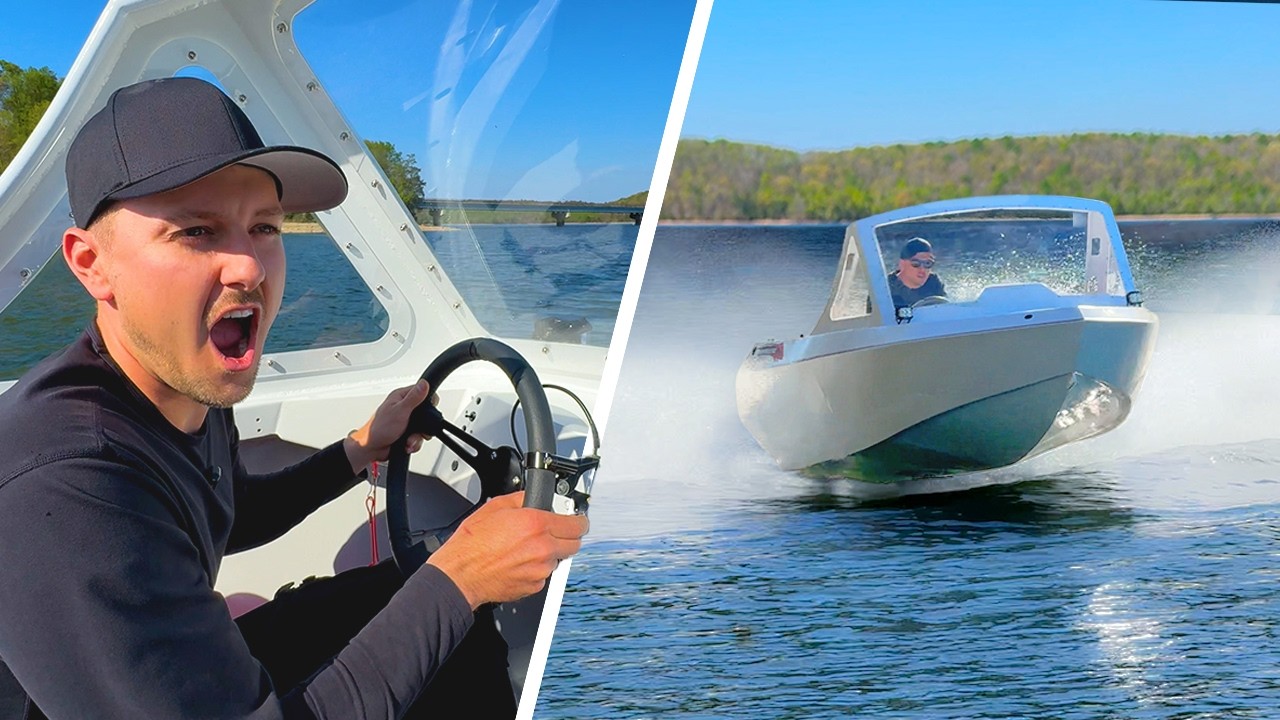
I Built a Tesla Powered Jetboat (3 year project)

Building the world's first Tesla-powered mini jetboat from scratch, tackling engineering challenges and EV modifications over 3 years.

Ask about this video. Answers come from its transcript only — with the timestamp, so you can check them.

Generated from the transcript and can be wrong — check the timestamp.

Key Takeaways

  • Complex EV conversions require extensive custom engineering and fabrication.
  • Safety is paramount when working with high-voltage Tesla battery packs and motors.
  • Aftermarket controllers can be necessary when factory EV systems are incompatible with custom builds.
  • 3D modeling and local machining are valuable tools for creating bespoke parts.
  • Persistence and problem-solving are critical for overcoming setbacks in innovative projects.

What the video covers

  • The project involves building a Tesla-powered mini jetboat from scratch, including fabricating the hull and modifying electronics.
  • Started with no prior EV experience, aiming to learn and solve complex engineering problems.
  • Stripped down a 2021 Tesla Model 3 to harvest the motor, batteries, and electronics.
  • Custom parts were designed and fabricated to connect the Tesla motor to the jet pump without the original gearbox.
  • Tesla battery modules were rearranged and housed in custom battery boxes to fit the boat's layout.
  • Switched from Tesla’s original control system to an aftermarket controller due to communication issues.
  • Built custom tools for safe battery handling and modified the battery management system (BMS).
  • Installed an external EV charge port on the boat for convenient charging at EV stations.
  • Wiring, motor mounting, and safety insulation were carefully done to handle high voltage risks.
  • The boat was successfully powered on and tested on water, revealing some battery and control system tuning needs.

Answers

Questions about this video

What type of Tesla vehicle was used for the jetboat conversion?

A 2021 Tesla Model 3 was used as the donor vehicle for the motor, batteries, and electronics.

Why was the original Tesla control system replaced?

The original Tesla control system failed to communicate properly with the ECU, so an aftermarket controller was installed for better compatibility and reliability.

How were the Tesla batteries adapted to fit in the boat?

The battery modules were rearranged into a vertical pattern and housed in custom laser-cut aluminum battery boxes designed specifically to fit the boat’s layout.

Full Transcript — Download SRT & Markdown

00:00
Speaker A
Today, we're building the world's first Tesla-powered mini jetboat. And it might just be the coolest thing I've ever built. In this series, we are going to be building the entire boat from scratch, fabricating the hull, modifying the electronics, and solving huge engineering challenges to make it all work together. I'm starting this project with no EV experience, just a goal to learn as much as possible.
00:20
Speaker A
We'll have some big problems. That was not good. Motor. But it'll all be worth it.
00:34
Speaker A
Oh, let's take it back 3 years ago where it all started with our donor vehicle.
00:47
Speaker A
A 2021 Tesla Model 3. Let's get it to the shop and strip it down. I can't remember how to get there.
00:57
Speaker A
Oh my god. This is not right at all. Ease it back. Back. Can you see anything?
01:06
Speaker A
I can't see a thing, dude. Oh my gosh. Get out. Get out. After letting it hang dry for a couple weeks, we are ready to pull out all the parts.
01:14
Speaker A
Full confession, I actually did this step before driving it into the pond. Obviously, you're supposed to have a special cart to remove these batteries, but I found this toolbox laying around, and it actually works really good.
01:34
Speaker A
Now, we can pull out the axle assembly and separate it from the motor. Now that we're done with the car, we can safely and responsibly dispose of it.
01:48
Speaker A
Now we get to build the boat. I got a mini jetboat kit, which is all the aluminum parts you need to build the hull.
02:08
Speaker A
And take it from anyone that's built one of these before, just because it says it's a kit doesn't mean you can build it in a weekend.
02:22
Speaker A
Here's the intake for the jet pump and the jet pump itself. Now that we're about done with the hull, we can start work on the motor.
02:31
Speaker A
In a perfect world, everything would be simple and easy, and I could just drop this motor into the boat and hook up a drive shaft between here and the jet drive. That won't work to drive the impeller on our boat because this motor
03:16
Speaker A
has a 9:1 gearbox reduction, and we need the full RPM this motor is capable of making. Here's our jet pump, and this is the shaft the motor's going to connect to. And you can see that it needs to
03:28
Speaker A
turn clockwise to jet water out the back. So here's the deal. We need all the power from that motor turned into this shaft somewhere in this location.
03:41
Speaker A
To do that, we need to move this inverter, which is normally right here. That's no problem. We can get some wires and put that wherever. It doesn't matter.
03:51
Speaker A
The problem is we need to somehow make a shaft that goes on right here, but also keeps this pathway of oil from here to here open. We're going to need some custom parts to solve this problem. So, I modeled up this flange that has an
03:59
Speaker A
internal passageway to allow oil up into this area. Then I designed our output shaft that will connect the rotor directly to our jet pump. Now the path of oil will be just like it was before all the way
04:12
Speaker A
through into the rotor. We just have to add a couple seals to keep the oil in the shaft. And that's our complete assembly.
04:26
Speaker A
I 3D printed some test parts before having them made at a local machine shop. We don't have the tools to make these parts quite yet.
04:35
Speaker A
And here's what our final assembly will look like on the motor. I thought it would be simple to just weld this shaft to the rotor output, but I had some trouble with it warping, so I had to put it on a lathe and
04:44
Speaker A
straighten it out. After a few more modifications, we are ready for the final motor assembly with zero gears for full RPM.
04:58
Speaker A
Now that the motor is assembled, we can go ahead and install it in the boat.
05:23
Speaker A
I made these adjustable motor mounts so we can perfectly align our jet pump. The Tesla batteries are really sensitive to moisture.
05:31
Speaker A
That's why I got it up on this pallet here so that it can't touch any water while it's in storage. This is an extremely dangerous project where we are modifying high voltage systems that cannot be turned off and have a lethal
05:42
Speaker A
voltage all the time. So, I have to say do not attempt anything you see in this project. Seriously, the amount of power here is terrifying. It looks like we have the full pack of the standard range batteries, which is great news because
05:56
Speaker A
they're way shorter than the regular ones. We got the more compact ones that'll fit in the back of the boat so much better.
06:11
Speaker A
Now that we have the battery pack broken down to its four battery modules, we need to fit it in the boat somehow.
06:19
Speaker A
Luckily, someone made CAD models of the batteries I was able to find on the internet. I think we're going to rearrange them into this vertical pattern and place them into two custom battery boxes. If we cut it in half, you
06:27
Speaker A
can see there's plenty of room between them and a little clamp system to hold them in place. Now, I'll send these files out to get laser cut and bent.
06:42
Speaker A
Now we can start assembling our two boxes. This is extremely sketchy, and I definitely need to make a tool to put the battery modules in. They're about 150 lbs each, and there is live voltage on almost every side.
07:03
Speaker A
This is looking pretty good. Let's get him in the boat. It's tipping. What? There's the problem. She's unbalanced.
07:26
Speaker A
Now we can mount all the controls and the iPad. All right, I got that epoxy in there. It should do a really good job insulating these three wires. The inverter here is the brains of the motor. We've got it
07:51
Speaker A
relocated to just above the motor. Now we can start wiring everything up. I'm using an aftermarket controller to run all the factory Tesla parts.
08:09
Speaker A
This is unbelievable. Months and months of work. The motor is working, but we have issues in other areas. Basically, what's happening here is I'm not getting any communication from the battery control system to the ECU that runs the
08:30
Speaker A
iPad. After investigating this issue, I've decided it's best to just ditch the Tesla control system and get aftermarket parts. This was a pretty expensive upgrade, but it is much lighter and smaller than the Tesla system, and I know it's going to work. Okay, here's
08:45
Speaker A
where we're at. Motivation all-time low. Profits all-time low. In the build space, you need to be willing to be so unmotivated and uncomfortable when you're doing something like this. We're going to push through and get this build done. We're not going to compromise on
09:01
Speaker A
quality, and it's going to be sick. The biggest downside to the new control system is we have to take apart the batteries and modify them. But it was a good excuse to build that battery removal tool I was talking about
09:16
Speaker A
earlier. This battery management system, or BMS, is critical for any electric vehicle. It keeps all of the individual battery cells balanced with each other.
09:30
Speaker A
Without the BMS, your car would not drive, and it would probably explode. We need to make a new mount for our new charger and battery management system here.
09:40
Speaker A
We also need to manually recreate the contactors that the Tesla system had. These are just big switches that connect the battery to the motor.
09:51
Speaker A
385, baby. This box is now one of the most dangerous places on Earth. Next, we have a few details to finish up, like the charge port. This may be controversial to put it on the exterior of the boat, but I really want to be
10:04
Speaker A
able to pull up to an EV charger and plug it in like a regular car.
10:21
Speaker A
Almost everything on this boat is aluminum. It's commonly thought of as harder to weld than steel, but once you get the hang of it, you can build things really quickly, and it blends out nicely.
10:26
Speaker A
Oh yeah, first mini jetboat with an EV charger in the side of it. And of course, we have to put in a nice floor.
10:45
Speaker A
I'm using this riv nut tool to insert hardware, so the floor panels are super easy to remove.
10:59
Speaker A
This looks really nice. It's coming together. It looks really complicated, but in my head, I've got it all figured out now. So, it's just putting the hours in, getting all the wires stuck in here, and we should be
11:17
Speaker A
able to turn it on today. Everything's wired up. I'm going to officially turn on the boat for the first time with the whole new battery system. There's really no forgiveness or wiggle room with these EV projects. So, I'm following it to the T, by the book,
11:34
Speaker A
so that it's super safe.
11:53
Speaker A
so that it's super safe and I don't have to worry about someone getting hurt. Not just me, but like if someone wants to work on this down the road if I sell it or something, it needs to be by the book
12:04
Speaker A
and safe because this stuff is so dangerous. Reflashing my inverter over the internet so that I can run it without the battery management system that it comes with. And I'm running it with the Orion instead.
12:19
Speaker A
This close. The Tesla Mini Jetboat on the water. I have no idea what's going to happen. I've never had it on the water. I've never even had it out of the shop before in a whole year it's taken
12:32
Speaker A
me to build it. And today's the day. This is it right here. We're going to find out. I guess it's in the water.
12:37
Speaker A
Is it actually? Did you put the plug in? Wait. The plug. There's a plug.
12:40
Speaker A
Yeah. Plug. I didn't put the plug in. Put the Keep coming back a little.
12:45
Speaker A
Is it sinking yet? I can't tell. I'm about to turn it on for the first time ever. I hope it doesn't electrocute us.
12:52
Speaker A
Okay. And go. Think it's uh working? Okay. You ready? Oh, where'd you get the helmet?
13:01
Speaker A
Dude, it's turning on. Wait. Okay. Um I don't see anything back here working. Dude, it's it's so close, dude.
13:09
Speaker A
Wait, you have gloves on now? Ready? Uh yeah. Here, you get you got your gloves I don't have anything on.
13:15
Speaker A
Just wearing boots. You are sitting on the battery though. Oh my gosh. I would be really concerned about that.
13:21
Speaker A
Okay. Press and drive. We're in drive. Let's go, dude. Drive. Remember, the steering wheel is backwards.
13:27
Speaker A
All right. Ready? Ready? Yeah. Oh my god. No way. It's very touchy. I bet your throttle is a cable.
13:38
Speaker A
Oh yeah. It's not very comfortable. No way, dude. We're doing it. It's working. We're doing it right now.
13:50
Speaker A
It's working. Something happened. Nothing. We have nothing. Ignition. Press the clear codes button. Clear codes.
14:00
Speaker A
Okay. I'm going to try to turn it off and on again. Oh. Oh no.
14:09
Speaker A
What even is that? What? This little red button. Ready? Do not touch that button. That's the pyro fuse.
14:20
Speaker A
If you touch it, it glows this breaker right here. Could potentially save your life. Yada yada yada. But it costs $300 every time you push it.
14:30
Speaker A
Even in an emergency, don't push it. Yeah. Everyone's really concerned about how safe it is cuz batteries and water don't really mix. But I've built every inch of this boat. Like I know where all the wiring goes. Every single high
14:42
Speaker A
voltage line is Where does that Where does that one go? The the big Okay, big the big red one down there. But let's just go to the battery. Wait, that's got to that one there.
14:53
Speaker A
I think that's a ground. See, watch. I brought this. Yeah. Check it. Check the voltage of it.
14:58
Speaker A
Yep. Just don't touch it. Okay. Okay. Okay. I'll leave it go. I'll leave it go.
15:02
Speaker A
If you wouldn't mind backing your gas guzzler up a little bit. The fumes are getting to my head.
15:10
Speaker A
Yeah. Don't you care about the environment at all? Yes, we're back. We're back. We're back.
15:23
Speaker A
381 volts. Okay. Okay. I think I know what happened. Ready? What? No throttle. Oh, we were in drive.
15:33
Speaker A
Oh, we're good. YES. LET'S GO, DUDE. I think I bought too much current. Oh, it didn't like that.
15:42
Speaker A
I have it set up at like um 200 amps. Yeah, I kind of floored it. I was trying to get on step.
15:49
Speaker A
Yeah, let's just coast for a little while. The first time the motor died was just a power setting set too low. No big deal.
15:58
Speaker A
But it's also looking like the batteries might not be in the best condition. Oh, reduce power.
16:07
Speaker A
Oh, what does that mean? I don't know. Uhoh. It's trying to clear the codes.
16:12
Speaker A
Clear the codes. That button is going to be pressed a lot today. Oh, no. I'm going to have to plug the computer into it.
16:18
Speaker A
Uh-oh. Can I go swimming yet? Guess what? My guess what my password is. What was your password?
16:25
Speaker A
No one's ever going to get that. Tyler, I I'm really hot. Can I go swimming yet?
16:30
Speaker A
No. Brady, you said you could film all day with me. Just I I know I said that, but I'm I'm All right, we're going to go up here to connect to BMS. This computer is scorching hot.
16:39
Speaker A
I bet it is a black computer. Canvas errors? Yes. Pack balancing? No. Fun they're having.
16:46
Speaker A
Great. Pay attention. I'm Don't you want to learn about diagnostics? Yeah, I don't. I'm on the lake, man.
16:52
Speaker A
This is fun. No, it's not. We're on the lake. We got shade. We don't. It's direct sunlight.
16:58
Speaker A
We don't have drinks either. This is great, bro. There's no It's safe. No, it's not.
17:02
Speaker A
Zoom in on this. This is very important. I don't know any of this. Pay attention. Discharge limits. So, the batteries are not in good shape.
17:10
Speaker A
Yeah, you've mentioned that. No big deal. We'll we'll try again. Okay. I got the new settings. Look, maybe.
17:16
Speaker A
There's some shade over here. Oh, really? Yeah. All right, let's try it. Oh, okay.
17:22
Speaker A
I think the water pump just went out. Yeah, it does. Okay, there you go. Maybe not.
17:27
Speaker A
Oh, no. That does not sound good. Yeah. What a piece of junk. Are you kidding me?
17:36
Speaker A
Failure. We can't really drive it without a water pump. It is really cool. I'll be honest. It's very unique.
17:43
Speaker A
Kinks to work. Yeah, but once it's dialed, it's like this is going to be fun.
17:51
Speaker A
Is it stuck, Tyler? The throttle is stuck. Why is it doing that? I don't know. You built it.
18:11
Speaker A
Oh. Oh, it blew it. It blew it again. Dang it. It's so close to getting on plane, dude.
18:16
Speaker A
Yeah, it's right there. It's right there. Yep. Yeah. We shouldn't drive it anymore without the water pump.
18:22
Speaker A
It's probably going to wreck something down here. What's happening here is the BMS is actually telling the motor to stop because we have an issue with our batteries.
18:31
Speaker A
Let's just put it back on the trailer. Call it a day. What's with you, man? You don't want I just I No, this isn't fun.
18:38
Speaker A
Come on. We got black t-shirts on black t-shirt on there. I'm literally in mock boots.
18:42
Speaker A
It's for your own safety. You're standing on a power cable. So, we couldn't get it up on plane today, but I think today was a great success.
18:49
Speaker A
Yeah. You know, we need to dial in a couple little features, but we got out here on the water. We figured out it doesn't sink. It doesn't start on fire.
18:57
Speaker A
It stays dry. It doesn't burn to the ground. I'm pumped, dude. Uhhuh. Just a little bit more tweaking in the shop. I think this is going to be really cool.
19:05
Speaker A
Yeah, once it's done. Ran out of battery. Ah, got to swim it in. Okay.
19:15
Speaker A
This is so sick. I love it, dude. It's so epic. I can't believe it floats.
19:21
Speaker A
Incredible. I took the boat out a few more times for testing. While everything about the motor was working great, the batteries are showing signs of weakness. They were in storage for quite a while during the build process and a few of the cells got out
19:38
Speaker A
of balance too far. So, in the next episode, not only are we going to fix all the problems, we're going to give the boat some major upgrades and take it on its first real test drive.
19:56
Speaker A
Huge thanks to Tuby for sponsoring this project. We'll be back next week with episode two, but if you want to watch the entire build series right now, it is live on Tuby.
Topics:Teslaelectric vehiclejetboatEV conversionbattery management systemcustom fabricationelectric motorhigh voltage safetyaftermarket controllerDIY electric boat

Get More with the SozAI App

Transcribe recordings, audio files, and YouTube videos — with AI summaries, speaker detection, and unlimited transcriptions.

Or transcribe another YouTube video here →