Skip to content

Tactical Analysis - Alonso's Chelsea Debut

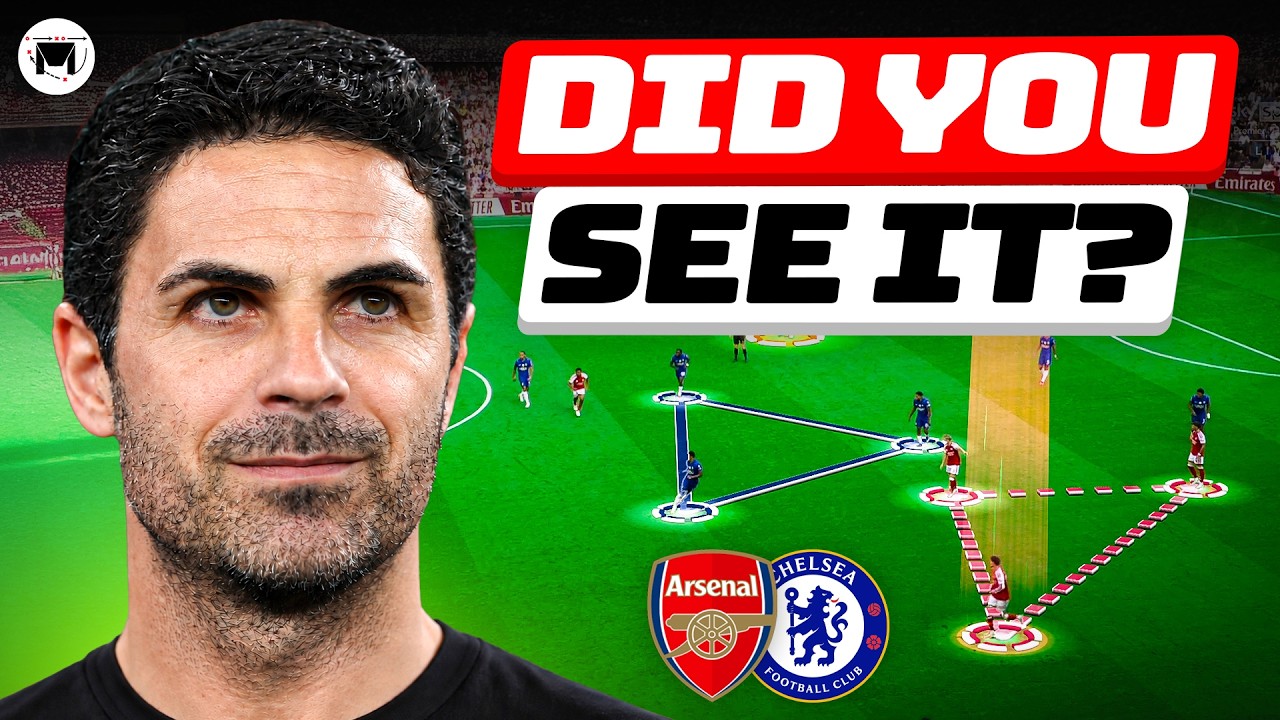
Tactical analysis of Javi Alonso's Chelsea debut focusing on pressing, defensive shape, and key players Palmer and Rogers.

Key Takeaways

  • Alonso's pressing system is based on tactical triggers, not constant energy expenditure.
  • Palmer and Rogers are pivotal in both defensive structure and pressing effectiveness.
  • Chelsea's defensive shape is aggressive but requires physical sustainability over a full season.
  • The back three formation allows for dynamic attacking transitions despite defensive risks.
  • Chelsea's defensive vulnerabilities stemmed mainly from coordination and Fulham's direct play.

What the video covers

  • Chelsea took an early lead but ceded possession to Fulham, maintaining only 39% possession in a high-intensity match.
  • Alonso's tactics emphasize a pressing system triggered by specific cues rather than constant high energy.
  • Key players Palmer and Rogers play crucial defensive roles by cutting passing lanes and maintaining narrow positioning.
  • Chelsea used an aggressive back three that was not purely defensive but focused on problem-solving and pressing.
  • Fulham's wide back three formation challenged Chelsea's press, but Chelsea adapted by focusing on solidity after conceding an equalizer.
  • Chelsea's mid-block was a narrow 5-2-3 shape designed to protect the center but vulnerable on the flanks.
  • Palmer and Rogers were tasked with staying narrow to block central passes and quickly adjusting to wide play.
  • Chelsea's defensive system allowed dynamic counter-attacks with numerical advantages after turnovers.
  • Defensive coordination issues arose from Fulham's runners from deep and exploiting space between the lines.
  • In possession, Chelsea showed fluidity with a 3-2-5 base shape, creating overloads and late runs from wide center backs.

Answers

Questions about this video

What is the main pressing strategy used by Chelsea under Javi Alonso?

Chelsea's pressing system is based on specific triggers rather than constant high energy, focusing on cutting passing lanes and pressing pivots to prevent central play.

Who are the key players in Chelsea's defensive tactics according to the video?

Palmer and Rogers are identified as the key players, tasked with maintaining narrow positions to block central passes and support the pressing system.

How does Chelsea's back three formation function in this tactical setup?

The back three is used aggressively for problem-solving and pressing, allowing dynamic attacking transitions while protecting the center, though it requires careful coordination to avoid exploitation on the flanks.

Full Transcript — Download SRT & Markdown

00:00
Speaker A
Jabi Alonzo's Chelsea led this match before a minute was on the clock. And then they did something weird. They handed Fulham the ball for the rest of the evening. 39% possession, and it still produced a five-goal thriller. Because
00:12
Speaker A
if this match is any indication, Alonzo's tactics are going to make Chelsea one of the most exciting teams in the league and a serious problem near the top. At the heart of those tactics are two players. Palmer and Rogers are
00:24
Speaker A
the keys to Alonzo's kingdom in and out of possession. So, let's take a look and start by watching what these two do the moment Fulham tried to play out. There's a misconception in some circles that just because a back three has an extra
00:36
Speaker A
defender in it, it is a [music] defensive formation. And early on, Chelsea showed just how aggressive a shape it can be and was all about problem solving. There was a risk that Chelsea would be overloaded in this zone. But Alonzo anticipated this and he
00:50
Speaker A
wanted the Blues pressing early. Fulham actually built in a wide back three from deeper areas with Leno being flanked by both of his center backs. This was key because if they built up in a back two like this, Xiao Pedro could direct the
01:02
Speaker A
play to one side, making it easier for Chelsea to defend smaller spaces as the pitch would effectively be cut in half.
01:08
Speaker A
Leno joining me hypothetically Bulham could switch the play at any time, making this pressing objective an impossibility. And this is where this duo come into it. Pay attention to their positions here.
01:21
Speaker A
The role for both was to pick up the pivots, but not necessarily man-marking them here, but rather cutting out the passing lane into them initially with Fulham using a double pivot. This basically made it impossible to play through the center. And things got worse
01:34
Speaker A
because early Chelsea weren't satisfied with just directing play. Pressure was the goal. Depending on which side the ball was, the 10 would then press the wider center back again looking to keep their same pivot in their cover shadow.
01:46
Speaker A
And here's the key. Where initially the deep tens from Chelsea allowed James and Lavia to be deep watching King as well as Bob who was drifting in a 10 going high to press was the trigger for those two to back up the press onto the Fulham
01:58
Speaker A
pivots to prevent that central play. And was all of this effective? Well, this is Fulham's attack distribution.
02:12
Speaker A
Effectively, Chelsea's attacking shape did not let Fulham attack centrally at all. And this high pressure system played straight into the opening goal less than a minute in.
02:32
Speaker A
[music] Now, here's the thing. Chelsea certainly did not press high for 90 minutes. Fulham's equalizer gave them the courage to play a little more. And Chelsea adapted, focusing more on solidity rather than pressing high for 90 minutes. That mid block of Chelsea's, it
02:48
Speaker A
was a 5-2-3 with the two and the three being extremely narrow. Protecting the center is all well and good, but that can quickly creep into being exploited in the wider regions. So, how did Chelsea contend with this as Fulham were
03:00
Speaker A
aggressive with their fullbacks? Well, one option would have been pushing their wing backs high early and this could actually be really effective. But there was a risk as with Bob drifting in off the right, Fulham could be attacking in
03:11
Speaker A
potentially a front five. Meaning if Chelsea had pushed up their wing [music] back, they could be outnumbered five versus four. So most of the time the wing backs tended to stay deep to allow this man-to-man setup. So what solution
03:23
Speaker A
did Alonzo go with? Those two men came into the picture once again as Alonzo tasked the pair with staying super narrow when possible. Narrow enough to stop the central passes, but as soon as the ball went wide, be it to a wide
03:35
Speaker A
center back if Leno was high or to the fullbacks if it was more of a four in the buildup. Time after time, Palmer and Rogers were asked to do this. And for the most part, time after time, they
03:44
Speaker A
delivered. And there was another benefit of the shape we shouldn't underrate. By taking up these positions when they were pressing, if there was a turnover deeper on the pitch, what was the result? Well, at times at three versus two, as both
04:04
Speaker A
the 10s were perfectly positioned to make runs into the space behind the fullbacks, and Chelsea looked dynamic and threatening on the break.
04:28
Speaker A
But let's take a moment because it is match day one. So, of course, Chelsea's defense was not perfect. They conceded two, but those were mainly assists from Sanchez rather than a poor defensive setup. But there were other issues and
04:40
Speaker A
was mainly the backline coordination. Remember that man-to-man orientation? It was great when the defenders were tough or physically superior to their opposite number. But as the game went on, Fulham were able to manipulate the space primarily by using runners
04:54
Speaker A
from deep that were initially too far for the [music] center backs to venture out and cover. This was often paired by deep movement from the forward or a wide man, creating room higher up the pitch for a man from deep to have a running
05:05
Speaker A
start against the center back. And that was combined with Fulham being increasingly more direct and playing in behind straight away.
05:31
Speaker A
But when the Chelsea center backs off, they had the opposite problem. As the Fulham attacking shape meant that they [music] could get plenty of numbers between the lines. So if the pivots were drawn high and the center backs were
05:41
Speaker A
deep, that space between the lines grew and the right pass would find the floating men with time and space to turn. And again, this was very much an out of possession performance from Chelsea. So, we'll only touch on a
05:52
Speaker A
couple of interesting bits in possession very briefly, namely the fluidity of the shape. In possession, the 3-2-5 very much functions as just a base, but the team was constantly looking for overloads around the pitch. Again, spearheaded by those dual tens, they could look to
06:07
Speaker A
exploit these gaps in the back four. But rather than rigidly sticking to the half spaces, we often saw them drifting to the same side of the pitch in order to overload the pivot.
06:22
Speaker A
And the bravery of the back three on the ball was another key feature as at every opportunity the wide center backs but Achin Pong in particular would look to flood forward combining with Palmer and Gusto to try and create a three versus
06:34
Speaker A
two overload and arrive late on the underlap as the extra man and Chelsea did get into promising positions in this way. And again the focus for this video was out of possession matters. But just before my final thoughts, it is a new
06:47
Speaker A
season and the perfect time to up your tactical knowledge. If that's appealing to you, check out Football Fundamentals down in the description, which is my free 30-day program that will teach you the fundamentals of tactical analysis.
06:59
Speaker A
Alonzo's Premier League managerial campaign begins with a win. And it came down to that defensive paradigm, a pressing system that is dictated by triggers instead of just pure energy for 90 minutes. And interestingly, the 2-10s are being asked to play important roles
07:13
Speaker A
defensively. And it sets up a key question for Chelsea season. And it's not if the defensive system works. My question is if Palmer and Rogers can physically sustain these defensive roles for 38 matches. What do you think? And
07:26
Speaker A
what else did you notice during this match? Drop it down below. And if you want to see how much Alonzo has already shifted his tactics in such a short time, check out this video on screen now examining his tactics in his very first
07:39
Speaker A
match.
Topics:Javi AlonsoChelsea FCPremier Leaguefootball tacticspressing systemdefensive shapePalmerRogersback threetactical analysis

Get More with the SozAI App

Transcribe recordings, audio files, and YouTube videos — with AI summaries, speaker detection, and unlimited transcriptions.

Or transcribe another YouTube video here →