TJR explains liquidity in trading, its importance, how to identify resting orders, and how to use liquidity to predict market moves profitably.
Ask about this video. Answers come from its transcript only — with the timestamp, so you can check them.
Generated from the transcript and can be wrong — check the timestamp.
Key Takeaways
- Liquidity is essential for market movement and trading success.
- Resting orders above highs and below lows are critical liquidity zones.
- Knowing where liquidity lies allows traders to predict price direction.
- Stop-loss placement by retail traders creates liquidity pools for market makers.
- Trading strategies should begin and end with understanding liquidity.
What the video covers
- Liquidity is defined as resting orders on the chart, crucial for market movement.
- Understanding liquidity helps traders predict price direction with high probability.
- The market moves by filling orders; without orders being filled, price moves sideways.
- Liquidity lies above highs and below lows where traders place buy orders and stop-losses.
- Most traders buy above highs expecting an uptrend continuation and place stop-losses below lows.
- Liquidity is central to trading strategies and is considered the 'goat' of confluences.
- Traders can profit by identifying where resting orders lie and trading in the direction those orders push the market.
- The video covers beginner to advanced liquidity concepts and real-time chart examples.
- Stop-loss placement and market structure (higher highs/lows and lower highs/lows) are key to understanding liquidity.
- Liquidity provides opportunities for market makers to manipulate price and change trends.
Chapters
- 00:00Introduction to Liquidity and Importance
- 02:22Defining Liquidity and Resting Orders
- 04:04Predicting Price Movement Using Liquidity
- 06:20Trader Behavior: Buying Above Highs and Stop-loss Placement
- 07:44Stop-losses and Market Structure in Uptrends
- 09:34Liquidity Zones: Above Highs and Below Lows
- 11:35Market Maker Manipulation and Liquidity Pools
- 14:34Real-time Examples and Advanced Liquidity Concepts
- 18:24Summary: Using Liquidity to Predict and Trade Market Moves
Full Transcript — Download SRT & Markdown
Speaker A
Look, liquidity explained. Numnuts, welcome to finally when we can actually start talking about fun stuff. Holy [ __ ] the first couple episodes were boring. [clears throat] We're so freaking boring. You guys know how difficult that [ __ ] is to sit down and
Speaker A
talk about candlesticks. NOW, WE CAN ACTUALLY GET INTO SOMETHING BENEFICIAL. LIQUIDITY. IF YOU GUYS don't understand liquidity, then you guys are never going Well, I'm not going to say that because there's a lot of people that make a lot
Speaker A
of money from trading from a bunch of different strategies, but liquidity is by far one of the most important concepts for the way that I trade and for the way that the vast majority of a lot of other profitable traders trade.
Speaker A
And if you guys don't understand this concept, then just re-watch this video a 100 freaking times and get it through your brain. Today is going to be liquidity explained. Tomorrow's going to be advanced liquidity explained. And then we're going going to keep going
Speaker A
into all these other concepts. So, first thing that we need to talk about today is liquidity. What is it? How to identify it? Why it's beneficial? And how we can make money using it. Okay, let's jump onto the charts, dude. Also,
Speaker A
bros, I mean, first of all, this is what I want to do. I realize that I wasn't presenting myself in a in a goodlooking hot manner. And I can realize that I can be a bit of an eyesore sometimes. So,
Speaker A
I got ready for you guys today. I dressed up even though I'm spending literally every single day or every single day in my house. I don't go outside. I don't do anything. So, you're thinking TJR's looking good. I'm doing
Speaker A
it for you. Okay, we got computer in front of us, right hand gripping schlong, left hand lotion. Let's get into liquidity and let's try and make you guys bust with some liquidity.
Speaker A
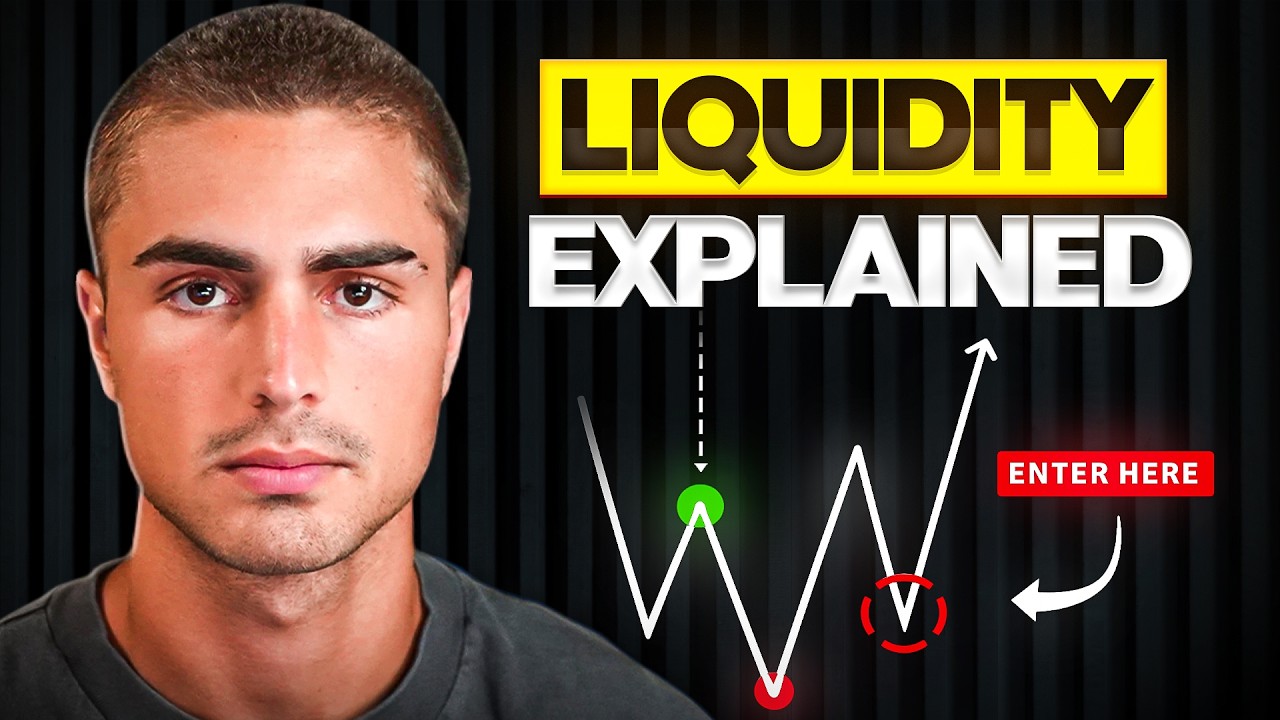
First and foremost, what is liquidity? Okay, what is liquidity? Liquidity is resting orders. Okay, that's all it is. Okay, it's just resting orders on the chart. Now, why is this important? Okay. So, the first thing that you guys are going to write
Speaker A
down all the beginners. Okay. What? Jeez, we're glitching. What? What? What liquidity? [clears throat] What is liquidity? What liquidity? Where where liquidity? What is liquidity?
Speaker A
Resting orders. Okay. And all of you advanced people, you guys are probably GOING TO BE LIKE, I ALREADY KNOW THIS. SHUT UP. SHUT UP.
Speaker A
Shut up. Shut up and trade, [ __ ] Okay, shut your mouth. You guys are going to learn something from this. Okay, what's liquidity? It's resting orders.
Speaker A
Okay, now why is this why why is liquidity important to us? Okay, why do we want to know where resting orders are? Well, in order for the market to move, it needs what? Orders to be filled in order to push the mark in order to be
Speaker A
able to push the market in the direction that it wants to go. Because if there's there's no orders getting f filled, then the market's just going to go sideways, okay? And not move at all. Okay? orders are constantly getting filled while the
Speaker A
market's open. Okay, so why do we want to know where liquidity is? Because there's resting orders and at areas of liquidity. I was about to jump forward and give you guys a sneak peek or tell you guys the secret of where liquidity
Speaker A
is, but we're not quite there yet. We're going to be there in like 2 seconds.
Speaker A
Okay, so now that we know what liquidity is first, okay, we're glitching. We're glitching. What is liquidity? It's resting orders. Why is that beneficial for us? because the market needs orders to move. So obviously us as traders we
Speaker A
would like to know where these orders are lying because from there again what are we trying to do with trading we're trying to accurately predict where price wants to go with a high probability on a daily basis. [clears throat] Okay, once
Speaker A
we understand that, we know that if we can spot resting orders in the market, then we are going to be able to accurately predict where price wants to go. Because if we if we know where liquidity lies and if we know where
Speaker A
orders lies, then we are going to be able to take trades based off of those orders in the direction that those orders are going to push the market. Oo, now we're talking. So liquidity is literally the c the center the totem
Speaker A
pole the like I don't even know the the a better explanation besides it's the goat the goat of confluences okay because this is where everything of our strategy begins it begins with liquidity it begins and it ends with liquidity okay
Speaker A
so that's why it's important Next, where does liquidity lie? Where are the orders? Where orders?
Speaker A
[clears throat] WHERE? WHERE THE [ __ ] ARE THEY? Let's think about this before before I tell you guys. Let's think about this. What did we learn? When was that? Yesterday. Yes, yesterday. What did we learn yesterday? How to identify
Speaker A
trends? How to identify highs and lows? So if we as traders know that the market moves in higher highs and higher lows and lower highs and lower lows, what can we safely assume? Okay, we know that when we're forming an uptrend,
Speaker A
people are probably going to be pressing buy. Okay, and when people are pressing buy, because the majority of people understand this market structure order, this is like very very beginner stuff.
Speaker A
Most people understand the market moves in higher highs and higher lows, lower highs and lower lows. Okay, with that understanding, when we're in in an uptrend, most people they notice and identify, hey, when we push above this high, I'm
Speaker A
probably going to press buy. Okay, I'm not telling you guys to do that, but that's what the vast majority of people are thinking. Why are they thinking that? Because they're like, hey, we're in an uptrend, and once we push past
Speaker A
this high, that means the uptrend is confirmed. and we are going to go up and make a higher high. So, they're pretty much betting on the fact that once we push above this high, we're going to make a higher high. And that's how
Speaker A
they're going to make their money, right? From pressing buy above this high and then trying to close somewhere up here. Or regardless, if it comes down a little bit, they're still probably in profit because it doesn't come back
Speaker A
underneath this high. That's not what I want you guys to do. And I'll explain a little bit later why that's the case.
Speaker A
But a lot of people are pressing buy above highs. Okay? On top of that, when these people press buy, what are they doing? Well, there's two ways to take a trade, okay, in these markets, okay?
Speaker A
It's by pressing buy and by pressing sell. The goal is to buy low and sell high. Sell high and buy back lower.
Speaker A
Okay? There's two different directions, right? You can make money in both ways through day trading, okay? This isn't like investing where we're only trying to buy low and sell high. We have the opportunity to make money both ways in
Speaker A
the market. Okay? We're switch hitters, okay? We can put it in the cooch or we can put it in the butt. Doesn't matter.
Speaker A
Okay. All fair game around here. Does not matter. We're accepting of both ways. Okay. You can be a switch hitter any day of the week when you're a day trader. Outside of that, don't we we won't talk about it. Okay.
Speaker A
Okay. So, when we're pressing buy above highs, what do we want to do? We want to protect our orders by using a stop-loss.
Speaker A
This is a very useful tool. helps us so that we don't lose a significant amount of money. So if we understand in an uptrend we are making higher highs and higher lows and if most people are pressing buy after we push above highs
Speaker A
in the market what are they going to do or where are they going to put their stop loss to protect their orders? They are going to put it underneath the low.
Speaker A
Why are they going to put it underneath the low? Because if this is a true uptrend, then ideally we will not put in a lower low and we will actually put in a higher low. So this is our
Speaker A
invalidation point or these traders invalidation point. They're going to be pressing buy when we push above a high and then they are going to put their stop loss or their protection
Speaker A
we push above the high, we're going to make a higher high, putting their trade in profit. And in turn, if it's a true uptrend, it's going to put in a higher low. And that's why we have the stop
Speaker A
loss underneath this low because if it's a true uptrend, then this stop loss shouldn't get hit. And again, it's to protect us just in case market structure wants to shift. If market structure shifts out of this uptrend, then boom,
Speaker A
this stop loss gets hit. You lose money on that trade. Now, you're probably saying, TJR, why are you telling me about all of this stuff? This is boring.
Speaker A
This is lame. This is useless. Wrong. This is the most useful information that you guys will ever learn in day trading because we are just doing that method right there. Just going through that exercise. What did we do? We just
Speaker A
identified two areas where orders are resting. Oh, yep. Get down there, buddy. Suck me off underneath the desk. Suck it, buddy. Yep. And what [clears throat] did we just identify? Where liquidity is? Because liquidity is resting orders.
Speaker A
So, what is resting above highs? Buy orders. What is resting underneath lows? Sell orders. And that's for people that are looking for long positions because again, they're pressing buy when highs get pushed above and they're pressing sell or their stop-loss is underneath
Speaker A
lows in the market. Okay? So, there's going to be resting buy orders above highs, sell orders below lows. Sorry, I'm glitching. That was a big minus sign. You get the point. Now, if we go over to the right hand side right here,
Speaker A
when we're talking about downtrends, it's the same situation. if we're in a downtrend. Okay, so this was putting in the in the cooch. Okay, this is when you're putting it in the butt. Again, no hard feelings. I'm all for it. Okay,
Speaker A
especially when we're trading outside. Do your thing. Okay, when we're in a downtrend, this is the opposite direction. So, same exact situation as the uptrend, but downtrend, it's just the opposite. So, if we're in a downtrend, again, most traders are going
Speaker A
to say, "Hey, we're making lower lows and lower highs. So, when we push underneath this low, I'm going to press short or I'm going to press sell. Why?
Speaker A
Because we are in a downtrend and we're probably going to make a lower low. And then on top of that, the people that are pressing sell once we push underneath this low, where are they putting their stop loss? They're putting their
Speaker A
stop-loss above highs. Okay? So, notice we have two sets of resting orders. Now, we have people who are going short on downtrends. They are pressing sell when we push underneath lows and they are pressing buy or exiting their positions
Speaker A
or putting their stop loss above highs in the market. So we have two sets of resting orders. There's people that are entering into positions when we push above highs and then there's people who are exiting positions or getting stopped
Speaker A
out when we push above highs. So there's two sets of resting buy orders above highs. Now, that's a lot of orders.
Speaker A
Not only do we have people pressing buy when we push above highs in the market because they think price is going to go higher, but we also have people that are forced to press by that are putting stop
Speaker A
losses above highs in the market that are going to get stopped out if these highs get pushed above. Why is that important? Because that is where liquidity lies. And what is liquidity?
Speaker A
Resting orders. So again, there's people that are looking to press buy when these highs get pushed above. And then there's people that are exiting their trades and press and being forced to press buy because that's where their stop loss is
Speaker A
above highs. Same thing with lows. When we push underneath lows, what is happening? People are entering into sell positions. Okay? And then also there are going to be people when we push underneath lows like let's say we push underneath these lows there are
Speaker A
people getting stopped out of their buy positions and being forced to enter into sells. So there's two sets of resting orders underneath lows. There's people who are entering into short positions or sell positions when we push underneath lows. And then the the people that were
Speaker A
previously in buy positions when we push underneath these lows, they are getting stopped out. So what did we just learn from that entire conversation? Well, we learned a couple very useful things.
Speaker A
We learned where resting orders are. And you're probably saying, "WELL, TJR, I'M ON THE SPECTRUM AND I DON'T KNOW WHAT YOU JUST SAID." OKAY, TIMMY, shut up. I'm going to tell you. Where do orders lie? Above highs and below lows in the market.
Speaker A
Because there are people when we push above this high. And let's just put on one trend so we can show this easier for you guys.
Speaker A
Where orders? Where are they? They are above highs and below lows. And that is where liquidity lies.
Speaker A
Okay, so let's say the market is trending up. Okay, this is our little uptrend.
Speaker A
There are people that are going to be pressing buy when we push above these highs. And then there are also people here. Let me redraw this real quick.
Speaker A
Okay, this is good. When [clears throat] we push above highs, there are people pressing by.
Speaker A
There are also people with cells resting underneath lows. Okay. Why is this beneficial for us to know?
Speaker A
So, there are some people that see this and think, hey, we're in an uptrend. So when we push above this above this high they are going to be pressing by.
Speaker A
There are also people because again people have different opinions on the market. People may think that the market's moving in a different way. Not everybody is going to be pressing pressing buy when we push above these highs. Some people on this move de
Speaker A
pressing sell. And if they're taking a short position on this move down because they think the market's going to continue lower on that move down.
Speaker A
What do they have above this high? They have buy orders as their stop-loss. So, there's two times the amount of buy orders. There's people that are getting stopped out from their sell positions when we push above this high. And then there's also people that
Speaker A
are pressing buy that are entering into long positions. So there's people that are exiting their sell positions by pressing buy because again if we try and sell high and buy low that's how we make money from the market. So these people
Speaker A
see the market moving down they press sell where are they going to put their stop loss above the high because if that high gets pushed above then their bias is wrong and the and the uptrend is continuing. And then there's also people
Speaker A
who say hey when this uptrend continues or if this uptrend continues and we push above this high I'm going to press buy.
Speaker A
So, there's two sets of buy orders above highs. There's also two sets of sell orders underneath lows. There are people that Let me get rid of this. Get rid of this.
Speaker A
Get rid of this. Get rid of this. Get rid of this. Get rid of this. Oops. Get rid of this. Get rid of this. Get rid of this. There are two sets of sell orders underneath lows.
Speaker A
So let's say for example right here there are people that are pressing buy on this move up. Okay the people that are pressing buy on this move up where are their stop losses?
Speaker A
Their stop losses are underneath this low. Now what happens when the market pushes underneath this low? The people that were in buy positions, they get stopped out. So they have to sell their position for a loss.
Speaker A
So all the people pressing buy on this move up. When the market comes down and hits that area, they are getting stopped out of their trade and they are being forced to sell their positions back for a loss.
Speaker A
There are also traders that when this low gets pushed underneath that are entering into short positions because they think price is going to go lower.
Speaker A
So there's two sets of resting orders underneath lows. Now again you are probably asking TJR why why why why are you telling me all of this stuff?
Speaker A
This is how the retail trader thinks. And what do we know about the vast majority of traders? 99% of traders fail. And I'm not trying to tell you guys this. I mean, we talked about this on day one. I'm not I'm not trying to
Speaker A
tell you guys this to discourage you. I'm telling you guys this to use this to your advantage.
Speaker A
We need to be thinking about we need to be thinking like the market movers. We need to be thinking like smart money. So if we understand that [clears throat] there are two sets of sell orders underneath lows and there are two sets
Speaker A
of buy orders above highs, we don't want to be following the method of pressing buy when highs get pushed above or pressing sell when lows get pushed underneath because that is how retail traders are trading. That's how the vast majority of
Speaker A
traders are trading. We want to be trading in the opposite direction. And this is how the market makers think.
Speaker A
Going back to our topic for today's video, what is liquidity? Liquidity is resting orders. We just talked about where retail traders resting orders are.
Speaker A
Now, let's think about smart money and let's think about the market makers. The people who actually move the market.
Speaker A
They need a significant amount of orders to be going in the opposite direction of them for their massive amounts of orders to be filled for them to be able to push the market in the direction that they want to go.
Speaker A
You're probably saying, "What does that even mean?" Let me explain. Let's think back to our high school economics class, okay? How does a stock exchange work? If I want to buy one share of Apple stock, we I need to find somebody that is
Speaker A
willing to sell me a share of their Apple stock at the current price. Now, back in the day, it used to be done by calling up your broker saying, "Hey, I want to buy one share of Apple." They
Speaker A
say, "Okay, I'm going to try and source source this for you. I need to find somebody that's willing to sell this sell it to you at this price nowadays." And then boom, they sell it to you.
Speaker A
takes a couple days and they say, "Boom, here's your paperwork." They ship it to you in the mail and then awesome, you have your contract that says, "I own one share of Apple at this price." Cool.
Speaker A
The the same thing applies, but in today's day and age, we have brokerages, we have exchanges that do this at mass scale online for us.
Speaker A
Now, it's the same exact thing when these big smart money market movers are trying to place their trades and move the market.
Speaker A
They need X amount of orders, like let's say freaking uh 1,000 orders to be going in the opposite direction for people. They need 1,000 people.
Speaker A
Let's say they want to take a 10,00 contract trade. Sorry, we'll simplify this. Let's say they want to take a 10,00 contract trade.
Speaker A
In order for them to be filled on those thousand contracts, there needs to be 1,000 contracts that are willing to either buy or sell depending on what direction they want to move the market in the opposite direction as them. So,
Speaker A
if the market movers, market makers want to push the market down and they want to fill 1,000 contracts, they need 1,000 contracts in the opposite direction.
Speaker A
And this is where liquidity comes in. They will manipulate price and push price above highs in the market to do what?
Speaker A
To activate and get those two sets of resting buy orders to get activated, right? The people that that that were pressing sell on the way down, what do they have? They have their stop losses above here. And then once
Speaker A
price pushes above this this this high, those people get stopped out of their sell positions. And then also the people that think price is going to go higher, they enter into buy positions. So now there's a bunch of people that are
Speaker A
willing to go long or press buy in the market. What does that give the market makers the opportunity to do?
Speaker A
To fill their massive amounts of sell orders to cause the market to go down.
Speaker A
Reverse psychology is how I like to think of liquidity. They are faking retail traders out to think that the market's going to go higher. They are getting people out of sell positions by pushing above the high and they're
Speaker A
getting people into buy positions and then they're able to fill their massive amounts of sell orders because there's a massive amount of people that are willing to go buy here or being forced to buy their positions back for a loss
Speaker A
and then they are able to fill their sell orders to push the market lower.
Speaker A
Same thing in the opposite direction. If we have a low, what is what is sitting underneath lows?
Speaker A
A massive amount of sell orders because there's people that are pressing buy because they think this move is going to go higher. Where are their stop- losses?
Speaker A
Underneath these lows and then when the market comes down, trades underneath these lows. What happens? Those people that were in buy positions have to are forced to sell their positions back at a loss. And then there's the people that are entering
Speaker A
into sell positions because they're saying, "Hey, a downtrend has started." What does that give the market makers the opportunity to do? Fill their massive amount of buy orders. Why?
Speaker A
Because there's a massive amount of people that are entering into sells here. And then that gives them the opportunity to push the market higher.
Speaker A
We do not want to think like retail traders. We want to think like smart money traders. We want to think like the market makers. That is why liquidity is so very important. And we're going to go onto the charts now and show you guys
Speaker A
real time examples of this happening. I'm not going to tell you guys how to take trades on this just yet. We're going to get into that later later on in this series. But this is the most crucial and the most important lesson
Speaker A
that you guys are going to learn in trading. There are sell orders that are sitting underneath lows. Does that mean we want to press sell? No. It means we actually want to be looking in the opposite direction because there's a massive
Speaker A
amount of sell orders sitting underneath lows. What does that give the market makers the opportunity to do? Fill their massive amounts of buy orders underneath those lows. because retail traders are pressing sell and that lets the market makers press
Speaker A
buy to be able to fill their massive orders and change the direction of price.
Speaker A
So with that being said, let's show realtime examples of this happening. We have one right here.
Speaker A
What do we have right here? A high in the market. All the people that were pressing sell on this move down, their stop loss is above these highs.
Speaker A
Once these highs get pushed above right here, what happens? The people that were pressing sell get stopped out of their sell positions. And then all the people that think market's going to move higher, what do they end up doing? they
Speaker A
end up pressing buy because they say, "Hey, a new trend is going to start." What does that give the market makers the opportunity to do? Fill their massive amounts of sell orders to push price lower. [snorts] This happens on every single time frame
Speaker A
because this is how the market moves. The market needs orders to be filled. The market needs orders to be filled in order to push price in the direction that it wants to go. Let's show another example right here.
Speaker A
Price comes down. Okay, so we just showed you guys an example to the upside. Now we'll show you guys an example to the downside. Price comes down underneath these lows.
Speaker A
What do we know is resting underneath lows in the market? A bunch of sell orders. What does that give the market makers the opportunity to do? It gives them the opportunity to fill their massive amounts of buy orders. So when
Speaker A
price comes down, what happens? All the people that were pressing by throughout this, they are getting stopped out of their positions. Their stop losses are underneath these lows. And then all the people that think price is going to go
Speaker A
lower. They are entering into sell positions right here. What does that give the market makers the opportunity to do? Fill their massive amounts of buy orders to push price higher.
Speaker A
Hopefully you guys are starting to get this. Now let's show another example. We have a high right here. We have two sets of highs and this is what we're going to get into for our advanced liquidity concepts.
Speaker A
But we have a bunch of low resistance draws and liquidity stacked up relative equal highs.
Speaker A
We'll get into this in tomorrow's video, but stacked up relative equal highs right here.
Speaker A
What is that making the people do when we push above this high? What are people doing? They're pressing buy. When we push above this high, what are people doing? They're pressing buy. Everybody that was pressing sell, where is their
Speaker A
stop losses? Above this high. Everybody that was pressing sell, where is their stop losses? Above this high. So now we have four times the amount of orders. We have four times the amount of orders, buy orders that are sitting above these
Speaker A
highs in the market. What does that give the market makers the opportunity to do?
Speaker A
Fill their sell orders above these highs. So the so the market makers push price up, manipulate these highs, enter their sell orders, and then what does the market do? It falls.
Speaker A
This happens on every single time frame. I can show you guys examples of liquidity sweeps on the fiveminut time frame, on the 15-minut time frame, on the 1 hour time frame, on the weekly time frame, on the quarterly time frame.
Speaker A
There are examples of liquidity sweeps everywhere. You remember the tariff flash crash? Super spooky. Oh my goodness, there's tariffs in the market.
Speaker A
All that it was was buying opportunity. We have a low. We have a low. We have a low.
Speaker A
Sell positions. Sell positions. Sell positions. What does that give the market makers the opportunity to do?
Speaker A
Fill their massive amounts of buy positions to make the rich get richer. You guys remember what happened?
Speaker A
February 2020, that very, very scary scary scary sickness that went around. This is on the monthly time frame, folks. This is how the rich continue getting richer through market manipulation, through scaring the population with one agenda in mind to make
Speaker A
themselves richer. Oh no, super scary sickness. Psych liquidity sweep. All the people that were buying right here entering sell positions. All the people that were buying right here forced to sell their orders because their stop losses are underneath these high time frame lows.
Speaker A
Oh no, the economy is going to collapse. You all of you guys should All of you guys should sell everything. All of you guys should short everything. Psych.
Speaker A
What does that give the market makers the opportunity to do? Fill their massive amount of buy orders and make the rich get richer.
Speaker A
It happens on every single time frame. This is how the market moves. 15-minute time frame.
Speaker A
What do we do? Push above a high. Boom. Market collapses. Let's go to the five minute.
Speaker A
Let me try and find a good example for you here. Push above this high, market collapses.
Speaker A
Now, before we end this video, I don't want you guys to just think, okay, whenever we push above a high, I'm going to press sell, and whenever we push below a low, I'm going to press buy.
Speaker A
That is not what I want you guys to take away from this video because we just we just demonstrated in yesterday's video that the market moves in trends. The market does move in higher highs and higher lows. So trends
Speaker A
happen but liquidity and liquidity getting swept and new trends being formed that that's how new trends are formed. Okay, through liquidity getting swept, okay, and by these orders getting filled. So if you guys think back to like kind of
Speaker A
halfway through this video, there is something that I said and a word that I want you guys to keep in mind. When we push a above a high and when we push below a low, it doesn't mean that the market makers
Speaker A
are instantly going to reverse price just because there's buy and sell orders there. Right? We can see here that okay, we have a high. We push underneath a low here.
Speaker A
Would that have been smart to press buy? No. We end up keep going lower. We push below this low. Would that have been a good spot to press buy? No. We keep going lower.
Speaker A
we push underneath this low, would that have been a good time to press buy?
Speaker A
Eventually yes. So, what I want to end this video on is a very, very key component of liquidity.
Speaker A
Liquidity lies above highs and below lows. All that liquidity does for the market makers is it gives the market makers the opportunity to change the trend. Okay? It doesn't mean that the trend is going to change every single time. It just gives the
Speaker A
market makers the opportunity to change the trend above highs and below lows. Now us understanding that above highs and below lows there is an opportunity for us to change the trend. That is the first step of our strategy because if we
Speaker A
can focus on catching the bottoms of reversals up we are going to be able to make so much more money. And if we can focus on catching the tops of reversals down we are going to make so much more
Speaker A
money. Now again, pressing buy below lows and just pressing sell once we get above highs is not a good strategy. I could show you guys a million reasons why, but you guys are going to have to trust me
Speaker A
on this because again, like if we look if we if we were to press sell when we pushed above this high, what would have happened? Okay, we we lose a whole bunch of money. If we press sell when we push
Speaker A
above this high, what would happen? We'd lose a bunch of money. If we press sell when we push above this high, what would happen? Well, we lose a bunch of money if we press sell. When we push above
Speaker A
this high, what happens? We actually are able to make money. But notice how there was an opportunity for price to reverse here. Did it happen? No. There was an opportunity for price to reverse here.
Speaker A
Did it happen? No. There was an opportunity for price to reverse here. Did it happen? Yes.
Speaker A
So all that I want you guys to take away from today's video is just understanding orders lie and resting orders lie above highs and below lows in the market. We are going to get into later in this series
Speaker A
of how to take advantage of the opportunity of understanding that orders are lying above highs and below lows in the market. and then how to identify other confluences to give us confirmation that orders are actually being filled on
Speaker A
the market maker side and the trend is reversing. That's what we're going to get into later on in this series. So, what I want from you guys, your homework for today is to identify again I there I don't want you guys to
Speaker A
be trying to understand the reasoning of why did price reverse above this high and not above this high. We're going to get into that later in this series. What I want what I want you guys to understand is understanding. Okay, we
Speaker A
know that price has the opportunity to reverse above highs and below lows. Your homework is to just give find five examples of price pushing above a high and then reversing off of it, pushing underneath a low and then reversing off
Speaker A
of it. Very, very simple stuff. And then in tomorrow's video, we are going to get into advanced liquidity concepts. So expanding more on this. So with that being said, love and appreciate you guys. Do your freaking homework.
Topics:liquiditytradingresting ordersstop-lossmarket structurehigher highshigher lowsmarket makersprice predictionday trading