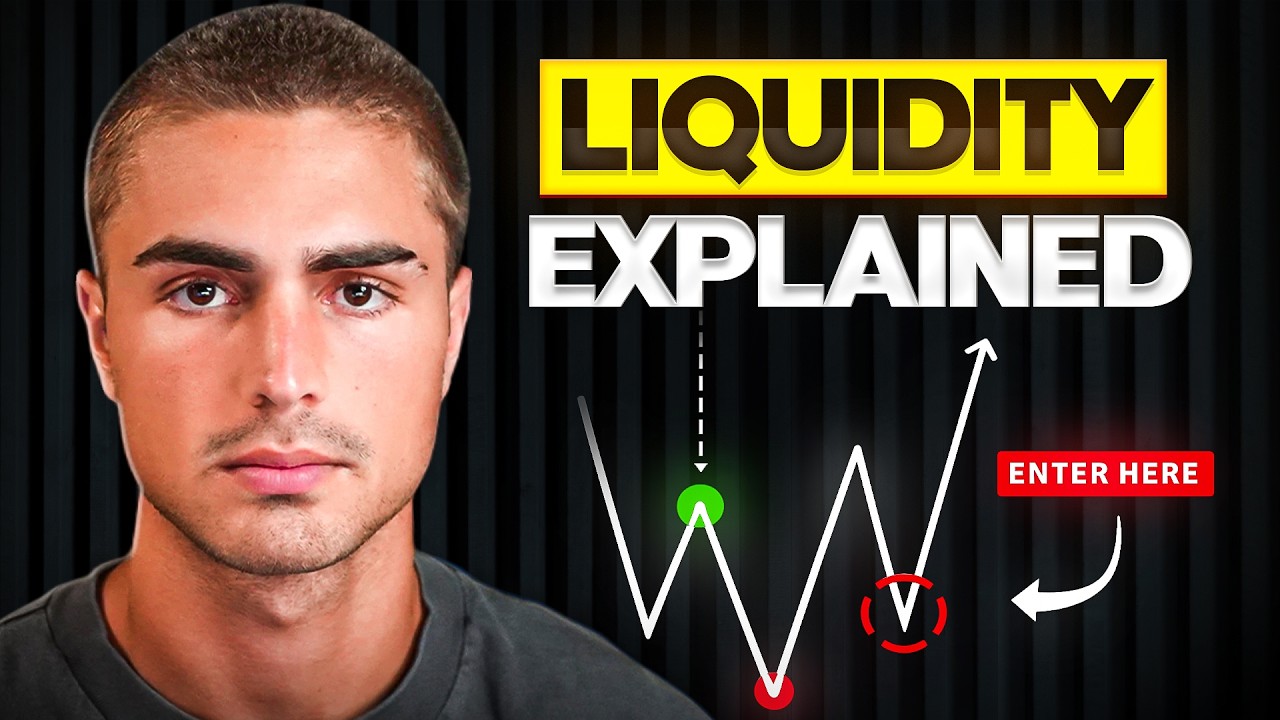
TJR explains the comprehensive strategy for profitable day trading, emphasizing strategy, risk management, psychology, and market experience.
Ask about this video. Answers come from its transcript only — with the timestamp, so you can check them.
Generated from the transcript and can be wrong — check the timestamp.
Key Takeaways
- Profitable trading requires a combination of strategy, risk management, and psychology.
- Market experience and time spent analyzing charts are critical to developing trading skills.
- Simply knowing a strategy is not enough; active practice and learning from mistakes are essential.
- Discretion and adaptability in applying the strategy are necessary due to varying market conditions.
- Patience and waiting for proper trade confirmations improve the likelihood of successful trades.
What the video covers
- The video is the final episode of the Path to Profitability series, presenting TJR's complete day trading strategy.
- TJR stresses that knowing a strategy alone does not guarantee profitability; risk management and trading psychology are equally essential.
- Successful trading requires extensive market experience gained by watching charts for hours daily.
- The strategy involves understanding order flow, liquidity draws, and trend continuation with discretionary adjustments based on market conditions.
- TJR compares learning trading to athletic training, highlighting the need for consistent practice and effort beyond just watching educational content.
- The video addresses common misconceptions about instant success and the importance of journaling, backtesting, and continuous learning.
- TJR explains how he developed his strategy by combining confluences learned from others and adapting them to his style.
- The strategy includes identifying high timeframe trends, liquidity zones, and using confirmations before entering trades.
- TJR emphasizes patience in waiting for price to reach confluences and proper confirmations to avoid premature entries.
- The video encourages viewers to put in the necessary time and effort to develop discretionary skills and market intuition.
Chapters
- 00:00Introduction and Strategy Overview
- 02:56Importance of Market Experience and Patience
- 05:39Taking Action Beyond Just Learning
- 08:13Development of TJR's Trading Strategy
- 10:36Strategy Construction and Order Flow
- 13:05Understanding Price Movement and Liquidity
- 18:37High Timeframe Trend Identification
- 25:34Trade Entries, Confirmation, and Avoiding Mistakes
Full Transcript — Download SRT & Markdown
Speaker A
All right, guys. Welcome to our very last episode of Path to Profitability, where we put everything together and give you guys the strategy that you guys have been waiting your entire lives to learn. The strategy that's going to make you a million dollars. Just kidding. It's not true.
Speaker A
you a million dollars. Just kidding. It's not true. Okay, so before we get into the actual strategy, that's this is what we need to preface beforehand. Just because you know the step by step of how to enter a trade, does that mean you're
Speaker A
Okay, so before we get into the actual strategy, this is what we need to preface beforehand. Just because you know the step-by-step of how to enter a trade, does that mean you're instantly going to be able to make money from trading? No.
Speaker A
profitable trader. Because again, we need all three skill sets in order to be profitable as a full-time day trader. We need strategy, we need risk management, and we need good psychology.
Speaker A
Second thing, or sorry, the second thing is that even though you have the strategy, we need to have risk management and we need to have psychology in check in order to be a profitable trader. Because again, we need all three skill sets in order to be profitable as a full-time day trader. We need strategy, we need risk management, and we need good psychology.
Speaker A
time when I do these strategy videos, I'm like, this is step one, step two, step three, step four. And then I'll go ahead and I'll post like a trade recap.
Speaker A
Okay, without all three of those, we are unable to be a full-time profitable trader. Now, another thing that I want to preface, and this is something that I'm going to do a little bit differently than I have in the past. Most of the time when I do these strategy videos, I'm like, this is step one, step two, step three, step four. And then I'll go ahead and I'll post like a trade recap.
Speaker A
skipped over this step." And that's the problem um with when mentors get on here and teach you guys their day trading strategy that helps them make money. We are trying to make it in like the easiest and most digestible way
Speaker A
And you know, granted that those other strategy videos are pretty dated and whatever, like my strategy has changed since then. People will be like, "Hey, well, you didn't wait for this to happen in your strategy," or "Hey, you skipped over this step." And that's the problem with when mentors get on here and teach you guys their day trading strategy that helps them make money. We are trying to make it in like the easiest and most digestible way possible.
Speaker A
where I instead of scaling down to the 5m minute I scale down to the 1 minute and I try and take a lower time frame trade or instead of waiting for this confirmation I wait for another confirmation. And that's like more of
Speaker A
In reality, a lot of strategy and a lot of trading comes down to just overall market experience. So there could be some times, like for the most part I'm following the same steps every single time, but there might be one day where instead of scaling down to the 5-minute, I scale down to the 1-minute and I try and take a lower time frame trade, or instead of waiting for this confirmation, I wait for another confirmation. And that's more of the discretionary side of this because in reality, if we wanted to just make some sort of trading bot that automated our strategy and if that strategy actually gave us 100% profitable results over a long period of time, then awesome, everybody would be able to get rich.
Speaker A
of time, then awesome, everybody would be able to get rich. And that's kind of the last thing that I wanted to talk about before getting into this. Just because you have this strategy doesn't mean that you know you're just instantly
Speaker A
And that's kind of the last thing that I wanted to talk about before getting into this. Just because you have this strategy doesn't mean that you know you're just instantly going to be a profitable trader. Trading is a lot more than that. It comes with a lot of market experience. It comes with watching the charts for hours and hours and hours over and over and over from market open to market close.
Speaker A
a lot of variables that go into being able to predict when price price action is good. being able to predict um or you know like decide whether to size up in your risk management, whether to size down and all of these things are factors
Speaker A
And there's a lot of variables that go into being able to predict when price action is good, being able to predict or decide whether to size up in your risk management, whether to size down, and all of these things are factors that play into whether or not you actually end up being a profitable trader or not.
Speaker A
putting in the time and effort required to be able to earn that skill, which is just looking at the charts and getting repetitions in. Because again, this is like I've I relate these series and um like these YouTube videos to like a
Speaker A
And really the only thing that is going to be able to give you that skill of discretion and that skill of market experience is quite literally putting in the time and effort required to be able to earn that skill, which is just looking at the charts and getting repetitions in. Because again, I relate this series and these YouTube videos to like a, let's say LeBron James made a basketball pre-training guide, right? And he gives you every single tip and trick required that he did when he was growing up to be able to become the best basketball player in the world.
Speaker A
Just because he gave you guys that blueprint, does that mean you're able to sit down, watch those videos, not take any action, and then end up becoming like LeBron James? No. What needs to happen after you watch the videos? Well,
Speaker A
Just because he gave you guys that blueprint, does that mean you're able to sit down, watch those videos, not take any action, and then end up becoming like LeBron James? No. What needs to happen after you watch the videos? Well, you need to actually go out and do the exact same amount of work and put in the exact same amount of effort to even have the possibility of getting close to him in terms of skill.
Speaker A
a whole bunch of other stuff that's involved like whatever genetics and just real like basketball IQ. And it's the same thing with trading, right? So like I can get on here and I can explain my strategy and I can tell you, hey, you
Speaker A
And then there's a whole bunch of other stuff that's involved like whatever genetics and just real basketball IQ. And it's the same thing with trading, right? So like I can get on here and I can explain my strategy and I can tell you, hey, you need to do this, you need to do this, you need to spend this amount of hours doing this, you need to make sure that you understand this concept, this concept, this concept, and then you need to put a ton of time into the charts.
Speaker A
charts. And that's how you're going to be able to make money from trading long term. I I've already done that. Um, and I continue to put in hours on the charts, but for you guys, it's like just watching these YouTube videos and just
Speaker A
And that's how you're going to be able to make money from trading long term. I've already done that, and I continue to put in hours on the charts, but for you guys, it's like just watching these YouTube videos and just digesting the content is not going to make you a profitable trader. It's one step. It gives you the knowledge required, but once you get the knowledge, you need to act on the knowledge that you got and then you start making more mistakes and then you learn from those mistakes.
Speaker A
start making more mistakes and then you learn from those mistakes. So getting the getting the correct information is one thing, but then going from, okay, now I have the information to actually taking action on the information that was given to you, that's a whole other
Speaker A
So getting the correct information is one thing, but then going from, okay, now I have the information to actually taking action on the information that was given to you, that's a whole other thing. And that's where most people end up messing up. And that's where most people end up going wrong is like they get the information and then they get it in this edutainment format where they're like, "Oh, life is so great. I just learned the best strategy that's going to turn me profitable. So now I don't have to do any work and I don't have to practice this. I don't have to backtest. I don't have to journal. I don't have to do anything. And I'm just going to take one trade a day every single day on market open and hope and pray for the best."
Speaker A
just learned the best strategy that's going to turn me profitable. So now I don't have to do any work and I don't have to practice this. I don't have to back test. I don't have to journal. I don't have to do anything. Um and I'm
Speaker A
And it's like you're going to suck at trading for your entire life if you do that. You need to put in the hours required to be able to drill out this strategy, to be able to understand the strategy correctly, and to get yourself in the right headspace to genuinely just be good at trading. You need to put the hours in.
Speaker A
to put in the hours required to be able to drill out this strategy, to be able to understand the strategy correctly. Um and to get yourself in the right headsp space to genuinely just like be good at trading, um you need to put the hours
Speaker A
There's a rule. It's like the 10,000-hour rule. If you want to be a master of something, you have to put 10,000 hours into it. You know, and the more the better. Like if you think about Kobe Bryant, rest in peace, he was one of the best to show and prove that rule. He put in probably the most amount of work and just had the craziest work ethic out of all of the great basketball players ever.
Speaker A
if you think about Kobe Bryant, like he was, rest in peace. Um he was one of like the best to show and prove that rule. Um he put in probably the most amount of work and just had the craziest
Speaker A
And it showed, right? He showed up, put in well over 10,000 hours worth of work, and became a master of his craft. It's the exact same thing with trading. And it's the exact same thing with anything that you're trying to pursue. You can't just say, "Hey, I'm going to sit here and watch a couple YouTube videos," because guess what? This YouTube video, by the time the year is up, will probably have well over 100,000 views.
Speaker A
same thing with anything that you're trying to pursue, [snorts] right? You can't just say, "Hey, I'm going to sit here and watch a couple YouTube videos because guess what? This YouTube video, you know, by the time the year is up,
Speaker A
But do you really think that 100,000 people are going to watch this video and then proceed to put in the 10,000 hours that's required to end up becoming a profitable trader? Probably not. So, if it was as easy as just sitting here and watching a YouTube video and then boom, we're all millionaires, I wish that was the case. But it's not the case.
Speaker A
not. So, if it was easy as just sitting here and watching a YouTube video and then boom, we're all millionaires. I wish that was the case. But it's not the case. I need to be open and honest with
Speaker A
I need to be open and honest with you about how this works. And that's the truth. It's one thing to get the information. That's what this video is here for, for you to get the information required to be able to build a good strategy, to be able to build maybe some sort of discretionary trading plan. But then from there, it's up to you to actually trade and make the mistakes, learn.
Speaker A
build maybe some sort of discretionary trading plan. But then from there it's up to you to actually trade and make the mistakes, learn from those mistakes, grow from the mistakes, make mistakes, learn from those lessons. Ideally, never make them again. And then that's how we
Speaker A
become a better trader. So for me, I learned this strategy. I taught myself this strategy based off these confluences that I've learned from a bunch of other people in the space and then kind of made this into my own
Speaker A
strategy that has worked for me and has made me a profitable trader. Um, and I put in the hours required to be able to test this and then to be able to actually make money from this. Uh, you
Speaker A
guys need to do the exact same. So whether you guys learn the confluences and then maybe want to twist this in a little bit different way. Um, and then that's the last thing. I'm not going to give you like I was saying like a
Speaker A
step-by-step, hey, this this this, I'm just going to give you the overall ideiations of how I'm going to be looking at trades. So, what I'm looking at when I'm looking for my daily bias, what I'm looking at for when I'm looking
Speaker A
to enter and how I'm using the certain confluences that I've taught you guys throughout this entire series to be able to make those predictions and to be able to make um highly probable decisions within the market on a daily basis
Speaker A
because that's our goal with trading. Um because again, from what I found in the past is like you give people like, hey, step one, step two, step three, step four. Then I do a trade recap and then they're like, hey, you skipped this
Speaker A
step. is this a new strategy? And it's like like no, that was just like literally 5 years plus of trading experience telling me, hey, I've seen this [ __ ] before. We should probably scale down to the lower
Speaker A
time frame and take a shorter time frame trade instead of waiting for a higher time frame confirmation because there's a bunch of draws and liquidity that are about to get hit. So, I know that there's not going to be a high time
Speaker A
frame higher time frame confirmation. So, I'm going to scale down so I can at least get into this trade so I can make some profit, right? Like that that thought process only comes from being able to that thought process will only
Speaker A
be built by putting the time required by seeing market open so many times and by seeing these candles print for years and years and years for hours and hours and hours for days and days and days. Um that's literally the only way that
Speaker A
you're able to be able to make adjustments like that. And then at the end of the day when you really get down to think about it, it's like, okay, so what was the trade taken off of the strategy or was it taken off of
Speaker A
discretion? And that's the big kicker with all of this. And I don't want to ramble, but I just really want you guys to understand this where it's like what I'm going to teach you today is the ideation and the thought process of how
Speaker A
my strategy is constructed. Okay? We go from orders being filled to change in order flow to continuation of the new trend. And I'm looking to enter and I'm looking to target other draws in liquidity or internal draws in liquidity
Speaker A
because in my head it's orders have been filled or orders have potential to get filled. How do we know orders have been filled? We see a change in order flow or a change in market structure. And then how do we know that change in market
Speaker A
structure is going to hold? we see continuation of that market structure and then where am I going to target where those orders that were filled up there or down here can be um exited right so that's going to be at draws and
Speaker A
liquidity or imbalance price action so that's how I think about my strategy when creating it and I'll show you guys or when I was creating it and I'll show you guys a couple examples on the chart um and I'll write down like the step by
Speaker A
step but you guys have to know and understand. And this is why I'm not going to be like, "Hey, you look at this time frame first and then you look down on this time frame and then you look on
Speaker A
this time frame because like the second that you don't do that exact step by step, the comment section is going berserk saying you didn't follow your strategy." And it's like, "Shut up, bro." like I know what my strategy is and I changed it so that I
Speaker A
would I was able to be able to take advantage of this price action that was in my favor. It's like I'm making sound decisions based off of what I've seen the market do for [ __ ] 7 years now
Speaker A
and you're like talking about you changed your strategy and it just drives me nuts. So, we're not going to do the step-by-step strategy look at this time frame and wait for this and then you have to do this right after this. It's
Speaker A
going to be this is how I've built my strategy and this is how I think about the markets and how the markets should be moving on a daily basis and this is how I look for entries. Okay? And you
Speaker A
guys will be able to get a pretty good gist of what I'm looking for on a daily basis and how I'm able to construct this and how I'm able to construct my thoughts when I'm looking at the markets. I'm not just going to give you
Speaker A
like step one, step two, step three because one, people [ __ ] that up all the time. And then two, they they they leave no room for any discretionary trading.
Speaker A
And that's what I want to leave room for you guys to be able to do is to be able to let your mind like flow and let your mind actually be able to see the candlesticks get printed and actually
Speaker A
force yourselves to put in the time required on the chart to be able to under understand why price is moving the way that it is, why price didn't want to go hit this draw on liquidity compared to this one. All of those things are
Speaker A
very important things for you guys to know. And I feel like as your mentor, I should purposely omit little pieces from this strategy video so that you go out and learn them yourself. And it's not like that I'm
Speaker A
leaving the [ __ ] out like um because it's so valuable and it's like some secret sauce. It's like no, [snorts] I'm not going to tell you to do certain things because there's some things that shouldn't have very strict constraints
Speaker A
on it. like, hey, we can only enter when this happens, then this happens. Like, no, I want you guys to be more of like a free little pony prancing through the rain. And just having all these confluences in your arsenal, like a
Speaker A
toolbox. So, every single day there's a different set of blueprints that are set down. You have all the tools and you have all the materials to be able to build what the blueprint is, but every single time you're probably not going to
Speaker A
be using the same tools because the blueprints are different. um the tools and materials are the same, but you might not need a wrench to be able to build whatever the blueprints say on this day. And then the following day,
Speaker A
you know, you might need the wrench, but you might not need the hammer, right?
Speaker A
That's how I want you guys to think about how we have our confluences, how we build out out our daily biases when we're looking at the market because the market's a different market every single day. That's one of the awesome things
Speaker A
about trading. Um but that's also one of the difficult things about trading is we have to constantly be adapting to the new things that the market's giving us.
Speaker A
So by unrestraining and unrestricting ourselves to, hey, you have to follow this super super [ __ ] strictly, it allows us to adapt to the market. So with that being said, let's hop on the charts. Give me like two seconds. I'm
Speaker A
going to go run and get a little energy drink because I'm like sleepy. So give me two seconds.
Speaker A
[clears throat] We're back, folks. Also guys, look, Killtech capsule 4. It's coming out. Fire, right? Cut off.
Speaker A
Fire. Okay, so I already feel better after a couple of sips. Let's look at this. [clears throat] Let's look at this. Let's look at this.
Speaker A
Let's look at this. So, here we are on the S&P 500. S&P 500 58 5.
Speaker A
[gasps] So let's imagine that we are right here. Okay, market is literally within the next millisecond going to open. Okay, this 30 minute candle just closed which means market is open. Okay, we obviously can't see the market open candle
Speaker A
forming, but market is now open. What am I going to be looking at? Well, the first thing that I'm going to be looking at is where are where are our where are our draws on liquidity for the day?
Speaker A
Because again, what is my thought process? And I'm kind of going to break this down while we're going through this trade that I took on Friday so that you guys can get a good gist of what I'm looking for for trades,
Speaker A
okay? And how I break this down. So the first thing that I'm looking for is have we swept out liquidity yet?
Speaker A
Where are our draws on liquidity? And what point are we at within current market structure? Okay.
Speaker A
So, on the S&P 500, this candle, it doesn't look it doesn't look like this. It's just formed like this because the trade replay. But [gasps] on the high time frames, we are continuing this 4hour bullish market structure. Okay. So we come up, we fill
Speaker A
this gap, we see extensions out of it. However, we form a down candle right here. Same thing here on NASDAQ.
Speaker A
However, we actually disrespect this gap. However, there's one gap underneath it. So, it's not a full-fledged disrespect of the bullish order flow that we're in.
Speaker A
We are actually just filling equilibrium from this low up to this high. Okay? Okay, so we filled equilibrium, we respected it, we moved up.
Speaker A
So at this point in time, I'm seeing on the high time frame, we're in B bullish, we're in bullish bullish order flow.
Speaker A
Okay, we inverse this top gap right here, right? So we move down, we inverse this top gap, and now we're respecting this for this 4hour equilibrium. And on the S&P 500, same situation. and we inverse this top gap. So, previously we
Speaker A
were in a downtrend, but then we inverse this top gap. We also broke structure to the upside. So, boom, we know that, hey, we're in an uptrend now. And how do we confirm that we're in an uptrend? We
Speaker A
come down, we fill this gap, and then we see legs up out of it. So, awesome.
Speaker A
That's my first thought process. That's the first thing that I'm thinking when I see all of that go down. So, I say, "Cool." But that's that's before way way way way before market open.
Speaker A
From there, we're going to be looking at Asia session. What else can we do? We can look at previous day highs, which are right here.
Speaker A
And then we have previous day lows, I believe. Nope, these were previous day lows all the way down here.
Speaker A
Okay, so we have previous day low right here. previous day high. Sorry, right here.
Speaker A
What day is this? Thursday. Sorry, I'm getting all mixed up. There it is. Okay, we previous day high, previous day low.
Speaker A
Boom. What else can we look at? Well, we can identify. Boom. We have Asia session low from this new day that we opened.
Speaker A
We have London session low right here. And then we have let's see right here.
Speaker A
This is London session high. Awesome. So right now we're in bullish market structure on the 4 hour. We came down.
Speaker A
We filled this continuation confluence. We're seeing legs up. Me personally coming into this day I'm pretty bullish.
Speaker A
Okay. Why? Because we have draws and liquidity to the upside, right? We have London session high right here. We've got some hourly highs stacked up right here. We also have previous day high all the way up here.
Speaker A
Okay, this is previous day low. This is Asia session low. And this is London session low.
Speaker A
So, what did I just do? What's the first step of finding my strategy? Well, it's daily bias. And we had a daily bias video like two days ago. Okay. So, I'm looking to one, identify the high time frame trend. Identify at what point in
Speaker A
time are we in in the high time frame trend? So, at this point in time, what what are we in? We were filling an imbalance and we are seeing extensions out of it, right? So, for me, I'm like,
Speaker A
okay, cool. We're filling imbalances. We're probably going to want to seek out some form of external draw on liquidity because that's how trends move, right?
Speaker A
If we're in an uptrend, which right now we are, we inverse this gap, we come down, we respect the 4hour gap, and then we start seeing legs out of it. Awesome.
Speaker A
Our targets should be up here, right? So, the first thing that I'm doing is doing that, identifying what order flow are we in on the 4 hour and on the 1 hour. Okay. The next thing that I'm going to want to do, sorry, disregard
Speaker A
that massive candle. That hasn't happened yet. Um, the next thing that I'm going to want to do is identify all of our draws on liquidity for the day.
Speaker A
So, what did I just do? I went in and I said, "Okay, we have previous day high right here. We have previous day low down here. We have a session low right here, which is Asia session. We have
Speaker A
session high right here, which is London session high. We have a session low right here, which is London session low.
Speaker A
um Asia session high had already been pushed past London session highs and there was no reaction off of it. So in turn that draw liquidity is pretty useless for us. Same thing here on the S&P 500. We have London session high, we
Speaker A
have previous day high, we have Asia session low, we have London session low, and then we can even mark out these hourly highs right here that look pretty good.
Speaker A
So now we have identified the high time frame trend that we're in and we identified the draws and liquidity. So me personally, what am I going to want to see? I especially right now because we're in an uptrend, I'm going to want
Speaker A
to see candles out of and reacting bullishly. Again, disregard this hourly candle right now. Let's imagine as if we can't even see this. But I want to see price start reversing up because right now on the S&P 500 we're in a downtrend
Speaker A
and on NASDAQ at this point in time we're actually in an uptrend. This candle should not be shouldn't look like this right now. But at this point in time we are in an uptrend. And actually even better for us is we are sweeping
Speaker A
out liquidity to the downside on the 1 hour. So for me, I'm thinking, hey, if we can get confluences to the upside, that to me means that, hey, we're going to want to come up and take out all of
Speaker A
these very solid draws in liquidity, right? We got London high, we got hourly high, hourly high, previous day high.
Speaker A
All of these highs up here look great, right? And we just recently saw that price came down and swept out these lows, and now we're reversing. And awesome. We already hit one of our draws on liquidity, but market is just
Speaker A
opening, so we weren't able to take a trade on that. maybe we can take a trade to be able to target some of these highs. So the first two things is I establish my bias. Okay, so my bias
Speaker A
today is bullish. I'm looking at all of these highs here. All right, the second thing that I do is identify the key draws and liquidity. Now again, what are draws and liquidity? Areas where price has the potential to fill orders, okay,
Speaker A
to cause reversals, right? So, with that in mind, I'm looking at these draws in liquidity as one of two things, okay? Entries and targets.
Speaker A
Right now, we just pushed up above this Friday's high on the S&P 500. We're or sorry, London session high on on on the S&P 500. We're significantly underneath the this high right now.
Speaker A
What is a concept that we learned when we are pushing above a high on one of the indexes and then below a high on another one of the indexes? An SMT divergence, specifically a bearish S& divergence. So, uh-oh. Even though we
Speaker A
are in bullish market structure on the 4hour time frame and we're respecting bullish market [clears throat] structure and I probably want these highs, what do I have to consider? I have to consider that, hey, we might be potentially
Speaker A
sweeping out these orders right here, missing these orders right here, and forming an SMT divergence from this high down to this high, from this high up to this high. And what is the S&P 500 telling us about NASDAQ that hey, we
Speaker A
probably want to go down and we actually might want to take out these London lows, these Asia session lows, maybe even the previous day lows all the way down here, right?
Speaker A
So, with that in mind, let's play the market out a little bit and let's see where we end up going.
Speaker A
All right, so we'll play this Boom. This candlestick stick forms. Does this give us any real overall sense of where the market's going to go or what decision the market has made?
Speaker A
Not really. Right. This is a pretty indecisive candlestick. The S&P 500, we are still remaining underneath these high time frame highs. So, for me, I see this and I see that we're underneath these high time frame highs. I'm
Speaker A
thinking, hey man, we're still above these highs on NASDAQ and we're still underneath these highs. My bias is still the same. I would potentially want some sort of high time frame entry to to take to take buy positions, but I have to be
Speaker A
conscious of a potential bearish SMT. So, from there, let's play it a little bit more.
Speaker A
Boom. Okay. So from here we end up getting boom another down candle. So now I'm thinking okay we've we we've made an extension up. We were unable to sweep out this high. We made extension up. We swept out
Speaker A
this high. So the S&P 500 is the leading index to the downside right now.
Speaker A
However, we are still in bullish order flow to to the upside on the fivem minute. Right. So, as well as taking into account the high time frame, high time frame order flow, which at this point in time is bullish,
Speaker A
we also want to take into account the low time frame order flow. So, I'm looking at the 5m minute and I'm saying this is bullish. We haven't broken structure to the downside yet. For me, even though we're making a bearish SMT
Speaker A
divergence, I want to see a change in order flow. Okay? I want to see a change in structure because it's one thing for us to again sweep out have the orders the potential to get orders filled but just
Speaker A
because we have two legs down doesn't mean that all of these sell orders were filled for us to reverse this right. It just means that there's potential because we came up came up here.
Speaker A
How do we know that orders are getting going got filled from those highs when we break structure?
Speaker A
So, right now, we could just be retracing to move higher to target these highs, right? So, we need to continue to be patient. So, let's play one more candle.
Speaker A
Boom. Now, do we think orders were filled? Probably. Right. So, I see a massive down candle and we break structure to the downside on NASDAQ and on the S&P 500.
Speaker A
Now, what is confirmed? NASDAQ swept out a draw in liquidity. We have a confirmed bearish SMT divergence.
Speaker A
NASDAQ for sure filled orders up here. How do we know that orders were filled?
Speaker A
Because we changed the current order flow of the low time frame. From there, what am I looking for? I'm looking for a continuation of the low time frame trend in order to prove to me that hey, we just broke this and we're starting a new
Speaker A
trend, you know, to the downside. I want to see that new trend continue to the downside. So again, the change in order flow or the change in structure could have been seen in two ways. Either via breakup structure or an inverse for
Speaker A
value gap. In this case, we didn't have a fair value gap to inverse within this leg up. So, we had to wait for a break of structure. And luckily, the market gave it to us. Same thing here on the
Speaker A
NASDAQ. We didn't have a fair value gap that we could inverse. So, what did we wait for? A break of structure.
Speaker A
Now, if we're waiting for a continuation of the current trend that we're in, what do we have to wait for?
Speaker A
We have to wait. we have to wait for one of our continuation confluences which is either a fair value gap getting filled or equilibrium. So right now we don't really have the opportunity for either of those because we don't have a bearish
Speaker A
for value gap that's formed yet and we don't even have an up candle to draw equilibrium from this high down to the low of the up candle. So let's see. And again I'm going to want to now be
Speaker A
focusing on this trade specifically on the S&P 500. Why? because it's the leading index, okay? And it's leading to the downside, meaning this one didn't this index didn't have enough buy orders to be able to push above this high.
Speaker A
So, what is it signaling to me? That the S&P 500 is the more bearish index. So, if I'm looking to take a short position, I'm going to want to take a trade on the index that doesn't even have enough buy
Speaker A
positions to be able to push up above these highs, that already has enough sell orders to be able to push down without needing to take out these highs, right? So, I'm going to want to focus my my targets on the S&P 500.
Speaker A
Okay, price comes down, break structure right here. From there, let's play it. Awesome. Boom. big candlestick to the upside.
Speaker A
So now what am I looking at? I'm saying, okay, from this high down to this low, where we're at, where are we at? We just filled equilibrium.
Speaker A
Awesome. Once we fill equilibrium, we can wait for one of two things. Me personally, I like to scale down to the lower time frames so that I can get ahead of this. But once we fill the confluence, what's the last thing that
Speaker A
we need in order to be able to enter? Well, we just need confirmation that not only was the confluence filled, but that we are actually going to move down out of it, right? Cuz it's one thing just for price to push into equilibrium, but
Speaker A
price easily could have just gone all the way up, right? So, if we just press sell, right, when equilibrium gets pushed into, then why did we even draw out equilibrium in the first place? It's pretty much useless. Why do we have
Speaker A
equilibrium there? It's to be able to see price come into it and then respect it and then that's when we're looking to enter.
Speaker A
Okay, continue. And same thing with a fair value gap. We didn't make a fair value gap on this, but if we have a fair value gap, do I enter the trade right when price pushes into the fair value
Speaker A
gap? Well, no. That would be stupid because if the candle is still forming and right when we get into the gap, what happens if price just keeps going higher and higher? You're immediately going to get stopped out. And that all of that
Speaker A
could have been avoided by just waiting for price to fill the confluence that you want and then wait for confirmation down and out of it. So you can wait for one of two options here. You can either wait for just the five minute the
Speaker A
following fiveminute candle to close bearish to prove like hey we filled this continuation confluence and the market is showing that we want to move down off of this or you can do what I do and what the majority of other people do is you
Speaker A
can scale down to the 1 minute time frame and you can look and see okay so we came down and we came up we filled the continuation confluence whether it was equilibrium or a fair value gap And then typically on these retraces up
Speaker A
on these 5minute retraces we are going to break one minute structure back to the upside either via an inverse for value gap or through a break of structure. So at this point in time on this candlestick we are bullish.
Speaker A
We're bullish going into this continuation confluence which on the higher time frame is going to be bearish for us. And we actually want price to break structure or get an inverse per value gap while pushing into these confluences because it's going to give
Speaker A
us our entry confluence. What is my entry confluence? Well, it's simply just waiting for price to push into the 5minute continuation confluence and then on the 1 minute we break structure to the upside and then we just simply wait for a break back down or
Speaker A
wait for a change in order flow back down because that what is that proving on the market? It's proving that price came into a continuation confluence and we when we push into the continuation confluence that is supposed to be respected of this new trend that
Speaker A
we're forming on the low time frame, we get a break of structure or an inverse for value gap. That's proving to me that hey, we filled all of the orders that we needed to up here and we are actually
Speaker A
going to continue this trend down. So in this case, I entered this trade. You guys can watch the trade recap. It was literally yesterday on Friday. I entered this trade once we inverse this gap right here.
Speaker A
And I put my stop loss above these highs. Okay? And then from there, I targeted all of my draws and liquidity. So we had London session lows. We had I believe these were the Asia session lows. We had
Speaker A
these high time frame hourly lows all the way down over here. Okay, we had really good draws and liquidity on the high time frame.
Speaker A
All right. Now, again, let me just walk you through the entire thought process of being able to take this trade.
Speaker A
I needed this is the stepbystep TJR strategy, how he thinks about entering trades. I need the potential for orders to be filled.
Speaker A
Okay, how do we see the potential of orders to be filled? By us pushing above a high, a significant high, or below a significant low.
Speaker A
Once we have the potential for orders to be filled, what do I need to see? I need to see confirmation that the orders actually were filled.
Speaker A
How can I see confirmation of that? through a change in trend on the lower time frames via a break of structure, via an inverse fair value gap. From there, I want to see a continuation of that new trend that was formed.
Speaker A
How do I spot continuation of a new trend that was formed? Via equilibrium and via fair value gaps. And then if you want to during that process when you're looking at the continuation, you can scale down into the lower time frames to
Speaker A
be able to spot confirmation out of the continuation confluence to prove that price is going to go down a little bit earlier than just waiting for a fiveminute candlestick to close.
Speaker A
Because notice this is going to be a lot better entry than if we wait for the next five minute candlestick to close because now again we would be entering this trade down here instead of up here and one of our takerits has just been
Speaker A
hit. So while my take-profit one is getting hit, you guys are just now entering by waiting for this candlestick down. And again, we can look in here. It is very obvious that we push into the continuation confluence and then we
Speaker A
confirm that orders were filled out of the continuation confluence on the lower time frame because we're disrespecting bullish continuation confluences right here. So, what's that telling me? It's telling me that hey, we're disrespecting bullish continuation confluences. We're going to go down, right? And if that's
Speaker A
the case, then we're probably going to sell off pretty hard towards our draws and liquidity, which again are where we are going to be able to offload all of the orders that we filled up here, which is the last step of our
Speaker A
strategy. So, we need the opportunity to fill orders. We need confirmation that that opportunity was actually taken by seeing orders get filled through a change in structure via break of structure or an inverse or value gap.
Speaker A
From there, I want to see a continuation of the new trend that is formed off of the orders getting filled via equilibrium or fair value gap. And then from there, I want to exit the position where we are going to be able to
Speaker A
liquidate the orders that were filled. So again, where do we have the potential to fill orders? Up here. And in this case, we had a bearish SMT divergence.
Speaker A
So that strengthens by bearish bias. Now, you're probably saying, I thought you had a bullish bias going into the day. Yes, that's correct. I did have a bullish bias today, but what did the market do? The market proved me wrong
Speaker A
and instead did what it wanted to do. So, there's very many ways or there's so many times where I'll come into the market and I'll be looking and I'll be saying, "Hey, these highs look really good. I want us to target those highs."
Speaker A
And then we'll have this exact movement happen and it's just like the market was like, "You're just wrong for the day." Okay? And that's completely fine. we can let the market prove us wrong and we can still make money. Okay, so we have the
Speaker A
potential for orders to get filled above these highs on NASDAQ and in turn we made a bearish SMT. So we know that NASDAQ swept out the highs. ES didn't.
Speaker A
So this is still a potential for orders to be filled. We saw confirmation that the orders were filled with a 5-minute break of structure. We saw continuation of the new trend that was formed by 5minute equilibrium and then we saw
Speaker A
confirmation out of that continuation confluence on the 1 minute and then we entered and then we are looking to exit underneath significant lows in the market where these orders that were filled are able to get liquidated and to be exited.
Speaker A
Okay, so we can let this play out. You can see that the rest of every single take profit ends up getting hit. Okay, so we hit take profit one, take profit two, and take profit three and I was able I was able to make a
Speaker A
significant amount of money off of this trade. And that is quite literally how I look to take trades in the market every single day. Okay, I look for and you guys should be doing the same. You should be looking for
Speaker A
potential for orders to get filled. Where do we see potential for orders to get filled? Via liquidity sweeps. How do we confirm that orders have been filled?
Speaker A
Through confirmation confluences. How do we see continuation of the new trend off of those orders that were filled?
Speaker A
Through our continuation confluences, equilibrium or for value gaps. And then where are we looking to exit the trade once we get that entry? We are looking to exit the trade at possible liquidation points such as high time frame highs, high time frame lows,
Speaker A
previous session highs, previous session lows where those orders that were filled can be liquidated, right? Again, we want to think about liquidity and that's why my strategy makes sense. My strategy makes sense if you think about it and
Speaker A
you guys think about how I just talked you through it. We have the potential to fill orders. We see confirmation that orders are filled. We see continuation of the trend once those orders have been filled and then we exit in areas where
Speaker A
those orders can be liquidated. We are quite simply trading and moving with the market flows with the inflows and outflows of the market. That is how we are trading. We're not trading off of support and resistance. Okay, price is
Speaker A
bend like bouncing off of a floor and it's going to go to a ceiling. Like come on. Like what like what what even is the thought process on that? like you you might as well you might as well like
Speaker A
like you're just flipping a coin at that point. You're just like hoping and praying. Um I'm not the big I'm not the biggest fan of support and resistance. I know there's some people that are very successful with it, but me personally,
Speaker A
I'm not the biggest fan of it. Um so yeah, that's my strategy explained. Hopefully you guys enjoyed it and hopefully this entire series has helped you guys become better traders. So, with that being said, it's been a fun little
Speaker A
ride. Path to profitability has been lit. Um, but with that being said, I love and appreciate you guys. I'll catch you guys on probably a trade recap, not on Monday because Monday market is closed. We'll do a trade recap on Tuesday or I don't
Speaker A
know, maybe a YouTube video, something else, me teaching you guys other concepts, maybe how to pass a funded account. I don't freaking know. But I'll catch you guys regardless. Love you.
Topics:day tradingtrading strategyrisk managementtrading psychologymarket experienceorder flowliquiditytrade confirmationdiscretionary tradingTJR