Discussion on NDP's future under Avi Lewis amid party divisions and challenges in communicating bold progressive ideas to Canadians.
Key Takeaways
- Avi Lewis aims to take the NDP further left with bold, populist ideas focused on the 99%.
- Effective communication to the broader public, not just party members, is crucial for NDP’s success.
- Internal party divisions, especially with provincial NDP leaders, pose a significant challenge.
- The NDP must balance being an issues-based party and a representational party seeking government power.
- Immediate policy relevance, such as addressing cost of living and housing, is key to gaining voter support.
What the video covers
- The video focuses on the political landscape with the Liberals nearing a majority, Conservatives maintaining support, and the NDP under new leader Avi Lewis.
- Avi Lewis emphasizes bold, populist ideas aimed at the 99%, with a focus on cost of living and progressive policies.
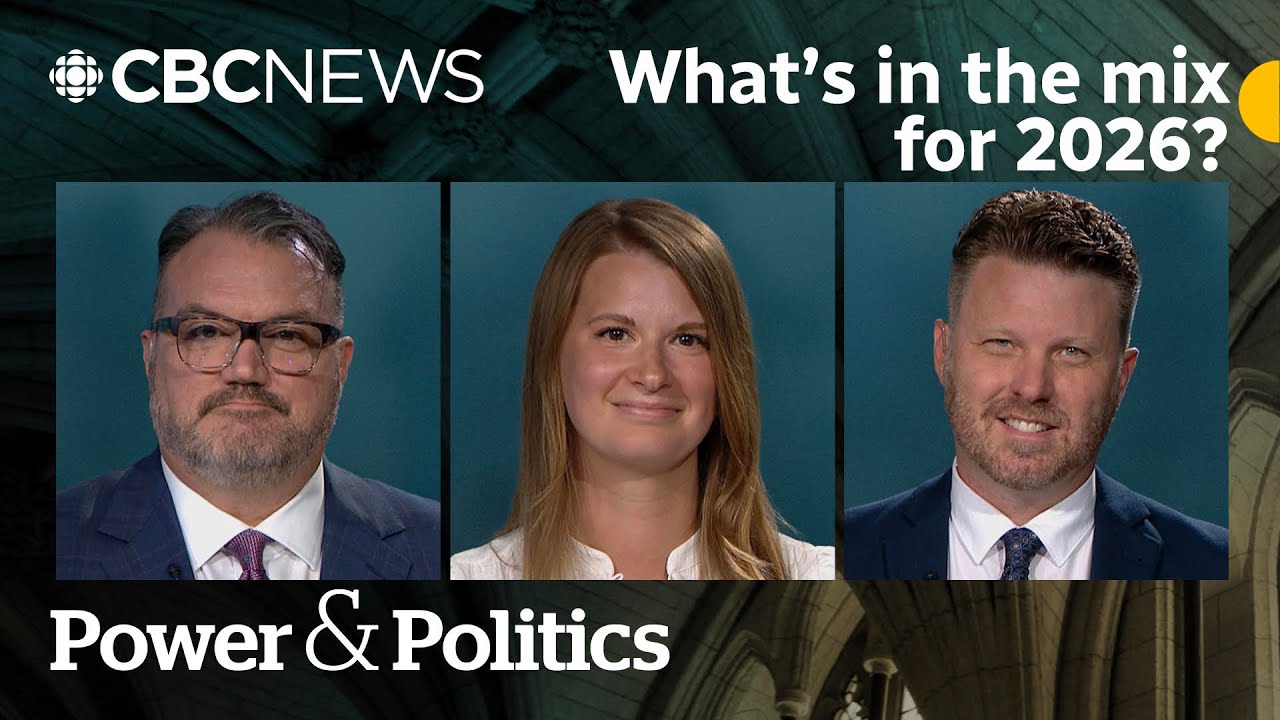
- Melanie Riche highlights the need for the NDP to balance big progressive ideas with clear communication to the broader Canadian public beyond party members.
- There is concern that Avi Lewis may need to moderate his messaging to connect with traditional NDP voters and the general electorate.
- Greg McKern points out internal divisions within the NDP, especially with provincial leaders distancing themselves from Lewis's federal leadership.
- The challenge for Lewis includes uniting the party’s base while appealing to voters in key provinces like Saskatchewan, Alberta, and Ontario.
- The discussion touches on the historical role of the NDP as both a conscience of Parliament and a potential governing party.
- Fred Delori notes the significant burden on Avi Lewis to reconcile federal and provincial NDP interests and to appeal to voters in regions like Alberta.
- The video underscores the importance of immediate, tangible policy impacts, such as housing, to resonate with Canadians facing urgent issues.
- Overall, the NDP faces a critical moment in defining its identity and strategy under new leadership amid a shifting political environment.
Full Transcript — Download SRT & Markdown
Speaker A
Hello, and welcome to a special holiday edition of Power and Politics. I'm Catherine Cullen.
Speaker A
It's a pivotal time for three of the main federal political parties.
Speaker A
The Liberals could be on the brink of securing a majority government one year into their mandate.
Speaker A
Conservative leader Pierre Poliev sailed through a review, but he's been leading support and MPs to the Liberals.
Speaker A
And the NDP has picked a new leader, but there are divisions within.
Speaker A
Can Avi Lewis return the party to its former glory or even simply official status?
Speaker A
Our party insiders are here to discuss it all.
Speaker A
Greg McKern, former Liberal ministerial staffer, now with Can Strategies.
Speaker A
Fred Delori, former Conservative campaign manager and partner at Northstar Public Affairs.
Speaker A
And here with me, Melanie Riche, former director of communications for the New Democratic Party.
Speaker A
Now a senior consultant with Earnscliff Strategies. Let's begin with the NDP, hot off a leadership race.
Speaker B
Avi Lewis.
Speaker B
39,734 votes.
Speaker B
39,734.
Speaker C
We are building a new foundation for our party.
Speaker C
And we are ready to come roaring back on the Canadian political stage.
Speaker C
The NDP will start winning again because we will become that beacon to the 99%.
Speaker C
A government that works for the many, not the money.
Speaker C
We're coming with a completely different set of ideas that are populist and popular.
Speaker C
There are differences in our NDP family that are the exception in a huge shared base of values.
Speaker C
Certainly, uh, the spiraling cost of living is just a fundamental focus.
Speaker C
It has been throughout this, throughout this leadership race and now that I'm leader, we're going to stay laser focused on that.
Speaker A
Okay, Mel, I want to start with you here.
Speaker A
What do you think the choice of Avi Lewis says about the direction that the NDP wants to go right now?
Speaker D
Right, I think, uh, throughout the leadership, what we saw, um, particularly with Avi Lewis's campaign, is folks who were excited, who were motivated.
Speaker D
And I think that's what we saw at convention this weekend.
Speaker D
Is a motivated, um, you know, voter base within the party that came out and supported Avi in big numbers.
Speaker D
Um, what that says about the direction of the party, I think will be a little bit different than what we've seen under Jagmeet, um, under Tom and even under Jack.
Speaker D
I think it's some, uh, more focus on, you know, the, the issue-based that's maybe seen as a little bit more progressive than, than pragmatic.
Speaker D
And I think that's what we're going to see, um, in the next little bit.
Speaker D
I do think that there's, there's an importance in balancing that.
Speaker D
I think, um, you know, in, in the, in the leadership speech on Sunday, we heard, uh, Avi talk a lot about some of the same things that he's been talking about throughout the campaign.
Speaker D
But this was now an opportunity to speak to Canadians instead of just members.
Speaker D
And using a lot of expressions and words that regular folks don't necessarily understand.
Speaker D
I think there's a broad, um, broad group of folks who may not have a membership to the NDP, but are part of the NDP's universe.
Speaker D
So I think it'll be important, um, in the next, you know, few weeks, few months to temper the big ideas with how are we talking about our big ideas in a way that people actually understand what we're talking about.
Speaker A
Okay, so, so this is really interesting.
Speaker A
I want to stay with this for a sec.
Speaker A
Uh, temper the big ideas.
Speaker A
I mean, he said bold.
Speaker A
He is not afraid of the word socialism.
Speaker A
I mean, you say progressive, but he wants to take this party to the left.
Speaker A
Are you suggesting maybe he's going to have to what, cool his heels?
Speaker A
Pivot a little bit.
Speaker A
Now that the race is over?
Speaker D
Right.
Speaker D
I do.
Speaker D
I do actually.
Speaker D
Because you're not talking to members anymore, so if you want to go anywhere, you need to talk to regular people.
Speaker D
And I keep thinking of, you know, my parents at home watching TV, who may not understand any of the things that Avi was talking about on Sunday.
Speaker D
And I keep thinking of, you know, my parents at home watching TV, who may not understand any of the things that Avi was talking about on Sunday.
Speaker D
But who traditionally vote NDP or who have voted NDP.
Speaker D
You know, under Jagmeet and and other past leaders.
Speaker D
So the importance of, um, and and I don't even know that it's tempering the big ideas.
Speaker D
But it's making sure that folks know, uh, what you're doing for them in the immediate.
Speaker D
We, we get lost a little bit sometimes in the big ideas.
Speaker D
Where, um, it takes a lot of time for those, those big programs to come in.
Speaker A
Is there a specific example you could give us?
Speaker D
Yeah, uh, maybe a specific example.
Speaker D
The way we talk about housing oftentimes is, is, is difficult.
Speaker D
For folks because it's going to take years to build, right?
Speaker D
And, and the, the, um, it, it's, it seems sometimes as a little bit out of touch with the reality of real people.
Speaker D
Because they don't have years to wait for stuff.
Speaker D
So the ability to tell them how we're going to help them in the immediacy is, is really important.
Speaker D
Because folks need help now.
Speaker A
Okay, Greg, I want to bring you in here.
Speaker A
I mean, there's the question of how to communicate your ideas to Canadians.
Speaker A
There's what to do about divisions within the New Democratic Party.
Speaker A
There's the question of finding a seat.
Speaker A
Mr. Lewis has a pretty long to-do list.
Speaker A
Where do you think he should start?
Speaker E
Well, you know, when you start off within minutes of winning, um, you know, the leader of the NDP in Saskatchewan.
Speaker E
Carla Beck, who has a really strong chance of becoming the next premier there.
Speaker E
The leader of the NDP, uh, in, uh, Alberta, uh, Mr. Nenshi.
Speaker E
They both issued statements, you know, basically disavowing, uh, the new federal NDP leader.
Speaker E
So, it, you know, what, what's the old story about, you know, the best time to plant a tree?
Speaker E
You know, is today and then, you know, or, or, you know, was a year ago and then or 10 years ago.
Speaker E
It feels like the work hasn't been done with some of the places in Canada where the NDP are quite strong.
Speaker E
I'm speaking to you from Halifax.
Speaker E
The official opposition here is the NDP.
Speaker E
In Ontario, the official opposition is the NDP.
Speaker E
You know, Wab Canoe, uh, premier, BC premier.
Speaker E
And then the two, two leaders that I just mentioned.
Speaker E
So it, you know, Wab Canoe was probably the best thing that happened to Mr. Lewis.
Speaker E
Who, you know, in his statements.
Speaker E
But he also talked about the importance of winning.
Speaker E
And my NDP friends talk about the struggle within their party about whether or not you want to be the conscience of Parliament.
Speaker E
Or do you want to be in government?
Speaker E
And it feels like Mr. Lewis is talking about an issues-based party as opposed to a representationally-based party.
Speaker E
And I, you know, I can't help but think of the moment right now.
Speaker E
The challenges that the Canadian auto industry is, is going, uh, through.
Speaker E
And I, you know, I think back to the, to the 80s and, and Ed Broadbent, who represented Oshawa.
Speaker E
The heart of a lot of, uh, auto manufacturing in Canada.
Speaker E
And and it seems to be a big gulf between Mr. Lewis and those traditional NDP voters.
Speaker E
And I think that's going to be a big challenge for him.
Speaker E
Uh, you know, Fred, uh, you know, wrote something about the NDP that got a lot of people's attention last week.
Speaker E
And our comments last week, you know, I, I had, you know, NDP, um, supporters on social media, you know, kind of attacking me.
Speaker E
You know, how, how is a liberal, are you going to say this?
Speaker E
But like, if I lived in Calgary and I'm looking at a premier that is talking about allowing a referendum around separation.
Speaker E
She's playing to the base of her party.
Speaker E
Well, and and there's no liberal party.
Speaker E
Well, I'm looking to people like Mr. Nenshi to make sure Alberta stays in, in Canada.
Speaker E
So, you know, I, I, the, the answer to your question, Catherine, is I think the new NDP leader has a huge burden ahead of him.
Speaker E
And and, you know, with two leaders that are waiting to take over in those provinces.
Speaker E
That don't feel like they, he reflects their values.
Speaker A
Uh, Fred, uh, so Greg referenced what you wrote on your substack.
Speaker A
Uh, which was in part that the provincial NDP should be terrified.
Speaker A
Of what Avi Lewis's leadership will bring.
Speaker A
I mean, Greg referenced that conversation with Wab Canoe.
Speaker A
Wab Canoe's probably helping Avi Lewis out a bit here.
Speaker A
But Avi Lewis is saying, listen, there is still common ground.
Speaker A
We can still work together.
Speaker A
Do you think he can mend some of those fences?
Speaker A
And as a conservative, I mean, you guys need the NDP to do a little bit better.
Speaker A
Are you anxious to see him up his game on that front?
Speaker F
Uh, look, I, I've, I've always argued against the word pivot.
Speaker F
That's a very, uh, striking move where you completely go a separate direction.
Speaker F
Uh, I think he's now getting on to the main, uh, agenda of what Canadians have been talking about.
Speaker F
Uh, and what they're concerned about when it comes to Trump and tariffs.
Speaker F
He was obviously very good on affordability and crime.
Speaker F
And came within only 20 or so seats of, uh, of the Liberals in the last election.
Speaker F
So it did work in that regard.
Speaker F
Now, he hasn't been strong on the tariff and US thing.
Speaker F
Until, uh, about a month or so ago when he gave his speech at the Economic Club.
Speaker F
And then he's been doing his tours.
Speaker F
He's went to the UK, he's went to the US.
Speaker F
And, uh, his program on Joe Rogan.
Speaker F
I think the strategy right now, though, for him and what they should be doing.
Speaker F
Is, uh, get as much time as you can.
Speaker F
Right now the issue set is not good.
Speaker F
We have a, uh, major, uh, trade crisis right now.
Speaker F
And all eyes are on the Prime Minister to, uh, diversify our markets and get things moving.
Speaker F
Uh, and it's not the real time for politics or elections.
Speaker F
So I think time is on his side if he can get to that stage.
Speaker F
There's a lot of conservative MPs who if an election were today would lose their seats.
Speaker F
Uh, and they're nervous about that.
Speaker F
Um, so I think he needs to, uh, time's one thing.
Speaker F
Also softening, uh, his voter coalition.
Speaker F
In terms of, uh, or sorry, his negatives.
Speaker F
Uh, which are very, uh, have been very high.
Speaker F
And I think he's had some success over the last few weeks on this.
Speaker F
I think the Joe Rogan thing.
Speaker F
Uh, was heard by millions of Canadians and the polling that we've seen on it.
Speaker F
Show that it's had a positive impact.
Speaker F
There has been a tightening by a few points in a number of the major polls.
Speaker F
He doesn't need to take over the polls or even tied them or or even come too close right now.
Speaker F
He just needs to soften the negatives.
Speaker F
That needs to be his focus.
Speaker F
And if he accomplishes that, he could get himself back into the running.
Speaker F
And again, it all comes down to when the next election is and what the issue sets are when we are in that next election.
Speaker A
Uh, Mel, one way he gets time is if Mark Carney gets a majority government.
Speaker A
But then Pierre Poliev potentially has to hang on for three years when some members of his caucus have, have left for the Liberals.
Speaker A
Is there such a thing as, as too much time for Mr. Poliev?
Speaker A
Like, like how does he get the balance right here?
Speaker D
Totally, and a reminder that the Conservative is the only party who have adopted Michael Chong's, uh, private reform act.
Speaker D
Which means that caucus gets to, uh, get rid of him at any, at any point that caucus wants.
Speaker D
So absolutely, too much time could be a bad thing for Pierre Poliev.
Speaker D
Particularly if he can't figure out what his message is and what his opposition to Carney is.
Speaker D
I think to, to Fred's point, there has been, um, Fred may not like the word pivot.
Speaker D
But finally a pivot after hearing about a pivot for a year, he said the things he needed to say on the US.
Speaker D
He said the things he needed to say about Trump.
Speaker D
He didn't take the bait from, from Joe Rogan on those things.
Speaker D
So, so some of those things are, are good for Pierre Poliev.
Speaker D
I think it's way too late.
Speaker D
I think the time to do that was, was a year ago.
Speaker D
And I don't know how much, um, goodwill that'll buy him with, with voters.
Speaker D
I'll go back to, you know, when I look at my parents.
Speaker D
Um, is, is that something that they can, or is he somebody that they can still vote for?
Speaker D
No, he's still the same, you know, guy who's said the same kind of things.
Speaker D
But, but it does, um, make it harder still for Pierre Poliev.
Speaker D
He, he hasn't figured out what, um, how to describe Carney.
Speaker D
And how to describe how different he is than Carney.
Speaker D
And I think that's a major challenge because he's unable to make the choices clear.
Speaker D
And in this weird time where he's been unable to do that, it's almost like he's lost ground on his issue sets.
Speaker D
We hear him talking less about the cost of living.
Speaker D
We hear him talking less about affordability because he's trying to match the Prime Minister on, on the Prime Minister's, you know, international stage.
Speaker D
Seriousness, statesman-like.
Speaker D
So he's trying to, to do what he had never done there, but in the, in the end, I think it opens up a massive place also on affordability.
Speaker D
And I think the opportunity there is actually for the Liberals, it's for the NDP.
Speaker A
Uh, Greg, interesting question when Mel says, well, he's got to figure out how to describe Carney.
Speaker A
But at the same time, some of what we're seeing, I think, is around how he describes himself.
Speaker A
What he wants Canadians to see about himself.
Speaker A
What is the bigger challenge for Pierre Poliev?
Speaker A
Is it how he deals with Mark Carney or how he presents Pierre Poliev?
Speaker E
Well, it's, it's funny, one of the things that he had said, I think, in the Rogan interview was he, he said, I am the Prime Minister in waiting.
Speaker E
And and I find that odd that, uh, there's lots of people that have been described, you know, prime ministers or premiers in waiting.
Speaker E
They don't usually describe themselves that way.
Speaker E
And it would have been perhaps a more apt, uh, thing to describe yourself in 2024.
Speaker E
It's certainly not that feeling now.
Speaker E
Uh, up until about Christmas, um, the parties were neck and neck.
Speaker E
Uh, Mr. Carney far ahead, uh, you know, in terms of head-to-head polling between, um, you know, Carney and Poliev.
Speaker E
But since that time, and I disagree with, with Fred.
Speaker E
I'm not sure the polls are actually showing that they got a, a bump from going on the Joe Rogan show.
Speaker E
I think, I think he got a lot of attention from it.
Speaker E
But we haven't figured out whether it's actually given him any boost.
Speaker E
I, I, look, Catherine, I do wonder.
Speaker E
What does Aaron O'Toole think some days?
Speaker E
What did I do that was so wrong when Poliev gets chance after chance after chance?
Speaker E
If he goes on a podcast and talks about the RCMP being politically manipulated.
Speaker E
Um, he goes on the Joe Rogan podcast, which we can talk about the reach.
Speaker E
But still, it's a podcast where some very unseemly things were talked about.
Speaker E
I still hear from people that they're very uncomfortable.
Speaker E
That, you know, that, that, um, that Mr. Poliev went on a show where he would talk about, you know, who Justin Trudeau's real father is.
Speaker E
I mean, that, that sounds like, you know, American network afternoon TV in the 1990s.
Speaker A
He did, he did shut that.
Speaker A
I mean, that was Joe Rogan's speculation.
Speaker A
And Mr. Poliev shut it down.
Speaker E
But Catherine, I, I, I hear what you're saying.
Speaker E
But I would, when you say that, I would actually encourage people to go and watch that.
Speaker E
Because there's a lot of laughter during that.
Speaker E
I wouldn't, it wasn't the hardest pushback I've ever seen.
Speaker E
And he kind of said, no, I don't know about that.
Speaker E
And I mean, that's the risk.
Speaker E
You go on, when you go on a medium like that, don't be surprised when it happens.
Speaker E
Um, I, I, I still, and I'm still kind of wondering if this push in the United States.
Speaker E
Is about having, you know, a lane open post politics for him.
Speaker E
And if that's the case, you know, he could do very well.
Speaker E
In the American right-wing speaking, uh, circuit.
Speaker E
But he's also got, you know, his, his campaign manager said a few days ago.
Speaker E
That they were focused on affordability and then a couple days later, Mr. Poliev is retreating the author of Harry Potter about trans issues.
Speaker E
And there's a picture of a, of a female boxer who is female.
Speaker E
And why if you are focused on affordability, are you talking about that?
Speaker E
The other thing, Catherine, I'm noticing is he seems to have less and less control over his caucus.
Speaker E
In terms of caucus discipline.
Speaker E
Um, Jamil Javanini, the part of the reason why Mr. Poliev couldn't go to Washington.
Speaker E
Is if he didn't leave Washington with a meeting with the, after meeting with the VP and the president.
Speaker E
Like Javanini did.
Speaker E
It would have been seen as a, as a failure.
Speaker E
And you also have Mr. Javanini voting the other day with props, using the Bible as a prop.
Speaker E
Which seems to suggest, well, the conservative MPs who didn't vote with a Bible.
Speaker E
What's up with them?
Speaker A
Uh, Fred, uh, Greg raises the question of what Aaron O'Toole, your former boss, might be thinking.
Speaker A
Why didn't he get a second chance?
Speaker A
Well, he didn't get a second chance because of the Reform Act and because of conservative caucus.
Speaker A
So I wonder how much you think Mr. Poliev, uh, needs to be concerned about that issue.
Speaker A
Uh, and that being perhaps the biggest challenge to his leadership right now.
Speaker F
Well, since Poliev passed the leadership review at the convention.
Speaker F
There is no other way to take him as leader other than if caucus does it.
Speaker F
And they do have that mechanism they could use.
Speaker F
At the end of the day, you know, I was Aaron O'Toole's campaign manager.
Speaker F
I ran two of his leadership campaigns and his general election.
Speaker F
And would have been happy to, uh, run his next campaign if he'd asked me to.
Speaker F
Uh, but at the end of the day, caucus didn't support him.
Speaker F
And they chose to remove him as leader.
Speaker F
Uh, I'm not hearing anything like that happening right now in the Conservative caucus.
Speaker F
I know when there was floor crossings happening, there was, um, reports of up to a dozen MPs who are very, you know, unhappy with Poliev.
Speaker F
That's a very small percentage of a caucus this large.
Speaker F
This is the largest opposition caucus in Canadian history with 140 plus members.
Speaker F
Uh, so it, there is no movement right now.
Speaker F
But it is something he has to be mindful of, um, as he goes in.
Speaker F
And as you know, we talked about the timing.
Speaker F
I do think time is on his side.
Speaker F
Um, but, you know, if things don't improve.
Speaker F
If if MPs are still worried after a year.
Speaker F
If we're talking about the same conversation next year, this could move.
Speaker F
But I remain convinced that Poliev will lead our party into the next election.
Speaker F
Unless he himself determines that's not what he wants to do.
Speaker A
Fred, you're saying he needs more time.
Speaker A
We just have a minute here.
Speaker A
But I'm wondering, is the ultimate conclusion that it's a good thing for Pierre Poliev?
Speaker A
If another MP crosses the floor, even if, like, if he's bleeding more MPs to the Liberals.
Speaker A
It ultimately that helps him?
Speaker F
Well, no, we don't, we don't need that.
Speaker F
If, uh, if the Liberals do a clean sweep in the by-elections, they'll have their true majority.
Speaker F
Uh, so it's not like that, uh, adds another, uh, in terms of prolonging this Parliament.
Speaker F
So, uh, and obviously losing a member is not helpful.
Speaker A
Okay, we are going to leave this conversation there.
Speaker A
But we're not done yet.
Speaker A
Still to come, can the Liberals capitalize on their momentum heading into those three federal by-elections?
Speaker A
That could, as Fred said, push them over the edge of a majority.
Speaker A
Our party insiders will be right back.
Speaker A
Welcome back to this special holiday edition of Power and Politics.
Speaker A
Today, we've been going over where each of the federal parties stands ahead of the upcoming by-elections.
Speaker A
But we're going to open the floor to our political insiders now to talk about what they're watching for in the weeks and months ahead.
Speaker A
I'm joined by Greg McKern, Melanie Riche, and Fred Delori.
Speaker A
Uh, so Greg, we are going to start with you.
Speaker A
You are watching the Prime Minister closely in the eight weeks left in this, uh, parliamentary session before the summer sitting.
Speaker A
Before the summer.
Speaker A
What do you think he's going to be prioritizing?
Speaker E
Well, just quick background for people that watch politics.
Speaker E
Um, there's something that's a phrase that's used sometimes the silly season.
Speaker E
And usually refers to that time before the Christmas break and the summer break.
Speaker E
Where you actually see what priorities the government has in terms of the legislation.
Speaker E
Um, and it's not just what they want to get passed in a minority.
Speaker E
It's going to be what they can actually get passed.
Speaker E
So the by-elections may have a lot to do with, um, what happens before the summer breaks.
Speaker E
There is a long session that goes from May to June.
Speaker E
And, uh, you know, sometimes there's extended hours.
Speaker E
There's, um, I know this week it was hard to, to believe this in Canada.
Speaker E
But it gets very, very hot in Ottawa very early.
Speaker E
And a lot of mistakes can be made.
Speaker E
The reverse in, in the fall was you had people like Michelle Rempel tweeting, um, we're going to win.
Speaker E
There was an, you know, a feeling that the conservatives might decide on the, on a confidence vote to, to pull the plug.
Speaker E
We saw thanks to some curtain shenanigans.
Speaker E
That that isn't the case.
Speaker E
So I don't think the government is as pressed in terms of, you know, whether or not the bills will pass.
Speaker E
But it is a amount a certain amount of time.
Speaker E
And what does the government want to be talking about over the summer going into the fall?
Speaker E
We're going to see that in May and June.
Speaker A
Mel, thoughts on silly season.
Speaker D
Yeah, silly season.
Speaker D
I'm glad I no longer on the hill for silly season.
Speaker D
But, uh, I, I would say, I think the government needs to start passing some stuff.
Speaker D
And start delivering on some of their strategies that they've introduced but not necessarily move the needle on.
Speaker D
I think that's what you're going to have to start seeing, particularly if they've got, you know, the ability to reconstitute.
Speaker D
Reconstitute, thank you, the francophone and me was putting the wrong accents there.
Speaker D
Um, committees and has a little bit more room to do what they want, uh, in the house.
Speaker A
Fred, do you think they need to put the pedal to the metal as it were?
Speaker A
If, uh, the electoral circumstances allow it?
Speaker F
Absolutely, they need to get things, uh, through the house.
Speaker F
They need to pass legislation.
Speaker F
It took, uh, up until, uh, about a month ago, only one bill had passed the house.
Speaker F
Uh, in Parliament as a whole.
Speaker F
So, um, they seem to have that goodwill now with the other parties.
Speaker F
There seems to be things moving constructively.
Speaker F
Um, but at the end of the session, I think it'll be helpful to their narrative to show, okay, we passed this legislation.
Speaker F
And now it's going to impact Canadians this way.
Speaker A
Mel, so much of the Liberal pitch of Mark Carney's pitch.
Speaker A
Was predicated on Canada's relationship with the United States.
Speaker A
Carney did say a couple times during the election campaign that we were going to win this trade war.
Speaker A
I do not know that anyone would argue that Canada is winning right now.
Speaker A
Um, how big a concern does the state of affairs with the US need to be for Mark Carney right now?
Speaker D
I think, I think to Fred's point of the shovels in the ground.
Speaker D
I think folks still, or not, I think when we look at polling.
Speaker D
We see that people still have a lot of trust in Mark Carney.
Speaker D
They still have a lot of empathy for him.
Speaker D
Uh, because he's dealing with somebody who's so unpredictable.
Speaker D
I don't know that anybody is expecting anything differently right now.
Speaker D
And when they see him traveling internationally and making those deals internationally, they're saying, okay.
Speaker D
We elected the guy to do this.
Speaker D
He's doing this.
Speaker D
Um, and he was the right person to do those things.
Speaker D
But if he is not, like, if he is not able to show how that help is impacting people on a day-to-day basis.
Speaker D
Or getting to them in a real way.
Speaker D
Um, I think that's when you start seeing the, the, the things.
Speaker D
I think that's when you start seeing folks lose, uh, trust in the Prime Minister.
Speaker D
Um, and I think that's also why you're seeing him every now and then he talks about something affordability.
Speaker D
When we saw, uh, the announcement on the GST.
Speaker D
That was not a natural thing for him to be talking about.
Speaker D
But we saw, you know, a focus on, um, help for people.
Speaker D
I think the more he does that, the more he insulates himself.
Speaker D
But that's not a natural place for him.
Speaker D
He, you know, he's usually talking about reinforcing our economy.
Speaker D
Investing in our industry.
Speaker D
So the, the risk there is that eventually people are going to start to say, you've announced a lot of cool stuff.
Speaker D
My bills are still too expensive.
Speaker D
My job is less secure because of what's happening with the United States.
Speaker D
At what point do we start trusting you that you're on the right path and you're doing the right things?
Speaker D
I think there's still some time to go to that.
Speaker D
And frankly, I don't think that there is, like, a real opposition leader right now taking him to task on, on that affordability.
Speaker D
Uh, angle, so he's got a little bit of room to breathe.
Speaker D
But I do think the longer it takes to start showing people, and it may not be as it relates to the US.
Speaker D
But I think it needs to be as it relates to one of the relationships that he's building.
Speaker D
The, the less trust people are going to have with him.
Speaker D
And that's when things are going to start to turn.
Speaker A
Greg, do, um, look, the amount of international travel he's doing is extraordinary.
Speaker A
The times are extraordinary, what Canadians have asked him to do.
Speaker A
In terms of, you know, rebalancing our trade relationship.
Speaker A
You can understand how it fits in with the, the perceived mandate.
Speaker A
But is there a danger there, is there a tipping point where he's, um, you know, this work on finding trade deals turns into like too much jet setting?
Speaker A
Becomes a political liability.
Speaker D
Totally.
Speaker E
There's, um, the aspect of his international travel is aided by the fact that it seems to be very well thought out.
Speaker E
And well received wherever they go.
Speaker E
Um, you know, somebody who had, um, reported from China from a, for a long time.
Speaker E
Uh, is now back in North America.
Speaker E
Told me the very fact that the, the way the invitation was given by China.
Speaker E
Was their indication that that trip was going to go well.
Speaker E
Um, but you're right, and I mean, if you start to lose the mood of the room.
Speaker E
You, you can, you know, end up in danger.
Speaker E
But I will, there, there's an interesting thing with the Prime Minister where, um, there'll be, you know.
Speaker E
There's an international trip or a deal and then there'll be something with the premier of Alberta.
Speaker E
This week we saw something with the premier of Ontario.
Speaker E
Um, but you will also have, um, you know, some pride in Canada.
Speaker E
One of our legends in terms of, uh, of culture, Joni Mitchell was recognized at the Juno Awards.
Speaker E
And it was our Prime Minister who presented that to her.
Speaker E
I think, you know, there's a lot of pride in that.
Speaker E
And the, I, I think he's, he's been a lot better at the political partisan things.
Speaker E
That I think even people like myself when we were hearing in the fall of 204, he spoke to caucus.
Speaker E
You know, there was a question about whether or not he would get that aspect.
Speaker E
He, he really gets it.
Speaker E
And when he adds a bit of humor and a human touch to it.
Speaker E
I, I think he's done a very good job in terms of covering as, as many of the bases as, as possible as you can do.
Speaker E
I think the one challenge, though, Catherine, is he's, he is only one person.
Speaker E
And when you have a very, you know, person-dependent brand, as Liberals saw with Justin Trudeau.
Speaker E
Um, you have to have, you know, some, some long-term planning.
Speaker E
And I always refer to the Cretchen cabinet where he had people on the right of the Liberal Party, people at the left.
Speaker E
There was something for everyone there.
Speaker E
Um, it's, it's not a great time to, to sort of to build out.
Speaker E
You know, the, the, to showcase the team for, for the sake of showcasing him.
Speaker E
Um, but again, he is only one person.
Speaker E
That's a lot of travel.
Speaker A
Uh, Mel, I mean, I have to, I already used up my, that's wild.
Speaker A
A few minutes ago on Terbon.
Speaker A
But what is happening in Quebec provincial politics is remarkable.
Speaker A
When somebody told me the other day that they thought the Liberals really had a shot.
Speaker A
And I thought, didn't the provincial Liberals like just have a scandal?
Speaker A
What is, what do you make of all this?
Speaker D
Absolutely.
Speaker D
And with the popular Quebec Liberal, right?
Speaker A
With Pablo Rodriguez, yes.
Speaker D
Pablo Rodriguez was, you know, seen as somebody big entering provincial politics.
Speaker D
That could change things for the Liberals, and how funny that the things.
Speaker D
Things changed for the Liberals once, once he was out the door.
Speaker D
I, I will say that I think the reason that things have changed for, um, the, the PLQ in Quebec.
Speaker D
Is because of that referendum question.
Speaker D
It's because of that separatism.
Speaker D
I think there's a lot of folks in Quebec who don't necessarily want to see that happening.
Speaker D
And then instead of putting their vote behind the PLQ, they're, they're, I think, supporting the Liberals as a, as a response to that.
Speaker A
I think, is it not also just about the, um, intensity of the PQ leader?
Speaker A
Paul St-Pierre Plamondon.
Speaker D
I, I think so, uh, I, I worked for Jagmeet and we had quite a few, uh, not so awesome interactions with him.
Speaker D
So, so I, I totally appreciate why that, that is something that, that could be seen for a lot of Quebecers.
Speaker D
Who do not see themselves represented in his version of Quebec.
Speaker D
So I think absolutely that could definitely be something that's impacting too.
Speaker A
Uh, and, you know, Greg, all of these things always interesting in terms of the federal consequences too.
Speaker A
What do you think, uh, about Fred's pick?
Speaker E
It's, it's interesting, I mean, there's a couple of lessons there about, um, leaders picking their time to go.
Speaker E
And I, I think everyone needs to take a look at, you know, when Frank McKenna left provincial politics.
Speaker E
He had, he had established a deadline for how long he wanted to be in and and he, he left, you know, according to that deadline.
Speaker E
Um, you know, you look at the premier of Quebec, you know, incredibly popular.
Speaker E
Um, you know, Teflon was used to describe him.
Speaker E
And and now not so much.
Speaker E
So do we see an example there, we saw this, um, you know, when you do a quick leadership, sometimes it works.
Speaker E
Doug Ford taught us that.
Speaker E
Look, look what happened since.
Speaker E
Look at the federal Liberals.
Speaker E
As as Mel kind of alluded to.
Speaker E
Um, what will actually happen there?
Speaker E
But I will say that like Quebec Liberals feel like the wind is in their sails.
Speaker E
That the, the circumstances and how the province has responded to the change of Liberal leaders.
Speaker E
Uh, has been, um, they're, they're very happy with that.
Speaker E
They think it's going their way.
Speaker A
Politics in this country, folks, never boring.
Speaker A
Uh, very grateful.
Speaker A
And you know what else is never boring?
Speaker A
The political pulse.
Speaker A
So I'm so happy that I got to spend some time with you guys today.
Speaker A
Thank you so much to our political pulse panel.
Speaker A
Greg McKern, Melanie Riche, and Fred Delori.
Speaker A
You can watch them every Friday night.
Speaker A
Right here on Power and Politics.
Speaker A
I am Catherine Cullen.
Speaker A
Thank you so much for watching this special holiday edition of Power and Politics.
Speaker A
There's more CBC News to follow right here on CBC News Network.
Speaker A
Stay tuned.
Topics:NDPAvi LewisCanadian politicsPower and PoliticsCBC Newsfederal electionprogressive policiesparty leadershippolitical strategyparty divisions