Skip to content

M06_C02

Detailed explanation of bank income, expenses, risks, and their impact on return on assets and equity.

Key Takeaways

  • Bank income is a mix of interest and non-interest sources, both exposed to different types of risk.
  • Interest rate risk significantly impacts interest income depending on loan portfolio composition.
  • Non-interest income can be fee-based or risk-related, affecting the bank’s risk profile differently.
  • Expenses, especially interest expenses and provisions for loan losses, directly influence net income and returns.
  • Liquidity and credit risks are critical factors shaping the bank’s financial performance and stability.

What the video covers

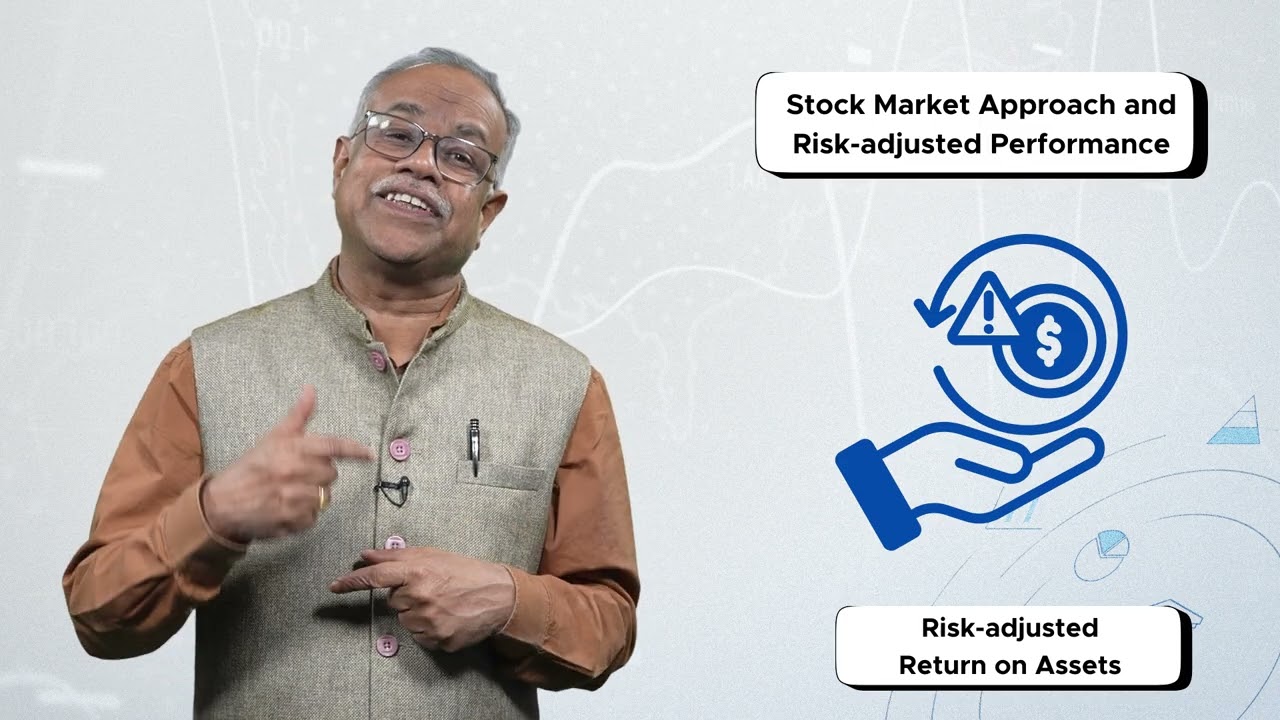
  • Return on assets includes net income derived from interest and non-interest income minus expenses and provisions for loan losses.
  • Interest income arises from advances and investments, influenced by interest rate, composition, and volume.
  • Non-interest income includes fees from services like guarantees, trading profits/losses, penalties, and fund transfers.
  • Interest income is exposed to credit risk and interest rate risk, especially depending on fixed vs floating rate loans.
  • Non-interest income carries some risk, particularly from guarantees and letters of credit, while some fees are risk-free.
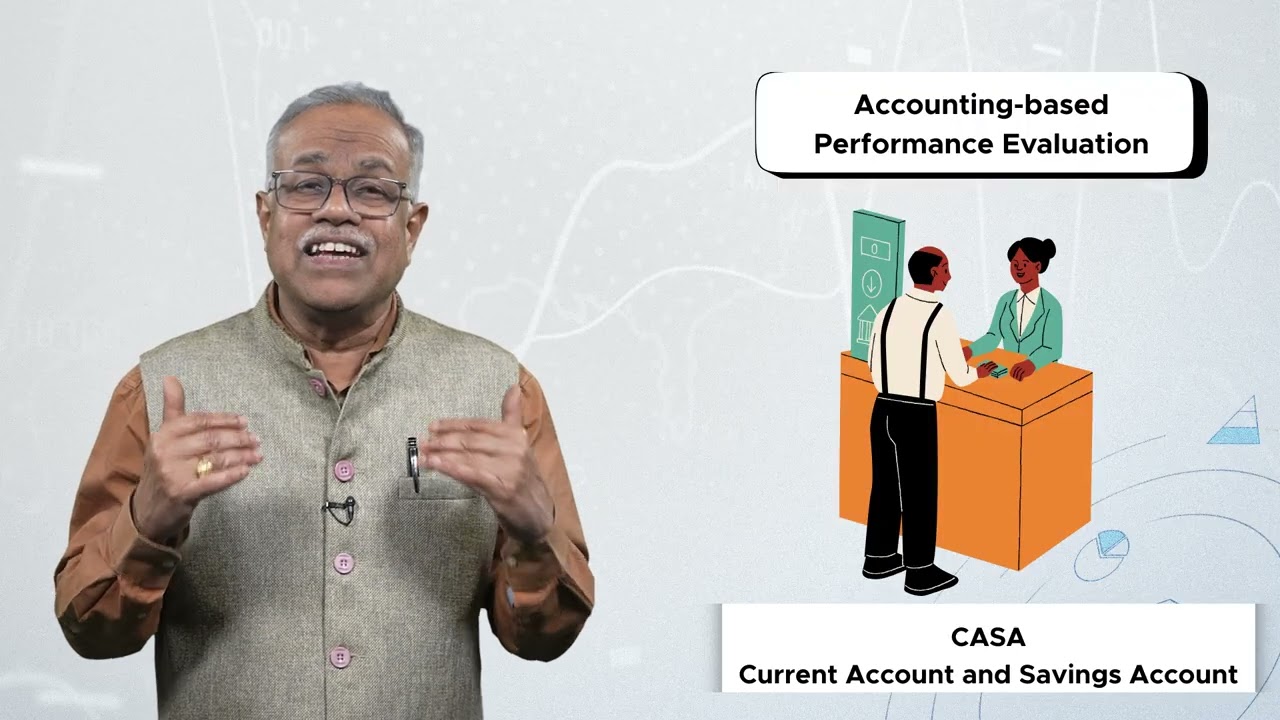
  • Interest expenses depend on deposit types (demand, savings, term) and borrowings, affecting bank costs and liquidity risk.
  • Overheads include salaries, administrative costs, marketing, audit fees, and other operating expenses.
  • Provision for loan losses reflects credit risk and directly impacts expenses, net income, and return on equity.
  • Liquidity risk is influenced by the composition of deposits and borrowings.
  • Market risk affects profits or losses on the bank’s investment portfolio and overall income.

Answers

Questions about this video

What are the main sources of a bank's income?

A bank's income comes from interest income generated by advances and investments, and non-interest income from fees, penalties, and trading profits.

How does interest rate risk affect a bank's income?

Interest rate risk affects interest income depending on the mix of fixed and floating rate loans, with floating rate loans being more sensitive to rate changes.

What role do provisions for loan losses play in a bank's financial health?

Provisions for loan losses indicate credit risk and directly increase expenses, reducing net income and return on equity.

Full Transcript — Download SRT & Markdown

00:06
Speaker A
Now let us try to understand a little more about this income part of the return on assets.
00:15
Speaker A
Return on assets is net income, which means income from interest as well as non-interest income. It also has expenses, interest expenses, overheads, and thirdly, provision for loan losses. So net income is the difference between income and expenses, that we know very well.
00:40
Speaker A
Income can be coming from two sources: interest income.
00:48
Speaker A
Interest income is coming out of the advances and out of investments. So both advances and investments have an interest rate, its composition, and its volume.
01:08
Speaker A
So interest income is a combination of three things: interest rate, what is the composition of the advances and investments, and then what is the volume of these things.
01:25
Speaker A
Similarly, a bank can generate non-interest income also. Non-interest income means a bank may be providing services like giving a guarantee or trading in the market by using their investment portfolio. The investment portfolio can be a tradable portfolio.
01:49
Speaker A
If it is a tradable portfolio, the bank is getting profit on trading or maybe losses on trading sometimes, and the bank may be generating other types of income also, non-interest income as well. For example, the bank charges some penalty if the minimum balances are not maintained.
02:10
Speaker A
In India, banks charge if the number of withdrawals from the ATMs is increasing more than a specified limit given by the regulator.
02:23
Speaker A
So the bank is charging a few rupees as charges for more and more ATM withdrawals, or the bank may charge for transfer of funds when they're using the NEFT or RTGS.
02:37
Speaker A
Some charges the bank may be doing, that is other income. So both the fee and service income and profit on investments and other income, this is the non-interest income portion.
02:53
Speaker A
If we look, both interest income as well as non-interest income is exposed to risk.
03:03
Speaker A
What risk? Interest income is exposed to both credit risk as well as market risk or interest rate risk.
03:14
Speaker A
Let us call it interest rate risk in the banking book. If the interest rates are changing, the bank charges the advances as per the revised rates. Bank charges the interest rate on advances as per the revised rates.
03:34
Speaker A
Bank may have fixed rate advances. Bank may have floating rate advances. Normally, a larger part of the loan portfolio is floating rate advances.
03:47
Speaker A
So interest rate risk largely influences the interest income. Interest income is influenced by interest rate changes.
03:59
Speaker A
Interest rate changes can be minimal, but the volume of the portfolio can be large, which affects the interest income, or interest rate changes can be substantial, but the composition of the fixed rate loans versus floating rate loans will be different.
04:22
Speaker A
If the bank has more fixed rate loans, then the exposure to interest rate risk is very limited, and if the bank has more floating rate loans, the exposure to interest rate risk is very high. So the interest rate risk we have discussed is having an impact on interest income and subsequently net income of the bank and return on equity to the shareholders.
04:40
Speaker A
In the non-interest income, there could be some portion of the income which is exposed to risk. For example, if the bank is giving more letters of credit or guarantees, then all these carry a credit risk, and the bank is getting non-interest income or fees for providing these services. That means actually these are increasing the risk of the bank's portfolio and also generating non-interest income.
04:58
Speaker A
Whereas there could be some services, as I mentioned, it can be a NEFT transfer, RTGS transfer, or ATM withdrawal mid charges, or account opening charges, or commitment charges, or those types of things which could have nothing to do with risk. It is just a fee-based service.
05:21
Speaker A
So the non-interest income portion is also exposed to a portion of risk, and interest income is totally exposed to interest rate risk. So one has to see what is this rate, composition, volume, and what is the portion of the fee and service charges as well as profit on investments. If the interest rates are showing volatility, the market risk is high, the bank may have profits or losses on its investment portfolio.
05:41
Speaker A
The bank may take advantage of trading either to maximize the profits or to mitigate the losses. So both the interest rate risk, credit risk, and market risk are influencing the interest income and non-interest income of the bank. Thus, the total income of the bank is being affected because of these things. Now, coming to expenses, similar logic is applicable. Interest expenses. The bank is paying interest on deposits and borrowings.
05:50
Speaker A
Whenever there are changes in the deposit interest rates, the bank's expenses change; interest expenditure changes. Again, this interest is a combination of rate, composition, and volume. What portion of the deposits the bank is holding. If the bank has more demand deposits, there is no obligation for the bank to pay interest amount.
06:12
Speaker A
Whereas if the bank has more term deposits and more borrowed funds, the bank has to pay interest rate on those things. So the interest-paying liabilities or non-interest-paying liabilities, what is the portion of the non-interest liabilities is an important indicator in the performance of the banks because it influences the interest expenditure. So a larger part of the demand deposits as well as the savings account deposits, the bank has limited obligation of interest payment only on savings account deposits. If the bank is dependent more on the deposits, term deposits as well as the purchased funds or borrowings, then interest expenditure increases.
06:28
Speaker A
Now these things, as we have studied and understood in the earlier videos, these things have influence on liquidity risk.
06:48
Speaker A
If the bank has more current account deposits or demand deposits and savings account deposits and term deposits, we have understood how these are going to influence the liquidity of the bank. Then, of course, the overheads are operating expenses. The bank has to pay the salaries and other benefits, and there will be other administrative expenses to run the bank.
07:04
Speaker A
Advertisement, marketing, stationery, audit fees, and various types of administrative expenses will be there.
07:26
Speaker A
All those things will come under the overheads. Then finally, what is the amount of the provision the bank is making to meet the loan losses is an indicator of the credit risk of the bank or it is an indicator of the default risk of the bank. If higher the provision for loan losses as a percentage of total assets, the bank is having higher credit risk, and higher the provision for loan losses, higher would be the expenses, lower would be the net interest income, and lower would be the return on equity. So it is again giving the position of the credit risk or impact of the credit risk on expenses, accounting expenses directly, and net income of the bank and overall return on equity of the bank.
07:34
Speaker A
Whereas if the bank is having more of the term deposits and more of borrowed funds, the bank has to pay interest rate on those things. So the interest paying liabilities or non-interest paying liabilities is what is the portion of
07:54
Speaker A
the non-interest liabilities is an important indicator in the performance of the banks because it influences the interest expenditure. So larger part of the demand deposits as well as the savings account deposits the bank has limited obligation of uh interest
08:14
Speaker A
payment only on savings account deposits. If the bank is dependent more on the deposits term deposits as well as the purchaser funds or borrowings then interest expenditure increases.
08:29
Speaker A
Now these things as we have studied understood in the earlier videos these things have influence on liquidity risk.
08:40
Speaker A
If the bank is having more current account deposits or demand deposits and savings account deposits and terms deposits we have understood how these are going to influence the liquidity of the bank. Then of course the overheads are operating expenses. The bank has to
08:58
Speaker A
pay the salaries and uh other benefits and uh there will be other administrative expenses to run the bank.
09:06
Speaker A
Advertisement marketing stationary audit fees and various types of the administrative expenses will be there.
09:14
Speaker A
All those things will come under the overheads. Then uh finally what is the amount of the provision the bank is making to meet the loan losses is an indicator of the credit risk of the bank or it is indicator of the default risk
09:32
Speaker A
of the bank. If higher the provision for loan losses as a percentage of total assets, the bank is having higher credit risk and higher the provision for loan losses, higher would be the expenses, lower would be the net interest income
09:53
Speaker A
and lower would be the return on equity. So it is uh again giving the position of the credit risk or impact of the credit risk on expenses accounting expenses directly and net income of the bank and overall return on equity of the bank.
Topics:bankingreturn on assetsinterest incomenon-interest incomecredit riskinterest rate riskliquidity riskloan lossesbank expensesfinancial risk management

Get More with the SozAI App

Transcribe recordings, audio files, and YouTube videos — with AI summaries, speaker detection, and unlimited transcriptions.

Or transcribe another YouTube video here →