Skip to content
Get App

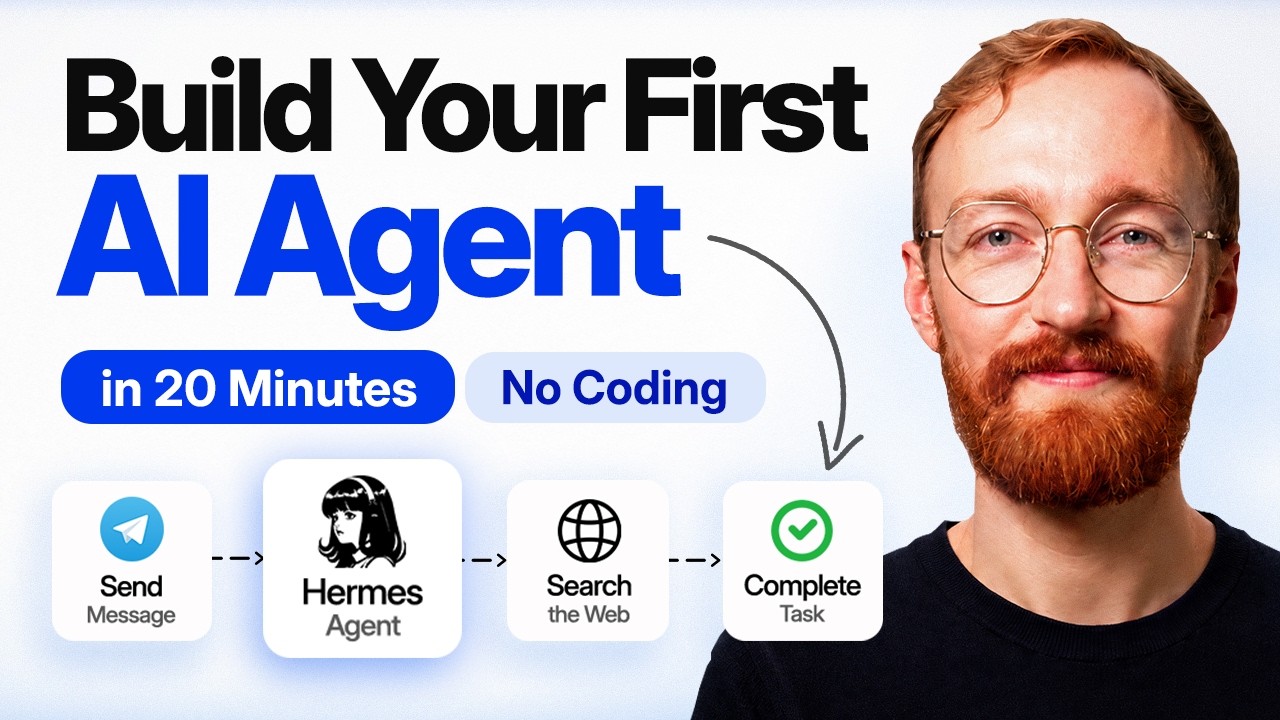
My Jev Pi Durable Agent CURATES News: HYPE, FACT, or SIGNAL

IndyDevDan shows how he uses a proactive, durable news agent (built on Pi/Jev, running on a Mac Mini) to filter AI hype, facts, and signal, moving engineers from in-the-loop to out-of-the-loop workflo

Key Takeaways

  • Proactive, durable agents running on a schedule can filter information noise autonomously and save engineers' attention.
  • Architecting agents as thin clients over durable backends allows the same agent to be accessed from multiple interfaces.
  • Cheap filter models (like Jev) placed before expensive LLM calls keep costs low while maintaining quality.
  • Engineers should separate information into hype, facts, and signal and act only on signal.

What the video covers

  • The AI era has exponentially more noise than signal, with clickbait, overhyped tech, and attention theft consuming engineers' time.
  • The video introduces 'proactive agents' that work autonomously on a schedule, then wait for the user to review results and give feedback.
  • Engineers are transitioning from 'human in the loop' to 'human near the loop' to 'human out of the loop', with agents potentially handling 80%+ of tasks.
  • The demo shows a news agent with a generative UI that caught the Gemini 4 Argon API release, illustrating the value of automated news curation.
  • The agent is a thin client/durable backend architecture: the browser and terminal are only clients, while the actual durable agent runs on a Mac Mini (or an exe.dev sandbox) backed by SQLite.
  • A proactive agent is defined as a durable agent plus a trigger (cron interval) inside a sandbox, running continuously without manual prompting.
  • Jev is used as a cheap gating/filtering layer in front of more expensive language model calls to control token and compute costs.
  • The pipeline ranks up to seven news cards per cron tick, with tunable weights for sources like Hacker News, Latent Space, Anthropic, and Claude Code.
  • The speaker argues that since code is cheap and copyable, what matters is taste, judgment, and the ability to architect unique systems.
  • News is sorted into three buckets: hype (attention-driven excitement), facts (verifiable information), and signal (actionable information the engineer can use).

Answers

Questions about this video

What is a proactive agent according to this video?

A proactive agent is a durable agent combined with a trigger inside a sandbox. It works on a schedule, such as every cron interval, and then waits, rather than waiting for the user to prompt it. The speaker describes it as more like a product operating without him, for him.

Why does the architecture use a client-server split for the news agent?

The browser and terminal are only thin clients connected to an API, while the durable agent runs on a Mac Mini or sandbox backed by a database like SQLite. This is why the browser and terminal stay synced and why the agent keeps working even when the user is not interacting with it.

How does the agent keep costs down?

A cheap model called Jev sits in front of the more expensive language model calls to gate and filter incoming information. It identifies the relevant pieces, so the costly model only processes what matters, keeping tokens and compute usage low.

Full Transcript — Download SRT & Markdown

00:00
Speaker A
What's up, engineers? Indie Dev Dan here. In the age of AI, there's already exponentially more noise than there is signal. Lots of clickbait, overhyped technology, and attention theft. You've likely already experienced this. I know I have. As an engineer, your time and attention are your most important resources. In this video, I want to show you how I sift through hype, facts, and signal with one ultra important emerging piece of technology: proactive agents.

00:16
Speaker A
attention are your most important resources. In this video, I want to show you how I shift through hype, facts, and signal with one ultra important emerging piece of technology, proactive agents.
00:30
Speaker A
But the meta lesson of what you'll see in this video is more important than the tools we'll use. The best engineers are transitioning from human in the loop to human near the loop to human out the loop. In, near, out. Why is this transition so important? It's because your agents can do 80% or more of everything you're doing right now autonomously if you have the right tech in place. The problem is jumping from in-loop straight to out-loop is a big challenge. That's where proactive agents come in.
00:43
Speaker A
transition so important? It's because your agents can do 80% or more of everything you're doing right now autonomously if you have the right tech in place. The problem is jumping from inloop straight to outloop is a big challenge. That's where proactive agents
01:01
Speaker A
Proactive agents don't wait for you to work. They work for you, then wait. And when you're ready, you step in, extract value, give feedback, and move on. If you want to understand how you can uplevel your agentic engineering by moving from in, near, and out of the loop, stick around and let's filter out the noise with the durable news agent.
01:15
Speaker A
by moving from in, near, and out the loop, stick around and let's filter out the noise with the durable news agent.
01:28
Speaker A
What if your agents never stopped? So, let's put up the application. And what you'll see here is a typical agent on the right, generative UI on the left.
01:42
Speaker A
You can see here our news agent has just caught the recent full announcement of Gemini for Argon getting released via their APIs. So, this is very powerful.
01:52
Speaker A
You can see here our news agent has just caught the recent Gemini announcement of Gemini 4 Argon getting released via their APIs. So, this is very powerful.
01:57
Speaker A
We can access this agent in two ways. You can see here I'm not actually operating on my device. I'm actually looking at a URL on my M4 Mac Mini device here. That means that the browser we're looking at is a detached client.
02:11
Speaker A
But at first glance, you might think this isn't super special. Am I just recreating ChatGPT here? Not so fast.
02:23
Speaker A
are they synced? It's because these are both only clients. My real agent is operating on my M4 Mac Mini. The browser and my terminal user interface here that you can see are both running GBT6 Luna are operating and connected to my
02:37
Speaker A
We can access this agent in two ways. You can see here I'm not actually operating on my device. I'm actually looking at a URL on my M4 Mac Mini device here. That means that the browser we're looking at is a detached client.
02:50
Speaker A
to work. It's working for me and then waiting for the next execution to kick off. This agent is proactive. It's built into a system. It's more like a product that's operating without me for me. It really is that simple. A proactive agent
03:05
Speaker A
Let's push this further. This is what a proactive agent really is. It's not waiting for me to work. If I open up my terminal, you can see something really amazing here. My agent in the terminal and in the browser are synced. Why are they synced? It's because these are both only clients. My real agent is operating on my M4 Mac Mini. The browser and my terminal user interface here that you can see are both running GPT-5 Luna, are operating and connected to my durable agent running directly on the M4.
03:18
Speaker A
we're operating now is just a client. It's a thin interface to an API which has the actual agent that's durable inside of it. This was the topic of last week's video where we looked at an on call durable agent that was also
03:32
Speaker A
So that's the power of what we have here. And you can see, my hands are off the keyboard. Every minute, every cron interval, work is just going to happen. It's not waiting for me to work. It's working for me and then waiting for the next execution to kick off. This agent is proactive. It's built into a system. It's more like a product that's operating without me, for me. It really is that simple. A proactive agent is a durable agent plus a trigger inside of a sandbox.
03:46
Speaker A
intelligence going up and cost going down. I've had this running for over a day now just non-stop gathering news filtering it out using Jev as a key part of the pipeline for gating the more expensive language model calls. Even
04:00
Speaker A
We can quickly just spam refresh here and get all the latest information. This agent is durable. It's backed by SQLite databases. It's backed by any database you really want to. What we're operating now is just a client. It's a thin interface to an API, which has the actual agent that's durable inside of it.
04:12
Speaker A
us to smoothly transition from in loop to outloop. The system is working for me without me. So pretty standard UI. This is a standard modern user interface that you're probably used to. We have agent on the right or on the left and then we
04:25
Speaker A
This was the topic of last week's video, where we looked at an on-call durable agent that was also proactive. And guess what? We're focused on it here again because this is a high-signal agentic piece of technology that's critical for advancing from in the loop to near the loop, which is what this is, to fully out of the loop, thanks to intelligence going up and cost going down.
04:36
Speaker A
code is now infinitely cheap, infinitely copyable. The reverse engineer anything trend is showing that mathematicians losing their mind over open AAI's huge math proof dump is also showing that what matters now is your taste, your judgment, and your ability to architect
04:51
Speaker A
I've had this running for over a day now, just non-stop gathering news, filtering it out, using Jeeves as a key part of the pipeline for gating the more expensive language model calls. Even though this is a very cheap Luna model, it's still a language model call that's chewing up tokens, compute, and therefore cache. So we put Jeeves in front to gate, to filter, to look for the right pieces of information. And this allows us to smoothly transition from in-loop to out-loop. The system is working for me without me.
05:03
Speaker A
release. That's the fresh new hot thing coming in right now. And my agent pulled this to me. I didn't have to go find it.
05:09
Speaker A
So, pretty standard UI. This is a standard modern user interface that you're probably used to. We have the agent on the right or on the left, and then we have the generative UI in the other portion. You can see we have a nice timeline here. We'll break down the actual feature set here, because how something is built matters more than what you're building. As you know, code is now infinitely cheap and infinitely copyable. The reverse-engineer-anything trend is showing that mathematicians are losing their minds over OpenAI's huge math proof dump. It's also showing that what matters now is your taste, your judgment, and your ability to architect unique systems with unique properties.
05:19
Speaker A
Mentally, I separate new information into three buckets. Hype, facts, and signal. Hype usually means there's too much attention and topic growth is driven by unfounded excitement because the topic itself is arousing or attentiongrabbing by nature. So, this is
05:35
Speaker A
So, before we get to the architecture of this durable news agent, which looks for news that's actually worth your attention, you can see we're getting a lot of news on the Gemini 4 Argon release. That's the fresh, new, hot thing coming in right now. And my agent pulled this to me. I didn't have to go find it.
05:48
Speaker A
instance, OpenAI dropped that huge set of math proofs. Can you, an engineer, actually act on that? Not really, but it is still awesome. It is still a fact of the matter. There's a new wave of mathematics coming that will likely
06:01
Speaker A
But before we dive into the architecture, I just want to talk about how I applied my taste and expertise to drive what I built here.
06:12
Speaker A
language model. It's state-of-the-art. You and I can use this right now. It was announced like a week ago or something, but this has just been rolled out at the time of filming. And now this is an actual piece of information you and I
06:23
Speaker A
Mentally, I separate new information into three buckets: hype, facts, and signal. Hype usually means there's too much attention, and topic growth is driven by unfounded excitement because the topic itself is arousing or attention-grabbing by nature. So, this is hype. We then have facts, and facts are objectively true. This is much closer to what I call signal. But it's important to differentiate signal from fact, because not all facts are useful information you can actually act on. For instance, OpenAI dropped that huge set of math proofs. Can you, an engineer, actually act on that? Not really, but it is still awesome. It is still a fact of the matter. There's a new wave of mathematics coming that will likely unlock things in the future for you and me and for the world. This is a fact, though. It's not really signal right now.
06:34
Speaker A
end result here, but I want to walk you through why software engineering is still so important. And having an opinion, having a product vision still matters. In fact, it matters more than ever since everyone is now copying, reverse engineering, and slopping out
06:49
Speaker A
And then there's signal. Signal is something you can actually act on. For instance, Gemini 4 Argon is a new language model. It's state-of-the-art. You and I can use this right now. It was announced about a week ago, but it has just been rolled out at the time of filming. And now this is an actual piece of information you and I can act on. So this is how we like to separate information in the age of AI to filter out the noise.
07:03
Speaker A
So the architecture for the system looks like this. This is the whole system. We have cron firing off our API and our API is our news desk pi durable agent. We dove into the details of PI durable agent in our last week's video. That
07:16
Speaker A
So with this applied taste, aka judgment, I can now build an architecture to help me do that. Obviously you're seeing the end result here, but I want to walk you through why software engineering is still so important. Having an opinion and having a product vision still matters. In fact, it matters more than ever, since everyone is now copying, reverse engineering, and slopping out anything they can think of.
07:28
Speaker A
durable lets us create durable tasks. This is all triggered via an API. So everything is isolated. And again, this is my Mac mini device. I could deploy this anywhere. In fact, I have. If we jump back, you can see this is operating
07:40
Speaker A
What does the architecture of this look like? Because now we have a goal. Now we have a concrete opinion about what the result should look like. Now we can dive in and answer: what's the architecture?
07:48
Speaker A
These are different sets of information. It's asking me some questions. The system is prompting me. This is what's called a two-way prompt system. I can prompt it. It can prompt me. And it's creating this own unique feed that's
07:59
Speaker A
So the architecture for the system looks like this. This is the whole system. We have cron firing off our API, and our API is our News Desk PI durable agent. We dove into the details of PI durable agent in last week's video. That one's getting a lot of attention for good reason. I think a lot of engineers are understanding this concept of proactive agents. It's so important. I have to talk about it again, back to back, week after week. This is high signal.
08:11
Speaker A
keep running as you can see here. And as you saw, we had the terminal user interface. We can access this via CLI and we can access it via a browser. So this is the whole system. It's a client
08:22
Speaker A
PI durable lets us create durable tasks. This is all triggered via an API, so everything is isolated. And again, this is my Mac Mini device. I could deploy this anywhere. In fact, I have. If we jump back, you can see this is operating on a local URL. This one here is operating on an exe.dev agent sandbox. As you can see, this one's focused on Muse.
08:31
Speaker A
This is built in layers. So we have our SQLite databases. We have PI durable.
08:35
Speaker A
These are different set
08:46
Speaker A
dirt cheap prices. And then we have the actual SDK which our browser, our TUI, our cron and our CLI uses. What we're doing here is building an architecture that can be redeployed across many different use cases in a proactive agent
09:00
Speaker A
first way. That's the idea. Whenever I sit down to build something, it's not just about the thing. It's about how it's built. It's about the architecture around it. There's more and more fear, uncertainty, and doubt in the age of AI
09:12
Speaker A
more than ever now. Code generation is solved. People are saying mathematics is solved. People are saying software engineering is solved.
09:19
Speaker A
I completely disagree with this. We're still going to need great practitioners who put their hands on the keyboard to drive the right results, to use the right architecture, to ask the questions, and to guide the language models. Obviously, there's levels to
09:33
Speaker A
that. That's what we're always focused on here on the Indy Deep Dan channel. But like don't lose faith in your engineering skills. You've been doing this for years. Many of you have been engineering like I have. I've been
09:42
Speaker A
engineering for over 15 years and agents have now come onto the scene. This is a new tool. That's all it is. Use it as a new tool. Don't let it scare the out of you and prevent you from actually
09:52
Speaker A
getting things done because you can do more than ever now if you're using the right tools. You can see here we're coming in with some dead sweeps. This thing runs every single minute. So, there's a lot it's pulling in. But back
10:03
Speaker A
to the architecture, it's built in layers and this unlocks this type of system. This is how this works. This is the AI developer workflow around this top level news sweep. We then have a task that runs. We gather, we gate, we
10:13
Speaker A
ddup, and then we rank and then we have end candidates that come back and then our durable agent decides what to actually render based on the rankings that come back. So that's the architecture. That's how it works. And
10:24
Speaker A
we're pretty much using Jev at every point in this. This is a great way to classify large amounts of text in many, many different ways. And Jev is, of course, as you know, dirt cheap. It's super reliable.
10:38
Speaker A
It's very fast. Roll your own if you want. I am saving a crap ton of time by just using out of the box Jev. It's a great generic classifier. But you can see here, this is a very powerful way to
10:49
Speaker A
process large amounts of information at sub halfsecond times per call. You can see how we're using this here. Is this news piece relevant? Is it a dupe? is the same story. If you can't hash it.
11:00
Speaker A
This is a great way to fall back from hashes. Of course, you want to do a content hash first. Then, of course, you know, research claim. Is this actually fact? We can put together many sources and determine if there's some overlap.
11:11
Speaker A
And then we do actual presentation. The big idea here, the meta lesson, the meta idea behind what I'm showing you here is this.
11:20
Speaker A
We want to move from in loop to near loop to outloop. This is the name of the game for agentic engineers because this is a measure of your skill. It's not about sitting in the terminal prompting back and forth. You've heard me say that
11:32
Speaker A
a million times now. The real edge now is move from in to near to out. And this is a direct measure of your agentic engineering skill. Because what does it mean? It means that you have more autonomous systems working for you all
11:45
Speaker A
the time, doing real work for you all the time. Of course, you know, the tokens you use have to be useful. The code you write, the things that run have to be useful. As you do this, as you
11:54
Speaker A
make this transition, which is what it's really all about, this is what it looks like to increase your agentic engineering skill. It's more threads of work working for you on your behalf all the time around the clock. This is the
12:05
Speaker A
new mental model I'm using and recommending to engineers in the loop, near the loop, and then out the loop completely. And I hope you can see how this system is a direct replication of that. First, you're in, then you're
12:16
Speaker A
near, and then you're out. Let me talk about some of the actual feature sets of the durable news agent. this move from engineering and architecture to hands-on product.
12:29
Speaker A
So, what are the features of this tool? One of the key things everyone should be doing in their software now is creating a data flywheel. It's creating a feedback loop between your users inputs and the way your code plus agents takes
12:41
Speaker A
that feedback and improves the product. News and gathering information and filtering through the noise is a great example for this. There's a reason I'm targeting this and I'm improving my agending engineering by using this use case specifically is because I can come
12:53
Speaker A
in now and upvote or downvote something. This is real information. This is real signal and fact that I care about. First off, I can just thumbs it up and then I can upvote the fact that this model release has happened. Of course, if I
13:05
Speaker A
click this, it'll open up the full link and we can read it and dive into it. We can see how this is getting trust me bro benchmarked right here. And I'm sure the actual post goes a lot further. If we
13:14
Speaker A
check out the Google DeepMind official release from 35 minutes ago, we can go ahead and dive into this and see the actual news on this release. I'm filming this at the perfect time. Our Proactive Agent picked this up and is now filling
13:25
Speaker A
the news feed with this. It's fantastic. We'll see if that model actually gives us anything unique, but this is signal that I care about. You can see that our Jev classifier said, "Yep, this is mostly signal." There's a lot of fact
13:36
Speaker A
here. It's a new model release. There's nothing to argue there. And then some hype, which is kind of true. 66 hype out of 100 because these model labs always have to hype up their release. So, you know, this makes a lot of sense. So,
13:48
Speaker A
that's one of the key features. I can thumbs this up and I can reinforce back into the ranking algorithms that this is important. Let me do this. I'll pass this in and I'll say increase the weight of Gemini. If it doesn't exist as a
14:02
Speaker A
keyword, add it. So, I'm going to talk directly to my agent. I'm going to cue this message. It's completing its sweep.
14:07
Speaker A
So, my message should pop up here in just a moment. Check. There we go. Good.
14:12
Speaker A
And there's my message. I can quickly reference that card. Increase the weight of Gemini. If it doesn't exist, add a keyword for it. And so it looks like there's a task queueing here. There we go. It's reading my taste files. This is
14:22
Speaker A
all the settings. So in the settings here, you can see we have all the keywords that I'm focused on. And we have the links that our system normally uses. This is all available here to be tuned and customized. Pulling in
14:33
Speaker A
information is all about waiting it. What do you care about the most? The system lets me wait, increase, decrease the signal for things. So you can see here my agent edited that keyword. It raised the existing Gemini keyword topic
14:45
Speaker A
from 1.2 to 1.3. So in all subsequent runs, it knows that this is an important keyword that I personally care about. So what is this application really doing here? Right, this is a high signal newsfeed curated to my taste driven by a
14:58
Speaker A
feedback loop between myself and my durable agents, specifically my durable agent architecture. So you can see here we got one new piece of news sent in and we can see this is banking watchd dogs ramp up a scrutiny. This is some signal,
15:10
Speaker A
some fact. If I want to, I can get rid of this. There's maybe some important information here. I'm just going to go ahead and download that. Get that out of my stream. But this is a really important feature. I can increase and
15:19
Speaker A
decrease the signal arbitrarily of what matters. Your signal, what you care about needs to be fine-tuned. You can see a bunch of things that I mentioned here. All these are, you know, if you've been with the channel, they're all
15:30
Speaker A
obvious topics and keywords that I focus on a lot on the channel. We also have links, new sources. I'm just starting to to tweak and tune the weights of my actual pages. Shout out Hacker News, Laten Space, Pi, Cloud Code, Anthropic,
15:44
Speaker A
Codeex, OpenAI, Simon Willis. And this is all fueled by an agent that has a unique set of tools. So, this is important for a lot of engineers really stuck in the engineering world. You should be building products with agents
15:56
Speaker A
with unique actions. They should be able to do unique things that differentiate your product. This is a durable news agent. All it does, it's not reading files, it's not changing code. It has specific tools to operate and to filter
16:08
Speaker A
and to curate news. So we have run the news sweep, list candidates, read items, search web, scrape URL, research items, Jev classify, huge shout out to Jeff and the type safe team, present news, present timeline, ask taste, so on and
16:20
Speaker A
so forth. All harness engineered tools that I built with an inloop agent to get the system up and running. I'm building the system that builds the system.
16:29
Speaker A
That's the reason you go into the loop. you're working on a system that's going to work for you with less of your attention. You want to be near the loop or out the loop and spending less time in the loop. That's the big meta theme.
16:40
Speaker A
So, have a nice set of tools here and we've got two new news blocks that just came in. Two nice new hacker news drops.
16:46
Speaker A
And you can see the keyword on the left. We've got coding agents and agentic engineering. This looks great. And the agent is just going to keep running.
16:52
Speaker A
This tick is on every minute. It's going to look for at maximum seven cards. It's going to jev rank them. So, you can see, you know, this system is very, very powerful. It's a great application. the durable agents. Specifically, I'm using
17:02
Speaker A
PI durable as mentioned in last week's video. If you want to learn more about their specific implementation, which is what I'm using under the hood, big shout out to the PI agent, my favorite open-source agent coding tool because
17:13
Speaker A
guess what? I'm in control. I can customize it and I can extend it however I want. It's the same with their durable agent implementation. And this is the new mental shift that I think durable agents unlock. They allow proactive
17:24
Speaker A
agents that really create this middle step for you. It makes it easier to transition from inloop to outloop, which is the central idea behind the phase 3 agentic engineering product I'm building right now for advanced engineers using agents every single day. Link in the
17:40
Speaker A
description for that early sign up is available. Don't miss that because this next leap moving to Outloop is truly a compounding, dare I say exponential opportunity, an exponential leap in your engineering capability. As you can kind of see, there's hints of it already by
17:54
Speaker A
just understanding and internalizing near the loop agentic engineering. First, you're in the loop, then you're near the loop. So, you're spending less time and then you're completely out the loop. And at every level, your ability to engineer, this is not vibing. This is
18:07
Speaker A
not vibe swapping. Your ability to agendic engineer the system becomes a higher and higher requirement to actually build something useful here that can work without you. Same for near the loop. So, this is the new mental framework, the new mental model I'm
18:20
Speaker A
recommending to engineers. And you know this is the way forward because this is going to offer you the most leverage but you have to make the transition in near out.
18:31
Speaker A
The lower level core theme here is durable agents are powerful. This durable news agent and last week's on call incident response agent. They're both really concrete examples of what it looks like to build an agendic system in a really concrete way with a concrete
18:46
Speaker A
outcomes that operate for you without you. And so you can see the system will just continue. We've got all the executions and all the traces mapped out that we can dive into at any point in time. We've got a nice set of settings
18:57
Speaker A
with weighted keywords that we can up and downvote. The durable agent is on my M4. It's on my exe.dev cloud sandbox.
19:06
Speaker A
Right, we've got a nice Jev hit here. I'm going to be tuning and tweaking this algorithm. Linked in the description for you is going to be this durable news agent system. And the whole point here is to really help you fast track that
19:18
Speaker A
movement between in the loop, near the loop, and out the loop. So, take this, tweak it, make it your own. I'm not going to give you my settings. You're going to have to choose your own settings. Feel free to, you know, take a
19:28
Speaker A
snapshot, try to get it into the system as much as you want here with some of the settings I'm playing with. But, there are a lot of improvements we made here. I'm really happy with the early implementations of this. I'm going to be
19:36
Speaker A
continuing to build on this. Again, link in the description. You want to be thinking about how you can build agents that work for you without you. Proactive agents don't wait for you to work. They work for you. Then wait. On the channel,
19:47
Speaker A
we're constantly pushing toward Outloop agentic engineering. If you haven't already, definitely sign up for the phase 3 agentic engineering product I'm building right now. Hands on. This is for the mid to senior cracked agentic engineer. That's on the edge. Here we're
20:02
Speaker A
focused purely on outloop phase 3 agentic engineering. All phase 2 tactical agentic coding members will receive a discount. So, if you're interested in that, check it out. That's phase 2, agentic coding. Here, we're going to be focused purely on the next
20:17
Speaker A
phase, the next massive leap. Pre-e sign up is available now. In a couple weeks, it'll be pre-sale. And at the end of November, it'll be launch time. It'll be go time. I can't wait to share more of this with you. Link in the description.
20:29
Speaker A
Get signed up. The next leap is going to be massive because once your Outloop system starts compounding for you, starts working for you, it's not going to stop. And durable agents are a key step in that direction. And I3, we're
20:42
Speaker A
going to take that much further. I've got the durable news agent linked for you. In the description, check this out.
20:47
Speaker A
Make it your own. Tweak it. Add more API providers. Add more links so that you're filtering out all the junk coming toward you in the age of AI to just the most important pieces. You can see here I've
20:58
Speaker A
got a decent set of information coming my way, but lots to improve, lots to tweak here. Costs have barely moved. I'm paying close attention to the tokconomics of the system so that I don't go broke in generating the value.
21:09
Speaker A
Jev and cheap language models like Luna and Haiku 5.5 are going to be key in that as well as other models like Deepseek V4.1 Flash. I highly recommend you start transitioning from in loop to near loop to outloop. You can see my
21:22
Speaker A
terminal client is still completely synced up. We can say what was the last entry you added and it's going to be completely synced with the browser. It's currently cued till after this sweep runs. There we go. What was the last
21:34
Speaker A
entry you added? We got a new post from Enthropic saying code merges have rose nearly 10fold since May. It got correctly categorized as hype. Also, some fact, some signal, but mostly hype.
21:46
Speaker A
I completely agree with that. Thumbs up on that. The models continue. If you want to learn more about Proactive Agents, check out the link in the description to check out last week's video where we use PI durable to build
21:56
Speaker A
an on call incident response agent. Proactive agents are the future of engineering. You want agents that are working for you in the background and waiting for your feedback, creating a data flywheel for both you and your users of your products. I'm building out
22:09
Speaker A
more and more of these all over my stacks, all over my devices in the cloud and products because the signal here is high. The signal here is rich. I recommend you do the same. Definitely sign up for the phase 3 product if you
22:21
Speaker A
haven't and keep your eye on the signal. If you made it to the end, let the YouTube algorithm know this is signal you care about. You know where to find me every single Monday. Stay focused and keep building.
Topics:proactive agentsdurable agentsAI news curationhuman out of the loopagentic engineeringPiJevgenerative UIGeminicron agents

Get More with the SozAI App

Transcribe recordings, audio files, and YouTube videos — with AI summaries and speaker detection. 30 minutes free.

Or transcribe another YouTube video here →