Skip to content
Get App

The Evolution of Medieval Castles: High to Late Middle Ages

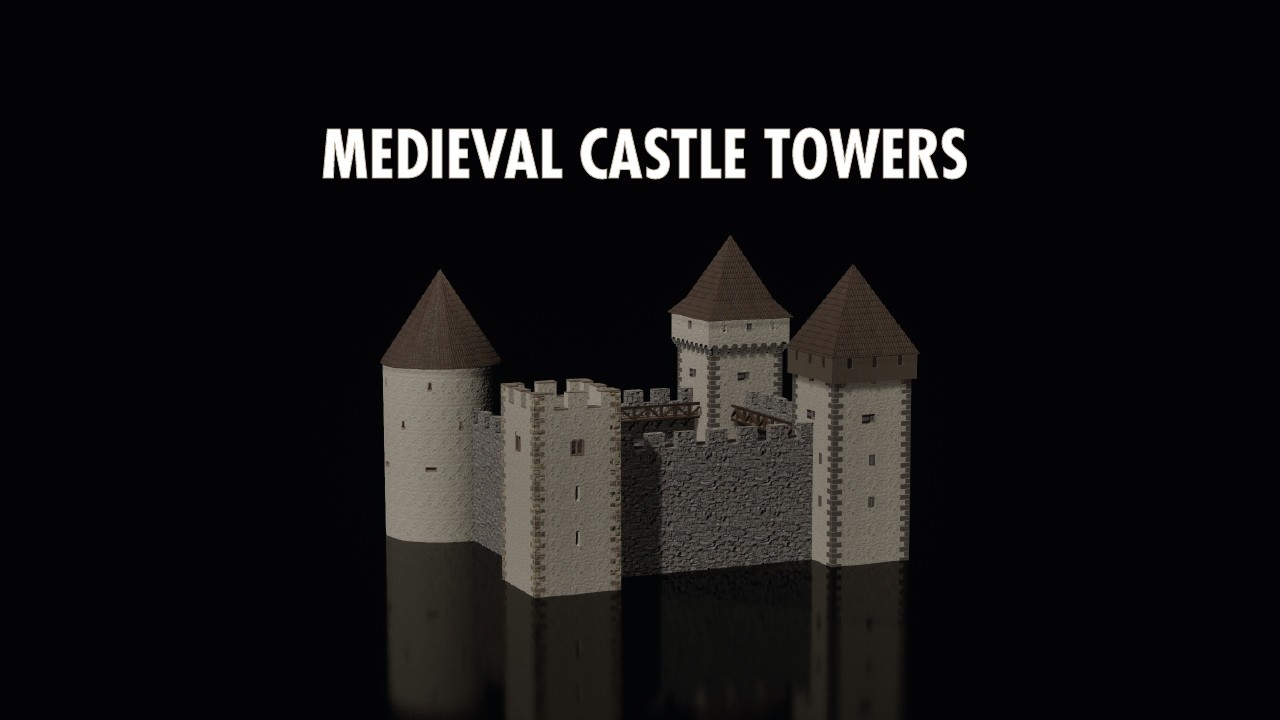
Castellum traces the evolution of a German mountain castle from 12th-century Romanesque design to 13th-century layered defenses, explaining bergfrieds, palas, and wall towers.

Key Takeaways

  • Castle design varied significantly by region, and German castles differ markedly from the English keep-centered model
  • Terrain and height were the primary defensive tools, shaping both location and tower placement
  • Castles evolved from single-layer simple fortifications to multi-layered systems in response to new weapons and strategies
  • Architecture and defense were intertwined, with status displayed through windows and palace design

What the video covers

  • Video is the first part of a series modeling a fully explorable Central European (German) mountain castle across centuries
  • The 12th-century castle relies on a steep rock site, a rock-carved moat, and a simple fixed bridge and arched gateway for defense
  • Crenellations with merlons and crenelles provide cover while allowing defenders to shoot crossbows or drop stones
  • German castles separate living quarters (palas) from the defensive tower (bergfried) rather than combining them in a single keep as in England
  • The bergfried's raised entrance, blind lower floors, and elevated fighting platform exploit height advantage for crossbows and falling stones
  • Romanesque architecture features double or triple-arched windows, round arches, and decorative cornerstones
  • In the 13th century the castle splits into an upper Hauptburg and lower Vorburg, separated by a moat
  • Gatehouses, wall towers, and a layered defense system were added, with slit windows reflecting the spread of crossbows
  • Hoardings (machicolation-like overhangs) let defenders shoot or drop projectiles straight down while protected
  • The Zwinger, an enclosed space between walls, became widespread in the Holy Roman Empire, and portcullises were added to gate passages

Answers

Questions about this video

Why did German castles separate the palas and bergfried?

German castles placed living quarters in a palas and the defensive tower in a separate bergfried, rather than combining them as in English keeps. The bergfried gave defenders a height advantage with crossbows and falling stones, while the palas offered a comfortable residence for the lord.

How did the castle's design change in the 13th century?

The castle expanded into an upper Hauptburg and lower Vorburg separated by a moat, with gate towers, wall towers, and a layered defensive system. Hoardings and the Zwinger were added to enable more active defense and cover blind spots.

What role did the site location play in castle defense?

The castle sits on a rock that falls steeply on three sides, making those approaches very hard for attackers to reach and blocking siege equipment. The flatter side was used for a practical path, and a rock-cut moat added an extra obstacle.

Full Transcript — Download SRT & Markdown

00:01
Speaker A
How did castles in medieval Europe go from simple towers to huge fortifications over the course of the Middle Ages? To answer this question, I created a massive model of a German mountain castle that's fully explorable.
00:12
Speaker A
With each century, the castle will grow and expand, and I'm pretty sure there are lots of design elements that you usually don't think about. Today, I'm going to take you on a tour through the castle and show you what it might have
00:23
Speaker A
looked like from the 12th century all the way up to the 14th century. This video is the first part of a new series about the development of a realistic castle from a high medieval stronghold to an early modern artillery fortress.
00:35
Speaker A
Each part is going to feature new buildings, towers, and defenses, so make sure to subscribe so you don't miss any upcoming videos about the castle's evolution. But, it doesn't have a proper name yet, so if you have any ideas what
00:46
Speaker A
I should call it, feel free to let me know in the comments. Welcome to Castellum.
01:00
Speaker A
When talking about castles, it's very important to keep in mind that their design and development can vary quite a lot depending on the region and the time period. Most popular media only focuses on English castles, so today I want to
01:12
Speaker A
show you what a castle in Central Europe might have looked like throughout the centuries.
01:22
Speaker A
The model you see here represents such a castle from the 12th century. It doesn't depict a specific real-life example, but if it actually existed, this castle could probably be found somewhere in southern Germany or Austria. They normally started out pretty simple, and
01:35
Speaker A
the most important defense is often their location. This castle sits on a rock that falls off very steeply on three sides, making it much easier to defend. Those sections would be very hard to reach for any attackers, and no
01:46
Speaker A
siege equipment could be used there. The height advantage also allows the defenders to watch over the land and notice any threats early on.
01:54
Speaker A
One side of the rock is much flatter, allowing for a relatively comfortable path to the castle to be created.
01:59
Speaker A
Castles are cultural and economic centers, and people need a practical way of getting inside. So, building spots like these were more popular than unreachable mountain peaks.
02:08
Speaker A
Because this site is much less protected, a moat was carved directly out of the rock. It's not filled with water, but it adds an additional obstacle, and the quarried stone could be used to build the castle. A simple
02:19
Speaker A
fixed bridge leads to the entrance, which just consists of an arched gateway with heavy wooden doors. More complex defenses like drawbridges were not really common in Germanic lands during the 12th century, but the planks at the last section of the bridge could
02:31
Speaker A
probably removed before an attack. A stone wall encloses the courtyard, forming the outer perimeter. It features a wooden walkway to allow the defenders to actively fight off enemies trying to get in, and also get a good view of the
02:48
Speaker A
surrounding area when guarding the castle. To better protect them during a siege, the wall is crenellated. The raised parts are called merlons and provide cover from enemy projectiles, while the gaps are called crenelles and can be used to shoot at the attackers with
03:01
Speaker A
crossbows or throw down stones. Contrary to popular belief, castles aren't usually square or rectangular because the outline follows the natural shape of the place they are built in.
03:12
Speaker A
While English castles are famous for their large keeps, German castles used a completely different approach that most people don't even know about. Instead of combining living functions and the main defensive building into a single large tower, German castles tend to separate
03:25
Speaker A
those functions into two individual buildings called a palas and a bergfried. The palas is a house-like building that offers a relatively comfortable living space for the lord of the castle and his household. It usually doesn't feature any active defenses, but it's very
03:46
Speaker A
massively built and offers a lot of passive resistance. There are only very small windows on ground level, and the entrance is raised to better protect it. Since this castle is from the 12th century, the palace is built in the Romanesque style that was
03:59
Speaker A
common throughout Europe during that time. Double or triple-arched windows are very typical for this architectural period, as well as round arches and decorative cornerstones. The walls themselves could either be left in bare stone or be whitewashed. Both was quite common.
04:13
Speaker A
Additionally to the palace, there could also be other buildings for things like the kitchen, storage, or stables if there's enough space within the courtyard.
04:26
Speaker A
While the palace provides the necessary spaces for daily life, the bergfried completely focuses on security and is the most important part of a castle's defense. The long and relatively low perimeter wall is hard to protect, and castles often only had a handful of
04:40
Speaker A
armed men. Placing a couple defenders in a very high tower puts them almost completely out of reach for most of the attackers' weapons, while they are still able to shoot their crossbows at anyone getting near.
04:51
Speaker A
Kinetic weapons like crossbows gain a lot of range when being placed in a high position, but lose power and range when shooting upwards, so the defenders have a big advantage. Stones dropped from such a height also develop a lot of
05:03
Speaker A
force on impact. The bergfried's entrance is raised and can only be reached by a retractable ladder, making it extremely hard to break into the massive tower. On the ground floor, there are no openings at all, and any windows on the upper levels are just
05:16
Speaker A
small slits to let some light and air in. The only proper windows are found on the top floor, where a guard room for a tower watchman is located. The tower has a dedicated fighting platform with crenellations, which can either be open
05:28
Speaker A
or have a roof for protection against the weather. From here, the castle's inhabitants have a great view of the area and can effectively control the surrounding land.
05:37
Speaker A
A bergfried not only allows you to spot any potential threats, but also helps to watch trade routes to enforce tariffs, making it a very valuable tool for any medieval lord.
05:46
Speaker A
Such a huge tower is great for any castle, but soon more complex defenses would further strengthen the fortification.
05:58
Speaker A
While a lot of castles were originally built in the 12th century, they often saw significant expansion in the 13th century.
06:05
Speaker A
Our castle is now comprised of two parts, the upper main castle, the Hauptburg, and the lower outer castle, the Vorburg. This separation is very typical for German castles, especially when the location of the main castle doesn't offer much space.
06:19
Speaker A
The main buildings are usually located in the Hauptburg, because it's the most secure part of the fortification and is almost always in a higher position.
06:27
Speaker A
The moat doesn't cut off the castle from the outside anymore, but separates the two sections of the castle.
06:32
Speaker A
The entrance was fitted with a gate tower, since the gate is the weakest part of the surrounding wall.
06:37
Speaker A
Like the buildings in the upper castle, it's still built in a Romanesque style and features finely crafted double-arched windows to represent the status and taste of the castle owner.
06:47
Speaker A
The small openings are most likely just slit-shaped windows instead of arrow loops for crossbows, since those slowly started to see more widespread use in German lands at the end of the 13th century.
06:58
Speaker A
To better protect the perimeter of the castle, wall towers were now added in strategic locations.
07:03
Speaker A
The defensive strategy still focused on giving the defenders a height advantage, so early wall towers often don't have any arrow loops for flanking fire.
07:11
Speaker A
Instead, they serve as a protected battle platform that gives the defenders a better position along the wall, like a vertical bunker, basically.
07:19
Speaker A
If the enemy manages to get on top of the wall, they still can't get into the tower and are constantly threatened.
07:24
Speaker A
Similar to the Bergfried, the wall towers also maximize the defenders' effectiveness by increasing the range of their crossbows and making stones thrown from the top hit much harder.
07:39
Speaker A
Another great improvement to the castle security was the addition of the new lower bailey, the so-called Vorburg.
07:46
Speaker A
The Vorburg of our castle consists of a wall section that takes up most of the flat area of the rock and denies the enemy easy access to this plateau.
07:54
Speaker A
To approach the upper castle from this side, the enemy now has to get over an additional wall giving the fortification a layered defensive system.
08:02
Speaker A
If any attackers manage to get into the lower castle, they are now in a very dangerous spot since they are trapped between the walls.
08:08
Speaker A
There's not a lot of cover for them in the open bailey and the defenders could easily shoot at them from the towers and battlements of the upper castle.
08:16
Speaker A
To get into the main courtyard, the enemy would still have to cross the moat and get over the second set of walls.
08:22
Speaker A
But to prevent anyone from even getting into the Vorburg, its entrance is also protected by a gatehouse.
08:27
Speaker A
At the end of the 13th century, the new Gothic style of architecture started to get more popular in Germany.
08:34
Speaker A
One of its key characteristics is that Gothic architects favored pointed arches over round ones. This gatehouse already follows the new style and the gateway arch is very prominently pointed.
08:45
Speaker A
Defensive architecture also started to become more intricate so in addition to multiple sets of regular doors, this gate already features an additional portcullis.
08:53
Speaker A
But the Vorburg doesn't only serve military purposes. Its civilian use is probably even more important.
08:59
Speaker A
It provided space for a lot of things that are necessary for supplying a castle like farm animals, horse stables, or kitchen gardens.
09:06
Speaker A
There was often a dedicated building at the outer bailey for storing supplies, equipment, and fodder as well as housing the castle's lower servants. Our castle also has such a building and you can see that it's already built in an early
09:18
Speaker A
Gothic style. It still has the double arched windows similar to the Romanesque ones, but they have pointed arches instead of round ones.
09:26
Speaker A
The 13th century was an important transitional period both in architecture and in military strategies and castles adapted to these new developments.
09:39
Speaker A
In the 14th century, the defensive strategy behind castle design changed dramatically. Before, castle owners mostly relied on blocking the enemy's path with strong walls and providing the defenders a secure fighting platform by building high towers.
09:53
Speaker A
Now, the focus shifted from passive resistance to active defense. One measure that became quite popular was to add overhanging wooden battlements to the tops of wall towers and gates.
10:04
Speaker A
They featured a gap between the wooden structure and the wall, which allowed the defenders to see anyone that managed to get near the base of the tower.
10:11
Speaker A
Instead of having to lean out and exposing yourself like you had to on regular crenellations, you could shoot straight down or drop heavy rocks at any attackers while staying safe behind cover.
10:21
Speaker A
The wooden battlements also protected the defenders much better from enemy bolts and arrows coming from the front, since they have small arrow slits instead of large gaps.
10:30
Speaker A
Arrow loops were now often added on multiple levels, which enabled the defenders to use their crossbows from inside the tower.
10:37
Speaker A
They were often positioned on the sides of towers to allow for effective flanking fire along the walls.
10:42
Speaker A
If necessary, new towers were added to further eliminate blind spots, as being able to watch over every area of the wall was very important.
10:50
Speaker A
Castle walls were often increased in height and thickness over the course of time, and in Germanic lands, they were often fitted with roofs as well.
10:57
Speaker A
This protected the garrison from the weather during guard duty, and allowed them to use the wall as a walkway between buildings while staying dry when it rained.
11:05
Speaker A
If the enemy could get into a high position near the castle, roofs also shielded the defenders from enemy bolts and arrows coming in from above.
11:19
Speaker A
Along with this more active style of defense, another concept called the Zwinger became very widespread in the Holy Roman Empire.
11:26
Speaker A
The Zwinger consists of a lower wall added in front of the main castle wall, leaving a narrow space between the two.
11:32
Speaker A
Similar to the fore-burg, it created a second layer of defense around the castle wall, adding another barrier that the enemy has to overcome.
11:39
Speaker A
But even more importantly, once an attacker enters the Zwinger, he's trapped between the two walls with no cover, and he can't easily retreat. The main wall and its towers are much higher, so the defenders have a great advantage over the exposed enemy and can
11:52
Speaker A
effectively fight them off. In our case, the Zwinger only covers the backside of the castle, since the front is already protected by the outer bailey, which basically serves the same function.
12:03
Speaker A
The gate between the upper and lower castle also saw some heavy reinforcements. A wooden structure was added to the front of the gate tower to provide another level of defense.
12:12
Speaker A
It has slits in the floor that allow the guards to see what's going on in front of the gate and defend it from up above if necessary.
12:19
Speaker A
The gate itself was now protected by a drawbridge that could be lifted using a pulley system with strong chains.
12:25
Speaker A
While normal double-winged doors were still the most important way of closing the entrance, an additional portcullis was placed at the far end of the gate passage.
12:33
Speaker A
Any enemies that made it through the first gate still had to overcome the second set of doors and the heavy portcullis.
12:39
Speaker A
At the same time, a murder hole in the ceiling could be used to attack anyone inside the gate passage.
12:45
Speaker A
But it wasn't only military strategies that saw a change in the 14th century. Gothic architecture now had fully replaced earlier styles in new construction.
12:54
Speaker A
Castle owners built large new palaces to meet increased standards of living of the time that called for more individual rooms and privacy instead of open communal halls.
13:03
Speaker A
Keeping up with architectural trends also showed off their wealth and was an important way of reinforcing their status among other noblemen.
13:10
Speaker A
The castles of the 14th century came a long way from the simple towers they often started out as, but the development didn't stop there. In the 15th century, early firearms became a relevant factor in siege warfare. While a lot of people think that black powder
13:24
Speaker A
weapons like cannons made castles obsolete, it was actually the time period where many of them were expanded drastically and so lots of construction.
13:32
Speaker A
In my next video, we are going to take a look at how castles were adapted to artillery warfare. So, make sure to subscribe so you don't miss anything.
13:39
Speaker A
And if you manage to come up with a name for our castle, please share it down in the comment section below. I would be happy to hear your ideas. Thank you for watching and see you soon.
Topics:medieval castlesGerman castlebergfriedpalasRomanesque architectureHauptburgVorburgZwingercastle defensemedieval fortification

Get More with the SozAI App

Transcribe recordings, audio files, and YouTube videos — with AI summaries and speaker detection. 30 minutes free.

Or transcribe another YouTube video here →