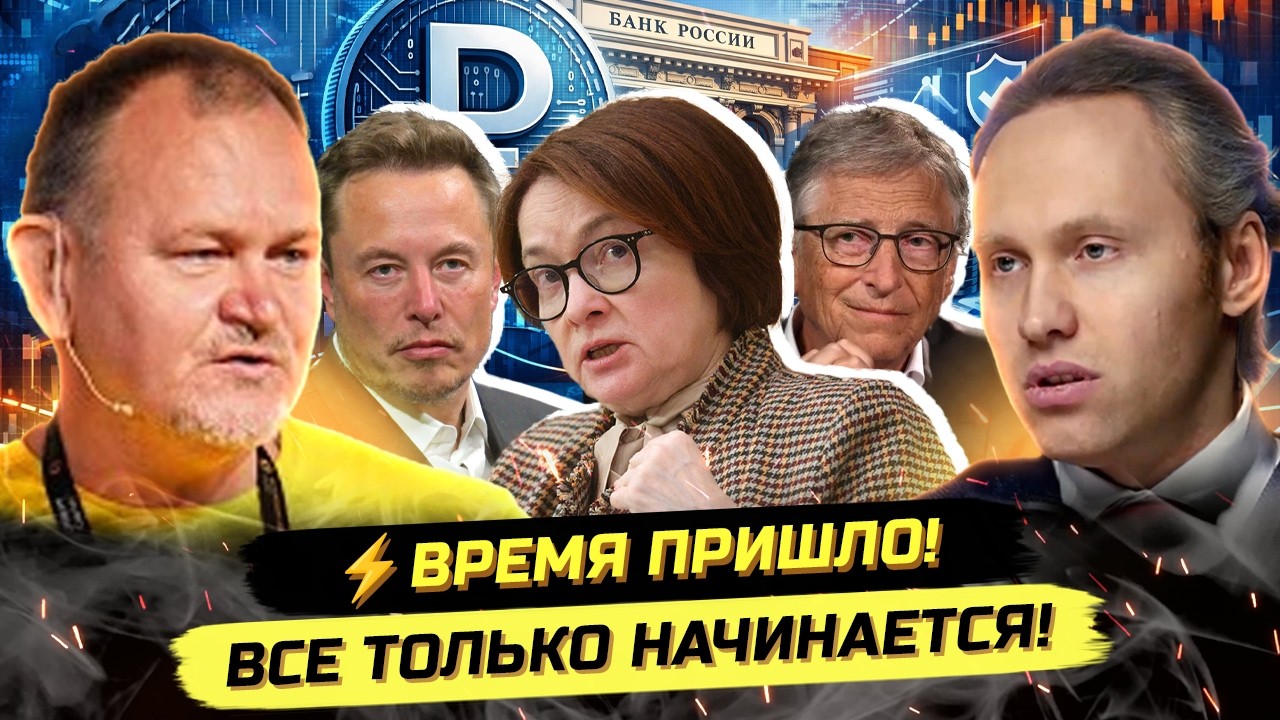
Expert Ella Alexandrovna discusses European protests, education disparities, and societal divides amid unrest and elite isolation.
Key Takeaways
- European cities face significant social and political divides fueled by migration and economic disparities.
- Uniform state curricula limit educational innovation and fail to address the needs of diverse student populations.
- Elite schools provide better facilities but do not guarantee superior educational outcomes.
- Social status influences educational experiences and outcomes, often protecting elite children from consequences.
- The current educational and social systems are insufficient to prepare future generations for societal challenges.
What the video covers
- Ella Alexandrovna, an expert on Swiss banks living in Western Europe, discusses recent European protests and social unrest.
- She highlights the migration-driven demographic and political divides between city centers and suburbs in France.
- The discussion covers disparities in quality of life and education between elite and non-elite schools.
- Despite lavish facilities in elite lyceums, the standardized state curriculum limits educational outcomes.
- Teachers in elite schools come from different socioeconomic backgrounds and cannot deviate from the uniform curriculum.
- The educational system fails to prepare a new generation adequately, with migrant children facing language and integration challenges.
- Elite children often receive leniency in grading due to their social status and future prospects.
- Anglo-Saxon style boarding schools serve more as networking hubs for future business elites than purely educational institutions.
- The broader cultural environment, including media and societal norms, impedes the formation of a coherent worldview among youth.
- The video also touches on the impact of social unrest on daily life, including disruptions in city centers and public services.
Chapters
- 00:00Introduction and Overview of Protests
- 04:25Elite Schools and Educational Disparities
- 07:56Teachers and Curriculum Challenges
- 12:10School Environment and Social Divides
- 15:43Impact of Social Status on Education
- 19:03Broader Societal and Cultural Influences
- 23:03Consequences of Social Unrest and Future Outlook
- 25:35Closing Thoughts on Education and Society
Full Transcript — Download SRT & Markdown
Speaker A
Good afternoon, dear friends. Please welcome our guest, Ella Alexandrovna Alexandrova. We are hosting an expert on Swiss banks with many years of experience in these institutions. She resides in Western European countries.
Speaker A
Ella Alexandrovna, welcome. We are glad to have this opportunity to discuss—greetings—to discuss the famous. Yes, we will try to discuss the protests.
Speaker A
The most important thing is that—yes, the protests. The protests, yes, of course, the images are very impressive. Thank God we are not in the city. And like many French people, everyone moved out of the city centers. Of course, this was done quite a long
Speaker A
time ago. That is, thinking people who want to work in peace most often do not live in cities now in Europe. Uh, and to compare, uh, like a dacha in the Moscow region, you know, and commuting to Moscow, of course, the
Speaker A
distances are different; they are smaller. Therefore, the number of people who live in country houses—large, small, it doesn't matter—and people who live in cities, well, those are two big differences, yes. But even in small towns, uh, in many, in
Speaker A
connection with these unrests, uh, the police and gendarmes recommend not to even enter the cities. So, what is the situation in the cities today? In principle, there are none of those necessary large stores, like grocery stores and so on. People even from
Speaker A
cities drive out in cars to shop in the suburbs, where the industrial zones are located. And all of this is happening in the city center because the administration is there, mainly, lyceums, colleges, and so on, universities are all in the cities. And
Speaker A
accordingly, everything that is happening, we see it in the city centers. That is, uh, the average working Frenchman, uh, does not really suffer that much, actually. So who lives in the cities? If you take the election statistics, it turns out that
Speaker A
there is a larger population in the cities. Now, a large part of the population, well, I can't say how much, right? That is, I don't know this statistic, and whether it even exists in France—it is prohibited. That is,
Speaker A
no racial, no such statistical data can be collected. And accordingly, in the cities, we see from the election results that, uh, the mood of the migrant masses is taking its toll, gaining the upper hand. Accordingly, we have a situation
Speaker A
where, for the most part, of course, poorly educated people and, uh, often people from other countries, uh, are, well, they are creating a tipping point with their votes in elections now in the cities. That is, the city votes for
Speaker A
one thing, and the suburb for another. That is, because of the quality of life and because of the ability to live outside the city in better quality conditions, yes, so you get this kind of gap. And what is actually happening
Speaker A
in the schools? I mean, you shouldn't think that the quality of education differs in the city, outside the city, or anywhere else. All education, in principle, is entirely and completely found in schools that are under state contract. That's what it's called.
Speaker A
Meaning, in these schools, there is a standard state curriculum, there are no deviations, and the state either pays the teachers or sometimes doesn't. But the point is that the curriculum is uniform. However, there are schools that don't protest at all, and there
Speaker A
are lyceums that, accordingly, do protest. I mean, if you go to a lyceum in, say, the 6th or 16th arrondissement of Paris, they have a restaurant-level menu, three dishes to choose from, plus what's called an amuse-bouche, to please the palate. That's a small
Speaker A
introduction to the food. Four or five choices for the appetizer, the same for the main course, and so on. So, this is a huge internal world that has been created inside countries, all countries, every country, just as in Russia,
Speaker A
just as in Switzerland, in Europe, where there are these small islands that Baudrillard talked about. And these islands of happiness are shrinking because the people who live there, firstly, they naturally don't accept other people into their circle, right? But their children, naturally,
Speaker A
do not demonstrate. Everything is fine for them, with just one exception. But take away, please, this fancy menu, the teachers, and so on. Is this in every school, or just in the good ones? No, I am talking about exceptional elite
Speaker A
schools. Uh-huh. Those who aren't protesting, they aren't on the streets right now. Uh-huh. They are fine at home.
Speaker A
Their parents, they suffer differently. They are looting stores right now. So, this is a specific kind of side effect.
Speaker A
But what is the kicker? The kicker today is that they have the exact same level of education. I mean, one can talk a lot, no matter how much you look at any statistics and so on. By the way,
Speaker A
the latest OECD PISA statistics, which are conducted for 15-year-olds, showed that this line between rich and poor is not that big, and it is shrinking, it is being erased. So all the money and all the islands of
Speaker A
happiness could not be converted into real brains. They were unable to prepare a new generation to replace them. Today, their children often have grades lower than one in core subjects.
Speaker A
Then the most important question is: Why? What is the problem, really? Children of migrants who don't speak the languages well, the state contract implies a unified approach to the educational process.
Speaker A
their own, their own. Meaning they might have a gorgeous building, an old mansion, a swimming pool, and so on. But the curriculum is one and the same. The teachers might be better, but the curriculum is exactly the same.
Speaker A
I mean, if in Russia, at least in some select lyceums and gymnasiums, it's not just different teachers, those teachers feel entitled to work not by the curriculum, but as they decide. We have that. With us, as they say, the
Speaker A
severity of laws is compensated by the non-compulsory nature of their execution. But in Europe, you're saying that even in elite institutions, there will still be this idiotic, cut-down curriculum. Understood? Continue.
Speaker A
Yes, that's logical, because the teachers do not come from the elite. Their own, their own.
Speaker A
they cannot. Elite status implies having servants, apartments, houses, a country home, and so on and so forth, a business and, accordingly, very high incomes. But in this case, it just doesn't help because the teachers come from a different environment. And they
Speaker A
come out just as trained, as prepared, as those for other schools. I mean, there are those who are more talented, they go into these elite schools, but they don't have the right to teach as they want, mostly, mostly. And then the
Speaker A
entire environment, which is just like in Russia, that is, the environment that shapes the whole society, including the cultural, the entire cultural sphere completely, including television, books, magazines, newspapers, the internet. Everything like this does not currently allow for
Speaker A
the formation of a normal worldview in a person, in a child, even in an elite school. I mean, and then one has to understand, I studied in an elite school myself, how can you force a child whose father is some billionaire,
Speaker A
how can you offend him with a bad grade? I mean, they have standards, they get these bad grades, but no one scolds them, because they think that he will reach where he needs to be in his elite
Speaker A
environment anyway, he'll make it. And in principle, the entire Anglo-Saxon educational system is based on this. I mean, these boarding schools that all Europeans are so eager, so strongly eager to send their children to. Closed boarding schools of the Anglo, let's
Speaker A
say, English type. I don't like the word "Anglo-Saxon," it's not entirely historically accurate. And these boarding schools, where parents send their children from age 11, which are so prestigious, expensive, and they are pampered there, and it's considered the
Speaker A
best option. In reality, what is it essentially? This is a place where children meet their future business partners. They go through this polishing and processing there, but
Speaker A
all, they will hire managers to do that , but we have reached a stalemate. We have hit a point where there are no teachers and there won't be the people they want to hire. So they will have to
Speaker A
deal with half-educated people, and they think—well, they hope, it's their last hope—that the "artificial idiot," or artificial intelligence, will save them, right? I mean, " artificial idiot" has already become a popular term, it seems. Ella Alexandrovna, please explain, going
Speaker A
back to the topic of the protests, it was initially stated that people were coming out to protest specifically against the poor quality of education.
Speaker A
They, well, at least in the public sphere, were demanding tougher standards, more assignments, and more hours for math. It’s another matter that later students, parents, and diaspora groups joined in, and they started looting stores and everything else, setting fire to those very
Speaker A
schools. Is there at least some grain of truth in these protests? I see the headlines. A fair protest. So, of course, headlines—headlines don't explain the essence of the phenomenon in principle. The essence of the phenomenon is a society so drained to
Speaker A
the very end, simply incapable of thinking or making any rational decisions. But let's, let's get to the specifics. Specifically. Why did the high schoolers go out?
Speaker A
You arrive at a French lyceum, it looks like a ghetto. It is fenced off with a grid.
Speaker A
themselves. First of all, those who live in the city walk or take transit themselves— that’s one scenario. But if you live in the suburbs, you are forced to take your child, if your schedule or route doesn't align with their college or
Speaker A
lyceum, because starting at 11 years old, they have the right to leave school on their own—well, from middle school, that is. And before that, a parent must bring them and pick them up , otherwise, they won't even let the
Speaker A
child leave the school. But from middle school on, and especially in high school, they are independent. And in every middle and high school located outside the city, there is a bus service, for example. I mean, state buses run along a specific route,
Speaker A
stopping in every little village, picking up and dropping off the children. These buses, first of all, have started running absolutely terribly everywhere. I mean, if the bus actually arrives and the child gets there on time, that’s already a great
Speaker A
stroke of luck. There are bus transfers , and the kids don't always figure it out. Well, this is quite an epic tale.
Speaker A
That's one thing. I mean, even just getting to school—middle school or high school—has become a problem for a child. That’s one point. Second, and I’m not even touching on the educational process yet. Second, could you please clarify over what
Speaker A
period of time these negative changes have occurred? their own It’s hard to say, because I didn't notice it before, and people always tried—well, in my circles, they took their kids by car, but this problem hasn't just started; I've been
Speaker A
observing it for at least 10 years. I mean, and then the bus might just not show up, I mean, it might not come at all. And you, as an adult parent, are at work, while your child cannot get to or from
Speaker A
school. These are things that, it would seem, well, it’s an elementary everyday issue that hasn't been solved.
Speaker A
One. And second, when a child is at school, it’s not guaranteed that they will have heat. When it's 35 degrees out, it’s not guaranteed that there will be any fan or air conditioning. So that’s and classes are not canceled.
Speaker A
If there’s some kind of extreme weather condition, yes, classes are not canceled and the children are not let out anywhere. So, it’s, well, actually, it’s quite understandable that the more elite the school, the better these everyday issues are
Speaker A
resolved. The third point is food. The food that is provided for a fee is, naturally, of such poor quality that it's dangerous to one's health. I mean, when you start to investigate and check what they are feeding the children, it
Speaker A
turns out that they choose the lowest-grade food. There are a lot of soy products that alter children's hormonal balance. And the general approach to food is designed so that if a parent pays for lunch, say, I don't know, when I sent my children to school
Speaker A
, it was 6 euros. But of that, the cost price that the school pays—I used to handle the finances for that school. I mean, 6 euros is what the parent pays the school so that it’s served on a
Speaker A
plate, the cafeteria is cleaned, the kitchen—everything is generally organized. But the school itself pays for each lunch not six, but only 1 euro . I mean so the services are 6 euros, and the food itself is 1 euro. their own again,
Speaker A
and one. So it turns out that many, many factors —the most basic, everyday things— are set up in schools in such a way that it’s hard for a child to go there. And so children, even at this time, at this age, are being put on
Speaker A
antidepressants and all those other joys. Children are miserable there; it’s bad everywhere, even in private schools , everyone is struggling. I mean, there’s this constant, you know, sort of thing. There was a joke going around just now. They’ve taken mobile phones
Speaker A
away from kids in schools in France, so now they’re forced to bully each other the old-fashioned way, verbally.
Speaker A
I mean. Well, you know, these sorts of things, there are some positive, um, hints of improvement. For example, this year they slightly raised the requirements for graduation exams, like the Russian ones. There. OGE and EGE.
Speaker A
Do I understand correctly that when children set fire to schools, they mean that school is such an unpleasant, nightmarish, disgusting place that it’s better if it didn’t exist at all, rather than having to go to a place where we’re sometimes hot,
Speaker A
sometimes cold, sometimes fed questionable things, and so on? That’s the logic, it seems. So, if you add this lack of basic amenities in schools, yes, it’s like a basis, a foundation upon which everything else is layered, and everything else is the
Speaker A
education system. It should be said that since 2018, transmission-based education, or teaching, has been banned in France. What is that? Transmission, passing on information. So the teacher is not allowed to explain to a child how grammatical rules work. They are
Speaker A
not allowed to explain to them how multiplication or division works. Everything is shown in such a way that.
Speaker A
Teachers have been specifically trained for this, so that the child supposedly figures it out themselves. So the child doesn’t receive a clear structure of knowledge. They don’t even receive a basic foundation. And now these eighteen-year-old dunces, they graduate
Speaker A
, and they can’t read or write. They can read a little, but they have absolutely no idea how to write. They can’t calculate anything at all.
Speaker A
Carrying over the tens doesn't work for them, even after finishing high school. Carrying over the tens means 18 plus 5.
Speaker A
Their own I’m not joking, these are real things . So, if they—and on the other hand, we see that the exact same idiots come out of elite schools, but they are supposedly promised a different outcome for their lives. Uh, but that
Speaker A
development won't happen. That development won’t happen because it’s failing everywhere; personnel determines everything, and those personnel just aren't there. So today, students who leave school, who go, for example, after their middle school exams, after college, who go to some
Speaker A
technical college, well, say, agricultural, no farmer will hire them afterward. They are incapable of performing the simplest work. Their brain functionality is impaired. And don’t think that this is only the case in France or in Europe. It’s like this everywhere, because the exact
Speaker A
same recommendations were adopted everywhere. OSR recommendations on the organization and conduct of the educational process. These are the same ones that control PISA and everything else. Oh yes, everything is even worse than it seems at first glance.
Speaker A
So, I have been designated as a foreign agent. First, I was fired from school with the quote: "How can he teach our children? After all, he doesn't love Putin." As my blog grew, people started writing denunciations against me and
Speaker A
even taking me to court. In total, I was questioned three times by the Investigative Committee and the Ministry of Internal Affairs. And every time it was determined that no extremism, LGBT propaganda, or whatever else I was accused of, had taken place.
Speaker A
But who has that ever stopped? I can be proud that, given our circumstances, I lasted this long. When I criticized the COVID madness, my content was blocked dozens of times. In the end, I had to create a whole network of YouTube
Speaker A
channels to jump from one to the other. And I was removed from Rutube completely and irrevocably for criticizing our migration policy and certain diasporas. On one hand, on Solovyov Live, they called me absolute evil. We do understand that we are
Speaker A
dealing with absolute evil. This Pavel Ivanov, nothing else—he is absolute evil. On the other hand, foreign agents called me a pro-Kremlin blogger.
Speaker A
A State Duma deputy from the Communist Party, Mikhail Matveev, had to record an apology. What actually happened? At the beginning of January, he gave an interview to pro-Kremlin blogger Pavel Ivanov.
Speaker A
And in truth, I don't belong to either one circle or the other. And even though I was in Donetsk near the front line, and then near Kursk, not far from the front line, and repeatedly participated in collecting humanitarian
Speaker A
aid for refugees, victims, frontline soldiers, and for the rehabilitation of the wounded. They made me a foreign agent. Now my opportunities are limited . I am counting on your support. Links and details are below the video. Like the video, leave comments, and
Speaker A
subscribe to the channel. Together we are a force. Well yes, but that doesn't mean it's the end of the world.
Speaker A
Yes, I hope we will return to this topic again. Continue. In 1936, when many different attempts had already been made to create a new education system based on the old gymnasiums of the Russian Empire. And all these attempts were failures.
Speaker A
Alexey Savvateev often talks about this , by the way. There was this science, well, pseudoscience very much in vogue —pedology, which was debunked, and from that moment on, education was put on new, normal tracks that were scientifically sound. Here, in
Speaker A
principle, the same thing happened. There was no scientific justification for all these innovations in education.
Speaker A
In other words, when a child receives a textbook where everything they need to know is written in black and white, without pictures or with almost no pictures, they generally manage just fine when they get that textbook. Well, I don't have a textbook at hand right
Speaker A
now, but European textbooks are basically all the same as modern, bright, colorful Russian ones, yet the child cannot cope with this volume of information and the way it is presented . Then the process of acquiring knowledge gradually, from simple to
Speaker A
complex, was broken there. And this process was replaced by a spiral process, where each topic is skimmed over a little bit without being studied in depth, and then in the next quarter or the next year, they return to it
Speaker A
again to try and delve deeper. It's a useless exercise, because the child has already forgotten what was under-studied or lightly covered the first, second, and third time, and it just piles up. So, the child isn't getting any knowledge, no real
Speaker A
knowledge that they can actually use to navigate life. And this is the main essence of the reality that, in principle, many people in France cannot even articulate, because they themselves—parents who are now roughly 40 to 50 (well, 30 to 50,
Speaker A
depending on when their children were born)—for the most part, do not realize that their children are not getting an education. They are surprised, they are outraged, but they do not grasp the depth of what is happening. Just as the elites do not
Speaker A
grasp it, having made things easier for their own children back in the eighties . There are no such strict, rigorous requirements for studying and getting admitted anywhere. And today, such higher schools in France as the ENA— that's the National School of
Speaker A
Administration, which trains civil servants or...Goodness, well, in general, there is another school as well. They no longer train at the same level as they did 50 years ago. 50 years ago, those who graduated—well, I don't know, maybe they existed in a
Speaker A
different form or under a different name—were high-quality specialists, analysts, and managers who could actually understand, find the cause, figure things out, change them, and take action. Today, that is gone. I mean, the level has dropped so much everywhere, and this level has dropped
Speaker A
in a very specific way; you don't see it right away. For example, I have collected a whole library of French grammar textbooks myself. The last good French grammar textbook dates back to 1954.
Speaker A
70 years ago. Yes, yes, yes. So, uh, and that is a disaster. This is a teacher who taught at a school with his spouse and who wrote several, well, textbooks, several levels of French language textbooks. So , I found them at flea markets. I
Speaker A
selected the most suitable ones from them and, in principle, I am using them for the children's education. And how popular is this in France and perhaps other Western countries? This family education, homeschooling?
Speaker A
Well, how is it popular? It is restricted because in order to switch to family education, you must submit a whole folder of documents, written by the parent, to the local regional rectorate. There is a certain grain of truth in this. I mean, before, you
Speaker A
could simply notify the school that we are leaving, write a letter to the mayor's office, notify them, and that's it. Today, in order to get permission to teach a child at home, you must create a curriculum and provide a list
Speaker A
of materials, textbooks, and some other educational technologies that will be used. And most importantly, you need to justify why you are doing this. So, well, for me, for example, they wrote that our daughter wants to study chemistry and biology in-depth
Speaker A
according to her interests, and for my son, it's a math and physics track. And so, we handle all of this ourselves.
Speaker A
And then they might grant permission, or they might not. Well, it's a double-edged sword. First of all, family education was used by people who were migrants and who did not have an education themselves. And apart from praying and something else, they, in
Speaker A
principle, well, are not able to teach the children. Perhaps with good intentions, but the restriction on family education was adopted precisely in the context of this fight against extremism. And when......well, a regular family wants to switch to family education with their children,
Speaker A
then, of course, there are inflated requirements for them, and they are much higher compared to school. Meaning , what a child studies in school, they might not pass subjects, stay back for a second or third year, and they can be
Speaker A
promoted to a new grade without acquiring the knowledge. So, they didn't pass something, but I'll promote them anyway. So it already depends on the educational institution and the child's parents. So there are no normal criteria here at all. They promote them
Speaker A
anyway, they still get that, and they will be issued some kind of diploma. If not one, then the other. I mean, if not the OGE, then the EGE. Uh-huh.
Speaker A
And they will drill him. But they still don't acquire the knowledge. Yes. Yes, unfortunately, you can drill information using artificial intelligence. You just repeat it, in one ear and out the other; various micro-earpieces are very popular right now. And protests, following France,
Speaker A
were picked up by Belgium, Spain, Italy , and Albania. They have the same situation with education there. They have there Well, it's the same everywhere; it's identical. And don't think that in Russia it's any different, it's analogous. Everything is done according
Speaker A
to the same templates. I mean, you don't need to be a prophet here. You just need to look at what the legislative acts are based on their own.
Speaker A
The legislative acts all boil down to the recommendations of one and the same organization their own.
Speaker A
Therefore, the situation is basically the same everywhere, absolutely the same. And you know, I really feel sorry for many parents who, in search of a normal school, move from city to city, change jobs, move from country to country in the hope of finding a decent
Speaker A
education for their children. And the irony is that they don't find quality education anywhere because there are no teachers. It's like Macron, after the first unrest, said: "That's it, tomorrow I'm adding another 3,000 teachers to French educational institutions, because there are no
Speaker A
teachers." This, by the way, is the main issue that I left unattended. There are no teachers. Not only is the curriculum worthless, but all the teachers have fled the schools; they were pushed out. The system pushed out all the decent teachers who wanted to,
Speaker A
who had the goal of teaching children. Not just And how much does a teacher earn in France right now?
Speaker A
I can't say that, because I don't know it at all. Uh, well, I think it's not a lot of money, but unlike in Russia, they are not in a completely destitute position. And that is for sure. I mean,
Speaker A
they have certain, they are considered civil servants, and they have very, very serious guarantees. But as soon as a person disagrees with some program, if a teacher suddenly starts explaining something, and the kids know that's not allowed, these same kids will report
Speaker A
that teacher, and they will be fired. But, but teachers, I mean, as of today, yes, they weren't destitute, but the fact is that prices have almost doubled for everything in half a year. And for Europe wait, wait. You said prices have grown
Speaker A
for everything in half a year. Could you elaborate on that? We aren't up to speed on what's happening with prices in Europe. We are following the Russian ones; they shock us too. What happened over there for you? Did your expenses
Speaker A
for military operations jump, too? Nabiullina caused a nightmare. First of all, there is a Nabiullina of our own here, but you shouldn't compare them.
Speaker A
Excuse me, please. Mortgages in Europe are 15%, not 25%. their own. That's one thing. Secondly, you have to understand that everyone here has become very accustomed to living well on their own, and they always go on vacation. Well,
Speaker A
in principle, in the 2000s in Russia, it also surprised me that people didn't invest in their children's education.
Speaker A
They, well, they preferred to travel around, go places, take a vacation somewhere. So, this nice, fat slice of Europe has, of course, long since deflated, right? I mean, there's no longer any...People haven't really been traveling much in recent years, from
Speaker A
what I observe. They might go to Morocco or Tunisia, it's cheaper there. And airfare doesn't cost much. But then again, now, just to simply get somewhere by car—if, for example, you commute to work by car—gas used to cost, uh...When it cost, well, gas cost
Speaker A
1.20 euros, not that long ago. And when this whole thing started—the sanctions restrictions on Russia— naturally, gas was the first thing to start rising. How long? For 2-3 years, they kept it down through all sorts of tricks. They still managed to get
Speaker A
tankers delivered and so on. Plus strategic reserves. But now we see from the prices that as soon as the strategic reserves started running low, it happened immediately because it's not being discussed anywhere. We’re just observing this ourselves and
Speaker A
understanding what’s what. And these price jumps correspond exactly to the recent closure of not only the Strait of Hormuz but also the Bab-el-Mandeb Strait. And consequently, all the oil companies immediately increased their prices.
Speaker A
Wait, this was even discussed in Russia —that Trump persuaded the Europeans to liquidate their hydrocarbon reserves . Well, Trump, Trump, Trump, Trump, he, uh...
Speaker A
Trump is, in my view, a destroyer who, like Saturn, shows what is buried where . It has become clear to everyone how the rich get richer, how they profit from war, and who is waging these wars.
Speaker A
And most importantly, it has become clear how effective and profitable the emission of the dollar—in this case —really is. I mean, we understand that, well, here we go back to my specialty. The money that Europe provided as a loan to Ukraine, where
Speaker A
did Europe get it? Do they have some kind of strategic reserves of their own from which they allocated and sent theirs? In reality, all the coffers are practically empty. I mean, pension funds, everyone knows this, all, all funds, insurance ones, and so on.
Speaker A
Everything, absolutely everything has been emptied out. And, naturally, they just draw up numbers there. But in fact , we see that they fight tooth and nail for every non-payer. I mean, if anything happens, the French tax system is a terrible thing; it's better not to
Speaker A
get involved. And when you realize that Europe provided money to Ukraine, what money, where from? And why is this Europe living on credit? Everyone says: "External debt of countries, external debt of countries." Who do countries owe? Their own.
Speaker A
Countries have always borrowed from the Federal Reserve System. It is an association of private bankers who, at one time, pushed hard, maneuvered, and ensured they became the sole issuers of money in the world, which is what we live with now. So the
Speaker A
Fed provided, well, officially, yes, the Fed provided the European Commission with money to lend to Ukraine. The European Commission signed documents obligating it to pay interest on this loan, because Europe pays interest to the Fed, meaning the interest on this loan will be paid by
Speaker A
Europe itself, that is, at the taxpayers 'expense. But they still hope to recover the principal of the loan from Ukraine.
Speaker A
Its own. Ukraine is a bankrupt state. It will cope. I mean, how anything could possibly work here, I can't even imagine. A representative of President Zelensky's office.
Speaker A
Podolyak, the extremist and terrorist or whatever he is, even declared that if a different president is elected instead of Zelensky, all of Ukraine's obligations will be automatically nullified. What even is that?
Speaker A
Well, Ukraine's obligations might be nullified, but will Europe's obligations to the Fed be nullified?
Speaker A
Their own, their own, their own. Yes, Ukraine's obligations cannot just be nullified like that either. That's not how it's done. These loans were taken out on behalf of the country, not on behalf of an individual.
Speaker A
Well, what options does Europe have to not repay this debt? I don't see any.
Speaker A
They will cease to exist. Yes. Yes. I mean, I mean, that is the real question here. And returning to the fact that schools are unheated, unrenovated, there are no teachers, and funding for them has been cut, right? I
Speaker A
mean, in many schools, some subjects aren't taught at all because there are no teachers. Uh, I mean, it's just like in Russia, exactly, what you're describing is one-to-one, one-to-one. The situation, don't think that it's somehow unique anywhere. And my daughter, for instance
Speaker A
, she attended college for one or two months at the very beginning. And we left immediately after seeing what a mess it was. And there, an IT guy was trying to teach them French, his own way, but he just couldn't do it, and
Speaker A
the kids saw it themselves because they have narrow specializations and a teacher cannot simply swap subjects. In other areas, for other subjects. And, naturally, the kids graduate. For instance, one of the best schools in our district, which was considered
Speaker A
almost a math and physics specialty school, produced graduates 30 years ago whom we know indirectly, who are, for example, high-class pilots. And these pilots advise sending children to this school. But there is no physics there now, it simply doesn't exist. The
Speaker A
subject of physics is gone. The word "school" remains, but the school itself is gone. This is generally what Yes, only the appearance remains. It's the truth. And that is why these kids who are leaving school now, they've been graduating for about 15 years, and
Speaker A
they realize that even if they study and find a job and pay for their housing and their lives, and so on.
Speaker A
They understand what comes next; they see how their parents suffer, how they ruin their health in completely meaningless office jobs. So when you take all of this into account, you realize that people have understood they are going nowhere. And all it took
Speaker A
was a spark, which was ignited by this Melenchon fellow, right, who called on people to go out and demonstrate. But, naturally, it all spiraled into this kind of situation. And as of today, my understanding is that the police can no
Speaker A
longer cope. They are just not numerous enough to handle it anymore. Today, there's fresh information. 2,000 people have been detained or arrested.
Speaker A
In total, nearly a million people are taking part in the protests. Yes. I mean, the ratio Well, yes. It reminds me of that wonderful cartoon.
Speaker A
Arrest everyone and take the pumpkin's house away. And by the way, an order was issued in Russia not to show it on federal television channels. Remove Cipollino from the air, remove, I don't know, *On the Moon*from the air, and
Speaker A
some other cartoon. Look, fine, what they call "young idiots" is a separate story entirely as to why they went out to protest. But what about adults— serious experts, analysts—how do they view this protest at all? In Russia, people are already looking at it and
Speaker A
saying: "Well, apparently, just as the decaying Roman Empire was finished off by barbarians, migrants are becoming the modern barbarians of the 21st century, finishing off the remnants of Europe." How is this felt within Europe itself? To what extent is this an
Speaker A
existential threat, or will they just stir up some trouble and disperse, like the Yellow Vests? They protested for, what, several years, but they only slightly delayed the reforms, and in the end, all those reforms were still adopted. So, they protest—it's like a
Speaker A
tradition: we protest and we protest. What are they actually saying about this in France? Well, people their own, well, you have to understand, when the cause-and-effect relationship is broken , it's broken precisely by the current education system. And it's breaking
Speaker A
everywhere, in Russia too. When it’s absent, a person is incapable of assessing the situation. That is, for example, the elderly—the grandparents of today—who see what is happening to their children and grandchildren, and who worked very hard, for them it was a
Speaker A
guarantee that if you work, your children are guaranteed a minimum quality education that will open the door to the future for them.
Speaker A
their own. Meaning they aren't even able, even though they were basically well-trained in reading, understanding, writing, and arithmetic—they had a good level—they aren't able, for instance, to see that the situation for their grandchildren has completely changed. So, when they sit down with a
Speaker A
grandchild, for example, during the holidays, when they happen to have the time, those who don't look after their grandchildren regularly, they are very surprised. They think that their grandson isn't quite capable , and most likely lazy, too. And that
Speaker A
you just need to go to school, behave, and listen carefully to the teacher. So , even back then, the foundations were laid that prevent people—well, France as a defeated country, right, in WWII, it ended up being carved up by all
Speaker A
these international organizations and various manipulations. Consequently, people don't think for themselves; their cognitive apparatus isn't developed to the level of an independent, sovereign subject. Uh-huh.
Speaker A
Accordingly, their principle is always, well, well, you are essentially describing the problem of the whole world, except for the Hegemon country, the USA, which isn't really a country either, but a core of the largest corporations that run everything there. The same private
Speaker A
shop, the Federal Reserve. Those are the serious guys, and everyone else must degrade so as not to get under the feet of the serious bigwigs. Well, I think there is a grain of truth in that . In reality, the education system,
Speaker A
even the one that was good, still needed to be adapted. For some reason, they didn't go the route of adaptation, but rather through destruction. And, naturally, that is a fairly easy path, yes. And in any case, well, we need to
Speaker A
think now not about how it happened and what was before, right, but about what will come next. But people here now simply cannot correctly identify the causes, and they will even shout that the school isn't heated or something
Speaker A
else. But in reality, the essence of the problem is that people are not being given knowledge. And it is precisely because of this that people have come out. And without this knowledge, they understand that they won't be able to build their future
Speaker A
careers, lives, and so on. And they realized that they were deceived. They clearly understood that. But they are not capable of where, how, or exactly how to present their demands. Because of their low level of education. And, accordingly, when this is not
Speaker A
formulated, then pitchforks are picked up. What are the options? Here, in principle, everything is logical. their own.
Speaker A
So you are saying now that this is a widespread opinion not among migrants, but among native French people, that is , among everyone, that soon they will gather to take up pitchforks or whatever is happening?
Speaker A
No, no, no. What is happening is that people have taken up pitchforks. These demonstrations are people who have come out of powerlessness, from the inability to guarantee by any labor, to guarantee their, let's say, their children a decent future,
Speaker A
well, at least even survival, right, and the continuation of offspring is not guaranteed. And, accordingly, people already, since they cannot, and the whole system is set up so that, no matter what you say, if it is about school,
Speaker A
teachers will not be able to do it neither the old way, nor any other way.
Speaker A
They can only do it the way they are supposed to do it their own.
Speaker A
And in this regard, of course, there is such an essence of betrayal, right, that if you want to earn money, to continue life, to earn a living with a teaching profession, then be kind, please. And if not, the door is the
Speaker A
exit. That's it. So most normal teachers, they have left the schools. And the teachers who are currently with us, uh, we have a teacher we know who is 80 years old, she, uh, says: "Well, education has been abolished." That is,
Speaker A
it wasn't changed, but rather it was simply abolished. I I also say in my blogs: "They don't believe me." Abolished. Abolished. Abolished everywhere. But on the other hand, one must also see, well, we need to find some kind of positive, right,
Speaker A
yes. Well, look, you are saying that, in principle, parents who understand this, grandmothers, teachers, there are some people in general, but at the same time, homeschooling is practically prohibited. You really have to push through bureaucracy to achieve this,
Speaker A
like you, for example, have done. And what about other aspects? Eco-villages are gaining popularity in Russia right now, aren't they? With the logic that, guys, whatever upheavals occur, we will live in our own kind of community. 50 people, 100 people, 200
Speaker A
people, 500 people. Like, someone will grow food, someone else will be, I don’t know, a welder, a plumber, a builder. Somehow, it’s just easier to handle things with your own people.
Speaker A
Sometimes this is done with the support of a representative of the Orthodox Church. Some priest secures land from officials so that people aren't bothered. People start gathering there, Orthodox families, large ones with five , seven, or ten children. And somehow,
Speaker A
life starts to boil there. Elsewhere, older people are gathering, right? Not long ago, we did an interview with Dr.
Speaker A
Ridko, actually. Yes, there are similar trends in Europe , too. What are people doing in the face of this crisis? Because if there’s going to be a real collapse of the Roman Empire modeled on the 21st century, it’s going to be really
Speaker A
painful. We can only fantasize about what kind of dystopia will be there in 20-30 years.
Speaker A
Yes, there are several scenarios for how events might develop. I prefer to voice the positive one that I see. In any case, everyone can see where things are heading. Well, now they’ve definitely seen it. Trump helped, he won't let you lie. But, if we look at
Speaker A
the positive option, I see no other way than a soft landing for this whole banking system that leads to the extinction of people, and the complete destruction of...
Speaker A
their and the destruction of nature. That is, as for what is happening in Europe now, the Europeans are to blame themselves.
Speaker A
It’s a terrible drought, where the rains simply don't reach the land from the seas and oceans. They just don't reach it because there is so much agricultural land there, including China having bought up land in France and growing things in absolutely
Speaker A
impossible conditions, drenching everything in chemicals. So, all of this will, in any case, lead to the degradation of the entire system. And we need to create new centers of production that will involve people living here on the land, who will move
Speaker A
out of the cities. Just the same way as in Russia. Everything should basically happen along a similar scheme. Land that is not involved in agricultural production will, in theory, be inhabited once again. And I cannot help but rejoice, for example, at such a
Speaker A
positive fact. When I traveled a bit through the regions of Russia in twenty-three, around Moscow, the Moscow region, I traveled around, new roads are being built everywhere. This is a very positive point.
Speaker A
Our own. Here in Europe, there are other unpleasant aspects. For example, here they have dug up our roads in critical places to set up checkpoints. Meaning they will shut people in regionally to prevent this general uprising, right?
Speaker A
All of this, I probably don't even know what the negative outcomes are, but you have to look for where the plus is, move there, go there, and invite our own. Then there are all sorts of legal forms that are quite well
Speaker A
developed in France. In both small and large forms, in large forms corporations become cooperatives and twist everything to suit themselves, adopting the cooperative experience and putting the profit into the hands of their own corporate cooperators. That is, it is not a cooperative approach at
Speaker A
all, but it exists. There are cooperative banks. And in Europe, they are starting to grow quite rapidly.
Speaker A
Small local banks that open in towns and serve only the local population, local farmers, local producers. So this small structure, which in fact is the basis of the economy, its foundation, where everyone can somehow be employed and receive money, food, housing, and
Speaker A
so on for it. It is slowly taking shape nonetheless. At the same time, in France, there is already an awareness of these problems, but for now, the inability to solve their own.
Speaker A
So when we talk, yes, as my daughter put it, that from Nero to Macron, in principle, it is the same situation.
Speaker A
And it turns out that, in principle, we are on the verge of this, but we are on the verge of this collapse everywhere, that is, everything is globalized, and therefore the answer must, in principle , be asymmetric and widespread. And it
Speaker A
is actually very simple. And that is why Europeans are preparing to do something, well, like, I don't know, eco-settlements. Europeans. The European Commission—it's not Europeans, it's not them, despite them.
Speaker A
Our own. The fact is that we in Russia are very lucky. We had the Soviet Union , the experience and upbringing of the Soviet person. We had pre-Petrine life in Russia, in Rus, in the north of Russia. We had—we have a concept of
Speaker A
freedom. We have the concept of, for example, an elementary thing, right, which many French people cannot understand; they demonstrated against the fact that a school level is required to teach their own children, in order to switch to family schooling.
Speaker A
Well, excuse me, if you don't have this level, how do you expect your child to achieve it? When this demand was put forward, the French went out to demonstrate there as well. Meaning, there isn't always sense in their
Speaker A
actions. It’s very difficult for them , it’s hard for them to realize that they can achieve something together.
Speaker A
They have all been very strongly atomized. I don't know if it's more than in Russia or not, but exactly as I've seen—since I split my time living between Russia and France—in Russia, I see the same kind of people
Speaker A
in cities, and completely different ones in their villages. That is, those who live off the land.
Speaker A
And this analogy, it’s certainly... but here everyone is urban, even those who live in villages, they are all isolated, atomized, and think that this individualism will save them. Well, in this case, no.
Speaker A
So you think Russians still have this, how should I put it, a huge core, human and spiritual. It is a massive core. It must not be underestimated. How many ideas, how much applied and basic, fundamental knowledge these people still have. And
Speaker A
these people often live on the land, by the way. Meaning they made the choice, just like the French, well, like Europeans, to live somewhere outside the city. Urban civilization in itself is flawed and built for specific purposes, for
Speaker A
accumulating wealth, and so on. But these are not our goals, not normal human or family ones—none at all. A child fundamentally cannot grow up healthy in a city. They always develop physiological deviations, in health and on a psychological level too. That is
Speaker A
why all our great scientists, our Kulibins, all came from simple villages . And "selo"(village), by the way, in Old Church Slavonic, means "arable land ." So, to be in a village means to be in a settlement standing on or next to
Speaker A
arable land. Well, that's another question. To plow or not to plow. I mean, this is also...I believe we need to explain to people that there are organizations that promote cooperation, the rejection of hired labor, and that they nurture and develop this. Using
Speaker A
the Chertayev system, for example—it is a wonderful system for fostering a proprietor, a landowner, someone who is the master of their own work. Because the appropriation of the funds that a person has earned while being a hired employee is nine-tenths. Out of
Speaker A
everything they produce, nine-tenths goes to the owner, and they are thrown this scrap just so they don't starve to death. Therefore, the system itself, in principle—and every country has its own legal forms, which are diverse and structured quite differently. To
Speaker A
implement production on a non-commercial basis. Even something basic. You take a French company and move it onto non-profit tracks; you automatically transfer the registration of this company from the chamber of commerce to the Ministry of Labor. Your entire approach changes,
Speaker A
and you don't pay taxes because you aren't seeking profit; you want the income that will provide for your life.
Speaker A
So, this principle—once people understand it, especially when our administrators understand it—in some countries it's called a cooperative, in others something else. That doesn't change the issue. The Chertayev system.
Speaker A
Chertayev, Magomed Chertayev, was a man who, starting in 1985, began to revive a completely neglected collective farm in the mountains of Dagestan. Shukty was the name of the village; it still is. And there, within a few years, he
Speaker A
simply established a different accounting system that allows every person to bear economic and other responsibility for what happens in their sector of production.
Speaker A
Their own. And this system makes it possible to pass on a product of better quality while maximizing cost savings. That is, to increase quality and lower costs. So , the cost price goes down, quality goes up. And within a few years, they
Speaker A
started building three-story mansions for their own people who lived and worked there. And then, such an important point—many don't consider what education really is. Even in such a settlement, an eco-village, a cooperative, education is something that, on the day the educational
Speaker A
process is carried out, brings no profit, no income at all. It is a purely loss-making side. What is it?
Speaker A
Why is it needed? When our landowners opened schools for the poor in their villages—an elementary foundation: teaching them to read and write—they were investing in a guarantee from this school that their children and grandchildren would inherit a village
Speaker A
with normal, working people who would provide them with income and ensure the survival of that territory for decades, for centuries ahead. And those who didn't do this, consequently, drank it away, gambled it away, and so on; they sold it, lost it, and those families
Speaker A
simply ceased to exist. So, education will never bring profit. And those parents who choose paid education for their children will, in any case, not be able to educate their children. No one can. Not a single prestigious school, neither in Russia nor in Europe
Speaker A
, provides a complete education. And what does it mean to fully educate a person? Teaching them algebra. Nonsense . Chemistry, sure, that's easy. But how do you make a human being out of them?
Speaker A
Their own. That is the most important thing. He will be able to learn chemistry and algebra later. That’ll be a piece of cake. But to build a person, that’s where you have to work hard. We don't just need a school here, we need a
Speaker A
community that will monitor the child's behavior, tell him what is right and what is wrong, and show him by example how things should be done. Meaning, all of this together. This new education system must be formed in this exact way
Speaker A
. But when it's just "educational services"—and it doesn't matter if they're paid for by parents or not—it yields no results at all, because you work your shift, slam the door, leave, go on break, and it doesn't concern you
Speaker A
anymore. And this system was inevitably destined to die. Which is exactly what we are observing.
Speaker A
Dear friends, what will you do in the face of the coming threats? Write in the comments. Don't wait for things to just work themselves out. By the looks of it, they won't. Please like, comment , and subscribe to the channel. I
Speaker A
cannot leave a link to Ella Alexandrovna because I am now forbidden from advertising anything. But nevertheless subscribe to the two ProfM channels, where I talk about the realities of life and the causes of consequences.
Speaker A
My own. About the causes of consequences. I mostly post analysis there that helps you make sense of things and form your own opinion about the world.
Speaker A
You heard it yourselves. See you next time. Thank you. My own. Thank you, Pavel.
Topics:European protestssocial unresteducation disparitieselite schoolsmigration impactFrench suburbsstate curriculumAnglo-Saxon boarding schoolsSwiss banks expertsocietal divides


![Introduction to DaVinci Resolve – [Full Course] for Beginners (2026) — Transcript](https://i.ytimg.com/vi/MCDVcQIA3UM/maxresdefault.jpg)

![[YTP] Pragerworld — Transcript](https://i.ytimg.com/vi/Nopw6DGzCFA/maxresdefault.jpg)