Skip to content

Why No One Makes "Original" Videos Anymore

Explores why YouTube videos feel repetitive due to Outlier Theory, a strategy optimizing for views but risking creativity and originality.

Ask about this video. Answers come from its transcript only — with the timestamp, so you can check them.

Generated from the transcript and can be wrong — check the timestamp.

Key Takeaways

  • Outlier Theory explains why many YouTube videos look and feel the same.
  • Using proven video formulas reduces risk but can limit creativity and growth.
  • AI tools often reinforce homogenization by replicating popular patterns.
  • Building personal intuition and experimenting are crucial for long-term success.
  • YouTube’s original spirit of originality is challenged by data-driven optimization.

What the video covers

  • YouTube videos increasingly feel similar due to the widespread use of Outlier Theory.
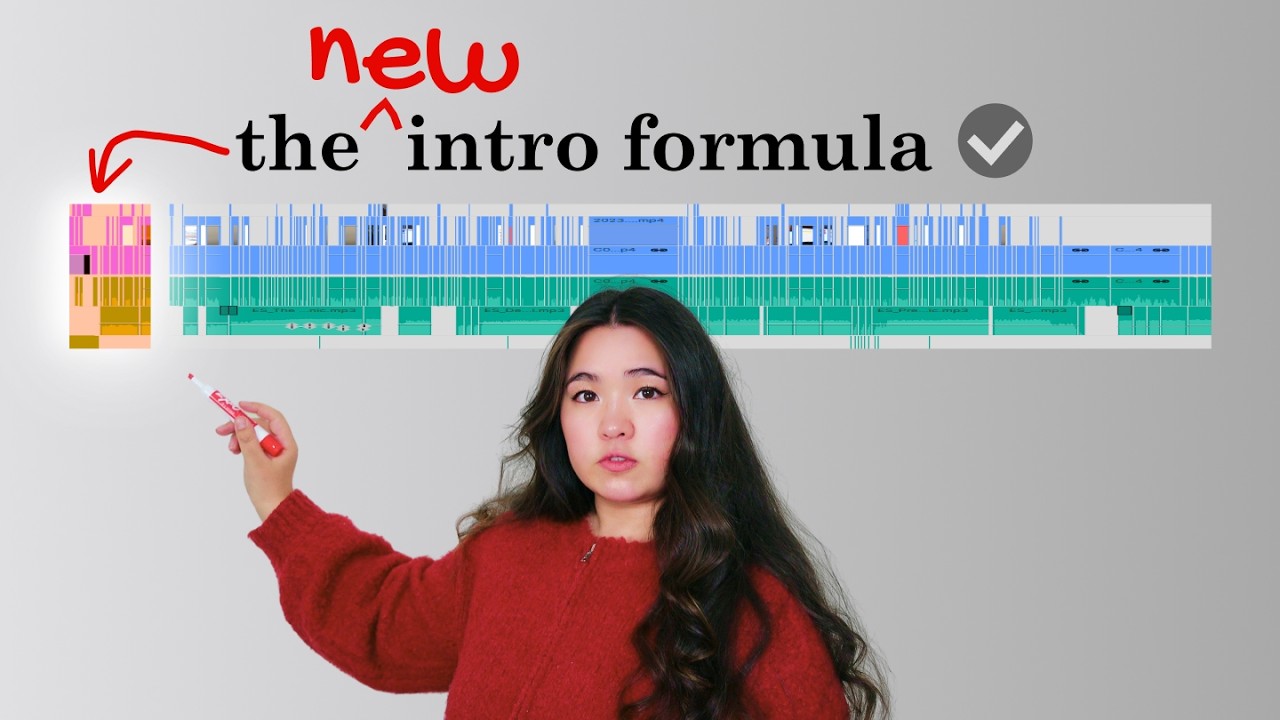
  • Outlier Theory involves analyzing videos that significantly outperform average views and replicating their successful elements.
  • This strategy evolved as YouTube grew, shifting from simple tips to data-driven formulas and playbooks.
  • Top creators and strategists use Outlier Theory to de-risk video performance by anchoring ideas on proven success.
  • The approach leads to homogenization, where many videos share similar structures, pacing, and themes.
  • AI tools often amplify this effect by generating content based on the same outlier data.
  • Relying on Outlier Theory can stunt creators' intuition and originality, making them dependent on proven formulas.
  • While it stabilizes view counts short-term, it limits long-term growth and creative potential.
  • Experimentation and risk-taking are necessary to discover truly unique and high-performing content.
  • YouTube originally aimed to empower individual creators to share unique voices, which is threatened by over-optimization.

Answers

Questions about this video

What is Outlier Theory in the context of YouTube videos?

Outlier Theory refers to identifying videos that significantly outperform a channel's average views and using their successful elements as a blueprint for new videos to increase the chance of success.

Why do many YouTube videos feel similar nowadays?

Because creators often use Outlier Theory to replicate proven video structures, titles, and thumbnails, leading to many videos sharing similar pacing, formats, and themes.

What are the risks of relying too heavily on Outlier Theory?

Relying too much on Outlier Theory can stunt a creator’s intuition and originality, making them dependent on others' ideas and limiting long-term growth and creative potential.

Full Transcript — Download SRT & Markdown

00:00
Speaker A
If you're starting to feel like all YouTube videos are beginning to look and feel the same, you're not crazy. It is happening, and there's a reason for it.
00:08
Speaker A
That reason is called Outlier Theory, and it's simultaneously one of the best and worst things to ever happen to YouTube.
00:15
Speaker A
You see, in order to make it as a YouTuber, you need to bring in views.
00:19
Speaker A
The more views you bring in, the more money you'll make. The more feasible the dream of being a YouTuber becomes. And whenever there's a metric to optimize for, especially that metric is linked to money, there are going to be strategies
00:30
Speaker A
for how to best optimize for it. Back in the early days of YouTube, these strategies revolved around tips and tricks like using better tags or being more reactive with your facial expressions or using brighter colors in your thumbnails. That was the extent of
00:43
Speaker A
what we knew and understood about YouTube. And [music] for a number of people, those tips and tricks did work.
00:49
Speaker A
But then, as the platform grew, the competition grew with it. Top YouTubers started bringing in millions of dollars.
00:56
Speaker A
Being a YouTuber became the most coveted dream job for the next generation. Businesses started realizing that YouTube was a huge opportunity for lead generation and marketing. [music] And suddenly, what used to work before just didn't cut it anymore. And this
01:07
Speaker A
competition gave rise to an entire new class of jobs. [music] Video editors, thumbnail designers, producers, and at the very top, YouTube strategists.
01:16
Speaker A
People whose literal job it is to study YouTube all day, every day, figuring out what drives views and why. I happen to be one of them. And as more and more analytical minds entered the space, [music] what we understood about YouTube
01:28
Speaker A
strategy started to rapidly evolve. Best practices shifted from simple tips and tricks to full-blown playbooks and formulas. Getting views became less of an art and more of a science. Some strategists have even gone so far as to say that YouTube is more or less solved.
01:45
Speaker A
And at the core of this new age YouTube strategy is something known as Outlier Theory. Jay Alto, a YouTube consultant that's been hired by the likes of YouTube powerhouses like Mr. Beast and Ryan Trahan, alludes to it here.
01:57
Speaker A
When you can find a smaller channel that's maybe not in the matter or, you know, stereotypically like that big YouTuber, when they have videos that explode, there's clearly something that worked there. So, there's something to tap into.
02:09
Speaker A
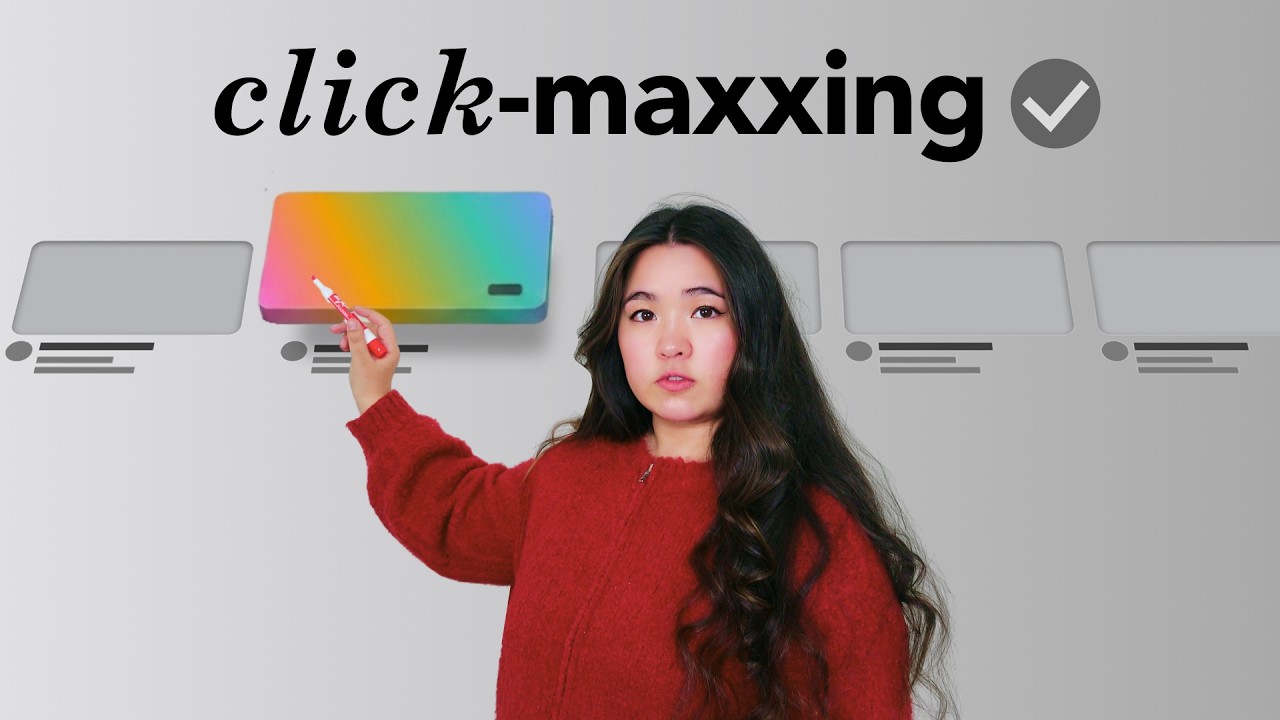
What he's referring to here is something called an outlier, which is a video that has significantly overperformed a channel's average. So, if a creator consistently pulls in 10K views per video, but one video pulls in 100K views, that video is an outlier. And
02:23
Speaker A
whether you like it or not, these outliers have secretly become the foundation of most YouTube videos that you see today. Because today's top YouTubers know that if a video has massively overperformed, there's something about it that allowed it to
02:36
Speaker A
reach a much broader audience. Something about it that worked. You can identify what that thing is and apply it to your own video, your video has a decent shot at working, too. This phenomenon isn't unique to YouTube, by the way. It's why
02:50
Speaker A
movie posters all have the same features. It's why SaaS landing pages all follow the same layouts. It's why so many hit songs use the same chord progressions. Across every industry, if something is proven to work, people will repeat it. And on YouTube, this doesn't
03:05
Speaker A
manifest as copying a video in its entirety. That would be plagiarism. Instead, it's breaking down an outlier video into its base parts. The topic, [music] the title structure, the thumbnail format, even the video angle itself. And applying one or more of
03:18
Speaker A
those ingredients into your own niche. And in recent years, outlier theory has become so popularized because it works.
03:26
Speaker A
I've seen time and time again how drawing inspiration from outliers can lead to incredible results. I've even experienced it myself. And in a world where it takes an incredible amount of time, money, and energy to make a good
03:38
Speaker A
video, outlier theory effectively de-risks each upload. Because instead of taking a shot in the dark and just hoping that it hits, you get to anchor your video on something that has proof of prior success. Something that is validated. And when we're all out here
03:52
Speaker A
trying to make a living making videos on the internet, and we have a team to support, or maybe we're just trying to leave our 9-5s, and when views are an essential part of how we get there, of course every YouTuber who thinks
04:02
Speaker A
strategically is going to use outlier theory. I mean, if it works, why wouldn't they? But last week, as I was using outlier theory to brainstorm a bunch of new video ideas for us this year, I realized something. I was taking
04:15
Speaker A
a strategic approach to ideation, digging through outliers from other niches, identifying their base structures, and adapting them to my own niche. But every idea that I was coming up with felt oddly generic. They were all videos that I had never seen before,
04:29
Speaker A
videos that didn't even exist. And yet at the same time, they were all videos that I felt I had already seen. Videos like "Seven common thumbnail mistakes that will ruin your channel." "The number one channel killer no one talks
04:41
Speaker A
about." "If I wanted to get 100K subscribers in 2026, I'd do this." Now, these are all technically new ideas, ideas I came up with after applying outlier title structures into my own niche, but they all feel like I've
04:53
Speaker A
already seen them before. And this sense of genericness reflected something that I've been noticing about YouTube as a whole. Because when everyone is pulling from the same pool of outliers, extracting the same title structures, and applying them to their own niches,
05:08
Speaker A
what you end up with is this. Now, these videos are all technically different, but they also all feel the same. Just by looking at them, I can already anticipate how they're structured, the pacing will feel like, and what I'll feel like
05:22
Speaker A
during and after watching them. Add to that the fact that people are increasingly turning to AI to help them plan out their videos and write their scripts, often feeding those same base outliers into their AI models of choice
05:33
Speaker A
in order to do so, and this convergence becomes even more obvious. And to be completely honest, I hate it. These videos have all done well, overperforming for their respective creators. From a purely views-based approach, these are all successful
05:49
Speaker A
videos. But this widespread adoption of outlier theory, [music] while being incredibly useful in stabilizing the average view count of creators who subscribe to it, is also producing a version of YouTube that feels increasingly homogenized. Now, some of you may be thinking, "Okay, big what?
06:05
Speaker A
So, all YouTube videos are starting to look and feel the same. But outlier theory is getting results. Creators everywhere are getting more views. Isn't that a good thing? What's the big deal?" And to that I say, "There's risk in
06:18
Speaker A
trying to minimize risk." And while in the short term it may seem like basing every video you make off of an outlier is a cheat code to getting more views, in the long run, you may be doing more
06:29
Speaker A
harm to your channel than you realize. To start, you never build your own intuition. When you rely on outliers to tell you what will work, you are essentially outsourcing your creative judgment. Someone else took the risk, someone else discovered what resonated,
06:45
Speaker A
and you're just copying their homework. And while that may work in the short term, in the long run it means that you're never developing your own ability to evaluate an idea, to determine whether or not something has potential
06:56
Speaker A
before you have definitive proof. It's like using AI to write an essay without ever learning logical reasoning and argument formation yourself. The output might be nice and polished, but you won't understand why, and you'll never be able to do it on your own. Over time,
07:13
Speaker A
this practice will keep you permanently dependent on others bec...
07:27
Speaker A
differentiate yourself with. I've seen channels where I can tell at a glance that every single video they make is based on an outlier. Every title looks vaguely familiar. Every thumbnail follows a format that I've seen before.
07:39
Speaker A
And while their videos may bring in a respectable number of views, there's nothing tying the channel together beyond just topic. There's no overarching brand identity, no signature content, nothing that would drive someone to choose them over anyone else
07:53
Speaker A
using outlier theory to cover the same subject matter. It's essentially the long-form version of a short channel that exclusively does trends and nothing else. You might [music] get views, but no one knows who you are. No one comes
08:06
Speaker A
back specifically for you. And if that's not enough to convince you yet, here's the real kicker. In the long run, ideating solely off of past outliers actually limits your potential growth, which is ironic considering that the whole point of outlier theory is to get
08:23
Speaker A
more views. You see, there's this concept in machine learning called a local maximum. Essentially, when an algorithm is trying to find the best possible outcome, it moves in whatever direction improves the result. But eventually, it reaches a peak where any
08:38
Speaker A
move in any direction makes things worse. So, it stays where it is thinking that it's found the best answer. But that peak may just be a local maximum.
08:49
Speaker A
There could be a much higher hill somewhere else, a far better outcome, but the algorithm will never find it because getting there would require going downhill first. And if all you ever do is what's already been proven to
09:01
Speaker A
work, you are that algorithm. You found a hill that performs respectably, and you're staying on it because every unproven idea looks like going downhill.
09:12
Speaker A
And yes, while it's true that unvalidated ideas have the potential to perform much, worse than validated ones, they also have the potential to perform much, much better, too. Because the first creator to execute a remarkable concept will always be the one to
09:26
Speaker A
capture the bulk of the attention. Your follow-up version, no matter how well executed, will only ever bring in a fraction of the original's views because it's no longer novel. And if it's a video performance that you really care
09:40
Speaker A
about, what's going to bring the most views in the long run is your own winning concept that you can be first to, that you can capture the bulk of the attention with. But you'll never find that remarkable concept if you only
09:52
Speaker A
stick to what's already been done before. So, if those are all the risks of over-reliance on outlier theory, what are we supposed to do instead? Well, if this video were made by someone else, they'd probably tell you to just be
10:05
Speaker A
original and stop looking at what others are doing and just do your own thing.
10:09
Speaker A
And I get it. I really do. But as someone who has a literal YouTube strategy channel, I'm also inclined to tell you that if something works, it works for a reason. Growing on YouTube's hard enough without banning yourself
10:23
Speaker A
from one of the most effective methods out there, especially if you don't yet have the skills and intuition required to ideate and execute on killer concepts of your own. Those skills could take years to develop, but you may not last
10:37
Speaker A
those requisite years if you're not getting any views in the meantime. Unless you're supremely dedicated and completely emotionally unattached from the performance of your videos and are okay spending years of your life without seeing much outcome. It's a romantic
10:50
Speaker A
idea, but fall into that category. Like it or not, outlier theory is an incredibly powerful tool to have at your disposal, especially if bringing in a consistent, predictable view count is important to you. So, I'm not telling you to abandon outlier theory, but it
11:08
Speaker A
may be worth adjusting how you use it. You see, when we use outliers as the starting point for ideation, what we end up with is a big list of containers, proven structures, proven framings, proven angles. And if that's our
11:22
Speaker A
starting point, we're not really coming up with video ideas. Instead, we're just trying to come up with relevant content to fit someone else's ideas. [music] That's why my big list of outlier drive ideas gave me the ick. Those weren't
11:36
Speaker A
videos that I was driven to make. Did I really have a channel-killing mistake in mind that could have ruined people's channels? Or was I just trying to invent content to fit that container? [music] When we do it this way, our videos feel
11:49
Speaker A
hollow. A pretty outside with no real soul. Just [music] slightly relevant fluff packed into a proven format. And sure, those hollow videos may get views, but I think that viewers can tell when things are done the other way around.
12:05
Speaker A
When you start with something you really, genuinely, truly want to share with the world, and then, if needed, use outliers to help you present and package what you want to say, so your message can reach the people you want it to
12:17
Speaker A
reach. Preferably AB tested against packaging ideas of your own. If the outlier-based packaging wins, so be it.
12:24
Speaker A
But the video inside will feel much more intentional and purposeful. [music] Like it was made to be shared, instead of just made to get views. Beyond that, the single most important thing you can do is make a room in your upload schedule
12:38
Speaker A
for pure experimentation. For ideas that have no validation, no proof of prior success, but that you feel genuinely inspired to try. And I know that this is much easier said than done, because every new experiment is also a potential
12:53
Speaker A
flop. And as YouTubers, there are few things that feel worse than pouring an incredible amount of time and energy into a video, only to upload it and get crickets. I understand. I truly do. I mean, how do you think I feel uploading
13:08
Speaker A
this video? It's the first video essay I've ever made. It has no proof of prior success, and it's completely different from anything I've made before in the past. What if it flops? What if no one watches it? But despite those fears, I'm
13:22
Speaker A
making it anyway. And if it flops, that's okay. It may sting, but it's data. And it's my data, and I can use that data to help me further develop my intuition and my ability to evaluate ideas of my own. I'm not saying you need
13:36
Speaker A
to go crazy with every upload. After all, the most likely result of experimentation, especially in the beginning, is going to be underperforming videos. And if you take that chance with every single video you make, you may run out of resources
13:50
Speaker A
before you find something that works. But that's why you get to control your own rate of experimentation. If you have a low risk tolerance, a high overhead to manage, or you simply don't yet have the skillset to come up with and execute on
14:03
Speaker A
your own unique ideas, keep it minimal. Maybe one experiment for every five or six proven videos. But no matter how low your rate of experimentation is, just make sure that it's there. Because when one of those experiments hits, it's
14:17
Speaker A
going to hit so much harder than any proven concept you've done in the past.
14:22
Speaker A
You won't be the 100th creator doing a version of someone else's concept. You'll be the first one doing yours.
14:28
Speaker A
You'll have left the local maximum and found a higher one. The point of this video isn't to convince you to stop optimizing your videos or stop following the best practices. I'm literally working on a video right now investigating how title capitalization
14:42
Speaker A
affects clickability, which is just about as mega optimized as you can possibly get. And unless I'm met with data that shows that a different approach works better, I'm going to keep teaching people about outlier theory.
14:55
Speaker A
After all, most of us are here because we want the life that being a full-time YouTuber can get. And outlier theory is one of the most powerful tools we have at our disposal to get there. And no matter how creative or original we want
15:08
Speaker A
to be, most of us are more than willing to sacrifice a little creative freedom if it means a chance to grow our channels and make a living making videos on the internet. Speaking of growing your YouTube channel, this is usually
15:21
Speaker A
the part of the video where I would tell you about a course that I run helping YouTubers grow. But with this particular video, that just didn't feel appropriate. So if you want to hear about that, check the description for a
15:31
Speaker A
link to it. But for now, I want to leave you with this. YouTube started out as a platform to broadcast you. A place where anyone, anywhere could build an audience, make a living, and genuinely impact others' lives. And despite how
15:47
Speaker A
many playbooks and formulas are floating around out there, the creators who are going to thrive in the years to come won't be the ones who learn how to optimize the best. Instead, they'll be the ones who figure out how to be both
15:59
Speaker A
strategic and original, who both use the tools at their disposal and never let those tools replace their own voice. So yes, use Outlier Theory, use every advantage you can get, but also trust yourself enough to try things that have
16:14
Speaker A
never been done before. Because the video that defines your channel, the one that people will share with their friends and come back to rewatch, that video isn't going to come from an Outlier spreadsheet. It's going to come from you. And I hope that in your quest
16:28
Speaker A
to make a living making videos, you don't optimize so hard that you talk yourself out of it. This is a very complicated topic, and I don't have all the answers. So if you have a take of your own that you want to offer to the
16:39
Speaker A
conversation, please tell me about it in the comments below. But otherwise, thank you so much for watching. Like and subscribe if you can.
16:47
Speaker A
Keep creating, and I'll see you in the next video.
Topics:YouTube strategyOutlier Theoryvideo optimizationcontent creationYouTube algorithmvideo viewsYouTube trendscontent homogenizationcreative riskAI in content creation

Get More with the SozAI App

Transcribe recordings, audio files, and YouTube videos — with AI summaries, speaker detection, and unlimited transcriptions.

Or transcribe another YouTube video here →