Skip to content

Was ist Wahrheit? Philosophisches Kopfkino (3sat)

Exploring the philosophical concept of truth through historical and modern perspectives, highlighting consensus, proof, and individual understanding.

Key Takeaways

  • Truth is not simply what most people believe but requires proof and consensus.
  • Truth can be absolute or relative, evolving with new information and perspectives.
  • Individual and cultural influences shape personal interpretations of truth.
  • Some truths are self-evident and do not require verification.
  • Effective communication and mutual understanding are essential to recognizing truth.

What the video covers

  • The video discusses various methods of discovering truth, emphasizing that superficial methods like torture or truth drugs do not capture philosophical truth.
  • Aristotle viewed truth as what most people agree upon, but this is challenged with examples showing popular belief does not equal truth.
  • Thomas Aquinas, Kant, and Hegel argued that truth requires universal proof and public acceptance, defining truth as agreement between knowledge and perception.
  • Dialectical materialism distinguishes between absolute and relative truth, showing truth as a dynamic field rather than a fixed concept.
  • The Earth’s shape is used as an example of absolute truth refined by relative truth, demonstrating that truths evolve with new knowledge.
  • Idealism emphasizes the role of individual perspective, cultural background, and moral principles in shaping one’s understanding of truth.
  • The video questions if there is an absolute truth or if truth is subjective, concluding that some truths are indubitable and evident regardless of proof.
  • American pragmatism is introduced as a philosophy accepting practical consensus over absolute proof, focusing on mutual understanding.
  • Truth depends on reaching general consensus through argumentation and shared meaning, highlighting communication as key to recognizing truth.
  • Ultimately, truth is portrayed as a collective agreement and understanding rather than an immutable fact.

Answers

Questions about this video

What is the main philosophical problem addressed in the video?

The video addresses the question of what truth is, exploring how it has been understood and defined by various philosophers throughout history.

How does dialectical materialism view truth?

Dialectical materialism distinguishes between absolute and relative truth, viewing truth as a dynamic unity that evolves over time through refinement and new knowledge.

Why is consensus important in understanding truth according to the video?

Consensus is important because truth is seen as something that must be accepted and understood by the general public through argument and shared meaning, making communication key to recognizing truth.

Full Transcript — Download SRT & Markdown

00:06
Speaker A
Philosophical mind cinema. What is truth? There are various ways to find it out. Through polite questioning, private detectives, forensic scientists, torture, or through sodium enthalpy, the truth drug. But that is not really the truth we are looking for. The
00:24
Speaker A
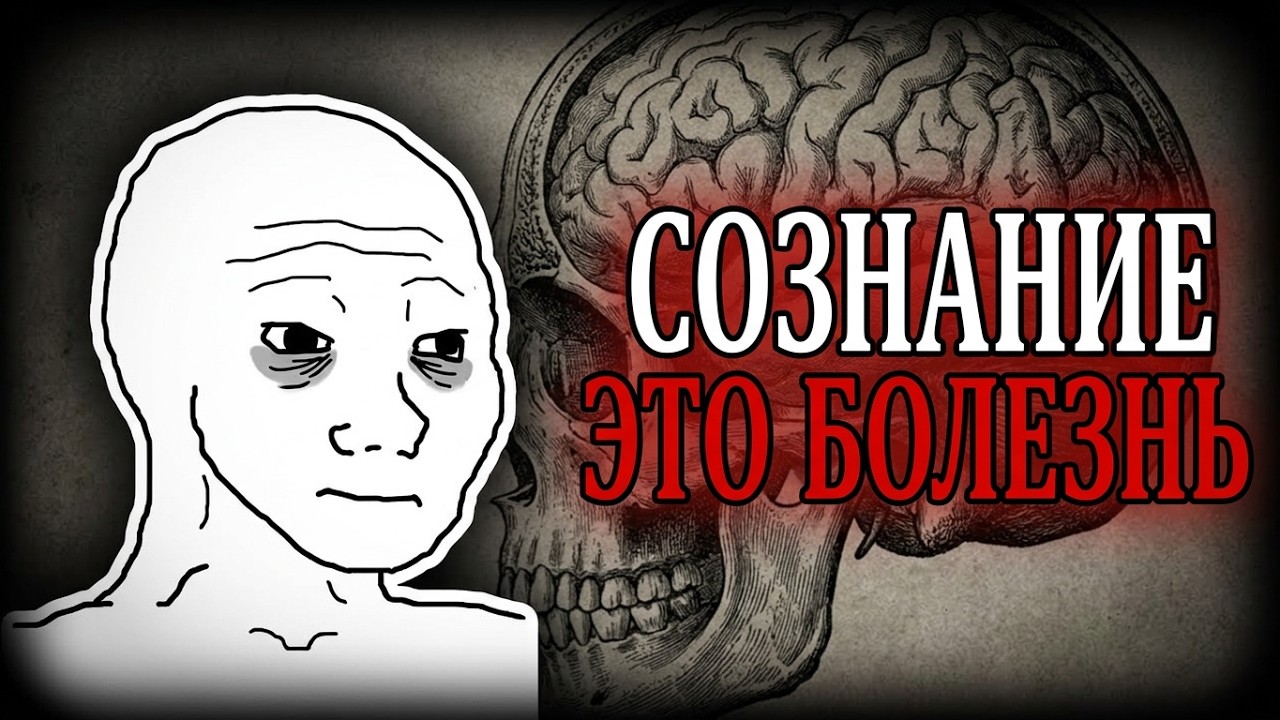
question of truth is one of the central problems of philosophy and has been answered differently by various thinkers. For Aristotle, truth resulted from the fact that as many people as possible agree with an opinion or assumption. Huh, something is true just
00:39
Speaker A
because enough people believe it? That would mean that Elvis is still alive, the Easter Bunny brings eggs, and Uri Geller can really bend spoons. No, it also has to be proven to be universally true at the same time. At least that is
00:53
Speaker A
how the monk Thomas Aquinas sat in the Middle Ages, and after him in the 19th century, other colleagues such as Kant and Hegel did. Proof has to be provided and accepted by the general public, and only then does the whole thing become
01:05
Speaker A
true. Truth is defined here as agreement between knowledge and seeing. Later, in dialectical materialism, people went into even more detail and distinguished relative from absolute truth. Both form a unity, a field of tension that serves to find the truth.
01:22
Speaker A
An absolute truth is that the Earth is a sphere. But this truth can be refined and relativized. The Earth has become somewhat out of shape due to billions of years of rotation and polar forces and is dented in many places. But in
01:36
Speaker A
principle, it is, of course, more of a sphere than a disk. This gives us a relative truth that is always up to date. There is no final, eternal truth.
01:46
Speaker A
Idealism focused more on the individual, because origin, cultural influences, upbringing, and moral principles also play an important role in understanding the world and its truths. Does each person therefore have their own truth?
02:00
Speaker A
Can there even be truth in itself? It cannot be proven, but neither can the opposite. There is a probability bordering on certainty, because there really are things that are simply true, regardless of whether they have been verified or not: the indubitable
02:15
Speaker A
obvious, also known as evidence. A statement is true if its assertion corresponds to reality. This idea was also taken up in American pragmatism. A philosophical variation in which one is content with what one has. In other words, it is better to speak of a bird
02:30
Speaker A
in the hand than a pigeon on the roof. Because sometimes one does not need proof at all, as long as one understands one another. The truth of a statement depends on whether a general consensus can be reached through
02:41
Speaker A
arguments alone. We understand one another and can therefore recognize the truth. We know what each other means and what we are talking about. We find a common tenor. And that is the whole truth.
Topics:philosophytruthAristotleThomas AquinasKantHegeldialectical materialismidealismAmerican pragmatismconsensus

Get More with the SozAI App

Transcribe recordings, audio files, and YouTube videos — with AI summaries and speaker detection. 30 minutes free.

Or transcribe another YouTube video here →