Taking a stand at a world at war with woke — Transcript

Ben & Jerry's advocates for brand activism, debunking 'go woke, go broke' and sharing strategies for authentic social change engagement.

Key Takeaways

  • Being 'woke' or socially aware is essential and expected by modern consumers, especially Gen Z.
  • Authentic brand activism, rooted in company values, drives stronger loyalty and business success.
  • Brands must pick a side and stand firm on their values to maintain credibility and impact.
  • Silence or lack of response after taking a stand can harm a brand more than the stand itself.
  • Effective activism involves clear messaging, partnerships, and encouraging consumer action beyond just awareness.

Summary

  • Ben & Jerry's leaders discuss the importance of brands taking a stand on societal issues, emphasizing the value of being 'woke' as awareness and activism.
  • They challenge the myth that 'going woke' harms business, citing data showing Gen Z expects brands to act on social issues and that activism drives loyalty and willingness to pay more.
  • The company’s approach starts with their core values and seeks authentic progressive change, contrasting with typical purpose campaigns focused on consumer preferences.
  • Four rules for brand activism are introduced, including the necessity to pick a side, the value of being talked about, and the importance of authentic engagement.
  • The Bud Light case is analyzed to illustrate the risks of silence after taking a stand, emphasizing that not standing firm on values can backfire.
  • Ben & Jerry's uses their platform to drive systemic change, leveraging partnerships and clear messaging on issues like racial justice and LGBTQ rights.
  • Their activism approach results in high engagement and audience connection, as shown by their social media performance and campaign impact.
  • The speakers highlight the difference between CSR and brand-led activism, advocating for campaigns rooted in genuine values rather than marketing strategies.
  • They stress that brands should be intensely loved by some and indifferent to others, rather than trying to please everyone.
  • The session concludes with encouragement for brands to use their voice boldly to influence social progress and build strong consumer bonds.

Full Transcript — Download SRT & Markdown

00:07
Speaker A
[Music] Thank you. Good afternoon, everyone. Welcome to this session. You know, we have the after-lunch session, so we'll try and keep it higher energy so you don't, uh, take a nap. Um, it's great to be here. Uh, my name is
00:26
Speaker A
Chris Miller. I have no offense, Kerry, what I believe is one of the best jobs in the world. I lead the sort of advocacy and activism work at Ben & Jerry's. I am fortunate to have come from Burlington, Vermont in the U.S., where our corporate
00:42
Speaker A
headquarters is based, and I lead a team of about a dozen campaigners that sit within our for-profit ice cream company and our 10 largest markets. My background, uh, is in policy and advocacy. I spent a bunch of years leading the climate
00:59
Speaker A
change campaign at Greenpeace US. I started my career working for Bernie Sanders. I am not a trained marketing or business professional. I get to work with people who are— Hi, I'm Kerry Thorpe. I lead the integrated communications at Ben and
01:16
Speaker A
Jerry's. I joined the company eight years ago, and of course, I get to talk about flavor news or cookie dough or lobby to change the name to Ben and Kerry's, but I also get to do the part of the job that
01:28
Speaker A
I love the most, which is using the tools and channels and platform and voice that Ben and Jerry's has to drive our fans to take action and drive systemic change in the world. So we're going to start by setting up a
01:41
Speaker A
little context for our conversation. I think we want to talk a little bit about the importance and opportunity of brands and companies taking a stand, both the risks and the rewards. But before we start with the context, a question:
01:56
Speaker A
So put your hands up if you think people should not at all be aware or actively attentive to societal issues. Okay, so no hands. That was a good start. Um, and that's because that's the dictionary definition of what it means
02:12
Speaker A
to be woke. So we feel at Ben and Jerry's it's time to really celebrate, lean in, and own this definition of woke and to recognize our responsibility to be aware of societal issues, to awaken our consciousness to them, because only by
02:26
Speaker A
doing that can we drive forward progressive change. So there are some that have tried to suggest that being woke is a bad thing, being attentive to issues that our society is wrestling with. Uh, in fact, they've sort of suggested if you go woke,
02:41
Speaker A
you may go broke. Uh, we're here to tell you that's, um, and the data shows that that's true. Um, so the Edelman Trust Barometer, Gen Z— Gen Z expects action. They are looking for brands and companies to be a part of
03:01
Speaker A
solving the problems that our society wrestles with. So, so for those who suggest that somehow being woke or brands being engaged and involved in helping address the issues of the day is somehow bad for business, it's what consumers expect.
03:19
Speaker A
And when brands do this right, it's not only what consumers— who they're willing to engage more with. So when you look at the data, when brands take a stand in the right way on societal issues, you'll find it drives
03:32
Speaker A
loyalty. People are four times more likely to engage with a brand, a product, or a service and buy that product or service if brands put their values out there and take a stand in a clear way. And of that group, people are also twice
03:45
Speaker A
as likely to pay more for that product or service. So it's the opposite of go woke or go broke. Really, doing good is good for business. And while this data is relatively new, the insight really isn't. Our co-founder,
04:00
Speaker A
Ben Cohen, our company was founded, uh, in 1978 in a dilapidated petrol station in Burlington, Vermont, and early on Ben had this insight that really the strongest bonds that our company or any brand can create with your consumers— at Ben
04:17
Speaker A
Jerry's, we call them fans— uh, the strongest bonds you can create is not just around a product transaction, pulling a pot of Ben & Jerry's out of the freezer at the market, but is around a shared set of values. If you think
04:31
Speaker A
about the brands that you are most loyal to, that you are most keen about, they are often brands where you have a connection around something the brand represents. So the data shows us that that's true, but Ben knew this a long time ago, and it's
04:47
Speaker A
been part and parcel of the way in which, uh, we've built this company. And what does it look like if you're going to do this stuff right? So if you're going to engage with your Gen Z or whichever audience in the right way,
04:58
Speaker A
what does it look like? And we think at Ben and Jerry's there's a big difference between purpose campaigning or CSR and brand-led activism. In purpose campaigning, typically it starts with a survey to find out what your consumers care about. So what did they care about?
05:13
Speaker A
Then marketers come along and they try to emotionally connect you with that issue, and then you might ask NGOs or charities, "Hey, how can you be of service to us and make our brand look better?" And the goal of these campaigns is nearly
05:28
Speaker A
always driving brand equity. So, and I would suggest there's a little bit of risk in this, right? Because the company or brand is focused on what's a value or cause or issue that my consumer base cares about. It doesn't
05:43
Speaker A
tell you something about the company or brand. So our approach is quite different in many ways. The creative output can look very similar, but we start at a very different place. Our work, using our platform, our tools to be advocates for
05:58
Speaker A
progressive social change, don't start with who are our consumers and what do they care about. It starts with what are our values, what are the things we believe, what's the change we seek to make in the world. And then we want to
06:11
Speaker A
build an emotionally compelling campaign that encourages people not only to consume a piece of content but ultimately to take action focused on making change in the world. Now we have the data, and we're going to share some with you, uh, here in a minute
06:28
Speaker A
that shows when we do this, when we're focused on authentically driving change, it accrues big rewards to the brand. It does both of these things at the same time, but you have to start with what's the change you seek to make in the world.
06:44
Speaker A
So we're going to give you four rules to think about, uh, how to approach this from a brand side. So rule number one: many marketers and brand people may have heard the term that it's time to get off
06:59
Speaker A
the sidelines. I think we're here to tell you today that there are no longer sidelines. That ultimately, you have to pick a side. Anyone familiar with this recent case? So let me just start by saying I'm not here to pick on any brand or company or
07:17
Speaker A
suggest that we're any more clever than anybody else, but I think it's important to look at these issues because I think what we don't want is people to take away the idea that taking a stand on LGBTQ or trans rights is a bad idea.
07:31
Speaker A
I'd suggest that it's not. Bud Light, Anheuser-Busch has a long history of supporting the LGBT community for more than 30 years. They've had a very engaged employee resource group. They had done Pride-themed cans before. In fact, they've been very strong
07:47
Speaker A
proponents in the U.S. for a landmark piece of legislation called the Equality Act that would create legal protections for LGBTQ people. This was, I think, an attempt to be inclusive, to expand the reach of the brand. You will know that they received a
08:05
Speaker A
very loud but, I might suggest, relatively narrow, uh, pushback on this piece of creative. The way in which it was handled, I would say, did not turn out particularly well. Bud Light in the U.S. has a household penetration of roughly
08:21
Speaker A
50 percent, so roughly 50 percent of folks under the age of 50, uh, have consumed a Bud Light in the last three months. It is also true that 80 percent of Americans support legal protections for the LGBT community. So taking a
08:34
Speaker A
position like this, I would advocate, I would suggest to you, was not particularly controversial. I would posit that the reason this was a problem was not because the brand took a stand. It's ultimately that they didn't take a stand, that in the face of
08:51
Speaker A
pushback, they remained silent. They weren't willing to stand up in this instance for the value that they were willing to associate themselves with originally. The, um, the senior director programs corporate—
09:11
Speaker A
the U.S said they had a moment to really stand up and demonstrate the importance of their values and they really fell short in this instance rule number two generally it's better to be talked about than not talked about
09:26
Speaker A
so at Ben and Jerry's for nearly the past decade we've been using our platform to Advocate and protect the rights of refugees and people seeking Asylum at Ben and Jerry's we've been very clear concise and loud and proud about our
09:41
Speaker A
view on the government's hostile environment policy towards people on the move and also the dangerous rhetoric that the government uses towards people seeking Asylum we have put this statement out many statements out whether it's saying that we don't agree with the Rwanda plan or
09:56
Speaker A
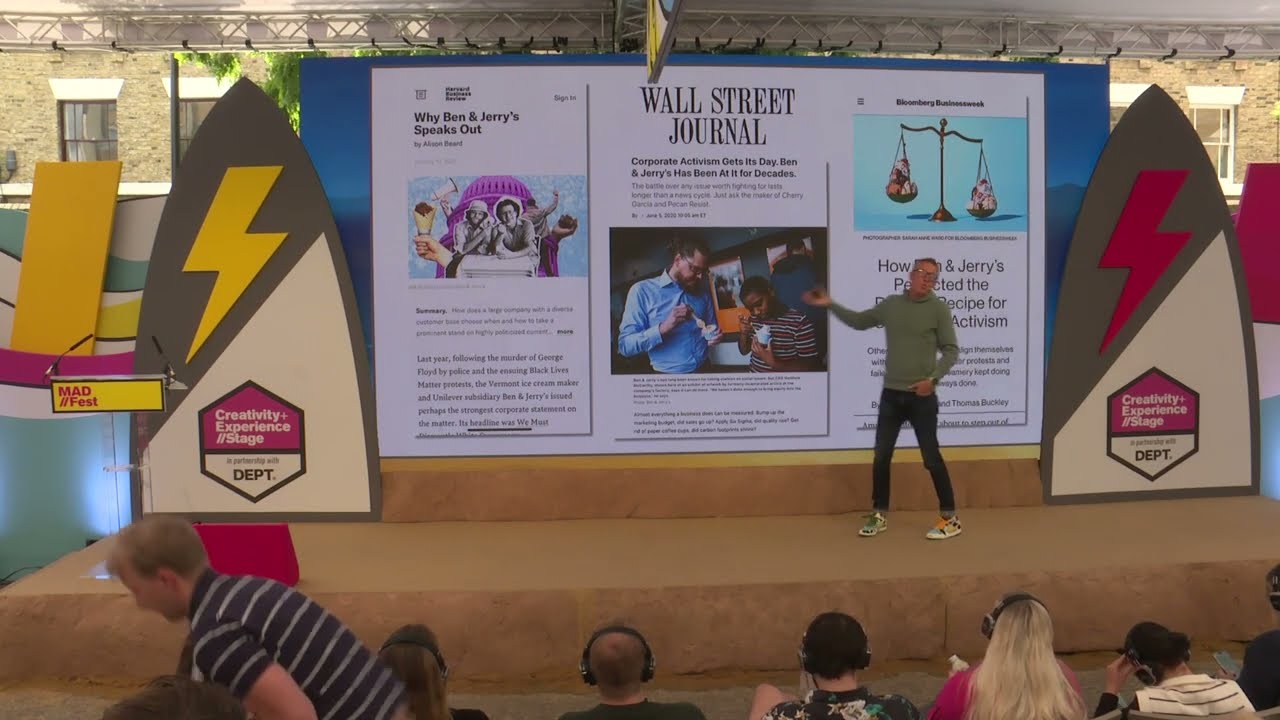
that the environment is very hostile and we've stood up for what we believe in for many people headlines like this that really put the Home Secretary against Ben and Jerry's would be a crisis a crisis comms issue something
10:10
Speaker A
that most corporates would absolutely hate from our vantage point of Ben and Jerry's this isn't a disaster at all this is us using the platform that we have to put an issue on the map in a way that ngos or movement Builders might not
10:23
Speaker A
be able to do alone and the debate that it stirs is worth it for us if people have drawn attention to an issue and might take action and of course whilst when we make this kind of issue with any progression comes
10:37
Speaker A
pushed back and there'll be some people who are less likely to buy Ben and Jerry's because our position is so clear there are those who know what Ben and Jerry stand for and know what we believe who are more inclined to buy our ice
10:47
Speaker A
cream so as you lose people by being clear and not playing it safe you gain people who know exactly what you stand for so here it shows that people went on to buy us and this was one of the comments that we
11:00
Speaker A
made calling out the lack of humanity for people fleeing War climate change and torture and we don't do it for this brand Equity driver we do it in partnership with a movement to drive change but what this shows is that it
11:13
Speaker A
resonates with our audiences when we make these clear statements people understand who we are and what we stand for and then move towards us we think and what you can also see from Ben and Jerry's is that we have nearly
11:27
Speaker A
20 of share of posts across all ice cream but we have a massive over 60 percent share of Engagement so we over index and engagement and you might ask yourself why that is or if you've ever followed Ben and Jerry's on Instagram
11:39
Speaker A
you'll see that you have one moment it's a really fun post about ice cream or about a recipe to make a sundae and the next minute it's a really strong message on racial racial Justice Refugee Rights and that mix of content the fact that we
11:55
Speaker A
don't just stand for selling a product is more interesting and therefore drives more engagement so rule number three the job isn't to say what's popular it's to make popular what needs to be said so 2020 the murder of George Floyd by a
12:16
Speaker A
Minneapolis police officer was not just a sort of seminal moment in the movement for racial Justice and civil rights in America in many ways it was an important moment for how Corporate citizenship was viewed companies really felt companies
12:35
Speaker A
and brands in the U.S and and really around the world felt the need to sort of speak out and speak up on issues of racial Justice that came both from employees who work inside of Corporations and Brands as
12:52
Speaker A
well as from society outside now we within about 72 hours of the murder of George Floyd working with a A constellation of groups and partners that we have worked with over the years on issues of racial Justice helped us
13:14
Speaker A
put together what was a very clear statement and I would suggest it was a statement that in many ways contrasted most other corporate statements words matter it's important not just to say something but how and what you say is
13:28
Speaker A
important I just want to take a quick moment and you may have read it while I was talking just to highlight some of the kind of language that we used language that the movement uses we're reflecting the partners and allies that
13:41
Speaker A
we work with in the world so you know what happened to George Floyd was not the result of a bad apple it was a predictable consequence of a racist and Prejudice system and culture that's treated black bodies as the enemy from
13:53
Speaker A
the beginning in addition to this statement we also lifted up a policy platform that our our friends and allies in the movement were promoting which included uh the United States apologizing for slavery instituting a program of reparations passing National
14:09
Speaker A
fundamental Criminal Justice Reform we were very clear about both the problem in very Stark and real language that reflected the movement and the partners that we work with and we offered up their policy platform using our power and platform that we have and again not
14:29
Speaker A
to pick on anybody but there was a sea of sort of corporate statements that were white text on a black background around you know the National Football League in the U.S put out a statement that literally didn't even use the term race or racism
14:44
Speaker A
to describe the issue because I'm assuming they they were concerned about being controversial uh this statement is the biggest thing we ever did it drove 3.5 million hits to the website the time on site was 4X the typical time on site people read and
15:06
Speaker A
engaged with um what this was it had 1.2 billion earned media Impressions and it really helped sort of set the standard for how companies take a stand on issues like this and finally one of our movement Partners Jamie hen who helped co-found a
15:27
Speaker A
global 350.org global climate advocacy group you know really summed it up better than I think I could that we we have a huge megaphone and unlike some other companies and Brands we're not afraid to use it we help our movement
15:42
Speaker A
Partners reach new audiences and as you saw in Kerry's slide we're we're not afraid of putting pressure you're on key decision makers which brings us to rule for it's better to be intensely loved by some and indifferent to everyone
15:57
Speaker A
there's probably not a day that goes by where we don't see a boycott Ben and Jerry's post onto our socials but if your words don't move people they don't matter so I think what we know about being clear and concise in our
16:07
Speaker A
statements as we've said before it's not why we do it but we know that it moves people both to take action for social issues and they're more likely to put you into their basket it drives this brand loyalty when you connect with
16:19
Speaker A
people not only over ice cream but over an idea over a shared vision for the future counter-intuitive I think that you know taking a position on issues that could be controversial lead to the kind of data that we've shown you but it is true
16:35
Speaker A
and for Ben and Jerry's we're now a company what in 38 countries around the world um this company has grown consistently year over year over year since it was founded in 1978 and we are one of the largest
16:52
Speaker A
ice cream companies uh in the world and despite having a clear political point of view right we would say you know no no surprise here we sit on the left side of the political Spectrum but what's interesting is in a recent survey among
17:12
Speaker A
a number of leading well-known Brands both in the UK and in the U.S we are seen as objective so people don't find the way in which we're engaging in these issues divisive they see us as objective and these Brands include Brands like
17:30
Speaker A
Tony's Dove Ikea Starbucks Nike and so um this way of engaging is seen as credible and and that's really interesting right at a time when their critics of politicians and policy makers and a lack of trust uh increasingly brands are being seen as
17:53
Speaker A
credible actors on these issues so with that let's leave you with the four rules it's better to be intensely loved by some than indifferent to everyone it's better to be talked about than not talked about the job isn't to say what's popular it's
18:13
Speaker A
to make popular what needs to be said and finally it's better to be intensely loved by some than indifferent to others those are three of the four rules but uh with that one typo we'd like to uh oh yeah
18:31
Speaker A
it's fine thank you all very much thank you thank you yeah
Topics:brand activismBen & Jerry'swoke culturesocial changecorporate advocacyGen Z consumerLGBTQ rightsprogressive marketingconsumer loyaltypurpose-driven brands

Frequently Asked Questions

What is Ben & Jerry's approach to brand activism?

Ben & Jerry's approach starts with their core values and seeks to drive authentic progressive social change, rather than focusing solely on consumer preferences or marketing strategies.

Does taking a stand on social issues hurt a brand's business?

No, data shows that consumers, especially Gen Z, expect brands to take action on societal issues, and authentic activism can increase loyalty and willingness to pay more.

What lessons does the Bud Light case illustrate about brand activism?

The Bud Light case shows that the problem was not taking a stand on LGBTQ rights but remaining silent in the face of backlash, highlighting the importance of standing firm on brand values.

Get More with the Söz AI App

Transcribe recordings, audio files, and YouTube videos — with AI summaries, speaker detection, and unlimited transcriptions.

Or transcribe another YouTube video here →