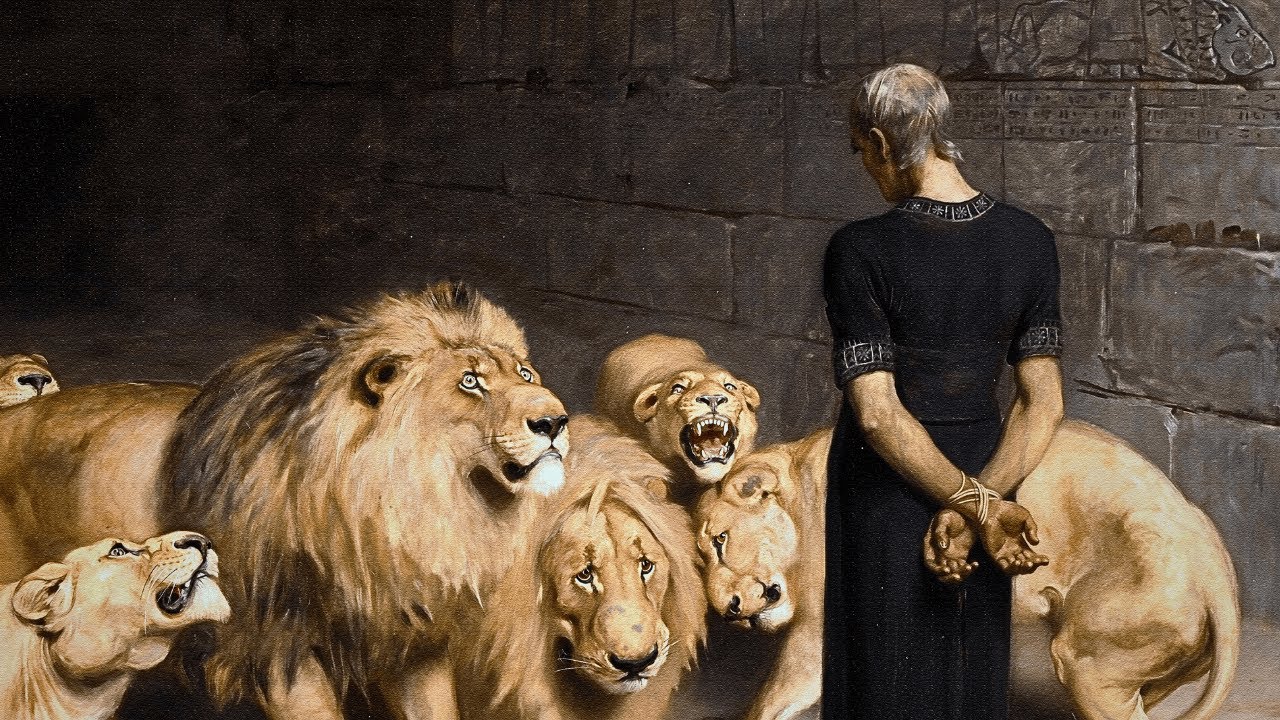
A motivational talk urging to embrace reality as the foundation of dreams and to use education to improve the world.
Ask about this video. Answers come from its transcript only — with the timestamp, so you can check them.
Generated from the transcript and can be wrong — check the timestamp.
Key Takeaways
- Reality matters and should be the foundation of dreams.
- Question buzzwords and seek fundamental truths in any field.
- Use your education and position to improve the world practically.
- Embrace your unique path even if it differs from others' expectations.
- Subjective realities are valid, but engagement with the real world is essential.
What the video covers
- The speaker compares life to a Christopher Nolan movie, emphasizing feeling reality rather than fully understanding it.
- Reality is often undervalued compared to dreams, but dreams are subsets of reality.
- Using the film Inception as an example, the speaker discusses subjective realities and the importance of accepting reality.
- Criticism of modern buzzwords like 'disruption' and 'algorithm' as obscuring true value and responsibility.
- Encouragement to focus on fundamentals and real-world impact rather than economic nihilism.
- The speaker challenges the audience, especially the younger generation, to reframe communication and improve the world.
- Advice to chase reality, not just dreams, using education as a foundation to create meaningful change.
- A humorous note on Bruce Wayne (Batman) not graduating, implying the audience is already ahead.
- The speaker shares personal background in filmmaking, emphasizing persistence and uniqueness.
- Final encouragement to find what distinguishes you and to pursue it despite expectations.
Chapters
- 00:00Introduction and Life as a Nolan Movie
- 01:03Reality vs Dreams and Inception Spoiler
- 01:54Subjective Reality and Audience Reaction
- 02:51The Importance of Reality
- 03:05Critique of Modern Buzzwords and Economic Nihilism
- 03:49Call to Focus on Fundamentals and Real Impact
- 05:21Chasing Reality, Not Just Dreams
- 06:06Humorous Note on Bruce Wayne and Graduation
- 06:56Personal Filmmaking Journey and Final Advice
Full Transcript — Download SRT & Markdown
Speaker A
My life is like a Christopher Nolan movie. I don't really understand what's going on.
Speaker A
[laughter] What would you tell him or her? I'd say don't try to understand it, just [music] feel it.
Speaker A
I feel that over the last couple decades, I feel that over time we've started to view reality as the poor cousin to our dreams in a sense. We've started to think of reality as this kind of gray [music]
Speaker A
pebble at the center of wonderful abstract thought that transcends it. And I want to make the case to you that our dreams are virtual realities. These abstractions that we enjoy and we surround ourselves with, they are subsets of reality.
Speaker A
Uh, Inception had something to [music] say about this. Uh, and I apologize to those of you who haven't seen it because I'm about to spoil the ending of it for you.
Speaker A
But at the end of the film, there's a spinning top that's spinning and if it falls or doesn't fall is the key idea.
Speaker A
Is it a dream? Is it reality? And the way the end of that film worked, Leonardo DiCaprio's character, [music] Cobb, he was off with his kids. He was in his own subjective reality. I didn't really care anymore. And that makes a statement
Speaker A
that perhaps all levels of reality are equally valid. The camera moves over to the spinning top, and just before the spinning top [music] appears to be wobbling, there's a cut to black.
Speaker A
I skip out of the back of the theater before people catch me. And there's a very, very strong reaction from the audience. Uh, usually a bit of a groan but, um, the point is objectively, it matters to the [music]
Speaker A
audience in absolute terms, even though what they're watching is a fiction, it's its own virtual reality. But the question of whether that's a dream or whether it's real is the one I've been asked the most about any of the films I've made.
Speaker A
It matters to people enormously, and that's the point about reality. Reality matters. It won't be transcended.
Speaker A
Uh, we had a dream of being outside for this occasion. Reality intervened, and we're in here.
Speaker A
[music] Uh, we live in the real world, we deal in the real world, and I think what I was saying earlier about communications, it's time for something of a reframing, and it's something that your generation could do that my generation can't. We
Speaker A
are firmly embedded in the belief that we have changed the world in all kinds of incredible ways, and we have all kinds of ways of selling this to you, and you know, we use fancy words like disruption,
Speaker A
[music] um, which is essentially a form of sort of economic nihilism, whereby you judge the value of a company by how much it can [music] stop other companies making money rather than what they actually make themselves. That's there
Speaker A
for those of you going into finance, by the way. Just trying to lay a little groundwork there.
Speaker A
Um, and we use words, slippery words, uh, like algorithm. Okay, now if you hear someone use the word algorithm and they're not a mathematics professor or a computer scientist, they're probably trying to obscure what it is they actually do, what their
Speaker A
company does. At the very least, they're trying to evade any responsibility for what it is that their company does or what it actually does. Um, I would love for you to be suspicious of this. I would love for you to look at
Speaker A
fundamentals, to look at, okay, what are we really doing in the world? What is the change that is being affected? How can we actually move the ball forward, progress in this way?
Speaker A
Uh, [music] Oscar Wilde once said, "The old believe everything, the middle-aged suspect everything, [music] the young know everything." You do know everything.
Speaker A
[music] Uh, I'm clearly in my suspicious phase. And I'd love to impart some of that to you because I think there's an enormous amount of work to be done. And in the great tradition of these speeches, I don't have to tell you how to do it. I
Speaker A
just have to tell you that it's your problem now. [applause and music] And in the great tradition of these speeches, generally what happens is the speaker says something along the lines of "You need to chase your dreams." [music]
Speaker A
But I'm not going to say that because I don't believe it. I don't want you to chase your dreams. I want you to chase your reality.
Speaker A
And I want you to understand that you chase your reality not at the expense of your dreams, but as the foundation of your dreams.
Speaker A
It's very, very important [music] that you take the elevated position that you have achieved over these four years, the advantages that this fantastic education has conferred on you, and you do everything you can with it to improve [music] the world, to improve
Speaker A
reality. In whatever field you're going off to work in, I think looking at fundamentals, looking [music] at how people are really affected by what you do, uh, I think you have limitless potential.
Speaker A
And there's been a certain amount of talk about Batman. But nobody's pointed out the most important thing [music] about Bruce Wayne, which is, yes, he attended Princeton, but he didn't graduate.
Speaker A
[applause] He didn't graduate, and so as of tomorrow, you are all already better than Batman.
Speaker A
[applause] [music] You do me a great honor by inviting me here to [music] be a part of this very, very important time in your lives.
Speaker A
I [music] am so excited for your future and so very grateful for you inviting me here, [music] and I wish you all the best tomorrow, and indeed with the rest of your lives.
Speaker A
Thank you very much. Okay, I never went to film school. I never studied filmmaking in any way.
Speaker A
[music] I started making films, uh, when I was a kid, when I was, I think, 7 years old, uh, making films using my dad's Super 8 camera and little action figures doing stop motion films, a little bit of animation, and a certain
Speaker A
amount of live action, and I just carried on making films as I grew up.
Speaker A
And over the years they got bigger, hopefully better, but more elaborate and [music] there never really was a period in my life where I completely stopped doing them. So, I was always moving up eventually from Super [music]
Speaker A
8 to 16 mm films, and then I think what Following represents is kind of the, uh, the peak of what I was able to do on my own or just with friends just using our own resources and borrowing
Speaker A
equipment and sort of using the things around us to make a film. You have [music] to stick to your guns.
Speaker A
You have to find something that you can do that maybe other people couldn't do. Uh, and even if that seems different or doesn't fit into people's expectations, that's what's going to distinguish it if you can do it successfully.
Topics:realitydreamsInceptioneducationmotivationcommunicationdisruptionalgorithmpersonal growthfilmmaking