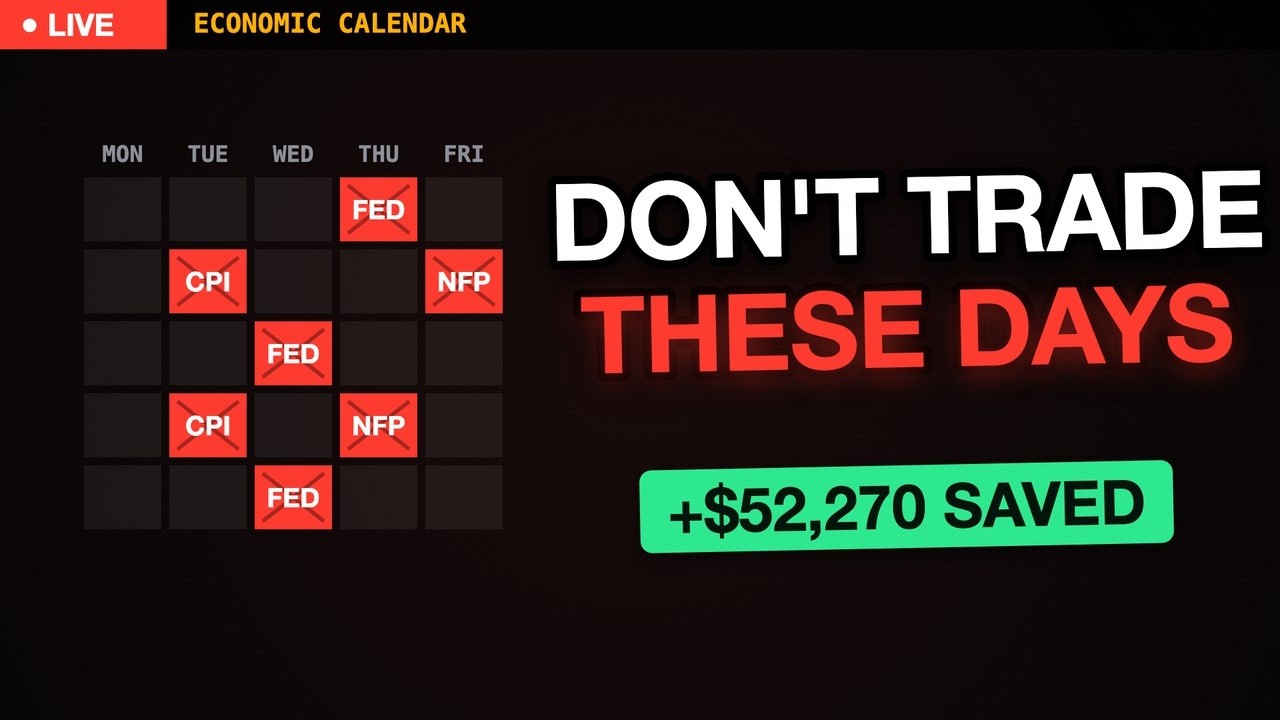
Jeff Tompkins explains the Golden One Day Options Trade, a market-neutral 0DTE long strangle on SPY/QQQ that profits from big moves in either direction, with defined risk.
Key Takeaways
- A long strangle on 0DTE options can profit from large moves in either direction without forecasting direction.
- Gamma is the key advantage for option buyers in short-dated contracts, while theta is the main cost.
- Risk is limited to the premium paid, and profit targets and stops should be set before entering the trade.
- Avoid trading around earnings and watch implied volatility percentile to avoid volatility crush.
- This strategy works best in volatile, choppy markets and is best combined with option-selling strategies.
What the video covers
- Host John introduces Jeff Tompkins, founder of Altos Trading and a hedge fund manager, to discuss a long-volatility 0DTE strategy despite the channel's usual focus on option selling.
- Jeff describes the Golden One Day Options Trade as a market-neutral, non-directional strategy designed to profit regardless of market direction.
- The trade is a long strangle: buying an out-of-the-money call and put on the same underlying and expiration, placed around the expected (implied) move.
- Jeff explains the Greeks logic: short-dated options have high gamma, so as a buyer gamma works in your favor while theta works against you.
- Risk is defined and limited to the premium paid, making the strategy small-account friendly; SPY strangles typically cost around $100 per contract.
- A live example from the morning showed an $83 position up $60 (about 72%) within 45 minutes.
- Key rules include avoiding earnings days to prevent volatility crush, checking implied volatility percentile, and keeping call and put premiums roughly balanced to avoid skew.
- Profit management involves predetermined targets, trailing stops, and adjustments such as selling premium to convert losing trades into profitable ones.
- Jeff cites a track record of roughly 25 trades with consistent results and recommends the strategy as a complement to premium-selling approaches in choppy markets.
- Position sizing is handled by defining risk per trade in advance, and the video emphasizes having a diversified toolbox of strategies.
Chapters
- 00:00Introduction and Strategy Overview
- 01:52Guest Background and Trading Journey
- 03:59Goals and Why Go Long Instead of Short
- 06:12Trade Construction: The Long Strangle
- 08:12Costs, Account Size and Live Example
- 10:11Entry Conditions, Volatility and Skew
- 13:00Profit Targets, Stops and Adjustments
- 27:00Results, Market Conditions and Closing Thoughts
Full Transcript — Download SRT & Markdown
Speaker A
I tell people a 50 to 100% ROI on this trade is relatively conservative. There's the potential to make money in both directions. We have interviewed many zero DTE traders on this channel.
Speaker A
Almost all have been options sellers. Today we take the opposite side. The strategy is called the golden one day options trade. Welcome to Jeff Tommpkins.
Speaker A
Hello John. Great to be here. Jeff, let's get straight to it. Give us the 42nd version of your golden 1day options trade and how it has worked for you.
Speaker A
Sure, John. Well, the golden one day options trade is a it's a unique strategy. So, it's it's market neutral or non-directional. So essentially it it as you mentioned it takes advantage of short duration option premium or zero DTE options and it has the potential to
Speaker A
profit regardless of which way the market goes. So it's the perfect strategy for volatile markets and of course we're going to walk through all the steps and how to build the trade.
Speaker A
But uh it's a very simple uh trade to put on. It's a simple trade to manage and it's defined risk so you always know what your risk is up front before you get into the trade and you know exactly
Speaker A
what your profit target is as as the trade progresses. So uh that's kind of the highle overview of the golden one day options trade.
Speaker A
Very exciting and those who are following this channel know that I am a seller primarily in my zero DTE trading.
Speaker A
So I'm really curious to learn about a long strategy. But first, before we dig into all the details, tell tell us a little bit about yourself, especially as an options trader.
Speaker A
Sure. Well, and I should say that I I do a lot of options selling as well. In fact, most of my my uh options trading is on the sell side, but um I I'll get into why you should I think it's wise to
Speaker A
incorporate some option buying, especially with short duration. But um anyway, we'll get to that. So, yeah, I started back uh trading back in the late 90s. So I tr started on the retail side like most of your audience out there I'm
Speaker A
sure and uh started trading equities and then gradually transitioned into options uh and like most people just started buying calls and puts and realized that's a very difficult endeavor difficult to make money just buying single leg calls and puts and gradually
Speaker A
transitioned into spreads and then more options selling but interestingly back when I started you know trading options we only had monthly expiration cycles right we had the third Friday of every month we had the option expiring and then weeklys came along and now of
Speaker A
course we have uh zero DTE contracts which is really exciting but uh but I now trade on the institutional side as well so I'm a hedge fund manager I manage money for my clients at Altos Capital um so I I continue to trade my
Speaker A
own account on the retail side but I also trade uh on the institutional side so uh a little over 10 years ago I launched a company called Altos Trading and uh we're a trading education company and our goal is to really kind of level
Speaker A
the playing field between institutional and retail traders and kind of get a a lot of that education and knowledge out there that I've accumulated on the institutional side uh out to the retail trading crowd.
Speaker A
Where are you located? We're headquartered in Boise, Idaho. Jeff, what are you trying to achieve with your golden one day options trade strategy?
Speaker A
A big thing we're trying to achieve is to eliminate the difficulty of directional forecasting. So most people, you know, trade directional option strategy, right? They're trying to predict which way the market's going to go. And with the golden Monday options
Speaker A
trade, the idea is that we remove that challenge is that it's again a market neutral non-directional strategy. So regardless of whether the market skyrockets or it sells off, maybe there's a black swan event or a market crash that we don't foresee, there's the
Speaker A
potential to make money in both directions. So, we're essentially eliminating the the need to forecast directional movement in the market.
Speaker A
You you touched on it a little bit, but uh let's repeat that. Why go long instead of going short as many traders uh prefer to do?
Speaker A
Great question, and we'll get into that in more detail, but the idea and the reason that we use short duration option contracts with the golden one day options trade relates to one of the option Greeks. So, it's it's related to
Speaker A
gamma, right? you have delta gamma theta vega and as an option a lot of people don't realize this but uh as an option seller uh at you know short duration premium if you're doing a zero DTE uh short options
Speaker A
trade you're exposed to a fairly high degree of gamma risk right so in other words a relatively small move in the underlying stock or whatever you're trading can correlate to a large move in the option premium using for instance
Speaker A
defined risk options option selling strategies uh on zero DT contracts is important. Now, as an option buyer, you can actually harness the the advantage of gamma right in your favor. And that's the idea behind the golden one option
Speaker A
straight is that and why we use zero DTE or short duration option contracts because as an option buyer, if a you have a small move in the underlying it, it can correlate to a large move in the option premium. So I guess we can say
Speaker A
that when you are a seller, theta is your friend and uh gamma is your enemy and when you're long gamma is your friend and theta is your enemy.
Speaker A
That's perfectly put. Yep. So uh let's show one example maybe uh of what you do uh in this trade. I I'll I'll bring in one I just put on tomorrow this morning just uh as an example for how I understand you that you do the the
Speaker A
strategy. Can you just explain very short briefly now what is the trade in itself?
Speaker A
Sure. So the golden Monday options trade is what we call a long strangle. So it involves buying an outofthe-oney call and an outofthe money put on the same underlying right and the same expiration cycle or expiry. So again very very
Speaker A
simple and what we do is we use what's called the expected move or the implied move. And the idea is that a large percentage of the time expected moves are reached. And so we structure the trade or build it based on the expected
Speaker A
move or around the expected move. And so we're essentially buying a call at the upper edge of the expected move and a put at the lower edge of the expected move. And the idea is that the market reaches or exceeds that expected move
Speaker A
and you profit on one side of the trade whether that's the call or the put side.
Speaker A
Right? And if we if we kind of drag uh this as the day goes on, you know, we will see that we'll see how this develops. So it it profits if you have a big move. And actually, you know, I put
Speaker A
on just one contract live this morning on SPY, paid $83 for this trade and it's up $60. So 72% in 45 minutes. Yeah.
Speaker A
Excellent. Nice job. Good example, I guess. [laughter] Yeah. Yeah. Not enough to make me rich yet, though.
Speaker A
Yeah. And we haven't gotten to that part is is the profit target, right? Uh and that like any strategy, you always want to know your risk before you get into the trade. And you want to know where you're going to take your profits so
Speaker A
you're not making that decision after you're already in the trade. That's where people tend to make emotional trading decisions, right? You want to have that all predetermined. And with the golden Monday options trade, it is.
Speaker A
We know uh again, it's defined risk. So you always know what your risk is up front and that's limited to the premium that you pay for the trade as John just mentioned and and showed you there.
Speaker A
Uh what it's obviously can be it's it's a small account friendly trade. So uh John showed you one on the spy and I often do this trade on either the spy or the QQQ. And on the spy, on average, I
Speaker A
would say, you know, it's going to depend on other variables like implied volatility, but on average, you can expect to pay about a dollar for the the trade or $100 a contract. Um, is a pretty typical price. It looks like John
Speaker A
maybe got in for a little bit less than that, right? Um, I got in for 83 um $83 for this.
Speaker A
$83. Yeah. So, that's actually And that's then that is my max loss, right? So, Sure. That's your max loss. Yeah. And that's actually a great price for this trade.
Speaker A
U I I obviously the lower the price the better. And we I do have a a kind of a a framework or guide for how much to pay for this trade on the spy and the QQQ because if it gets too expensive, that's
Speaker A
one of your indicators that you want to uh not get into the trade. So um my cuto off generally is about a$1.15 on the spy and a dollar roughly a$130 a$140 on the QQQ and we will get into that just one let's
Speaker A
just explain one basic term first you mentioned estimated move what do we mean by estimated move yeah so essentially what the options market does is it it forecasts or price in um how much the underlying whether that's the S&P 500, the NASDAQ, or an
Speaker A
individual stock is expected to move by a future date and time. So, we call that the implied move or the expected move.
Speaker A
Uh, a lot of traders aren't aware of it, or if they are, they're not maybe sure how to use it, but it's hugely valuable information. And we can use it in all sorts of ways. We can use it to define
Speaker A
risks, set realistic profit targets, uh, or build trades like the golden one, the options trade. Essentially, it's the option market forecasting or handicapping how much uh the underlying asset is expected to move by a future date in time. Sorry for interrupting the
Speaker A
interview, but I would like to spend 40 seconds to recommend a fantastic tool for options traders. It is Option Strat.
Speaker A
You may have noticed that we use Option Strat often here on Theta Profits. And to be honest, it would be hard for me to do my options trade without option strat. I love how I can visualize my trades in option strat,
Speaker A
see how they will develop over time, and even share my trades with others. There are numerous other functions such as the options flow, telling where the big money and options trades is flowing right now. This is a recommended tool.
Speaker A
Check out the affiliate link in the description. Okay, we have covered the basics. I think it's time to dig a bit more into the details because uh this is not of course as simple as just buy one long on each side and be done with it.
Speaker A
So let's start with the entry mechanics first. What are your preferred underlyings for this trade?
Speaker A
Yeah, so the preferred underlines are I I like to do this trade on the S&Ps and the NASDAQ. Uh essentially you could do this trade on any optionable security assuming there are liquid options but the majority of the time I like to use
Speaker A
the the index products like the spy uh the QQQ and occasionally I do this trade on the options on futures uh so I'll occasionally do this trade on the the options on the ES for instance the E- mini S&P futures. The advantage you have
Speaker A
there is that the options on futures trade around the clock like uh like the underlying futures contract. So you have a little bit more flexibility there to manage the trade, get in and out um you know outside of US equity market hours.
Speaker A
So take us through your process of deciding to to do the trade. What are the conditions for entering this trade?
Speaker A
Because as I understand it, this is not a trade you're entering every day. So what are the specific conditions for when you will enter it?
Speaker A
That's correct, John. So like anything else, you don't want to just go out and blindly put this trade on. some of the primary conditions we're looking at and long strangles benefit from an increase in volatility, right? So, at the very
Speaker A
least, you don't want to get caught caught in what we call V crush. So, for instance, you wouldn't want to put this trade on on an individual stock where the company is expected to report earnings that day, right? Uh so, long
Speaker A
stringles again benefit from an increase in implied volatility. So, I like to put this trade on when implied volatility is already low or it's increasing and expected to continue to increase. So, that's kind of one of the major timing components I use
Speaker A
for the gold one day options trade. How do you define implied volatility being low in this context?
Speaker A
Good question. Um, I'll generally use IV percentile. So, I'll look at at the uh IV percentile. Um, and you know, generally below an IV percentile below 35% I would consider to be, you know, fairly low.
Speaker A
And what time of the day would you put it on? Another great question. So, this trade, and I call it the golden one day options trade because it's designed to you're to be in and out of the trade within about
Speaker A
a 24-h hour period. And some of these were in for a matter of minutes. Uh, some others maybe the entire day. But here's the key. this trade can be done with, as we mentioned, with zero DTE contracts. In other words, you're in the
Speaker A
tra and out of the trade the exact same trading session. And if that's the case, you want to get into the trade near the cash open, right? So near when the market opens, so you have as much exposure to that day's movement. But the
Speaker A
trade can also be done one DTE. In other words, I'll put the trade on near the cash close the day prior to expiration and and then we'll we'll uh you know set the trade up for the next day's
Speaker A
expiration cycle. It can be done either way. We just don't want to go further out than one day. And the reason for that is you start to rapidly lose that gamma edge uh as you go further out in
Speaker A
expiration. So for instance, I would never do this trade, you know, a week out in expiration or a month out in expiration. uh it's really designed for short duration and so it can be zero DTE or one day to expiration 1 DTE
Speaker A
are there other conditions for when you will enter the trade that once you have been through so interestingly this trade can be done without even looking at a at a price chart a candlestick chart but I do incorporate a little bit of candlestick
Speaker A
analysis into this trade and the other thing I'm looking for and this will often correlate to volatility The other thing that I'm looking for is what I call range expansion. So if you look at a basic candlestick chart,
Speaker A
right? And generally when you're in low volatility conditions, you're going to see narrow high low ranges. So the high and low of the candle will generally be pretty narrow, right? You'll see the the small wicked candles. Range expansion is
Speaker A
simply when the high low range of the candle widens and that again will generally correlate with volatility expansion or an increase in volatility.
Speaker A
So, I'll often put this trade on when I notice there's range contraction on the chart. In other words, narrow high low ranges, but it's starting to widen dayto day. Um, and that that can be a good timing component for this trade as well.
Speaker A
Okay, let's move to selecting the strike. We have mentioned that you do this around estimated move, but can you show us how you find the estimated move and exactly where you would then uh place the trade?
Speaker A
Absolutely. Yeah, the first thing that I'm I'm going to do uh when I'm building this trade, and we can just do hypothetically, you know, say we're doing it for today's expiration. John already has one on on the spy, but I
Speaker A
would I would go to the current day's expiration. And in Thinker Swim, the expected move is found over to the right of the expiration cycle. All right, so you just simply go over here to the right. Now, this will be located probably in a
Speaker A
different spot on your respective broker platform, but most optionable broke, you know, brokers that offer options trading are going to provide the expected move.
Speaker A
And I can show you a way to estimate it as well, but in just a second, but that's what this number over to the right is. We can ignore the percentage.
Speaker A
That's an annualized V percentile. It's the number to the right that I'm concerned with at the at the moment that says plus or minus 2.67. I It's probably a little hard to see on your screen, a little small, but it says uh plus
Speaker A
or minus 2.67. And And you are on spy now. And I'm on the spy. Yeah. And so that's the expected move number. And what it's telling us is that between now and the end of the the trading session today,
Speaker A
the spy is expected to go up or down by roughly $2.67. And so that's what this expected move number is and that's what we use to build the trade. So what we do is we simply add and subtract the expected
Speaker A
move from the current underlying share price. Right? So right now SPY is trading around 765 a share. Right? So we would simply add the expected move.
Speaker A
And I always tell people don't get too caught up in in the pennies, right? You can round up or down, right? I could round this up to roughly three. Um, in fact, let's just do that. So, um, what I would do is I would add
Speaker A
3 to 765. Okay? And that's going to give me 768. Now, of course, we're not doing this right at the cash open. The market's already been open for about an hour. So, this is just more for demonstration hypothetical purposes. Um, these
Speaker A
wouldn't actually be the strikes. And John probably has different strikes in his strangle, but then we would subtract three, right? And that would tell us to buy a 762 uh put. So, this is my put. This is my
Speaker A
call. Sorry, that's a little messy. Um, but I can show you here in the chain, right? So, we would go down here and we would buy the 762 put, right? Those are right now those are offered at 21 a contract. And then we
Speaker A
would buy the 768 call which are currently offered by at about 38. Now, here's the other thing that you want to be careful of with this trade is what we call skew, right? So generally there's going to be skew or
Speaker A
difference in price on the put and call side of the chain. And generally there's a premium on the puts, right? Puts cost a little bit more than calls at equidistant deltas. But the the important thing is you don't want there
Speaker A
to be too much skew in the trade. You want to try to pay relatively equal premium on the call or the put side because again with the golden one options trade, we don't care which direction the market goes. it could
Speaker A
rally to the upside or crash to the downside and the trade has profit potential. But you always want to keep in mind you have to make up the premium on one side of the trade. Um, and when we talk more about exits, I'll give you
Speaker A
a little trick that I use um for for exiting this trade as well that relates to that. But that's an important consideration with this trade as well.
Speaker A
But that's how the trade is built is we're simply adding and subtracting the expected move from the underlying share price when we put the trade on. And again, that's your your maximum defined risk. Whatever you pay for that trade um
Speaker A
is your defined risk. Um you can't lose any more than that amount on the trade.
Speaker A
So basically, if I understand it correctly, the estimated move is your starting point. Then you adjust uh adjust from there so that you get approximately the same. You pay approximately the same on both sides.
Speaker A
Exactly. And you it will never be exact, but it'll be close. If for some reason you can't find that expected move in your platform, there's a way to estimate it and that's simply to add up the at the money straddle. Meaning that you
Speaker A
just take the strike price uh closest to the underlying share price and add up the premium on the at the offer on the call and the put side and that will actually give you a pretty close estimate of the expected.
Speaker A
All right, you have entered the trade and let's now talk about your ex exit mechanics. When will you take profits?
Speaker A
When what are your rules for that? Yeah, the fun part, right? That's what we're all here for. So, I typically target between a 50 and 100% ROI. In other words, I'm looking to make about at a minimum half of what I invest into
Speaker A
the trade up to double the amount that I invest in the trade. And that's possible because of these short duration contracts. As I mentioned earlier, a relatively small move in the underlying can equate to a large move in the option premium. And
Speaker A
that's again largely due to gamma. I tell people a 50 to 100% ROI on this trade is relatively conservative. Uh there are occasions where I've seen the zero DTE contracts go up three, four, 500, even quadruple percentages in a
Speaker A
single day. So the key here is that in terms So the question probably is well which do you do? do 50% or 100% or somewhere in between 75%.
Speaker A
And I base that on the implied volatility when I get into the trade. So if implied volatility is very low when I put the trade on and it's increasing, right? And probably a lot of your viewers look at the VIX, right? Or use
Speaker A
the VIX to gauge volatility, right? You're noticing the VIX, it's starting low on that day, but it's rising considerably, right? So, we're getting volatility expansion. I would be more aggressive with my ROI target, right?
Speaker A
I'd be looking to make closer to that 100% return on my investment. If volatility is already mildly elevated and not really increasing much, I'll be more conservative on my ROI target. I'll I'll typically target a 50% or half the
Speaker A
investment in the trade uh return in that scenario. So, let's bring my example trade in because I put this on uh actually just after the market opened today and now we are about 1 hour and 10 minutes into the market and my my trade
Speaker A
is up uh 123%. Should I take the profit now? This the the VIX has been going gradually down this this this day that we are recording this. Should I take it uh take it off or try to get more? Yeah,
Speaker A
good question. You've already hit the profit target. So, again, uh 100% is generally our max profit target. I there are occasions where I hit more uh or higher ROIs than that and you obviously have in this example, John, but um now would be a
Speaker A
great time to take profits. You've already doubled your money or more than doubled your money um and hit the uh profit target. Um, with that said, there are ways to manage this trade to allow for larger gains. Um, for instance, you
Speaker A
can trail a stop on on and I I'm assuming you hit this on the call side.
Speaker A
Uh, since the S&Ps are are up about half a percent right now. Yeah. So, so you you know, you could start trailing a stop on the calls if you want to go for a larger gain.
Speaker A
We have a relatively nominal rise in the market today, right? So about we're up about half a percent right now, but your trade's up 136%.
Speaker A
Um, and so that that is the that's possible, but it doesn't always play out that way, right? So you want to you want to be, you know, cognizant of volatility. If the VIX is starting to come back down, as you mentioned, that
Speaker A
would be a good indicator to take profits because the the trade is vulnerable to theta as you get closer to expiration, theta decay and volatility crush. So those are kind of the two things you want to be aware of and so
Speaker A
yes now would be a great time to take profits and profit taken as you may maybe heard.
Speaker A
Yes. Yes. Exactly. Yep. But uh that's when things go well you know uh like like today but of course uh the market is the market and it doesn't always go uh like uh like that. So what are your rules on the other side when
Speaker A
things are not moving when it goes against you? What are your rules for taking a loss and do you operate with a stop-loss etc.
Speaker A
Great question. Yeah, of course like any other strategy, trade trade management is critical and there will be occasions when the market just doesn't move or maybe you get caught in crush. Um there are different scenarios where the trade
Speaker A
may not work out and there are ways to adjust this trade. So typically what I'll do and this is where premium selling comes into the picture is I'll actually sell premium to mitigate a loss or even I've had scenarios where I've
Speaker A
taken a losing golden one options trade and transformed it into a net profitable outcome by selling premium. So essentially there are two main adjustments I use with this strategy.
Speaker A
and that is to convert it either into an iron butterfly or an iron condor. So I don't touch the original trade. I leave it in place because you never know what is going to happen, right? You could still end up getting a big directional
Speaker A
move by the end of the day to convert it to an iron butterfly. We simply sell an at the money straddle, right? So, we leave the original trade in place and we sell premium on the call on the put side at the same strike price
Speaker A
that's currently when you make the adjustment closest to the underlying share price. The other option is to convert it to an iron condor. Um, that one's only possible if there's enough premium left in the contracts that are trading near your original golden one
Speaker A
day option trade strike prices. Um, and if that's possible, I'll usually go with that option. And and so the determining factor is just simply how much premium can you bring in by selling uh calls and puts to either mitigate a loss or and
Speaker A
again in some cases we can transform these into net profitable trades. Um but simp you would simply sell an out-ofthe money call and put uh one strike away from where your uh golden one day options trade is structured.
Speaker A
So so how much premium are you requiring to do that? Good question. Ideally, I want it to be around what I paid for the trade. Uh, and most of the time that's going to be possible with uh by converting it to an
Speaker A
iron butterfly, selling an at the money straddle. Um, or the premium exceeding what I paid for the original golden Monday options trade. Um, and that way if if V continues to contract or the market just doesn't move, you get the
Speaker A
theta decay on the short options and gradually as you get closer to expiration, that premium can make up for the loss and even exceed the loss in the original golden one day options trade.
Speaker A
But will you sometimes just let this expire and just take the loss because the lo the max loss is is your debit?
Speaker A
Sure. Yeah, that there are circumstances where I just accept a loss as well. And what I do, I s do what I I call sizing for zero. So, uh I size all my positions for zero, meaning that I determine my risk
Speaker A
up front and then I back into the number of contracts I'm going to trade based on that risk. And I don't so I don't use a stop-loss in this trade. There's no stop-loss needed. your risk is already defined um by nature of just buying a
Speaker A
call and a put option. And so I size the trade based on if that trade went to zero. Uh and there are occasions where where I just let it go. Um and that might be because there's just not enough
Speaker A
premium uh in the in the straddle or converting to an iron condor that would warrant uh uh adjusting the trade. And so you want to look at that. And then also market conditions. Maybe it's an erratic day and price is just jumping all over
Speaker A
the place and or maybe it's headline driven. Maybe there's, you know, a news event that um, you know, might do something unexpected to the market and I just don't want to add any short premium to the position. So there are a number
Speaker A
of considerations there. We have uh covered it a bit already but let's talk a little bit more about risk. What is the worst that can happen with this uh strategy?
Speaker A
Right. And that's that's one of the huge benefits to the golden one day options trade and buying call and put premium is your risk is defined upfront. So the worst that can happen with this strategy is that the premium goes to zero and you
Speaker A
lose the premium that you paid for the for the trade on the call on the put side. And that's really the worst case scenario. Um other than if you make an adjustment to the trade. So if you do uh
Speaker A
do anything to change the trade like converting it to an iron butterfly that does add risk to the trade um and that's where you potentially could exceed the risk in the original golden Monday options trade. So those are all
Speaker A
important considerations as well. But as far as the golden one day options trade itself, your risk is always defined to the premium that you invest into the trade. I always ask my guests to place their strategy on a risk profile scale
Speaker A
where one is very low risk and 10 is very high risk and you are free to define these numbers as you see fit.
Speaker A
Where would you put your strategy on such a scale? Well, I would just first of all say that risk is there's different types of risk, right? Risk risk is partly subjective, right? Determined by the trader themselves. how many contracts do they
Speaker A
decide to trade? Um, so you can give the same strategy to two different traders.
Speaker A
One trader trades one contract, the other trades 100, right? Trader B is going to have much greater risk just based on position sizing. So that's partly determined by the trader. But to equalize that, right, and just look at
Speaker A
the trade itself, I would put it on low on the scale because if you compared it to something like selling a naked call, which has very high risk, theoretically unlimited directional risk, uh, this strategy is defined and as long as you
Speaker A
don't overleverage or, you know, use bad money management, I would put it low on the scale. It's, you know, probably a two or a three. There aren't really any other strategies other than buying a call or a put, right, where you can
Speaker A
define your risk to that degree. Vertical spreads, right, are also defined risk. So, um, again, a lot of that just is determined by your position sizing.
Speaker A
What about the assignment risk? So, as an option buyer, there's no assignment risk. uh and and that is you you touched on something important in terms of the trade management and closing it out, right? Uh so I another
Speaker A
symbol I do this on is the XSP uh which is the uh the mini cash settled uh S&P options. Um, so that if maybe you forget to put in your limit order or you're, you know, maybe forget you have the
Speaker A
trade on and you're not managing it and you are profitable on one side of the trade, right? Those contracts will cash settle. But yeah, essentially you want to um, you know, SPY, QQQ, uh XSP SPX um, and and so you want to make sure
Speaker A
that you're closing that out. you have a limit order in place or using a cash settled index.
Speaker A
But when you do your the adjustments that you said mentioned about making it an iron condor or an iron butterfly, you are adding assignment uh risks.
Speaker A
If you were to adjust it and convert it, then there would be assignment risk. If you for instance converted it to um an iron condor, right? And then the short the short strikes on the put or the call
Speaker A
side could be a sign if they're in the money at expiration. And again, if you're if you're if assignment risk is a concern, um you can use the cash settled index like SPX or uh XSP where again they're cash settle, excuse me, cash
Speaker A
settled index indices. So there is no assignment risk with those. But SPY, QQQ, any of the index ETFs, or if you do this on an individual stock and you convert it into an iron butterfly or iron condor, then there would be
Speaker A
assignment risk. How long have you been trading this strategy? Oh, many years. Uh I I couldn't get Yeah, I I'd have to really go back and think, but it's been years.
Speaker A
And what have been your results from trading it uh over these years? And how do you measure it?
Speaker A
Sure. Yeah. So, this is one of many strategies that we use inside of our I run a live trade room. So, uh I meet with our Altos members a couple times a week in our live trade room. And this is
Speaker A
one of the strategies that we trade inside of our live trade room. And I can actually show you uh the results from uh our last 25 uh golden one day options trades. So again, this is one of our uh the the
Speaker A
strategies that we trade inside of our live trader and we do a lot of other strategies, but these are just golden one day options trades, the strategy that we just walked through. Um and this is a just a sample of our last 25
Speaker A
uh 25 golden one day options trades that we did. Um so it's been very consistent.
Speaker A
Again, we don't do them every day. Uh but it out of the last 25, we've uh won uh 20 of those. So, uh, an 80% win rate, um, out of the last 25 golden Monday options trades.
Speaker A
That's pretty impressive. But have you have you measured the results over all those years you have traded it?
Speaker A
Uh, yeah. Yeah, I have. And, uh, I would say that's about in line with with the win rate um, and just overall expectancy um, of the strategy. So it it it again it performs very well in the long run in
Speaker A
different market conditions, but you just you don't want to go out and do this trade blindly. I always tell people don't just go try this at home. You really want to understand uh the mechanics of it, the timing of it, when
Speaker A
to put when it's appropriate to put the trade on, how to manage it, when to adjust if needed. And so those are the really important considerations. But yes, over the long run, it's done very very well. And and about what I just
Speaker A
shared with you. So win rate has been how much? And uh the average results how much over these years?
Speaker A
Yeah, I would say over the years on average about 75 to 80% win rate um and on the winning trades were generally between a 50 and 100% return and on the losing trades um you know generally between in that same range between a 50
Speaker A
and 100% uh loss. Let's sum up. How will you sum up this uh strategy and in particularly what would be your two or three most important takeaways that you really want the audience to remember?
Speaker A
Yeah. So I think again the big advantage with the golden one day options trade is it removes the difficulty or the challenge of trying to time or forecast a directional move in the market. uh especially when markets become volatile
Speaker A
and erratic, people tend to get whipsawed or chopped up in their trading. And this is a I think a good strategy for those market conditions when you're not having to predict the market direction. So, it's a market neutral, non-directional strategy. Uh
Speaker A
and and and so that's a big weight off the shoulders, I think, and one of the reasons I really like this trade.
Speaker A
Important takeaways are obviously trade safe, define your risk, and by nature of the golden Monday options trade, it's a defined risk strategy, but ultimately you determine your risk. And so I always tell our members at Altus, right, use
Speaker A
good risk management, good money management, don't oversize your positions. Um, but if you want a strategy that again removes the directional forecasting difficulty, um, and you want something that has profit potential in the short term, this trade because it's short duration also
Speaker A
allows you to benefit from compounding over time. So, in other words, we can turn this trade over rapidly, right? We can do this in a short period of time and then put on a new trade. So you're not
Speaker A
[clears throat] you don't have this long extended market exposure, right? Where a lot of different things could happen and maybe, you know, you end up losing money on the trade after you've been in it for a couple weeks. Well, then you've just
Speaker A
wasted, you know, a couple weeks of time. So this is a again a short duration strategy. Um you can turn the trade over, you know, pretty rapidly. Um and I think those are some of the main benefits.
Speaker A
How does it uh fit with other strategies that you trade? Yeah, and this I think is a good complement to a lot of other strategies.
Speaker A
So, I mentioned I do a lot of option selling. Um, in fact, most of my options trading is on the sell side. Uh, and I think it's a good idea for most people, of course, everyone's different, but um,
Speaker A
at least for me, to have an option buying strategy in the mix, right? And so, uh, I like to have kind of a diversified, um, you know, basket of strategies because there isn't one strategy that works perfectly in all market
Speaker A
environments. So, it's really important to have a diversified, uh, you know, toolbox of strategies that you can use. And so, I think this is a good complement to option selling strategies, again, which I do a lot of.
Speaker A
Um, but it's also a complement to directional options trading. So, if you're, you know, taking directional options trades, maybe you have a lot of bullish trades on at the moment, but no bearish trades. Well, if the market sells off, then you're going to lose
Speaker A
money, right? You don't have anything or any opportunity to make money on the downside. So, again, with the golden money options trade, you have opportunity in both directions, and that's where I think it's a good complement to other option strategies.
Speaker A
What would be uh good resources to learn more? There are a number of uh ways to learn more. I run a live trade room. So, uh we meet twice a week on Tuesdays and Thursdays and uh it we are relatively
Speaker A
exclusive. We try to keep our trade room pretty small. Um but there's an opportunity for members to join us. Um they can go uh just to our website and I give some tips and tricks kind of some prolevel tricks of uh you know exiting
Speaker A
with profits. Um and and one of those is I didn't mention is to use two separate um limit orders to exit the trade because occasionally you can hit the profit target on both sides of the trade on the call and the put side like if the
Speaker A
market sells off early in the session and then reverses and rallies later in the session. Um so I go into all of those you know kind of little nuance tips and tricks.
Speaker A
Would you have a couple of good books about options trading you would like to recommend to our viewers?
Speaker A
you I'm actually a published author. So I recently published uh a book uh although it's not specifically about options trading. It's more about using artificial intelligence in trading. It's called coded capital. Of course I'm biased but I'll recommend my own book
Speaker A
there. Um [laughter] but uh you know I I have to be honest I don't do I don't read a lot of options books. Um I I kind of prefer to learn by doing um by practicing. And I know there
Speaker A
are a lot of good books out there. Um, but I don't have any specific uh books that I've really read on options or that I recommend.
Speaker A
And I will of course uh as always recommend to watch some of the other interviews we have here on Theta Profits. We have a number of interviews about selling zero DTE strategies. So I do recommend to take a look at some of
Speaker A
them. Also, please subscribe to our newsletter. You see the link on the screen if you want to stay updated about new interviews and also about our theta live weekly shows on Mondays. Jeff, thank you very much for sharing your
Speaker A
strategy with us. It was a pleasure, John. Thanks for having me.
Topics:0DTE optionslong stranglegolden one day options tradeoptions tradinggammathetaSPY optionsmarket neutral strategyimplied movevolatility crush


![[YBA] BASTARD WORLD EATER (HAVOC) TRIED TO EAT ME SO I ENDED HIM 5-0 — Transcript](https://i.ytimg.com/vi/C9OA_QaAjqI/maxresdefault.jpg)