Skip to content

Squeezing Every Bit Of This From Her Hoof

The Hoof GP treats cow hoof infections and lesions, demonstrating careful trimming and infection management for better recovery.

Ask about this video. Answers come from its transcript only — with the timestamp, so you can check them.

Generated from the transcript and can be wrong — check the timestamp.

Key Takeaways

  • Early detection and careful trimming are crucial to managing hoof infections effectively.
  • Dermatitis, while painful, is treatable with proper care and hygiene.
  • Maintaining hoof balance prevents additional problems and supports healing.
  • Removing dead tissue and maggots helps reduce infection and promotes recovery.
  • Routine hoof care and follow-up treatments like foot baths are essential for herd health.

What the video covers

  • The video features The Hoof GP treating cows with hoof infections including dermatitis and white line lesions.
  • Craig identifies and carefully trims healthy and infected areas to avoid causing further damage.
  • Dermatitis is explained as a painful but treatable infection caused by Treponema spirochetes.
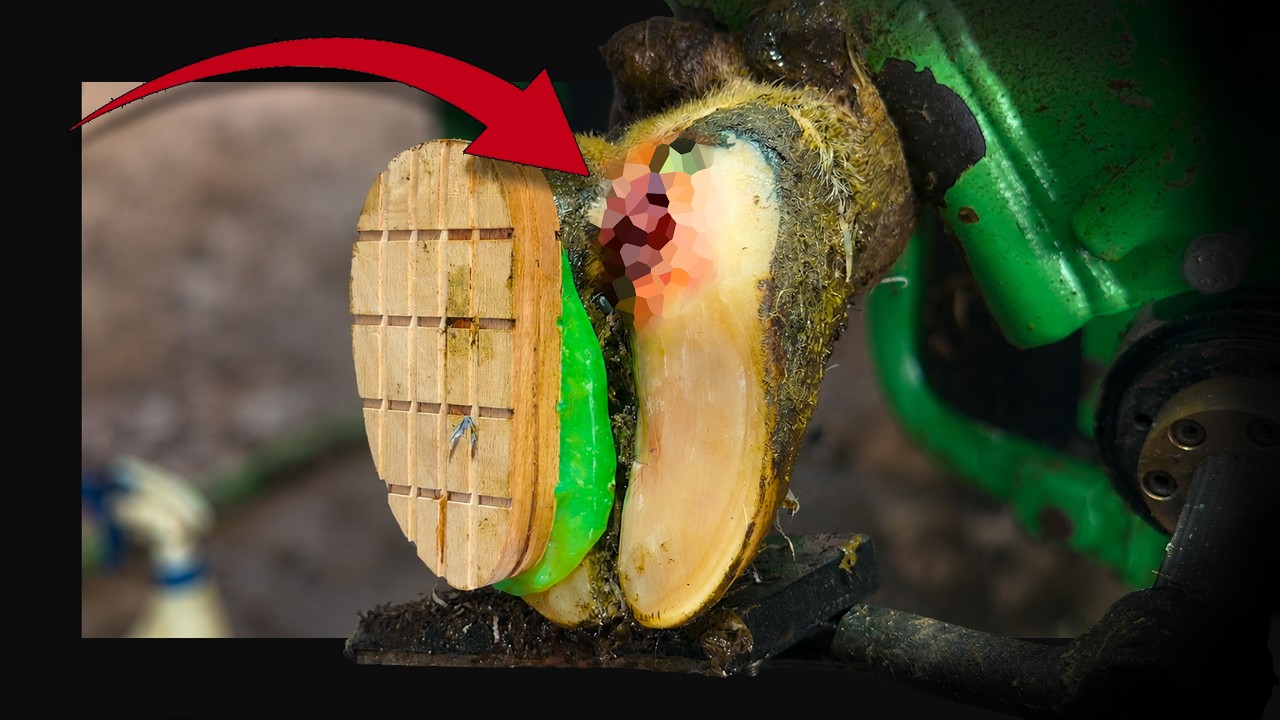
  • The process includes balancing claws, removing infected tissue, and applying blocks to aid healing.
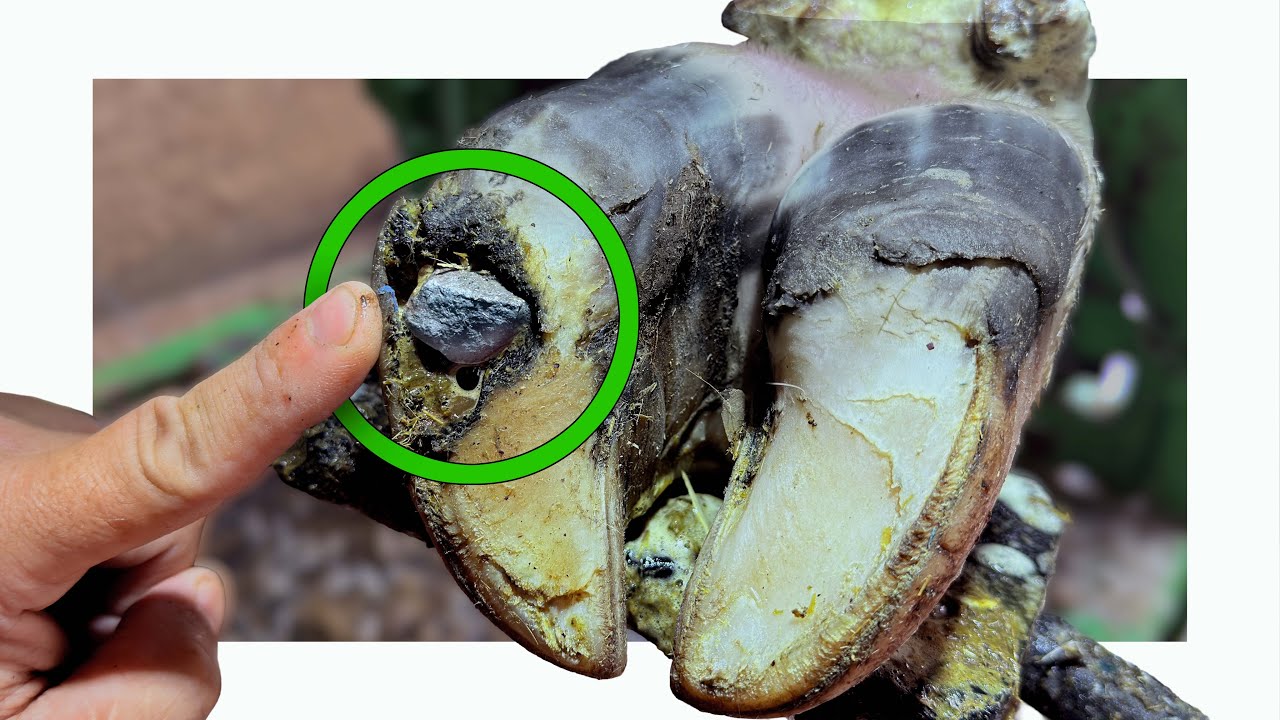
  • Maggots found in infected hoof tissue are removed as part of the cleaning process.
  • Craig emphasizes the importance of preserving hoof structure while removing damaged parts.
  • The video shows detailed steps of trimming, grinding, and smoothing the hoof horn.
  • The use of hoof oil and blocks is demonstrated to protect and support healing.
  • The video highlights the importance of routine hoof care and monitoring for infections.
  • Follow-up care including spraying and foot baths is recommended to ensure recovery.

Answers

Questions about this video

What causes digital dermatitis in cows?

Digital dermatitis is caused by Treponema spirochetes that infect the skin once the skin barrier is compromised, leading to painful lesions.

How does The Hoof GP treat hoof infections?

Treatment involves careful trimming to remove infected tissue, balancing the hoof, cleaning out maggots, and applying blocks to support healing.

Why is it important not to over-trim healthy hoof areas?

Over-trimming healthy hoof can cause new problems by reducing claw height and disrupting hoof balance, which can lead to further issues.

Full Transcript — Download SRT & Markdown

00:00
Speaker A
In this video, we're removing these unwanted guests from a cow's hoof and looking at another cow whose hoof is overrun with infection.
00:10
Speaker A
This, ladies and gentlemen, is the Hoof GP. It's early August, and here in Southwest Scotland, the pressure on these cows is slightly different at this time of year.
00:38
Speaker A
Well, I see the problem already on this cow. You can see, like in here, she's got dermatitis.
00:43
Speaker A
Oh, it's good when you find the problem. Sometimes you can't. It's maybe good that he's found it, but dermatitis is terrible. Once the skin barrier is compromised, Treponema spirochetes corkscrew into the interdigital tissues, causing damage and inflammation.
01:00
Speaker A
As the infection spreads, it develops into an active dermatitis lesion. Craig's already spotted dermatitis on her back right foot, and we'll come to that in a minute, but first he's moving on to the left. At first glance,
01:14
Speaker A
this foot actually looks really good. There's not a huge amount that needs doing, but that is exactly when you need to be careful.
01:23
Speaker A
Taking too much away from a healthy foot can cause problems that simply weren't there to begin with. So, Craig carefully balances her claws, removes only what needs to come off, and makes sure everything is sitting exactly as it should be. And once he's
01:37
Speaker A
happy with his grinder work, it's time to finish off the trim. This is actually nothing except if I take that away, that's going to take height away from this inside claw, which I don't want to be doing.
01:48
Speaker A
Just take that wee notch there out. And Craig is absolutely right. He does not want to reduce the height from that inner claw whatsoever. Right, on to her back right foot, and this is the one that's been badly affected by
02:02
Speaker A
digital dermatitis. Dermatitis is a disease that affects herds of cows right across the globe. It's incredibly painful, but actually it's also very easy to treat. Craig started off by doing a routine trim on
02:18
Speaker A
this foot, which is very, very similar to her back left foot. And now that he's finished with the grinder, he can get on with the rest of the trim.
02:25
Speaker A
So far, so good. I mean, a little dermatitis is probably the least of the cow, at least the proper flu.
02:32
Speaker A
The one of the easiest things anyway to heal on a cow, I would say, after you look after it anyway and keep constantly spraying it.
02:39
Speaker A
Trying to clear up that. And foot bath as well. It should clear up pretty easily. All right, so we'll just open that up.
02:51
Speaker A
This has been nothing like a dramatic hoof trim, but for the cow, it's going to make a whole world of difference once that lesion starts to heal.
03:00
Speaker A
So, I've got a problem obviously in this back foot. Well, it's not obvious straight away because you haven't even saw the foot yet, but we have got a problem that is pretty obvious. So, you can see this whole heel is going to come
03:11
Speaker A
away. I will actually bend it up. Right down in there. That's how badly that heel is coming away, so we'll clear all up. We've got everything all set up and ready for the block and what we have to do, and then we'll deal
03:23
Speaker A
with the problem. Riggy boy is certainly right about one thing. This cow's problem is obvious, but at this stage in the trim, the true extent of what he's going to find is anything but obvious. This cow has a white line lesion,
03:39
Speaker A
and experience tells me that it's going to be in zone three of that inside claw and travel all the way through to where the typical sole ulcer site is.
03:52
Speaker A
I'm going to start with actually dealing with the problem because once you put the block on, the block can get in your way, especially if you have to use the grinder again. So, we'll attend, attend. All right. We'll attend the problem. All
04:05
Speaker A
right, what? We'll attend the problem. Actually, I don't know about it. We'll start with the problem.
04:12
Speaker A
So, I'm going to start from up here. I can see there's a sole ulcer appearing here.
04:18
Speaker A
But, start from up here. At least that was down the tightest, which is obviously starting to shear on here now that the opening has started.
04:30
Speaker A
Now, the thing with these is I'm actually starting this the wrong way. Really, what I should be doing is bringing the heel down properly with the grinder, especially when I can see that there is a sole ulcer right here.
04:41
Speaker A
My worry was that I nicked this sole ulcer. And then make a boo-boo, but should be okay.
04:49
Speaker A
I told you that experience told me this was a white line lesion, but Craig keeps referring to it as a sole ulcer. And that's because it's in the typical sole ulcer site, or at least the hole is.
05:00
Speaker A
But, I know that on the inner claw, it's incredibly rare to have any form of sole ulcer. So, it's much more likely to be a white line lesion.
05:08
Speaker A
Smell that there. How did you guys hear the exact same thing to you, rotten man?
05:12
Speaker A
See, when they make smell-o-vision, ooh. Be aware of this. It'll be stinking. Oh. Oh, we have a little—oh, it's a wormy, guys.
05:23
Speaker A
Yep. Oh. Oh, wormy guys in here. And we're off some more. Can you see them all gathering around us and munching?
05:33
Speaker A
They'll be eating off all the dead tissue. But, they say that's—what do you think they think is in the bucket in there?
05:46
Speaker A
Oh, they're eating the dead, which is kind of beneficial in some ways to the cow, but would you really want maggots crawling around the inside of your foot? Because I definitely wouldn't.
05:55
Speaker A
No, I wouldn't. Dealing with this in reality literally makes my skin crawl, and seeing it on camera isn't much better.
06:02
Speaker A
Maggots are embedded right in this cavity right here. You can see them all crawling around.
06:15
Speaker A
I'm trying to find where this hoof horn meets the next part of hoof horn so that it's all, you know, blended in, like it all is attached again. That way I know how far I can take this. See that? See how that's
06:27
Speaker A
all just perfectly joining back on again? So, that's—tell me that's where this stops.
06:33
Speaker A
So, I don't want to take that any further than there. I also need to work down. This hoof horn is solid. It's like skipping a little stone.
06:45
Speaker A
I'm trying to work my way up there. Let's see if I can clean some of this off. Dad, can I get a little bit of blue roll, please?
06:56
Speaker A
So, you see that bit up top here is—that's going to have to be trimmed away, but it's—see, this is soft tissue. This is a bulb, the heel bulb area, which is always soft. You have to be very careful
07:06
Speaker A
with that because you take that off too deeply, and you will make a mistake.
07:12
Speaker A
All right. So, I'm just going to chisel away down here. So, at least down here I can see where it's starting to blend in.
07:26
Speaker A
I'm just carefully using the hook of the knife just to try and flick these wee bits out because I can see that it's pretty much there. It's pretty much starting to—so, there's maggots in there, Dave, was
07:37
Speaker A
it? There was a little one there. Um, there's kind of little—I think it's like—I don't know if it's maggots, so won't. So, that's all also that I thought was going to be bad is actually disappeared.
07:50
Speaker A
It's pretty much nothing there. I've got to watch that dermatitis area as well because it's very sensitive.
08:00
Speaker A
I'm just going to try to saw bits off because I want this all to be perfectly smooth and perfectly connected so that when it starts growing back, it grows back properly.
08:13
Speaker A
Yeah. So just taking these little bits, these little nicks is the best option at the moment. The dermatitis has obviously just caused most of this problem. I've got another knife so I can take this bit off the way, but
08:26
Speaker A
I'm trying to saw off so I don't take more than I need to. There's still some loose and about here.
08:41
Speaker A
I know, darling. I'm sorry. It's because I'm touching this dermatitis area. This is really, really sensitive for her.
08:56
Speaker A
Good. Still little bits of loose. It's starting to blend in really nicely. It's coming together.
09:10
Speaker A
I'm going to take these little bits as well. There's some difference in it, isn't there?
09:15
Speaker A
It is. You can see this whole bit of dermatitis here that is protruding from the hoof horn is what's caused this whole problem.
09:24
Speaker A
So I'm just going to smooth this down. You got any hoof oil? Yes, I will be here.
09:29
Speaker A
Uh small block here of outside claw is quite small so I won't get a large one on it.
09:37
Speaker A
I think this is looking pretty good for the first time cuz she will be back in again for another look see and make sure this is okay.
09:45
Speaker A
But for now Yeah, that's pretty good. I'm going to get ready and prepare this foot for the for the block going on, so The transformation in this foot is incredible and clearly Craigy boy has done a fantastic job. And now this cow
09:59
Speaker A
has a really good shot at a full recovery. [music] All right. You got it to put the block on for me.
10:08
Speaker A
The trim is clearly incredibly important, but the block is almost the most important aspect. [music] I might keep that, but I don't want to take that at the same time, so I know it's a little bit of a
10:19
Speaker A
little bit of risk, but I just want to be careful once you get to this point cuz I really really would like it to be nice and clean and no not cutting into the corium.
10:33
Speaker A
I also want it to block the right way. Yeah, how's that done? So, we'll give it a little spray of red pedama cuz most of the cows have been damaged up here.
10:49
Speaker A
And that is her on her way to healing. Probably see this cow again in maybe about 4 weeks time and we'll see how she's getting on.
10:57
Speaker A
But for now, that's all we can do and let's just see how she walks when she comes out of the crush.
11:05
Speaker A
Oh, that was a very graceful exit from the crush. She's looking a lot better.
11:10
Speaker A
Anyway, that's our last cow at this farm. We like to save all our nice cows, so This is maybe Craig and Derek's last cow at this farm for the day, but she has more than enough to keep them busy for the next little while.
11:23
Speaker A
This first foot, her back right foot, is a model foot. It's almost perfect as it is.
11:29
Speaker A
The blackness you can see is purely pigmentation and nothing to worry about. Sorry Graham my obstructing your view.
11:37
Speaker A
That's all right. I'm sorry. I know. I'm fit then, but this is another problem foot.
11:47
Speaker A
Why does it look funny, sorry? It looks different. I can't even put my finger on why it looks different.
11:51
Speaker A
It's all kind of bulbous-y looking. It's It's just because it's sore she's keeping it off the ground. I'm surprised it isn't more longer cuz of that she's keeping it off the ground, but my assumption right now is solar also,
12:05
Speaker A
but I could be wrong. Cameraman Graham with the fantastic questions again. This foot doesn't look quite right. He's absolutely correct, but it doesn't look overgrown either, does it? That's because something is going wrong with the tip of her toe.
12:22
Speaker A
Craig pointed out that she's not overgrown and that's because she's keeping her foot off the ground, but is pawing the ground with the tip of that hoof, which is wearing it right down.
12:32
Speaker A
So, you probably thought I was cleaning this off for a block. I wasn't. I was actually cleaning this off cuz I'm trying to find something cuz this looks so clean that I can't find a thing.
12:44
Speaker A
Uh if there's nothing going on with the end of this toe, I can't even see.
12:49
Speaker A
Graham, could you put your torch on, please? Yes. Ooh. There is a crack right on the front of this foot.
13:01
Speaker A
Can you see it? I really am. Cows are anything but stupid creatures and this cow is no different. If the tip of your toe was incredibly sore, you wouldn't touch the ground with it. You would use your heel instead.
13:16
Speaker A
And vice versa is true. If your heel was sore, you would only use your toe and that's why we can tell the real problem with this cow is in her heel area because she is avoiding using it and
13:27
Speaker A
instead wearing down the tip of their stall. Right, on the end of the tool.
13:36
Speaker A
You're also seeing little bits of fluid every time I press on it. I can see little bits of fluid.
13:44
Speaker A
I just want to know where this goes because if I can take more down with the grinder then great, but I'm concerned where how deep I can run it, you know, how how much I can actually take.
14:00
Speaker A
It's very clear for us all to see why Craig is concentrating his efforts here.
14:05
Speaker A
Stuffy or something. Running there. This is why diligence and perseverance is crucial with hoof trimming because things are not always as they appear.
14:15
Speaker A
I don't know. She does not like me messing around with it but I really would like to see something before I start getting the grinder back into play.
14:28
Speaker A
Mhm. Is there actually any fluid there or is it just the way the light is catching it?
14:33
Speaker A
to have disappeared as well. I'm thinking there is a problem here. Um I'm going to get the Daddy, have you got access to the infrared thingy?
14:41
Speaker A
Yes. Just bring it back to me. [laughter] Purpose of the hoof tester is to give it a little bit of pressure just to see if she kicks.
14:50
Speaker A
I really feel for Craig in this situation. He's not the most confident person in the world and he's being filmed, but he does truly know his stuff.
15:01
Speaker A
Yeah, I'm thinking she has sore in there. Wait, if there I don't need to hit I don't need that thingy. I can see something.
15:07
Speaker A
Right. So, look, can you see how that's rippling in there? That is actually a little bit of fluid coming out as well. See that?
15:14
Speaker A
Mhm. See that all right. So that I'm going to give it a little nick almost just to get it started.
15:25
Speaker A
Oh, there we are. It's very close to the corium. I can see that. Sorry, Graham, if I'm getting in your way. I'll just want to get my knife hook underneath it just to get it started so I can see
15:40
Speaker A
exactly how much space I have between the hoof horn and this cavity that I think we have in here.
15:47
Speaker A
I'll drag this down a bit. Hopefully in the process of doing that, the blade will open up this bit.
15:59
Speaker A
There we go. You can see it there. Still kind of holding them back. Did you just pump?
16:05
Speaker A
It's off. It's floorboard. Floorboard, and I can't keep Oh, this is extremely close. Feel like you're giving me a cut.
16:21
Speaker A
He's going to like release it, but I know, but I think it's already released, mostly really. It's just See here.
16:29
Speaker A
So, you can see that it's all underrun double sole, which I'm just uh very cautious right now because of how close it is to the corium. Stop. Get it all stopped.
16:46
Speaker A
I think it managed to drip just now, too. So, this is going to go all the way down.
16:49
Speaker A
So, I'll try to So, I should be able to reduce all of this. Oh, look at that. And I didn't even actually think it was as close as that to that. That's one of the reasons why I was taking it
17:06
Speaker A
quicker there. I wasn't expecting it to open up that quickly. Sorry, Graham. I'm just going to sneak in here.
17:17
Speaker A
Try and get into that. This is not enjoying this at all. And who Who can really blame her?
17:34
Speaker A
[music] That entire claw is engorged with inflammation. The whole thing is bursting at the seams. So, every movement, every touch that [music] Craig makes will be excruciating for her.
17:49
Speaker A
This is where you're going to see that it goes all the way down to the toe.
17:55
Speaker A
[snorts] Get that all cleaned out. [music] So, it's quite handy that that little crack is on the end of the toe. I wouldn't have really known where to start here.
18:09
Speaker A
The heel bulb on a cow's hoof, right up there at the top of the screen right now, is where a cow's foot lands every time she steps.
18:17
Speaker A
So, this would have been unbelievably sore with every stride that she made. So awkward when you're trying your best to stay away from the corium.
18:34
Speaker A
Back up to the top here and just get all these little niggly loose bits of hoof out of the way.
18:45
Speaker A
All right. So, that's as much as I can take from the hoof now. I'm going to prepare the foot for the block.
18:50
Speaker A
Both Craig's second and third trims were incredibly difficult for different reasons, and he has [music] expertly put both of those cows on the road to recovery.
19:00
Speaker A
All right. Ready to put that block on. I'm going to get a wrap ready.
19:03
Speaker A
Little roll. This is for some support now. Salicylic acid as well. Spray it with some Repiderma.
19:13
Speaker A
And then we'll wrap it up. Cuz this will take a little while to heal. So, Vetrap bandager to keep it clean and Vetrap bandager, sorry. And salicylic [clears throat] acid to help keep it clean and hopefully speed up the healing
19:28
Speaker A
process. But she should be feeling a hundred times better than that crush that she was when she was Okay, she'll be back in next time.
19:43
Speaker A
Possibly. But I mean let's see. That might That might heal up quite quickly cuz it's particularly all the loose new horn and and it's the sole horn. See, I tend to think sole horn tends to heal quicker than like say torn necrosis. Like
19:59
Speaker A
it's tends to be quite a quick heal, I think. Usually you can back I can back with Graham after a couple of weeks and nearly all the sole is back.
20:09
Speaker A
Hopefully that So, we'll let her go and see Where you going, girl? What a job we have being able to look after these cows and make a real difference [music] on virtually every single farm that we visit.
20:27
Speaker A
Craig is a tremendous trimmer and he is an [music] absolute credit to himself. For someone who had barely set foot in a farm six years ago, just look at what he's able to do now.
20:38
Speaker A
Hopefully we'll see her in another four weeks time and then we'll see how she's getting on.
20:42
Speaker A
Couldn't have said it better myself, Craig.
Topics:hoof carecow hoof infectiondigital dermatitiswhite line lesionsole ulcerhoof trimminglivestock healthThe Hoof GPhoof blockcow health

Get More with the SozAI App

Transcribe recordings, audio files, and YouTube videos — with AI summaries, speaker detection, and unlimited transcriptions.

Or transcribe another YouTube video here →