Skip to content

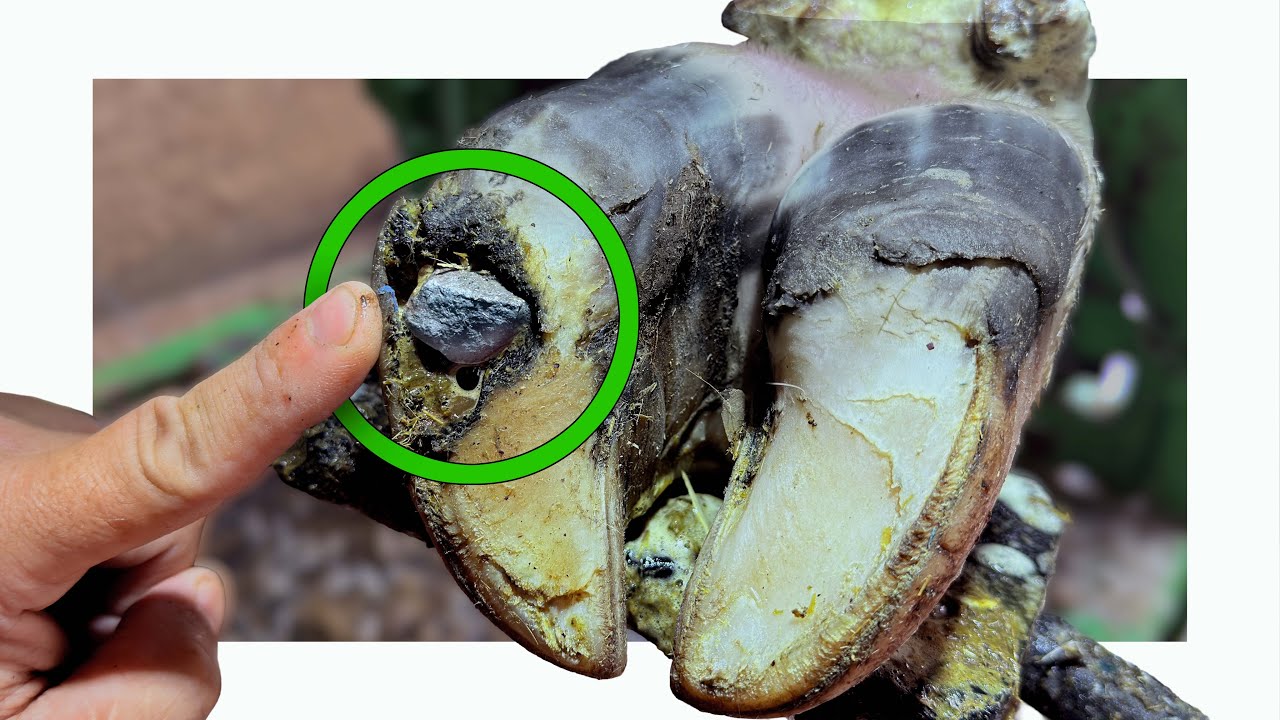
Every Time I Pressed This Hoof … Something Came Out!

The Hoof GP trims and treats cows' hooves, addressing deformities and explaining the vital role of dairy cows in food supply.

Ask about this video. Answers come from its transcript only — with the timestamp, so you can check them.

Generated from the transcript and can be wrong — check the timestamp.

Key Takeaways

  • Routine hoof trimming is essential to maintain cow health and prevent lameness.
  • Hoof deformities require careful, educated trimming to avoid causing further harm.
  • Healthy dairy cows are crucial to the global food supply, producing nutritious milk.
  • Local farming communities like those in Wigtownshire play a vital role in agriculture.
  • The Hoof GP’s work supports both animal welfare and the dairy industry.

What the video covers

  • The video follows The Hoof GP visiting a local farm to trim and treat the hooves of 16 Holstein cows.
  • It highlights common hoof problems such as overgrowth, twisting, and ligament damage affecting cow mobility and health.
  • The trimming process requires skill, patience, and constant re-evaluation to avoid over-trimming and to improve hoof alignment.
  • The video explains the importance of routine hoof care in preventing serious diseases like white line disease.
  • The Hoof GP discusses the connection between healthy cows and the food supply chain, emphasizing their role in milk production.
  • The farm is located in Wigtownshire, a key dairy farming region known for grass growth and high-quality dairy products.
  • The video mentions Rowan Glen, a local yogurt producer, linking the cows’ milk to well-known dairy products.
  • The Hoof GP expresses pride in the local farming community and the centuries-old tradition of dairy farming in Galloway.
  • The trimming work is presented as both a family business and a vital agricultural service supporting the wider community.
  • The video also promotes a stone circle reservation opportunity ending August 7, 2026.

Answers

Questions about this video

Why is routine hoof trimming important for cows?

Routine hoof trimming prevents overgrowth and deformities that can cause lameness and serious diseases like white line disease, ensuring cows remain healthy and mobile.

What challenges does The Hoof GP face when trimming cow hooves?

Challenges include dealing with twisted hooves caused by bone and ligament issues, avoiding over-trimming, and making educated guesses to restore proper hoof alignment.

How does hoof care relate to the food supply chain?

Healthy hooves allow dairy cows to produce nutritious milk efficiently, which is a vital ingredient in many dairy products that support local communities and global food supply.

Full Transcript — Download SRT & Markdown

00:00
Speaker A
In today's video, we're looking at three different cows with slightly different feet, solving a serious problem for this cow and talking about how I am incredibly important to your food supply. This is the HoofGP.
00:25
Speaker A
The chance for you to reserve your place on the stone circle ends on the 7th of August 2026.
00:43
Speaker A
Good morning. Good morning. You're joining us today on our way to a farm that is only about a mile's drive from our house.
00:52
Speaker A
And hopefully waiting for us should be about 15 or 16 beautiful Holstein cows.
00:59
Speaker A
Today is a routine day, and it should be easy trimming. But you never know what is going to be thrown up.
01:11
Speaker A
And just like that, we are here. But now is when the hard work begins because we need to push this big sucker into place.
01:20
Speaker A
And whilst it's very easy to lift up and off the trailer and down the back door, pushing it round the corner is not quite so simple. The ground is incredibly slippery, and without Derek and his help, let's be honest, we struggled more than a little.
01:33
Speaker A
Lovely jobbly, and we were spot on. There are indeed 16 cows to trim.
01:51
Speaker A
I was going to see if they had 16 or wasn't too far off. 16. So, we best trim them. For well over a decade now, I've been coming to this farm every 4 weeks. And this farmer's commitment to the cow's hoof health is truly paying off, which is why we're easily able to fly through these cows.
02:03
Speaker A
Despite the massive amount of commitment, time, and money that goes into looking after these cows' feet, things can and do still go wrong. This cow's foot is overgrown because she's not been wearing it out properly. That outer claw has a twist in it, and because of that, her toe isn't touching the ground when she walks. So, you should be thinking of this more as underwear rather than overgrowth.
02:12
Speaker A
But through routine trimming like this, we can stop these problems in their tracks. This cow was only trimmed 4 months ago, but due to the lack of wear, it looks as though she hasn't been trimmed in a year. It's difficult for me to get her claw back exactly as it should be.
02:49
Speaker A
But some patience, a little know-how, and a lot of want goes a long way.
03:02
Speaker A
Cows' feet like this are actually incredibly easy to over-trim because the bone has moved inside the hoof capsule itself. I'm not entirely sure where it is, or for that matter, how deep down through the hoof horn the corium lies. So, we need to constantly stop and recheck our work, reanalyze the foot, and have another go until we get it as close to perfect as we dare venture.
03:14
Speaker A
And once that first foot is as close to perfect as we can get it, we move on to this back right foot, which is in exactly the same condition as her back left. I tell you many times that cows' feet often mirror each other, and this problem is likely caused through ligament damage or a genetic defect. The bone inside this hoof capsule is actually twisting, and the hoof horn itself grows in the same orientation as the bone lies. So, if the bone is twisted, so too is the hoof capsule round about it. This is incredibly uncomfortable for the cow, and if we left it like this, she would wear through her white line and end up with seriously bad white line disease.
03:19
Speaker A
So, you have to. Because the ankle's slightly twisted, you need to look that looks longer. It looks about half an inch longer, but then when we level up the frontal walls, they're almost the same size, but not exactly the same size. So, we do still need to reduce it just that little bit more. I am simply guessing where I need this foot to be.
03:28
Speaker A
It is an educated guess, but at the heart of it, it is still a guess. I want to do the best I can, but it's incredibly difficult to judge when there's a deformation in the hoof.
03:42
Speaker A
That's better. Right. Still need to model out. The whole foot is twisted. So, if you come down and look from this angle here, I can see this foot is sitting perfectly, but then look at the twist on this. What we're looking for is this is the actual wall. We want this wall perpendicular to this. So, in other words, we want this at a right angle or 90° to this wall here, and that's what it is. And hopefully, when the cow steps, that'll force her foot back round to be in square a bit more like that, but even more. It's really hard to see, but yeah.
03:55
Speaker A
So, it's never going to look perfect when it's in air, and when we put it down on the ground, to be honest, it's probably still not going to look perfect. But the whole point is that we get that pedal bone inside her foot to start to rotate backwards. Just take out this little bit of hoof heel and that looks absolutely terrible. Yes, I know it doesn't look good. It looks like they're the wrong length. It looks like they're twisted because they are. But I'm hoping when I put her foot on the ground, it twists back just that little bit more. It's not going to go perfect, I know that for a fact. But if you come here, just look how well that is sitting on the ground.
04:07
Speaker A
It looks perfectly level and flat now. And you doubted me. Although I probably doubted myself more. Never mind walking perfectly well, she runs out of the crush pretty well.
04:24
Speaker A
Although her udder is swinging rather massively. But what is the point in trimming these cows? What's the point in looking after them? After all, they're not pets, are they? Cows like this are abnormal. They're not the norm.
04:38
Speaker A
These cows that feature on this channel are the cows where something has gone wrong. Something has fallen down in the process, the protocols, the things that we do every day to look after these cows. And where I live here in Wigtownshire is a hub for cows. We see tens of thousands of cows over the years. And in this area alone, there are 70, 80, 90,000 cows. So it's little wonder that things go wrong. Where we live is a real hub for grass growth.
04:50
Speaker A
And that's why we've got so many dairy cows in this area. But all of these dairy cows aren't just here as ornaments. They're not pets.
05:02
Speaker A
They are doing a vital job in our food chain. The vast majority of the cows that we trim have nothing wrong with them at all.
05:07
Speaker A
They're here to produce nutritious milk. Sounds like an advert for the dairy industry. But they are. That's exactly what they do. And where I live, right here, in straight across the water is where some of that milk goes. I actually used to work at this place called Rowan Glen, which is just across the estuary from my house, and they make one of the best yogurts in history.
05:23
Speaker A
Literally, officially, according to their TV, the best rhubarb crumble yogurt you will ever eat. What you see on this YouTube channel, on this Facebook page, or wherever you're watching the AGP, is family residence, is family business.
05:37
Speaker A
This is what I do for a living. I love these cows. I truly, truly do. But, what we're doing is business.
05:43
Speaker A
And it's at the heart of our community. The area we live in is called Wigtownshire, and it's home to a vast amount of farmers and farmer families and families that are connected to farms through agriculture and all the different things that they do surrounding that. And these cows are providing for us and for you all over the world this incredible ingredient, milk. And that milk is made into some of the best products ever, from my point of view, that could be. And, yeah, I probably do eat too much of them. What I'm not bothered to tell you this for, though, it's maybe not news to you. Maybe you don't care. Maybe you do care.
05:55
Speaker A
I am immensely proud of the area that I live in, this place that we call Galloway, that has done what we do for hundreds and hundreds, if not thousands, of years. These cows have provided for us as humankind in this area for thousands of years. And we're a small part in that process. But, it's a small part that matters massively.
06:11
Speaker A
put her foot on the ground, it twists back just that little bit more. It's not going to go perfect, I know that for a fact. But if you come here, just look how well that is sitting on the ground.
06:21
Speaker A
It looks perfectly level and flat now. And you doubted me. Although I probably doubted myself more. Never mind walking perfectly well, she runs out of the crush pretty well.
06:33
Speaker A
Although her udder is swinging rather massively. But what is the point in trimming these cows? What's the point in looking after them? After all, they're not pets, are [music] they? Cows like this are abnormal. They're not the norm.
06:47
Speaker A
These cows that feature on this [music] channel are the cows where something has gone wrong. Something has fallen down in the process, [music] the protocols, the things that we do every day to look after these cows. And where I live here in Wigtownshire is a
07:04
Speaker A
hub for cows. We see tens of thousands of cows over the years. And in this area alone, there are 70, 80, 90,000 cows. So it's little [music] wonder that things go wrong. Where we live is a real hub
07:18
Speaker A
for grass growth. [music] And that's why we've got so many dairy cows in this area. But all of these dairy cows aren't just here as ornaments. They're not pets.
07:28
Speaker A
They are doing a vital job in our food chain. The vast [music] majority of the cows that we trim have nothing wrong with them at all.
07:35
Speaker A
They're here to produce nutritious milk. Sounds like an advert for a the dairy industry. But they are. That's exactly what they do. And where I live, right here, in straight across the water is where some of that milk goes. I actually
07:49
Speaker A
used to work at this place called Rowan Glen, which is just across the estuary from my house, and they make [music] one of the best yogurts in history.
07:57
Speaker A
Literally, officially, according to their TV, the best rhubarb crumble yogurt you will ever eat. What you see on this YouTube channel, on this Facebook page, or wherever you're watching the AGP, is family residence, is family business.
08:12
Speaker A
This is what I do for a living. I love these cows. I truly, truly do. But, what we're doing is business.
08:20
Speaker A
And it's at the heart of our community. The area we live in is called Wigtownshire, [music] and it's home to a vast amount of farmers and farmer families and families that are connected to farms through [music] agriculture and
08:31
Speaker A
all the different things that they do surrounding that. And these cows are providing for us and for you all over the world [music] this incredible ingredient, milk. And that milk is made into some of the best products ever, from my point of view,
08:45
Speaker A
that could be. And uh yeah, I probably do eat too much of them. What I'm not bothered to tell you this for, though, it's maybe not news to you. Maybe you don't care. Maybe you do care.
08:55
Speaker A
I am immensely proud of the area that I live in, this place that we call Galloway, that has done what we do for hundreds and hundreds, if not thousands, [music] of years. These cows have provided for us as humankind
09:09
Speaker A
in this area for thousands of years. And we're a [music] small part in that process. But, it's a small part that matters massively. [music] If these cows don't walk fantastically well, they cannot provide for us and our families.
09:23
Speaker A
For many people, including myself, definitely, in this area of the world, we've grown up in agriculture, and we're completely and utterly attached to it. I grew up on a family farm, this this one, called the Knock. We had beef and sheep,
09:37
Speaker A
and that's all I knew. And then my dad died when I was 14, and I had a bit of a sabbatical from the area for a little while. But when I came back, I made yogurt at Rowan Glen, like many people
09:48
Speaker A
in the area have. So, I was still directly connected to agriculture. It's kind of strange. When you're younger, you're thinking about a career and what you want to do and what's fun. And as you get older, certainly for me, you
09:59
Speaker A
feel more connected to what you do, and that really helps to drive me forward.
10:03
Speaker A
And one of my customers, who obviously [music] we trim their feet for, mentioned what a good job that this yogurt company are doing for the community. I didn't realize a massive company bought it out, and they just closed the whole thing down. And then
10:15
Speaker A
the employees all started, and they worked for free for 3 months. But the main thing is their yogurt tastes absolutely bloody amazing. Rhubarb is my favorite fruit. Is that fruit? Is Is rhubarb a fruit?
10:27
Speaker A
No, a vegetable. Huh. It grows in the ground, I can't remember. It's fruity, but is it classed as a fruit? Cuz it's not like a fruit.
10:34
Speaker A
If you had to ask me, I don't know if it's a fruit or a vegetable.
10:36
Speaker A
I don't know anything. Rhubarb is one of my favorite flavors. They do loads of other stuff. This isn't an advert, by the way. It kind of is an advert, I suppose, isn't it? But it's not a paid advert. I'm just telling
10:45
Speaker A
[music] you that Rowan Glen make amazing yogurts, and I'm extremely happy even to play a very small [music] role in that process. If you're ever anywhere and you see Rowan Glen yogurts, trust me, try them. They are absolutely brilliant. And
11:00
Speaker A
they genuinely did not pay me to say that. Although, if you're watching this, Rowan Glen, send me as much rhubarb crumble yogurt as you like.
11:08
Speaker A
But when all of that is said and done, what really matters is that these [music] cows get their feet trimmed, and we keep them in as healthy a condition as we possibly can.
11:17
Speaker A
And in the case of this cow, that means getting these claws back to the correct length. Clearly, this inner one is really overgrown, and because of that, she's carrying far too much weight on it.
11:29
Speaker A
And because this foot is overgrown, we're going to need to remove a substantial amount of material from both claws because it's not only this inner claw that has an excess of height.
11:39
Speaker A
Believe it or not, both claws are actually overgrown. It's just the one on the inside is more substantially overgrown so we can see the difference.
11:47
Speaker A
[music] I work between both soles of the claws and once I've got that pretty close to where I need to be, I start reducing the tips of her toes back to the correct length, [music] which is around 75 to 80
11:59
Speaker A
mm from the hairline. We measure it from the front of the cow's foot, which you can't quite see here, but because I've done hundreds of thousands of cow's feet now, I'm used to how long they should be. Once I've got them pretty close, I
12:12
Speaker A
start modeling out both claws with my grinder. Once all of that's done, it's on with the knife part. And all we're going to do is neatening up not neatening up, widening [music] up this model. And actually, I can see a
12:24
Speaker A
bit of hoof one up here that needs to be removed. We don't [music] want to leave any of these flaps and clearly in there was tight like a tiger in there.
12:34
Speaker A
Down here on this actual wall, there's just an overhang there. And we're going to model this one out just that little bit more as well.
12:42
Speaker A
This claw doesn't look perfect up close, but it looks a lot better than it did to begin with.
12:48
Speaker A
Lovely. Doesn't look like we did all that much. [music] But the vast George, she nearly kicked me in the face, by the way, for context.
13:03
Speaker A
Um that was no exaggeration. I [music] felt like she nearly kicked me in the face.
13:08
Speaker A
The vast majority of people watching this video right now are people [music] who have watched this channel many, many times before. So, we all know that if we'd left a cow's foot like [music] that, because of so much extra pressure
13:20
Speaker A
on that inner claw, it was very likely that something would have gone wrong and she would have ended [music] up It's lame. And once that's done, she can be on her way. And yes, we have filmed her other three feet.
13:32
Speaker A
Ooh, she's a bit wobbly, isn't she? When it comes to the anomaly, though, the cow that has gone wrong, that is the next cow on our list.
13:41
Speaker A
[music] And she is a little bit highly strung. So, we're hoping that she will straighten.
13:46
Speaker A
And she's the anomaly, or the one that sticks out, because she is lame on one of her front feet.
13:53
Speaker A
Now, you may be watching this video thinking, "It's not an anomaly." An an an an an It's not an an an an It's not an anomaly.
14:03
Speaker A
Because we show you problems like this all the time, so it's a regular occurrence. But, your windshield on your car smashing is not a regular occurrence. That's an anomaly in your life. But, if you spoke to somebody who
14:15
Speaker A
replaced windscreens, and asked them to video it, you would see a lot of windscreens being fixed. That analogy makes sense to me.
14:22
Speaker A
That makes sense to you. Makes sense? Total sense. Yeah. Now, the only question we need to ask ourselves here is, I know she's lame on her front foot, but I'm not exactly sure which one it is. Although, my money is on this front
14:35
Speaker A
right one. I was going to say, signs aren't very good to begin with, but look, why is it green?
14:41
Speaker A
Oh. There's why it's green. Look, can you see that? It's just that little bit coming out of it as well. It's green because the farmer has obviously treated this cow previously to us coming here.
14:52
Speaker A
And we can all see that her foot is in good condition. It's the right shape, the right length, and the right height.
14:58
Speaker A
But, for this cow, that's simply not good enough, because she's sore on that inner claw.
15:03
Speaker A
And we need to investigate it and take the pain away from that area. So, because I know she's sore on that outside claw, the first thing that I do is get the inner claw ready for a block.
15:12
Speaker A
I've already told you the length, shape, and height of this claw is about right.
15:17
Speaker A
So, I don't want to remove very much material at all. And when it comes to the outer claw, all I'm really doing is cleaning it off so I get a better view of what I'm going to need to do with the
15:27
Speaker A
knife. Once all of that's done, I grab my trusty glue, a big block, squirt out some green goodness, and wiggle the block into place.
15:37
Speaker A
Lovely. Right. Let's attack this root. Just give this a bit of a clean off so we can all see just that little bit better.
15:45
Speaker A
So I said the farmer had already treated this cow. It wouldn't have been the farmer. The farmer sort of manages the farm and is constantly busy with the intricacies of making sure that the business is running well. It will have been the dairyman
15:58
Speaker A
here who is also called Graham and also actually has his name spelled properly. For future reference by the way, Graham, g r a e m e.
16:09
Speaker A
Graham. Not Grahamy, not Graham. Graham. Right. This is going to be a tricky one.
16:19
Speaker A
So clearly we all saw that white stuff coming out. Graham has done a very good job of trimming this. You can You can all see that he's not going overboard.
16:29
Speaker A
He's not taking too much away, but the shape of the foot is good. So he's done a good job.
16:34
Speaker A
But it is clearly still very, very sore. And ultimately, you can see it all wanted to come away right down here as I do this.
16:45
Speaker A
So we're going to have to go right around here. Isn't it strange the amount Like this is part of the yogurt making process. Looking after cows is part of the yogurt making process and it's part of our economy, our local economy. Other
17:03
Speaker A
than whiskey, there's very little else here. Use the back of the blade of our knife to try and separate these folds and get in there without cutting away anything that we really, really don't want to.
17:17
Speaker A
Oh juicy juicy juicy. Juicy greasy juicy. Oh. I can see through this hoof horn because it's translucent and I can see that there's a flap here of hoof horn that needs to come away.
17:42
Speaker A
Need to work our way down this actual wall. Strip away that detached hoof horn.
17:48
Speaker A
There's a lot to do. But it does need to be done. That is an ulcer, a dirty great ulcer.
18:03
Speaker A
Actually done pretty well. I'm I'm quite happy with this. What we're going to do is we're going to wrap it with salicylic and we're going to cover it in iodine because if we look from the side [music] here, it's
18:13
Speaker A
protruding out of her sole and we need it to retract so that the hoof horn can grow right over it and seal it back in there so that it's away from the elements and all of the mucky environment that these cows walk on.
18:28
Speaker A
Which is perfectly natural, but still not good for the cow's feet. I actually find it a source of pride that we are [music] so ingrained within the local industry.
18:38
Speaker A
Around here, agriculture is the lifeblood of the countryside and we play a small [music] part in that process.
18:44
Speaker A
And without us looking after these cows to the best of our abilities, we can't possibly produce food for the nation.
18:50
Speaker A
And isn't it a stroke of luck just how good [music] that food tastes? Although she probably just ate two or three yogurts [music] there instead of six or seven.
19:03
Speaker A
The dairyman Graham trimming this cow last [music] week and us intervening now and taking that down that little bit further and adding the block is going to get this cow over [music] this lameness issue really quickly. I'm happy with how
19:17
Speaker A
she leaves the crush. I'm happy with how she's walking, and she will be happy in about a week or two when that ulcer starts to truly heal up.
19:27
Speaker A
I love my job. And I love being part of this process. Thank you very much for watching. If you've made it all the way to the end.
19:38
Speaker A
One week. That's it. The stone circle. The names, if you would like your name engraved on the stone circle, our stone circle, the Herd stone circle, this community's stone circle, then you've one week left.
19:50
Speaker A
There are still some spaces [music] available. There are eight stones in total, and we have had a huge amount of people being included in this project. We are shutting it off on the 7th of August, so we've now picked all of the stones for
20:04
Speaker A
the stone circle, and they look incredible. They're going to look epic. They're going to be It's going to be a truly, truly special sort [music] of sculpture that is going to embody us in this community, and it's going to stand
20:15
Speaker A
for hundreds of years for people to visit and to wonder who we were and who this community was. Although there are spaces still available, we need to shut it off on the 7th so that the engravers [music] can start engraving
20:28
Speaker A
your names, my name, Craig's name, my wife's name, our names into place, and then we can start eventually [music] erecting this incredible feature that is going to represent all of us.
20:47
Speaker A
This area is dotted with these monuments to the people before us, and now we're going to [music] be included in that. Who knows? Maybe someone in the future will make a video about our monument. Anyway, [music] if you do want to reserve your space and
21:00
Speaker A
be included in this project, then go to the herdysleep.com [music] right now.
Topics:hoof trimmingcow healthdairy farminghoof careHolstein cowswhite line diseaseWigtownshiremilk productionThe Hoof GPRowan Glen yogurt

Get More with the SozAI App

Transcribe recordings, audio files, and YouTube videos — with AI summaries, speaker detection, and unlimited transcriptions.

Or transcribe another YouTube video here →