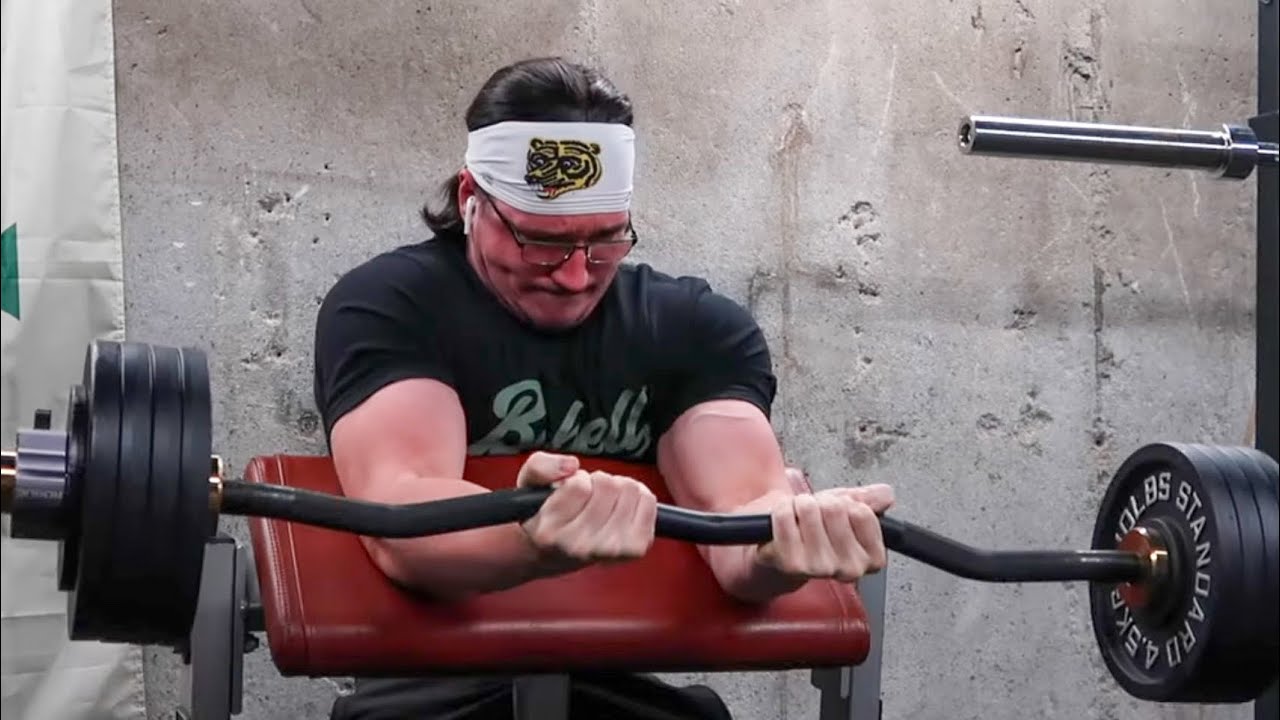
A detailed response discussing the importance of rep ranges and resistance profiles in optimizing muscle growth and training effectiveness.
Ask about this video. Answers come from its transcript only — with the timestamp, so you can check them.
Generated from the transcript and can be wrong — check the timestamp.
Key Takeaways
- Rep ranges matter and should be optimized rather than ignored.
- Resistance profiles affect how muscles are loaded throughout a movement.
- Higher reps are beneficial for short and biased lifts to ensure full-range muscle fatigue.
- Length and biased lifts allow better muscle isolation and prime mover engagement.
- Training should balance working hard with optimizing variables like rep range and resistance profile.
What the video covers
- The video is a response to a popular YouTube short claiming high reps are unnecessary for muscle stimulation.
- The creator emphasizes the importance of understanding rep ranges as a core training philosophy.
- Disagrees with the nihilistic view that rep ranges do not matter and advocates for optimizing training.
- Explains the concept of resistance profiles and how tension varies through different points in a movement.
- Uses the example of dumbbell and cable lateral raises to illustrate differences in resistance profiles.
- Highlights that low reps may not be ideal for short and biased lifts due to weaker muscle positions and takeover by other muscles.
- Advocates for higher reps (10-20+) in short and biased lifts to build fatigue across the full range of motion.
- Explains that higher reps allow better muscle fiber activation and proximity to failure throughout the movement.
- Notes that length and biased lifts place the target muscle in a stronger position, allowing better isolation.
- Concludes that ignoring rep ranges and resistance profiles can limit training effectiveness and muscle growth.
Full Transcript — Download SRT & Markdown
Speaker A
All right, what's up everybody? So today I have a bit of a response video to a video about rep ranges that I saw earlier on YouTube. Every year, I'll scroll through some YouTube shorts, and this time something kind of interesting popped into my feed. Initially, I thought it was kind of dumb to make a response video to something that is a YouTube short, but I think I did enough mental gymnastics to justify this by seeing that video has as many views as my entire channel has every single video added up times two. And I'm like, you know what? That's enough for me to personally validate myself to make a response video to this 18-second YouTube short video. So something that is a core fundamental to my training philosophy is understanding rep ranges. And I know it's very popular out there to say your rep range just doesn't matter whatsoever. You'll get the same results with four reps as you would with 20, blah, blah, blah. It doesn't matter. I tend to be someone that is actively against nihilistic lifting takes. Not to be too extreme with that, but I think a lot, a lot of people just say nothing matters, just do this and you'll get the best results possible. I'm someone that's always looking to optimize. I'm already training hard. I'm putting my maximum effort into everything that I'm doing with my lifting and my program, so why not find ways to guide that effort and make it as optimal as it possibly can? There's nothing wrong with optimizing your training unless it's in place of actually working hard, which is an overused argument in my opinion. So let's get off this tangent about optimal training versus working hard and actually get into this video. So I'm gonna put the clip up on the screen right now. [Music] That raise is a nerf at the heavy in my life. That's no reason why that set is not just as stimulating as a set where you go to 15 reps. You probably didn't feel like a crazy burn or anything. Yeah, no, very normal. I think this is where people get tripped off. It's like, is there something special about this muscle compared to this muscle? Now, okay, then why here we need to do 20 reps for it? All right, so basically the justification that this guy's making for not using high reps is that your muscles are all the same and there's no difference in fiber type, and the feeling that you're getting doesn't mean a whole ton. And there's parts of this that I do agree with for sure, but at the same time, I think most people that ignore rep range just entirely also don't pay any attention to resistance profiles. And basically what a resistance profile is, is how much tension is on your muscle and how difficult that movement is at different points of the movement. So a classic example of this is a lateral raise with a dumbbell. Obviously, it weighs just about nothing at the bottom, and at the top it weighs basically the weight of the Earth. So when you take a lateral raise, I guarantee you basically anybody watching this video could hold a hundred-pound dumbbell by their leg and move it out one inch. I think we can all probably do that, hold it by a leg, move it out one inch just in this bottom little range of motion. If you were to take that same hundred-pound dumbbell and move it up by one inch at shoulder height, nobody could do it unless you're like a complete freak. I don't think I could ever do that. But what I'm trying to say is that's an example of resistance profile where as you go more against gravity, it gets a little bit heavier. So I do think that this person's take completely ignores that. And I know some of you guys will say this is a cable lateral raise that he's using it as an example on, and in most cases if it's set up properly, I would agree. But this isn't a length and bias cable lateral raise, and this isn't like nitpicky biomechanics stuff. This is like a legit argument for why this isn't a smart idea to do low reps with. So when you're doing a cable lateral raise, if you want to make it length and biased, you have to set it at the height that your hands fall at when they're resting by your sides, and usually it's about mid-thigh height, depends how long your arms are, but mid-thigh height give or take a couple inches. And if you do a cable lateral raise from that height, it will be heaviest at the bottom because gravity is now basically to your side, not actually, but in the lift technically it is by your side. The higher up you get, the easier it is because you're fighting less against gravity. So essentially it's just inverting the resistance profile of a dumbbell lateral raise, and that's kind of the benefit of the cable. The setup that they're doing here, they're doing a cable lateral raise, but they're setting it up at the bottom, so it's more or less the same as a dumbbell lateral raise. So they're not actually getting the benefit of using that cable. And with that length and biased cable lateral raise where it is mid-thigh height where your hands hang, it is okay to use lower reps, and I usually would advocate for it for the same reasons that he states in this video. But when you're taking a lift that is shortened biased, there's a few different reasons why you might want to avoid lower reps in favor of higher reps, usually 10 to 20 or at least 10 plus. So let's see what I got here for notes. Basically, when a lift is short and biased, you're much weaker in that position, so you're prone to having other muscles take over. And that's not the end of the world. Like, you can't perfectly isolate a muscle. It's not a perfect world. It's not an ideal world, but you want to get the best that you can in terms of isolating that muscle, and you want to avoid pretty much the most you realistically can having other muscles take over. It's pretty straightforward bodybuilding advice. When a lift is length and biased, the target muscle is in a position to be used effectively as the prime mover. So when your shoulder or when you're doing a shoulder raise, well, a cable lateral raise in the length and position when it's set up at mid-thigh height at this bottom position, your side delt is in its strongest position, so it's in a perfect setup to execute as the prime mover of that lift, and you don't really have to worry about other muscles taking over. Like, what else is going to take over when you're going from here to here? Probably nothing. But when it's really hard at the end, your traps are in a better position to take over, even your back. You can use kind of your rib cage to like leverage it up a little bit. It's kind of just an awkward feeling. And I'll touch a little bit more on this later, but basically when a lift is length and biased, that prime mover you can set up pretty easily to basically take over that entire movement and target it in the way that you're attempting to target it. Another point that I have here, when you're doing low reps with a short and biased movement, you're not building fatigue earlier in the set with the full range of motion. With higher reps, the resistance profile would be smoother over the last few reps, and the full range of motion will be challenging and stimulative. So when you're using higher reps, and this is something that we all kind of know if you have any experience obviously lifting and using a variety of rep ranges, basically what this allows you to do is work through the entire range of motion and build fatigue throughout the entire range of motion. Proximity to failure and range of motion is what's going to get most of your muscle fibers activated, and getting your muscle fibers activated and close to failure through a full range of motion causes muscle growth, and that's obviously what we're after. So when you have more reps, aka more opportunities to go through that four-inch motion, you have more time to build fatigue throughout that muscle, and basically that failure point won't hit you like a wall like it normally would with a super low rep. So if you were to do say one or two reps on a super heavy lateral raise, you're basically building no fatigue at the bottom portion of the mov...
Speaker A
popped into my feed and initially I thought it was kind of dumb to make a response video to something that is a YouTube short but I think I did enough mental gymnastics to justify this by seeing that video has as many views as
Speaker A
my entire channel has every single video added up times two and I'm like you know what that's enough for me to personally validate myself to make a response video to this uh 18 second YouTube short video so something that is a core fundamental
Speaker A
to my training philosophy is understanding rep ranges and I know it's very popular out there to say your rep brain just just don't matter whatsoever you'll get the same results with four reps as you would with 20 blah blah blah
Speaker A
it doesn't matter I tend to be someone that is actively against uh like nihilistic lifting takes and not to be too extreme with that but I think a lot lot of people just say nothing matters just do this and you'll get the best
Speaker A
results possible I'm someone that's always looking to optimize I'm already training hard I'm putting my maximum effort into everything that I'm doing with my lifting and my program so why not find ways to guide that effort and make it as optimal as it possibly can
Speaker A
there's nothing wrong with optimizing your training unless it's in place of actually working hard which is an overused argument in my opinion so let's get off this tangent about optimal training versus working hard and actually get into this video so I'm
Speaker A
gonna put the clip up on the screen right now [Music] that erase is a Nerf at the heavy in my life that's no reason why that set is not just as stimulating as a set where you go to 15 reps you probably didn't
Speaker A
feel like a crazy burn or anything yeah no very normal I think this is where people get tripped off it's like is there something special about this muscle compared to this muscle now okay then why here we need to do 20
Speaker A
Reps for it all right so basically the justification that this guy's making for not using High Reps is that your muscles are all the same and there's no difference in like fiber type and the feeling that you're getting doesn't mean
Speaker A
a whole ton and there's parts of this that I do agree with for sure but at the same time I think most people that ignore red brain just entirely also don't pay any attention to resistance profiles and basically what a resistance
Speaker A
profile is is how much tension is on your muscle and how difficult that movement is at different points of the movement so a classic example of this is a lateral raise with a dumbbell obviously it weighs just about nothing
Speaker A
at the bottom and at the top it weighs basically the weight of the Earth so when you take a lateral raise I guarantee you basically anybody watching this video could hold a hundred pound dumbbell by their leg and move it
Speaker A
out one inch I think we can all probably do that hold it by a leg move it out one inch just in this bottom little range of motion if you were to take that same hundred pound dumbbell and move it up by
Speaker A
one inch at shoulder height nobody could do it unless you're like a complete freak I don't think I could ever do that but what I'm trying to say is that's an example of resistance profile where as you go more Against Gravity
Speaker A
it gets a little bit heavier so I do think that this person's take completely ignores that and I know some of you guys will say this is a cable lateral raise that he's using it as an example on and
Speaker A
in most cases if it's set up properly I would agree but this isn't a length and bias cable lateral raise and this isn't like nitpicky biomechanics stuff this is like a legit argument for why this isn't a smart idea to do low reps with so when
Speaker A
you're doing a cable lateral race if you want to make it length and biased you have to set it at the height that your hands fall at when they're resting by your sides and usually it's about mid thigh height depends how long your arms
Speaker A
are but mid thigh height give or take a couple inches and if you do a cable lateral raise from that height it will be heaviest at the bottom because gravity is now basically to your side not actually but in in the lift
Speaker A
technically it is by your side the higher up you you get the easier it is because you're fighting less Against Gravity so essentially it's just inverting the resistance profile of a dumbbell lat Federal race and that's kind of the benefit of the cable the
Speaker A
setup that they're doing here they're doing a cable lateral raise but they're setting it up at the bottom so it's more or less the same as a dumbbell lateral raise so you're they're not actually getting the benefit of using that cable
Speaker A
and with that length and biased cable lateral raise where it is mid thigh height where your hands hang it is okay to use lower reps and I usually would advocate for it for the same reasons that he States in this video but when
Speaker A
you're taking a lift that is shortened biased there's a few different reasons why you might want to avoid lower reps in favor of higher reps usually 10 to 20 or at least 10 plus so let's see what I
Speaker A
got here for notes basically when a lift is short and biased you're much weaker in that position so you're prone to having other muscles take over and that's not the end of the world like you can't perfectly isolate a muscle it's not a perfect
Speaker A
world it's not an ideal world but you want to get the best that you can in terms of isolating that muscle and you want to avoid pretty much the most you realistically can having other muscles take over it's pretty straightforward
Speaker A
bodybuilding advice when a lift is length and biased the target muscle is in a position to be used effectively as the prime mover so when your shoulder or when you're doing a shoulder raise well a cable lateral raise in the length and position when
Speaker A
it's set up at mid thigh height at this bottom position your side belt is in its strongest position so it's in a perfect setup to execute as the prime mover of that lift and you don't really have to
Speaker A
worry about other muscles taking over like what else is going to take over when you're going from here to here probably nothing but when it's really hard at the end your traps are in a better position to take over even your
Speaker A
back you can use kind of your your rib cage to like Leverage it up a little bit it's kind of just an awkward feeling and I'll touch a little bit more on this later but basically when a lift is
Speaker A
length and biased that prime mover you can set up pretty easily to basically take over that entire movement and Target it in the way that you're attempting to Target it another point that I have here when you're doing low reps with a short
Speaker A
and biased movement you're not building fatigue earlier in the set with the full range of motion with higher reps the resistance profile would be smoother over the last few reps and the full range of motion will be challenging and
Speaker A
stimulative so when you're using higher reps and this is something that we all kind of know if you have any experience obviously lifting and using a variety of rep ranges basically what this allows you to do is work through the entire
Speaker A
range of motion in build fatigue throughout the entire range of motion proximity to failure and range motion is what's going to get most of your muscle fibers activated and getting your muscle fibers activated and close to failure through a full range of motion causes
Speaker A
muscle growth and that's obviously what we're after so when you have more reps AKA more opportunities to go through that four inch motion you have more time to build fatigue throughout that muscle and basically that failure Point won't
Speaker A
hit you like a wall like it normally would with a super low rep so if you were to do say one or two reps on a super heavy lateral race you're basically building no fatigue at the bottom portion of the movement even with
Speaker A
pretty heavy weights you're just going to fail it about halfway up when the resistance profile just kind of smacks you in the face so at that point you can fail but you haven't really got a whole ton of stimulation you have got a nice
Speaker A
kind of isometric holding it in that failure point and that's fine it's still going to be stimulative but in an Ideal World you do want to be going through that full range of motion at least for the start of the set to build fatigue in
Speaker A
the entire range of motion and you'll find this just irons out the strength curve a little bit it's never going to be perfect but you'll feel that if you do a like an all-out set of 20 on dumbbell lateral raises even the bottom
Speaker A
will feel extremely challenging towards the end of that set when you're doing a set of like three to five or even seven like they were doing in this video I'd argue that's not really the best way to feel the muscle working in that bottom
Speaker A
position and generally speaking it's a better idea to play it safe and challenge that length and position at least once or twice a week in your program on a certain lift or a certain setup because generally speaking that is
Speaker A
the part of the lift or the part of the range of motion that is going to build the most muscle so we see this all the time where lifts like preacher curls and cable lateral raises these do a good job
Speaker A
of building muscle because they train that muscle in the length of position quite nicely based on the resistance profile so one point and this is just kind of a mental takeaway point that I want you guys to kind of think
Speaker A
about and and be mindful of with your training and your programming there's a lot of things that we know as lifters that we might not truly understand and one thing that I'm always trying to do with this channel is take things that
Speaker A
maybe you guys already know but you don't quite understand or you don't know how to like explain it or put it into words and this is essentially just articulating Bro Science and that's kind of the way I see it where I've always
Speaker A
known basically since my first week in the gym that certain lists just feel better with higher reps like there's a reason why even the Bros that don't understand training at all will say oh I like to do High Reps on my isolation
Speaker A
work and generally speaking they they know that it's like the right thing to do and that it feels right but they can't explain it and just because they can't explain it doesn't mean they're wrong so I challenge you guys to say a
Speaker A
lot of the time we might know certain things even if we can't articulate it or make an argument for it or explain it that doesn't mean that it's incorrect so I think this is a classic case of this
Speaker A
guy not really understanding why a higher rep might be a better option for that lift and just kind of saying well I can't make a logical argument for why we should do higher reps so there is a somewhat logical argument to do lower
Speaker A
reps and that's that this muscle is no different than this muscle and he's correct but at the same time I think just kind of overriding your instincts like that sometimes leads to poor decisions and I speak with experience through that so
Speaker A
what I'm trying to say is bring some of your instincts back into bodybuilding to a degree trust your gut sometimes and and it's not a bad idea just to like feel things out a little bit like we as
Speaker A
a community we we tend to like hate on the pump and the feeling and mind muscle connection and instincts and all this kind of stuff your body and your brain it's probably not as dumb as you think at least most
Speaker A
of you I think so that's pretty much all I got for you guys today just a little bit of food for thought honestly I think this guy had perfectly fine intentions this is no attack at him I don't even
Speaker A
know who this guy is because I don't think it was uploaded on his channel so um that's pretty much it I'll see you guys in the next one
Topics:rep rangesresistance profilemuscle growthhigh repslow repslateral raisecable lateral raisedumbbell lateral raisetraining optimizationbodybuilding