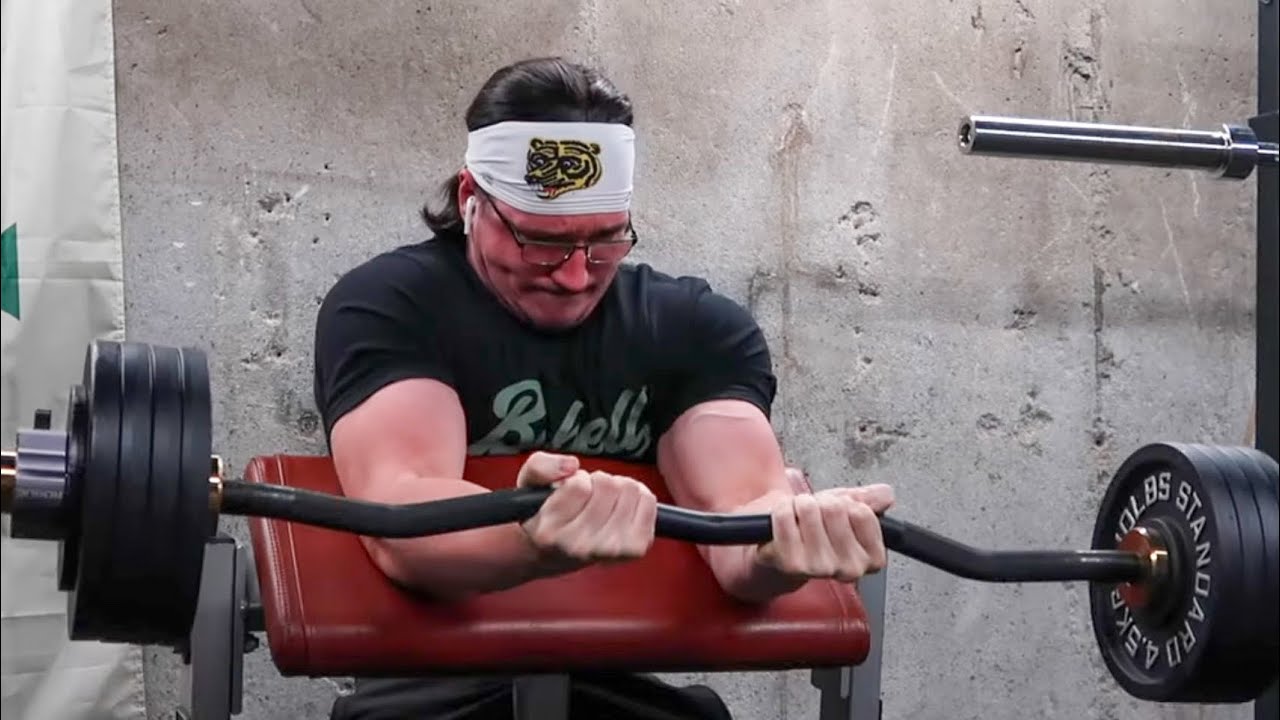
Basement Bodybuilding explains why high reps (12-20) can be better for hypertrophy, sharing analogies and tips to overcome common limitations.
Ask about this video. Answers come from its transcript only — with the timestamp, so you can check them.
Generated from the transcript and can be wrong — check the timestamp.
Key Takeaways
- High reps (12-20) can be more effective for hypertrophy when done properly.
- Stopping short of failure is less of an issue with higher reps, allowing better muscle fatigue.
- High rep training requires mindfulness to overcome limiting factors like fatigue and burn.
- Isolation exercises benefit more from high rep ranges compared to heavy compound lifts.
- Personal experience and practical application are valuable alongside scientific understanding.
What the video covers
- The video advocates for high reps (12-20) in hypertrophy training, especially for isolation exercises.
- High reps are often overlooked due to perceived downsides, but awareness can help overcome these issues.
- Stopping short of failure is a common limiting factor in hypertrophy, but higher reps allow closer proximity to true muscular failure.
- A simple percentage analogy shows that higher rep sets allow a greater percentage of reps completed before failure.
- An analogy with strides toward a wall illustrates how smaller, more numerous reps (high reps) get closer to failure than fewer, larger reps (low reps).
- High reps may be more time-consuming and fatiguing but enable better muscle stimulation if done mindfully.
- The video focuses on isolation movements rather than heavy compound lifts like squats or deadlifts.
- The presenter emphasizes practical experience over scientific data, sharing personal insights on rep ranges.
- Awareness of limiting factors like cardio endurance and burn sensation is key to maximizing high rep effectiveness.
- The video promises further analogies and tips to manage high rep training challenges.
Full Transcript — Download SRT & Markdown
Speaker A
All right, so today's video is going to be on high reps and why I actually prefer them in my own training and why I do advocate for them quite a bit. So obviously, with high reps, they do get kind of, I think, neglected and overlooked by a lot of people, and for good reason. I understand the downsides to high reps, but I think if you're aware and you understand what those downfalls are of high reps, then you can overcome it pretty easily. And I think there's a hidden benefit to high reps that not a lot of people understand. And this video is not going to be like some scientific, science-based video on why higher reps are better. This is just going to be my experience and my thoughts and the way that I perceive low reps and high reps. So when I'm talking high reps, I'm talking about for hypertrophy in a realistic sense, like very rarely do people train above 20 reps. Obviously, there's like certain pros or whatever that try out that rep range, but I'm talking about 20 reps maximum for this video so you guys know what I'm talking about here. When I say high, I'm generally talking about 12 to 20, and I think the closer you get to 20 is obviously higher it gets. I am going to cap it off there though. So the downsides to high reps, just to start the point on that so I can kind of overcome it later in this video, is going to be high reps have potential limiting factors. And when I say limiting factors, I mean factors that will prevent you from completing the set to muscular failure. So a lot of the time, there's going to be like your cardio is not good enough, maybe the burn is a little bit too much, you can't quite handle it, you stop short. There's a bunch of different reasons why you might stop a set shorter than true muscular failure, and obviously for hypertrophy, we can't let that happen. I do think if we're mindful and you're aware of those limiting factors, you can overcome them quite easily, and that's why I do still see a ton of value in high reps. So with all that being said, let me dive into the analogies that I have today and the reasons why I do think high reps are better. So I think they're better for hypertrophy because I do think if trained properly, which is simpler than we all think, you can get closer to failure, and obviously that's very important for hypertrophy, more important on isolation movements. So in this video, I'm generally going to be talking about isolations. There are going to be certain compounds, actually a lot of compound lifts, just not the ones that are better to go heavy on. Like this definitely doesn't include squats and deadlifts or similar variations, probably not bench press. But let me start with that first analogy. So the way that I want you guys to think of this is this is going to be the most, like, I guess, straightforward analogy that I have, and I'm going to go into a couple more that will make a little bit more sense where you might be able to wrap your head around it a little bit more. So the first way that I like to view it is just based on what percentage is each rep of that set. So let's say you're doing a set of five on something. Each rep is going to be 20% of that set. If you fail on that last rep, let's say you leave one rep in the tank, if you hit four reps, you're only 80% to completing that set. You're only 80% to failure. I know the numbers don't work out exactly like that, I totally get it, but for the sake of this video, four reps out of five potential, let's say you stop at four, that's only 80% of your set, and that's a one rep in reserve set. Take ten reps for example. If you stop one rep shy of failure at nine, now that's 90% of the reps that you could have gotten to get to failure. And let's take 20 reps for example, and let's say you stop, same thing, one rep in reserve at 19. Now it's 95% of the set that you were able to get. So that's a very straightforward, very like surface-level way of viewing it. All right, so the next analogy is going to be a little bit more of like a physical one. I think you guys will start to understand this one a little bit more now. So to explain what I'm talking about here, picture yourself standing somewhere and then picture a wall 10 feet in front of you. The goal of this is to step as close as you can to that wall, but every stride has to be the same distance. So picture someone that's taking four-foot strides. If the wall is 10 feet in front of you, that person can take a total of two strides before they can no longer take a full stride. Let's say someone's taking slightly smaller steps. That person can take, let's say, they're taking three-foot strides. They can take three strides before they reach the wall where they can't take another full stride. Let's say there's someone that's taking two-foot strides. That person can take five total strides before they can't take any more. So the difference between these three people is going to be their proximity to the wall. So the analogy here is each step that you take is equivalent to a rep that you perform on a set. The wall is going to be failure. So the person that did the fewest amount of steps, the person with the four-foot strides, they completed two reps before they couldn't take anymore. The problem is they're still two feet away from the wall. The person that was taking three-foot strides, they got more overall strides in. They're still not quite to the wall, but they're only one foot away, so they're twice as close as the person that was taking the four-foot strides. The person that was taking the two-foot strides, it might have taken a little bit more effort, maybe it was a little bit longer, but that person got right up to the wall. They took that to failure. They got as close as they possibly could and they beat out the person that was taking the three-foot and the four-foot strides. So even though those people were taking more efficient steps, at the end of the day, if your goal is to get to the wall, the person that was taking the two-foot strides ended up winning that one. And this translates right over to sets and reps performed within that set. So let's say you're taking a set to zero RIR, which all of these three people did taking those strides. Each person couldn't complete another rep, but the first person taking the four-foot strides was only 80% to failure. They were only 80% to the maximum capacity. So even though they couldn't get another full rep, another full stride is what I'm trying to say here, is that person, they couldn't take anymore, but they're not quite to failure. And this is going to be the same as low reps within a set. The next person that did kind of like the medium reps with the three-foot stride, that person was a little bit closer, but they're still not quite to where they want to be. The last person is the only true person that got as close as they could to zero reps in reserve. And if that's the goal with your training, it makes a little bit more sense to do higher reps. And yes, maybe the two-foot strides is a little bit more time-consuming, maybe it's a little bit more difficult, and yeah, they're going to be tired by the time they get to that wall. Not actually because it's 10 feet, but it's just an example, so don't write that in the comments. That person got to where they needed to be even though it was a little bit harder and a little bit more difficult. They had to be mindful of maybe fatigue as they were getting closer to the wall, but as long as they're aware of it and they can overcome it and they recognize what's happening, that person can get much closer basically with no issue. And I hope that analogy makes a lot of sense. I do have one more that I want to dive into before I go into some of the limiting factors to be aware of and how to overcome them. So the last analogy, this one is very straightforward. I'm going to keep it quick, and I think everybody should be able to understand this one. Think about a, let's take a mason jar for example. Let's say you are, your goal is to fill that mason jar with rocks, and the rocks are about, may...
Speaker A
kind of i think neglected and overlooked by a lot of people and for good reason i understand the downsides to high reps but i think if you're aware and you understand what those downfalls are of high reps then you can
Speaker A
overcome it pretty easily and i think there's a hidden benefit to high reps that not a lot of people understand and this video is not going to be like some scientific science based video on why higher reps are better this is just going to be my
Speaker A
experience and my thoughts and the way that i perceive low reps and high reps so when i'm talking high reps i'm talking about for hypertrophy in in a realistic sense like very rarely do people train above 20 reps
Speaker A
obviously there's like certain pros or whatever that try out that rep range but i'm talking about 20 reps maximum for this video so you guys know what i'm talking about here when i say hi i'm generally talking about
Speaker A
12 to 20 and i think the closer you get to 20 is the obviously higher it gets i am going to cap it off there though so the downsides to high reps just to start the point on that so i can kind of
Speaker A
overcome it later in this video is going to be high reps have potential limiting factors and when i say limiting factors i mean factors that will prevent you from completing the set to muscular failure so a lot of the time there's going to be
Speaker A
like your cardio is not good enough maybe the burn is a little bit too much you can't quite handle it you stop short there's a bunch of different reasons why you might stop a set shorter than true muscular failure and obviously for
Speaker A
hypertrophy we can't let that happen i do think if we're mindful and you're aware of those limiting factors you can overcome them quite easily and that's why i do still see a ton of value and high reps so with all that being said
Speaker A
let me dive into the analogies that i have today and the reasons why i do think high reps are better so i think they're better for hypertrophy because i do think if trained properly which is simpler than we all think
Speaker A
you can get closer to failure and obviously that's very important for hypertrophy more important on isolation movements so in this video i'm generally going to be talking about isolations there are going to be certain compounds uh actually a lot of compound lifts just
Speaker A
not the ones that are better to go heavy on like this definitely doesn't include squats and deadlifts or similar variations uh probably not bench press but let me start uh with that first analogy so the way that i want you guys
Speaker A
to think of this is this is gonna be the most like i guess straightforward analogy that i have and i'm gonna gonna go into a couple more that will make a little bit more sense where you might be able to wrap your
Speaker A
head around it a little bit more so the first way that i like to view it is just based on what percentage is each rep of that set so let's say you're doing a set of five on something each rep is going to be 20 of
Speaker A
that set if you fail on that last rep let's say you leave one rep in the tank if you hit four reps you're only eighty percent to completing that set you're only eighty percent to failure i know the numbers don't work out exactly like
Speaker A
that i totally get it but for the sake of this video four reps out of five potential let's say you stop at four that's only eighty percent of your set and that's a one rep and reserve set take ten reps for example if you stop
Speaker A
one rep shy of failure at nine now that's ninety percent of uh the reps that you could have gotten to get to failure and let's take 20 reps for example and let's say you stop same thing one rep in
Speaker A
reserve at 19. now it's 95 of the set that you were able to get so that's a very straightforward very like surface level way of viewing it alright so the next analogy is going to be a little bit more of like a physical one i
Speaker A
think you guys will start to understand this one a little bit more now so to explain what i'm talking about here picture yourself standing somewhere and then picture a wall 10 feet in front of you the goal of this is to step as close as
Speaker A
you can to that wall but every stride has to be the same distance so picture someone that's taking four foot strides if the wall is 10 feet in front of you that person can take a total of two strides before they can no
Speaker A
longer take a full stride let's say someone's taking slightly smaller steps that person can take let's say they're taking three foot strides they can take three strides before they reach the wall where they can't take another full stride let's say there's someone
Speaker A
that's taking um two foot strides that person can take five total strides before they can't take any more so the difference between these three people is going to be their proximity to the wall so the analogy here is each step that you
Speaker A
take is equivalent to a rep that you perform on a set the wall is going to be failure so the person that did the fewest amount of steps the person with the four foot strides they completed two reps before they
Speaker A
couldn't take anymore the problem is they're still two feet away from the wall the person that was taking three foot strides they got more overall strides in they're still not quite to the wall but they're only one foot away so they're
Speaker A
twice as close as the person that was taking the forefoot strides the person that was taking the two foot strides it might have taken a little bit more effort maybe it was a little bit longer but that person got right up to the wall
Speaker A
they took that to failure they got as close as they possibly could and they beat out the person that was taking the three foot and the four foot strides so even though those people were taking more efficient steps
Speaker A
at the end of the day if your goal is to get to the wall the person that was taking the two foot strides ended up winning that one and this translates right over to sets uh and reps performed within that set so
Speaker A
let's say you're taking a set to zero rir which all of these three people did taking those strides each person couldn't complete another rep but the first person taking the forefoot strides was only 80 percent to failure they were only 80 to the maximum
Speaker A
capacity so even though they couldn't get another full rep another full stride is what i'm trying to say here is that person they couldn't take anymore but they're not quite to failure and this is going to be the same as low reps within a set
Speaker A
the next person that did kind of like the medium reps with the three foot stride that person was a little bit closer but they're still not quite to where they want to be the last person is the only true person that got as close
Speaker A
as they could to zero reps in reserve and if that's the goal with your training it makes a little bit more sense to do higher reps and yes maybe the two foot strides is a little bit more time consuming maybe it's a little bit
Speaker A
more difficult and yeah they're going to be tired by the time they get to that wall not actually because it's 10 feet but it's just an example so don't write that in the comments that person got to where they needed to be even though it
Speaker A
was a little bit harder and a little bit more difficult they had to be mindful of uh maybe fatigue as they were getting closer to the wall but as long as they're aware of it and they can overcome it and they recognize what's
Speaker A
happening that person can get much closer basically with no issue and i hope that analogy makes a lot of sense i do have one more that i want to dive into before i go into some of the limiting
Speaker A
factors to be aware of and how to overcome them so the last analogy this one is very straightforward i'm going to keep it quick and i think everybody should be able to understand this one think about a let's take a mason jar for example
Speaker A
let's say you are your goal is to fill that mason jar with rocks and the rocks are about maybe they're like a cubic inch somewhere along the lines of that size you can probably fit maybe like six or seven in
Speaker A
that mason jar before it starts to overflow and let's take another jar for example and your goal is to fill this one to the top and let's say you fill it with sand instead or maybe much smaller pebbles or
Speaker A
gravel or something you can fit maybe 20 little pebbles or maybe like 50 little chunks of gravel or something by the time that one gets full and what you'll notice is the one that's filled with the bigger rocks
Speaker A
while it's still filled at the top and you can't fit another rock in there there's still a lot of air there's still a lot of gaps between each rock there's a lot of gaps between the rock and the
Speaker A
wall and even if you were to pour some sand into that mason jar you could fit a lot in there like the jar is actually only half full and you'll notice that because it's lighter there's not as much to it and the one that's
Speaker A
filled with maybe the the little pebbles or the sand for example that one it's basically entirely full you can't really fit anything else in there it's much closer to its actual capacity than the one filled with the rocks and the
Speaker A
analogy between this i'm sure all of you get it at this point but the jar is going to be the set and the proximity to failure is the top of the jar each item inside the jar is going to be the
Speaker A
reps so you'll notice that the one with the sand or the gravel is pretty much like 99 full there's very little air in it that's 99 to failure the one with the rocks in it maybe that one's only 60 or 70
Speaker A
percent the failure and you just can't fit anymore because the rocks are taking up so much space and even though there's more space in it you can't fit an entire another rock it's the same thing with a low wrap set let's say
Speaker A
for example you're doing a set of five on curls for example if you have four reps and you're at eighty percent of your capacity for that set and you go for and let's say let's say you stop that set because you only have
Speaker A
19 left in you and the rep takes 20 percent you're missing out on 19 because you're missing one tiny piece of that percentage and that's the same exact way that uh the rocks fill up the jar but it's not quite as
Speaker A
full as it seems so i hope at least one of those analogies makes sense to you i know they make sense to me but sometimes people don't quite get it i tried to explain it the best that i could
Speaker A
with that being said high reps in a practical sense can have some downsides that i think a lot of us are aware of and that's why a lot of people preach maybe like the five to eight rep range
Speaker A
and high reps they don't work they're just for toning or whatever the reason why i prefer higher reps is obviously because you can get closer to failure like i just explained but obviously each aspect in each variable of fitness and
Speaker A
rep ranges it's kind of a double-edged sword so being aware of the downsides and not just diving into high reps on everything is uh necessary in my opinion so there's a couple things so obviously when you're doing high reps a lot of people don't
Speaker A
maybe have the highest pain tolerance i know a few people that can basically do an entire set to failure and not feel any burn or anything whatsoever myself included that's definitely something that's adapted over time i used to feel the
Speaker A
burn all the time when i was doing leg extensions i don't feel it at all anymore if you're someone that feels the burn when you're doing a lift it's really important to understand that that is that doesn't have anything to do with
Speaker A
muscular failure you want to take it to where you can't get another rep because your muscle doesn't have the strength left in the muscle to get that last rep if you're stopping a set early because it just hurts really bad that's not actual
Speaker A
failure that we're looking for with hypertrophy so it's good to have a little bit of self-awareness with this or if you have kind of like the mental fortitude to just push through it either way and just grind it out go for it and that's
Speaker A
totally fine but you have to be aware of the reason for your failure the next one's going to be uh let's see the the type of movement and the muscles involved so if something is like a heavy lower body
Speaker A
free weight compound lift that doesn't necessarily make the most sense to do in super high reps let's take this squat or deadlift for example you're going to have a ton of limiting factors there if you're trying to go for
Speaker A
high reps mostly it's going to be cardio you're going to become out of breath it doesn't make a whole ton of sense to take one of those sets to super high reps when at the end of the day high
Speaker A
reps and low reps in in theory can both produce the same amount of hypertrophy so that's that's another example it's generally the more if if a lift is compound lower body and free weight the more of those variables that it has
Speaker A
the lower reps you should do and the more if it's a machine or cable and it's a supported lift like a machine and it's upper body or a smaller muscle group those you can take a little bit to
Speaker A
the higher reps because there's going to be less cardio in the limiting factors so that's definitely something to be aware of and that's those are pretty much the two biggest limiting factors um it's really just being aware of those from each lift
Speaker A
and obviously every lift is different i don't think there's any type of like there's no way to specifically categorize each lift like compound lifts vary from the easiest to the hardest compound lift and same thing with isolation so i don't want to just
Speaker A
make a blanket statement but with all that being said i want you guys to think about that a little bit and yeah i guess give it give it some thought give it some trying uh in your program and that's pretty much all i've
Speaker A
got today so thanks for watching let me know if you have any questions
Topics:high repshypertrophymuscle growthbodybuildingtraining tipsisolation exercisesreps and setsmuscular failureBasement Bodybuildingworkout advice