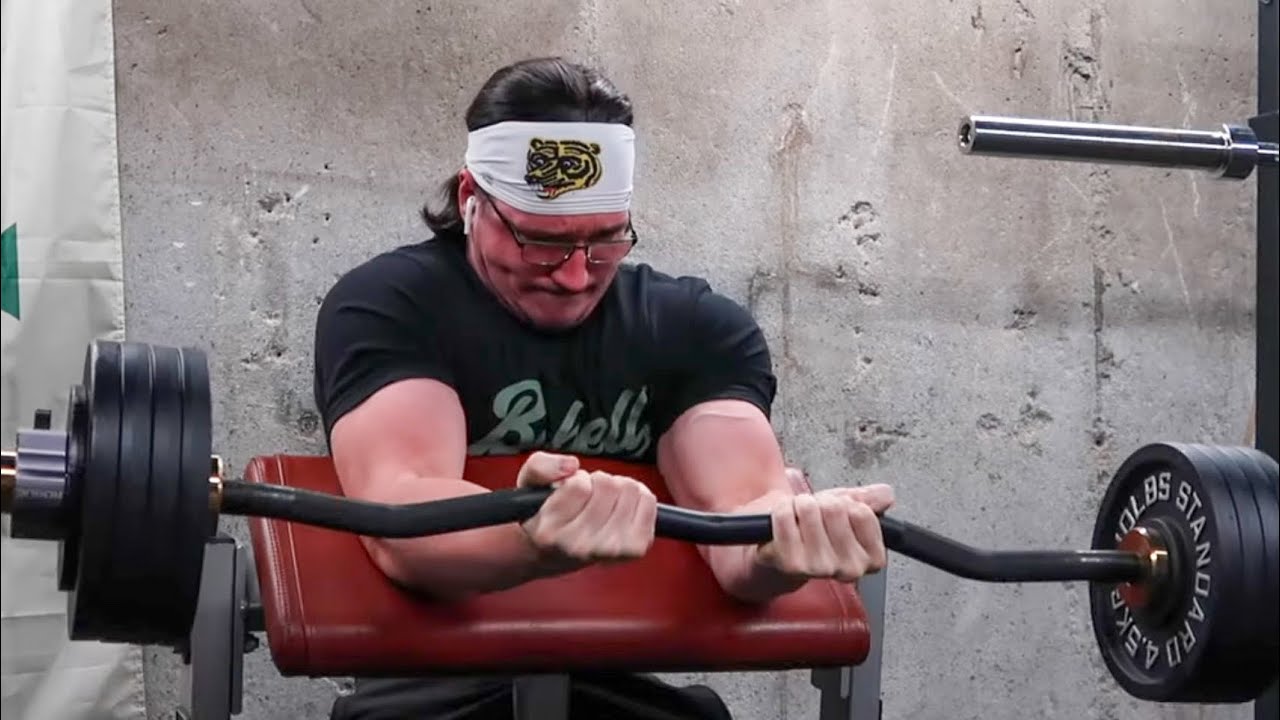
Explores how longer rest periods, inspired by powerlifting, impact bodybuilding gains and hypertrophy effectiveness.
Ask about this video. Answers come from its transcript only — with the timestamp, so you can check them.
Generated from the transcript and can be wrong — check the timestamp.
Key Takeaways
- Longer rest periods improve set-to-set performance and hypertrophy stimulus by allowing muscles to recover closer to a fresh state.
- Short rest periods lead to early failure and less effective reps, reducing hypertrophy potential.
- Powerlifting rest strategies have valuable lessons for bodybuilding, especially regarding force output and muscle growth.
- Volume effectiveness tapers off with fatigue; longer rests help maintain training quality across sets.
- Adjust rest intervals based on individual recovery and training goals to maximize gains.
What the video covers
- The video discusses whether longer rest intervals between sets, a powerlifting practice, benefit bodybuilding hypertrophy.
- Powerlifting rest philosophies are argued to be more effective for hypertrophy than traditionally shorter bodybuilding rests.
- Longer rest allows for better performance in subsequent sets, leading to higher force output and more effective reps.
- Short rest periods cause premature failure due to fatigue, preventing reaching true proximity to failure in a fresh state.
- The analogy of going from zero to 60 mph is used to explain the importance of resting enough to reset muscle performance.
- Volume has diminishing returns; longer rests help replicate the potency of the first set in subsequent sets.
- Training in a fatigued state with short rests is less productive despite feeling harder.
- Longer rest periods may not increase hypertrophy directly but correlate with the ability to apply more mechanical tension.
- Rest periods can be adjusted gradually to find an optimal balance between fatigue and performance.
- The video encourages viewers to ask questions and engage in the comment section for further discussion.
Chapters
- 00:00Introduction to Rest Periods and Powerlifting Influence
- 00:38Engagement and Question Overview
- 01:19Rest Periods: Powerlifting vs Bodybuilding Philosophy
- 01:55Effectiveness of Reps and Rest Duration
- 02:38Muscle Failure and Potent Reps Explained
- 03:13Analogy: Going from Zero to 60 - Muscle Performance Reset
- 04:30Fatigue, Rest, and Training Volume Diminishing Returns
- 05:12Recreating the First Set with Longer Rest
- 05:49Training in a Fatigued State vs Fresh State
- 06:30Hypothesis on Longer Rest and Hypertrophy Correlation
Full Transcript — Download SRT & Markdown
Speaker A
All right, what's up everybody? Welcome back to part two of the 20K special. This is a question that is super interesting. Somebody asked if longer rest periods, so longer rest intervals between sets, is another example of a powerlifting approach infecting bodybuilding.
Speaker A
approach infecting bodybuilding and I actually think this is something where powerlifters were right the whole time and bodybuilders were incorrect so this is a valuable thing that powerlifting has taught to bodybuilding and I'm going to break that down throughout this video
Speaker A
And I actually think this is something where powerlifters were right the whole time and bodybuilders were incorrect. So this is a valuable thing that powerlifting has taught to bodybuilding, and I'm going to break that down throughout this video.
Speaker A
on it if you see any other questions you like in the comments give it a like so it's higher up and I can see it uh and I'll be more likely to see it so the question here I'm not going to read the
Speaker A
Before I get into it, if you have any questions you want to see answered in the series, leave them in the comments below. If it's a good, interesting question that is applicable to many people, I will probably make a video on it.
Speaker A
other strength Sports because they're performance oriented but when it comes to hypertrophy even though performance isn't what we're after ultimately longer rest times and better Performance Set over set is correlated with higher Force output so uh when we're getting into
Speaker A
If you see any other questions you like in the comments, give it a like so it's higher up and I can see it, and I'll be more likely to see it. So the question here, I'm not going to read the whole thing, but I'll put it up on the screen: Are long rest times another example of powerlifting philosophy that has infected bodybuilding?
Speaker A
curl and you fail at rep number 10 it's really only the last one to two reps it's actually a little bit higher than that but in this comedy says one to two Reps for the sake of Simplicity let's
Speaker A
So for this, I would actually say yes. Longer rest times were probably popularized through powerlifting and other strength sports because they're performance-oriented. But when it comes to hypertrophy, even though performance isn't what we're after ultimately, longer rest times and better performance set over set is correlated with higher force output.
Speaker A
could probably do another nine reps so you're basically getting more ineffective reps just to get reps 8 and N versus if you rested say 15 to 30 seconds like he says in this comment and you got maybe three reps reps 2 and
Speaker A
So when we're getting into this topic, the way I see it, and another point that he made in this comment is that he's basically saying you can reach failure sooner if your rest intervals are shorter. So if you do, say, a set of 10 with 100 pounds on a barbell curl and you fail at rep number 10, it's really only the last one to two reps. It's actually a little bit higher than that, but in this comment he says one to two reps for the sake of simplicity. Let's say it's the final two reps of each set that are potent.
Speaker A
state so what I mean by this is you're failing before your your true failure potential so you're almost in a bit of a a paradox here you're hitting failure before you're potentially able to hit failure in a fresher state so the way I like to view
Speaker A
If you were to do a set of 10 reps, nine and rep 10 were potent, and that's what gives you stimulus for growth. If you were to rest 5 minutes, you could probably do another nine reps, so you're basically getting more ineffective reps just to get reps 8 and 9. Versus if you rested, say, 15 to 30 seconds like he says in this comment and you got maybe three reps, reps 2 and 3 are going to be very potent and you're not wasting your time doing more ineffective reps.
Speaker A
taking that muscle to 60 say that's the speed limit that's the most you can go AKA hitting failure in that set the key is doing what you can to get close to zero again rather than going back to
Speaker A
So the reason why I disagree with this is because you're not actually reaching the same proximity to failure that you would be in a fresh state. So what I mean by this is you're failing before your true failure potential. So you're almost in a bit of a paradox here. You're hitting failure before you're potentially able to hit failure in a fresher state.
Speaker A
want to go from 0 to 60 it's not just about getting to 60 it's about making this massive jump from being in a fresh state to uh being in a highly potent State that's basically at failure or your desired proximity to it and to kind
Speaker A
So the way I like to view your sets and your volume in training is how many times can you, or how many times do you need to take the muscle from zero to 60? So taking a set from zero to 60, you're starting in a fresh state. You're taking that muscle to 60. Say that's the speed limit, that's the most you can go, aka hitting failure in that set. The key is doing what you can to get close to zero again rather than going back to just 50, because then you can only go up from 50 to 60, which is only an increase of, say, 10 miles per hour.
Speaker A
starts to taper off and then you run into recovery issues and it actually goes back down so the way I see it is if the first set is going to be the most potent longer rest times can basically
Speaker A
So in the same analogy here, if you go back a little bit, you can only go up a little bit. And when you want to go from zero to 60, it's not just about getting to 60, it's about making this massive jump from being in a fresh state to being in a highly potent state that's basically at failure or your desired proximity to it.
Speaker A
like a five or six number set for the day if you're not resting properly but if you rest for say 10 minutes which is a little bit extreme I'd argue uh at that point you're basically recreating that first set you'll have a tiny bit of
Speaker A
And to kind of explain all this in a bit more of a practical and relatable way, we all know that volume has diminishing returns. It's a bell curve where your volume starts up very potent. The more sets you do in a session or in a week, it starts to taper off and then you run into recovery issues and it actually goes back down.
Speaker A
periods so if your rest periods are shorter for whatever reason whether it's preference or whether it's you not being able to train uh as hard or not wanting to train as hard not knowing how to train as hard you can be a little bit
Speaker A
So the way I see it is if the first set is going to be the most potent, longer rest times can basically have you artificially replicate that first set again. Because if you're training from, say, set one to set two and you rest 1 minute, you're in a very fatigued state. That second set is almost giving you the benefits of, say, like a five or six number set for the day if you're not resting properly.
Speaker A
of fatigue will determine how effective that intensity is I kind of already touched on this point point so pretty straightforward there and the hypothesis longer rest means more volume so it creates more hypertrophy uh I think this is kind of a false correlation I don't
Speaker A
But if you rest for, say, 10 minutes, which is a little bit extreme, I'd argue, at that point you're basically recreating that first set. You'll have a tiny bit of fatigue, but you're almost getting the same benefits that that first set offers. Of course, there are limitations on this because that's just how physiology works, but ultimately what you're trying to do is recreate that first set again. So that's my mindset when it comes to rest periods.
Speaker A
you being able to push hard in a given set um I would also say that training in a fatigued state is less productive even though it might feel harder uh through lingering Sensations in the muscle so a lot of the time this is when our
Speaker A
So if your rest periods are shorter for whatever reason, whether it's preference or whether it's you not being able to train as hard or not wanting to train as hard, not knowing how to train as hard, you can be a little bit more liberal with volume and this can make up a lack of intensity to a certain extent. But this is very limited and I usually do recommend against it.
Speaker A
shorter rest times uh but very obviously if you're looking at muscle growth through an entirely different mechanism with mechanical tension versus just kind of the pump the burns the sensation it's pretty obvious which one is now the the
Speaker A
The proximity to failure definition of intensity is important, but your levels of fatigue will determine how effective that intensity is. I kind of already touched on this point, so pretty straightforward there.
Speaker A
intensity in a set with high effort in a fresh State while training it in a fatigu state can help you reach failure sooner it's still a less potent stimulus compared to what you're capable of in a fresh State longer rest intervals are
Speaker A
And the hypothesis: longer rest means more volume, so it creates more hypertrophy. I think this is kind of a false correlation. I don't necessarily know that it creates more hypertrophy. I think it's just more of an indicator that you're able to put more force and aka more tension onto that muscle.
Speaker A
is you want to replicate that first set because that's the most potent set and that's my Logic for why you do want to opt towards longer rest times I would say just for a final takeaway this is so
Speaker A
So more volume doesn't cause it. More volume is more of the outcome of you being able to push hard in a given set. I would also say that training in a fatigued state is less productive even though it might feel harder through lingering sensations in the muscle.
Speaker A
long and you can slowly cut back on them you can track them for a short period of time maybe start by cutting 15 30 seconds and see how long you can go to the point where you're no longer
Speaker A
So a lot of the time this is when our instinct might be working against us. If you're feeling that sensation in your muscle, you kind of feel the burn, the pump going on, it makes you want to kind of keep that going. And that's why people, I think instinctively, do opt towards shorter rest times.
Speaker A
answered in the miniseries I'm going to be making these videos probably most days if not every day so let me know I'll see you guys in the next one
Topics:rest periodshypertrophypowerliftingbodybuildingtraining recoverymuscle growthset intervalstraining volumefatigue managementstrength training