Skip to content

You've Been Lied To… (Rep Ranges DO Matter!)

Exploring why rep ranges matter in training and how to optimize them for better muscle growth and performance.

Ask about this video. Answers come from its transcript only — with the timestamp, so you can check them.

Generated from the transcript and can be wrong — check the timestamp.

Key Takeaways

  • Rep ranges do matter and should be thoughtfully selected based on the lift and individual needs.
  • Higher reps can improve muscle engagement in lifts with uneven tension curves or complex movement paths.
  • Mechanical tension is the key driver of muscle growth, not just the burn or pump sensation.
  • Fatigue and endurance factors can limit the effectiveness of very high rep sets.
  • Finding the right rep range is a balance between managing tension and avoiding premature fatigue.

What the video covers

  • The video discusses the importance of selecting appropriate rep ranges for different lifts and individuals.
  • High reps can help even out tension curves in lifts with skewed difficulty across the range of motion, like lateral raises and lat pulldowns.
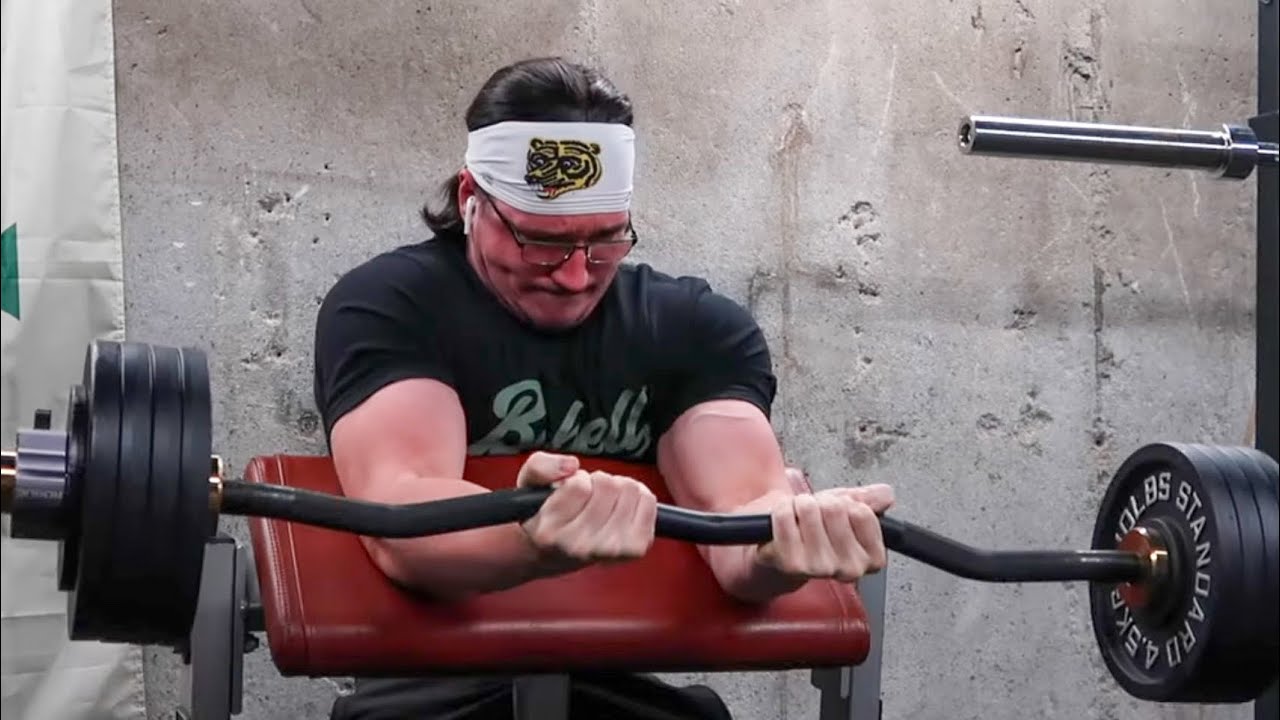
  • Lifts that move in three dimensions, such as barbell curls, may benefit from higher reps to manage movement and center of gravity challenges.
  • Higher reps can be limited by systemic fatigue, muscle burn, and endurance, which may prevent reaching true muscular failure necessary for growth.
  • Mechanical tension, rather than the burn or pump, is emphasized as the primary driver of muscle growth.
  • A balancing act is needed to find rep ranges that optimize tension curves without causing premature fatigue or compensation.
  • The 'rocks in the jar' analogy is used to explain how different rep ranges and intensities fill the capacity for muscle stimulus.
  • The presenter encourages personal experimentation due to variability in individual response and evolving scientific understanding.
  • Intensity techniques and weighted stretches are briefly mentioned as additional factors influencing training outcomes.
  • Overall, the video challenges the common belief that rep ranges do not matter and provides logical reasons to optimize them.

Answers

Questions about this video

Do rep ranges really matter for muscle growth?

Yes, rep ranges matter because they affect mechanical tension, fatigue, and how the muscle is engaged during different lifts. Optimizing rep ranges can improve training effectiveness.

Why are higher reps recommended for some lifts like lateral raises?

Higher reps help even out tension curves in lifts where certain parts of the movement are disproportionately difficult, making the exercise feel smoother and more effective.

What limits the effectiveness of very high rep sets?

Systemic fatigue, muscle burn, and endurance factors can cause premature failure before reaching true muscular failure, which is necessary for maximal growth stimulus.

Full Transcript — Download SRT & Markdown

00:00
Speaker A
All right, what's up everybody? So today we're talking about rep ranges, more specifically how I select my rep ranges that I use for my own program as well as my clients, and what I just put out is general recommendations as far as rep ranges go. This is something that I think I have a slightly different view on than most people. Most people, if you were to ask them, "Do rep ranges matter?" they would probably lean towards no. I'm not saying that you can't get big in maybe a different rep range than I use, but these are the things that I like to take into consideration when I do pick my rep ranges because I think it's something worth optimizing, and I'm here to make my case for the fact that it is important. I think I have pretty good logical reasons why you should be putting more thought and effort into the rep ranges that you choose for each lift. So with that being said, let's get to it.
00:11
Speaker A
ranges go this is something that I think I have a slightly different view on than most people most people if you were to ask them do rep ranges matter they would probably lean towards no I'm not saying that you can't get big in maybe a
00:27
Speaker A
How I select my rep ranges: these are my top secrets. So the first little method or mental cue that I use is that high reps do even out tension curves. I don't know the science behind this, but take a lift like a lateral raise or a lat pulldown, where one portion of the movement, it's the lockout in both of these lifts, just so happens to be where it's disproportionately more difficult. The weight feels heavier, and sometimes it is heavier based on how it's going against your muscle versus gravity. So in these types of lifts where the tension curve is very skewed, the high reps tend to even it out. I can't fully explain why that's the case, but in my experience, I've been lifting for years. Higher reps just feel better for something like a dumbbell lateral raise or even a lat pulldown. For some reason, it just works better.
00:37
Speaker A
the fact that it is important and I think I have pretty good logical reasons why you should be putting more thought and effort into the rep ranges that you choose for each lift so with that being said let's get to it
00:48
Speaker A
So another case for the high reps is that they can work better for lifts where the weight moves in three dimensions, especially as you get stronger. So take a lift like a Smith bench, for example. You're locked into one plane of motion. It's a two-dimensional movement. You're just pressing up and down. The bar can't go in front of you or behind you; it's completely stuck. Take something like a barbell curl, for example, where the bar goes up and it goes in front and then it comes back. It's like a half-circle motion right here. It's moving in a bunch of different directions throughout the movement, and this messes with your center of gravity. It's not like a squat or it's not like a bench or a deadlift; it's completely different. The bar is moving. It's right in at your center of gravity, then it moves forwards and then it comes back throughout the rep.
01:00
Speaker A
take a lift like a lateral raise or a lat pull down where one portion of the movement it's the lockout in both of these lifts just so happens to be where it's disproportionately more difficult the weight feels heavier and sometimes
01:12
Speaker A
So when you go with lower reps on this, this doesn't have anything to do with tension curve or proximity to failure or anything. This is more so just, is the weight just going to start pulling you forwards? Is this the weight you're using in ratio to your own body weight? Is that weight too heavy to where it actually changes the movement to where your back has to compensate or pulls your shoulders forwards? There's these little things that you don't really notice until you get stronger. So for the guys that aren't quite that strong yet, that might not notice it. It's kind of like a blessing in disguise. As you get stronger, lifts like a barbell curl get a little bit tougher to execute because they do pull you around in certain ways, and this goes for any movement that moves in a 3D plane.
01:26
Speaker A
experience I've been Lifting for years higher reps just feel better for something like a dumbbell lateral raise or even a lap pull down for some reason it just works better so another case for the High Reps is that they can work better for lifts
01:40
Speaker A
When it comes to other downsides of higher reps, you have to be aware of other forms of fatigue, and I find this happens at a different rate based on the individual, based on the lift that you're doing, and last but not least, the muscle that's being trained. So does this muscle exert your entire body systemically? Does this muscle have that burning sensation like your calves might? You have to think about other things that could limit you from actually reaching muscular or technical failure.
01:55
Speaker A
front of you behind you it's completely stuck take something like a barbell curl for example where the bar goes up and it goes in front and then it comes back it's like a like a half circle motion right here
02:07
Speaker A
So take something like the burn in your calves. If you're doing sets of 50 on calf raises, odds are you're more likely to give up because of the burn, and that's going to prevent you from actually getting close to muscular failure, which drives growth. The burn feels good, and it feels productive, and the pump feels productive, but it's not what's going to cause growth, or at least what's going to cause the majority of growth, which is mechanical tension. I'll touch more on that later because a lot of people get confused by that with rep ranges. So you have to be careful of things like cardio, your endurance, the burn, all these little sensations, even the pump. Like if the pump's too intense, it stopped me from lifting in a set before because it's just too intense and my muscles are like starting to hurt and whatever. So these are all things that you have to be mindful of.
02:17
Speaker A
in at your center of gravity then it moves forwards and then it comes back throughout the rep so when you go with lower reps on this this doesn't have anything to do with tension curve or proximity to failure or anything this is
02:30
Speaker A
So when it comes to picking your rep ranges, you want to find that balancing act. Where is this light enough to make the tension curve a bit more natural for lifts that have a very skewed tension curve, and is it low enough to where I'm not giving out for other reasons? So it's really a balancing act between these two concepts and finding the sweet spot in between. I have three or four other concepts that I do take into consideration when I make my rep ranges as well, so let's go into it.
02:42
Speaker A
your back has to compensate or pulls your shoulders forwards there's these little things that you don't really notice until you get stronger so for the guys that aren't quite that strong yet that might not notice it it's kind of
02:54
Speaker A
And these are all kind of random, but I think they are helpful and they're worth talking about. So the first one I have here is the rocks in the jar analogy. For any of my OG fans, any OG subscribers here, the rocks in that jar analogy is something that I put out probably over a year ago at this point, and the title of the video is "Why I Prefer Higher Reps in My Opinion." So when it comes to the rocks in the jar, the way I see it, and this applies mostly to tension curves and muscular failure, but if you have a mason jar and you have a bunch of medium-sized rocks, maybe you can fit like 10 rocks in there and then it's at its limit and you can't fit any more rocks in the jar. Is the jar full? Some people would say yes, some people would say no. But what if you got little pebbles, like gravel? Could you fill more gravel in there? Yeah. So is the jar full or is it not full, right? And then what if you got like fine grain sand? Now is it full? Was it full when it just had gravel and rocks? And now that it has sand and it's perfectly evened off, what if you add some water? I'm sure there's room for water to fit in there too because water, I had a flood if it's anywhere. So these are all things to take into consideration. I think that's an analogy that works well for higher reps.
03:05
Speaker A
when it comes to other downsides of higher reps you have to be aware of other forms of fatigue and I find this happens at a different rate based on the individual based on the lift that you're doing the end last but not least the
03:21
Speaker A
Basically, if you're not putting the two and two together, are lower reps able to get you close enough to muscular failure? Let's say you do a set of five. If you're unable to get that sixth rep, that's 18 percent of that lift. You might be leaving on the table. Let's say you stop at one rep in reserve. You can get six and you get five. You're one rep in reserve, but you left 18 percent of performance on the table. That's a lot of proximity to failure to leave on the table. What if you take something like a 15 rep set and you stop at 14?
03:35
Speaker A
so take something like the burn in your calves if you're doing sets of 50 on calf raises odds are you're more likely to give up because of the burn and that's going to prevent you from actually getting close to muscular
03:47
Speaker A
It's still one RIR, but that's only 7.5 percent. I think. I'm not a mathematician. I was until like third grade. I just for some reason didn't get any smarter, and then everybody passed me. But what I'm trying to say is, are these proportionate? To put it simply, I won't bother you forever with that analogy. So the next concept I have here is that low reps and heavy loads are generally better for weighted stretch movements because the amount of stretch is determined by the weight used, unlike the amount of tension. So this is a misconception I'll hop into in a second, but let's talk about the weighted stretch for now just because you're going close to failure on a weighted stretch movement with super light weight doesn't mean you're getting all the benefits of the weighted stretch. A lot of the time, in my experience and my observations of other lifters, the people that tend to have the best response to the weighted stretch are the people that go heavier because in this case...
04:00
Speaker A
I'll touch more on that later because a lot of people get confused by that with rep ranges so you have to be careful of things like cardio your endurance the burn all these little Sensations even the pump like if the pump's too intense it
04:12
Speaker A
stopped me from lifting in a set before because it's just it's too intense and my muscles are like starting to hurt and whatever so these are all things that you have to be mindful of so when it comes to picking
04:22
Speaker A
your rep ranges you want to find that Balancing Act where is this light enough to make the tension curve a bit more natural for lifts that have a very skewed tension curve and is it low enough to where I'm not giving out for
04:35
Speaker A
other reasons so it's really a balancing act between these two concepts and finding The Sweet Spot in between I have three or four other Concepts that I do take into consideration what I make my rep ranges as well so let's go into it
04:47
Speaker A
and these are all kind of random but I I think they are helpful and they're worth talking about so the first one I have here is the rocks in the jar analogy for any of my OG fans any OG subscribers here the rocks in
05:00
Speaker A
that jar analogy is something that I put out probably over a year ago at this point and the title of the video is why I prefer higher reps in my opinion so when it comes to the rocks in the jar
05:11
Speaker A
the way I see it and this applies mostly to tension curves and muscular failure but if you have a mason jar and you have a bunch of um medium-sized rocks maybe you can fit like 10 rocks in there and then it's at
05:25
Speaker A
its limit and you can't fit any more rocks in the jar is the Jar full some people would say yes some people would say no but what if you got little Pebbles like gravel could you feel more gravel in there
05:38
Speaker A
yeah so is the Jar full or is it not full right and then what if you got like fine grain sand now is it full was it full when it just had gravel and rocks and now that it has sand and it's
05:49
Speaker A
perfectly evened off what if you add some water I'm sure there's room for water to fit in there too because water I had a flood if it's anywhere um so these are all things to take into consideration I think that's an analogy
06:00
Speaker A
that works well for higher reps basically if you're not putting the two and two together our lower reps able to get you close enough to muscular failure let's say you do a set of five if you're unable to get that sixth rep that's 18
06:15
Speaker A
of that lift you might be leaving on the table let's say you stop at one reference Reserve you can get six and you get five you're one rep in reserve but you left 18 of performance in the table that's a
06:26
Speaker A
lot of proximity to failure to leave on the table what if you take something like a 15 rep set and you stop at 14.
06:34
Speaker A
it's still one RAR but that's only 7.5 percent I think I'm I'm not a mathematician I was until like third grade that I just for some reason didn't get any smarter and then everybody passed me but what I'm trying to say is
06:50
Speaker A
are these proportionate to put it simply I won't bother you forever with that analogy so the next concept I have here is that low reps and heavy loads are generally better for weighted stretch movements because the amount of stretch is determined by the
07:06
Speaker A
weight used unlike the amount of tension so this is a this is a misconception I'll hop into in a second but let's talk about the weighted stretch for now just because you're going close to failure on a weighted stretch movement
07:18
Speaker A
with super light weight doesn't mean you you're getting all the benefits of the weighted Stretch A lot of the time in my experience and my observations of other lifters the people that tend to have the best response to the weighted stretch
07:30
Speaker A
are the people that go heavier because in this case the weighted stretch it doesn't have a whole time to do with proximity to failure muscular technically it has to do with how much of a stretch are you getting regardless
07:41
Speaker A
of the proximity to failure which is also key but we're not looking at that when we isolate the weighted stretch so something like a rackpole the people that do super heavy rack pulls have pretty big traps the people that do
07:53
Speaker A
super light rack pulls for sets of 20 I can't say I've seen enough of that and of course this is just an observation and you have to take it with a grain of salt and I take it with a grain of salt
08:02
Speaker A
even though it's my own observation the way to stretch tends to work better with heavier weights and I think that's just logical So based on observation and a little bit of logic I could assume that's the case and I'm willing to say I
08:15
Speaker A
probably lean towards that way even if I'm a little bit uncertain about it either way that's my two cents on the way to stretch That's My Method you can take without what you will the next portion to talk about is mechanical
08:27
Speaker A
tension is not heavy weight or low reps that these are two entirely different things when it comes to Mechanical tension think of this as proximity to failure you hear a lot of people say oh well if you're going 15 plus reps there's just
08:43
Speaker A
it's too light there's no tension on your muscle you're not getting that mechanical tension which causes growth the people that say this don't know what mechanical tension is and I'm no expert but mechanical tension is it's basically proximity to failure your muscle will
08:58
Speaker A
generate more tension as you get closer to failure it activates more muscle fibers obviously because you have to recruit more as you fatigue and as you get stimulus of course with that so that's another important thing to understand so if you're just making
09:15
Speaker A
yourself do Low Reps on everything and you're doing like sets of six at the the highest you go you're probably leaving some games on the table by not tapping into higher reps and I know the science says it's all
09:27
Speaker A
equal and it doesn't matter but let's be real a lot of the science changes over time and a lot of it isn't it's not produced on lifters like near you and I think that's why personal experimentation is going to be key so it
09:42
Speaker A
is important to get a variety of rep ranges get that diversification and you should be covered uh next point that I have here last one I got for you today is to be aware of intensity techniques making it easier when trying to use low
09:57
Speaker A
reps and intensity techniques on everything in my personal opinion this is a plan b or it's a plan a on certain lifts but I do reserve it for a couple specific lifts like a calf raise where it's hard to generate that much force
10:08
Speaker A
and an intensity technique will help especially where it's a weighted stretch biased arguably muscle so you might be asking what does this have to do with intensity techniques well a lot of people would say can't I just do
10:24
Speaker A
a super low rep set and just do sets of five on everything and then if if a muscle does need more can't I just go into using intensity techniques or Advanced Techniques like Maya reps or drop set or whatever
10:37
Speaker A
a lot of the time and I'm prone to this too this is how I know it I see this all the time too the people that default to using intensity techniques are using it as a way to get
10:50
Speaker A
around what actually causes growth it's mechanical tension and what happens with this is people will drop they'll go to a they'll drop their weight in a drop set before they even fail the first set because subconsciously they know they
11:04
Speaker A
have more work to do so they Reserve their energy it's the same concept of the people that do 50 sets a week and they just do these ultra high volume workouts regardless of how hard some people might push there's
11:15
Speaker A
a lot of people that just innately leave a lot of effort on the table because they know they have more to do you see this in work days too there's this there's the studies that show the people that work for eight hour days they only
11:28
Speaker A
do three hours worth of work and the people that work five hours technically get the same amount of work done it's the same concept so it's the same yeah it's the same as the whole volume thing the people that do ultra high volume
11:39
Speaker A
psychologically are more inclined to leave more on the table and make their work less intense so when you go to something like these low reps with intensity techniques it's easy to leave reps on the table and leave proximity to
11:53
Speaker A
failure on the table because you know you have an intensity technique to go to so I wouldn't touch those Advanced their intensity techniques until you truly understand what zero rir is for you what failure is for you on a variety of
12:07
Speaker A
different lifts and they're called Advanced Techniques for a reason so I'm just going to leave the video at that I hope that was helpful I try to jam pack as much useful information as I could I don't hear a lot of this stuff talked
12:20
Speaker A
about that much so this is my sales pitch for why rep ranges actually do matter so I'll leave it at that see you guys soon
Topics:rep rangesmuscle growthmechanical tensiontraining optimizationlifting techniquefatigue managementhigh repsweighted stretchstrength trainingBasement Bodybuilding

Get More with the SozAI App

Transcribe recordings, audio files, and YouTube videos — with AI summaries, speaker detection, and unlimited transcriptions.

Or transcribe another YouTube video here →