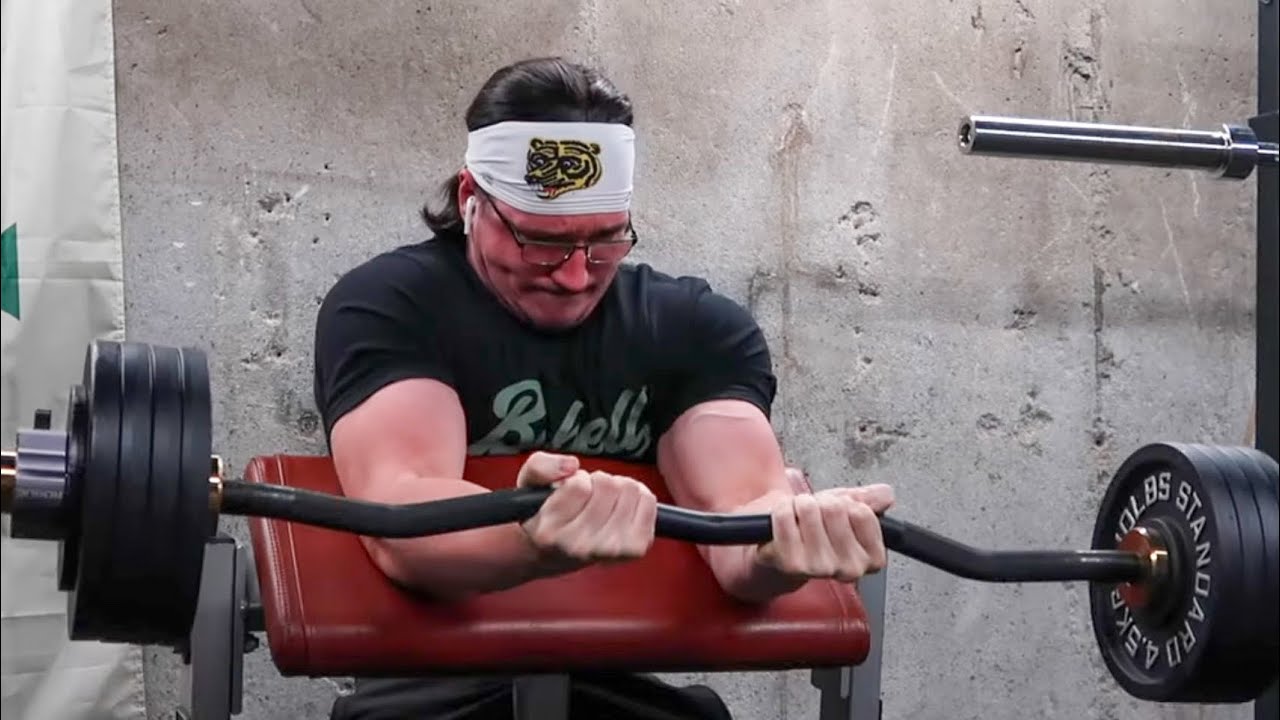
What Everyone Gets Wrong About Progressive Overload (Al… — Transcript

A detailed response to Alan Thrall on progressive overload, focusing on realistic training progression and chasing stimulus over weight increases.

Key Takeaways

  • Progressive overload does not require adding weight every session or week.
  • Consistent training with the same load over multiple sessions can be highly effective for muscle growth.
  • Focus on mechanical tension and proximity to failure rather than just increasing weight.
  • Master your technique and extract maximum stimulus from your current weights before increasing load.
  • Regularly measuring muscle size can help track progress and adjust training honestly.

Summary

  • The video responds to Alan Thrall's points about progressive overload and adding weight in training.
  • It emphasizes that you don't need to increase load every session; consistent use of the same load can still stimulate growth.
  • More volume and frequency with the same weight can lead to better hypertrophy than constantly adding weight.
  • Adding weight too quickly can indicate 'progressive overload anxiety' and is often unrealistic.
  • The primary goal should be chasing mechanical tension and proximity to failure rather than just heavier weights.
  • The creator uses an analogy comparing driving a marathon to illustrate that the method of training matters more than just the outcome.
  • Mastering technique and milking the current weight for stimulus is encouraged before increasing load.
  • Measuring muscle growth regularly can provide honest feedback on training effectiveness.
  • Chasing stimulus and proper technique ultimately leads to both hypertrophy and strength gains.
  • The video promotes a humble, realistic mindset towards progressive overload and training progression.

Full Transcript — Download SRT & Markdown

00:00
Speaker A
All right, what's up everybody? So today I had an incredibly good leg session. Actually, on my first set, I accidentally took my set of hack squats to failure. I got five reps, and I thought I had a six in the tank, but I failed at the sticking point. The weight came back down. Luckily, I have pretty good mobility, especially with a low stance, to be able to get out of that safely. So with that being said,
00:12
Speaker A
the reason I'm making today's video, it's not really planned, but on the car ride back from the gym, I was listening to— it was kind of perfect timing, like right as I left, Alan Thrall actually posted a video about adding weight to the bar and
00:22
Speaker A
adding weight to a machine, dumbbell, whatever you're using. Basically, just adding load and progressing in your training. And that's a topic that, as you guys know, interests me quite a bit because I think there's a lot of misconceptions and a lot of improper
00:33
Speaker A
mindsets when it comes to adding load and progressing within your training. So he had a few words of wisdom in here, and I think it's important that you guys kind of hear that, and I want to make a
00:45
Speaker A
response to kind of just build off what he said and put my two cents in because this is kind of like my bread and butter. The first thing he said that really, really caught my mind was that you don't
00:55
Speaker A
need to just adapt from session to session. And more specifically, you can use the same load in the same protocol for multiple sessions in a row, from like a string of sessions or a block of training or however you'd like to put it,
01:06
Speaker A
and it can still be stimulative. And this is a mindset that nobody talks about, and I think it's cool that he brought it up because it's so important. So the best way to think about it is
01:19
Speaker A
if you do, say, four plates on the hack squat for one session, will that get you as much quad growth as someone that does four plates for the same reps, say eight times over a month? Who do you think would have the bigger
01:29
Speaker A
quads? Probably the person that does the same weight in the same reps for eight times over the month. For a simple reason, that they're just doing more, they're having more frequency, more volume, and that's going to lead to more growth.
01:43
Speaker A
At a certain point, it's a good idea to add weight to that hack squat, but it's more so out of convenience, and that's something I'll expand on a little bit throughout this video. So I think in general, we just need to have a more realistic
01:56
Speaker A
pro approach and humble ourselves when it comes to adding load and when it comes to progressing within our training. A lot of us think that we just are entitled to adding weight and that we should be adding weight every session or
02:09
Speaker A
every week. And when you really put that in perspective and do the math and zoom out a little bit, it's pretty ridiculous to actually do that. And even for the super strong guys, even for someone like myself where I
02:20
Speaker A
think I'm a little bit gifted for strength, even I'm not just like adding weight all the time because then I would just be the strongest person on Earth. And when it comes to building up your muscles and chasing hypertrophy,
02:32
Speaker A
ultimately what you're looking for isn't necessarily more weight, although it is more convenient. Again, like I'll expand on that later in this video, you're looking for mechanical tension. More specifically, you're just looking for a stimulus to actually build your muscle.
02:45
Speaker A
How strong you are and how much you perform and what you need to get that stimulus is basically just determined by how big you are. And I think we're chasing the wrong thing. A lot of you guys have been following me forever. It's
02:56
Speaker A
an underground niche community, so a lot of you guys will understand this stuff. But for any of my new viewers, I think this is an important thing to actually understand. It is kind of one of my core philosophies on this
03:07
Speaker A
channel. So when it comes to adding weight, let's humble ourselves, appreciate the weight that you're at, and milk out what you can from that weight. Master that weight before adding weight to that bar. Adding weight too quickly, and this is
03:19
Speaker A
where it gets more important, adding weight too quickly indicates that you have or might suffer from progressive overload anxiety. Try switching your mindset to chasing something like measurements or chasing mechanical tension, or if you want another word for
03:33
Speaker A
that, chase proximity to failure. Or to simplify it even more, like Steve Shaw says, chase hard sets. Doesn't get much simpler than that. I love it. And that will give you an honest look into your training stimulus. If you want
03:49
Speaker A
the outcome, chase what causes it. Don't chase the outcome. So a good way to look at this is on that ride back from the gym, it was about 20-something miles, and an analogy I thought of when I was driving
04:05
Speaker A
that is like I just drove a marathon. But who cares? Like nobody cares, right? I didn't get any adaptations from it because I didn't actually run it. I drove it. So take the vehicle that you need to
04:17
Speaker A
reach that goal. So when you put that in the perspective of bodybuilding, when I'm doing my hack squats at that gym earlier today, I could go halfway, I could just go to parallel, I could put my feet up higher and wider to get more glute and hip out of
04:32
Speaker A
the movement, and I could just go to five plates or six plates or whatever. But at the end of the day, that's like taking a car to drive a marathon. I want to run the marathon to get me those
04:44
Speaker A
running adaptations, aka the hypertrophy adaptations. So what did I do? I put my feet lower, I had decent control of the eccentric, and I pushed myself unintentionally to failure. Usually, I try and stop right at zero RAR, but that's
04:54
Speaker A
besides the point. The analogy has said it already. I don't need to elaborate on a rather simple analogy. So basically, what you want to do here is chase the cause of growth, chase the cause of the outcome, not the outcome
05:08
Speaker A
itself. Because if you're trying to run marathons and you have your sights set on 26 miles, I would take a car, I would probably take like a bus or a train. It's even faster. I would take a plane. That's even faster, and that means I can
05:24
Speaker A
do it more often and get there faster, but that doesn't actually get me adaptation. So take the tool that you need, use it properly to get to that outcome, and you'll see it's not, it's not so much about the outcome, it's about how
05:39
Speaker A
you get there. And ultimately, I think that's a good way to look at bodybuilding. So chase stimulus, chase proximity to failure, and all this stuff. When you look at something like measurements instead, if you know that you have to measure your muscle at the
05:51
Speaker A
end of each month, you're going to be much more honest with your training, and you'll notice that automatically shifts your mindset to getting stimulus because now the goal you're chasing is an actual size. It's not a strength number. It's not
06:06
Speaker A
the five or six plates on the hack while you're chasing a 27-inch leg or an 18-inch arm, whatever it is. And when it comes down to this, that gives you a pretty glaringly obvious, honest insight into how your training's going. I
06:16
Speaker A
caught this with myself with the hack squat, and this is essentially what I was doing with my power-building phase a few years back with my hack squat. I had a higher stance, wasn't going down as low as I should
06:31
Speaker A
have, and I wasn't getting that much out of the lift. And then a month later, when I had my measurement check-ins, I kind of thought back like, oh, I should have been getting more out of that lift, and my
06:41
Speaker A
quads probably aren't going to be as big as they should be. So what did I do? I changed my technique up, and now I'm just chasing stimulus. And ironically, chasing the stimulus and building muscle will get you stronger, and it will get you
06:52
Speaker A
truly strong in a hypertrophy sense. That means that you can actually expose that muscle to whatever, and it has the adaptations, it has the size to pretty much manage what you need to to continue to get it to grow.
07:07
Speaker A
So like I said, run the marathon, don't drive the marathon. And one last point to finish up this video: heavier weight isn't necessarily more stimulative. This is a huge misconception. Heavier weight is essentially just...
07:19
Speaker A
so like I said run the marathon don't drive the marathon and one last point to finish up this video heavier weight isn't necessarily more stimulative this is a huge misconception heavier weight is essentially just more convenient at a
07:35
Speaker A
certain point to continue training with optimal technique and what I mean by this is I could still get big quads hack squatting two plates but I'd have to slow my Tempo down a ton I have to do whatever I could to absolutely maximize
07:49
Speaker A
range of motion and this set would probably take two minutes and that at that point it's not convenient building up a bunch of fatigue and I'm just risking failing for other reasons if in a practical sense I can no longer do two
08:01
Speaker A
plates on the hack Squat and train with my ideal technique in the ideal rep range that I'm looking for then I should add weight so I can match that technique the best way to look at diversity training is
08:13
Speaker A
have your Technique down and then pick the weight that maximally challenges that technique but you can maintain it and still get to the ideal proximity to failure that you're aiming for within the rep range that you're looking for as
08:26
Speaker A
well the load is the last thing you need you have to build stimulus and you have to get stimulus out of your lifts and string together multiple sessions to build that stimulus and then to be able to add weight and that's a pretty good
08:37
Speaker A
short to midterm indicator that you are making progress don't stress too much about it Chase stimulus and actually measure your muscles too guys it's insane how we have all these strength standards we everybody talks about everybody's strength numbers but we
08:49
Speaker A
don't talk about like the basic muscle measurements like we don't have normal standards for how big your quads should be or your calves or your arms like let alone forearms chest all that kind of stuff start measuring and that will give you a
09:02
Speaker A
shift in mindset that you might need to break out of the progressive overload anxiety and shift your focus to chasing stimulus chasing proximity to failure chasing mechanical tension and as simply as this last one is just chasing hard
09:14
Speaker A
sets and always give credit to Steve Shelton that one because he he puts it so so simply and I I love that because I think that's really what gets it to click with a lot of people so with that
09:23
Speaker A
being said check out Alan thrall's video he explained this in a bit more of a a tangible way that you can kind of directly apply to your training I know my stuff's a little bit more like mind steady and an approach to training and
09:37
Speaker A
that kind of stuff so that's all I got for today enjoy the rest of your Sunday I will see you guys soon for that 15K q a
Topics:progressive overloadhypertrophymuscle growthtraining progressionmechanical tensionproximity to failurestrength trainingAlan Thrall responsehack squattraining mindset

Frequently Asked Questions

Do you need to add weight every training session to progress?

No, the video explains that you can use the same load for multiple sessions or blocks of training and still achieve muscle growth due to increased volume and frequency.

What should be the main focus instead of just adding weight?

The main focus should be on mechanical tension and proximity to failure, which are the true stimuli for muscle growth rather than simply increasing the weight on the bar.

How can measuring muscle size help in training?

Regularly measuring muscle size provides honest feedback on training effectiveness and helps shift the focus from chasing strength numbers to chasing actual hypertrophy progress.

Get More with the Söz AI App

Transcribe recordings, audio files, and YouTube videos — with AI summaries, speaker detection, and unlimited transcriptions.

Or transcribe another YouTube video here →