Skip to content

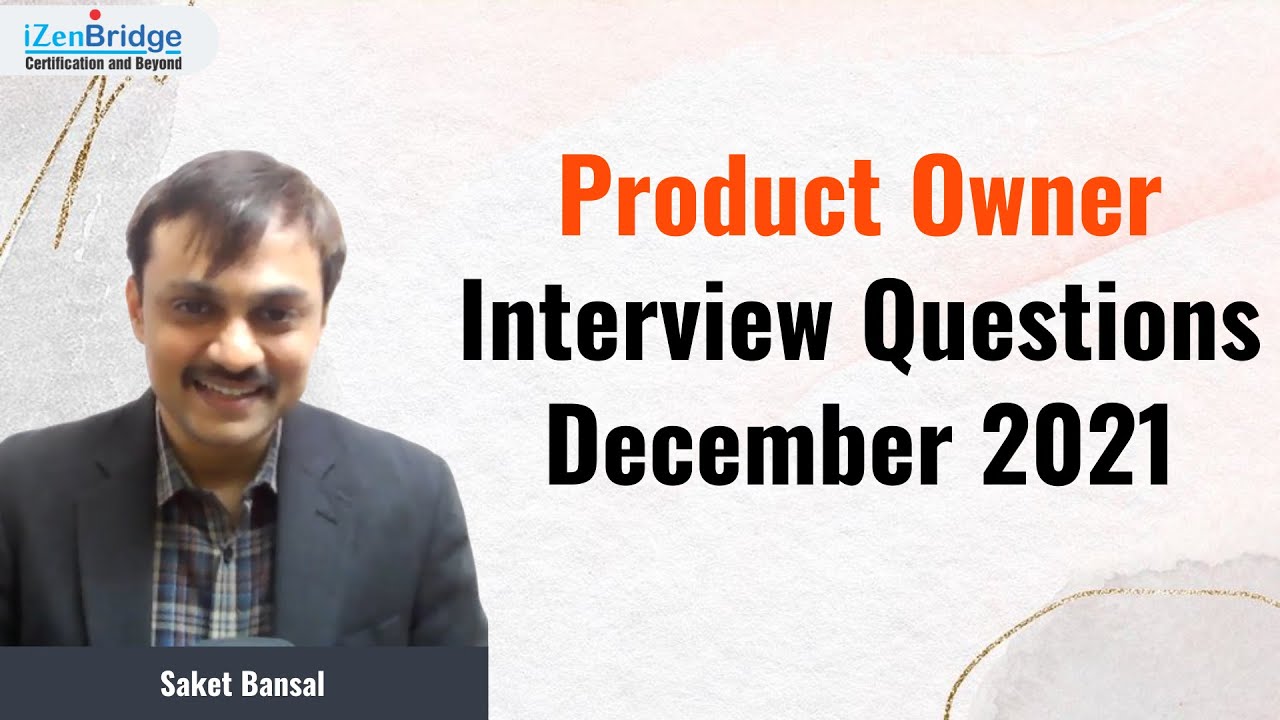
Product Owner Interview Questions:iZenBridge

Explore key Product Owner interview questions and role distinctions with expert insights on delivering high-value products in agile environments.

Ask about this video. Answers come from its transcript only — with the timestamp, so you can check them.

Generated from the transcript and can be wrong — check the timestamp.

Key Takeaways

  • Product Owner and Product Manager roles differ and should be clarified during interviews.
  • Understanding the business roadmap and customer needs is critical to delivering high-value products.
  • Effective stakeholder engagement and organizational awareness enhance a Product Owner's impact.
  • New Product Owners should validate assumptions often and learn continuously from existing products.
  • Interview responses should be adaptable based on the interviewer's expectations and organizational context.

What the video covers

  • Discussion on the growing importance of business agility and interest in product ownership and management roles.
  • Clarification of the differences between Product Owner and Product Manager roles, especially in scaled agile frameworks.
  • Advice on how a new Product Owner can increase the chances of delivering high-value products by understanding business roadmaps and customer needs.
  • Emphasis on the importance of stakeholder engagement and understanding organizational structure during interviews.
  • Strategies for empathizing with end customers to prioritize product features effectively.
  • Guidance on adapting answers during interviews based on the interviewer's openness and expectations.
  • Insights on working within independent agile teams versus scaled agile environments.
  • Recommendations for new Product Owners to observe existing products and validate assumptions frequently.
  • Discussion on the challenges of prioritization and release planning from a product management perspective.
  • Final thoughts on differentiating products in established markets and continuous learning as a Product Owner.

Answers

Questions about this video

What is the difference between a Product Owner and a Product Manager?

The Product Owner typically focuses on specific areas or components within a product and works closely with the development team, especially in scaled agile frameworks. The Product Manager oversees the entire product or solution, integrating multiple areas and focusing on the overall business strategy.

How can a new Product Owner increase the chances of delivering a high-value product?

By understanding the business roadmap, empathizing with end customers to grasp their compelling needs, prioritizing features accordingly, engaging with stakeholders, and collaborating with other product managers or business people.

Is it appropriate to ask about the business roadmap during a Product Owner interview?

Yes, asking about the business roadmap can demonstrate your interest in aligning with organizational goals. However, some of this understanding may develop after joining, so it’s good to gauge the interviewer’s openness and adapt your questions accordingly.

Full Transcript — Download SRT & Markdown

00:00
Speaker A
Hello everyone. Today we have a few questions, not many, and we are exploring again the domain area of product owner or, I would say, product management. Recently, what I see is that business agility is becoming important. People are focusing on evolving their business models, and because of that, I am finding a good amount of interest is getting created in the product management, product ownership space. That might be the reason we are getting a few, like more than usual, interactions on the product management space. So, we have a professional, and she is willing to share some of the questions. Okay, let's get started. Go ahead, maybe you want to talk about your experience and the question.
00:17
Speaker A
focusing on evolving their business models and because of that i am finding good amount of interest is getting created in a product management product ownership space and that might be the reason we are getting few like more than
00:30
Speaker A
Yeah. Hi, Saket. I have 10 years of experience. I have now joined into a role of a product owner in a new organization. So, I have a couple of questions, and I want to have an understanding about exactly the product owner role and how they are different from the product managers in a company. So, what should be their vision and priorities in doing their roles and responsibilities? So, while interviewing for that, I had a few questions for which I wanted some help from you.
00:50
Speaker A
yeah i suck it hi hi saket um um i am 10 years experience i've i have now joined into a role of a product owner in a new organization so i have a couple of questions and i want to have an understanding about
01:08
Speaker A
So, the first thing which they ask is, if there is a new product owner who they want to hire, how will he or she increase the chances of delivering a high-value product?
01:23
Speaker A
questions for which i wanted some uh help out from you so so uh the first uh for the first thing which they ask uh is if there is a new product or owner who who they want to willing to hire so how
01:40
Speaker A
Okay. So, what I suggest here is maybe first we need to be clear about the difference between product owner and product management. Sometimes, we may need to ask the interviewer also, what does it mean when he talks about product management and product owners? Now, in many cases, this is a little confusing. It's not a universal way of looking at these roles, but especially when there are some scaling frameworks in place, maybe a scaled agile or something, they will have some senior integrated product management role which they may call product manager. The whole product or a whole solution, sometimes it's a solution rather than a product, may have various parts in it, various components or sections in it or areas in it. In the absence of any name, on those area levels, we have specialized people who are working with the development team to get that area developed well. So, many times, especially if people are using scaled agile framework or influenced by a scaled agile framework, the role which is done by the area group is called product owner. The individual who is providing the clarity on overall requirements which might be important for that particular area, that particular section, is called product owner. That person and the team he works with is one scrum team, whereas someone who is working with the complete product or a solution where multiple areas are integrated may be doing a product management job. So, now why this differentiation is important is because accordingly you can answer how do you add value, how do you get started, how do you prioritize things, and how do you fit into the big picture if you are a small product owner or if you are a part of one area-focused person. You deliver value by integrating with other areas and understanding the big picture and also making your area as well as your team more and more aware and focused on the overall delivery of the application or solution. So, that part we need to be clarified.
01:58
Speaker A
interviewer also that what does it mean but what does it he mean when he talks about product management and product owners now many cases this is little confusing it's not a universal way of looking at these roles but especially when there
02:14
Speaker A
What is your view when I explain this all?
02:29
Speaker A
solution rather than a product may have various parts in it various you can say component on sections in it or areas in it in the absence of any name and on on those area level we have a specialized
02:43
Speaker A
Okay, so you mean we need to know the business roadmap in order to understand how we have to work towards it to deliver the high-value product. Can I ask that in the interview, or is that one we have to get into after that we get into the product? Do we need to know? Like, can we ask that question upfront in the interview about the map of the what?
02:58
Speaker A
group is called product owner the the individual who is providing the clarity on overall requirement which might be important for that particular area that particular section is called product owner that person and the team he works with the one scrum team whereas someone
03:15
Speaker A
Yeah, so one possibility is one can talk about their previous experience and share the overall structure. Many interviewers may ask about a draw and stakeholder engagement chart, or they will call it a kind of your relationship with other stakeholders, where you fit into the overall organization. Sometimes, this is draw your organization network and show me where you were. So, it is more about showing how you fit into the existing, how you were there in that particular overall structure which was delivering customer value.
03:35
Speaker A
you prioritize things and how do you fit into the big picture if you are a small product owner or in a say that if you are a part of one area focused person you deliver value by integrating with other areas
03:51
Speaker A
Yeah, so if that discussion has already happened, that gives both of you clarity about what role you are playing and what role they are expecting. Sometimes the interviewer also ends up explaining what role they are expecting from you by drawing a similar network or a hierarchical diagram where they show that this is how the organization is, this is how the various stakeholders and teams are, and here you will fit, and this is how you will deliver the value. So, that clarity is needed. Now, if you see that the person is not that informed enough and he just wants to hear your answer and he's not open enough to talk that much, then you can give generic standard things and keep them tentative like, okay, we as a product owner, my whole focus is how do I meet customer needs in an effective way. So, as a product owner, the first thing I do is I empathize with my end customer. I understand how the overall kind of this product is. So, empathizing with the customer is not about only focusing on the solution but understanding why the person is buying this solution. So, I will understand their compelling need for purchasing the product or the service. And now, once I know that, then I will see how my product and overall prioritization can take care of those compelling needs in a seamless way or better than someone else who is doing it right now. So, that is how you add value at a very nutshell level. Now, in order to achieve that, sometimes you won't be able to do it alone, especially if you are in a product owner space in a scaled agile kind of context. You work with other business people, you work with other product managers in order to achieve that.
04:11
Speaker A
what is your view when i explain this all okay so you mean we need to know the uh business roadmap in in order to understand how we have to work towards it to deliver the uh high value product
04:30
Speaker A
If you are in an independent agile team fashion where there is a team, there is a product, and you are the one, your team is the one who is directly delivering the solution to the end customer, and there is no in-between kind of, there are stakeholders but they are not in-between stakeholders, in those cases, you do the overall work by way of directly interacting with the customers and understanding their needs and taking care of those needs through your solution. So, how do you meet those needs depends upon how the overall, I think I would say, system is emerging in your organization for delivering the product.
04:41
Speaker A
map of the what yeah so what one possibility is one one can talk about their previous experience and share the overall structure in many interviewers may ask about draw and stakeholder engagement chart or they will call it a kind of your your
05:00
Speaker A
Yeah, so in a large and complex organization, you show that I work with stakeholders because that is what they are expecting. Also, they are not expecting many times, especially from a product owner, that you will be doing something where you are taking care of end-to-end product in some scaled agile kind of environment. They don't expect that from you. They expect that you work with existing stakeholders and business stakeholders, whereas in a small organization or where there is a way they are designed, little agile independent team who can deliver things, they may expect you to do an end-to-end job. So, you can speak generic and then you can sense which direction it is going and accordingly you can adapt. That's possibly, I think, I can suggest.
05:14
Speaker A
in that particular overall structure which was delivering customers value yeah so that if that discussion has already happened that gives both of you a clarity that what role you are playing and what role they are expect sometimes the interviewer also end up explaining
05:29
Speaker A
Okay, thank you. In addition to that, if we are new to the domain and new to the organization and there are already product backlog items there, how do we instantly sit with the team and do the product backlog prioritization? Do we need to take help from, who would be the first person to get help from? Whether it will be a scrum master or it's a dev team or it is, as you said, stakeholders? But if you're an individual team there, then who would be our first point of contact to reach out to?
05:42
Speaker A
is how you will deliver the value so that that clarity is is needed now if you see that you know person is not that not informed enough and he just wants to hear your answer and he's not open
05:55
Speaker A
Perfect. So, the way I see this...
06:09
Speaker A
owner first thing i do is i empathize with my end customer i understand how the overall uh kind of this product is so the empathizing with the customer is not about only focusing on the solution but understanding why
06:25
Speaker A
the person is buying this solution so i will understand their compelling need for purchasing the product or the service and now once i know that then i will see how my product and and overall prioritization can take care of those
06:42
Speaker A
compelling need in a seamless way or a better than someone else who is doing right now so and that is how you add value at a very nutshell level now in order to achieve that sometime you you won't be
06:56
Speaker A
able to do it alone especially if you are in a product owner space in a in a scaled agile kind of a context you work with other business people you work with other product managers in order to achieve that
07:10
Speaker A
if you are in a independent agile team fashion where there is a team there is a product and you are the one your team is the one who is directly delivering the solution to the end customer and there
07:20
Speaker A
is no in between kind of there are stakeholders but they are not in between stakeholder in those case you do the overall work by way of directly interacting with the customers and understanding their needs and and taking care of those needs through your
07:34
Speaker A
solution so how do you meet those need depends upon how the overall i think i would say system is emerging in your organization for delivering the product yeah so in a large and complex organization you show that i work with
07:50
Speaker A
stakeholders because that is what they are expecting also they are not expecting many times especially from a product owner that you will be doing something which where you are taking care of end-to-end and product in a in in some scaled agile kind of environment
08:05
Speaker A
they don't expect that from you they expect that you work with existing stakeholders and business stakeholders whereas in a small organization or where there is a the way they are designed little agile independent team who can deliver things
08:20
Speaker A
they may expect you from doing end-to-end job so you can speak generic and then you can sense which direction it is going and accordingly you can adapt that's possibly i think i can suggest okay thank you in in addition to that if we are new to
08:43
Speaker A
the um domain and new to the organization and there is already a product backlog items there so how do we instantly stick sit with the uh you know team and do the product backlog prioritization there do we need to take help from the who
09:00
Speaker A
would be a first uh person to take get help from whether it will be a scrum master or it's a dev team or it is as you said as a stakeholders but uh and if you're an individual i mean
09:12
Speaker A
individual team there then who would be our first point of contact to reach out to perfect so the way i see this question the interviewer is trying to know how you enter in a unknown territory how well you can
09:28
Speaker A
create relationship and what is your approach so it is something like and sometimes they may give you in your case that you know you have been hired and you have this scrum team they are working on this product for last two
09:39
Speaker A
years and they know what they are doing there is a product backlog but you need to go and and get a get start working as a product owner but whereas you might know less from them than them now how do you get started so
09:55
Speaker A
that's that's a good good question in a way and there's a good situation to also uh look at yeah so again there will be not a universal answer because it all depends but there are few elemental things which will be always
10:11
Speaker A
needed and one of the element of this uh this entry in a new unknown territory would be that you spend time in learning and observing things so you need to clearly come up with some kind of a strategy depending upon how much you
10:27
Speaker A
understand that particular organization that i will spend some time observing what is going on i will spend some time looking at the existing product before i look at a product backlog i will look at a product if it has been released before
10:42
Speaker A
i will also look at the type of value the end customers are getting from them so there's a homework kind of things you know so you may have some steps and that's also a kind of dependent on your own style that i do a
10:56
Speaker A
homework to understand where do we stand and then you start talking about once you are done with the homework then you start doing observation that okay now i observe how the teams are working how the current prioritizations are
11:10
Speaker A
happening how much prioritization is is already done and if there is an existing product owner who is going to leave that team and you are going to get replaced like you are going to replace that person then you work with that person
11:24
Speaker A
for in parallel and you understand what are his reasons for prioritization what is working and what is not working what kind of of a job is is under uh progress now if you don't have anyone there but there must be someone who might be
11:40
Speaker A
working as a product owner he might be titled as a scrum master or an engineering manager or a project manager that's a separate thing but there is someone who must be doing prioritization as of now so you work with that
11:53
Speaker A
particular person and you understand that how this prioritization and everything is done and you continue your homework and with the homework and and parallel working you start working on refinement and prioritization and initially you take extra validation from the respective stakeholders meet a
12:13
Speaker A
development team be described master or be that particular person who has been prioritizing and you show that i remain open for my errors because i believe since i'm a new guy i might be doing errors initially so i need to be extra
12:27
Speaker A
conscious about it so i am i'm clear that i might be making mistakes in the in the beginning steps and that's why i will validate more and more often and then you start getting a kind of a relationship with external people so you
12:41
Speaker A
did a homework you observe the internal people you work with the internal people and then you start working with external people also who are providing you input it could be an end customer or their representative who is taking deliveries
12:54
Speaker A
from you so something like this a combination of these can probably help you in getting started it also depends upon the type of organization you are in or or you are they are looking for but such kind of strategies can help what do
13:08
Speaker A
you think like anything other than this which can help yeah i think that's a good approach uh as you said if we have a already existing product owner we can sit with him and or her and have a discussion if he is not
13:26
Speaker A
available maybe the other product owners can have uh what i used to do is i used to sit with the scrum master and the project manager as well to understand the bigger road map and what is a bigger
13:37
Speaker A
picture because sometimes the scrum master can be technical or cannot be technical so i take inputs from everyone and then i plan something but it is also you know a situation depending on the organization we are going because too
13:55
Speaker A
many inputs also can you not lead you to a good result so focusing on one or two could be and based on your experience could be the one better approach so i think observing and doing our homework is one thing which
14:09
Speaker A
what you said uh is a good way to follow i think yeah so observe do the homework and also keep looking at a working product because i have seen many product owners they don't feel comfortable looking at the product many of them are coming from
14:24
Speaker A
pure business domain space so they start but they don't look at the running product many times and that could be also a negative thing so you need to look at the product as well so how the product is working demo
14:36
Speaker A
demo demo like you should have a good understanding of the product yeah in addition to this the people uh in the interviews also expect or ask that what is your timeline expectation that you can be able to you know understand
14:51
Speaker A
the product and start delivering this is something which i have heard a lot like they want an answer where the harm because suppose if the domain is also new so it is a bit challenging for the person to first understand the domain
15:05
Speaker A
and then you know uh understand the product and start working towards the business or giving a high-end delivery of the product so do you think specifying a timeline in an interview would be a good idea or how do we have to approach that
15:23
Speaker A
uh yeah see my guess is someone who is asking that question may want to see how eager and how confident you are because everybody know that things will evolve as we go along but they just want to hear answer from
15:39
Speaker A
you now and you need to be conscious that extreme answers could be dangerous because you don't know what kind of answer the person is looking for so one of the extreme answer could be that i should be productive within a day or two so
15:53
Speaker A
something like this you are you are quite predictively saying or you are saying yeah it will take maximum one week and i should get to the speed now you may see that i am you may think that you are showing a good confidence
16:04
Speaker A
uh but uh it may also get interpreted as that this person doesn't know the depth of the the job and he's too over confident and he believes he knows everything so someone may interpret it like that yeah now the reverse could be that you you go
16:21
Speaker A
to another extreme where you say you know it's very difficult to tell i am such a everything is new for me i need to understand what is product and i need to talk to the people and i have never
16:32
Speaker A
worked in this kind of environment before uh so i don't know yeah it will be evolving over a period of time that can uh that's another extreme where the stakeholder may see that this guy looks like very uh lacking the confidence and
16:48
Speaker A
is very safe player because he doesn't even have a kind of a zeal and enthusiasm to get started and delivering value so i would say that you need to balance these two things now how do you balance that so
17:04
Speaker A
if i have to answer it i would say that there will be some set of activities which i should start doing maybe in the first week itself so things which are primarily done with the help of my facilitation so you can say that i
17:19
Speaker A
will start using my facilitation skills i might not be able to contribute to making decisions but i can start getting decisions made related to the privatization related to other areas based on stakeholder inputs based on developers inputs so you can say that
17:36
Speaker A
okay in a day or two i will understand the whole process and then i will start contributing which are facilitation based inputs and then based on what what things are doing i will move to the second stage where i also start making decision on
17:50
Speaker A
myself you know because initially i am not making decision because i am learning from others and then i will move to a decision making space so you can you can give again an example in the last project what happened so that's a
18:03
Speaker A
safe thing to do so you create something like last time what happened is this is how i i end up doing yeah and i think the similar thing may work here so you may put a story that last time i joined
18:14
Speaker A
initially there were these many people these work that was a complex environment and initially i was facilitating there were set of people i made rule for prioritization everybody voted and based on the votes we were running i was knowing less about it but
18:28
Speaker A
i was asking a lot of questions then i did a lot of homework and then in the next meeting backlog refinement meeting i was ready and i was able to contribute and make this at a decision making level uh from third
18:41
Speaker A
meeting or second meeting so this is how you can put a story so give some answer show the path but don't show very predictable path so that they they think that you are not mature and also don't say that i don't know so
18:55
Speaker A
that they think that you are too afraid okay that's very well said so thank you i generally use examples from the previous one and that's why i don't give that i'll be doing in one day or two days so just wanted to show whether i'm
19:11
Speaker A
going in the right direction yeah and you can just package some roles initially i start with learning facilitating decision making um i have a last question yeah but okay okay sure they go ahead yeah the last question i had uh was
19:43
Speaker A
about uh the the question is always like uh pro being a product owner how do you plan your future releases my sense here is so this this has two parts again yeah sorry go ahead [Music] uh whether you're already uh already uh
20:11
Speaker A
no i mean uh this was something like whether you know the pro about anything about that industry and uh or you have no complete knowledge about the industry what you're coming in so how do you understand the competitors and how do you understand
20:26
Speaker A
the uh value of what you have to deliver in it so how do you try to approach that process so that was one perfect now so see there are various ways to present and it could be simple to very complex answer
20:46
Speaker A
planning a release sometimes people who are coming from development space always focus on it is a function of when we complete the requirement we gave it but as a product management thing it is not about completing something it is
21:02
Speaker A
about identifying what market needs and what kind of a time window we should select so that we get maximum returns from the product so the person is trying to understand how do you understand and estimate market demand and market needs and how do you balance
21:23
Speaker A
your development capacity to the demand so how do you target a particular point and also consider what we as a development team are able to do about it so this is how you balance you can also talk about
21:41
Speaker A
that as you said the release strategies or understanding the market also depends upon at what stage your product is at or at what stage the market for that product is so if the market is at a very initial
21:58
Speaker A
stage so assuming that the type of need you are serving there are not many competitors around that in that particular space you may produce something called generic product a product which can take care of the the given thing and people anyway they
22:15
Speaker A
don't have anything else to use at that point in time someone will adapt they will start using that particular product to solve their problem and learn as they go along so you don't so in that case you can launch
22:28
Speaker A
a product with a very less features you can go ahead and learn along the way because there are not others who are solving that problem and nobody knows how the problem will evolve over a period of time but if the market is already developed
22:46
Speaker A
so it's like this that there are already someone competitors are already there who are taking care of that particular customer needs that particular customer segment and now you want to enter in that particular space so you are including in
23:01
Speaker A
an established market now your approach will be little different now what you are doing is you are argumenting something which was not there already you need to add some special differentiator which can help your customer see that your product has
23:19
Speaker A
a better value than others it could be some integration with with other product or other markets yeah something which was lagging before so say you have have a have a device and now this device can integrate with the phone yeah earlier
23:34
Speaker A
those devices were there but they were not integrating with android phone but now you are integrating with android phones so you are documenting and you are taking care of little extension of the need now in those cases your product launch
23:47
Speaker A
strategies or product uh feature launch strategies will be more uh focusing on augmenting the product you will not go with a very basic product in the market because nobody will look at it so you can go with the
24:01
Speaker A
basic product when the market is emerging that there is no clear winners there so in a sense what i can answer here is that if somebody is asking that how do you decide the market and release it says it's depending upon the market
24:17
Speaker A
demand the market maturity for that particular product uh product maturity as well as our delivery capability because i need to balance my delivery capacity capability against the product and the market space and depending upon all these things i find it out so if you want to use a
24:41
Speaker A
terminologies we we have a one way of of identifying and doing it especially for a prioritization purpose we call it cost of delay yeah sometimes you says this this is a further understanding that okay how do i prioritize the features and all but in
24:56
Speaker A
general release is is a function of market demand and your capacity okay wow it's really nice always to have a discussion with you on the interview questions or understand the product owner role in a much better way a socket
25:18
Speaker A
you make it very simple and easy to take it forward and thank you so much for your time and it's always a pleasure talking to you great thank you see you next time evie yeah yeah sure bye bye thank you
25:35
Speaker A
[Music] you
Topics:Product OwnerProduct ManagerAgileScaled Agile FrameworkBusiness AgilityInterview QuestionsProduct ManagementStakeholder EngagementCustomer NeedsPrioritization

Get More with the SozAI App

Transcribe recordings, audio files, and YouTube videos — with AI summaries, speaker detection, and unlimited transcriptions.

Or transcribe another YouTube video here →