Skip to content
Get App

Ep. 18 - Awakening from the Meaning Crisis - Plotinus and Neoplatonism

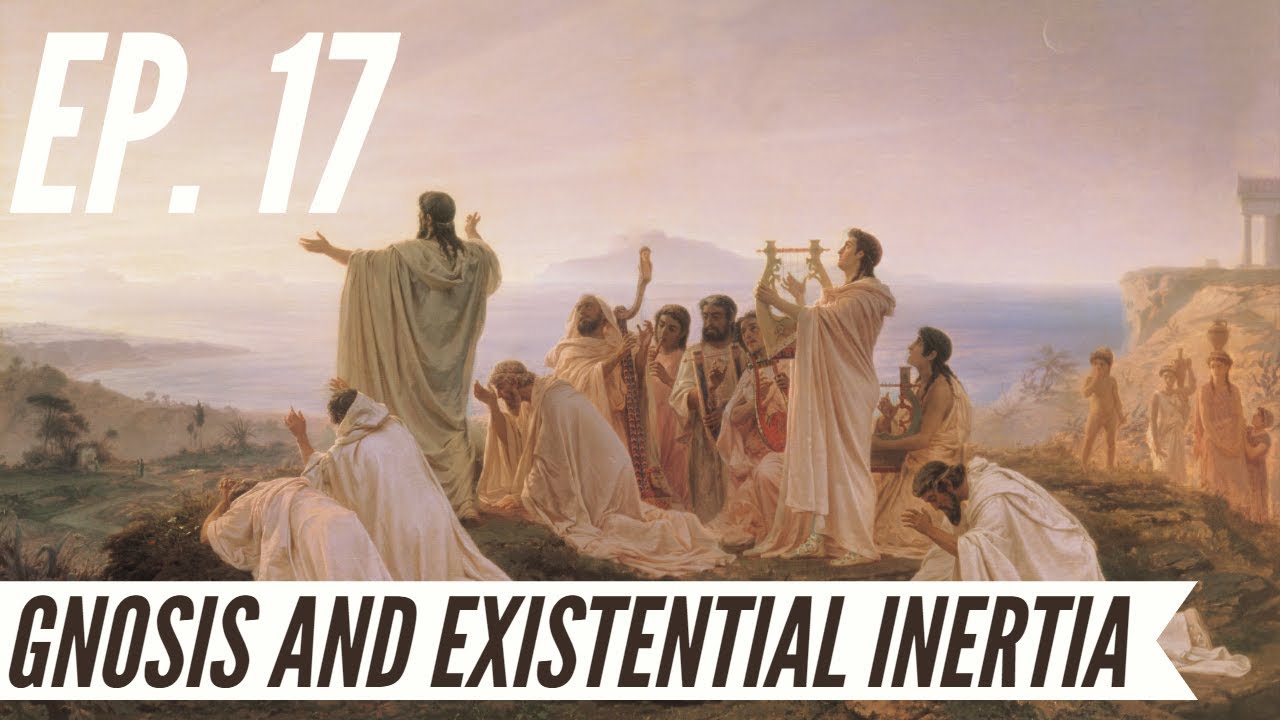
Vervaeke explains Gnosticism as a cognitive-existential response to the meaning crisis, linking gnosis, ritual, community, and Plato's forms to modern existential entrapment.

Key Takeaways

  • Gnosis is a transformative, ritually framed, community-supported form of knowing aimed at escaping existential entrapment.
  • Gnosticism is a pervasive interpretive style during early Christianity, not a single sect.
  • Modern meaning crises parallel the Hellenistic-era crisis that Gnosticism and Christianity responded to.
  • Community and shared mythology are necessary to prevent self-deception during radical transformation.
  • Gnostic dualism carries risks of misuse, so its ideas must be interpreted carefully.

What the video covers

  • Gnosticism is presented as a style or way of interpreting rather than a single organized community, comparable to existentialism or fundamentalism.
  • Gnosticism is framed as the culmination of the Axial Revolution, with direct relevance to today's meaning crisis.
  • Drawing on Harry Frankfurt and L.A. Paul, the lecture describes existential entrapment: inertia, indecisiveness, and stupefaction when facing transformative experience.
  • Gnosis is characterized as deeply transformative, participatory knowing achieved through enacted analogy, ritual framing, and altered states of consciousness.
  • Ritual play and serious engagement are proposed as tools to bridge the self one is and the self one wants to become.
  • Dangers include parasitic processing and self-deception, so shared mythology, psychotechnologies, and community feedback are essential safeguards.
  • Gnosticism developed alongside early Christianity, with many Gnostics seeing themselves as Christians who sought to become like Jesus.
  • Plato's forms and the idea of a flawed material world are identified as influences on the Gnostic cosmology of a fallen, imprisoning creation.
  • The Gnostic myth is compared to modern films and popular culture, which often replay similar themes of hidden truth and awakening.
  • The lecture warns that Gnostic-style dualism can be distorted into dangerous ideologies, referencing conspiracy thinking and fascism, and closes with the claim that becoming more integrated makes reality more real.

Answers

Questions about this video

What does the lecture mean by gnosis?

Gnosis is described as a deeply transformative, participatory knowing that is ritually framed and embedded in a supportive community. It enables people to escape existential entrapment and align the self with a more real and integrated worldview.

Why does Vervaeke say Gnosticism is relevant today?

He argues that modern people experience the same existential entrapment and meaninglessness that Gnosticism addressed, and that Gnostic mythological themes persist in contemporary culture, including movies.

How are Gnosticism and Christianity related in the lecture?

They interacted closely and often in opposition, with many Gnostics regarding themselves as Christians who interpreted Jesus as a bringer of gnosis and sought to become like him.

Full Transcript — Download SRT & Markdown

00:00
Speaker A
[Music] you [Music] welcome back to awakening from the meaning crisis so last time we were taking a look at group of people as I said before the Gnostic shouldn't be understood as forming like their own community or group although there might
00:32
Speaker A
have been some Gnostic churches we should think of them more like we think of existentialism or fundamentalism you can be a fundamentalist Christian or Muslim or Jew etc it's more about a style a way of being a way of
00:48
Speaker A
understanding and interpreting and that it was pervasive during the same period as early Christianity and the two are interacting with each other in fact as will see many Gnostics thought of themselves as Christians so we were taking a look at how to go about
01:09
Speaker A
interpreting Gnosticism why are we doing this we're doing this because I'm presenting the Gnostic movement as the axial revolution within the axial revolution it's taking the revolution to its culmination in many important ways that I think have direct relevance for
01:29
Speaker A
us today in order to do that I'm presenting to you something like the cognitive science of what gnosis actually is and in order to do that we've been making use of some important work by Harry Frankfurt in LA Paul the
01:46
Speaker A
basic idea is that we can talk about people being existentially trapped and that that is a result of them being exits and existentially stuck there I have inertia they do not know how to engage the anti Gog a in order to make a
02:04
Speaker A
worldview viable to them and they are existentially indecisive they are existentially stupefied because they're facing deep transformative experience and they don't know how to reason their way through it they don't know if they should do it and that
02:25
Speaker A
existential entrapment can be very very damaging it can fragment your world and tear apart your agency and so people can suffer from this in a profound way which means Gnosticism as Hans Jonas and other people have seen is directly
02:45
Speaker A
relevant to a lot of the modern confrontation with meaninglessness and nihilism because in the meeting crisis people also similarly feel deeply existentially trapped so what is needed what is needed argued is a recovery of serious play through the engagement in
03:09
Speaker A
ritual behavior this ritual play and now allows one us affords an individual to engage in inactive analogy so that they can get into that liminal state in which they can in a perspectival and participatory manner bridge in a very
03:28
Speaker A
apt way between the world and the self that they are now and the world and the self they want to viably become that enacted ritual should also afford and agog a it should afford the trans framing the reciprocal an anarchic
03:47
Speaker A
process by which self and world are transformed such that we can go through the sensibility transcendence which will make a worldview viable to us that combination that ritual combination of enacted analogy and inactive Ana Gaga is empowered by the cognitive flexibility
04:09
Speaker A
brought on by an altered state of consciousness hopefully a higher state of consciousness that gives us a sense of the in the increased realness the more realness of the world that we are trying to move into so that higher state of
04:27
Speaker A
consciousness as we've talked about before motivates us to go through this radical transformative experience now of course there are dangers associated with all of this when we are engaging in this kinds of radical transformation of our salience landscape when we are putting
04:50
Speaker A
ourselves and our world at risk when we are inducing altered states of consciousness there is a significant chance that we will fall prey to parasitic processing to bullshitting ourselves to deceiving ourselves and therefore it is very important and this
05:08
Speaker A
is also part of what was going on with Gnosticism to build up a community shared mythology a shared set of tight psycho technological practices a shared social network of distributed cognition to provide Sapienza feedback guidance correction and encouragement for people
05:35
Speaker A
when they are endeavoring to go through the kind of transformation that will release them from this existential entrapment so you have some higher state of consciousness hopefully that has some aspects of being a higher state of consciousness and that is going to be
05:56
Speaker A
set within a ritual framing that I've been talking about and then you want that in turn set within an important central and supportive community that is teaching you all kinds of the relevant skills by which one can bring wisdom the
06:20
Speaker A
ability to overcome self-deceptive self-destructive behavior to bear upon this transformation when all of that is the case this is what gnosis is it's this kind of deeply transformative deep respectable participatory knowing that is ritually and framed and embedded with
06:46
Speaker A
a sappy ntral and supportive community so our community so what do we have going on here is a project that was addressing the dama side that it was still in existence persisting from the Hellenistic dama side that we were spoken about so also
07:15
Speaker A
as I mentioned one of the reasons why Christianity took root because while the Roman Empire offered a socio-political solution to some of the problems of the ancient world it didn't have a viable answer on its own to the meaning crisis
07:29
Speaker A
the dama side of the Hellenistic period things like stoicism had been generated but Christianity is a significant response and at the same time this movement this Gnostic movement arises now these Gnostics many of them not all of them saw themselves as Christians
07:52
Speaker A
they interpreted Jesus as somebody who had brought them gnosis and for them the important thing was not to believe in Jesus but as much as possible to become like Jesus to go through that's the kind of radical transformation to be at one
08:19
Speaker A
with God the way Jesus was now whether or not we believe in that particular mythology two things we need to note for our purposes in this course we need to know that Gnosticism and Christianity are deeply talking to each other and informing each
08:38
Speaker A
other even though in many ways they'll have an oppositional relationship we're going to see that both Gnosticism and Christianity are also in a very important dance and inter measurement with neoplatonism now many people when I put it out with the examples of jeep
08:57
Speaker A
form and therapy martial arts right many people are seeking gnosis today because gnosis is the kind of thing you need in order to bring about a release from the existential entrapment that we're finding in the meaning crisis now what's
09:20
Speaker A
interesting about the Gnostics is they create a mythology for all of this and I think the best book because if you just read their stuff it's like man it's like if you were strung out on an incredible acid trip and everybody was speaking in
09:36
Speaker A
Reverse it is so hard their stuff is so bizarre and weird and strange but I think if you pay attention to some of the main themes of the mythology you can see how it is a mythological scaffolding for bringing about gnosis a book I would
09:56
Speaker A
recommend to you is April the conex book the Gnostic new-age in that she does some good work at bringing out some of the central themes of this movement and she also points out how much Gnosticism is prevalent in our culture today
10:11
Speaker A
mythologically and you may say what do you mean by that well many movies and she chose this in the book actually have a Gnostic theme the the mythology of the movie and movies are where we go to play
10:26
Speaker A
with a lot of our mythology actually are a are pretty clear versions of this gnostic mythology so what is this myth this mythology so the Gnostics have an idea and you can see and part of it comes from Plato there's an influence
10:45
Speaker A
from Plato so if you remember Plato has this idea about the everyday world right is there the everyday world is a world like the shadows and the echoes these things are not fully real this table this wall is pen they're in a profound
11:06
Speaker A
sense images right they participate in the forms remember those powder of intelligibility and realness so Plato had a problem which is the forums are basically eternal so if you think of something like you know equals mc-squared right that's not an event it's sort of
11:31
Speaker A
timeless and spaceless and then how does this it turn how do these eternal forms how do they express themselves in the temporal things the things that are changing here so basically how do time and eternity intersect and so Plato
11:51
Speaker A
proposed a mythological answer he closed that there was a figure he called the figure the craftsman the demiurges the Demiurge and what the Demiurge is is he can sort of become aware of these because he's rational agent and then
12:09
Speaker A
what he does is he shapes things in space and time in order to make the world of the coming have some reality to it and so it has some important similarities to the eternal world and that means that by pay attention to
12:29
Speaker A
temporal events we can become aware of these eternal principles sort of what science does right now now whether all of that is true I think in an important sense it's not true there's a mythological point here Plato is trying to understand mythologically
12:48
Speaker A
the relationship he's trying to give us a way in imagery and story of understanding the relationship between eternity and time now the Gnostics were influenced by this but they took this notion and they did something very interesting to it
13:15
Speaker A
because they said the temporal world the everyday world were in is a world of very significant suffering so remember they're there after the Hellenistic garments there during a period both where the Ellen istic dhamma site is still in
13:31
Speaker A
existence and the roman empire has caused massive pain and suffering throughout the world so they're looking at the everyday world and they're seeing all this suffering they're feeling deeply trapped within it existentially trapped and the way we've been talking about so for them that was
13:53
Speaker A
very clear evidence that whoever had created this world was either stupid or evil or both they were looking around the world and saying look at how much we suffer look at how much pain we're in look at how
14:12
Speaker A
much we're trapped and therefore what is what whatever is creating the structures that we're living in is both stupid and evil so they in Plato the Demiurge is basically a beneficent being but in here the Demiurge very often becomes
14:35
Speaker A
something like an evil overlord now what's going on here well what they're trying to do is articulate again the sense of being trapped and that the socio-economic socio cultural political economic structures that they find themselves in are actually thwarting
15:00
Speaker A
them and now when I say it that way it's like oh maybe that's a mythological way of talking about something that you might be experiencing you're experiencing existential entrapment and then when you look out at the patterns of your culture the patterns right are
15:20
Speaker A
the market patterns the political patterns you don't feel like they are shaping a world that is going to help alleviate your trap meant instead you feel that they are stupid and evil and I know from a lot of the research we did
15:37
Speaker A
for the book on zombies with the work I did with Chris and Philip more and more people view their their myths their deep leave repeated cultural political socio-economic patterns not as helping them but as 14 their efforts to
16:04
Speaker A
be free from their existential entrapment adding to their fragmentation and their suffering so whether or not we believe in and in the gnostics super naturalistic way of talking about this which I don't we can nevertheless understand what they are articulating we
16:25
Speaker A
have this existential entrapment and we have socio political socio cultural patterns that are designed to further that entrapment further our self-deception further our self-destruction keep us a mashed in modal confusion or keep us a washed in parasitic processing keeping us trapped
16:47
Speaker A
stuck and stupefied so for the Gnostics right they needed to try and link this to existing mythologies and here's what they did something that is radical they identified all the existing gods whether it's the god of the the Jews or the god
17:18
Speaker A
of the Romans instead of seeing these gods as divine beings they saw these gods as basically the guards of our prison so they see everything else that people had thought of as previously sacred all the gods as actually things
17:45
Speaker A
imprisoning us even Paul was talking about this in the Bible where he talks about powers and principalities that keep us imprisoned now I want you to stop and pause because this is a radical idea this is an idea
18:03
Speaker A
that there has been something common to all of these gods that must now be challenged so up until now right the relationship between us and them was one of servitude often bordering on notions of slavery we were the slaves or the
18:28
Speaker A
servants of the gods the Gnostics want to invert that they want to tell you that instead of worshiping these gods instead of idolizing these gods instead of giving in to these powers and principalities these patterns that are pervasive and
18:54
Speaker A
profound in the way they entrap us instead of thinking how we should serve and fit into them think of this again remember the actual revolution don't try to fit in to the everyday world you want to transcend it instead of serving and
19:08
Speaker A
fitting in we have to transcend them all they are not divine they are our prison guards they may be powerful but instead what we need to realize is that there is something in us they thought of it as a
19:34
Speaker A
divine spark that will actually carry us above to the God beyond all gods which sounds like a contradiction because of course that's what they're trying to get at the idea here can be expressed using some of the Christian mythology that
19:54
Speaker A
they were quite willing to well it depends who you're talking to if you're Orthodox Christian you see the Gnostics as perverting your mythology if you're not excused see yourself as disclosed by transformation what's actually available in the mythology so from the
20:13
Speaker A
Gnostics this God is the God of the Old Testament evil jealous vindictive right who threatens and and bullies people his authorises genocide shows favoritism for no moral reason is just in and I mean think about think about he you know he
20:42
Speaker A
says the god of the old tell em of jealous God you don't you dare or worship anybody other than me right and if you do I'll kill you and I'll kill your kids and I'll kill your kids kids
20:53
Speaker A
and all this horrific stuff and then that God is compared to the god of the New Testament the God of Agape the God of light and love and the idea is that God was the God beyond all gods does not
21:14
Speaker A
want our worship wants us to reunite with him he wants us or she wants us to fully participate and I have to say he and she specifically for the Gnostics is one of the things they also challenged was the difference between the genders
21:31
Speaker A
in the ancient world they're famous for that of thinking women are as equally capable of a spiritual life as men so we are radically not at home because this this our capacity for a gapek love means we have a gnostic potential we have the
21:55
Speaker A
power the potential to remember to know that we belong here we can sense that we don't belong here we can sense that we belong somewhere else we know there's something fundamentally wrong here and then the idea is this this God beyond
22:18
Speaker A
all gods this absolute fullness of being sends individuals down into the world of suffering to bring us the gnosis to bring us this kind of transformative knowledge that will set us free and what the Gnostic Christians did is they said
22:39
Speaker A
Jesus was this individual so the Gnostics don't put a huge emphasis on the person of Jesus and his crucifixion instead that teachings of Jesus are much more important to them because what the what is going to happen here is Jesus is
22:59
Speaker A
going to bring us the way of knowing gnosis of agape so that we can free ourselves from this so then the Gnostics therefore don't don't see the purpose of Christianity as doctrine or Dogma the purpose of it is to give us a mythology
23:28
Speaker A
that will free us from our existential suffering and allow us to experience this transcendence of the gods now this this inversion right this radical inversion it's like this what I mean it's the calm and age it's the axial
23:45
Speaker A
revolution that it's finally applied to even to the whole mythological framework of the ancient world and what it means is the the Gnostics have a very and this is one of the things that they're critics often leveled against them the
24:02
Speaker A
Gnostics keep churning out new Gospels and new stories and new myth because for them it's not about having a final Orthodox story a final Orthodox set of principles it's about having engaged in participated in the process of creating
24:22
Speaker A
the inactive analogies the enacted and agog a that's what matters that's what actually matters now this idea that spirituality is ultimately about transcending the gods rather than serving the gods is very it's very both pertinent to us today and
24:56
Speaker A
very radical for its time because you have basically the challenging of a not even a belief it was just an unquestioned presupposition that our relationship to the gods was one of servitude and slavery getting transformed into no no descent the core
25:16
Speaker A
of spirituality is not worship the core of spirituality is self transcendence healing and freeing people from existential entrapment and their suffering and that our mythology and our practices should always be in service of us reuniting to who and what we are and
25:42
Speaker A
we we we love this story notice how first of all it still got all the platonic elements here are the people trapped in the cave they're bound they get the secret knowledge right that frees them so that they can return to
26:00
Speaker A
and see the light right but of course for Plato you come back down into the cave the cave for the Gnostics you try to spread the message to as many people as you can so it has the Platonism it of
26:16
Speaker A
course has a way of connecting that platonism to christianity by reinterpreting jesus as the embodiment of gnosis rather than as a sacrifice in whom we should have faith Jesus is a teacher who provides us with something like what the shaman did and
26:40
Speaker A
what our therapist does provides us with the keys to unlocking right unlocking all the ways in which these patterns these socio-cultural political-economic patterns ways of thinking and being are just permeated into layers of our psyche and ways of being in the world that they
27:00
Speaker A
just exacerbate our suffering our existential entrapment and the way it is fragmenting our world and ripping apart our agency so we long for that now this was Hans Jonas great insight we long for that now so we go to movies that show
27:23
Speaker A
this right so the conic goes through several movies that are basically modern portrayals of this gnostic mythology of course famously and it brings bow it brings all of these elements in the Christian the then the platonic and the
27:39
Speaker A
Gnostic of course is the matrix right because the matrix is this you're entrapped in a world of illusion there are evil overlords who are trying to keep you entrapped so you don't ever discover who you truly are right but you know remember there's a
28:00
Speaker A
scene in the movie you said you'd like you know like a splinter in your mind that there is something wrong and you don't belong right that's the matrix or you can see a movie starring Jim Carrey the Truman story notice of course the
28:15
Speaker A
play on words there right true man Truman discovering who you really are and he grows up in a world right with an overlord that has manufactured it to keep him from ever actually getting his true agency finding true love etc and
28:33
Speaker A
what he has to do is get the knowledge in order to get beyond this God we keep telling this story because it's a myth because it keeps pointing us to patterns that are pervasive and profound and powerful and we can't quite articulate
28:57
Speaker A
them and we can't quite know them but the myth at least gives us a moment of right at least narrative in symbolic recognition of our suffering so the Gnostics are offering a radical form of the actual revolution now it carries
29:26
Speaker A
with it a dark side they keep showing you with all of this stuff that's the light side and the dark side of Christianity right and you probably could see how there's a Gnostic element also with in Star Wars you've trapped
29:42
Speaker A
within the Empire with the evil overlord the Emperor and you have to get free and you need to have the knowledge of the force that will set you free and blah blah blah blah like we love this and we
29:53
Speaker A
keep wanting to do it that's great what's the dark side of the Gnostic vision the doc's the dark side of the Gnostic vision is it can it doesn't have to and many of them many of the original Gnostic writers that I've read it it's
30:09
Speaker A
not the case but it can do this this is ultimately a conspiracy theory this is a grand conspiracy theory that behind look one of the reasons why this is comforting is behind all the apparent chaos and suffering there actually is
30:32
Speaker A
some evil overlord I mean one of the things that would make evil so much more tractable for us as if it was ensconced within an individual but this is the ultimate conspiracy theory there's a whole system that is keeping
31:00
Speaker A
you from realizing the truth and who you truly are the true man that you are and how you belong elsewhere and living another way and now you say oh well conspiracy well stop and think look what are the Gnostics saying this evil
31:22
Speaker A
overlord some of them say not all of them it's the same as the god of the Old Testament who are the people that worship the God of the Old Testament the Jews here's an idea that's now being sewn into Western
31:42
Speaker A
culture the Jews are part of a conspiracy to keep us from realizing our true heritage that is going to turn out to be an extraordinarily dangerous and bloodthirsty idea Nazism is a twisted and other people have pointed this out
32:06
Speaker A
Nazi Nazism is not primarily a political or even a socio-economic movement Nazism is a twisted Gnostic response of the meaning crisis that was being magnified in the Weimar Republic of Germany so the there is a dark side to Gnosticism so we
32:34
Speaker A
should have an ambivalent attitude towards it in order to understand it we must think of how we can extricate Nasus from Gnosticism how can we salvage gnosis from narcissism just like how can we salvage agape from Christianity how
32:58
Speaker A
can we salvage wisdom from the ancient neurological order so on one side right you can see the dangers why did this happen it's a long complicated story but part of the problem part of the reason is the emerging fourth Oh doc Church it wasn't
33:26
Speaker A
even an Orthodox Church at that time it called itself the Apostolic Church the church that thought Jesus was absolutely unique right and the point was to worship Him and that faith is what was crucial faith in the sense of believing
33:41
Speaker A
in him as a sacrifice persecuted and I mean that literally persecuted the Gnostic form of Christianity and drove it underground and as underground it became a meshed with any type of group that was trying to challenge the established order and that's how it
34:08
Speaker A
tends to surface again and Nazism will see there are more things that feed into Nazism but that's all we need for right now Gnosticism of course is also deeply influential in some very important people so here are three people we're
34:27
Speaker A
going to start talking about more and more you've already heard me talk about Tillich Tillich is one of the great theologians Tillich talks about the meaning crisis in a classic book that I highly recommend to you called the
34:43
Speaker A
courage to be and he talks about that the response to that is a way of discovering and it's clear because of how he talks about symbols and he talks about transformation although he does not use the term but he's talking about
34:58
Speaker A
gnosis he's talking about that the response to the meaning crisis is the gnosis of the God beyond the god of theism that what we need to do is discover the God who of course is not a God because what's the God beyond the
35:15
Speaker A
God of theism as the meaning crisis destroys mythology of right the theistic mythology of God can we discover rediscover sacredness in a way that liberate sus from our existential suffering this is the core now Tillich thought that Christianity could play a
35:42
Speaker A
significant role in that and one of my friends and colleagues Jonathan pazzo thinks that Christianity will in fact go through this kind of self transformation so that it can move beyond the meaning crisis I'm not convinced of this but I
35:59
Speaker A
do respect these points many of you have heard me already mentioned jung jung basically was deeply Jung is to Gnosticism what you know cognitive behavioral therapy is to stoicism Jung is basically a transformation into psychotherapeutic context the gnostic
36:20
Speaker A
mythology and you should understand why that is not a coincidence the gnostic mythology is a way right of giving us a scaffolding for inactive analogy in active and agog a which of course are so central to therapeutic processes the
36:43
Speaker A
person you haven't heard me mention and I'll talk about more later is korben korben was very much about trying to recover this kind of knowing because his great concern was that we had lost this kind of knowing and therefore we had
37:02
Speaker A
lost our capacity for the transformation and the liberation that it can bring about and we can get trapped in these historical patterns that fragment our world and tear apart our agency so because they represent the radicalization of the actual revolution
37:26
Speaker A
there is much to learn from Gnosticism I do not I am not advocating an attempt to resurrect it or bring it back what we need to do is understand and that's what these individuals represent and notice that at least one of them was one of the
37:48
Speaker A
most courageous opponents of the Nazis telic was the first non Jewish academic to be fired from the Nazis because from the very beginning and consistently he identified them and resisted them so keep this whole framework in mind can we
38:06
Speaker A
salvage from narcissism gnosis and some of its radical message about how we can reconfigure how we can have a non-theistic non-supernatural istic understanding of sacredness can we do that and avoid the conspiratorial way of thinking they can be so damaging and has
38:39
Speaker A
been see one of the things week that narcissism can quickly elide into right is that those utopian they're so enticing right those utopian ideologies that give you the great conspiracy theory and tell you that you belong to the chosen few the chosen race or the
39:03
Speaker A
chosen class right and that what and violence is acceptable because the system is evil and must be destroyed I point you to the work of Chris Hedges because he's criticized both sides right he wrote a book American fascists about
39:27
Speaker A
fundamentalist Christianity and it's pervasive right portrayal of a grand conspiracy but he also wrote a book on the the new atheist and how they also represent a utopic perfectionism that sanctions violence and if you don't believe me take a look at Hitchens and
39:52
Speaker A
Harris and the proposals for nuclear first strikes against the Islamic world etc so I'm suggesting to you and I'm trying to give you an argument for it how we should have an ambivalent attitude towards Gnosticism let's put it
40:12
Speaker A
back in the historical picture because I told you about the the three that are crucial and how their inter messed with each other we have the emerging Christianity we've seen this by taking a look at right Jesus and John and Paul
40:31
Speaker A
and we've seen how it's interacting with Gnosticism we have already seen how Gnosticism is influenced and influencing platonism and in particular I want to look at Neoplatonism because it is also deeply enmeshed with Christianity this triangle is going to be necessary for
40:56
Speaker A
understanding the final elements of the orders of meaning the grammar of you as I've put it before of meaning we've got the normal logical order what is Neoplatonism by the way Neoplatonism is also why the main character and the matrix is called neo
41:18
Speaker A
for neoplatonism and he's often referred to as the one because the one is the central thing within neoplatonism again there's a reason why all of these mythological patterns keep being so attractive to us so platanus let me give
41:43
Speaker A
you an analogy I think this is a helpful analogy scientists right now are trying to integrate quantum mechanics and relativity the two great theories and if they if they come up with it they'll have the grand unified theory Einstein
41:58
Speaker A
tried and failed many people think they've had to answer and then it collapses by analogy platanus is the grand unified field theory of ancient spirituality cuz what does he do well he takes plato spirituality he takes the whole idea of an agog a right from Plato
42:28
Speaker A
he takes Aristotle's theory the whole Aristotle worldview the theory of knowing right the theory of the structure of the world we've talked about that and he takes from the Stoics that whole therapeutic project right overcoming modal confusion and what he
43:05
Speaker A
does is he integrates them together he integrates them together in powerful way how does he do that well he talks about first of all he says well let's the thing well you can start anywhere you can start in any one of these places in
43:31
Speaker A
Platanos as writing and then get to the other two it's it is such a powerfully integrated system and when you're reading Platonists it's not like when you're it's you're not just reading an argument you're also undergoing a spiritual exercise that is trying to
43:48
Speaker A
transform your state of consciousness in your cognition so what's the main theory here let's start here so if you remember you have Aristotle's conformity theory we know something right remember this by conforming to it by sharing the same
44:06
Speaker A
structural functional organization with it right and then Platina says a wait a sec Aristotle also has sort of levels of being and we talked about this we talked about at the lowest level right there's pure potentiality and at the highest
44:29
Speaker A
level there's pure actuality and we don't need to get into the metaphysics but here's the idea there are levels of reality levels of realness as we know and this doesn't mean intellectual as we like this is participatory this is very
44:50
Speaker A
much like gnosis and he's in discussion with gnosis we know that Platonists have has Gnostic students he's also critical of them but right but this is not just intellectual knowing this is deeply participatory knowing as we may these and think listen to my language as
45:07
Speaker A
we make these levels of reality viable to us as they become livable to us right we conform to them and we change and this is Eric pearls brilliant idea right he all of his stuff is so good right
45:23
Speaker A
as we conform and make this level of reality real to us we're conforming to it and we're also moving to a higher level of the self as we conform we're also altering and this is the antig oggi of Plato right we're altering
45:47
Speaker A
what level the self is at and of course as we alter the level that the self is at we're more capable of living in that higher level of reality what this does for us is it helps us deeply remember
46:11
Speaker A
the being mode who we really are let me try and do put this all together you with an example what is it that makes something real think about this think about Socrates here right Socrates like what do you mean by real we we care
46:34
Speaker A
about whether or not things are real with like it really matters to us look at the word really it really matters to us and yet what is it that makes something real how much time have you put into that because if you are driven
46:54
Speaker A
by a pursuit of realness and you don't understand what it is if you if it's something you're pursuing and you don't understand remember what that is that's the gap of okay so what makes something real well and and notice for Latinas and
47:21
Speaker A
again Eric pearl make especially in his book thinking being just a fantastically brilliant book can't recommend it enough right but it's not what makes something real is how do we also sense it as real so it's both what structurally
47:39
Speaker A
functionally organizes it to be real two sides of the worldview and what makes how do we sense it how does it make us be able to sense it as real and here's the answer and it and it's some sense
47:51
Speaker A
it's basic but another sense it's it's it's profound what makes something real is how one it is how integrated it is how much it is structurally functionally organized so we treat the object as more real than the shadows because it's more
48:14
Speaker A
structurally functionally organized that's talking about the object when is what is it to understand something well here's a bunch of separate things and when I understand them I find how they're all one how they can all be integrated together
48:30
Speaker A
when I understand something I understand how all of its parts are integrated together and then what we do is okay these things have been integrated here and then oh and I can integrate these here and I can and this is more real
48:43
Speaker A
what's one behind all of these variants thing and then I can course find what's underneath all of this and what's underneath this and once underneath this things become more real to us as we integrate them together and they're more
49:02
Speaker A
real as things as they are integrated together so as we try and find the deeper underlying principles that integrate things together we become more integrative together and we become more real we are realized it's it's it's we are
49:26
Speaker A
the object we're getting to what's more real and we as we become more integrated more actualized are becoming more real I'm becoming more integrated and you can see this at Plato's in agog a write the inner conflict within me is being
49:45
Speaker A
reduced I'm becoming more real as I'm becoming more integrated and that is allowing me to make viable and real these more integrated deeper levels of reality and then the whole thing spins anagogical II and what I have is I move
50:06
Speaker A
from where things are only potential they don't have much form like an Aristotle all the way up to as having the greatest structural functional organization they can and all of this isn't just it's not just a theory it's a
50:28
Speaker A
change in my existential mode I am becoming more real that's why I use the word realization its simultaneously I'm making more real of the world and me and becoming more aware of what's more real but what what is it what's down here or
50:49
Speaker A
up depending on which way you want to draw these lines what's then what's here well it's got to be like it's got to be right the principle that makes everything else real that integrates everything together it can't in any way be multiple soap
51:12
Speaker A
latinas calls this the one he doesn't mean the single this is that by which reality is realized and our mind realizes reality so tanis's uses the metaphor of light just like light is itself invisible and makes everything seeable the one is not
51:40
Speaker A
anything we can ever know you can't know the one because it is that by which everything is known it is that by which everything is so how do you ever reunite with it if you can't know it if it is
51:56
Speaker A
beyond all possible thought because thought breaks things apart if it's beyond all possible how do you know it you can't know it you can't have it you can't have it even in fog you can't have it even in the most beautiful Theory you
52:12
Speaker A
can't have it the stuff you can only be it you can only have gnosis of the one by being one so at the pit at the height of latinas system is it is a higher state of consciousness and awakening
52:35
Speaker A
experience but notice it's completely integrated with the best science and the best scientific psychotherapy of the time there is no deep division in platanus between spirituality science and therapy they are all beautifully mutually supporting interwoven and meshed together it's the culmination of
53:01
Speaker A
everything from the Greek Axial Age next time I want to talk about how all of these currents Christianity Gnosticism and Neoplatonism are going to be taken up by Augustine thank you very much for your time and attention [Music]
53:27
Speaker A
you [Music] you you
Topics:Gnosticismmeaning crisisPlatoNeoplatonismexistential entrapmentritualAxial RevolutionChristianityJohn Vervaekemythology

Get More with the SozAI App

Transcribe recordings, audio files, and YouTube videos — with AI summaries and speaker detection. 30 minutes free.

Or transcribe another YouTube video here →