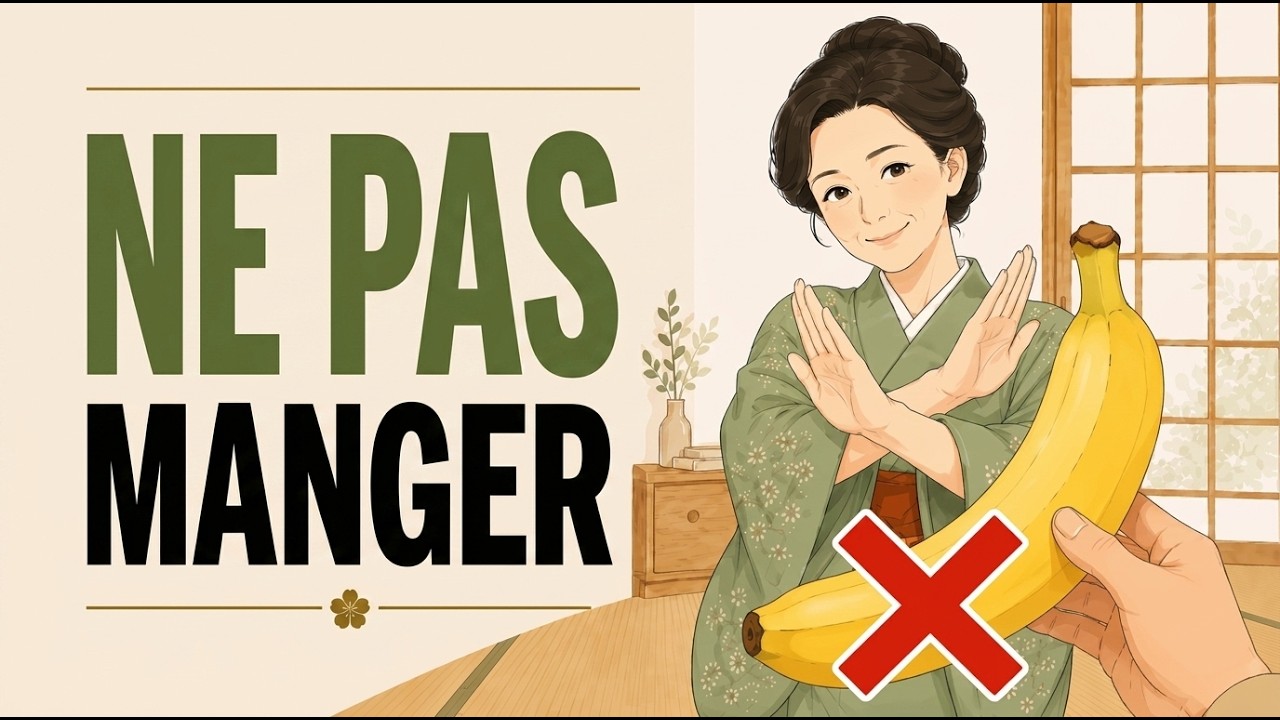
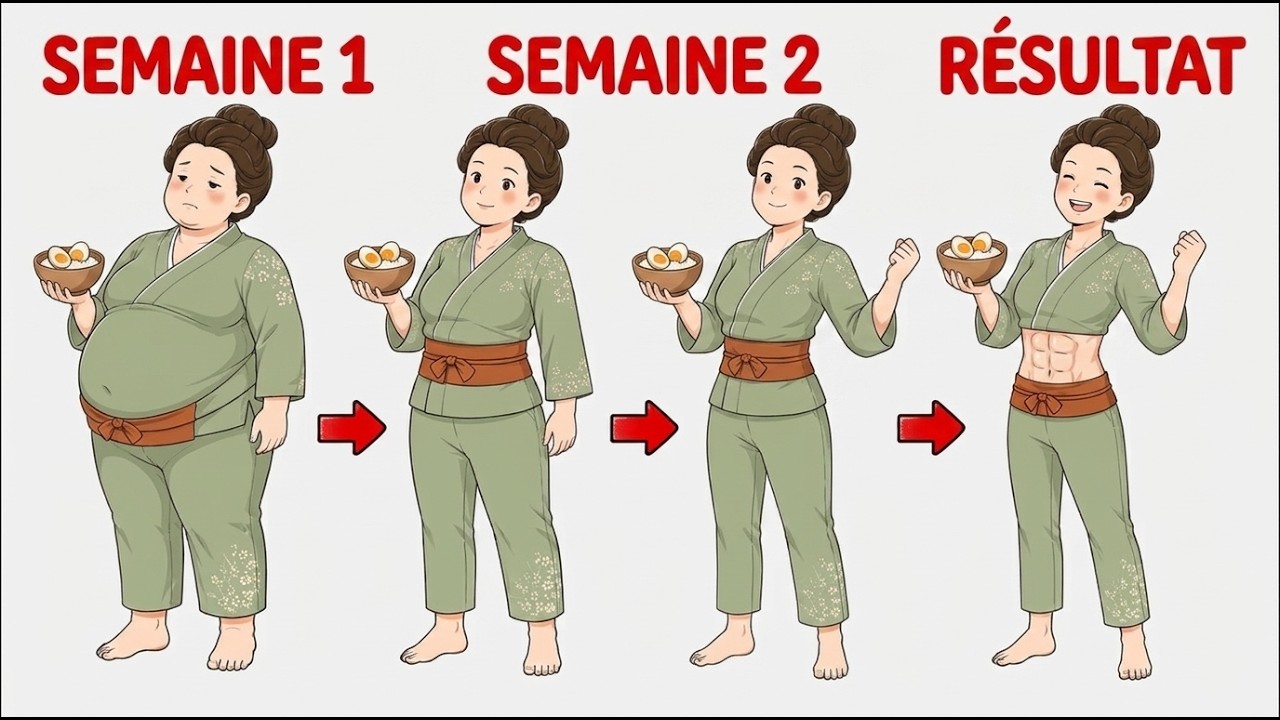
Discover the Japanese fermented soy breakfast that helps reduce menopausal belly fat by targeting estrogen receptors and gut health after 55.
Key Takeaways
- Fermented soy is key to activating estrogen receptors and reducing menopausal belly fat.
- Breakfast timing and composition have a major impact on fat storage and hormone regulation.
- Skipping breakfast or eating sugary foods in the morning promotes fat storage, not fat loss.
- Gut bacteria (estrobolome) play a critical role in recycling estrogen post-menopause.
- Traditional Japanese dietary habits offer effective natural strategies for menopausal weight management.
What the video covers
- Menopause causes hormonal changes that lead to increased abdominal fat due to empty estrogen beta receptors in fat tissue.
- Fermented soy contains isoflavones that act as 'duplicate keys' to activate these receptors and reduce fat storage.
- Fermented soy also feeds gut bacteria called the estrobolome, which recycles estrogen and maintains hormonal balance.
- Skipping breakfast or eating sugary foods in the morning worsens fat storage by triggering cortisol and insulin spikes.
- Japanese women over 50 have traditionally eaten a hot fermented soy breakfast, which sends two fat-burning hormonal signals.
- The timing of breakfast within 30-60 minutes after waking is crucial because cortisol levels peak and amplify hormonal responses.
- Non-fermented soy does not activate estrogen receptors effectively, highlighting the importance of fermentation.
- Studies like the Japanese JPHC study confirm fermented soy reduces visceral fat and menopause symptoms significantly.
- Alternatives to miso include fermented foods and flaxseeds, which also provide beneficial plant compounds and probiotics.
- Consistent intake of these foods can improve fat metabolism and hormonal health over time, but results take weeks to months.
Chapters
- 00:00Introduction: Menopause and Abdominal Fat
- 01:16The Two Hormonal Signals in Japanese Breakfast
- 02:26Estrogen Beta Receptors and Isoflavones
- 03:58The Role of the Estrobolome in Estrogen Recycling
- 05:06Common Mistakes: Skipping Breakfast or Eating Sugary Foods
- 07:49The Importance of Breakfast Timing and Cortisol Peak
- 10:20Fermented Soy vs Non-Fermented Soy: Key Differences
- 12:15Alternatives to Miso and Additional Tips
- 13:43Conclusion: Consistency and Long-Term Benefits
Full Transcript — Download SRT & Markdown
Speaker A
You may have cut out breakfast to save on calories. Or maybe you eat muesli with red berries because you were told it’s healthy. And yet, your belly keeps growing right in the middle of your body, where it never was before.
Speaker A
Yes, it’s menopause, you already know that. But here is what almost no woman over 55 ever learns. In the first 30 minutes of your day, your body decides whether it will store fat today or burn it. Not at the gym, not in the evening,
Speaker A
but in the morning. And your gynecologist has never explained to you why. Which means you might be sending a hormonal signal every morning, without knowing it, that directly feeds your belly fat. If you get this wrong, you are fighting against your own hormonal
Speaker A
system every day, and you are losing. Not because you are weak, but because the morning signal was the wrong one.
Speaker A
Later in this video, I will show you why the thinnest women in the world after 50 in a small region of Japan have been eating the same hot bowl for breakfast for centuries. And in this bowl are hidden two distinct signals
Speaker A
sent to your belly fat. Not just one. Two. And I will also show you how to reproduce these two signals with ingredients from your local supermarket if miso is not for you. Your grandmother already had an answer.
Speaker A
It’s just that no one ever explained it to her. The real problem is not your age. The real problem is a receptor.
Speaker A
Specifically, the estrogen beta receptor, and it dominates exactly where your menopausal belly is located.
Speaker A
Imagine estrogen receptors as locks in your abdominal fat tissue. As long as you produce estrogen regularly, that is, until around age 50, the keys fit perfectly. The locks are occupied, and the signal sent to your fat tissue is
Speaker A
clear. Everything is calm. No extra storage is necessary. After menopause, the keys disappear. The locks remain empty, and empty locks send a completely different message to your body: store more fat here as a buffer, as protection, as a backup reserve for
Speaker A
the estrogen that is no longer there. And now, here is what almost no 55-year-old woman knows. There are plant compounds that act like duplicate keys and actually fit into this specific lock. They are called isoflavones, but—and this is the crucial point—only
Speaker A
in their fermented form. With raw soy, the key gets stuck in the lock and won't turn. With fermented soy, the key fits, it turns, and your fatty tissue finally breathes. That is the whole difference between a supermarket soy
Speaker A
yogurt and a traditional miso paste. Both are soy, but only one speaks the language of your receptors. One of the world's largest observational studies, the Japanese JPHC study, conducted on over 90,000 participants, showed that women consuming fermented soy daily had
Speaker A
significantly less visceral fat and much milder menopause symptoms than women consuming the same amount of soy in non-fermented form. The difference didn't come from the quantity, it came from the fermentation. But here is where it gets really interesting,
Speaker A
because there is a second signal, and almost no one knows about this one. Living in your gut is a community of bacteria that scientists call the estrobolome. Its only mission? To recycle the estrogen present in your blood, putting it back into circulation
Speaker A
instead of letting it leave. Imagine the estrobolome as a recycling plant working in three shifts; when it's running at full capacity, it keeps every drop of your remaining estrogen in the system. After menopause, this plant loses diversity dramatically. The
Speaker A
staff shrinks, and what nourishes it again? Live probiotics, exactly those found in unpasteurized miso paste.
Speaker A
Fermented soy therefore gives your body two signals at the same time. A spare key for the lock on your abdominal fat and food for the bacteria that keep your remaining estrogen in circulation.
Speaker A
What you eat in the morning therefore decides more than just your calories. It decides the amount of estrogen your body actually has at its disposal today. It took me two years to truly understand this. And when I finally
Speaker A
understood it, I knew my friend, who has been fighting her belly for ten years, hadn't done anything wrong. She simply never had the right information.
Speaker A
It’s not your discipline, it’s your receptors. And if this video finally explains why your belly reacts differently in the morning than before, do me a small favor. Subscribe to the channel and turn on the bell. And if you have a friend who is still
Speaker A
struggling with her menopause belly, send her this video. Together, we are helping more women over fifty who are still eating the wrong thing without knowing why. But now, here is the mistake that 90% of women over 55 make in the morning that destroys both
Speaker A
signals before you have even left the house. And this mistake exists in two variations. Maybe you do one of these, maybe both depending on the day. Option A, you skip breakfast. Maybe because a magazine recommended intermittent fasting. Maybe because you want to save
Speaker A
calories. Maybe simply because you aren't hungry in the morning, which is actually perfectly normal during menopause since ghrelin, your hunger hormone, functions differently after 50. But here is what really happens in your body when you don't eat during
Speaker A
that window. At 7:00 AM, your cortisol level is already at its highest for the entire day. Cortisol is a wake-up hormone. It is there to get you moving.
Speaker A
If you don't eat during this cortisol peak, you signal famine to your body, and your body reacts in a perfectly predictable way. It holds onto every gram of fat it has, especially visceral fat, especially in the center of the
Speaker A
body. You are saving calories and storing fat at the same time. Option B. You eat something sugary. Muesli with red berries, toast with jam, fruit yogurt, oats with honey—all things sold to you as healthy. But your insulin sensitivity has dropped by up
Speaker A
to 40% after menopause. This has been clearly shown in a study from the Menopause Journal. What does that mean?
Speaker A
It means the same bowl of muesli you metabolized without issue at 40 now causes an insulin spike that goes straight to visceral storage, not toward energy, but toward abdominal fat. Forty percent less insulin sensitivity in the morning. The same bowl, double the
Speaker A
storage; you are fighting your belly fat, and the first thing you do in the morning sabotages that fight. Not because you want the wrong thing, but because what was sold to you as healthy was designed for a 40-year-old woman's
Speaker A
body, not yours. It is normal after 50. But normal does not mean irreversible. It simply means your body needs a different signal in the morning than before. And this is where what changes everything begins—what Japanese women have been doing intuitively for
Speaker A
centuries, and what modern science can finally explain. Three steps: not complicated, not expensive, but each with a direct hormonal effect. Step number 1, the timing. Have you noticed that your body reacts completely differently in the morning versus the
Speaker A
evening? Most guides treat all meals the same, as if the time didn't matter at all. They say eat less, eat healthier. Period. Here is what is really happening inside your body. In the first 30 to 60 minutes after waking
Speaker A
up, your cortisol is at its peak. And that is not a problem; it is intended by nature. Cortisol is there to get you moving, but it has a side effect. When cortisol is high, your body becomes particularly reactive. An insulin spike
Speaker A
acts twice as strongly during this window. But a warm, salty, fiber-rich, and fermented signal also acts twice as strongly in the right way. This time, your body is listening most attentively during these 30 minutes. What you put into this window is amplified, for
Speaker A
better or for worse. Research published in Cell Metabolism showed that the same meal, the same calories, the same nutrients, produce a totally different hormonal effect in the morning versus the evening. And in post-menopausal women, this difference is even more
Speaker A
marked than in younger women. It is not just what you eat, it is when y
Speaker A
Have you ever tasted an instant miso packet and wondered what was so special about it? Most women think miso is just miso. It's fermented, so it's good. And the instant supermarket version is salty. It's hot, it looks like miso
Speaker A
soup, so it should act like miso soup. And this is exactly where it gets really interesting. The probiotic effect, the whole effect on the estrobolome, depends on one single condition. The miso paste must be unpasteurized and it must never be
Speaker A
boiled. Why? Because the living bacteria die starting at 70 ° C. Instant miso is always pasteurized. The bacteria are dead long before the packet reaches the shelf. And if you cook it yourself and stir the miso paste into boiling broth, you kill the
Speaker A
bacteria at the exact moment you need them. The right way to do it, and you can easily remember this: take an unpasteurized, traditionally fermented miso paste. Brown miso, aka miso, has more character. White miso, shiro miso, is a gentle introduction. You can find
Speaker A
both in health food stores or well-stocked Asian grocers. Heat the broth without letting it boil. Remove it from the heat and only then stir in a tablespoon of paste. That’s all.
Speaker A
The bacteria survive. The isoflavones remain in their active form. Both signals reach your body. Dr. Mary Claire Haver, an American doctor specializing in menopause, repeats this constantly in her work. It is not about the quantity of fermented foods; it is
Speaker A
about their vibrancy. A living miso acts. A dead miso only warms. Step number 3, the French adaptation. Are you telling yourself that miso is not for you? Maybe you don't like the taste . Maybe you live in the countryside and
Speaker A
the nearest organic store is half an hour away. Maybe you simply want something more familiar. Most guides act as if there were only one solution, one single Japanese ingredient. As if the mechanism were attached to that specific word. But here is what almost
Speaker A
no one says about French cuisine. France has its own tradition of fermentation, centuries old. Raw sauerkraut and French peasant women ate flax seeds before anyone invented the word superfood. Together, the two provide an alternative that is mechanically almost equivalent to miso
Speaker A
soup. Sauerkraut juice—not the pasteurized kind from the supermarket, but the lacto-fermented kind found in health food stores—provides the live probiotics that nourish your estrobolome. A tablespoon of ground flax seeds provides lignans, the most powerful class of phytoestrogens that
Speaker A
grows in Northern Europe, and a hot vegetable broth with carrots. Celery, onions, and a bay leaf give you the warmth and electrolytes your body needs in the morning. The recipe: 200 ml of hot vegetable broth taken off the heat,
Speaker A
in which you stir in a tablespoon of ground flax seeds, then two to three tablespoons of lacto-fermented sauerkraut juice. That's it. It is not identical to miso, but it is mechanically the same attack on both axes. The isoflavone signal for the
Speaker A
receptor, the probiotics for your estrobolome. Studies on the role of lignans in post-menopausal women show effects on visceral fat distribution comparable to those of soy isoflavones.
Speaker A
And in Northern European women, they are perhaps even better assimilated because their intestinal flora has been accustomed to these plant compounds for generations. Your grandmother already knew this. And here are three little bonuses that reinforce the whole thing.
Speaker A
Bonus number 1. If you choose the Japanese variant, add a small handful of wakame seaweed. Wakame provides iodine, and your thyroid needs more iodine because with less estrogen, it also works less efficiently. A single teaspoon of dried wakame in the hot
Speaker A
broth is enough for the whole day. Bonus number 2: whether you choose the Japanese or French variation, always add an extra teaspoon of ground flaxseeds. Lignans and isoflavones reinforce each other. Double signaling effect, no extra effort. Bonus number 3
Speaker A
. And this one is important for your peace of mind. You don't need to do it every day. Three mornings a week are enough for a measurable effect on your estrobolome. What matters is regular momentum, not perfection. If tomorrow
Speaker A
you don't want to, don't have time, or don't have the ingredients, it's not a big deal. The day after, you start again. Your body counts in weeks, not days. And if you know a woman over 55 who has been skipping breakfast for
Speaker A
years thinking she’s doing the right thing, send her this video now. She has probably never heard this explanation from anyone else. Now, a question I get asked all the time. How long will it be until I feel something? Let's be honest
Speaker A
, because you deserve realistic numbers and not empty promises. In the first three to five days, you won't see anything on the scale, but you will feel something very concrete. The 11 a.m. craving disappears. That mid-morning slump that pushed you
Speaker A
toward sugary coffee or a biscuit simply fades away because your blood sugar is no longer spiking like it did with muesli. After 10 to 14 days, your digestion changes. Your stomach is less bloated in the evening. Your transit
Speaker A
becomes more regular, and many women tell me this is the first moment they thought, "Hey, my pants button more easily in the morning." It's not lost fat yet; it's less inflammation and water retention. And that is already huge because it's a sign that your
Speaker A
estrobolome is starting to work again. Between 4 and 8 weeks, that's when your body composition really changes.
Speaker A
Visceral fat doesn't go away in 3 days, never, for anyone. And anyone who promises you otherwise is just selling you something. But it does respond, and it responds well when the signal is consistent. And there is a detail that
Speaker A
almost no one mentions. Don't measure your progress solely on the scale. The scale doesn't distinguish between muscle, water, and fat. Instead, take a measuring tape and measure your waist circumference at the belly button, on an empty stomach, once a week on the
Speaker A
same day. It is this figure that reflects visceral fat, the kind that really counts for your hormonal and heart health. Write it down in a notebook. In 6 weeks, you will have a real trend, not just an impression. And
Speaker A
one last thing I want to be very clear about: this breakfast does not replace any medical treatment. It does not replace your doctor. And if you are taking hormone therapy or blood thinners, speak to your practitioner about fermented soy and flaxseeds
Speaker A
before starting. This isn't excessive caution; it's simply common sense. Let me summarize everything on a postcard.
Speaker A
Two signals, one single breakfast. Signal number 1, a spare set of keys for the empty locks of your estrogen receptors in your belly fat. This comes from the isoflavones in fermented soy or the lignans in flaxseeds. Signal number 2, live probiotics for your
Speaker A
estrobolome. That intestinal recycling factory that keeps your remaining estrogen in circulation. This comes from unpasteurized miso or lacto-fermented sauerkraut juice. All within 30 to 60 minutes after waking up . Three mornings a week. Warm, never boiling. And if you are listening to
Speaker A
this thinking, "I've been doing this wrong for years," then please, no. You haven't done anything wrong. The information simply wasn't ever available in your language. Until today , your body hasn't broken down. It has reconfigured itself and is waiting for
Speaker A
the right signal. In the next video, I will show you five Japanese yoga postures that melt belly fat after age 55. Even if you have bad knees and haven't exercised in years. And the 5th one is done lying down right before
Speaker A
sleep. You don't want to miss that. So, subscribe and turn on notifications.
Topics:menopauseabdominal fatfermented soyisoflavonesestrobolomeestrogen receptorsJapanese breakfastmenopausal weight lossgut healthhormonal balance