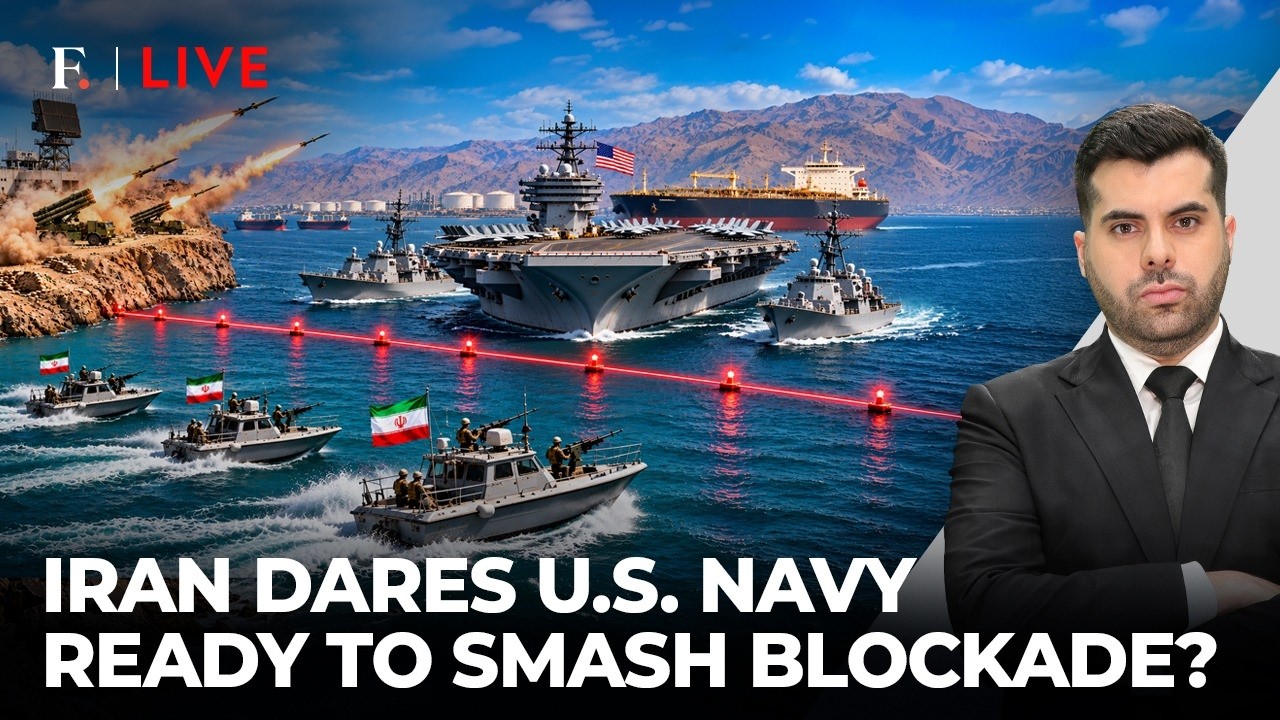
Iran refuses talks with Washington until seven conditions are met as its currency plunges under new U.S. sanctions. Analysts debate Iran's escalation and U.S. strategy amid a stalled deadlock.
Key Takeaways
- Iran is hardening its negotiating stance and refusing talks until its seven conditions are met, despite mounting economic pressure.
- U.S. policy appears inconsistent, combining maximum economic pressure with diplomatic mediation through Qatar.
- Economic strain on Iran, including currency collapse and winter energy shortages, is driving both defiance and escalation.
- Claims about Iran's chemical and nuclear weapons programs are presented with caution, as they often rely on indirect evidence.
What the video covers
- Iran's parliament speaker says Tehran will not negotiate with Washington until seven conditions are met, including lifting the naval blockade, removing sanctions, and releasing frozen Iranian funds.
- U.S. Treasury Secretary Scott Bessent says Washington will keep targeting Iran's financial networks as Iran's currency, the rial, falls further after new sanctions.
- Michael Jabri-Pickett argues Iran is confidently matching Trump's bellicose rhetoric, leveraging the Strait of Hormuz and its geographic proximity to U.S. allies, and noting Iran fired over 3,000 missiles and drones at the UAE during the war.
- Robin Creel describes Washington as running two conflicting tracks: maximum pressure through blockade and sanctions, alongside Vance and Rubio mediating via Qatar, which is the channel that reaches Tehran.
- Analysts suggest Iran is acting from economic desperation as winter approaches and houses struggle to heat, prompting it to lash out, including attacks on Bahrain and tankers in the Strait of Hormuz.
- Israel's defense minister claims Iran is developing chemical weapons; the discussion notes the claim rests largely on satellite and remote sensing analysis indicating possible contamination, not confirmed evidence.
- Panelists criticize the pattern of Israeli officials framing Iran's capabilities to shape the global narrative, recalling past claims that Iran was two weeks from a nuclear weapon.
- Oxfam warns Gaza has become a toxic wasteland threatening human safety, and the Board of Peace has reportedly spent only a fraction of about $17 billion while its ceasefire may collapse.
- Trump's involvement in reinstating Jensen Huang as Nvidia CEO draws scrutiny, with the stock market reacting strongly, nearly a trillion dollars in value moved in a single day.
- Bangladesh's government says it plans to carry out a death sentence against Sheikh Hasina if she returns to the country.
Chapters
- 00:00Introduction and top news headlines
- 02:30Iran's negotiation stance and the U.S. response
- 07:35Washington's diplomatic and sanctions strategy
- 12:00Israel's chemical weapons claims and narrative framing
- 20:00Gaza, Oxfam warning and the Board of Peace
- 28:20Nvidia leadership change and market reaction
- 36:40Bangladesh and the Sheikh Hasina death sentence
- 40:00Closing segment and wrap-up
Full Transcript — Download SRT & Markdown
Speaker A
Hello and welcome. I'm Leanne Keren, and watching W News Extra, broadcasting [music] live from the Al Arabiya Studios in Riyadh. These are our top [music] stories.
Speaker A
Tehran says it will not hold talks with Washington until its seven [music] conditions are met as Iran's currency plunges further following renewed [music] U.S. sanctions.
Speaker A
Oxfam warns that Gaza has been turned into a toxic [music] wasteland which threatens human safety and survival.
Speaker A
President Trump's [music] role in reinstating Jensen Wong as Nvidia's CEO comes under scrutiny. Iran's parliament speaker says Tehran will not enter talks with Washington until the U.S. meets seven conditions set by Iran. These include lifting the naval blockade, removing sanctions, and
Speaker A
releasing frozen Iranian funds. Meanwhile, U.S. Treasury Secretary Scott Bessent says Washington will continue targeting Iran's financial networks as Iran's currency plunges even further. To discuss this and all of today's stories, I'm joined by managing director of This is Dubai, Michael Jabri-Pickett, and
Speaker A
also journalist Robin Creel. Robin and Michael, so good to have you on the show with me this evening. Thank you so much for your time. Michael, let's start with you because Iran is making their stance on negotiations and Trump's remarks
Speaker A
extremely clear. They are where they are and they are not shifting. They are digging in. They're prepared to fight strategically, militarily, and also verbally. You know, a lot of leaders around the world, I'm Canadian, Mark Carney has done this, European
Speaker A
leaders have done this as well, where they will sort of shy away from trying to be Zelenskyed. We can remember the first a couple of months when Donald Trump was in office. He had the Ukrainian president in the Oval Office,
Speaker A
and there was an attack. And that became sort of the way that most global leaders were thinking about avoiding something when they were meeting with Donald Trump. They just don't want it to be a a horror show. And so what the
Speaker A
Iranians are doing is they're leaning into it. For everything that Donald Trump says, you know, all the bellicose statements, the Iranians come back with equally bellicose and outrageous statements. They're going toe-to-toe with Donald Trump. It's not something that Donald Trump is used to, but it's
Speaker A
certainly something that the Iranians feel quite comfortable doing. They recognize that they're so much more powerful than they were before the war started.
Speaker A
They're incredibly more confident. We can see that with the comments that they're making. And they've recognized that they have, you know, leverage, not just the Strait of Hormuz, but they also are able to use the geography to their
Speaker A
advantage. And by geography, I mean, well, they have so many US allies so close to them. You know, I've said this before. During the nine months or so of the war, that the Iranians fired more than 3,000 missiles and drones at the
Speaker A
UAE. I'm in Dubai, which is part of the UAE. And that those 3,000 missiles and drones, that's more than they shot the Iranian shot at Israel. So while Donald Trump is trying to have these conversations with the press in the
Speaker A
United States, the Iranians are just going on about their business and they're prepared to match Donald Trump for everything that he says.
Speaker A
And Michael, I'm listening to what you're saying, but in many respects, I was speaking to Joey Hood earlier, who's a former US ambassador and many analysts I've had on the show, and they take is that Iran is becoming more aggressive because Iran is
Speaker A
really starting to suffer. It's feeling these bites of economic sanctions. We've seen the rial in Iran sink quite dramatically today, and that's after new US sanctions were imposed on Iran yesterday, and Iran are determined not to be in this no war, no peace status
Speaker A
quo that they are at the moment because they know that they are struggling in Iran. Winter is coming up. They cannot afford to heat many of the houses. So Iran in many respects is becoming desperate, starting to lash out in order
Speaker A
to make sure that this economic blockade is lifted on them. So Iran is acting out of a place of fear at the moment. But I guess, Robin, the big question is: when we talk about, um, diplomacy and when we
Speaker A
talk about the US, we talk about negotiations, where does this leave America right now when it comes to these talks that we see happening with Qatar and, um, with of course them in Washington, the officials speaking to JD
Speaker A
Vance and Marco Rubio? Um honestly, Diane, sort of in a waiting room with a clock ticking ticking down on the wall. Um Washington essentially running two tracks, sometimes pulling in opposite directions. On one track, it's this maximum pressure, enabled blockade,
Speaker A
fresh round of sanctions on um on Iran's shadow banking network that we saw. And a president who President Trump said he is inclined to go back to war after the new year. But that on the other track, you have Vice President JD Vance and
Speaker A
Secretary of State Marco Rubio both sitting down with the Qatari Prime Minister yesterday. We know that Qatar is the one channel that still reliably reaches Tehran. And the [snorts] the messaging is mixed. So um you know, the US does does the US need to focus more
Speaker A
on domestic policies or things like at home? Um only last week President Trump told Vice President Vance that that needed to be the case. And and then again this week Vance is back uh as chief mediator mediator. So which one is
Speaker A
it? Yeah, exactly. Which one is it? And we all seem to be in this waiting room at the moment when it comes to negotiations and Iran's maximalist demands. And of course, we don't see the US backing down either. But it is quite interesting.
Speaker A
Michael will talk a little bit more about it, but obviously we look at the news day in day out, and I feel like we're getting a lot of information coming out of Iran at the moment. We're hearing from all the big hitters in
Speaker A
Iran. We're hearing from the IRGC. We're hearing from Masoud Pezeshkian. We play hearing from Abbas Araghchi. But President Donald Trump has essentially been pretty quiet on the whole situation. I think he's just happy for this economic blockade to basically
Speaker A
crush Iran from the inside, bring down the systems, hopefully see what he thinks in his eyes will be a revolution, and then it's time to restart military action. But I mean, it's very difficult to know what is going through President
Speaker A
Donald Trump's head. But also we've been hearing a little bit from Israel, Michael, and Israel's defense minister says Iran is developing chemical weapons, and that's included and that's according to local media in Israel.
Speaker A
And that's part of the Israeli playbook. I think we can go back to the 1990s and we can see Benjamin Netanyahu standing up at various functions in front of the UN as well as at other private events where he's being recorded talking about
Speaker A
how Israel, excuse me, Iran is two weeks away from having a nuclear weapon. So, this idea of Iran having all of these weapons and, of course, also being willing to use them this is consistent with how the Israelis will always sort
Speaker A
of operate: making sure that they are wanting to own the narrative and being very specific about what it is that the their supposed enemy has, wanting to make sure that the world starts to gather their narrative and to agree with
Speaker A
what it is that the Israelis are consistently putting out. And if we just come back to you, um Robin, we always have a meeting before um the show, just spoiler alert to everyone out there. And I think in the
Speaker A
meeting I could sort of have come to this conclusion that President Donald Trump is almost ghosting Iran at the moment. Iran are desperate to um you know lash out. We've seen them hit Bahrain, um you know tankers in the
Speaker A
Strait of Hormuz. Iran says 30 tankers in the Strait of Hormuz in the last 10 days have either been struck or they've hit landmines.
Speaker A
And I just wonder what do you think the US playbook now is going forward? Do you think they just just want to let things be for a while?
Speaker A
That that is a that is a great question, Leanne. And um I think everyone is waiting to understand what what's happening there. Obviously um there are there is a this brand new um warship that has just entered uh the Central
Speaker A
Command area of operations um and so everyone kind of thought that that that might signal something to kick off. Um but we're not seeing that. But now President Trump has set this new deadline with his words saying that new
Speaker A
uh new year they could they could go back to war. Um so perhaps that that is that is one um marker or milestone that could be tested. And then again if a tanker uh tries to go through and is
Speaker A
fired upon, will that mean that diplomacy changes overnight? Um but yes, I I think the the term that you used earlier, Leanne, was um that Iran was being ghosted by President Trump. Um and I I I do think that's quite a an apt way
Speaker A
of putting it. Yeah, definitely. Um Michael, I'm not sure what your thoughts are, but I feel like we've been talking about this war for months now since February. It appears that we are still stuck in this deadlock. We are seeing escalation on
Speaker A
the side of Iran in many respects, as I said, when it comes to the Strait of Hormuz. And um they have hit Gulf countries, Bahrain, Kuwait, and so forth. I just wonder if we're any closer to a deal at all. And maybe if the
Speaker A
Democrats come into power in January, obviously President Donald Trump lost the midterms, do we see a different calculation?
Speaker A
You know, traditionally there would be so so many reports that would be coming out of the White House because there would be so many people who would be involved in high-level meetings, especially at a time of war.
Speaker A
And that's not the case. Donald Trump has an incredibly tight, close circle of very few people. Now we also know, as we've just mentioned, that we do have this meeting before and we have talked about this where Donald Trump will be in
Speaker A
a press conference and he'll contradict himself in that same press conference. So when we're trying to figure out what's next, there isn't a grand overarching overarching strategy that is coming out of Donald Trump or the White House. So we're all left
Speaker A
to try to guess. And this I think is also what the Iranians quite frankly are trying to do. Now they have said that they do not want this no war, no peace status quo to drag on, which is why
Speaker A
they're trying to escalate things a little bit, trying to drive the Americans back to the negotiating table because the Americans will, the Iranians hope, be pressured by Gulf allies.
Speaker A
Donald Trump does not seem to be succumbing to that pressure at this point because he really isn't giving any indication, at least when he speaks to the media about what it is that he's going to do. He'll say yes, he's going
Speaker A
to start bombing again in 2027. No, just a few days ago he said no, I don't see that things are going to escalate anymore. So we're all trying to read what it is that Donald Trump actually means. I think the Iranians, to your
Speaker A
point, yes, they're feeling it economically. They really want things to start to get back to the way they were.
Speaker A
And until that happens, the Iranians are going to be stuck in the same position that the rest of the world is stuck in, which is, what's next when it comes to what Donald Trump is going to do?
Speaker A
Yes, of course, and it's always that uncertainty that raises so many questions. Just to bring you a breaking news line right now, and this is from Iran. Iran's Revolutionary Guards say a container ship was targeted while sailing in an unauthorized route near
Speaker A
the Strait of Hormuz. That's according to state TV inside of Iran. And of course, as we said earlier, we've seen this real uptick in um attacks on vessels going through the waterway. But thank you so much for your thoughts on
Speaker A
that. Stay right there as we move on to another story now. Gaza has become what Oxfam describes as a toxic wasteland, and that's according to a new report. It says more than 99 percent of its land shows signs of contamination linked to
Speaker A
Israeli attacks, including heavy metals, explosives, and asbestos. Robin, let's come to you first because what else has Oxfam said about the conditions in Gaza at the moment, right now?
Speaker A
The headline is is obviously the 99 percent, but I think the important phrase is also Leanne, for for decades to come. This could drag on and on and on. And when Oxfam, what Oxfam and the conflict and environment observatory are
Speaker A
describing is a war that doesn't just end when the shooting stops. It's all of the asbestos dust from flattened buildings, the heavy metals, the explosive residue in the soil, sewage, dioxins in the water and air. And people are living in tents, trying to go grow
Speaker A
food on that land, as well as drink from from that aquifer. So and it matters because just a year into the so-called ceasefire, people are still living in those tents on that rubble.
Speaker A
The Board of Peace warning that it's going to be another winter of people living in the tents and rubble. So, it's not abstract. This is what small children are breathing and eating right now.
Speaker A
Um, what Israel says as a caveat in fairness, it's largely a spatial analysis built on satellite and remote sensing data. So, it identifies indicators of possible contamination.
Speaker A
It's not soil samples from every single street. Um, Israel's teasing upon that, calling it biased and unprofessional, but it also echoes what the United Nations Environmental Program Environment Program found earlier in the war about asbestos and warned about the toxic debris. So, the question
Speaker A
will then become who cleans it up? Who pays? And who's even allowed in to investigate it?
Speaker A
Yes, of course. I mean, we can see those pictures on our screens at the moment and just the waste that is around Gaza at the moment. And of course, this report that we are getting from Oxfam.
Speaker A
But Michael, we got a little bit of what Israel's response is there from Robin, but what else have they had to say following this publishing of the report?
Speaker A
So, the first thing is who spoke about it? And I feel as though the Israeli government didn't want to give it too much credibility. So, it was left to the Israeli embassy in the UK to address the report. Now, they said that it lacked
Speaker A
academic rigor, which to my mind actually that was one of the report's strengths was the clinicalness and the science that they used to try to come up with their findings. They also said that the report did not take into account the
Speaker A
extensive tunnel system that is underneath many many areas in Gaza. Now, to me that feels a little bit weak as a bit of an explanation as to why there would be so many toxins that Gazans are are breathing
Speaker A
and their water is also susceptible to and it's of course it's in the soil. So everywhere that Gazans are going to turn, they're going to be dealing with these toxins. I would also say that the UN estimates that there were 16
Speaker A
Oh, we just appeared to be having a slight issue um with Michael's um internet there. Um Robin, before we get him back up, we'll come back um to Oh, I do apologize. Michael is back with us.
Speaker A
Michael, finish off your point. Sorry. Um we had a little gremlin in your line there.
Speaker A
So that this seems to happen consistently either in our previous meeting or during the show. Fortunately, it's gone, so it won't happen again today. I would say this. The UN has estimated that there were 61 million tons of rubble that was left in Gaza as
Speaker A
a result of the destruction by the Israelis. That is a that comes out to 29 tons of rubble per uh person living in Gaza now.
Speaker A
The last statistic that I would share is according to the Gaza government media office, Israel dropped two more than 200,000 tons of explosives during the war, which you can imagine the amount of uh dust in the air, the toxins in the air, and now
Speaker A
that's in the soil and the water. And this is what the Oxfam report uh detailed quite extensively explaining what it is that as Robin said, generations of Palestinians are be living with this.
Speaker A
Yes, of course, generations, and we do know that the healthcare system inside of Gaza has all but collapsed. There's a few hospitals that are working the best that they can with very little resources. So even if people do succumb
Speaker A
to illnesses from environment um and the situation, there's no way that they can really get treated. So it's an extremely um sad situation. But really Robin, we have a look at the situation. Okay, we're years since this US-backed ceasefire was
Speaker A
signed and we're still seeing Israeli attacks on Gaza in some occasions even daily. We saw one yesterday that killed seven people.
Speaker A
Israel claimed it also killed the top Hamas commander. There were more explosives and strikes on Gaza today and a lot of people are saying where is the board of peace? Why why are we still here one year on?
Speaker A
I believe Gaza officials count have counted more than 1,600 people dead since since that truce began.
Speaker A
The board of peace has paid just about 17 billion US dollars and just a fraction has been spent and its own report saying that the ceasefire could collapse without urgent steps. We do know that they are due to address the
Speaker A
United Nations Security Council in November whatever that means. So where where are they? It's it's a that's a great question.
Speaker A
Yeah, and I think that's a question so many people are asking. Michael, Michael, you giving us some statistics a little bit earlier. 200,000 tons of explosives used on Gaza by Israel. 61 million tons of debris across the country and we do know that over 74,000
Speaker A
people have lost their lives. Palestinians have lost their lives inside of Gaza. And what we're seeing at the moment is this chicken and the egg situation. Hamas doesn't want to disarm because Israel won't withdraw. Israel doesn't want to withdraw because Hamas
Speaker A
won't disarm. Is there going to be any breakthrough just for the sake of the people who live inside of Gaza, just for more aid at least to come to them, some sort of deal?
Speaker A
This is what Gazans have been dealing with for decades is that they are the ones that get squeezed. There's Hamas on one side and the on the other, and they are both um wanting exactly what it is that they
Speaker A
want. And of course, that's not the way negotiations work. I mean, we're not even at the point where we're having negotiations. And this is uh how the Gazans um are having to live in between a rock and a hard place.
Speaker A
Yeah. Um thank you so much for your thoughts on that. Um very good to get them on that story.
Speaker A
Now, stay right there as we move on to another story. Tech stocks in Asia rallied on Tuesday as investors piled back into the sector after Jensen Huang returned as Nvidia CEO. Shares of companies across the region that supply
Speaker A
the chip giant as well as the wider AI industry did get a major boost and thanks that was thanks to Huang's reinstatement.
Speaker A
Anyway, Michael, fast forward a few hours and um that tech rally has lost steam. Of course, we've seen those gains be paired back at the US market. If we have a look at um the open in the states, we're not seeing that rally
Speaker A
anymore, but the fallout from Trump's intervention and Jensen's return is also continuing to make major headlines and come under intense scrutiny today, really.
Speaker A
Yes, but I it shouldn't come as a surprise. I so here I have a bit of a theory on this. I think that Donald Trump sees a little bit of himself in Jensen Huang, which is why he has been
Speaker A
so passionately involved. Not just because of that. Of course, Donald Trump is he gauges the success of America on the stock market. The S&P 500 is disproportionately supported by uh AI and tech companies and Nvidia is such a
Speaker A
large part of that. And for Nvidia to to do well, it needs or at least the track record shows it needs Jensen Huang at the helm. That's now back in place.
Speaker A
And of course, there was a surge as a result of his announcement that he was going to be back there. The other thing, Donald Trump likes surrounding himself with people, specifically men, who are going to donate to his causes. And Jensen
Speaker A
Huang has donated, according to credible news reports in the States, about $25 million to the Trump ballroom that is being erected where the East Wing once was.
Speaker A
And so he is very much Donald Trump is very much involved in making sure that Jensen Huang has a prominent role in the Nvidia, which means a prominent role for the stock market. We can of course also talk about one of the big issues that
Speaker A
Americans were so concerned about during the midterms, and this is why the Republicans won so well. One of the top issues, if not the number one issue, it was corruption. And we know that Donald Trump, according to filings, has earned
Speaker A
millions as a result of Nvidia stock. It's in his best interest politically, the way that he operates politically, as well as personally, to make sure that Jensen Huang remains at the top of Nvidia. And this is one of the reasons
Speaker A
why there's so much talk about why Donald Trump is getting involved. And one last point, of course, another reason why there's so much chatter about it is that you have the American president getting involved in the maneuverings of a private company.
Speaker A
Which is completely unprecedented. We never see US presidents get involved in the way that President Donald Trump has when it comes to Nvidia. And President Donald Trump did admit, I pushed for it, you know, I was part of those board
Speaker A
meetings. But you talk about President Donald Trump making money out of Nvidia. Of course, he owns shares in the chip company. But there's also a much wider conversation to have here. The 401 k's in the United States are very much
Speaker A
linked to artificial intelligence and Nvidia. And this is really important for many pensioners, especially in the US.
Speaker A
The 401k's did also plunged dramatically yesterday. And there's so many questions around how AI right now is actually holding up this um economy in the US and globally at the moment because so much has been invested into it and there's a wider conversation
Speaker A
about the AI bubble too. But um Robin, what I find is so fascinating is we had so many pictures, didn't we? Jensen Wong, he's gone back into the office.
Speaker A
You know, everyone's really happy. He says I'm going to be a better CEO the second time around. You know, all the cheesy lines. What message does this send?
Speaker A
Uh a clear message. Um I'm not sure it's one that the Nvidia board intended, but the message is some people are just too big to fire. Um just a week ago the board board chair said that Wong's behavior was
Speaker A
inconsistent with the company's code of conduct and he wouldn't be coming back. And those sorts of companies pay uh human resources professionals enormous amounts of money to make sure that all kinds of policies and procedures are followed for uh for hiring and and
Speaker A
firing. Then President Trump, uh as you said in an unprecedented, but perhaps you mean meant unprecedented uh turn of events, picks up the phone and the vice president makes a personal appeal and then the board reverses its uh its decision. Um he was
Speaker A
Jensen Wong was was greeted by cheering staff, people saying the board acted too hastily. Um and and the stock market agreed as you said, nearly a trillion dollars in market value um in a single day. Um the sound of sort of investors
Speaker A
voting with with their wallets. Oh yeah, definitely. It definitely looks like this was all about stabilizing Nvidia yesterday, which is extremely important to the US stock markets because that plunge in Nvidia was causing real investor jitters, especially when it comes to AI, is it
Speaker A
overpriced? Is it a bubble? But um also we see AI driving dragging those US stocks down lower today which I think just highlights really how volatile AI is when it comes to the financial space.
Speaker A
But Michael, what I really think a lot of people are going to be asking right now is obviously we're going to see um Jason Huang Jensen Huang, sorry, go before um you know he's going to have a hard time
Speaker A
from Congress now because the Democrats are going to get in. I think his head's going to be on the chopping block.
Speaker A
They're going to want to ask lots of questions and I think the question people want answered is did Nvidia sell chips to China through third parties because the US had restrictions on it? I guess this is a question no one knows
Speaker A
the answer to right now. It's certainly a question that Elizabeth Warren's going to be asking him, and he is going to have to be prepped, certainly better than he has been in the past when he's spoken to the media,
Speaker A
because he's not going to be facing a friendly, uh, line of questioning this time, especially after what's everything that's happened. Now you're going to have the the the China hawks and doves of course and most Democrats as well as
Speaker A
most Republicans are very much on the hawkish side. So they're going to want some real tough questions answered by him, and now that he's back at the helm, it's only going to make things even more difficult. And I'm sure that there are
Speaker A
going to be, you know, throughout all of this and I I would say that this is true for most, uh, news programs that are talking about this. There's not a lot of talk about, uh, the affairs, and I
Speaker A
wonder if maybe there's going to be a little bit extra sort of oomph from some of the uh, women on, the in Congress who are going to be wanting, uh, answers to some of the questions about, uh, protocol and how you conduct yourself,
Speaker A
and what is the Nvidia, uh, um, environment actually like? What I believe should be happening next is that the board should be sitting down with Jensen Wong saying okay, we ran into an awful situation. We recognized that there is no successor plan. Uh we
Speaker A
need to make sure that we don't you don't have 60 reports uh coming to you on a regular basis. What we have to do is we have to start figuring out for what happens when you're gone. This, I think, would be the
Speaker A
best way for the markets to remain calm in case we're having this conversation a couple of weeks or a couple of months from now when Jensen Wong is maybe gone again.
Speaker A
And Robin, I just wonder if maybe Michael mentioned the affairs there and people haven't been talking much about them. We know one affair was with a possible alleged a Chinese spy Alice Wong. No one has heard from her since um
Speaker A
this news broke. But do you think maybe we're looking at the moral argument when really when it comes to Wall Street it's all about the money argument?
Speaker A
I mean, it's a terrible look for corporate governance. Um, and and, you know, boards exist to hold CEOs accountable, um, for, for all kinds of reasons, including national security risks. Um, and now every single boardroom in America, um, can
Speaker A
understands that if you're strategically important enough, um, the board could get overruled by the White House. Um and and then yes as you as you say there's there's two sort of sides to this. The twist is on that very same afternoon
Speaker A
that Wong was reinstated the Commerce Department blacklisted Megvii, the Singaporean company where that woman at the center of the scandal worked. So Washington is effectively saying the company is a risk but the CEO isn't.
Speaker A
Yeah, it's so interesting also the fact that Nvidia is of course the world's second largest company behind Apple.
Speaker A
It's no small amount of money but thank you so much for your thoughts on that.
Speaker A
Let's move on to another story now. Bangladesh's former Prime Minister Sheikh Hasina has said she plans to return home on the 16th of December. A spokesperson said she's asked the Bangladeshi government to fly her back from Delhi, where she's been living in
Speaker A
exile for the last two years. The announcement comes amid renewed unrest inside of Bangladesh, where supporters of her Awami League party are staging protests. Robin, how significant is it that Sheikh Hasina has actually set a date for her return? And I guess the big
Speaker A
question is, where does this leave the government inside of Bangladesh at the moment? Well, it's turned it's turned that date um it into a it's turned a threat rather into a deadline. And she chose that date very strategically. December 16th is Victory
Speaker A
Day, the day that Bangladesh celebrated its independence um in 1971. That was the struggle that her father led. So she's wrapping her return um in in in the national flag and her family's founding story. Um and it's a it's a
Speaker A
it's a great piece of political theater. Um she has done this before. In 2007 um a caretaker government tried to keep her out and she was stopped from boarding a flight from London. Um but a few weeks later she flew home anyway. Um
Speaker A
so I don't believe Dhaka is taking this um lightly as a bluff, but it really puts them in a bind because she is a convicted fugitive. And if she comes back in handcuffs, arresting her on Victory Day in front of all the cameras,
Speaker A
it could take this deposed leader living outside of the country and turn her into a martyr, blaming her supporters, uh, in during a time when, when Bangladesh is already, um, under, under, under unrest in in other sectors.
Speaker A
Yeah, absolutely. And I think that is the big um concern because the Prime Minister right now who took office back in February is grappling with massive setbacks, a really bad measles outbreak, and also protests by garment workers who
Speaker A
are demanding a higher wage inside of Bangladesh. But I guess Michael, the question is, how credible is her route back? Because she can only essentially been extradited back from India.
Speaker A
It's not like she can just jump on a commercial plane. You know, she's she's never sought a presidential clemency and she's never accepted the verdict.
Speaker A
She has rejected it in fact. And it is a unique situation for an exiled leader to want to come back when they are still unpopular, at least by the government.
Speaker A
And this I think creates a unique situation. I'm also surprised quite frankly that the country that is hosting her is allowing her to speak about politics. Usually the protocol is that, you know, if you're going to be in the country while you're in exile,
Speaker A
you're not going to be engaged in politics. And that's certainly not the case here. And I would argue that the government in Bangladesh would feel so much more comfortable if she were to stay away because she has received a
Speaker A
death sentence and because she missed the deadline to appeal, there is no legal basis, officials in Bangladesh have said, for an execution to not take place. So if she in fact were to come back and because of the history of her family
Speaker A
and because her father was instrumental in in the fight for freedom for the country and it he was the the country Bangladesh's first leader after the end of the war, it puts the government in an incredibly awkward position. They now
Speaker A
are having the the daughter of a hero, someone who led the country for 15 years returning. There is a death sentence. Do they actually keep her in handcuffs if that's how she returns, and then executor, that's not a position that
Speaker A
they want to be in. They would have very much preferred that she were to stay away. Maybe a little bit of the politics they could accept, but for the most part their lives would be easier if she were
Speaker A
not to come back. So your question, is it credible? Unfortunately for the government in Bangladesh, yes, it feels as though she's a strong-willed woman who has said that she's going to come back in just a few weeks.
Speaker A
My money is that she will in fact be back in Bangladesh on December 16th.
Speaker A
Of course, and we'll wait to see what happens, but an adviser to Bangladesh's Prime Minister said the government, Michael, does plan to carry out the death sentence if Hasina does return to the country. So we are hearing that um
Speaker A
from the government inside of Bangladesh, and also the chief prosecutor of Bangladesh's International Crimes Tribunal, which sentenced Hasina to death, said it was ridiculous for a convicted fugitive to expect the government to arrange her return to Bangladesh. And apparently they have got
Speaker A
the guards and they're staying very alert on the porous borders between India and Bangladesh at the moment. But fascinating story. Let's see what happens on the 16th of December. Thank you for your thoughts on that. Now it's that time of the show where Michael and
Speaker A
Robin have chosen two of their quirkiest stories of the day. And Michael, you've got a story about an auction with a superhero spin on it, and that's for us today.
Speaker A
So I have some bad news for everybody, but according to at least one professor at Syracuse University, the superhero memorabilia world has become so diluted that there is now a Batmobile from Tim Burton's 1992 Batman Returns movie that will not be
Speaker A
sold. There are 989 billionaires in America. There are more than 9 million millionaires and yet nobody could come up with the 5 to 7 million minimum bid for this Batmobile. It reached 3.25 million and that's where the bids
Speaker A
petered out. And [snorts] unfortunately this wonderful car that is revered by many, some people love the Michael Keaton Batman series, but it has it's not going to be sold.
Speaker A
Now the record was in 2013 a show that I watched in the 60s, the original Batman TV series. That Batmobile sold for nearly 5 million dollars. This one unfortunately is not going to hit that mark.
Speaker A
I must admit something. I find it quite fascinating Robin I don't know what your thoughts are because I thought maybe people would have really been interested in the Batmobile. We see some pictures of it.
Speaker A
Of course it's from the 1992 Batman film Michael was talking about. Or do you think people are now more concerned about the practicality of it? Because I'm not sure that could you know drive on the road so well.
Speaker A
Not sure 1992 I don't think you and I were born then. [laughter] I definitely wasn't born in the 90s.
Speaker A
I'm not sure and perhaps hopefully maybe there is a millionaire or billionaire watching this that thinks oh I just have to have that particular that particular ride.
Speaker A
Yeah I think it's more for for show I would imagine and driving around. Yeah.
Speaker A
Let's see Michael maybe after someone watches it they might think oh why not? Got some pocket money around might as well you know let's see.
Speaker A
Anyway moving on. Robin yours is about an animal that has been rediscovered after almost a hundred years. What little animal's this?
Speaker A
Yeah so some good news from Ethiopia. You can see on your screens, hopefully, the Ethiopian water mouse.
Speaker A
So for almost a century, science only knew one single specimen. It was caught in the late 1920s and it was kept in a museum drawer rather unceremoniously in Chicago. Researchers went back to look for it numerous times. They found
Speaker A
nothing and they feared that it was extinct. And then in October of this year, during a biodiversity survey in the Yayu Forest in southwest Southwest Ethiopia, there it turned up. Hundreds of K's from where anyone thought that it
Speaker A
lived. And my favorite detail, it turned up in a stream where local people washed their clothing, hiding in plain sight for a hundred years. And it's supposed to be a remarkable little creature. It's a water adapted rodent. It's the most
Speaker A
water adapted rodent in Africa with waterproof fur and big wading feet. And the name literally means mouth from the source of the Nile. Now I used to live in Ethiopia and they're very well known for their coffee. And the Yayu Forest is
Speaker A
also one of the last wild coffee forests on Earth where Arabica coffee literally grows wild. I've I've seen it. So next time you're having your morning coffee, you can raise it to that little tiny mouse to refuse to go extinct. But the
Speaker A
question is there's only one. They've only found one. So does a colony this does not make yet.
Speaker A
Well, I think maybe it's one, but the others might just be hiding. They might be a little bit shy. I don't know, you know, cuz the mice like to go in little holes. Yeah, I hope so too. But Michael,
Speaker A
I just love the story cuz you know, we always talk about the environment and climate change and so many different doom and gloom aspects about the way the world is at the moment. But this is such a lovely story to know that actually
Speaker A
nature underneath it all is still thriving to some extent. You know, you mentioned nature. I for I was thinking fiction and specifically animation. I don't know if either of you remember country mouse, city mouse, but that mouse reminded me of one of the
Speaker A
country mouse, city mouse. I was I thought you were going to say Splinter from the Teenage Mutant Ninja Turtles, but I think [laughter] I don't know why I thought that. You know, it's the only mouse I can remember. But who knows? We could find a
Speaker A
dodo soon. I don't know, you know. The world's pretty remarkable place. But anyway, thanks to our guest, managing director of this is Dubai, and that's Michael Jabri Pickard, of course, and journalist Robin Creel. And that' s all from us on W News Extra. Don't forget to
Speaker A
subscribe to our YouTube channel, follow us on X GNT. That's coming [music] up next. Goodbye and thank you.
Topics:IranU.S. sanctionsStrait of HormuzIran nuclear talksTrumpIsraelGazaNvidiaJensen HuangBangladesh