Skip to content
Get App

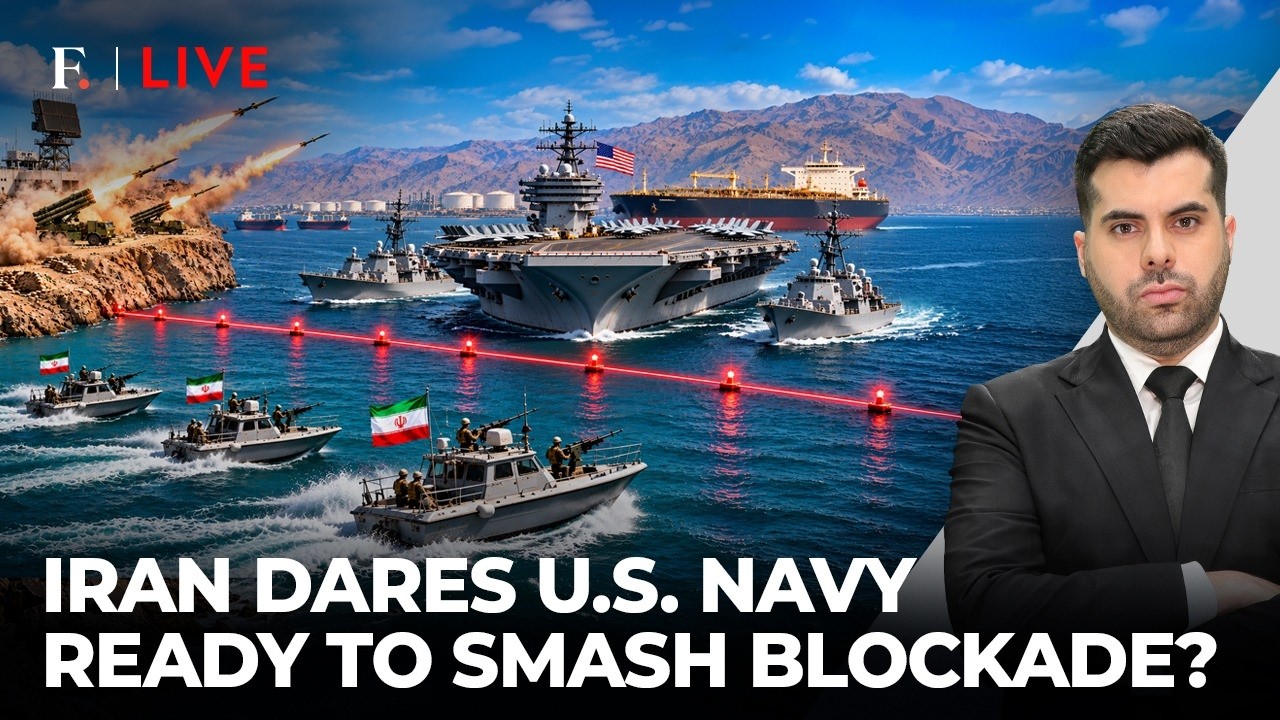
Iran's Missile City Exposed! Hundreds of Missiles in Underground Base, Trump on Notice

Firstpost reports on Iran's IRGC unveiling underground missile cities and a dual missile launcher, plus Houthi attacks on Saudi oil infrastructure amid US-Israel-Iran tensions.

Key Takeaways

  • Iran is using publicized missile city tours to deter renewed hostilities and signal that its arsenal remains active.
  • Dual missile launchers could complicate missile defense, raising the threat level for US and regional forces.
  • Houthi attacks on Saudi energy infrastructure show Iran-linked proxies expanding the regional conflict into critical economic targets.
  • Energy markets and shipping lanes such as Hormuz and the Red Sea remain highly vulnerable to escalation.

What the video covers

  • Iran's IRGC toured an underground missile base showing hundreds of short- and medium-range ballistic missiles and truck-mounted launchers, presented as a response to Trump's claims of destroying Iran's launchers.
  • The IRGC revealed a dual missile launcher capable of firing two liquid-fueled missiles simultaneously, which analysts say could overwhelm air defenses and enable evasive adjustments.
  • Open-source analysts linked the missiles on the launcher to the Shahab and Kadar families, with other missiles such as the Imad and Gad also seen in the tunnels.
  • The IRGC warned the US and Israel against resuming hostilities and threatened strikes on NATO bases if European countries assist US operations.
  • A second underground missile city was shown on November 21, following an earlier reveal on November 10 that included long-range missiles and kamikaze drones.
  • The Houthis claimed strikes on Saudi Arabia's Rabigh oil refinery and a radar facility in Najran, after Saudi forces intercepted a drone.
  • The Rabigh complex is a major petrochemical facility run by Saudi Aramco and Sumitomo Chemical, making the attack a notable escalation.
  • The conflict has disrupted energy flows through the Strait of Hormuz, which normally carries about a fifth of world crude shipments.
  • Trump claimed US control over the Strait of Hormuz and said Iran was not offering a real deal, while Iran's foreign minister said any settlement must address its demands.
  • The Houthis have also threatened Red Sea and Bab al-Mandab shipping, and the report notes human rights concerns including detentions, torture, and child recruitment in Houthi-controlled areas.

Answers

Questions about this video

What is the dual missile launcher Iran unveiled?

According to the transcript, it is a truck-mounted launcher that can carry and fire two liquid-fueled ballistic missiles simultaneously at the same target. The report says this doubles strike capacity per launcher and may complicate interception.

What did the Houthis attack in Saudi Arabia?

The Houthis claimed they struck the Rabigh oil refinery and a Saudi radar facility in Najran province. The transcript notes the extent of damage at Rabigh remains unclear, and that Saudi forces had intercepted a Houthi drone earlier.

Why does the Strait of Hormuz matter in this story?

The transcript says Hormuz normally carries roughly a fifth of the world's crude oil shipments and has been disrupted by the conflict. Disputes over control of the strait add to global energy market instability.

Full Transcript — Download SRT & Markdown

00:00
Speaker A
Iran is showing Donald Trump something he would rather not see. Hundreds of brand new missiles, shiny truck mounted launchers in endless underground tunnels, all part of a missile city. But now, for the first time, Iran has unveiled a dual missile launcher.
00:16
Speaker A
Basically, a truck that can fire two ballistic missiles in one go. This can overwhelm America's air defenses, increasing the chances of a lethal strike. On one hand, Trump keeps saying the US military has destroyed Iran's missile launchers and then Tehran keeps
00:31
Speaker A
dropping missile city tours lined up with all kinds of modified launcher trucks. Our next report tells you more.
00:40
Speaker A
You cannot destroy what you cannot find. That is the dare Iran has given US President Donald Trump. On November 21, the Islamic Revolutionary Guard Corps or the IRGC unveiled another underground missile city. IRGC Chief Ahmed Wahidi accompanied by commander of the IRGC's
01:00
Speaker A
aerospace forces, Brigadier General Sed Maj Mousavi, tooured an underground missile base in an unknown location in Iran.
01:10
Speaker A
Hundreds of short-range and medium-range ballistic missiles were seen inside the tunnels stacked up against the walls.
01:17
Speaker A
Hundreds of shiny truck mounted launchers were also visible in the footage. And then the two IRGC officers turned a corner. Behind them, a unique truck armed with two missiles could be seen. Iranian media reports this is the first time that the IRGC has unveiled
01:34
Speaker A
its dual missile launcher. The launcher seen in the underground missile city can carry two liquidfueled missiles at the same time, allowing it to fire two missiles simultaneously at the same target, which doubles the strike capacity per launcher. That makes it
01:51
Speaker A
harder for any air defense systems to intercept the incoming dual threat. And twin vertical launches of liquid fueled missiles allow speed controlled adjustments of the launch, increasing the chances of evading any interception.
02:05
Speaker A
So, a twin missile launcher increases the chances of a successful strike drastically. While Iran has not officially revealed which two missiles were seen on the new dual launcher, open-source intelligence analysts point to two possible weapons.
02:21
Speaker A
The missile at the top resembles the Shahab family of liquidfueled missiles that are known for their sharply tapered baby bottle-shaped nose, while the missile at the bottom has a rounded nose cone painted in black and closely resembles medium-range ballistic
02:37
Speaker A
missiles of the Kadar family of liquidfueled missiles. Along with these, several other missiles like the Imad and Gad were also seen inside the tunnel.
02:47
Speaker A
But beyond the two missile threat, the IRGC also warned the US and Israel against resuming hostilities. The IRGC chief threatened to even strike NATO bases if Europe assist the US in resuming hostilities.
03:02
Speaker A
NATO's secretary general said that we have 5,000 flights from all NATO countries. This is a figure they themselves have admitted to. They were all there, but by God's permission, how often has a small force defeated a large one by God's permission? Our
03:18
Speaker A
capabilities have increased in the period between the two wars. Surprises and effective products of a deterrent and crushing nature have taken shape within our military organization.
03:31
Speaker A
Just in November, Iran has now shown two hidden underground missile cities. The first such military infrastructure was revealed on the 10th of November where hundreds of longrange ballistic missiles and kamicazi drones were on display.
03:59
Speaker A
And then on November 21, the IRGC aired footage of a second underground missile base equipped with short and medium-ranged ballistic missiles.
04:23
Speaker A
Despite Donald Trump repeatedly claiming to have destroyed Iran's war fighting capabilities, the IRGC keeps churning out guided tours of its missile bases.
04:34
Speaker A
And these missiles are not just a message to Washington. The audience also includes Israel, Saudi Arabia, the UAE, Qatar and every country in West Asia that hosts US military bases. Iran is trying to deter resumption of hostilities by showing that its lethal
04:52
Speaker A
capabilities are very much active and are neatly hidden in mountains. And in a region that continues to remain on the edge, Iran's message from these missile bases is just as important as the missiles themselves.
05:10
Speaker A
The Houthis have a message for West Asia. No oil refinery is too far away.
05:14
Speaker A
No shipping lane is too important. And no military is too powerful to be put under pressure. The Iranbacked militia have now claimed an attack on Saudi oil refinery.
05:25
Speaker A
The Houthi say they struck the Rabig oil refinery in Saudi Arabia. The group also claimed it struck a Saudi radar facility in Naj province. The claim comes after Saudi forces intercepted and destroyed a Houthi drone heading towards the
05:39
Speaker A
kingdom's western region. The extent of the damage at the Raig site remains unclear, but the message is becoming increasingly difficult to ignore. Saudi Arabia's oil infrastructure is no longer just an economic asset. It is a target and the people threatening it are not a
05:54
Speaker A
conventional army. They're the Houthis, a militant group that Saudi Arabia has spent years trying to contain. A group that has arrived that has survived years of military campaigns, expanded its arsenal, and now appears increasingly comfortable taking on some of the
06:08
Speaker A
region's biggest powers. And if Riyad thought its problems were confined to Yemen, it may want to think again. Let's understand why. The latest attack comes amid an intensifying regional conflict between the United States, Israel, and Iran, which began in
06:23
Speaker A
late February. It is no secret that Iran has been using its network of regional allies to increase pressure on Washington and the Houthis are one of its most consequential partners. Over the weekend, Gulf countries reported multiple attacks by Iran linked forces.
06:41
Speaker A
The Yemeni armed forces will continue to defend our country and our people and will teach the criminal Saudi enemy lessons it will never forget, relying upon God Almighty and placing their trust in him to ensure it receives its
06:55
Speaker A
fitting punishment and pays the price for its crimes against our people. Meanwhile, the Iran has made its negotiating position clear. Iran's foreign minister says the country will not accept a deal simply to escape the conflict. Any settlement must address
07:09
Speaker A
its demands and concerns. In other words, Theran is not looking for an exit door. It wants the terms of its exit written in its favor. And the Houthis are helping make that possible. Their latest target, the Rabi complex, is
07:21
Speaker A
particularly significant. It's located around 165 km north of Jedha. Rabi host Petro Rabi, a major oil refining and petrochemical facility developed by Saudi Aramco and Japan's Sumitomo Chemical. So it is part of the infrastructure that keeps Saudi Arabia's
07:38
Speaker A
energy industry running. That is a dangerous escalation, especially when the world's energy markets are already on edge. The war has disrupted energy flows through the straight of Hormuz, a critical shipping route that carried roughly a fifth of the world's crude oil
07:54
Speaker A
shipments before the conflict. Donald Trump, meanwhile, claims the United States has total control over the Straight of Ormos.
08:01
Speaker A
They want to make a deal, but they don't want to make a deal that's acceptable to me.
08:05
Speaker A
who want to make a real deal, not a fake deal that they've been doing for 51 years. No longer 47. People talk 47, it's 51 years. They've been uh they've been people for 51 years.
08:21
Speaker A
But controlling a shipping route on paper and keeping it safe in practice are two very different things. The Houthis are demonstrating precisely why.
08:28
Speaker A
Because Hormuz is not the only choke point the world needs to worry about. The Houthis have previously demonstrated their ability to threaten shipping through the Red Sea and the Babal Mandab Strait, another critical artery for global trade. They have already shown
08:42
Speaker A
that a relatively small militant force can disrupt international commerce on a massive scale. And now they're expanding that threat. The bigger problem is that the Houthis have evolved. They're no longer the ragtag rebels who emerged as a major force in Yemen over a decade
08:56
Speaker A
ago. They now control roughly a third of Yemen's territory and most of its population. They have built an increasingly sophisticated arsenal of missiles and drones and have demonstrated an ability to sustain attacks against much stronger opponents.
09:11
Speaker A
Their military capabilities have also evolved. They do not launch missiles with empty ambitions. The group has backing from China and they have also developed pragmatic ties with several terrorist groups such as al-Qaeda and al-Shabaab.
09:25
Speaker A
The group has also reportedly built relationships with armed organizations, expanded its outreach across the Horn of Africa. This outreach appears to be modeled on Iran's efforts to build up strong regional allies. And that's not all. In fact, the Houthies are expanding
09:41
Speaker A
missile and drone production, experimenting with new technologies, and studying modern warfare, including lessons from the Russia Ukraine conflict. Reports have also pointed to the use of artificial intelligence tools to improve aspects of their military capabilities.
09:56
Speaker A
There's another reason their growing influence should worry the region. The Houthi's ambitions do not necessarily end at Yemen's borders. The group has repeatedly expressed ambitions beyond its immediate territory, including rhetoric around Saudi Arabia's holiest cities, Mecca and Medina, and the
10:11
Speaker A
liberation of Jerusalem. Its ideology is deeply confrontational, and its record of governance is equally troubling.
10:17
Speaker A
Human rights organizations have documented arbitrary detentions, torture, disappearances, and the recruitment of child soldiers under Houthi control. And Saudi Arabia is right in the firing line. But here's where Riyad has a problem of its own.
10:32
Speaker A
For years, Saudi Arabia spent billions trying to build a military capable of protecting the kingdom. It has bought advanced aircraft, missile defense systems, and sophisticated weapons from some of the world's biggest defense manufacturers. Yet, the Houthi threat exposes a fundamental weakness. Why?
10:47
Speaker A
Because Riyad's military was not necessarily designed for a prolonged unconventional war against a determined insurgent force operating right across its border. On top of that, the kingdom has historically been reluctant to develop a powerful domestic military that could potentially become a
11:03
Speaker A
political threat to the monarchy. That leaves Riyad facing a difficult reality. The United States is heavily occupied with its confrontation against Iran.
11:12
Speaker A
European countries have their own security priorities, particularly Ukraine, and other Gulf states have little appetite for getting dragged into another prolonged conflict. Saudi Arabia therefore may have to shoulder much larger share of the burden itself. And that is not going to be easy because
11:29
Speaker A
even if the kingdom manages to secure a temporary ceasefire, the underlying problem will remain. The Houthis will still have their weapons, their territory, their networks, and most importantly, their ability to threaten Saudi infrastructure.
11:42
Speaker A
A pause in fighting could simply give them more time to regroup and expand their arsenal. For Riyad, this is no longer just about winning a war in Yemen because the Houthis may have started as a rebel movement. But they're fast
11:54
Speaker A
becoming a regional power problem. And Saudi Arabia is discovering that despite having the world's money, what it can't buy is peace.
12:05
Speaker A
If you enjoyed today's show, hit the like button and subscribe so you never miss an episode. And if a story stood out to you, drop us a comment. We'd love to know what caught your attention. Tell us what matters to you and what you'd
12:17
Speaker A
like to see us cover next. Connect with us and we'll always connect back. [music] Hi, my name is Josh Barnes. I am the international foodie.
12:29
Speaker A
I can't wait to try his food. Let's go. [music] Wow. [music] This is a top level restaurant.
12:42
Speaker A
Genuinely is the nicest [music] feeling. But here is something completely different. This is unbelievable food.
Topics:IranIRGCmissile cityHouthisSaudi ArabiaRabigh refineryStrait of HormuzTrumpdual missile launcherWest Asia conflict

Get More with the SozAI App

Transcribe recordings, audio files, and YouTube videos — with AI summaries and speaker detection. 30 minutes free.

Or transcribe another YouTube video here →