Learn how to rapidly improve your Roblox game stats like playtime, conversion, and revenue with proven data-driven methods.
Ask about this video. Answers come from its transcript only — with the timestamp, so you can check them.
Generated from the transcript and can be wrong — check the timestamp.
Key Takeaways
- Improving game stats requires understanding and analyzing both qualitative and quantitative data.
- Every update should be treated as a hypothesis tested against player data to maximize impact.
- Onboarding tutorials and satisfying core loops are critical for retention and engagement.
- Monetization improves with cheap starter packs, repeatable purchases, and tiered pricing.
- Marketing elements like thumbnails and titles significantly affect player acquisition.
What the video covers
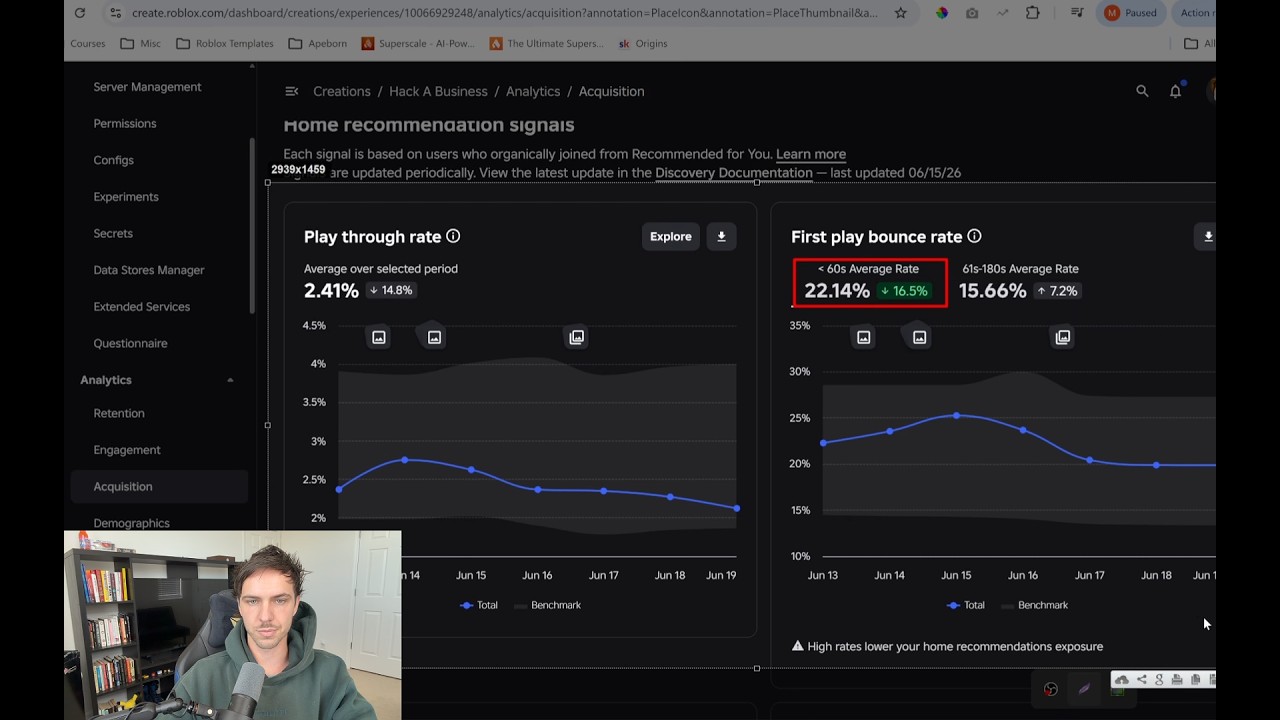
- The video teaches how to improve key Roblox game stats such as average playtime, D1/D7 retention, payer conversion rate, ARPPU, and QPTR.
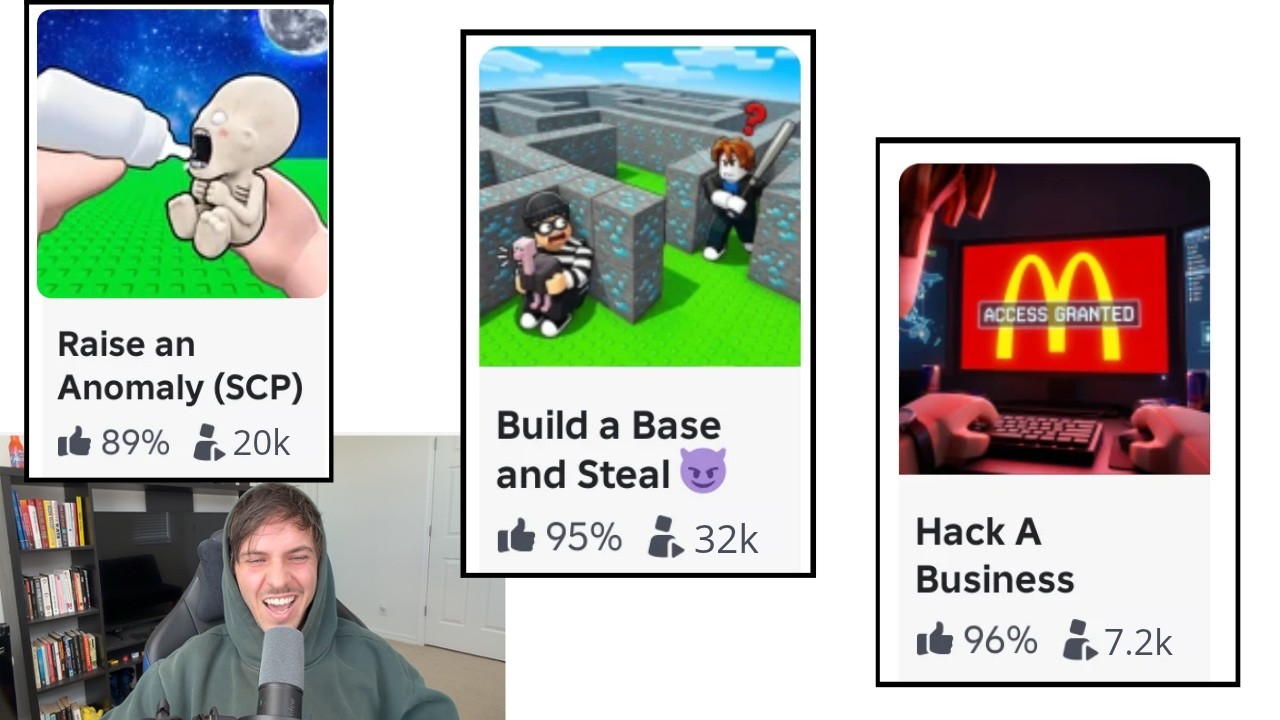
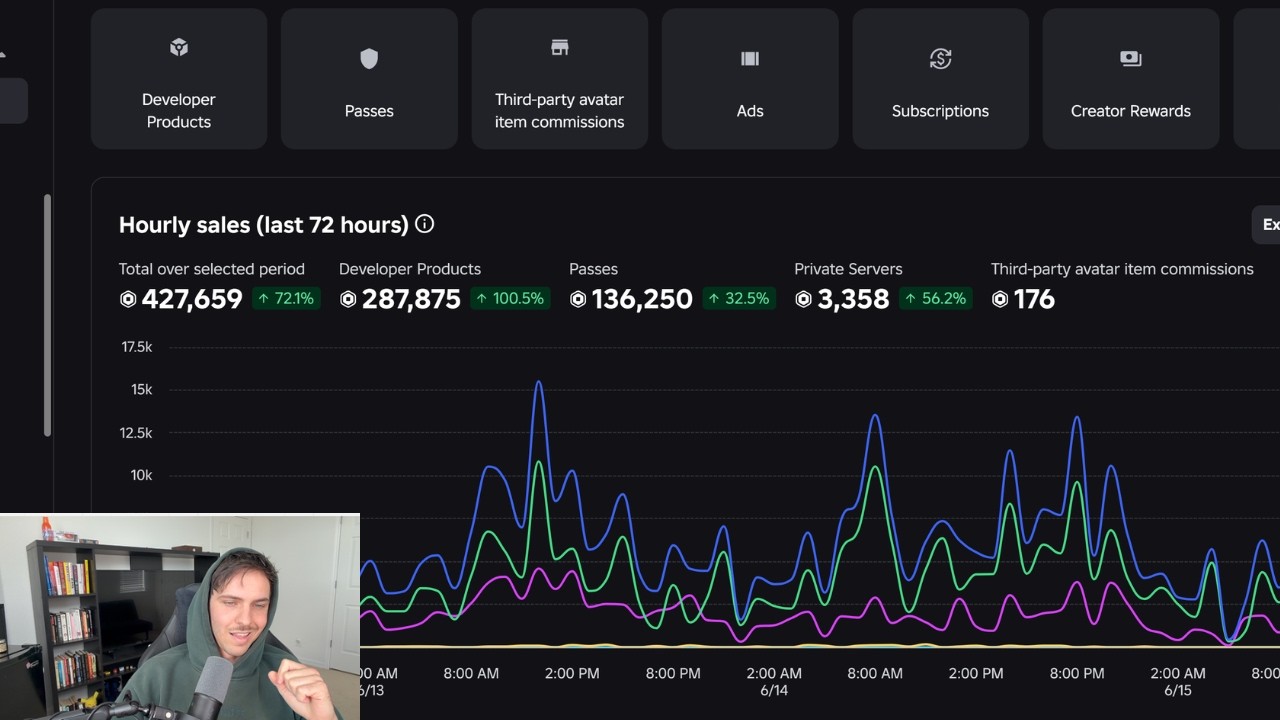
- It uses the example of the game Hack of Business, which scaled to 1K concurrent users and $6K monthly revenue within two weeks.
- Emphasizes the importance of iterative updates based on data and forming hypotheses before launching changes.
- Explains how to improve average playtime by enhancing the core gameplay loop with satisfying feedback like sound and camera effects.
- Discusses improving D1 retention by optimizing onboarding tutorials using funnel tracking and show-don't-tell teaching.
- Mentions social features, content, and events as ways to boost D7 retention.
- Recommends starter packs and consumable developer products to increase payer conversion rate.
- Suggests tiered game passes for maximizing average revenue per paying user.
- Highlights the role of marketing elements like thumbnails and titles (QPTR) in attracting players.
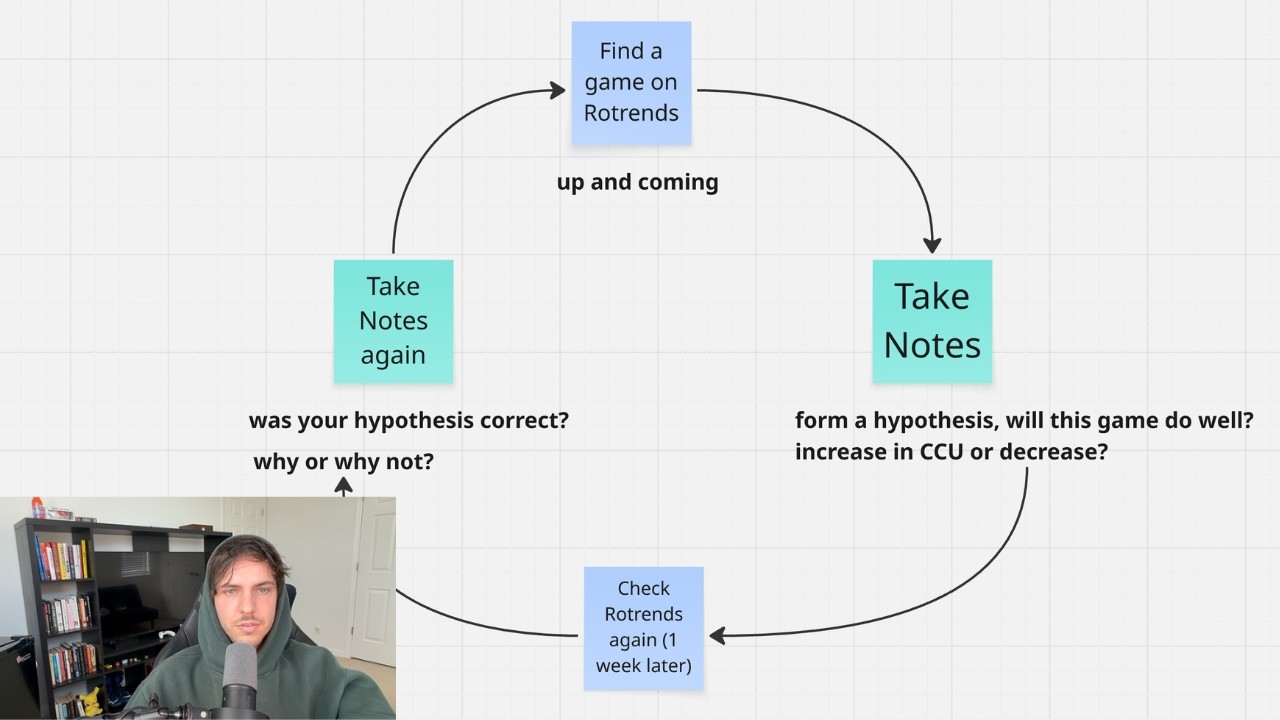
- Introduces a mental model borrowed from e-commerce A/B testing focused on data-driven hypothesis formation and validation.
Chapters
- 00:00Introduction to Improving Roblox Game Stats
- 00:49Developer Collaboration and Game Success Story
- 01:46Improving Average Playtime with Satisfying Gameplay
- 02:54Optimizing Onboarding Tutorials for D1 Retention
- 03:36Boosting Payer Conversion Rate with Starter Packs
- 04:21Maximizing Revenue Per Paying User and Marketing Tips
- 05:18Data-Driven Mental Model from E-commerce to Roblox
- 06:00Forming Hypotheses and Using Qualitative Data
- 08:48Combining Data Points and Competitor Research
- 11:23Example Hypothesis and Update Process
Full Transcript — Download SRT & Markdown
Speaker A
This is how to improve your Roblox game stats fast. So, this video is going to be for you if your stats absolutely suck. I'm talking average play time, D1, D7, payer conversion rate, average revenue per paying user, QPTR. We're
Speaker A
going to go over all of it. I'm going to show you the exact methodology and mental model that I used to take this game, Hack of Business, to a peak of 1K CCU today. Probably going to hit 2K this
Speaker A
weekend. Okay, nearly all green stats besides D7 is a little cooked, which I'll explain.
Speaker A
And this game is currently making 6K USD per month. When I first started working on this game, these stats aren't where they are today.
Speaker A
And it's thanks to the developer. Shout out to you, David. He's hardworking. He updated daily, sometimes twice a day, and he followed the data. And I'm going to show you guys exactly how both me and David, because I
Speaker A
am a co-owner in this game, Hacker Business, scaled this game again to 1K CCU, 6K USD per month within just two weeks of launching. So, without further ado, if your stats suck, this video is for you. Let's get into something called
Speaker A
iterative updates. I'm going to give you a quick overview of how I would improve each stat, what each stat means, my personal opinion. Let's just get this out of the way. So, average play time.
Speaker A
If it's low, that means your core loop sucks. It means it's not satisfying. Every little action in the game should have a sound effect or a visual effect.
Speaker A
Okay? So what I mean is like for example if I have a pickaxe and I go to hit a rock there should be a sound effect when I hit the rock. Okay. And there should be a little camera shake. Okay. It is
Speaker A
basically satisfying gameplay. Okay. Action and response. D1. If you have low D1 usually it's your onboarding tutorial that is absolutely cooked. You don't have a good tutorial. You need to track using funnels. If you guys don't know what funnels is, which I'm shocked that
Speaker A
how many freaking devs I've met that don't use funnels to track, you need to go here, analytics, funnels, okay, and track your actual tutorial completion rates. Okay, you can see we're tracking every single step in our tutorial here. Okay, and the biggest
Speaker A
thing when it comes to tutorials is show don't tell. Okay, let the player see direct cause and effect of their actions. Example, grow a garden. Player plant seed. They see seed grow into a carrot. Okay, that's a learning
Speaker A
experience. When I do this, this happens. Rather than just saying, hey, seeds are used to make carrots. You have to show them, give them the opportunity to actually act. I mean, think about how you learn as a toddler, right? Do you
Speaker A
learn by your your dad telling you this is how you catch a baseball with a baseball glove or do you learn by actually catching a ball with a baseball glove? Okay, it's really that simple.
Speaker A
D7, I'm going to be honest, I am not the best guy when it comes to D7, but usually is there a social flex element in the game? Does the game have enough content admin abuses and events? Um, shout out Lucky Matt G if you're
Speaker A
watching this video in the Discord. This guy is the goat when it comes to admin abuses. Okay, payer conversion rate.
Speaker A
Easiest quick win for you guys. Always have a starter pack. Make it cheap. Uh consumable dev products. What I mean by that is it's something that can be bought again and again. Something we do for Hack of Business is every time they
Speaker A
get offline earnings and they go to collect it, there's a prompt that says, "Hey, would you like to double your offline earnings for 19 Robux?" That's drastically increased our payer conversion rate. Okay. Average revenue per paying user, which is of course this stat. This is
Speaker A
going to come from your game passes. Make sure you have expensive game passes for your whales. Okay? I learned this from both Hack Business and Farmer Die.
Speaker A
Um, small, medium, and large fries, right? You go to McDonald's, you get small, medium, or large. Usually want three options. For our game, we have a starter pack, we have a pro pack, and we have an OP pack. OP pack is most
Speaker A
expensive. Pro pack is mid-price range. Starter pack is cheapest. Okay. QPTR. I've made tons of videos on this. This is probably my best wheelhouse is marketing. So packaging, right? What's packaging? Thumbnail and title. Okay.
Speaker A
This is just a quick overview of how I would improve each stat. Okay. Now, what's more important, what I want to teach you guys is the mental model that I highly recommend. And this is actually a mental model I formed running
Speaker A
conversion rate optimization in AB tests for eight and nine figure ecom brands. Okay, this mental model I'm about to share with you, I have yet, not to toot my own horn, I've yet to see a dev put it the way I'm going to explain it to you guys
Speaker A
and I'm going to try to break it down super simply. So the question is always how do I improve my stats? Okay, and the answer always is you need to understand your data. Okay, now when I worked in
Speaker A
the ecom space, it was all about reading data. You got to you got to figure like I'm in a position, right? I'm working on a nine figure ecom brand. They're trusting me to make a change on their website and it's super risky. If I make
Speaker A
the wrong change, I could cost them a ton of money. Okay, so what did I do? I took a lot of time to do research and look at data to make informed decisions on what to change on their website. Now,
Speaker A
it's the exact same mental model for a Roblox game. Okay, so what do we do?
Speaker A
Let's say we want to improve average play time. Before we can do this, you guys first need to understand, this is the way I look at it. Every fix or update you publish to your game is really just an educated guess. Okay?
Speaker A
Aka, it's a hypothesis. If you remember the scientific method in like 8th grade, it's basically this.
Speaker A
You're always either adding, removing, or improving something in your game. Might sound straightforward, but these are examples of what a hypothesis will look like. If I add Y feature, then X stat will improve. If I remove Y feature then X stat will improve. If I
Speaker A
improve Y feature, then X stat will improve. Okay, you can change the word feature with um action um economy progression, right? You can change that word. It's interchangeable. But this is an example of what it looks like to form
Speaker A
a hypothesis. Okay. So, basically what we're doing before we launch an update to improve our stat because remember our goal is to improve a specific stat, we need to form kind of an educated guess.
Speaker A
That's the easiest way to put it, right? And this educated guess is going to be either adding, removing, or improving something in your game. Okay? Now, what we want to do before we just launch updates willy-nilly and hot fixes, okay,
Speaker A
is we want to look at as much data as possible to give our educated guess the highest chance of succeeding. So, to have the highest chance of success, you want to cross reference multiple data points to strengthen your hypothesis.
Speaker A
Okay? Don't get discouraged or overwhelmed with fancy terms if you feel like this is like overwhelming. I'm going to try to break this down super simply.
Speaker A
Super simply, but the TL;DR is you want to look at tons of data to make sure you are making the best possible educated guess. Okay, I'm going to show you guys an example of what this looks like for Hacker
Speaker A
Business. Okay, before I do that real quick, just understand there's two types of data. Okay, the first is called qualitative data. What is qualitative data? Qualitative data is basically it's like your voice of the player.
Speaker A
Okay, this is direct feedback from players in your surveys. So if you go here, you go to audience feedback. Okay, this is all qualitative data. Okay, it's basically any data that's not numbers. It's usually words, people are saying things.
Speaker A
It's also, you know, bug reports in your game's Discord. And my personal favorite one, watching what players do live in the game. Okay, let's read a quick definition. Qualitative data is descriptive, non-numerical information that captures concepts, opinions, emot...
Speaker A
why and how behind a subject. Instead of measuring how much of something exists, it describes the qualities or characteristics of an experience. This is the most overlooked thing in Roblox development in my personal opinion.
Speaker A
Okay, a lot of devs want to just look at numbers in their dashboard, but in my opinion, this is the most overlooked data source. Qualitative data, specifically watching players live in game is my personal favorite. Okay, that's qualitative data. Second type of
Speaker A
data is quantitative data. Okay, what is that? Quantitative data is any information that can be counted, measured, and expressed in numerical values. This is all of your stats basically. This is all quantitative data. Okay?
Speaker A
So, simply put, it's numbers. You know, your funnels, new user, first session, retention. It's anything with numbers is quantitative data. Okay. Third honorable mention place to look for quote unquote data is competitor research. And it's exactly what it sounds like. It's looking at
Speaker A
games that are in your genre that are crushing you. Okay? The top games in your genre. Okay, so again to wrap this back up, bring it full circle. We want to improve average play time. Okay, what we need to look at is
Speaker A
our qualitative data, our quantitative data, and do some competitor research to form a hypothesis in order to make an update in hopes that it will improve a specific stat. Okay, so I want to improve average play time. Step one,
Speaker A
what am I going to do? I'm going to go do research. I'm going to analyze both qualitative and quantitative data and do a little bit of competitive research.
Speaker A
Let me show you an example of an update that we pushed live for Hacka Business that improved the average play time.
Speaker A
Okay, so this guy came into our Discord. This is qualitative data. Again, voice of the player suggestion mode and settings to make antennas target random servers or not. How would it work? Each antenna on a plot targets a random
Speaker A
server on the plot until it's full, then goes to another server, blah blah blah.
Speaker A
If you guys have played Oil Empire, basically what this guy was saying is when you go to play Oil Empire, okay, you can collect oil or sorry, gas from multiple refineries at once. Okay, our game is a I don't want to say clone, but
Speaker A
heavily inspired by Oil Empire. Okay, the issue was you could only collect data from one server at a time. This guy was suggesting, hey, what if I could collect data from multiple servers at a time?
Speaker A
That's our qualitative data. So, that's one piece of evidence that gets me thinking, okay, I'm starting to form a hypothesis. If I add this feature, it will improve average play time. What do I do next? I go do some competitor
Speaker A
research. I look at the biggest game in the genre and I see, does this game have this feature? Okay, yes or no. If the answer is yes, I now have two pieces of data that are pointing towards this
Speaker A
update being a good idea. The update being I should make it so all servers can have data collected from them at once. Okay, I now have two po two pieces of evidence that point towards this being a good idea for something to ship.
Speaker A
Okay, now I go look at my quantitative data. Okay, I look at new user first session retention. This is one of my favorite metrics. If you go here under analytics to engagement, okay, I always usually like to look at 7-day windows.
Speaker A
You scroll down here, you can see this right here. Okay, for all my content creators, this is basically like your hook and retention rate. Now, I can see there is a decent steep drop off at around the 2 minute and 30 second mark.
Speaker A
So, what I could do is I could go into my game. I could type in five minute timer on Google, go into my game, start this timer, play through the tutorial, and see what is actually happening at the 2 minute and 30 second mark that is
Speaker A
causing this drop off. Okay, let's say it is something related to what this guy was saying. You guys get where I'm going with this? I now have three pieces of evidence that is strengthening my educated guess. Okay? And my educated
Speaker A
guess is being if I change this feature in my game, aka how the player actually collects data from the server. If you go play hack business, you'll know what I'm talking about. Then average play time will increase. Notice how I don't just
Speaker A
look at one piece of evidence. I'm looking at player feedback. I'm looking at competitors. I'm looking at my actual metrics. I have three pieces of evidence now to strengthen my educated guess and increase the chances that this change to
Speaker A
my game will improve that specific metric. Okay. So, what do I do now? I form a hypothesis. If we make it so all servers can collect data at the same time, then it will make for a more engaging user experience, especially on
Speaker A
mobile, therefore increasing average play time. This is my hypothesis. Now what do I do? I simply make the change and I ship the update. Okay, I push that update live and I check the data. Did it improve average play time? Yes or no? If
Speaker A
no, we need to go back to the drawing board, revert the change and come up with a new hypothesis. This is the very simple mental model when it comes to improving your stats.
Speaker A
What is the key takeaway? You want to cross reference several data points to increase the strength of your educated guess. Okay, literally updating your game, even creating a game loop is just an educated guess. You could technically say everything in game development is an
Speaker A
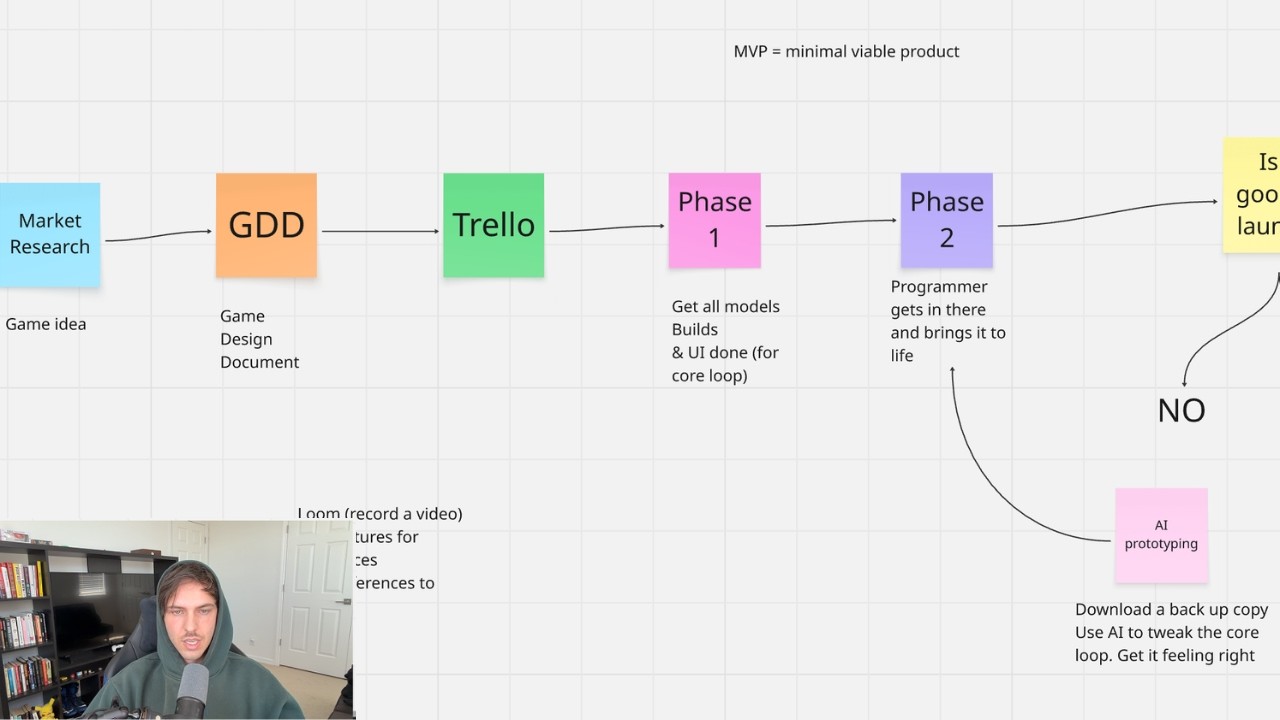
educated guess. Okay, technically. Now, this is how you win more often than not. So, what is the process? Okay, it's research. What is research?
Speaker A
Qualitative data. Okay, what's qualitative data? I put it right here. This is direct feedback from players and surveys, reports in your games and Discord, uh, watching players live in the game. Okay, so I'm looking at qualitative data.
Speaker A
I'm also looking at quantitative data. Okay, what's quantitative data? That's your stats. If I can spell holy cooked.
Speaker A
Okay. And then competitors. This is how you improve your stats. This is the mental model. Okay. Research.
Speaker A
What's step two? Form hypothesis. That's supposed to be two. Chill. Okay. Okay. Launch update.
Speaker A
That's three. Okay. What's four? Check results. Check results. Did it work? Yes or no.
Speaker A
If yes, awesome. Go back to doing more research. Come up with your next hypothesis. If no, awesome. Revert the change. Go back to doing research. Form another hypothesis and launch another update. This is the iterative cycle.
Speaker A
Okay? This is the exact thought process and mental model that I used to improve conversion rate of nine figure e-commerce brands. And it's the exact same mental model that I've used in combination with David just executing like an absolute beast and being an
Speaker A
absolute beast of a developer. Go follow him on Twitter to improve stats to get this game to the point where it's at where it's making 6K USD a month within two weeks of launching. This is the mental model.
Speaker A
Okay, I don't know how how much more sauce I can give you guys. This is literally it. If you have any questions, just ask me in the Discord. Hope you guys got value from this video. Peace and love.
Topics:Roblox game developmentgame stats improvementplayer retentionpayer conversion rategame monetizationgame analyticsiterative updatesgame marketingA/B testingHack of Business Roblox