Skip to content
Get App

1 Урок французского языка, учим с 0. Новый проект.

First lesson of a 'Learn French from Scratch' series: how to read French, starting with monosyllabic words, nasal sounds, and the semi-soft 'l' and French 'r'.

Key Takeaways

  • Learning to read French from the first lesson is more efficient than learning the alphabet
  • Several French letters are silent at the end of words, especially in monosyllabic words
  • French has distinct sounds (guttural r, semi-soft l, nasal vowels) that differ from English and Ukrainian
  • Pronunciation should be approached relaxedly at the beginning, with precision developing over time

What the video covers

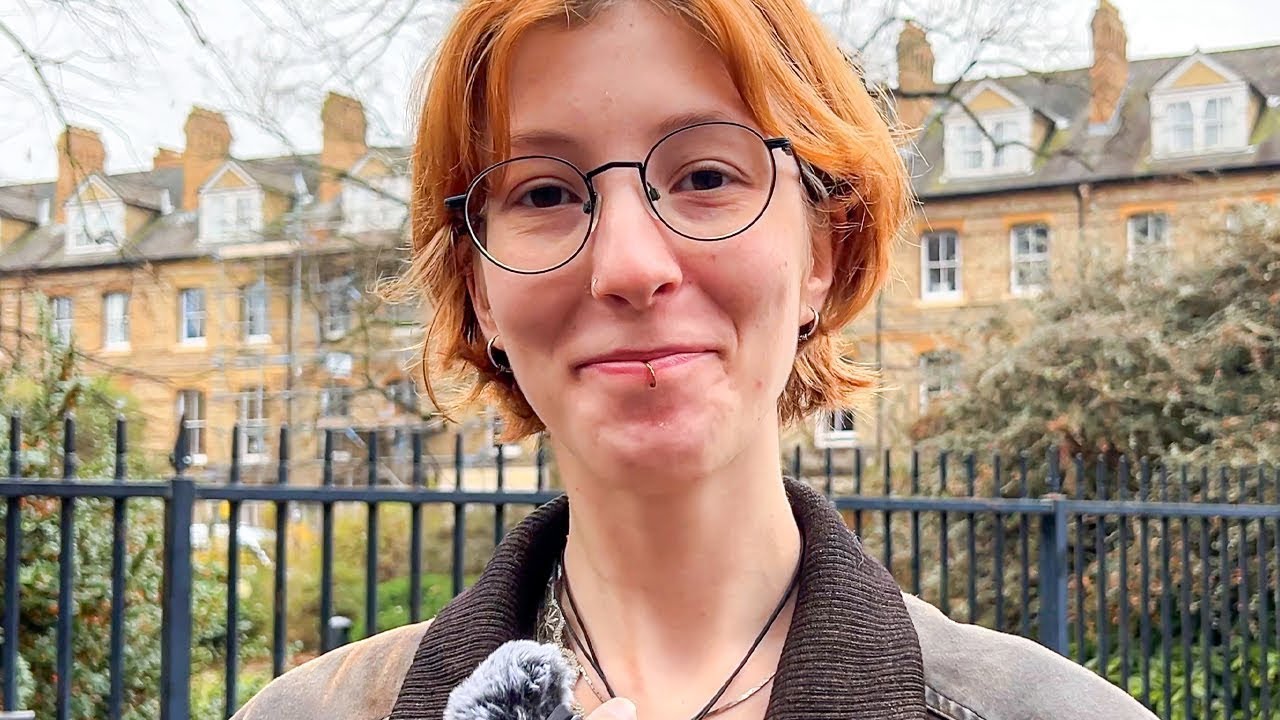
  • Introduces the new 'Learn French from Scratch' series with a student, Alena, who already speaks English
  • Explains why learners should start reading immediately instead of memorizing the alphabet, since letter names differ from their sounds
  • Covers reading rules for monosyllabic words, including silent final 'e' and final consonants like s, t, k, l, m
  • Teaches the 'oi' combination, pronounced as the 'y' sound
  • Describes the French guttural 'r' (back of the throat) and contrasts it with a rolled 'r'
  • Explains the semi-soft 'l' sound, which is neither hard nor soft, as in 'blouse'
  • Introduces nasal vowels from 'on' and 'om', with the n/m silent and only nasalization remaining
  • Notes that 'ain'/'in'-type sounds and silent endings like 'ent' or 'es' are explained through examples
  • Walks through short dialogues introducing 'Mon mari' (my husband) and sentence structures like 'C'est' (this is)
  • Advises that pronunciation need not be perfect initially and that the first 10 lessons will mainly review rules, with materials shared via Telegram

Answers

Questions about this video

Why does the instructor recommend skipping the French alphabet at the start?

The instructor argues that letter names are pronounced differently from the sounds the letters make in words, so memorizing the alphabet wastes time. Starting directly with reading rules is more efficient.

How is the French 'r' different from the rolled 'r'?

The French 'r' is produced in the back of the throat, closer to the Ukrainian 'g', rather than being rolled or burred at the front of the mouth as in many other languages.

What does the instructor say about pronunciation accuracy in the first lessons?

The instructor says learners can relax about pronunciation early on. Precision matters for a pleasant, practical speaking level, but the first lessons focus on reading rules and are not meant to be difficult.

Full Transcript — Download SRT & Markdown

00:02
Speaker A
Bonjour, dear viewers. Bonjour, Alena. And this is our first lesson, our first video, and the format is "Learn French from Scratch." And those who have been with me for a while know that I've had a similar format before. My sister and
00:18
Speaker A
I have reached lesson sixty-five. And now, let's say, someone has appeared in my life who also wants to try learning French from scratch. As always, I don't know what lesson we'll be studying up to, yes, but I think we'll have at
00:32
Speaker A
least 20 lessons 100%. We'll see what happens next, yes. If our, uh, participant, our student, uh, Alena, wants to continue studying, then, of course, we'll continue, perhaps preparing for some exam, yes—that is, all this can change as we go. But
00:49
Speaker A
nevertheless, yes, you can count on at least 20 lessons, so to speak, if you start studying with us. As always, we start with reading rules. Alena already has a first foreign language, which she's already learned—English. Oh, and now, yes, you're learning English
01:08
Speaker A
too, right? There. And, actually, French, yes, will be like, well, um, like a second foreign language. So, sometimes I'll make some footnotes, links to English, explain things using some English rules . Again, if it's appropriate and convenient. So, in my case, I believe
01:31
Speaker A
that in order for a person to study a language, and as a teaching specificity , you first need to learn to read.
01:40
Speaker A
However, I don't ask people to learn the alphabet. I think that's pointless, because in the alphabet, the letters are pronounced one at a time. That is, like the name of the letter, but they produce a completely different sound.
01:53
Speaker A
Therefore, to save time, I always recommend starting, uh, trying to read right from the first lesson. And while some words might be more difficult, because, yes, it's impossible to explain all the rules, I've tried to build a system of reading rules so that
02:11
Speaker A
one thing builds on another and gradually, yes, this rule base grows. We'll be partially based on my course for beginners, um, a French course from scratch. If you're interested, you can check out all the information on my Telegram channel and find my contact
02:27
Speaker A
information there. Yes, a link to the Telegram channel, where there will be some supporting materials for our lessons and, perhaps, homework, if appropriate. And the first 10 lessons will most likely just be review, right?
02:40
Speaker A
So, I'll be sending Alyona a document that will simply require reviewing the rules and reading something, because, yes, in the first lessons we're learning to read, well, and we'll take some minimal information to make things interesting and keep things moving. So,
02:55
Speaker A
we'll start with a reading rule, which I think is very important, because people who learn without a teacher make this mistake later, well, it's very difficult to eradicate. In French, words that consist of two letters are, let's say, monosyllabic words. So, what
03:16
Speaker A
is a monosyllabic word? For example, our word "mama" consists of, well, how many syllables? Two. Right, mama ma.
03:26
Speaker A
But there's, for example, the word "par "—that's already one syllable, right? There. And the words we see on the screen—they're words, yes, made up of one syllable. And in monosyllabic words , if we see the letter "E" at the end,
03:44
Speaker A
but in French it's pronounced "zhe." So , we never say "zhe"(a), because "zhe" would be like "I have." There. So, this is a key mistake that I often notice.
03:59
Speaker A
So, zh, l, m, t, k, s, the negative particle n also applies here, meaning it will be pronounced n, not n, right?
04:12
Speaker A
So we need to remember this right away. Alena, please try reading these words. Lyo, myo, te, te, se, nyo. Yes, very good. By the way, I want to say right away, yes, at first you don't need to try to pronounce the sounds there in
04:31
Speaker A
any special way. Later, we will have, for example, the sound y. It's a regular y. And indeed, there are some sounds that remain the same as we are used to pronouncing them. If somewhere you need to tense your lips more, yes,
04:46
Speaker A
and I will explain this. French has active articulation. We will not worry too much about pronunciation. It is important for us, yes, to reach some kind of practical, pleasant level of speaking in the near future. But if something is super, yes, it's
05:02
Speaker A
definitely important, I'll, of course, talk about it. But for now, yes, you can kind of relax. Everything that will be in the first lessons won't be difficult. Here's a translation just in case, just so you can roughly, yes, if
05:15
Speaker A
you glance there, understand what you're reading, but for now we're interested in the reading rules. So, in monosyllabic words, yes, it's read like this: zh, l ', m, t, k, s. Next, the first letter combination we're analyzing is the letter combination oy.
05:33
Speaker A
Both of these letters in this combination, in this sequence, yes, are read as y. This is our usual y sound.
05:42
Speaker A
There, for example, some Murka, chicken . The first words that came to mind with the y sound, yes, there's husband, for example, yes, it wasn't the first thing that came to mind, but there's powder. And all this also has the y
06:02
Speaker A
sound. The usual y sound. Let's look where we see these two letters. Here, next to each other, we pronounce y.
06:10
Speaker A
That's why the first word is kangaroo. And I didn't say anything about the r da, although it's so important. And this burred r sound, as everyone says.
06:20
Speaker A
No, it's not a burred r, if you try to burr it. I burr it. That's not the sound we need. Ah, the French G. This beautiful, yes, such a, yes, well, also , yes, the calling card of the French
06:34
Speaker A
language is pronounced in the back part of the gr. If you try, you will understand, you will feel where. And, as I say, it's closer to our Ukrainian sound g, yes, which begins to engrave.
06:50
Speaker A
We kind of vibrate it than kr. No. G. Kangu. Kangu. Let's try. R. Very good. And tell me that this is not an r, because the r is pronounced in the middle. The r is closer, yes, to the front, and the gr is pronounced
07:10
Speaker A
there, well, closer to the mountain, right? G. And that's where kangu is created. Further.
07:17
Speaker A
Kangu. Zhur. Uh-huh. Tuzh. U, grup. Blues kuple sop sup. Yes, just soup, like we say soup. I didn't say that yes, it's highlighted in gray.
07:42
Speaker A
That's right, you understand, right? I mean, we can't read the "I" at the end here. I didn't say "Lyo," right, because it's impossible to immediately list all the rules or the ones we need.
07:54
Speaker A
In French, there is no l sound, but there are semi-soft l. That is, it's not l, and not l, it's between. That's why it's called semi-soft. L, l, l.
08:05
Speaker A
Such l. Toulouse, blouse, kuple, that is, well, we don't say toulouse, but specifically toulouse.
08:13
Speaker A
Blz. I also think that this gives such a softness to the French language. And please read these three words. Blues, blues, kuple. Okay, you remembered that , right? It's a combination of letters.
08:30
Speaker A
It's not that difficult, especially since the words are chosen in such a way that, well, there is, yes, something to latch onto, and, let's say , mentally, yes, there is a similar word, yes, the name of the city, blouse
08:42
Speaker A
, kuple, verse, soup, that is, you can see the translation. Then the next letter combinations. O, N, o, mm, make a nasal sound. O, o, o. Let's try to pronounce it nasal. When we pronounce it nasal, it's like the sound comes
08:56
Speaker A
through both our nose and our mouth, right? There you go. Well, we can't close our mouths, otherwise nothing will be heard. But you need to let the sounds through your nose, then it will be O. Let's try.
09:08
Speaker A
O. Om. Good. Om. Om. Oh, excellent. That's it, right? Om. A and N. And m, if you pronounce the consonants, well, they are like, yes, nasalizing. N, well, m, m. Everything here seems to be tense for us. And that's why these two
09:27
Speaker A
letters in a certain position, I'll explain a little later, well, let's say , before a consonant or at the end of a word, these two letters create a nasal o. On bonzhuh, konku. That is, the n is no longer
09:45
Speaker A
pronounced, only an overtone remains. In some places, especially here, yes, to move on to the next consonant, we, of course, need to pronounce, yes, a little bit, well, like this. Bonzhuh.
09:57
Speaker A
Bunzhuh. Let's try. Bonzhu. Ugu. Konkul . Ugu. Ton. Bondon. Yeah. There are two b. Bomb-bom.
10:14
Speaker A
Bomb. Okay, now. Bomb-bom. Ugu. Vagon, lawn, citron baon. A little softer. Balon, balon, balon balcony. Mon salon. Saison.
10:36
Speaker A
Yeah. And here it was just, yes, very interesting. Season. Season. If I wrote here that this is a season, yes, it would be clearer right away. It is pronounced like a season.
10:50
Speaker A
Oh, by the way, salon and balom, yes, the softening is clear here, L', yes, but the word "balcony" also has a balcony. Bal'kon.
11:00
Speaker A
Bal'kon, yes. That is, we also soften the semi-soft l 'a little. But again, we'll get used to this in French. And there are three main nasal sounds. This is the nasal a. A, an. A, an. Nasal. O.
11:17
Speaker A
Well, first I pronounce the non-nasal, then, yes, it's sort of nasal. It's om. And there's also a nasal em. Here, e, it seems to me, sounds like a bit like a, yes, for us, but it's not that big
11:33
Speaker A
of a deal, as is. I just try to pronounce it from the e position. Well, and I kind of blow air through my nose.
11:43
Speaker A
And there's also a nasal sound, but it's very rare there. We won't take it into the framework of our, yes, e, well , not exactly express, but course, yes, and so as not to linger too long, not to bother. We'll come back to this
12:00
Speaker A
later on. The nasalization disappears. We saw OM there. But if we have doubling, and doubling not only when two identical ones are used, but also when m and n occur, the nasalization disappears, meaning it will just be tone, bon, gom. There is no x sound, so
12:21
Speaker A
we ignore the letter. Om. Oton. Here, perhaps, you need to pronounce some simple words a few times, like dom, son , tom, to disconnect from this nasalization. Just pronounce son, dom, ton, ton, dom, ton.
12:40
Speaker A
Yes. And now let's say these words. Uh-huh. Ton, bon, gom. Om. Oton. Oton. Regarding stress. Yes, the stress in French is on the last syllable, that is , at the very end. And this is convenient; you don't have to calculate
13:00
Speaker A
it or think about where to put it. Therefore, we always simply place the stress at the end. Also, in French, I mentioned active articulation and final consonants; they're pronounced, yes, clearly. Ton, bon. And perhaps, at first, you even need to artificially do
13:20
Speaker A
something, you know, make them artificially clear and resonant. That is, later it will all even out, but you'll develop this habit, yes, it will then always help you pronounce and read correctly and beautifully. Ton, bon.
13:37
Speaker A
Now, it's as if you savor these final consonants, because our articulation is inactive, meaning we can, basically, speak without moving our mouths. In French, it's kind of like that. And we, well, we'll talk about this, about everything. And I also wanted to say,
13:55
Speaker A
yes, why do I teach reading, yes, at the beginning? That is, it may seem a little boring at first, because even if a person after ten lessons suddenly realizes that it's not "I don't want to " or "there's no time," something in
14:06
Speaker A
life has changed, but at least the person already knows how to read. And so, one autumn evening, he picks up a book in French and sits there, reading it, enjoying himself. That's it. So, this is already some kind of initial
14:20
Speaker A
result, which can be achieved in a short period of time, because learning a language and becoming fluent takes a long time, a long period of, yes, study , there, interest in the language. And reading—we can learn to read decently
14:35
Speaker A
in the near future. So, the next rule is final consonants that are not pronounced. You can see them on the screen. So, you can remember that the E at the end is not pronounced, s, well, and Es too. Well, basically, if there
14:53
Speaker A
is an s after the t, an s after the p, or an s after the d, yes, then we won't pronounce either one, well, because the s, well, in English, is like a plural marker, yes, it's not really final. But
15:08
Speaker A
if we add "e" there, it will be feminine agreement for some words, then , of course, this unreadable consonant will start to be read. So, let's try.
15:22
Speaker A
We pay attention to the consonants, right? That is, if you need time to see if it's readable or not, then stop, look, don't rush. Ugu. You can read it.
15:35
Speaker A
Shower. Duz. Yes, it's s duz. Ugu. Duz. Pad. Salat. Salad. Soften. Salad. Ugu. Padi. Pagi. Blyus. Magi.
15:57
Speaker A
Dam. Ugu. Tabure. Tabuhe. Tabuhe. Tabooga Panama Panama Panama drum titan pirates pirate pirate pirate pirate we have, look, there's one pirate, it's not read at the end, yes, it's clear here, pirates, that is, it was added with neither one nor the other is read,
16:39
Speaker A
pirate will be the same, yes, pirate pirate T bana banal banal banal Italy Italy Italy Pirate table table table table Strasbourg Strasbourg Strasbourg yeah, syrup trope here, so I understand . Boku, yes. The P is not read at the
17:07
Speaker A
end, that's why the last one. Siro, tro, buku, dra. Uh-huh. sigo, troku da dra.
17:20
Speaker A
Yes, everything is correct. You're doing very well, by the way. That is, absolutely great.
17:26
Speaker A
Well, that's all for now regarding the reading rules. That is, we'll stop at them in this lesson. I'll send them to you, you'll review them.
17:35
Speaker A
There. And now we'll move on to something that can probably be called, later, that you already know something, we, uh, learned something today. And we will start, of course, with these words , so that we can say there, I,
17:51
Speaker A
something, you, but these are called personal pronouns. I also wrote that these are preverbal, that is, yes, indeed, after them there will be a verb or the idea of the word. In French, this is called "upper." A pronoun. I
18:04
Speaker A
actually like this word, because it kind of says that it takes the place of a name. That is, we can say there, ah, Alena teaches, we can say she teaches, right? That is, the word she replaces the name, right? That is, this is
18:22
Speaker A
called a pronoun. So, do you remember how it is read? Zhe. Zhe. Good. Zhe-that's me. This is a personal pronoun. Next we have tyu. And this sound in French is front-tongued, so tense and closed. Such tyu. Tyu, tyu.
18:42
Speaker A
Tyu, tyu. Good. A il. El, il, el. He is nasal. Oh. He is he.
18:54
Speaker A
Aha. How do you read this? Well, well, well, and vu. Well, v. Yes, everything is correct. So , our rules that we learned today, right? The s is not pronounced, and o yu makes the y sound. Well, in
19:14
Speaker A
here the s is not pronounced. And here the s is not pronounced. Il el.
19:19
Speaker A
Il. El. Uh-huh. So. Well, we will have a linking going on. But even though we have both well and vu, the s is not pronounced, but if we continue with the word, yes, the verb will begin with glaza,
19:34
Speaker A
then we will pronounce vuzabity. Vuzabity, that is, you live. And this word, it's called an article, I'll talk about it later, it will be read as lesson fun less lнф. That is, when you see a word beginning with a vowel,
19:55
Speaker A
words like these will, well, make this sound z mezami, lezanfan, vuzabite. Well, even we still remember the rules about not pronouncing these final vowels. Read these words.
20:16
Speaker A
Fun. Yeah. And vuzabite, vzabite, vuzabite. Yes, we completely ignore this letter here. I probably want to connect something here, yes, as if I'm mixing it up with English, that this, yes, davala there sh, yes, vot or this makes
20:38
Speaker A
a ziva sound. This doesn't exist in French. That is, this letter, it makes a letter combination, but in this case it would be f. Here. And in this case it would be sh. So in all other cases, we ignore it, right? I said this
20:54
Speaker A
because these final vowels, they can be pronounced, and these too, but in a certain situation, when we have a situation like this later, for example.
21:06
Speaker A
Here. Well, this, yes, you don't need to remember this, just keep it in mind, yes, so that later it doesn't become a problem with some kind of exception.
21:14
Speaker A
Next. And two words that will come up everywhere, and today we'll even read a short dialogue with these words. This word is "lord" and then "wife" or " woman." The word "lord" is read somewhat irregularly, so we'll remember
21:31
Speaker A
it right away. I usually write it like this: "myos" and that's it. "Myos." You have to remember that, right? According to the rules, there's a nasal o here, so we read "mon,""da," and "da," and it's "mon"—it's like "
21:47
Speaker A
my,""my,""something,""lord,""yes," but here "monsieur" is simply "monsieur." You remembered "myos," right? It's easy to remember. And the word "wife" or "woman" is read as "fem." Am, da. So, there's no fm or nasal here, just "fem." Myasyo fam. Well, when
22:09
Speaker A
addressing a man, they usually say " msyu,""da," or "semafam," meaning "my wife,""my woman,""setafam"—that's your wife, or "da" or "fem"—that's also a woman. That's it. And what we'll need to really try to learn next time is our first verb, "to be," right? Or
22:30
Speaker A
in French it's "etho," the verb "to be. " That is, thanks to it, we'll start saying, "I am beautiful." He is smart, she is brave. That is, this verb is also needed where we don't say, "she is beautiful,""you are smart." In French,
22:49
Speaker A
as in English, we need to say "she is." Here we'll say, "eh,""yeah." That's why now we'll read how to read the verb " echo," that is, the verb "to be," yes, in English. Uh-huh. Tu tu tu e il e
23:11
Speaker A
il e here also includes "el e she is," and he e he is a pronoun that can be translated as "we" or as an impersonal pronoun, but I'll talk about that separately. For now, we remember that for "il," and for "el," and for "he,"
23:28
Speaker A
the verb "to be," and any verb in general, it will be the same in one form, yes. Il el he egutori, please.
23:39
Speaker A
Il el on e Uh-huh. Nusom. Nusom. There is no nasal here. Once again. Well, som.
23:50
Speaker A
Yes. Like a catfish. I'm saying this for those who find it difficult. Well, som. Uh-huh. Vzet.
23:58
Speaker A
Vuzet. Il or el son. There is a nasal here. Oh , ir, el, son.
24:06
Speaker A
Very good. It was not for nothing that we learned, yes, all of them, the nasals, and the one that is not read at the end. Now I will read it again in its entirety. This is the main verb,
24:15
Speaker A
such a very important one at the beginning. We will read it and then you will repeat it in its entirety. Good.
24:21
Speaker A
In a row. Il el om vzm. Uh-huh. Now you . Svi el on e Uh-huh.
24:43
Speaker A
Well, som, well, som vzet. Uh-huh. Il elson. Yes. That's it. Ilson. Elson. Yes. Or il Elson. Yes. Well, they are simply written together. That's them. If the combined group is men, women, or only men. And this is if it's only girls,
25:06
Speaker A
yes, specifically only girls there, el sonbel, they're beautiful, but if there are both men and women there, they work in groups, I'll say ilthawai, that is, I'll take the masculine gender. Well, that's how it's done.
25:21
Speaker A
Vzt. Yes, it's not read here, see? E, it's not read here either, right? I mean, we noticed that. What else is important here? Oh, by the way, he is also il, right? I mean, not il, but specifically il. Il. Yeah. Il. Eh.
25:36
Speaker A
There you go. Good. Excellent. Now the first one, yes, that's a more interesting activity. We'll now read these short dialogues. We need to get a closer look, right? It's a bit hard to see, right? Fine. Fine.
25:49
Speaker A
I can do it like this. I mean, uh, later, maybe we'll even try to teach them as much as possible. And here people ask whose name is which, right?
26:01
Speaker A
So they get to know each other, and they ask who is who to whom, like husband, wife, and so on. And bonjour, monsieur. Got it, right? I'll explain it now so you understand what you're about to read.
26:13
Speaker A
Vu, vuzaple. It's a reflexive verb, the action of which is sort of directed at itself. We say, "My name is," that is, I'm being called. And they say, " Basically, I'm being called." You're being called.
26:29
Speaker A
Only this s, which in our case conveys reflexivity, in theirs it's expressed by an additional word, between the personal pronoun and the verb. So, there, mya, to dress, it will also become there, there, I'm washing myself , it will be zhe melav. So, this myo,
26:51
Speaker A
it's replaced by sya, which we have. Yes, I'm washing myself. That's all. That's why vuvu zaple—this is already the beginning of the quest, right?
27:00
Speaker A
What's your name? Vuvu zaple. Vuvuzaple . Yes. The connection is being made. Vuvu zaple. Basically, it says your name here. He simply says "dusse iv" questioningly. Yes, it's like the "y" and "y" in English "iv." Dusse et "
27:21
Speaker A
t" is not pronounced. It's also "evasi. " It's pronounced "vasi." Probably everyone knows the word "voalya." Voalya. Uh-huh.
27:30
Speaker A
And here's "vasi." It's essentially the same thing. "Voalyavasi" is "just about here.""Evvasi mafam." And here's my wife, Alice. Uh-huh.
27:40
Speaker A
Bonzhuh. Madam. Will you try? Yes. Uh-huh. Banzhu. Bonzhu. Aple. "Vzaple ocherple dusi duseyu dusek" and "v duse ivos mafa vvasi" is like "volya" only "vvasivasi mafamvasimafam" alis bonzhu madam very good yes bonzhuh m'syo bonzhuh madam correctly good all these
28:19
Speaker A
expressions I'll write separately how they are translated, right? That is, we'll do that later.
28:28
Speaker A
Now try it yourself. I won't give you any hints here. Read it the way you think. Well, that's the only word, right? Uh-huh. Uh-huh.
28:38
Speaker A
Bonjuvi swi. Bonzhur swilis. Vzet aha soseditel't. Madam palko dat-that's you. That is, here we have bonjour swi. Hello. I am. Madame Falco.
29:07
Speaker A
Are you Madame Falco? Uh-huh. Madame Falco. Bonjour maple. Mapel. Yeah. Bonjour vypel Nicole Falco. Aldo.
29:23
Speaker A
Aldo. Mon Marie. Very good. Mon Marie is my husband. Yes . Uh-huh. She introduces, she says: "Aldo, Mon Mary." Aldo, my husband.
29:33
Speaker A
And madame asks again: Agno. Agno. Non aldo. Il il ilplel. Aldo. Yeah. Ilpel Aldo.
29:51
Speaker A
Very good. I'll read it once now, I'll listen later. Bonju Madame Falco. Bon Nicole Falco.
30:03
Speaker A
My name is Nicole Falco. Yes. There we had Vuvuvu zaple your name is, and here Jo Mapel. My name is. That is, I call myself, literally.
30:14
Speaker A
Uh-huh. My name is Nicole Falco. Aldo. Montmaray. Ano, no Aldo. Il sapelle. Aldo. Very beautiful. Uh-huh. Siltople.
30:30
Speaker A
Bonjou Jovi. Alice Dousset. Vzet. Madame Falco. Nicole FC Aldo Marie anon aldopel Aldo or sapelle Aldo. Very good.
31:03
Speaker A
Well, I mean, look, you and I haven't really done anything. First lesson, but now you're reading sentences like this.
31:09
Speaker A
Good. Very correct. Great. And then, then she asks who this is. I'll explain briefly here. So, in French there is something with se-eto like it is or this is. That is, this is .
31:24
Speaker A
Uh-huh. This is. And here she says who this is. Only with here this se e e this is.
31:36
Speaker A
It's upside down, you see, in places. Eh, and then that's it. And it's read like with ki with ki with I'll write how it's read. There's another rule involved here, but we won't talk about that for now. It's
31:55
Speaker A
read like kis. Who is this? Or we can say with ki. You see this verb "to be", like we have. Remember "il e he is". or "el e she is". And s-this is with this in detail, right? For now, just so you
32:17
Speaker A
understand what you're reading. Kis-who is this? With aldo. Aldo, falco. Aldo. Or these titalian. Here, too, the t is attached to the i. You see, right? It's starting to read. Or these talian. Can I draw it or is it visible? Here,
32:37
Speaker A
either "italian" or "you el" is read as "senicole el e fances" and so, "ki es se" with "aldo aldofalco aldo" or " etitalian" or "el senicole el e francez " but I think the translation is clear.
33:06
Speaker A
I don't have to translate further. Yes, well, I think so. Yes, he is Italian, and she is "kol", she is French. Yes, try it, I will correct you if anything.
33:24
Speaker A
With se aldo. Aldo, falco aldo. Or il e so il these Italianalian Italian give on sovotalian and el el el se س nik ال and ال El el e is very difficult with English, of course.
34:02
Speaker A
And I understand, yes, it is ist, yes. There you go. Yes, of course. El e francez.
34:08
Speaker A
Encesz, yes. But new neural connections. Learning languages is very good for the brain. I always calm myself with this, yes. Ah , that's right. Good. This is with, yes , that is, we have the verb etxo, yes, to be. Uh-huh. There is aldoldo and
34:29
Speaker A
etilian. Yes, it's just nasal here, so nothing else is pronounced. Iletalian. You are el, yes. And she is generally uh, this is this and, and she is Nicole , she is French. There. Well, for now, something like that. And the last thing
34:50
Speaker A
. It's not difficult. Nothing will be connected here. We say tupel. Zhyakumo. Zhyakumo is some kind of Italian, right ? Italian is nasal. You can make a connection here. Now, I'll try italin.
35:23
Speaker A
Svi svitalian. Svitalian. Uh-huh. For example, when you say that there is svizyuknyen, this z, yes, will also sound there.
35:39
Speaker A
So, when you study or read these dialogues, what important will you learn here? You'll learn how to say: " My name is, your name is, there, her name is." or his. And we'll also add " your name is." So, we'll read this now
35:58
Speaker A
so you remember it correctly later. Zhemapel, tyutapel, elsapel, vuvu vvuple. Yes, here we have now, just a second. Yeah, I have everything enlarged, so I can't mark. Here we'll have a linking. I usually mark with underlining, right? And as I said again, this is a
36:24
Speaker A
reflexive verb, since we'll talk about them later, I want you to understand right away what it is. This will be translated as I with I call me. That is , literally I am called or, well, in normal language my name is, of course,
36:41
Speaker A
but in French it's constructed specifically with I call me. Because then sometimes you ask a person to say: "My name is," and they say: "And what is me?" But here we don't need to remember me, right? Because it's just a
36:54
Speaker A
different way of forming the construction. Жёмал, тютапель, элсапель, вувузапле. Yeah. Read. Yeah. Very good, right? You already remember that л is semi-soft, you pronounce it correctly, you don't read the endings. Very good. Can I ask you, Тютапель Комал. Is your
37:23
Speaker A
name Kat? Тютапель Комал. And how will you answer? My name is Алёпель. Алёна. Дёмал Алёна. Травян.
37:30
Speaker A
Very good. I think we can finish here then. today's lesson. I'll send you a review assignment and see you next time . Обнтувор.
37:42
Speaker A
What should I say now? Well, merci, for example. Merci. That's it, bye-bye.
Topics:learn FrenchFrench reading rulesFrench pronunciationFrench for beginnersnasal vowelsFrench r soundsemi-soft lFrench lesson 1learn French from scratchFrench alphabet sounds

Get More with the SozAI App

Transcribe recordings, audio files, and YouTube videos — with AI summaries and speaker detection. 30 minutes free.

Or transcribe another YouTube video here →