Skip to content

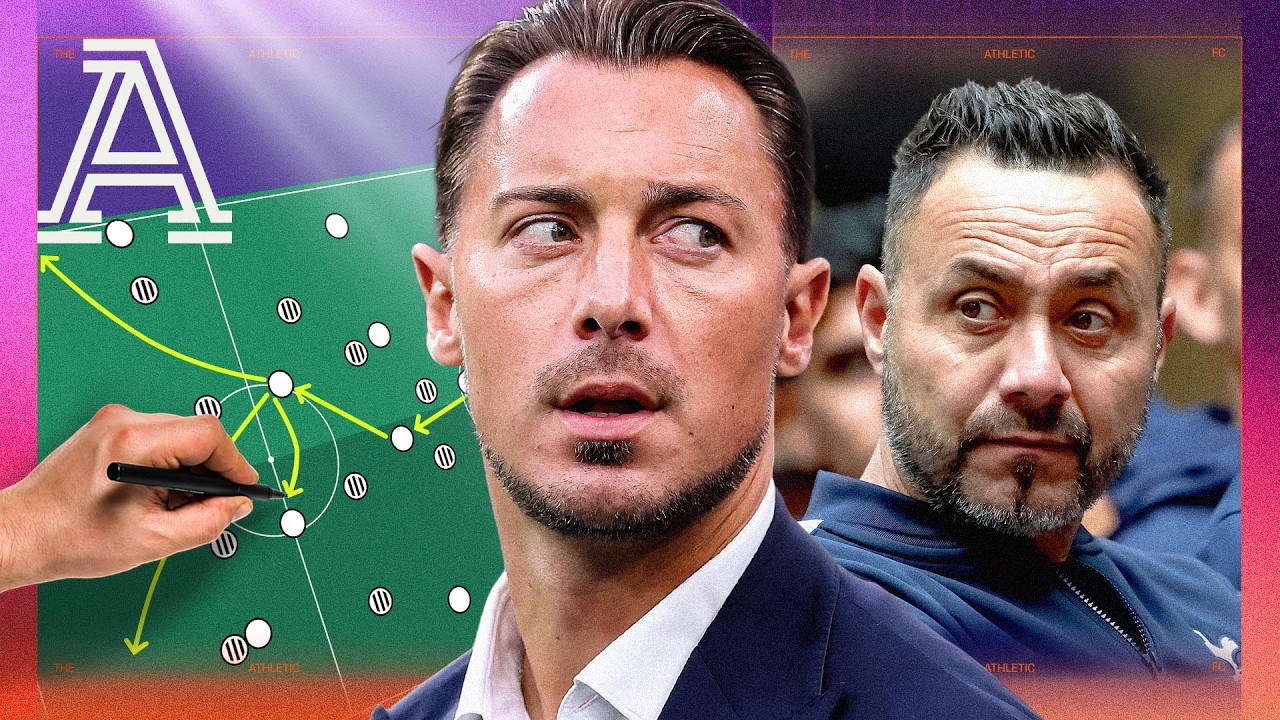
Are Chelsea really title contenders?

Analysis of Chelsea's Premier League title chances focusing on their strong attack and weak defense early in the season.

Key Takeaways

  • Chelsea’s attack is their strongest asset and key to their title contender status.
  • Jao Pedro’s skill set enables Chelsea to bypass pressing and launch quick attacks.
  • Despite offensive strengths, Chelsea’s defense is a significant weakness early in the season.
  • Defensive gaps and poor positioning are exploited by opponents, leading to many conceded goals.
  • Chelsea’s low possession style relies heavily on fast breaks and effective forward play.

What the video covers

  • Chelsea are considered title contenders due to their impressive attacking performance early in the Premier League season.
  • They have scored the most goals and exceeded their expected goals (xG) of 5.6 after three games.
  • Chelsea's attack is characterized by quick transitions, fast breaks, and effective use of line-breaking passes.
  • Jao Pedro plays a crucial role in Chelsea's attack by holding up the ball, evading pressure, and enabling fast counterattacks.
  • Players like Cole Palmer and Rogers combine well with Pedro to maximize attacking opportunities.
  • Chelsea has the second lowest possession in the league but compensates with rapid attacking play.
  • Defensively, Chelsea has struggled, conceding the second most goals and facing the sixth most shots.
  • Their defensive shape, often a back three, is vulnerable to manipulation by opponents, creating dangerous gaps.
  • Teams exploit Chelsea’s defensive weaknesses by pulling defenders out of position and creating space in midfield.
  • Chelsea’s defensive issues raise questions about their ability to sustain a title challenge despite their strong attack.

Answers

Questions about this video

Why is Chelsea considered a title contender despite low possession?

Chelsea compensates for low possession by attacking very quickly, using fast breaks and line-breaking passes, with key players like Jao Pedro enabling rapid transitions.

What are Chelsea’s main defensive issues this season?

Chelsea has conceded many goals due to defensive gaps caused by opponents manipulating their back three, pulling defenders out of position, and leaving space in midfield.

How important is Jao Pedro to Chelsea’s attacking strategy?

Jao Pedro is crucial as he can hold up the ball, evade pressure, and help Chelsea bypass pressing teams, enabling fast counterattacks and effective combination play with teammates.

Full Transcript — Download SRT & Markdown

00:00
Speaker A
Many people have described Chelsea as title contenders for the Premier League this season. Now, JJ, it's still very early, of course, but they have certainly been very impressive, mainly in attack, right?
00:13
Speaker A
team, which as you'll know is the best thing to do in attack. Done for an expected goals of 5.6. And that is interesting because obviously they're scoring over their xG, which means it might not be the same all season long.
00:23
Speaker A
That's correct, Alex. In fact, they've scored the most goals of any team, which, as you'll know, is the best thing to do in attack. Done for an expected goals of 5.6. And that is interesting because obviously they're scoring over their xG, which means it might not be the same all season long.
00:33
Speaker A
breaking passes leading to a goal of any team and also they've had the most shots from fast breaks and that aligns with their possession numbers. So they've got the second lowest amount of possession.
00:43
Speaker A
It's only three games in, so we can't take too much of this too seriously. But total shots, they have taken quite a lot of shots. What's more interesting for me is how they're getting their shots because they've taken the most line-breaking passes leading to a goal of any team and also they've had the most shots from fast breaks and that aligns with their possession numbers.
00:52
Speaker A
like Jao Pedro who can receive and get you out of danger, you can do that.
00:55
Speaker A
So they've got the second lowest amount of possession. Basically, what these numbers tell us is that they're attacking very quickly. They don't have a lot of the ball and I think one of the main reasons that this is happening is because they have Jao Pedro up top. So if you have a player like Jao Pedro who can receive and get you out of danger, you can do that.
01:04
Speaker A
of position, and then you get these lovely little runs here like this run in between so they can just pass it forward and suddenly they can attack very quickly. Obviously Pedro gets fouled here, right? This is another game
01:12
Speaker A
Here's them playing against Arsenal. Obviously, Arsenal very good at pressing. So if you can just skip past them, you can just skip this whole step, get straight into J Pedro who can hold the ball up, spin his man, pull Gabriel out of position, and then you get these lovely little runs here like this run in between so they can just pass it forward and suddenly they can attack very quickly. Obviously, Pedro gets fouled here, right? This is another game against Brighton.
01:23
Speaker A
back heel flick type thing that takes everyone by surprise. Hocus pocus. See you later. And now suddenly Chelsea are on the attack. Of course, because you're defending low, Chelsea defending low quite a lot of the time. It means
01:34
Speaker A
So the balls into the box, and what happens is that they clear their lines, show Pedro drops deep, does this really, really cool thing. There's a lovely bit of skill here where he jumps up with a sort of flying volley back heel flick type thing that takes everyone by surprise. Hocus pocus. See you later. And now suddenly Chelsea are on the attack. Of course, because you're defending low, Chelsea defending low quite a lot of the time. It means there's a lot of space in behind for them to attack into. But Jao Pedro is so important to what they're doing in attack.
01:43
Speaker A
can turn his man play and Cole Palmer. And again, one of the things they've done so well so far in their attack is how well like Palmer, Rogers, and Pedro are combining. So you see Rogers here.
01:53
Speaker A
So here's a Gustau throwing a throw-in to him. He can hold the ball up. Players can't get close to him. He can turn his man, play and Cole Palmer. And again, one of the things they've done so well so far in their attack is how well Palmer, Rogers, and Pedro are combining. So you see Rogers here.
02:02
Speaker A
net. Basically, they've got really good players at the top end. Pedro's given them an option to get out and skip past presses. They can go long quickly, bring other players into play, so they can break fast. And then they've got players
02:13
Speaker A
He is going to drag this defender out the way because he knows Palmer's going to run towards this. Palmer can drive into space. Rogers could receive if the ball comes to him, but Palmer keeps going, pings it into the back of the net. Basically, they've got really good players at the top end. Pedro's given them an option to get out and skip past presses. They can go long quickly, bring other players into play, so they can break fast. And then they've got players like Rogers, Palmer, really, really clever, who are able to combine and make their attack the best so far in terms of goals, but not expected goals in the league.
02:21
Speaker A
Yeah, it's interesting you point out J Pedro being able to trap the wall high.
02:24
Speaker A
Yeah, it's interesting you point out J Pedro being able to trap the ball high. When I watched the Arsenal game as well, I noticed you've got him, Rogers, and Palmer are all able to have a really good first touch. So, I think it allows Chelsea to go very direct. What you were saying before, those fast breaks. Now, you mentioned Chelsea have been defending low and defending seems to be something that Chelsea haven't been doing quite as well as their attack. So, what's going on there?
02:35
Speaker A
you mentioned Chelsea have been defending low and defending is seems to be something that Chelsea haven't been doing quite as well as their attack. So, what's going on there? I would go further and say they've been bad at it.
02:45
Speaker A
I would go further and say they've been bad at it. No, they have conceded the second most goals. Well, technically third, I guess, but second, yes, here we go. Seven goals conceded. That is not good. But it gets worse. They face the sixth most shots so far, which again is not ideal. They're sort of level with Hull City and they're supposed to be a title contender. Is this good enough, Alex? Who knows?
02:58
Speaker A
sort of level with Hull City and they're supposed to be a title contender. Is this good enough Alex? Who knows?
03:01
Speaker A
Chelsea playing the same sort of shape he had at Bay Labor and he's got this back three. You see the three there? You've got two midfielders that are going on there and you've got your front line of Rogers, Pedro, and Palmer. All the good ones there. Now, this is against Fulham in the first game of the season. Chelsea obviously winning 1-0.
03:06
Speaker A
You've got two midfielders that are going on there and you've got your front line of Rogers, Pedro, and Hammer. All the good ones there. Now, this is against Fulham in the first game of the season. Chelsea obviously winning 1-0.
03:16
Speaker A
This shape is fine. You're going to push the ball wide. That's kind of what you want. Get them away from the center. Out it goes. Now, what you start seeing though are gaps appear. Specifically, when this player can drag a defender out the way, this gap appears. And a lot of teams are doing this against Chelsea just now. So, what they're doing is they're finding ways to manipulate the back three, pull one of the defenders away, which causes a lot of space elsewhere, which other players then want to go and fill. Because then what happens when you have this is that players can run from deep into the space that creates. And that's exactly what happens here. Fulham. Rogers can't see the running behind him. He gets in. But what's also happening is that Romeo Levia is trying to get back into position to try and protect this space.
03:25
Speaker A
the way, this gap appears. And a lot of teams are doing this against Chelsea just now. So, what they're doing is they're finding ways to manipulate the back three, pull one of the defenders away, which causes a lot of space
03:34
Speaker A
Now that's kind of fine. That's what you want to do. He sees the danger and that's what you should do. But in doing that, obviously you're going to leave space in the midfield here. That's going to be left open because then he's leaving his midfield position, which is not ideal. This is what the back flag looks like at the moment. You can see where it's been pulled apart a little bit. We can see loads of different examples throughout the three games they've played so far. Only three, where we can see their team getting pulled apart. So this is against Arsenal. Now, what do you think of their defense in this game?
03:43
Speaker A
the running behind him. He gets in. But what's also happening is that Romeo Levia is trying to get back into position to try and protect this space.
03:50
Speaker A
It's interesting. They seem to get pushed back very easily. Uh, they seem to try and press Arsenal higher and then in the next 10 seconds they were back in defending their own box.
03:59
Speaker A
leaving his midfield position, which is not ideal. This is what the back flag looks like at the moment. You can see where it's been pulled apart a little bit. We can see loads of different examples throughout the three games
04:08
Speaker A
That is an excellent point and one I wanted to be reminded of. So what we have here are Chelsea's wing backs really high. Now we see Chelsea are playing a 3-4-2-1 most of the time, but in this game you switch to a back four, but you'll be able to see there's wing backs here and there's also a back three because what they're doing is pulling one of the midfielders into the back line. So another thing that Alonso's teams do, even though they're a four, they're also a three. It changes all the time. And within this, what I think we're seeing is a lot of confusion and players not knowing exactly when to go and where to be and who to press and what to do.
04:18
Speaker A
they seem to try and press Arsenal higher and then in the next 10 seconds they were back in defending their own box.
04:23
Speaker A
So, what we see in this next example against Arsenal is Chelsea in their back four. Arsenal's wingers are pushed up really high and that is keeping Chelsea's fullbacks pinned back.
04:34
Speaker A
you'll be able to see there's wing backs here and there's also a back three because what they're doing is pulling one of the midfielders into the back line. So another thing that Alonzo's teams do, even though they're a four,
04:42
Speaker A
That's exactly what's happening here. But what's really interesting is what's further up the pitch because what you have is the forward press. You've got front three players. That's the front three. But actually, that's the front three because that's Pedro Neto on that side there. So you've got Palmer who's one of the attackers on the wide right and you've got Pedro Neto who's the winger who's playing inside but Neto is also in this position should really be a wing back because you've got a back three shape here. So you got the width but there's something else going on is that they can't really get close enough to Arsenal to put pressure on them. I don't think players are often exactly sure where they're meant to be at the right times just now.
04:52
Speaker A
what to do. So, what we see in this next example against Arsenal is Chelsea in their back four. Arsenal's wingers are pushed up really high and that is keeping Chelsea's fullbacks pinned back.
05:02
Speaker A
So it this plays out right. Calori is wondering in behind but one pass if they make it will get him behind the entire of the Chelsea front line. So like one ball in there will just take them all apart. Now that's obviously a bad thing. You don't want that to happen. And as this is happening, I think the Safana st...
05:12
Speaker A
side there. So you've got Palmer who's one of the attackers on the wide right and you've got Pedro Netto who's the winger who's playing inside but Netto is also in this position should really be a wing back because you've got a back
05:22
Speaker A
three shape here. So you got the width but there's something else going on is that they can't really get close enough to Arsenal to put pressure on them. I don't think players are often exactly sure where they're meant to be at the
05:31
Speaker A
right times just now. So it this plays out right. Calori is wondering in behind but one pass if they make it will get him behind the entire of the Chelsea front line. So like one ball in there will just take them all apart. Now
05:43
Speaker A
that's obviously a bad thing. You don't want that to happen. And as this is happening, I think the Safana steps out.
05:48
Speaker A
He can see the danger. He can see that Califur is there. But obviously then you can see there's a knock on effect where other players can get in behind because again it's an example of Arsenal manipulating Chelsea's defense to be
05:58
Speaker A
able to find free players. So this ball doesn't go to where I thought it would go to Califur. It goes out wide instead.
06:03
Speaker A
But then you see the knock on effect that we're just talking about. So this is where the gap is because Favana stepped out. And so that ball in behind puts Havits there. And then you see this, this is an example of like again
06:12
Speaker A
being able to manipulate the defense. You've got three Chelsea players trying to close down like one Arsenal player and it causes all this sort of space in between. I wonder if it's because players aren't sure exactly when to go
06:22
Speaker A
and with who because teams have already figured out what to do against them. Yeah. And it's worth saying that Chelsea changed their defense in this game. Hat moved inside from left wing back previously where he played I think
06:32
Speaker A
against Brighton. He's playing as a left back or a left center back. Like when you say Chelsea would change in shape between a back three and a back four that much unfamiliarity in a new system as well when Chelsea have previously
06:41
Speaker A
played mainly a back four under in Moresca it's hardly going to help in situations like this right I think probably yes there quite a lot of confusion there's a lot trying to do a lot of things at once very quickly and
06:51
Speaker A
you can see where other teams have maybe already figured out ways to um pull that apart so again same game as Arsenal a lovely wide camera and some things we can see what we can see is Declan Rice
07:00
Speaker A
is now playing basically like a center back a lot of the times in the back line Chelsea trying to press the front three, but they can't really get close. And again, we're talking about the manipulating of Chelsea's play. So, the
07:09
Speaker A
distances are too much for them to cover to mark certain players. And so, Arsenal always have players spare. Now, if we zoom in, this is the midfielders. So, they're quite far apart. You probably want to be more compact than this, but
07:18
Speaker A
it's the reason they're doing this because they're going manto man. So, these players are tracking Arsenal midfielders. Miles Skellyy and Martin Oligar dropping in, right? So, they're trying to go manto man. Now, they're going manto man. Other players have to
07:27
Speaker A
go manto man. Otherwise, it's a bit too much of a mix and there's going to be someone spare. And that's what you see because Morgan Rogers should probably be getting tight to Declan Rice, but that's not really his man. So, it's really
07:36
Speaker A
confusing what Arsenal done to Chelsea here on the spot. It's 50 minutes in. So, they've already found ways to be able to do this. Rogers can't go out to Rice as part of this press. And if he does try and go, it's too far anyway
07:47
Speaker A
because they'll leave Hatau with two players to deal with because again, Kai Havver has come over to one side and manipulating the defense here. Rather than being in the middle here, Havs has come to one side. So he's now got man to
07:57
Speaker A
mark which means this player has to go tight to Saka or Rogers can drop him but that's too deep and Arsenal can come forward with it or he's got a run over there and the time he runs over there
08:04
Speaker A
the ball can come to Ben White over here on the side and a lot of teams are already pushing their fullbacks really high especially during buildup. So they they're going to be really high this is a thing we'll probably see a lot of
08:13
Speaker A
teams do and it's something that Alonzo will have to solve. Something else we should talk about I think is the midfield. They obviously have a lot of ground to cover just in midfield too in this game and the other games under
08:23
Speaker A
Alonzo. It's largely comprised of fullbacks as well because Chelsea don't have any midfielders. They didn't plan particularly well for Enzo Fernandez leaving the club. And like you mentioned earlier, they have an extraordinarily low amount of possession. So what's
08:35
Speaker A
going on there? Well, a few things. Like for example, they have made the third fewest amount of passes in the league. Now when Alonzo came in, I think everyone would have thought they'd have lots of possession because that's what Bay Lever Kusen did
08:45
Speaker A
later on. But um they're not really keeping the ball. And we've touched on some of the reasons why that might be because of J Pedro and exactly talking about midfield. What's interesting is their long pass percentage is 15.8%. So
08:55
Speaker A
a lot of their passes, I mean they're not far off with like knocking force lead United really direct teams, which is maybe not what we thought it would be like under Jabi Alonzo. They've been very end to end and I'm not sure whether
09:06
Speaker A
it's on purpose or whether it's just necessity because they've ended up with like you said Malo Gusto and Ree James ended the game in midfield together in the last game and there's lots of times where they're both pointing at where to
09:16
Speaker A
go. They're not exactly sure but again it comes from some of the defensive stuff. They're being pulled apart and no one's really sure when to go where. So there's a lot of confusion going on when we look at what they're doing. I think
09:25
Speaker A
this is maybe a quite an interesting example of what's going on here because this is against Brighton, an end to end game. There's like a basketball thing.
09:30
Speaker A
So many goals, loads and loss and loads. Chelsea have the lead. Long ball from the goalkeeper towards Jared Pedro.
09:36
Speaker A
We're looking for trying to get the long ball early cuz why try and play through a press when you just go long. But this is one where the defender bounces back towards the midfield. bit of a strummash here, but you see what happens when
09:45
Speaker A
they're not quite in the right places or not really compact enough to deal with this. Suddenly, you end up with Brighton in behind all of Chelsea's players. So, we saw earlier that they want to put their wing backs really high. That's
09:55
Speaker A
what they're trying to do. So, they're going long, the wing backs push high. That means there's loads of space out wide. There's also players trying to push up to support the second ball. They get behind it really quickly. Brighton
10:04
Speaker A
can now turn out they go and you start seeing players point where they're meant to go. So, Hatau is the left wing back in the situation. He's telling Fafan, I think what he's telling him is he's going to have to track this runner out
10:12
Speaker A
wide. That's where the ball's going to go. And so that's exactly what happens. Doesn't go out straight away. He's not sure. He's trying to stay in the middle.
10:17
Speaker A
They're trying to keep their back three here. That's what they're trying to do. And so then what happens? Fana wants to go out. Left center back wants to go out to push him down. But Hatau probably also wants to do that. So they both go.
10:27
Speaker A
And then because they both go, it means that the midfielder comes across as well, which leaves space just on the edge, the very dangerous area on the edge of the box. And so this should be a goal for Brighton. It's a really
10:36
Speaker A
wellworked well passing move, but also Chelsea getting pulled out a little bit. not sure exactly what to do because of all these end to- end things going on.
10:44
Speaker A
But that's not what happens. Something else happens instead. The ball turns over, they pass out, and then Hatau can help Chelsea do what they do best, which is of course counterattacking very quickly, a fast break. Lovely bit of
10:55
Speaker A
skill from Rogers. He turns inside out and passes it through. And now you've got Hatau on the wing back run just getting in behind them. And so you see like again by being deep, they've gone from being like the other end really
11:06
Speaker A
deep again bright and push up. Now they got all the space to attack. It's really really end to end. They hardly had any possession in this game at all. But Hat does really well here. Loads of space to
11:13
Speaker A
run into. He takes it, runs in behind. This next touch is absolutely elite. Blocks off the defender, has a pace to get behind him. And Pedro scores the goal. So what we're seeing here, I think, is a lot of all the things we
11:22
Speaker A
talked about. We're seeing like the defensive manipulation by other teams. We're seeing how well they attack, which is really good, but they're not having a lot of the ball. They're not keeping an awful lot.
11:31
Speaker A
So what you're saying is they're not particularly great defensively, but in a way that's kind of helping the way they attack so quickly and directly sort of. So, they're scoring lots of goals from these fast breaks and they're
11:41
Speaker A
getting the fast breaks and space to run into because they're defending so deep, but I'm not sure that's what they want to be doing. It's quite effective, but they're missing like a midfield that can maybe press and keep the ball in the way
11:51
Speaker A
they want to at the moment. That'll probably change when Cass's back and players like that. But also, this is the way they're scoring. It's very effective. Like, it does really work.
11:58
Speaker A
But against Arsenal, they found ways to get around him and most coaches will find, I think, ways to manipulate what Chelsea are doing right now. So although this works at the moment, what we're also seeing is that they're scoring over
12:08
Speaker A
their expected goals. They're probably higher up already after three games than they maybe are, they look really fun in attack, like it looks good, but then you see that there are loads of defensive issues from players being manipulated
12:20
Speaker A
and pulled out and decision-m and just a bit of the structure that will probably come with coaching over time. But I think the numbers that we're seeing are probably not the kind of thing that Alonzo would want going forward.
12:30
Speaker A
It's not the strategy of a title winning team. Exactly. I don't know if it's a title winning team. I think they're good and I think they'll get a lot better. But what we're seeing is a team who are really
12:39
Speaker A
good at doing one thing but far far far too open. And I don't know whether midfielders fix that or whether it's structure. If you like this video, please consider subscribing to the channel. The Athletic is home to some of
12:50
Speaker A
the world's best sports journalists including David Ornstein, Amy Lawrence, and James Horncastle. With the latest transfer news and insights on every Premier League story that matters, The Athletic.com puts you inside
Topics:ChelseaPremier Leaguetitle contendersJao Pedroattack analysisdefense weaknessesexpected goalsfast breaksfootball tacticsThe Athletic FC

Get More with the SozAI App

Transcribe recordings, audio files, and YouTube videos — with AI summaries, speaker detection, and unlimited transcriptions.

Or transcribe another YouTube video here →