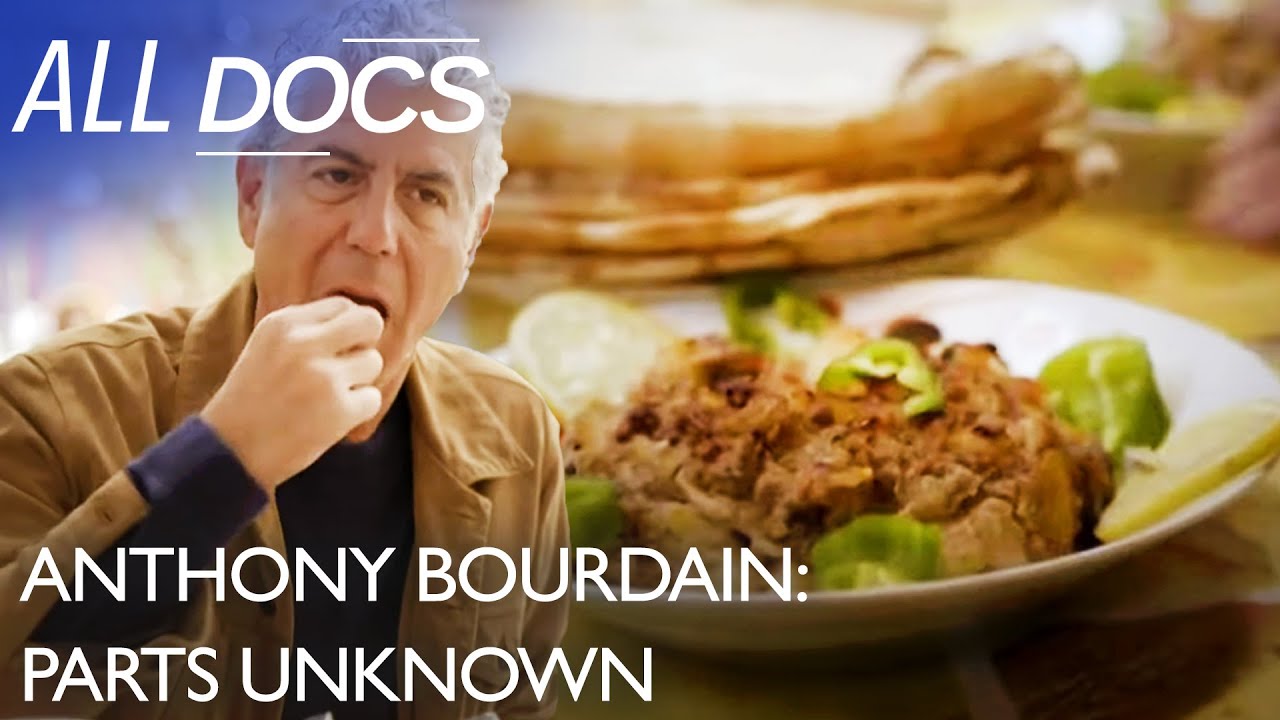
Anthony Bourdain explores Mississippi's food, music, and history, from Jackson's Farish Street to the Delta, examining how race and culture shaped the state.
Key Takeaways
- Mississippi's food, music, and culture are deeply intertwined with African American and Mexican heritage.
- Integration weakened Black-owned business districts like Farish Street.
- Confronting racial history is essential to understanding Mississippi today.
- Mississippi is undergoing cultural revival led by artists and entrepreneurs.
What the video covers
- Bourdain opens by framing Mississippi as the birthplace of blues, rock and roll, R&B, and soul.
- Jackson's Farish Street, once the hub of African-American commercial and cultural life, declined largely after integration reduced demand for Black-owned businesses.
- The Big Apple Inn and Gino Lee's restaurant showcase Mississippi food like pig ear sandwiches and hot tamales, whose Mexican roots link to migrant labor after the Great Migration.
- John T. Edge of the Southern Foodways Alliance argues Southern food traditions are as African as they are Western European.
- The episode addresses the uncomfortable history of Southern cooking tied to plantation slavery and the risk of nostalgia.
- Bourdain recounts Mississippi's violent history, including the murders of Emmett Till, Medgar Evers, and civil rights workers in 1964.
- Local artist High Infamous describes cultural renewal in Jackson, where creative spaces revive neglected parts of town.
- The Delta episodes include Greenville, Greenwood, and the Mississippi River, with discussion of Faulkner and the blues legacy.
- Bourdain discusses whether Mississippi is more racist than New York, concluding that deep-rooted issues connect to a shared Southern past.
- Bourdain argues that the South should progress and change rather than be frozen in 1865 or 1965.
Chapters
Full Transcript — Download SRT & Markdown
Speaker A
Some time ago, something crawled or slithered or grew like a fungus. Something that started small, got bigger, lurched like a swamp thing out of the mud and moist earth and humid nights of the Delta. Then, it took over the world.
Speaker A
So, next time some smart-ass foreigner, horrified by our latest ham-fisted foreign policy blunder, wonders out loud, "What good is America?" Well, you could always pipe up that the blues, rock and roll, R&B, and soul all came out of this place. One state,
Speaker A
Mississippi. Right now, we're in the middle of downtown Jackson. Farish Street is steeped in a lot of history, what it used to be like back in the day.
Speaker A
The street was packed with folks. Folks all over, they had their own restaurants, grocery stores, juke joints. I mean, everything happened on Farish Street that happened in Jackson.
Speaker A
for the African-American community. The state capital of Jackson, Mississippi, located along Interstate Highway 55, just outside what's known as the Mississippi Delta. It's the kind of place that makes you wonder, why did they make it the capital?
Speaker A
Until you grab hold of what used to be around here. Farris Street used to be the hub of African-American life in this city. It's black commercial, cultural center. When Dr. King came to town, he came here.
Speaker A
Everybody did. Medgar Evers had an office just upstairs, here. Musicians like Tommy Johnson, Sonny Boy Williamson II, and Elmore James all played here. And the likes of Duke Ellington, Cab Calloway, Count Basie, and Louis Armstrong all took the stage
Speaker A
at places like the Crystal Palace Ballroom and the Alamo on Farris Street. What happened? Where did it all go?
Speaker A
What killed Farris Street? Integration. Once we're able to branch out of our own indigenous black-run businesses, the black-owned businesses died.
Speaker A
Right. So, great for the black race, but terrible for the black business. In fact, the only reason you're coming to Farris Street right now is you have two churches, two funeral homes, and the Big Apple Inn. So, you're going to
Speaker A
either die, worship, or come to my place to eat, and that's the only traffic you have.
Speaker A
Or all three, and that, you know, was Not in that order, but You want them hot?
Speaker A
Back when things were hopping, Gino Lee's great-grandfather, Juan "Big John" Mora, moved to Mississippi from Mexico City, started a family with an African-American woman in Jackson. He sold hot tamales out of a steel drum on the corner. In 1939, he moved the
Speaker A
operation inside, right here. Now, the last restaurant on the street. Lurking inside, waiting for us is John T. Edge, who leads the Southern Foodways Alliance.
Speaker A
Mr. Edge, how you doing? Well sir. Who makes a point, a mission, out of knowing and teaching as much as he can about the real culinary traditions of the South, and doing what he can to keep them alive and unmolested.
Speaker A
All right. Thank you. Thanks sir. Look at that. Awesome. It's as I could dream sandwich. What do you go for here are smokes, smoked sausage sandwiches.
Speaker A
And these magnificent beauties, pig ear sandwiches called ears. Both pretty much served with the same garnishes of slaw, mustard, homemade hot sauce on a soft bun.
Speaker A
Now, as I understand it, originally this is one of those, nobody wants these things, they're dirt cheap.
Speaker A
right. In fact, by dirt cheap, the ears were actually free. When my great-grandfather started giving the pig ears, the local butcher was giving them to him because he was just throwing them away.
Speaker A
It's everything you, you know, we we love about pig, the texture, the the mix of fatty, lean, all of that.
Speaker A
Oh, that's good. Mhm. Man, that is just hard to beat. And they're good? Mhm. It's a good sandwich. And of course, some hot tamales, which at this point in history are about as Mississippi as they are Mexican. Like
Speaker A
the blues, they came out of Mississippi in the early 20th century as Mexican migrant workers came in to replace African Americans who were headed to work in the great factories and stockyards of Chicago and Detroit.
Speaker A
You know, sitting down here, um, eating tamales, we can sketch a history of Mississippi. Um, and that's kind of what I'm most interested in doing, helping Southerners understand that their food is African as they are Western European.
Speaker A
And hopefully, by way of, if not by largely, you know, music and, you know, all the other cultural expressions of the South. I think food is a sneaky way of getting at some of the serious stuff we've been talking about.
Speaker A
As I told you before, I didn't know what a cool job or what a cool restaurant I had until you showed it to me.
Speaker A
I'm just making a living. You know, just like a lot of folks around Mississippi. We're not trying to make history. We're not trying to increase tourism. We're not All we're doing is doing what we do.
Speaker A
There is a a discomfort level about exploring Southern food ways or particularly Mississippi food ways. When you're talking about high end traditional Southern cooking, you're talking plantation slavery cooking cuz that's where these recipes came from.
Speaker A
So to revel in that, you don't want to tumble into nostalgia. The potential for awkwardness Right.
Speaker A
uh and offense is enormous. I want to be careful. I'm not saying that's what I want the South to be. I'm saying that's what people come South looking for.
Speaker A
Right. I come to South looking for the past preserved in the amber. Um but the reality is something different. I don't want to fix it in the past. I don't want to fix it in 1865 or 1965. I want it to progress and change.
Speaker A
I want to document the change along the way and celebrate that change along. The burden of race is upon us and we ain't going to shake it. And that can make us better.
Speaker A
I'm a Yankee. So for me, it's kind of shocking to see this flag. It means a lot of things to a lot of people.
Speaker A
First and foremost meaning I'm not a Yankee and I don't much care what you think.
Speaker A
There's no doubt that much of Mississippi history is ugly. From slavery which was pretty much the backbone, the foundation of industry here from the get-go to Jim Crow, lynchings to church burnings.
Speaker A
14-year-old Emmett Till killed for talking sass to a white lady in 1955. The assassination of Medgar Evers in 1963.
Speaker A
The murders of civil rights workers James Chaney, Michael Schwerner, and Andrew Goodman in 1964. Hell, they had to send in 30,000 armed federal agents, national guardsmen, and military police just to enforce federal law allowing a black man to attend state college. A
Speaker A
notion that was, shall we say, less than popular here. To be honest, that was about all I had for an image of the state of Mississippi. That was all I knew, and it hadn't occurred to me to look further.
Speaker A
But I've traveled the world since then, and I visited and learned to love many places not my own, cultures and beliefs very different from the Upper East Side of Manhattan.
Speaker A
Why can't I love Mississippi? High Infamous is a proud son and resident of Mississippi, a youth mentor in Jackson's church and public school systems, owner of a marketing agency, and hip-hop artist.
Speaker A
This town it feels empty. But where is everybody? I think one thing is a lot of people think that you have to leave Mississippi to be able to do something great.
Speaker A
But I think a lot of it is there's so much bubbling in the undercurrent that that sometimes isn't seen. And I think it takes an artist who usually takes something that's blank and creates something that's awesome to be able to
Speaker A
see the potential in the place, in a canvas, so to speak, that has been vacated by others.
Speaker A
Soul Wired Cafe, one of a number of places where something is going on, where artists, entrepreneurs, moving in workshops, performance spaces, set up something new and good in formally abandoned and neglected parts of town.
Speaker A
This is a deeply, deeply conservative state to say the least. Right. It's a tough question cuz I've got my own opinion. Is it more racist than New York?
Speaker A
So, I think there there are some deeply ingrained problems in Mississippi that are connected to a very ugly past that that we share with some other southern states. So, however, I think as far as we talk about racism expressed through a
Speaker A
classes lens, I think Mississippi and New York are on par. Right. Yeah, no doubt.
Speaker A
Pi Infamous is originally from Clarksdale in the Delta and went to Ole Miss, but he's neither left nor lost faith. He feels an obligation to empower, uplift, educate, to contribute.
Speaker A
One of the important tasks of musicians is being able to really speak truthfully about what's going on without fear of reprisal.
Speaker A
Right. It allows the audience then to say, "You know what? You're right." Now that you put it to a nice melody or to a nice beat or you say it in that way, and hopefully then that engages them more and allows them to move. And I
Speaker A
don't think any movement in the world has not had a soundtrack. Right? Regardless of what it is. And so, that's our job.
Speaker A
Depending on what metrics you're using, the Mississippi is somewhere between the 10th and the fourth largest river in the world. One thing for sure, it's big and it's freaking strong. Also, you really got to put your back into it if you're
Speaker A
crazy enough to want to paddle a canoe around in its fast-moving waters. What's the source of the Mississippi?
Speaker A
Well, anywhere a raindrop falls in 44% of America. And it's furthest reach is three forks on the channel.
Speaker A
If you follow the volume of water, 2/3 comes down the Ohio River. But most people say Lake Itasca in Minnesota.
Speaker A
John Ruskey is what I'd guess you'd call a river rat. In 1998, he started the Quapaw Canoe Company, a custom outfit that leads guided expeditions on the Mississippi River and its tributaries.
Speaker A
As a central part of his operations, he trains local kids from Mississippi and across the river in neighboring Arkansas under an apprentice program, teaching skills like hand-carving canoes, outdoor survival, and the ins and outs of guiding and the history of the river.
Speaker A
Most of these kids come from pretty distressed neighborhoods, and the hope, the intent, is that once trained up, they'll stay with the company.
Speaker A
Nice paddling, Johnny. You got the feather down. Thank you. I'll be feeling that tomorrow.
Speaker A
Buck Island. Most of the island could be under 45 to 50 ft of flowing river water from April to June with the spring ice melt and rainstorms.
Speaker A
We do a lot of cooking. We've got gallons out here. Multi-purpose and indestructible. Mhm.
Speaker A
Okay, and the next step in this thing is that here are the greens, and we should stuff as many greens as we can into that pot.
Speaker A
You know, this right here? Uh-huh. All right. So, how does your program work? Around what age are they generally when they get first started?
Speaker A
And as soon as they can hold a paddle, the only thing we ask is interest and commitment.
Speaker A
Well, what does that mean, commitment? We have this thing called the three R's, which is respect of yourself, getting good sleep, eating good food, especially before we go on a trip. Second one is respect of other people, other paddlers,
Speaker A
and then of course our clients. And then the third thing is um taking care of the river. And you know, they've been told by their parents don't get on Mississippi River. Maybe they don't even know how to swim. And you know, for a
Speaker A
young man or woman uh overcoming a fear like that and getting in the canoe and then to have people come and appreciate what you're doing Mhm.
Speaker A
is uh life-changing uh experience. But within that is this incredible bright and beautiful spirit that that is intact in the Delta.
Speaker A
Sweet potatoes, greens into the Dutch ovens. Throw on the corn when getting close. Finally, on the wet logs on top of glowing coals, lay some steaks, some pork loin, and pork tenderloins right on there. Just keep an eye on them.
Speaker A
Well, we got full spectrum of steaks. Steak is perfect. Corn on the cob? Yeah.
Speaker A
Hushpuppy bread. Living large on the Mississippi. And yes, there is too much food for two people. And yes, that is a whole hell of a lot of meat. And I know it would be awful to waste all that extra. But don't
Speaker A
worry. Cuz these gentlemen are tired and hungry. Welcome gentlemen. Finish it up. Right on, Kwab. Let's come on. Corn on the cob here, greens.
Speaker A
Oh, hushpuppy cookie. You got to have a little bit more of this. Oh, looking good.
Speaker A
Excuse me. I don't want to say I'm good, but I'm good. All right. Pork sir?
Speaker A
Who's missing steak here? Me sir. You got Who needs steak? I feel all Crocodile Dundee.
Speaker A
Beautiful. So, all that paddling, how bad am I going to hurt tomorrow? Oh, I don't like the sound of that.
Speaker A
tell hesitation not a good sign. Those tenderloins are nice. Good stuff. And we have mastered the wild today.
Speaker A
The Mississippi Delta is a big sponge that stretches between the Yazoo and the Mississippi.
Speaker A
It's what's called an alluvial flood plain of about 7,000 square miles or almost 4.5 million acres.
Speaker A
This area used to look very different. Massive, wild, old-wood forests and swamps. After the passage of the cheerful-sounding Native Removal Act of 1830, the Delta became open for settlement by any white people crazy enough, hardy enough, determined enough,
Speaker A
or just plain mean and greedy enough to come here. There's no way to make up for our bad racial past, but you do you know the sense of community that keeps people here is evident in this place. Julia Reed is
Speaker A
Greenville born and raised, the daughter of a political family, a writer, author, and as Delta as it gets.
Speaker A
How long you've been in Mississippi? 22 years. I came in 1992. John Currence is a celebrated chef who had left New Orleans to come to Mississippi and open first one, then many more restaurants and businesses in the town of Oxford.
Speaker A
I've stayed busy. And this is Doe's Eat Place in Greenville. Hello. Hi. This is the great Florence signor. Florence, so good to meet you.
Speaker A
Florence is in charge of the salad bowl and has been for Floats Dough senior sister-in-law. When did y'all open up Floats 1930 1940?
Speaker A
41 close enough. Like a lot of folks around here Dominick Big Dough Signa got his start selling hot tamales to go.
Speaker A
At the beginning the place catered to the black community but after word got out how good the food was white people started coming which led to a kind of weird accommodation to the segregation of the day. Blacks came in the front
Speaker A
white people snuck in the back. The menu expanded with the clientele. What human qualities are unique or marked in uh the native of Mississippi?
Speaker A
I cannot address Mississippi because like I said the Delta's a whole 'nother planet. Ah okay better question then. How does the life of Delta resident differ from the to be a little crazy to want to come in the first place cuz it was like the
Speaker A
swamps buddy. It was under water. I mean you had to be crazy to come and you had to have enough money to to make it work.
Speaker A
So you had to be sort of gamblers. I mean that that spirit still infuses the place. It's a little reckless. It's uh sophisticated cuz they'd all come from elsewhere. You know I mean you know you go from from the Delta to the hills. I
Speaker A
mean we're totally snobbish up here even when we didn't have a right to be. I mean where you just came from Jackson.
Speaker A
Are you kidding me? Really? You'd have to be paid money to go to Jackson from Greenville.
Speaker A
I bet they feel the same way down there but you have to They don't get us cuz they ain't got no sense of humor.
Speaker A
So what about the food? Has this place changed at all in No. It's been 20 years since I was here last and literally exactly the same.
Speaker A
Not much in the way of capital improvements or time motion study. The system such as it is is well crazy.
Speaker A
You eat right here in the kitchen and the division of labor the flow of work well I gave up trying to figure it out five minutes in and just figured I'll get loaded and eat all this delicious food.
Speaker A
The salad thing is famous. Hand tossed in the same wooden bowl for decades. The hot tamales, same as they ever was.
Speaker A
And those tamales are and just incredible because they're made with the steaks drippings and stuff that you're getting ready to save. So Oh, yeah. Oh, really?
Speaker A
greatly enhances the flavor. Oh my god. I could eat them till I was sick.
Speaker A
Fries done in cast iron pan on the stove top. The famous shrimp. Steaks on an old roll out broiler.
Speaker A
Drippings all over the top. And you know, you're not going to get skinny or healthy eating the hot tamales and fried shrimp and steak at Doe's.
Speaker A
There's no question about it. Oh, that's good. right here. I'm happy. It's the grease that makes it.
Speaker A
Uh-huh. Man, that's good. Well, you're right about those shrimp. They are delicious. The shrimp?
Speaker A
Yeah. Oh yeah. Is there a dessert that I should be saving room for? Are you kidding me? There is no dessert.
Speaker A
It's pretty damn bare-bones, my friend. If you ask for one, they'll give you a lollipop.
Speaker A
This is exactly what you expect in Mississippi though right? Yeah, it's supposed to look like this.
Speaker A
You know, I moved here from Georgia and the thing that struck me when I moved here, driving through the Delta the first time, was just how empty it was.
Speaker A
Like, you know, it's like everybody left. The Great Migration. Three factors: automation, the invention of mechanical means to pick cotton, the call of better paying jobs in the industries of the north, and of course, freedom.
Speaker A
You know, people think about the blues as a lament. A lot of blues songs are about freedom, about getting the hell out of Mississippi.
Speaker A
And there were a lot of reasons to get the hell out of Mississippi for a long time. Now there's a return migration.
Speaker A
I mean, there's that whole period, late '60s, early '70s, where kids are bugging out of Brown University to come sit at the foot of an aged blues musician.
Speaker A
There's a cyclical pattern to that. Now, you know, you see people kind of doing the same thing with food. Like, there's a whole generation that wants to come down here and sit at the foot of an aged catfish cook.
Speaker A
State Senator Willie Simmons has been an elected official of the Mississippi Delta for 20 years.
Speaker A
And he's been running this place, Senator's Place, for 11. No. What's the difference between soul food and southern traditional southern food?
Speaker A
It It depends on the culture and what neighborhood you was in. If you were in the black neighborhood, then it became soul. We probably put a little bit more of the throwaway in our cooking. It's the pig feet, the
Speaker A
pig tail, the neck bones, and all of that's fatty. Now, you're making me hungry.
Speaker A
Now, you're definitely the neck bones go? Okay. Oh, excellent. So greens? Turn greens. I'll have some of that, for sure.
Speaker A
Is that fried okra there? I'll have a little of that. Yeah, I might need more than one plate at this rate.
Speaker A
Uh let me get some mac and cheese. What's that? Lima beans and the red bean. Oh, man, that looks kind of good, too. Yeah, a little bit of that. Neck bones uh floating around somewhere?
Speaker A
Okay, yeah, I'll have some of those. Little rice and gravy on there? Yeah, thanks.
Speaker A
And uh oh, I don't know, a piece of fried chicken there. If you got a thigh, that would be great.
Speaker A
Okra's perfect. Yeah, it is. Oh, man, that's good. Now, here in the South, if you want to, you can throw your fork away and just grab that neck bone and Oh, yeah, I'll be working on that.
Speaker A
What's We forgive you. No laws against it. you know. I could eat this okra all day long, man.
Speaker A
It's It's good. I don't know what you think about those greens and butter beans.
Speaker A
they're nice. Man, that's tasty. Do you think the right people get the credit for Southern cooking as we know it?
Speaker A
I do. You You think the right people get the credit? I mean, look at the way people know. People know who's behind this food, whether it's called soul food or whether it's called country cooking.
Speaker A
How is the Delta, the mindset in the Delta, different than the rest of the state?
Speaker A
No one else can compare with us. Like, there is no other center who can sit and talk to you and tell you that they represent Dockery Plantation, where the blues supposed to been born. There's no one else can tell you that in his district
Speaker A
is the home of B.B. King. Can tell you that he represent the area where Fannie Lou Hamer came from, where Jerry Butler was born.
Speaker A
Go on and name others, the Staple Singers. When we talk about the heritage and the culture and what comes out of the Delta, that's all within this little district that I represent. So, Mississippi Delta has that pride.
Speaker A
46 miles southeast is Greenwood, a town with a lot of history, most of it of the not good variety. Known, unfortunately, as much for Byron De La Beckwith and Tom Brady's infamous speech after Brown versus the Board of
Speaker A
Education as anything else. Fairly or not, it's hard to get past that. During all the years of cruelty and struggle from 1933 on, through it all and until today, this place, Lusco's, was a beloved institution.
Speaker A
Once a grocery store it turned restaurant to the money class, serving them in discreet quarters in the back where one could enjoy an alcoholic beverage in what was then a dry state.
Speaker A
Still going after all these years and unchanged. Why? This place is like a reliquary of like indiscretions past, you know?
Speaker A
But maybe to really tell the story of this place, you have to start with the story of its most famous employee, Booker Wright, who'd been working at Lusco's as a waiter since he was 14 years old.
Speaker A
Red beer. We don't have a red menu. I'll be glad to tell you what we're going to serve tonight.
Speaker A
In 1965, NBC News came to town making a documentary on race relations. Booker's entertaining recitation of the menu at Lusco's was famous around town, so they asked him to do his usual routine for the camera.
Speaker A
We have fresh shrimp cocktail, lots of fresh shrimp, fresh oysters on the half shell, baked oysters on But at the end of his usual litany, that's where he dropped the truth bomb that nobody was ready for. Right here.
Speaker A
Now, I ask what my customers I say my customers they expect me to do Something tonight. Some call me Todd, some call me Booker, some call me John, some call me Jim, some call me [ __ ] Oh, that hurt, but you have to smile. If
Speaker A
you don't, what's wrong with you? The meaner the man be, the more you smile, although you're crying on the inside.
Speaker A
I'm not going to tip that [ __ ] he don't look for no tip. Yes, sir. Thank you. What you say?
Speaker A
Come back. Can I take care of you? Well, that's what you have to go through with. But remember, you have to keep that smile.
Speaker A
Telling the truth was still risky business in 1966 Mississippi, and Booker Wright was not rewarded for his candor.
Speaker A
It was not a good experience for him. It did not make him a star by a Not within the white community, but even though Stokely Carmichael maybe first chanted black power here, that was less important to the black
Speaker A
community here than what Booker said on the NBC News. Yeah. The private dining rooms at Lusco's still here.
Speaker A
The menu, much the same. Steaks, fish, the famous broiled shrimp, the Lusco's special salad with a house Italian vinaigrette dressing, and a healthy dose of anchovy.
Speaker A
Onion rings. Salad makes me happy. Yeah, me too. Mostly the anchovies make me happy.
Speaker A
Yeah, yeah. Love those. Catfish for Mr. Edge, the famous pompano for me. It's the kind of mark of being a great restaurant in the Delta if you have pompano.
Speaker A
It's a big damn fish. No way I'm finishing this. Sitting here, the booths, the curtains, the whole ring bell for service thing, it seems lost in time.
Speaker A
We got a long and ugly history, but one of the things I love about this place is you can't deny the burden of the past.
Speaker A
Like it's on your shoulders, right there. Like, you know, America chooses to deny its problems, you know, in many ways, you know, and then declares itself a post-racial society. That just [ __ ] doesn't fly in Mississippi. You can't
Speaker A
You can't claim that. Oxford, Mississippi is a lovely, incongruously eccentric little island, a mutation, a college town, a magnet for writers, thinkers, and oddballs drawn perhaps by its rich literary tradition as the home of one of our greatest
Speaker A
authors, William Faulkner. Faulkner was a Mississippi native, a former postman, an outdoorsman, an eventual winner of the Nobel Prize in literature, and two Pulitzer Prizes for fiction.
Speaker A
He never graduated high school. This was his house, Rowan Oak. Faulkner wrote such American classics as The Sound and the Fury, As I Lay Dying, Light in August, and Absalom, Absalom.
Speaker A
And many of his works took place in a fictional county, a place very much like this place in Mississippi.
Speaker A
This is where Faulkner started his writing career uh in this room here. For the past 10 years, Bill Griffith has been curator at William Faulkner's estate.
Speaker A
He got into this room only after he won the Nobel Prize. And on the wall here is an outline of one of his novels.
Speaker A
Yeah. Yeah. Yeah. Yeah. Greatest book. Faulkner thought this was his masterpiece. Jack Pendarvis is the author of Your Body is Changing, The Mysterious Secret of the Valuable Treasure, and Awesome, as well as a staff writer for the game-changing animated series Adventure
Speaker A
Time, all works of which I am a huge fan. So, he wrote right right on the wall.
Speaker A
He just wrote on it. It's It's his name thing. Yeah, it's his It's his version. He said that houses in Mississippi you have a family business have one room dedicated to the family business, and this family's business is writing.
Speaker A
From as early as 1919 through the early '60s, Faulkner wrote extensively about the post-Civil War South. He was the first author to do so at a time when most writers were writing about anything but.
Speaker A
He always said that he wrote about a South torn between itself, torn between the old ways, the old traditional ways, and modern development. He said he was going to break the antebellum code.
Speaker A
Right. And he did. But He did. And yet he had those hobbies and interests that were definitely uh of a gentry class and a gentry nature.
Speaker A
His portrait and his horse a great example of him in his in his riding habit. That's a great example.
Speaker A
You do to get to a certain level of success, and all of a sudden this seems like a good idea. And it's never a good idea at that age.
Speaker A
At any age. At Exactly. Was he politically active at all? He had a lot going on in his middle-of-the-road Democrat. That's what he said. He said you have to bring black education up with white education. And since the state of Mississippi will not
Speaker A
invest in black education, it's up to us citizens to do so. He said that segregation wasn't about being right or wrong. He said any sane, sober southerner knows that it's wrong.
Speaker A
It's about wanting to change or not. But people don't want to give up power.
Speaker A
Fear is still alive and well in Mississippi. I think racism is one of those great things in the world that you'll never solve and that's why Faulkner wrote about it.
Speaker A
Writers, as I know from looking in my own dark heart, are generally terrible people. Put 10 of them together and it's like putting your head in a bag full of snakes.
Speaker A
I meet a bunch of them above City Grocery, John Currence's place on the square.
Speaker A
There's the brilliant author Tom Franklin and his wife, the poet Beth Ann Fennelly. Grisham writer in residence Megan Abbott.
Speaker A
Pendarvis, you know, poet Chauna Elliott. Wright Thompson is a senior writer for ESPN. Fellow writer on the series Treme, Chris Offutt. Novelist Ace Atkins.
Speaker A
Poet Derrick Harriell is originally from Milwaukee. Crime novelist Billy Boyle from Brooklyn. Downstairs, Currence's restaurant City Grocery cranks out many delicious things.
Speaker A
The man known as Big Bad Chef, aka Johnny Snack, is sending some of those goodies upstairs as there's nothing professional writers like more than free food.
Speaker A
Usually you put five writers in a room, it's a ugly hell broth of envy, hatred.
Speaker A
We all hate Tommy. No, that goes without saying. Even me, I hate me worst of all.
Speaker A
Around here anyway, the writers are really supportive of each other. For writers to argue would be like arguing over a piece of dirt.
Speaker A
I mean, what are we fighting about? The stakes are so low. Why would you be a jerk about it?
Speaker A
If Mississippi were a country and there were a national hero, dead or alive, by consensus statewide, who would who would the statue be of?
Speaker A
Elvis. Really? Wouldn't it be B.B. King? It should be It should be B.B. King.
Speaker A
I mean wouldn't Yeah, but it would be Elvis. But it would be Elvis. Well, I mean Mississippi is you know, the joke is that it's not a state, it's a club. That it's so small that everybody knows everybody.
Speaker A
In the middle of Mississippi, Oxford is an oasis of thought and and art, literature, and feeling, and sentiment, and everything. They call this place the velvet ditch.
Speaker A
Why the velvet ditch? Are you actually rolling and it's pretty freaking comfortable and you don't care much about getting out.
Speaker A
Right? Right? Am I right? Well, no one here seems too bitter about that. It's a place that needs help, but it's a really great place.
Speaker A
We're never leaving. Is there a distinctive barbecue style in the state of Mississippi? No, not that that we can really discern at all. And it's part of the reason that we wanted to do this. We You know, we
Speaker A
got our hands on this place and sort of been puzzled for years at you know, what Mississippi barbecue is all about. The more I dug into it, the less and less I could find.
Speaker A
So, what we wanted to do is sort of take a look at barbecue that surrounds us and you know, see if we could sort of Frankenstein barbecue.
Speaker A
There isn't really any fixed idea of Mississippi barbecue. And other than this place, Lamar Lounge, John Currence's not-for-profit bar restaurant, there's no other pit-smoked whole hog barbecue in the entire state.
Speaker A
A 175-lb pig will feed many mouths. About 250 people eat here a day. Now, this is a not-for-profit establishment, is that Is that right?
Speaker A
Yeah, it sure is. What kind of socialist communist are you up to, Currents? What what what's going on here? This is the state of Mississippi.
Speaker A
Oh. Just a feel-good kind of guy. Me too. I've been here only a week, and my sentences they're starting to change already, cuz it's not just a physical a rhythm to the speech, but the way I'm organizing my thoughts is starting to
Speaker A
change. Some of the Oxford writers from last night managed to make it out of bed, heads pounding no doubt, filled with a shame and self-loathing surely familiar for writers.
Speaker A
But like such greats of the past as Malcolm Lowry, F. Scott Fitzgerald, and Charles Bukowski, they too have learned that more alcohol first thing will often make you feel better about the world.
Speaker A
Particularly if accompanied by freshly baked cornbread, biscuits, pulled pork off that whole hog, sweet-cured chicken, and brisket. Hell, I feel better already.
Speaker A
The Mississippi that I've received is not the Mississippi that I've had in my head, you know. I was surprised on how sober I was off the bat.
Speaker A
If you want to write, come to Oxford. You think that's true? Well, apparently Yes.
Speaker A
I like that line in Barton Fink, you can't throw a rock without hitting a writer.
Speaker A
And then he says, "Do me a favor, throw it hard." It's easy to just look at Mississippi and go, "That just happens down there, so we're good. Our hands are clean." It's a totally misperceived place. When I came, I fell in love with the place I
Speaker A
never thought that I would. There's something to it, but you can't put your finger on on what it is.
Speaker A
What it is can be found in the dark spaces across the tracks and on the other side of town.
Speaker A
Hey, good evening, ladies and gentlemen. Welcome to Rat Hole Lounge, right by the cemetery and back by the river. Leo Bud welcome.
Speaker A
What is a juke joint? You've heard reference to them no doubt, but but what is it? I guess the first thing you got to know is it's pronounced juke joint.
Speaker A
And this one, this is a real good one. Scholars have suggested the word juke came from the Gullah, descendants of enslaved Africans, and it meant wicked or disorderly, to dance, or a place of shelter.
Speaker A
Juke joints started as plantation community rooms during slavery times. They went on to become the small private African-American-run bars, clubs, and lounges. First in rural areas, then in towns and cities where workers could dance, drink, party, and gamble as a
Speaker A
respite from the hard labor of Delta sharecropping, tenant farming, house service, and segregation. They were often condemned by church leaders as houses of the devil.
Speaker A
William Po Monkey Seaberry runs this place as he has since 1963, and he makes the rules.
Speaker A
How long has this been in business? I've been in this place 68 years. I'm 74.
Speaker A
How did you get into this business? I just got into it. Something I like to do, and everybody come and enjoy they self.
Speaker A
No problem. Please explain this policy. You don't have no hats backwards or no pants hanging down.
Speaker A
That's right. That's right. If you don't like my rules, don't come. Come. What are the rules here?
Speaker A
No rap music. No. I don't like that. Bumper bumper bumper. I don't like that stuff. Give me a headache and it hurts your brain.
Speaker A
I love all blues. All of it good to me as long as it's blues.
Speaker A
Good R&B? That's right. That's right. But no rap. No. No. Never. Even if I Kanye West wants to rent out the place, you're going to rent it to him?
Speaker A
Yeah, I'll rent it to him. Okay. Just to get So I ain't got time to work with them and keep down all this old [ __ ] If you ain't come for a good time, stay away from here.
Speaker A
What do you live by? Well, thank you, sir. I love your place and thank you for having us.
Speaker A
Well, you got to come back again. Oh, I surely will. I'll find somebody to get naked with you.
Speaker A
Uh-oh. Okay, DJ. You can kick it back off. She was a bad girl. She's bad.
Speaker A
Thursday night. Don't forget about it. Come on. Right here. Thursday night is family night at Po Monkey's. Mostly locals. A mixed bag.
Speaker A
The music is classic R&B and pre-disco soul. The attitude, loose. Just familiarize yourself with those rules and there won't be a problem.
Speaker A
In the cities of the north, where I come from, in some ways we've been able to buy ourselves free from our past. New arrivals pour in with no memory of the ugly parts of our history.
Speaker A
We can afford the luxury of the new. We can live in comfortable bubbles, our apartments high in the sky.
Speaker A
In many ways, more separate than at any time in history. But for Mississippi, the past is right there to see.
Speaker A
Still present. And coming to terms with it, not an abstract discussion, but the daily business of life.
Topics:Anthony BourdainMississippiMississippi DeltaSouthern foodJackson Mississippicivil rights historyblues musicFarish StreetSouthern cuisineParts Unknown