The 2027 Hyundai Tucson offers sharper styling, advanced tech, and multiple powertrains, setting a new benchmark in the compact SUV segment.
Key Takeaways
- The 2027 Tucson enhances its premium feel with sharper styling and advanced digital technology.
- Hybrid powertrains provide a compelling balance of power and fuel efficiency over the base gasoline model.
- The vehicle offers spacious, versatile interior space suitable for families and everyday use.
- Physical controls alongside digital displays improve usability and driver safety.
- Hyundai positions the Tucson as a benchmark compact SUV, challenging established competitors.
What the video covers
- The Hyundai Tucson competes strongly in the compact SUV market with bold styling and advanced technology.
- The 2027 model builds on the 2026 version, focusing on premium design and modern cabin features.
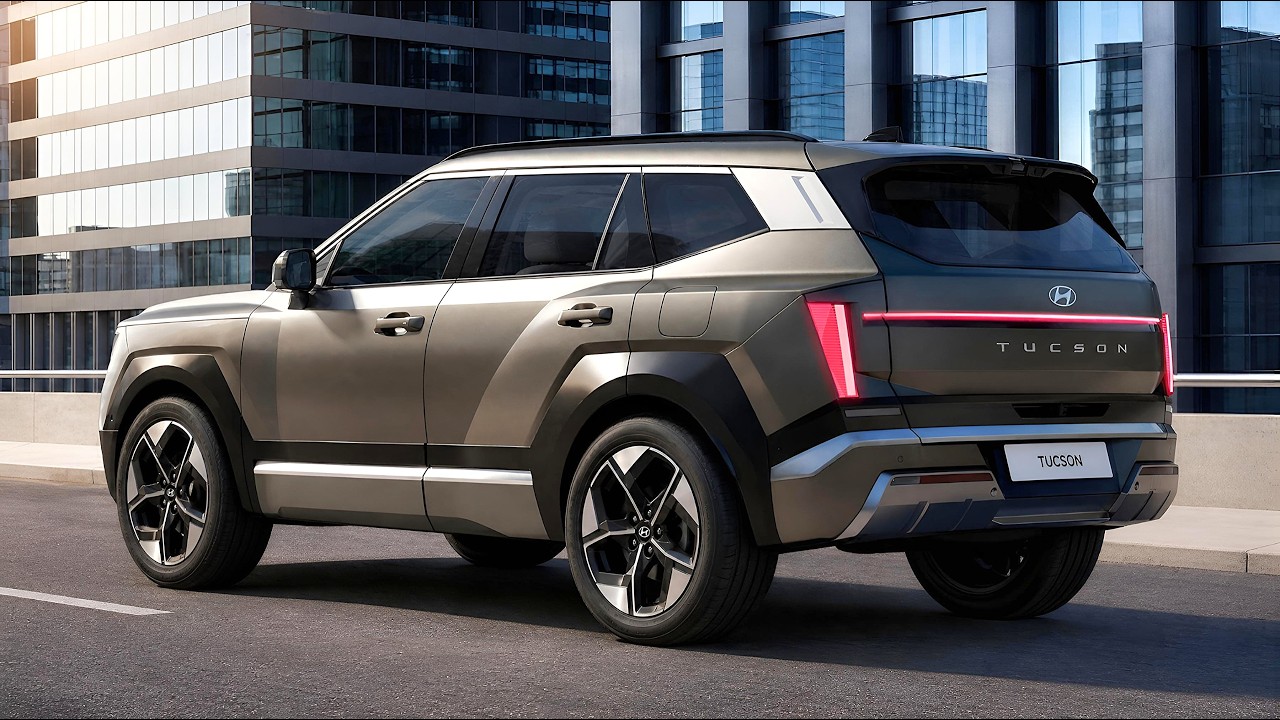
- Exterior design emphasizes a distinctive front grille, integrated lighting, and sharp geometric surfacing.
- Interior features a clean horizontal dashboard with a standard 12.3-inch touchscreen and optional panoramic curved display.
- Physical controls complement digital interfaces for safer and easier operation while driving.
- The Tucson seats five comfortably with spacious rear legroom and versatile cargo space, including a hands-free liftgate.
- Powertrain options include a base 2.5L gasoline engine and a more powerful, efficient hybrid system with AWD availability.
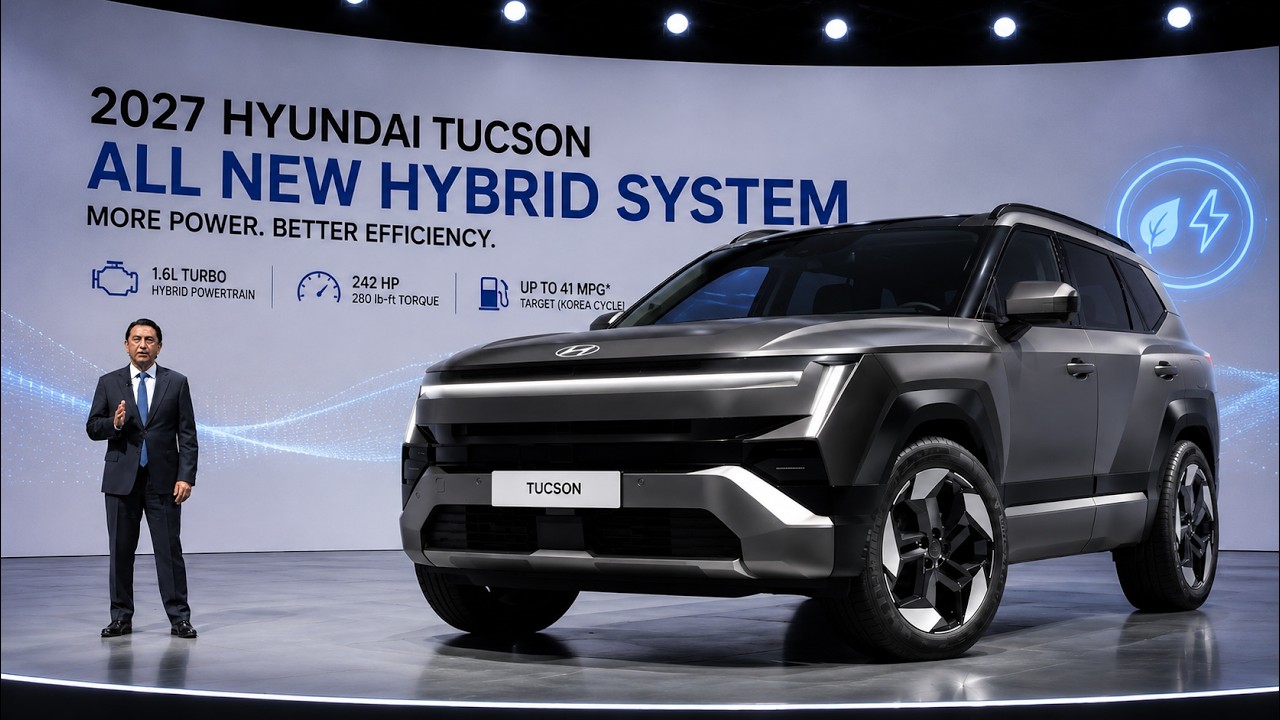
- The hybrid model offers 231 combined horsepower and improved fuel economy, appealing to performance and efficiency buyers.
- The suspension balances comfort and control, with AWD enhancing traction in various driving conditions.
- The Tucson aims to be a practical, stylish, and technologically advanced family SUV that rivals segment leaders.
Chapters
- 00:00Introduction to the Compact SUV Market and Tucson's Position
- 01:03Tucson's Distinctive Exterior Design
- 02:06Interior Design and Digital Technology
- 04:14Physical Controls and Usability
- 05:13Interior Space and Cargo Versatility
- 06:21Gasoline Powertrain Overview
- 07:23Hybrid Powertrain Advantages
- 08:27All-Wheel Drive and Driving Dynamics
- 09:50Summary and Market Positioning
Full Transcript — Download SRT & Markdown
Speaker A
[music] [music] The compact SUV market is one of the most competitive parts of the entire automotive industry, and the Hyundai Tucson has quietly become one of the vehicles that Toyota, Honda, and Nissan can no longer afford to underestimate.
Speaker A
The latest Tucson already combines bold styling, one of the most modern cabins in the segment, gasoline, hybrid, and plug-in hybrid powertrains, available all-wheel drive, and a long list of technology that once belonged almost exclusively to luxury vehicles. Now, as
Speaker A
we look toward the 2027 Hyundai Tucson, the big question is whether Hyundai can push that formula even further. Complete US specifications for the 2027 Tucson have not yet been officially announced.
Speaker A
So, the latest confirmed 2026 model gives us the clearest factual foundation for what buyers should expect. And if Hyundai continues in this direction, the 2027 Tucson could become less of a value alternative to the Toyota RAV4 and
Speaker A
Honda CR-V and more of a genuine benchmark for the compact SUV class. The Tucson has never been afraid to look different, and that remains one of its greatest advantages. [music] Where some compact SUVs rely on safe proportions and conservative details,
Speaker A
Hyundai has given the Tucson a much stronger visual identity. The front end immediately communicates that personality. The grille is wide and integrated deeply into the body, while the lighting design creates a distinctive appearance that is easy to recognize from a distance. Hyundai has
Speaker A
used hidden or integrated daytime running lights in recent Tucson designs, helping the front fascia look more technical when the vehicle is illuminated and cleaner when it is parked. The hood sits relatively high, giving the Tucson more SUV presence, but
Speaker A
the body still avoids looking oversized. Strong lines around the fenders create width, while the lower bumper treatment helps visually anchor the vehicle to the road. From the side, Hyundai uses sharp geometric surfacing instead of simple straight character lines. The doors and
Speaker A
fenders catch light differently depending on the viewing angle, [music] giving the body more visual movement than many competitors. Available 18- and 19-inch wheels allow different trims to develop very different personalities.
Speaker A
The XRT in particular leans harder into the rugged look with darker exterior elements, unique wheel designs, additional cladding, and more adventurous styling. This does not turn the Tucson into a dedicated off-roader, but it gives buyers who want a tougher
Speaker A
image an alternative to the luxury-oriented Limited. At the rear, the design remains modern and wide. The lighting is positioned to emphasize the width of the vehicle, while the rear spoiler and sculpted tailgate help avoid the tall, boxy appearance that can make
Speaker A
some compact SUVs look overly practical. Overall, the Tucson feels more expressive than a Honda CR-V and arguably more futuristic than the current Toyota RAV4. Whether you prefer that look comes down to taste, but Hyundai deserves credit for giving the Tucson an
Speaker A
identity that does not simply imitate its rivals. Step inside and the Tucson becomes even more convincing. Hyundai has placed major emphasis on digital technology, but the cabin is not simply a collection of large screens. The dashboard uses a clean horizontal layout
Speaker A
that visually stretches across the cabin, making the interior feel wider and more sophisticated. A 12.3-inch touchscreen comes standard on the latest Tucson, while higher trims can combine it with an additional 12.3-inch digital instrument cluster to create a panoramic
Speaker A
curved display [music] effect that immediately gives the cabin a more premium atmosphere. Navigation, vehicle [music] settings, media, smartphone connectivity, and camera views can all be presented clearly, [music] while wireless Apple CarPlay and Android Auto support makes it easy to bring
Speaker A
familiar smartphone functions directly into the vehicle. Hyundai has also returned some important physical controls to the cabin after experimenting with touch-sensitive interfaces. That is a smart decision.
Speaker A
Large displays look impressive in a showroom, but drivers still need to adjust climate settings, audio volume, and basic vehicle functions while keeping their attention on the road.
Speaker A
[music] A combination of physical controls and digital interfaces often works better than forcing everything through the touchscreen. Of course, compact SUV buyers do not choose a vehicle based only on dashboard design.
Speaker A
[music] They need space. The Tucson is a two-row, five-passenger crossover, and Hyundai has used its dimensions efficiently. Front passengers get a comfortable seating position with good outward visibility, while rear passengers benefit from a relatively spacious second row. That rear seat room
Speaker A
is important because compact SUVs have increasingly become primary family vehicles rather than small secondary cars. [music] Adults can realistically sit in the back on longer drives, and the relatively flat floor helps the center position remain more usable. The
Speaker A
cargo area is another strength. A wide rear opening and low loading floor make it easier to load luggage, groceries, sports equipment, or larger items. Fold the rear seats down, and the Tucson can handle significantly more cargo, giving it the versatility many buyers used to
Speaker A
associate with larger SUVs. The available hands-free smart liftgate is useful when your hands are full, and storage areas throughout the cabin help manage everyday clutter. This is one of the reasons the Tucson competes so effectively with the RAV4 and CR-V. It
Speaker A
is not simply trying to win on styling. It still handles the boring but important [music] parts of SUV ownership extremely well. For buyers who want the simplest and most affordable powertrain, the current Tucson uses a 2.5-liter 4-cylinder gasoline engine producing 187
Speaker A
horsepower and 178 pound-feet of torque [music] paired with an 8-speed automatic transmission. Front-wheel drive is available, while Hyundai's HTRAC all-wheel drive system can be added for buyers who want additional traction. Those figures immediately tell you what this version
Speaker A
is designed to do. It is not a performance model, and it is not trying to impress anyone with acceleration numbers. Instead, the gasoline Tucson is intended to deliver predictable everyday transportation, reasonable fuel economy, lower entry pricing, and the kind of
Speaker A
simplicity that some buyers still prefer. For normal city driving and highway commuting, 187 horsepower is adequate. Although drivers who frequently carry several passengers, travel through mountainous areas, or simply prefer stronger acceleration may find the hybrid considerably more appealing, fuel economy remains
Speaker A
respectable, particularly in front-wheel drive form, and the conventional 8-speed transmission gives the Tucson a more familiar driving character than some rivals that use continuously variable transmissions.
Speaker A
[music] The gasoline model therefore remains a sensible choice, but within the broader Tucson lineup, it increasingly feels like the starting point rather than the version that best represents what Hyundai can now offer. The Tucson Hybrid is where the lineup becomes much more
Speaker A
compelling because it combines improved efficiency with substantially more power. The current hybrid system pairs a turbocharged 1.6-liter 4-cylinder engine with electric assistance to produce 231 combined horsepower, creating a meaningful performance advantage over the standard gasoline model. Electric
Speaker A
assistance provides stronger response at lower speeds, making the vehicle feel more energetic when pulling away from traffic lights, joining a busy highway, or overtaking slower traffic. At the same time, fuel economy improves rather than becoming worse, which creates one
Speaker A
of the strongest arguments for choosing the hybrid. Depending on configuration, current Tucson hybrid models can achieve fuel economy figures approaching the high 30 MPG range, giving families the ability to reduce fuel use without changing their
Speaker A
no charging cable to think about and no need to plan journeys around battery range. The hybrid system simply works automatically in the background, deciding when to use the gasoline engine, electric motor, or both.
Speaker A
Available H-track all-wheel drive adds another layer of usefulness, particularly for buyers who live in areas with rain, snow, or slippery roads. This combination of stronger performance, improved efficiency, AWD availability, and completely normal daily operation may make the hybrid the
Speaker A
most balanced Tucson in the range. It is also the version that puts Hyundai most directly against the Toyota RAV 4 hybrid and Honda CRV hybrid. For buyers who want to go further into electrification without committing to a fully electric
Speaker A
vehicle, the Tucson plug-in hybrid becomes even more interesting. The current PHEV combines the same basic 1.6 L turbocharged engine with a larger battery and a stronger electric motor, producing 268 combined horsepower and 271 pound- feet of torque. [music] that
Speaker A
makes it the most powerful mainstream Tucson configuration and gives the vehicle noticeably stronger acceleration than the standard gasoline model. More importantly, the larger battery provides an electric only driving range of around 30 mi under current EPA ratings, meaning
Speaker A
a driver with a relatively short commute and access to home charging could potentially complete a significant portion of everyday travel without using gasoline at all. Imagine driving 15 miles to work, charging overnight at home, and using mostly electric energy
Speaker A
during the week. Then, when the weekend arrives and you need to drive several hundred miles, there's no need to worry about finding a charging station because the gasoline engine allows the Tucson to continue like a conventional hybrid.
Speaker A
This flexibility is the real attraction of a plug-in hybrid. It gives owners some of the benefits of an EV without forcing them to depend completely on public charging infrastructure. Standard all-wheel drive and useful towing capability add further versatility,
Speaker A
making the PHEV an especially attractive choice for buyers willing to pay more for additional performance and electric capability. The Tucson has been designed primarily around comfort and confidence rather than outright performance, which is exactly the right strategy for a
Speaker A
compact family SUV. The suspension is tuned to absorb rough pavement and everyday road imperfections without allowing the body to feel excessively soft or disconnected. [snorts] The elevated seating position provides the visibility buyers expect from an SUV, while the vehicle's manageable exterior
Speaker A
dimensions mean it is still easy to drive through crowded streets, parking structures, and suburban neighborhoods.
Speaker A
Steering is intended to be light enough for easy daily use, but controlled enough to maintain confidence at highway speed. Hybrid and plug-in hybrid models benefit from the smooth response of electric assistance and regenerative braking functions can help recover
Speaker A
energy while slowing the vehicle. The XRT trim may look more rugged and adventure oriented, but expectations should remain realistic. The Tucson is still primarily a road focused crossover rather than a dedicated off-road vehicle. HRA all-wheel drive can help
Speaker A
provide traction on snow, loose gravel, wet roads, and mild trails, but anyone planning serious off-road adventures would be better served by something more specialized. For the majority of Tucson owners, however, the priority will be quiet highway travel, stable handling,
Speaker A
good visibility, and enough suspension comfort to keep passengers relaxed during long trips. Official US pricing for the 2027 Tucson has [music] not yet been announced, so exact numbers would currently be speculation. The latest confirmed lineup provides the best
Speaker A
indication of where Hyundai is likely to position the next model. The gasoline Tucson begins around the $30,000 level before destination and additional charges, while hybrid versions move slightly higher, and the plug-in hybrid enters the $40,000 range, depending on
Speaker A
trim and equipment. That broad pricing structure is actually one of the Tucson's greatest strengths because it gives buyers several entry points.
Speaker A
Someone who simply needs a practical family SUV can choose the conventional gasoline version, while a buyer who drives many miles each year may justify the higher cost of the hybrid through better efficiency and stronger performance. [music] Buyers interested in electric commuting
Speaker A
can move into the PHEV without abandoning gasoline flexibility. Hyundai's challenge for 2027 will be keeping enough separation between the Tucson and more premium products while continuing to add features. If pricing rises too aggressively, buyers may start comparing higher Tucson trims with
Speaker A
entry-level luxury SUVs. But if Hyundai maintains its current balance between features and value, the Tucson should remain one of the strongest packages in its class. So, is the 2027 Hyundai Tucson really becoming sharper, smarter, and more premium? If Hyundai carries the
Speaker A
strengths of the current lineup into the next model year, the answer is very likely yes. The Tucson's greatest advantage is not one spectacular feature, but the completeness of the package. It offers distinctive styling, a modern cabin, generous passenger
Speaker A
space, useful cargo capacity, available AWD, multiple powertrain choices, strong hybrid performance, plug-in capability, and safety technology that was once reserved for luxury vehicles. The biggest weakness is that the standard 187 horsepower gasoline engine feels increasingly ordinary when compared with
Speaker A
the much more convincing hybrid. But that may simply make the electrified version an easier recommendation. The Tucson Hybrid may currently represent the sweet spot because it delivers stronger performance and better efficiency without requiring owners to plug anything in, while the PHEV offers
Speaker A
an appealing bridge toward electric driving. [music] Hyundai has reached the point where the Tucson deserves to be evaluated alongside the RAV4 and CRV as an equal rather than as a cheaper alternative. And if the 2027 model becomes even more refined without
Speaker A
sacrificing value, Toyota and Honda may have a very serious competitor on their hands. [music] Would you choose the 2027 Hyundai Tucson over the Toyota RAV4 or Honda CRV? Let me know in the comments below and watch these videos,
Topics:Hyundai Tucson 2027compact SUVhybrid powertraindigital cockpitSUV designfamily SUVfuel efficiencyall-wheel driveautomotive technologyHyundai Tucson review