Skip to content

He Tested 4,700 Paywalls. These Won.

Explore key paywall optimization lessons from 4,700 experiments, focusing on design, personalization, and metrics for long-term growth.

Ask about this video. Answers come from its transcript only — with the timestamp, so you can check them.

Generated from the transcript and can be wrong — check the timestamp.

Key Takeaways

  • Start simple with paywalls to prioritize user acquisition before optimization.
  • Radical design changes and personalization are the most effective levers for paywall improvement.
  • Metrics should align with business goals, balancing ARPU, LTV, and churn.
  • Testing paywall placement and timing throughout the user journey is critical.
  • Long-term business success requires avoiding overly aggressive discounting and gimmicks.

What the video covers

  • Paywall optimization is not crucial at the start; focus on getting users into the app first.
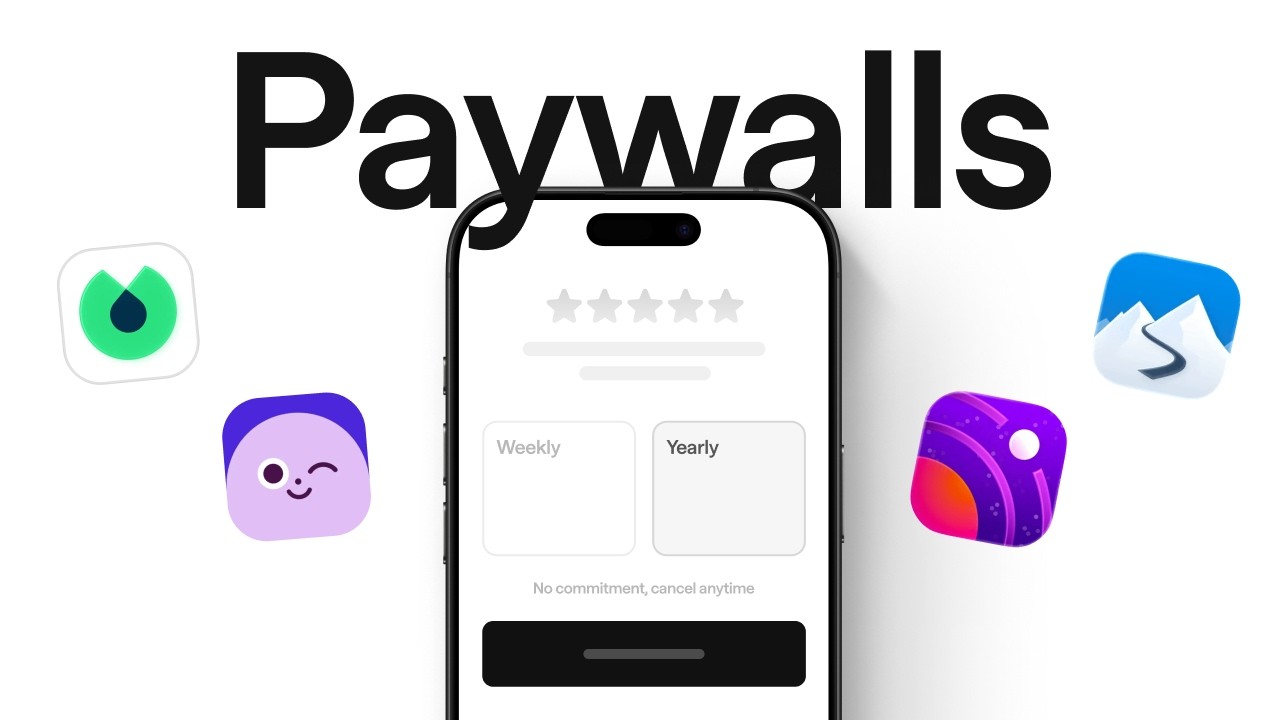
  • Simple paywalls with a headline, bullet points, and a continue button work well initially.
  • Design tests have the biggest impact, followed by personalization and price packaging.
  • Showing only two pricing options reduces cognitive load; yearly plans often yield higher LTV.
  • Device-based pricing tests can be done but have diminishing returns and high complexity.
  • Key metrics to track depend on business goals, including paywall view rate, trial-to-paid conversion, LTV, and churn.
  • Different paywall touchpoints (onboarding, gating features, cancellation) are important to test.
  • Creating an account before showing the paywall helps tie subscriptions to user IDs.
  • Steep discounts in win-back campaigns are acceptable but should be used carefully to avoid revenue cannibalization.
  • Some popular paywall tactics like 'spin the wheel' work short-term but may harm long-term business sustainability.

Answers

Questions about this video

How important is paywall optimization at the start of an app launch?

At the start, paywall optimization is not very important. The focus should be on getting users into the app first, with a simple paywall setup that includes a headline, bullet points, and a continue button.

What paywall elements have the biggest impact on conversion rates?

Design changes have the biggest impact, followed by personalization such as calling out the user's name or tailoring visuals to their identity. Pricing presentation also matters but has less impact than design and personalization.

What metrics should businesses track when evaluating paywall experiments?

Metrics depend on the business but typically include paywall view rate, trial-to-paid conversion rate, lifetime value (LTV), churn, and retention metrics like D1, D7, and D30. ARPU can be useful but may not tell the full story.

Full Transcript — Download SRT & Markdown

00:00
Speaker A
I spoke to someone who's designed 4,700 paywalls. How important is paywall optimization? As a starting point, it's honestly not that important.
00:10
Speaker A
And the highest converting paywall isn't always the one that you should use. Unfortunately, it works.
00:17
Speaker A
So today, we are unpacking the biggest growth lessons from thousands of paywall experiments and why most founders are optimizing the wrong thing.
00:27
Speaker A
For your first paywall, honestly, all that you need to do is to have a headline describing the product, a couple bullet points describing the product and what it does, and a button to continue. I get in calls with some
00:38
Speaker A
people that think they need to do all these crazy optimizations for their placements and paywalls in the beginning. You really don't. You just need to make sure that you're getting users into your app first, and then you can optimize that traffic later.
00:49
Speaker A
When you run a paywall experiment, how do you decide what's worth testing first? Design tests move the needle the most.
00:55
Speaker A
So, you try radically different designs until you find something that blows everything out of the water. You could have a video paywall, you could have bullet list paywall, a trial timeline paywall, a long-form paywall. After design, personalization moves the needle
01:09
Speaker A
the most. Calling out their name, highlighting their goals. [music] So, if they're male or female and it's a fitness app, you can show like a strong man on the paywall and it's representative of the user's identity, and then price packaging design. So, how
01:23
Speaker A
do you design the footer of the paywall? If you have a yearly and a weekly product, are they vertical product groups? Are they horizontal? What do you put in those product groups? How do you present the price? Do you show it as
01:34
Speaker A
weekly for both options with a subtitle that shows the actual real price? Or how do you go about that? Ideally, you want to default to a yearly product because we see that that has the highest LTV.
01:47
Speaker A
You only want to show two to decrease cognitive load on the user, but a yearly product may not be the best for your business. You can also start doing tests based on what kind of device the user has. If the user is on an iPhone 17 Pro,
02:02
Speaker A
they're on 5G and don't have low battery mode, show them a higher price as opposed to a user that's on an iPhone 13 Pro on 3G and their low battery indicator is working, maybe you want to show them a lower price because they may
02:18
Speaker A
or may not convert at the higher price. But, that's like one of the last levers that you really pull because it's so much work. It incrementally gets smaller and smaller in what moves the needle.
02:28
Speaker A
What do you think are the metrics that matter the most when you're evaluating a paywall experiment?
02:33
Speaker A
That depends entirely on the business. I used to use ARPU as my North Star metric, but ARPU doesn't necessarily give you all the answers. Your ARPU may be high, you may have three or four dollar ARPU, but the reason you may have
02:45
Speaker A
three or four dollar ARPU is because you have weekly products, and so your churn may be 90 to 95% per month. Even though ARPU is high and it looks good, it doesn't tell you the full picture. I typically look at paywall percentage,
02:58
Speaker A
how many people are actually looking at the paywall that installed the app. If it's above 80%, you're doing good. If it's 90% or above, you're crushing. I look at trial to paid conversion rate, LTV, D1, D7, D30, churn, and then based
03:13
Speaker A
on the kind of customer that they are, I'll suggest different things. If you're vibe coding an app and you just want to build something and launch it and get as many users as possible, then you're going to be focusing on ARPU as the key
03:25
Speaker A
metric. But, if you're building like a long-term business, you want to maximize revenue while still balancing churn, then optimize for LTV and retention.
03:37
Speaker A
We take your paywall and use that as a control, and then we would design four to five paywalls to go against it. For all of our clients so far, we are able to beat the control in the first week
03:50
Speaker A
for every app except two. It ended up taking until the second or third experiment to really see the statistically significant win for them.
03:59
Speaker A
When you're doing experimentation, you just have to be patient also. It's not always going to work out.
04:04
Speaker A
How about the paywall touch [music] points? How important is it to test them? All the different touch points are extremely important. Onboarding paywalls, gated paywalls that gate some kind of feature, paywalls in the settings page, paywalls for if the user
04:18
Speaker A
wants to cancel their account, you can win them back showing them some kind of discounted offer. Uh, a paywall for when they're about to delete the app. You'll say, "Before you go or before you delete, we'd love for you to try one
04:30
Speaker A
last time." When it comes to what is the most used paywall, it's the after onboarding paywall.
04:37
Speaker A
In fact, 78% of iOS apps on Mobbin show the paywall after onboarding. Now, do you create an account before or after? That you have to test actually because I have tested it multiple times and I still have inconclusive results
04:53
Speaker A
and I think it's just because it's all been in different app categories. I like to create an account first and then show the paywall. That way I can tie a user ID to the person that's actually subscribing. So, you have to think about
05:04
Speaker A
the entire life cycle of the customer. It's literally the only part of the app that makes you money.
05:11
Speaker A
Having a steep discount in your win back campaign, I think is okay. I don't really like it when apps immediately go for the 80% off discount after onboarding because you could be cannibalizing revenue by showing them such a discounted offer before they've
05:25
Speaker A
even had a chance to go back and see a paywall a few more times. But, if they're subscribed already and they're thinking about canceling, showing them a lower rate before you do a bunch of price testing is the cool way for you to
05:38
Speaker A
keep your customers that are thinking of churning anyway. What's a paywall best practice you completely disagree with?
05:44
Speaker A
Is the [music] spin the wheel paywall. This is a predetermined spin the wheel lottery file that may land on some kind of discounted percentage. If you're optimizing for the longer-term business, that may not be a good paywall for you.
05:58
Speaker A
But, if you're optimizing for a weekly price, and you want to maximize revenue, unfortunately, it works. The issue is that I think more and more users are getting comfortable closing paywalls because they know they're going to get some kind of offer afterwards. For the
06:12
Speaker A
apps that want to build a really good business, just remember that this is a long-term game.
06:17
Speaker A
Throughout this conversation, Jonathan kept coming back [music] to the same question. What kind of business are you trying to build? Neither of these are right or wrong, but [music] they're very different games. Next up, watch this paywall video on why some of them work
06:32
Speaker A
[music] and some don't.
Topics:paywall optimizationsubscription growthapp monetizationpaywall designpersonalizationpricing strategyuser retentionLTVconversion ratepaywall testing

Get More with the SozAI App

Transcribe recordings, audio files, and YouTube videos — with AI summaries, speaker detection, and unlimited transcriptions.

Or transcribe another YouTube video here →