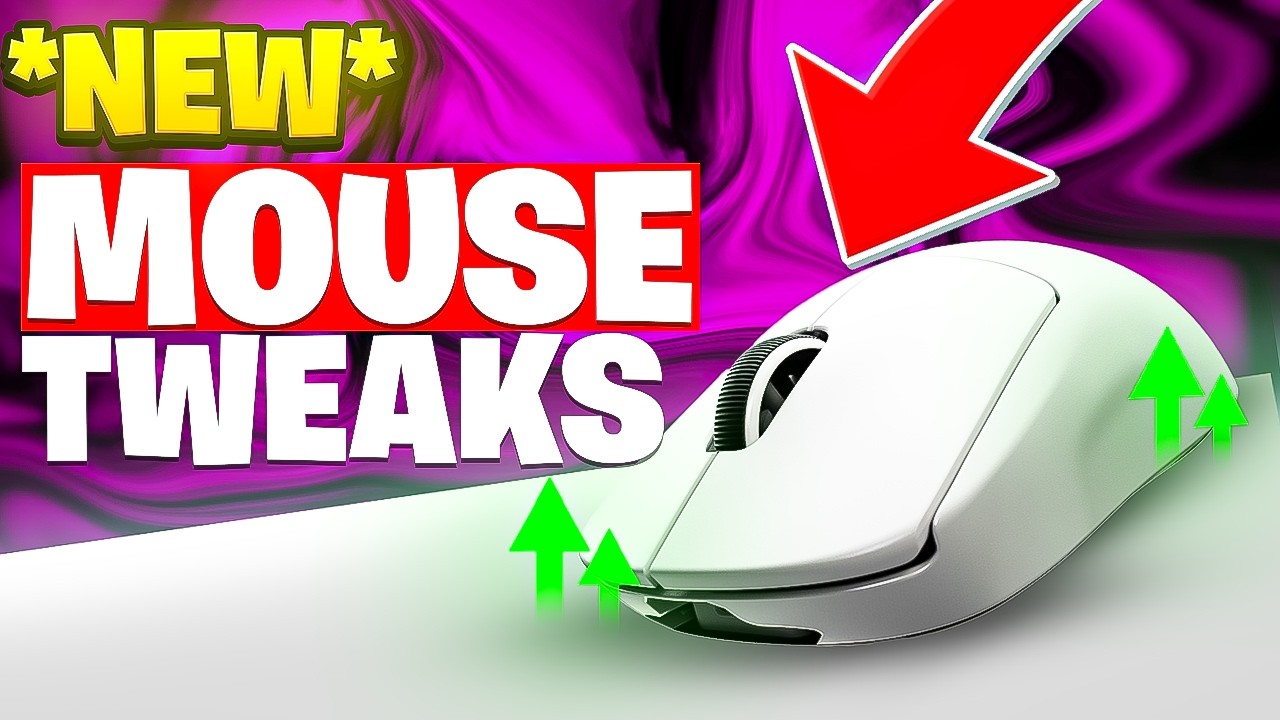
Learn how to retrain your brain for calm, smooth aiming by reducing tension and instinctive overreactions in aim training.
Key Takeaways
- Aim training should prioritize calm, smooth, and conscious movements over fast, instinctive reactions.
- Tension and overreactive aiming are common problems that degrade aim quality and learning.
- Training with slow, inertia-based scenarios helps the brain relearn proper aiming responses.
- Minimal mouse movement and visual target reading are key to improving aim consistency.
- Not all aim training methods suit everyone; players must identify their specific issues first.
What the video covers
- Traditional aim training often fails because it induces a tense, instinct-driven response that hinders learning.
- The brain learns better when shown slow, simple, and conscious movement patterns rather than hyper-difficult scenarios.
- Excessive tension causes reactive flicks and snapping instead of smooth, predictive aiming.
- Effective aim training should focus on minimal, deliberate mouse movement guided by visual target reading.
- Introducing inertia in target movement helps reduce exaggerated tension and encourages smooth aiming.
- The video offers custom scenarios in KovaaK's designed to teach these principles with adjustable speeds and patterns.
- Players should identify if they suffer from tension and overreaction before applying this method.
- The approach complements but differs from other systems like SYA by targeting response perfection rather than just accuracy.
- Maintaining accuracy between 60-80% during training is recommended to balance challenge and learning.
- Shorter interval breaks and a structured playlist system help transition from learning to playing effectively.
Chapters
- 00:00Introduction: Problems with Traditional Aim Training
- 00:36Instinct Mode and Brain Learning Challenges
- 01:22Experimenting with Scenario Difficulty and Movement Patterns
- 02:05Target Audience and Common Aim Issues
- 02:55Overreaction and Tension in Aim: Causes and Effects
- 03:39Minimal Movement and Counter Prediction Strategies
- 04:46Learning vs Playing: Structured Training Playlists
- 05:24Relearning Aim: Calmness, Inertia, and Smoothness
- 06:55Custom Scenarios and Practical Recommendations
- 08:05Summary and Final Advice on Aim Training
Full Transcript — Download SRT & Markdown
Speaker A
I think I can change your aim. See, there's something fundamentally wrong about aim training. Why doesn't it work for everyone, and why do some people pour hours into it and somehow still end up looking average? This question has been
Speaker A
on my mind for a long time, and it led me to start questioning everything I know.
Speaker A
I'm yet again trying something different, and my question was simple. What if all these hyper difficult or exaggerated scenarios are not only not helping us, but hindering us by creating an exaggeratedly tense response to very basic movements? I realized that in our
Speaker A
panic to increase difficulty, we're putting our brain in an instinct mode. And it's actually difficult to learn and reprogram your brain while it's in this instinct mode. So, to fix it, I had to deep dive into the basics of the brain.
Speaker A
The idea is simple. If we show our brain structure in a non-dramatic, dare I say, stupidly slow and conscious way, it'll lead to unconsciously better responses.
Speaker A
The theory is simple, but there are problems. See, raw smoothness and centering scenarios have been prevalent for a long time. Except, every time I tried this, I ran into issues I couldn't fix. Firstly, they were either too precise, causing too much tension, or
Speaker A
they'd be too fast and include complex patterns, and that's not the direction I was going for. So, after much experimenting, I decided to move away from any difficulty a scenario may offer in order to show my brain the exact
Speaker A
response and structure on how to react to basic movements at different speeds and distances. I was specifically looking for fast, but non-complex movement patterns just as they are in game.
Speaker A
But, I struggled to find the slowness and thickness I was going for, so I decided to make my own, and if you go to KovaaK's right now, click update online scenarios and search accuracy edit, you'll find exactly those. But, in order
Speaker A
to understand why this may or may not work, we first have to understand where it's coming from and who it's for. Like [snorts] any of my videos, they're specific to a group of people struggling with a particular issue, and not every
Speaker A
video is meant for everyone. See, tension itself is a self-created aim training phenomenon, meaning people who don't aim train often don't suffer with as severe tension issues as aim training mains do. This is due to the constant, intense and, more importantly,
Speaker A
the over-reactionary, instinct-based aiming aim training pushes, where the brain responds first and reads later, which happens as a cover-up for skill and improper structure. Alluding your brain to prioritize your hand above your eyes. Eyes that should be guiding that
Speaker A
hand. In turn, your brain learns to move first, causing randomness as opposed to structure, where you'd smoothly target read by looking at the target, reading his movement speed, and then responding appropriately with your hand last.
Speaker A
A typical issue of this can be spotted in two ways. Firstly, snapping in reactive or microstatic flicks instead of a smooth glide. Both of these are actually caused by an overly tense responsive aim type. This would be the
Speaker A
correct way to track. The issue is that you're caught in a loop of instantly reacting and putting an overemphasis on your initial flick speed as opposed to a deceleration and smooth movements back to the target. And the visual results
Speaker A
become a person who treats everything like it's static and not someone who's capable of reading the target's patterns and then responding accordingly.
Speaker A
This person responds the same regardless of the pattern or scenario presented, and I can tell you from coaching thousands of people, this is extremely common.
Speaker A
Your goal should be to input minimal mouse movement, only moving when necessary and not wasting movements by overreacting or being baited by a small change in direction. This works directly to counter prediction since you're essentially showing your brain exactly
Speaker A
how you want it to react when a change in direction happens, and your brain now doesn't need to draw from a pool of instinctive randomness. It basically replaces the need for your brain to do any guessing work, which is exactly why
Speaker A
predicting happens. If you're interested in getting a super detailed aim analysis with years of verified aim results for a variety of games, check the description to stop guessing what your next playlist or issue is, start knowing exactly what
Speaker A
you're doing wrong, and get knowledge to keep for a lifetime. Back to the video.
Speaker A
This suggests a possible difference in learning and playing, where you can possibly play to learn or play to play.
Speaker A
And I've set up three different playlists just for you to do so. One to learn, one to play directly after, and one that's combining them, which works as an expansion of the SYA system. You can play at least one minute of these
Speaker A
hyper slow scenarios, which you can quickly adjust in free play before moving on to normal speeds. I recommend pairing difficulty with hyper slowness to show your brain the proper way you want it to be performed. Learning the structure before the instinct and not
Speaker A
the opposite way around. Your brain is essentially overly focused on the speed part, the instinct part, and your raw reactions. But, we need to fix that through relearning your brain how to look first and react later. The solution
Speaker A
I created is scenarios with more inertia. But, what does this mean? Essentially, Overwatch scenarios have zero inertia. They change directions instantly. This causes a hyper exaggerated tense response in order to catch up with that speedy unexpected movement change. This is exactly what we
Speaker A
don't want. Instead, I want you to look at this. You may think it looks too easy, but I'm looking at something completely else. See, when the target changes direction, my fingers, arms, or shoulders are completely calm, effectively allowing my brain to
Speaker A
tediously be in a state of smoothness, which encourages learning and analyzing instead of a state of constant instinct and responsiveness. This doesn't mean you shouldn't play hard scenarios. It means people with high tension, poor instinct-based reactions, and excessive
Speaker A
snaps need to relearn how to flick, track, and aim to a stupidly simplified level before moving up in difficulty.
Speaker A
Like any of my videos, first identify if you have the problem I talk about before trying the specific advice. Many people have mistakenly viewed videos and implemented advice that is not even for them. I have over 300 videos, and not all
Speaker A
of them are meant to target your issues. Just like my playlist, they're often hyper specific to different cases and issues. In turn, the goal of this is to build a habit of not tensing during changes in direction and incorporate a
Speaker A
style of minimal mouse input instead of an overreaction to very small or negligible changes in direction. It's a nice way of saying it'll make your aim smoother. Surprisingly, this directly works on your ability to counter prediction, which makes sense because
Speaker A
you're showing your brain exactly how to react when a specific change in direction happens, which eliminates the need for your brain to do any guessing work, which is exactly why prediction happens. Many of you may run to something like SYA, which is greatly
Speaker A
effective for this. But, SYA targets high accuracy. We're targeting perfection in responses. Just don't have scenarios that incorporate too much raw smoothness to where it's extremely basic. It shouldn't completely not challenge you, but keep your accuracy around 60 to 80%, with the lower ends
Speaker A
being for precision tracking and higher ends for reactive. As always, this is a baseline metric, but I wouldn't go much under 50% accuracy when trying this technique. Again, with the goal being perfection.
Speaker A
I found that the best scenarios tend to be precision-based with a mix of smooth and mid strafes that cause relaxed, decelerated responses back to the target. And if you're plus 25, like my YouTube demographic suggests a lot of
Speaker A
you are, I strongly believe in shorter interval breaks when y
Speaker A
This is because you can come back refreshed showing your brain good patterns from the get-go instead of brute forcing 10 runs simply because the playlist says you should complete 10 runs. All these issues comes from you as a person being so obsessed with score
Speaker A
and not technique. You're so obsessed with trying to reach and respond to the target as fast as possible in order to get that good score, not actually teach your brain how you want movements to be executed and that's the biggest issue
Speaker A
with aim trainers I find today. Far too many people see the high score goal rather than a place to relearn to aim. I've been saying this since 2021, but in 2026, I hope someone listens and reaps the reward for it. What you have
Speaker A
to understand is how easily you can accidentally limit yourself in aim trainers and it's why you put countless of hours trying to brute force it. But, the solution may just be that good technique equals a long-term score gain.
Speaker A
Bad technique may equal the occasionally good high score, but comes with a long-term plateau. So, learn how to consciously aim and don't waste your precious time.
Topics:aim trainingaim improvementKovaaK'saiming techniquessmooth aimingreduce tensionbrain retraininggaming aimreaction trainingaim coach


![[YTP] pogo — Transcript](https://i.ytimg.com/vi/RJ6CfJDcKfA/maxresdefault.jpg)
![[YTP] pragu — Transcript](https://i.ytimg.com/vi/Ugq49qa0AZo/maxresdefault.jpg)
![[YTP] pragerboy — Transcript](https://i.ytimg.com/vi/HqwP2IT_Z0w/maxresdefault.jpg)
![[YTP] benis brager — Transcript](https://i.ytimg.com/vi/0tvqZRSyRbg/maxresdefault.jpg)
![[YTP] PragerU goes hard — Transcript](https://i.ytimg.com/vi/eT_t0UoKq2U/maxresdefault.jpg)