Skip to content

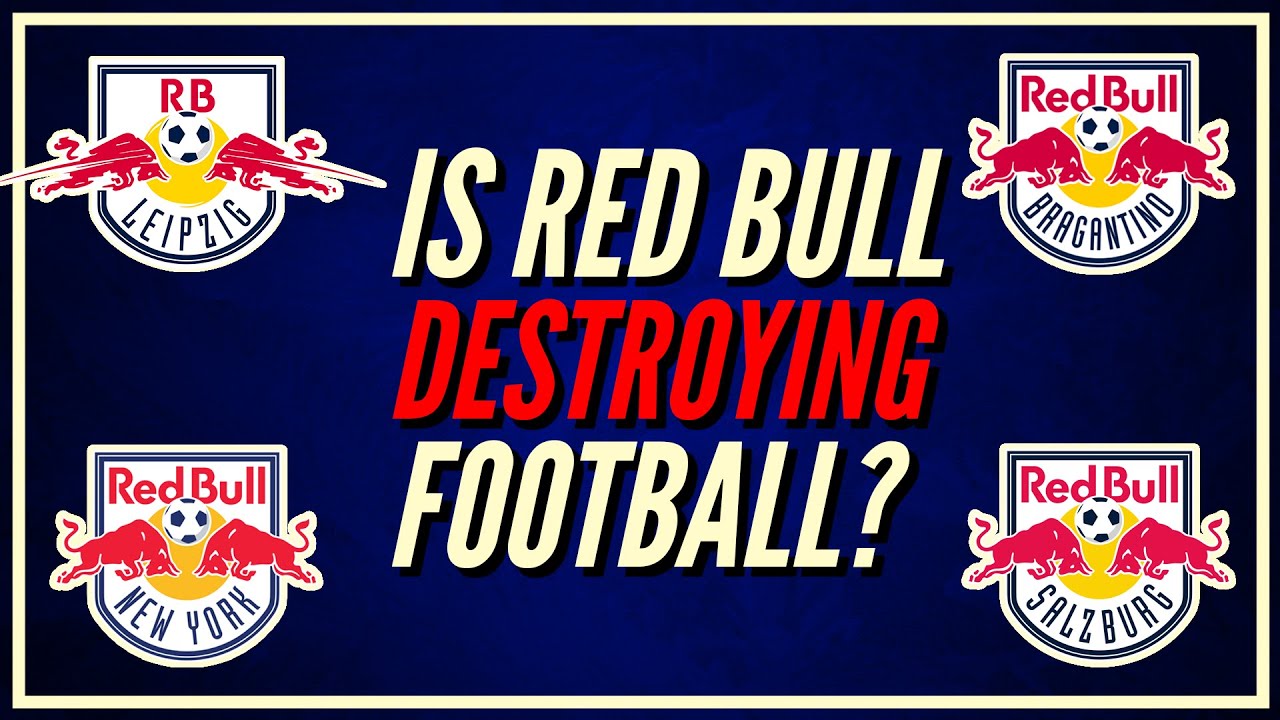
Why the RED BULL SYSTEM is Football's Most HATED Success Story

Exploring the controversial Red Bull football network's rise, philosophy, and impact across six clubs on four continents.

Key Takeaways

  • Red Bull's multi-club system is one of football's most successful and controversial projects.
  • Unified playing philosophy and interconnected clubs create a competitive advantage in player development.
  • The model disrupts traditional club ownership and fan culture, leading to significant backlash.
  • Financial efficiency through buying low, developing fast, and selling high sustains the network.
  • Sporting achievements validate the system despite cultural resistance.

What the video covers

  • Red Bull's football network spans six clubs across four continents, including Leipzig, Salzburg, New York, São Paulo, and Saitama.
  • The network began in 2005 with Red Bull's acquisition and rebranding of SV Austria Salzburg, sparking fan backlash and the creation of a new club by original supporters.
  • RB Leipzig was created in 2009 by purchasing a fifth-division license and circumventing German ownership rules, leading to widespread criticism.
  • Ralf Rangnick developed a unified playing philosophy based on high pressing and fast transitions, implemented consistently across all Red Bull clubs.
  • The system includes a multi-directional player development pipeline with feeder clubs like FC Liefering and pathways between continents.
  • Financially, the model focuses on buying young talent cheaply, developing them rapidly, and selling at premium prices to reinvest.
  • Red Bull clubs have achieved significant sporting success, including multiple Austrian league titles, Bundesliga promotion, and Champions League semifinals.
  • The network's expansion includes Red Bull Bragantino in Brazil and Omiya Ardija in Japan, broadening its global footprint.
  • Despite sporting success, the network faces cultural resistance due to its commercial approach and perceived threat to traditional football club ownership.
  • The Red Bull system challenges traditional football values but offers a highly efficient and successful multi-club model.

Answers

Questions about this video

What is the Red Bull football network?

The Red Bull football network is a multi-club ownership model spanning six clubs across four continents, unified by a shared playing philosophy and a focus on developing young talent.

Why is the Red Bull system controversial in football?

It challenges traditional football club ownership and fan culture by prioritizing commercial interests, leading to backlash from supporters and institutions who see it as undermining community-based club identity.

How does the Red Bull system develop and transfer players?

The system buys young players at relatively low prices, develops them using a consistent playing style across clubs, and sells them at premium prices to reinvest in the network, creating a financially efficient model.

Full Transcript — Download SRT & Markdown

00:00
Speaker A
There is a club in Leipzig that German football spent years trying to pretend did not exist. There is a club in Salzburg whose original supporters walked away and formed a new club rather than accept what their team had become.
00:12
Speaker A
There is a network connecting these clubs to others in New York, São Paulo, Saitama, and beyond. And at the head of it, as of last year, sits Jürgen Klopp.
00:21
Speaker A
That sentence should not make sense. And yet here we are. The Red Bull Football Network is the most controversial, most methodical, and most consistently successful multi-club project in the history of the sport. Six clubs, four continents, a shared philosophy [music]
00:36
Speaker A
that has developed some of the most valuable players in world football, and a level of cultural resistance from the game's [music] traditional institutions that has not slowed it down by a single step. This is the story of how it was
00:47
Speaker A
built, why the game [music] hates it, and why that hatred might be football's biggest blind spot. Welcome to Mega Football. Let's get [music] started.
00:59
Speaker A
The story begins in April 2005 in Salzburg. Red Bull GmbH, an Austrian energy drink company with a net worth in the [music] tens of billions, purchased SV Austria Salzburg, one of the most decorated clubs in the country's history.
01:12
Speaker A
Titles, European football, more than a century of identity built on violet shirts and a connection to the city that was understood as simply being part of what Salzburg was. Within weeks of the takeover, the violet was gone. [music]
01:24
Speaker A
The crest was gone. The name became FC Red Bull Salzburg. The kit was red and [music] white. Red Bull's red and white.
01:31
Speaker A
And the fans who cared most about what had just been lost did not protest and eventually accept it. They left. They formed their own club, SV Austria Salzburg, starting over in the lower divisions, carrying the history that felt like it had been taken from them.
01:44
Speaker A
They are still there today, still playing, still in the violet. The following year, Red Bull moved into the United States, acquiring the MetroStars, one of MLS's founding franchises, and renaming them the New York Red Bulls.
01:55
Speaker A
Then, in 2009, came the most provocative move of all, the creation of RasenBallsport Leipzig in Germany, [music] not an acquisition, a creation.
02:04
Speaker A
Red Bull bought the license of SSV Markranstädt, a fifth-division club with no meaningful presence in German football, [music] and rebuilt it from the ground up. The German Football Association's rules [music] were designed specifically to prevent what Red Bull was attempting. The 50+1 rule
02:20
Speaker A
requires clubs to be majority owned by their own members, their supporters. So, Red Bull structured Leipzig as a registered association with membership fees so prohibitively high that the club launched with fewer than a dozen members. The voting majority belonged in
02:34
Speaker A
practice to [music] Red Bull. The backlash was immediate, sustained, and genuinely angry. Supporter groups across Germany organized boycotts. Away fans held banners calling Leipzig a non-club, a product, a stain on the history [music] of German football. Clubs refused to sell them away tickets. The
02:50
Speaker A
fury was not simply about aesthetics. It was about precedent. [music] If Leipzig was allowed to exist and succeed, what did that say about the principle that football clubs belong to the communities they represent? By 2019, the network had
03:03
Speaker A
expanded to South America with the takeover and rebranding of Clube Atlético [music] Bragantino in Brazil, now known as Red Bull Bragantino, competing in the Série A and the [music] CONMEBOL Sudamericana. The club nobody wanted had become an empire nobody could
03:17
Speaker A
ignore. Strip away the controversy, and you are left with a question that is purely football. How does the Red Bull system actually function? What is the logic that connects a club in the Austrian Alps to one in Leipzig to one
03:30
Speaker A
in New Jersey to one in São Paulo? The answer starts with a man most people outside the game have never [music] heard of, Ralf Rangnick. The German coach and sporting director who joined Red Bull in 2012 was the architect of
03:42
Speaker A
the playing philosophy that now runs across every club in the network. Rangnick's football is built on pressing, specifically on winning the ball back as high up the pitch as possible, as quickly as possible, [music] and attacking before the
03:55
Speaker A
opposition can reorganize. It is vertical, physical, demanding, and extraordinarily consistent across every [music] Red Bull club. Watch Salzburg press, watch Leipzig transition. The movement patterns, the triggers, the distances between lines, they are the same, not similar, the same.
04:10
Speaker A
[music] The pipeline does not run in one direction, and it does not start in one place. FC Liefering, Red Bull's direct feeder club in the Austrian second division, is where the youngest European [music] recruits enter the system. They
04:21
Speaker A
learn the philosophy in competitive football before stepping up to Salzburg, but the network's reach goes further than Austria. New York has functioned [music] as a genuine development node. Tyler Adams came through the NYRB Academy, moved to Leipzig, and was eventually
04:35
Speaker A
sold onward for a fee that validated the entire chain. Bragantino [music] gives the system access to South American talent at prices the European market has not yet inflated. Players who can be developed within the Red Bull environment [music] before the network
04:48
Speaker A
decides whether they belong at a higher level. Every club is both a destination and a waypoint. The system does not have one entry point or one exit, it has six of each, and they are all connected. The financial model that results from all of
05:01
Speaker A
this is devastatingly efficient. Buy young at prices the market [music] has not yet inflated, develop fast using a proven system, sell at a premium to clubs with the budget to pay it, then reinvest and [music] start again. The
05:13
Speaker A
numbers across 20 years are extraordinary. Sadio Mané joined Salzburg for 4 million euros and left [music] for 11. Naby Keïta left for 52 million. Erling Haaland arrived for 8 million and left for 64. Dominik Szoboszlai developed at Salzburg [music]
05:28
Speaker A
and Leipzig before Liverpool paid 70 million. Dayot Upamecano, Ibrahima Konaté, Karim Adeyemi, [music] the list does not stop. No single club in world football has produced as much transfer value from players it developed internally at [music] the prices Red
05:42
Speaker A
Bull paid for them. That is not a coincidence. It is a competitive advantage that has been built, tested, refined, and protected over two decades.
05:51
Speaker A
You can dispute the methods. You cannot dispute the table. [music] Red Bull Salzburg were champions of Austria in every single season between 2014 and 2023, 10 [music] consecutive titles.
06:02
Speaker A
They have been regulars in the Champions League, and they have produced Champions League moments that go beyond results.
06:08
Speaker A
The domestic dominance has since been broken. Sturm Graz have taken the last two Austrian titles. But for a club that Austrian football initially refused to take seriously, the decade they built stands as the blueprint [music] everything else in the network was
06:22
Speaker A
modeled on. Leipzig's rise is the most dramatic number. [music] In 2009, they were in the fifth division of German football. By 2016, they were in the Bundesliga. [music] And after 1 year, they were Champions League competitors. In 2020, they had
06:36
Speaker A
reached the Champions League semifinals and finished the season as arguably the fourth best side in European football.
06:42
Speaker A
They won the DFB-Pokal in both 2022 [music] and 2023. They are, by any objective measure, an established elite club. They got there in 14 years from the fifth tier. Red Bull Bragantino have pushed the boundaries of what the South
06:56
Speaker A
[music] American arm of the network can achieve, reaching the Copa Sudamericana final in 2021, [music] qualifying for the Copa Libertadores, and consistently competing at continental level [music] in a country where football resources are concentrated at a handful of
07:10
Speaker A
historic giants. [music] The New York Red Bulls reached the MLS Cup final in
07:24
Speaker A
the acquisition of Omiya Ardija, a J2 League club based north of Tokyo in one of football's fastest growing markets.
07:31
Speaker A
Four continents, six clubs, a coherent identity connecting all of them. The project that German football tried to shut down before it started is now a permanent feature of the sport's [music] global landscape. And now the man overseeing all of it with the authority
07:45
Speaker A
to align the philosophy, raise the coaching standards, [music] and articulate what this network is trying to become is Jürgen Klopp. In January 2024, after 9 years at Liverpool, announced he was leaving Anfield. The assumption was a year off, a period of
07:59
Speaker A
rest. What followed was, depending on your perspective, either perfect or baffling. [music] Klopp was appointed head of global soccer for Red Bull GmbH, not a club manager, the head of the network. The most charismatic [music] coach of his generation is running the
08:13
Speaker A
most analytical project in football. The system just got a soul, and the clubs that hated Red Bull now face a more complicated version of that feeling.
08:21
Speaker A
The results do not resolve the argument, and they were never going to because the argument was never purely about results.
08:28
Speaker A
The identity question sits [music] at the center of everything that football's traditional culture cannot forgive about Red Bull. When SV Austria Salzburg supporters walked away in 2005, they were making a statement about what a football club is, not a product, not a
08:42
Speaker A
vehicle for commercial returns, but a living institution that belongs [music] to a community across generations. The crest matters, the colors matter, the name matters. Not because of sentiment, though sentiment is real, [music] but because those things are the mechanism
08:56
Speaker A
by which a club retains its meaning to the people who give it its reason [music] to exist. Red Bull's answer to that argument has always been implicit.
09:03
Speaker A
Look at what we built. Look at what these clubs are [music] now achieving. Would Salzburg have been a Champions League club without the investment?
09:10
Speaker A
Would Leipzig exist at all? The counter argument is that achieving things is [music] not the same as meaning something, that a club created to serve a brand's marketing interests is a different kind of institution to one created to represent [music] a city,
09:22
Speaker A
regardless of how many trophies it wins. Modern football's audience invest not just in results, but in identity, in a sense of belonging to something with continuity and history. Red Bull's clubs, by design, do not offer that.
09:35
Speaker A
They offer efficiency, quality, and a constant supply of exciting young players. That is a real offer. It is just not the same one.
09:43
Speaker A
Here is the question that the hatred tends to obscure. Is Red Bull actually the villain of this story, or did they simply do first and most openly what everyone else is now doing quietly? The City Football Group now controls clubs
09:56
Speaker A
in Manchester, New York, Melbourne, Yokohama Montevideo Palermo Lommel and beyond. Their network is larger than Red Bull's. Their budgets are larger.
10:05
Speaker A
Their ambition is larger. And the Manchester City project has been the subject [music] of more financial fair play investigations than any other club in European football [music] history. Yet, City Football Group does not attract the visceral cultural rejection that Red
10:18
Speaker A
Bull does. Their clubs retain their names, their crests, [music] their colors. The connection is financial, not philosophical. That distinction, in the eyes of traditional football culture, appears to matter enormously. [music] The multi-club model, connecting clubs across markets, sharing data, moving
10:33
Speaker A
players between them, building commercial synergies, is no longer a Red Bull innovation. [music] It is the direction that elite football ownership has moved in almost universally. What Red Bull did was prove it works, not theoretically, in practice, on the
10:47
Speaker A
pitch, in the transfer market, in the development of coaches who went on to reshape how the sport thinks about pressing [music] and tactical periodization. Every major ownership group now building a multi-club portfolio looked at what Red Bull produced and drew conclusions. The Paris
11:01
Speaker A
FC investment, Red Bull's minority stake [music] in the French capital's second club, giving the network a presence in one of the sports most commercially significant cities without a full rebrand, [music] suggests the model is evolving. The collaboration with Leeds
11:14
Speaker A
United, a club with a passionate fan base, [music] deep history, and more Premier League ambitions points in the same direction. The network does not always need to own entirely. Sometimes access to the data infrastructure, the scouting methodology, the philosophical
11:27
Speaker A
alignment, without [music] the political cost of rebranding, is the smarter play. That evolution is, in a sense, Red Bull's quiet acknowledgement that the backlash [music] matters. Not enough to change course. The results are too compelling for that, but enough to find
11:40
Speaker A
new ways of expanding influence that do not require the direct confrontation that Salzburg and Leipzig provoked. So, here is where we land. 20 years after an Austrian energy drink company walked into a century-old football club in Salzburg and replaced the violet with
11:55
Speaker A
red and white. [music] The sport has not resolved the question that moment raised. It has instead built an entire industry around attempting to answer it in the most commercially efficient way possible. The hatred is real, and it comes from a real place. When SV Austria
12:09
Speaker A
Salzburg supporters chose the fourth division over rebrand, they were not being irrational. They were saying something true about what football is for and what gets lost when it is treated purely as a vehicle for commercial [music] returns. But, the
12:21
Speaker A
influence is equally real. The coaching philosophy that Rangnick built at Salzburg and Leipzig, now in the hands of Jürgen Klopp, who is applying it across six clubs and four [music] continents, has changed how the world's best teams press, transition, and think
12:35
Speaker A
about the relationship between youth development and competitive [music] success. The question the briefing poses is the right one. In 20 years, will the Red Bull system be remembered as modern football's most hated idea or its most influential? The uncomfortable [music]
12:48
Speaker A
truth is that it will probably be both, and that might be exactly what football deserves. This is the Red Bull Football Network. Subscribe to Mega Football, and we'll see you soon.
Topics:Red Bull footballRB LeipzigRed Bull Salzburgmulti-club ownershipfootball philosophyRalf Rangnickfootball controversyplayer developmentfootball business modelfootball culture

Get More with the SozAI App

Transcribe recordings, audio files, and YouTube videos — with AI summaries, speaker detection, and unlimited transcriptions.

Or transcribe another YouTube video here →