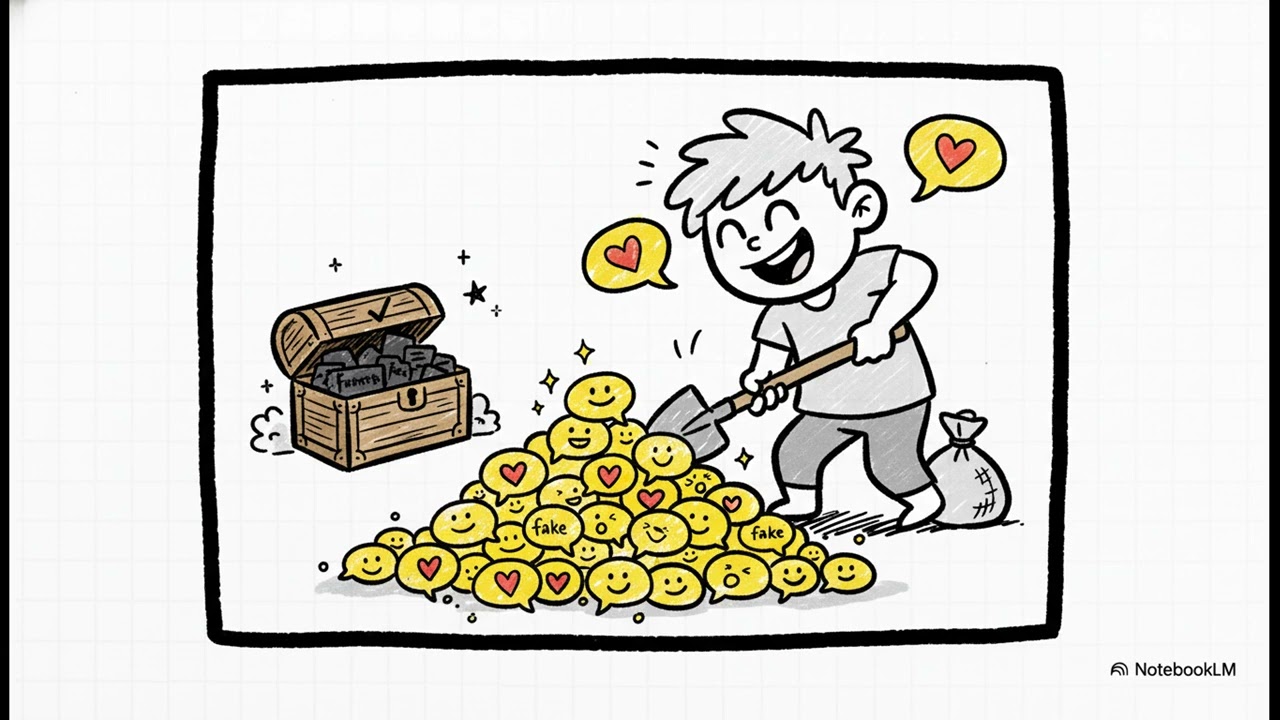
Explores why idle games like Cookie Clicker hold players so well despite requiring little action, drawing on their origins as satire, reward and progress mechanics, and compulsive design.
Key Takeaways
- Idle games exploit reward timing, progress feedback, and the sense of accomplishment without requiring active play.
- Their compulsive appeal stems from always-on progression, endowed value, and the constant presence of unrealized potential.
- Traditional psychological models of engagement do not adequately account for games that require disengagement.
- The genre's satirical roots and its mainstream success reveal how game mechanics can reproduce the grind they were meant to mock.
What the video covers
- Idle games are compared to a sitcom laugh track: they make players feel engaged even when little real play happens.
- The genre began partly as a parody of repetitive MMORPG grinding, with Progress Quest and Cow Clicker satirizing the mechanics of games like RuneScape and Farmville.
- Cookie Clicker is presented as a commentary on capitalism and endless expansion.
- Idle games have unusually high player retention, with publisher data cited as showing 4 to 10 times the retention of other top games.
- Traditional engagement models assume that not acting means disengagement, which does not fit idle games, making them hard to study with existing methods.
- Rewards arrive even when the player is away, and prestige resets make numbers feel powerful, producing a sense of accomplishment.
- Idle games have no real stakes or losses, so progress always moves forward and input only changes speed.
- Compulsion comes from intrusive omnipresence: players feel uneasy knowing their rate could be higher if they were more active.
- Endowed value, evolving mechanics, and low time cost make quitting hard and continued play easy to justify.
- Hardcore gamers make up much of the audience, since their habits of grinding, progress, and competence fit the genre's mechanics.
Chapters
- 00:00Idle Games as a Laugh Track for Games
- 00:47How Idle Games Work
- 01:32Origins: Satire of RuneScape and MMORPG Grinding
- 02:13Progress Quest, Cow Clicker, and Cookie Clicker
- 03:45Why Engagement Models Struggle with Idle Games
- 04:24Rewards, Progress, and Feeling Powerful
- 05:29Compulsion, Intrusive Omnipresence, and Quitting
- 07:09Who Plays Idle Games and Why
Full Transcript — Download SRT & Markdown
Speaker A
you know how when sitcoms they play a laugh track every two seconds even when the joke is terrible the laugh track plants the idea that the joke is funny and your brain responds like it actually is well idle games are like a laugh track
Speaker A
but for video games I'm Jake frondorf and this is the psychology of idle games if someone were to ask you to define a game your answer would probably include a player doing things and I doubt anyone would have argued against you a decade
Speaker A
ago but today there are lots of games where you don't have to do anything they're called idle games incremental games or Clickers for those who aren't familiar they're very simple games most of them follow this formula the longer you wait and the more you
Speaker A
click the more currency you get then you spend that currency on upgrades that lets you get currency faster but whether you're there playing or not the game progresses forward letting you continue to accumulate currency and if you've never played these games before
Speaker A
they're somehow really compelling idle games somehow have the very highest player retention rates of any genre online game publisher congregant said their Idol games have 4 to 10 times higher retention than the next top games on their platform
Speaker A
but how on Earth is a game where you don't do anything compelling is there some sort of flaw in human psychology that makes us so susceptible to something so stupid see idle games actually just started as a joke back in
Speaker A
2007 one of the most popular games of the time was RuneScape and in that game it was more common to see players grinding levels for nearly useless skills than anything else just outside of every city you'd see huge lines of
Speaker A
campfires that players would make in order to raise their fire makings go or cutting down trees or cooking fish or whatever else in fact RuneScape has so much grinding that automating RuneScape was a popular pastime progress Quest started out as a parody of these MMORPGs
Speaker A
the joke was that most MMOs were so repetitive that you might as well remove the awkward middle stage between clicking and seeing a number go up the game just wanted to show how meaningless and redundant it was to play
Speaker A
MMORPGs and it Illustrated that perfectly by well cutting out everything but clicking progress Quest satirical angle was one that resonated with these games players and people picked up the game because it was funny after making your character the game
Speaker A
which is basically a glorified spreadsheet would play itself however the developer Eric Fredrickson was surprised when people actually enjoyed the game many of the idol games that followed were also supposed to be parodies cow clicker was a commentary on play by
Speaker A
appointment social media games like Farmville every six hours the game would permit you to click a cow just one click Cookie Clicker is a commentary on capitalism you click a cookie you receive a cookie eventually you hire some grandmas to help out but before
Speaker A
long you're running cookie factories cookie Farms you have hundreds of cookie mines you're sending ships out to space to find other cookie planets even warping space time of Reality by condensing anti-matter into cookies and that's the tip of the iceberg
Speaker A
capitalism consumes everything and so do cookies but if these games are all jokes games with the game part stripped out why are they actually so compelling it's a pretty difficult question to answer see the way psychology studies engagement doesn't take idling Dynamics
Speaker A
into account the process model of Engagement says when a player stops taking game actions it means they're not engaged with the game and most psychology studies take that for granted but idle games often force you to disengage it's a required mechanic so
Speaker A
how do you account for that it's also particularly hard to study an adult game since so much of the Dynamics of the game is when a player chooses to play and when not to and no other genre is choosing one to
Speaker A
play or not a real gameplay decision but idle games are played in semi-frequent short bursts while psychology studies are typically done in single long sessions so not only do we not have an adequate model for studying we don't really have an adequate
Speaker A
methodology either but that doesn't mean there haven't been attempts to answer this question in particular there are studies that rely on survey data and while it's not perfect it gives us the start of an answer so what did these surveys find
Speaker A
why would anyone waste our time with these games well starters they're very rewarding since idle games are always progressing every time you open it you're greeted with a load of money to spend the longer you go without playing the more rewarded you
Speaker A
are and the more tempting it is to open the game back up secondly the games do a lot to make players feel powerful for example after you prestige your tiny numbers become big numbers much faster than before and that gives player a
Speaker A
sense of accomplishment even if it was largely unearned or inevitable ultimately your brain doesn't care how you get these rewards you'll still feel a sense of accomplishment regardless players feel the same sense of reward as they'd get from grinding an RPG the game
Speaker A
has absolutely no Stakes as well you can't lose you're always making progress forward the only difference your input makes is the speed at which you progress adult games don't impose schedules on you they never threaten to take your
Speaker A
progress away however that doesn't paint the actual picture in fact enjoyment isn't even among the top reasons why people play these games the biggest reason is because they're incredibly compulsive see unlike other games you're never allowed to stop playing you're playing
Speaker A
continually from the moment you install the app to the moment you delete it in scientific literature it's referred to as intrusive omnipresence and because of that players feel a continual sense of unease when the game Idols your current rate of currency
Speaker A
accumulation is always lower than it could be if you were more active and Gamers hate playing a game poorly but surely players would just quit once they realize there's nothing to it right not quiet it's hard to justify quitting
Speaker A
for three reasons firstly the endowed value effect plays a big role you ascribe value to your current game because of how much progress you've made in it so far the longer you've played the more value you ascribe to it
Speaker A
basically people become emotionally attached to things they've dedicated time and attention to secondly they're hard to quit because of their Dynamic nature as you progress the nature of the game changes new mechanics and upgrades are constantly unlocked the players are
Speaker A
continually presented with new goals finally it's incredibly easy to justify continuing to play it it takes so little to let the game keep idling players who get bored or frustrated with the game tell themselves they'll check the game less often or
Speaker A
they'll justify their compulsion to keep playing because of how little time each session of gameplay takes but you're still playing it unless you delete the app entirely now you can't have a conversation about why people are playing these games
Speaker A
without talking about who plays these games I said earlier that idle games seems like a perfect casual genre but very few casual gamers actually play them according to demographics data from congregate a majority of idle game players are actually pretty hardcore
Speaker A
gamers and even though it's surprising I think that fits the ideas I've presented so far see hardcore Gamers spent tons of their time grinding their games their brains are already wired to love progress upgrades and bigger numbers and
Speaker A
their brain doesn't separate the difference between inevitable progress and earn progress it's all the same the other big reason hardcore Gamers game is to build up competence they like being skilled at the games that are playing but when it comes to idle games
Speaker A
every second you're not playing you're playing poorly you're leaving cookies in the cookie jar so to speak if you want to have the most optimized idle game setup you must play the game a lot this sense of unease that hardcore Gamers
Speaker A
feel is probably a lot greater than people who aren't as competitive all of this paints a picture pretty similar to MMORPGs like Idol games MMORPG players feel like they're missing out the longer they don't play their peers continue to
Speaker A
play and pull ahead while they stagnate it and that can make them very addictive there's a lot of literature about online games causing addiction and one of the big factors is the sense of the knees they get when they're not playing
Speaker A
just like in idle games of course take this with a grain of salt there haven't been any addiction studies on idle games yet so ultimately it's purely speculation on my part but it's not baseless the literature has studied
Speaker A
its compulsive nature just not how that relates to the possibilities of addiction of course idle games require players to take breaks while their currency builds up while asking for only a little time in return so perhaps it's not a big
Speaker A
concern but at the end of the day humans enjoy silly things like small numbers becoming big numbers if you're one of the people who like playing idle games don't be ashamed it's just how we're wired but if it causes you more anxiety
Speaker A
than Joy ask yourself what that big number actually means to you thanks for watching and if you like seeing small numbers become big numbers try clicking the Subscribe button if you think about it it's like a massively multiplayer clicker but everyone only
Speaker A
gets to click once and once you subscribe we both win thanks for watching
Topics:idle gamesincremental gamesclicker gamesgame psychologyplayer retentionCookie ClickerRuneScapecompulsiongame designengagement