Skip to content
Get App

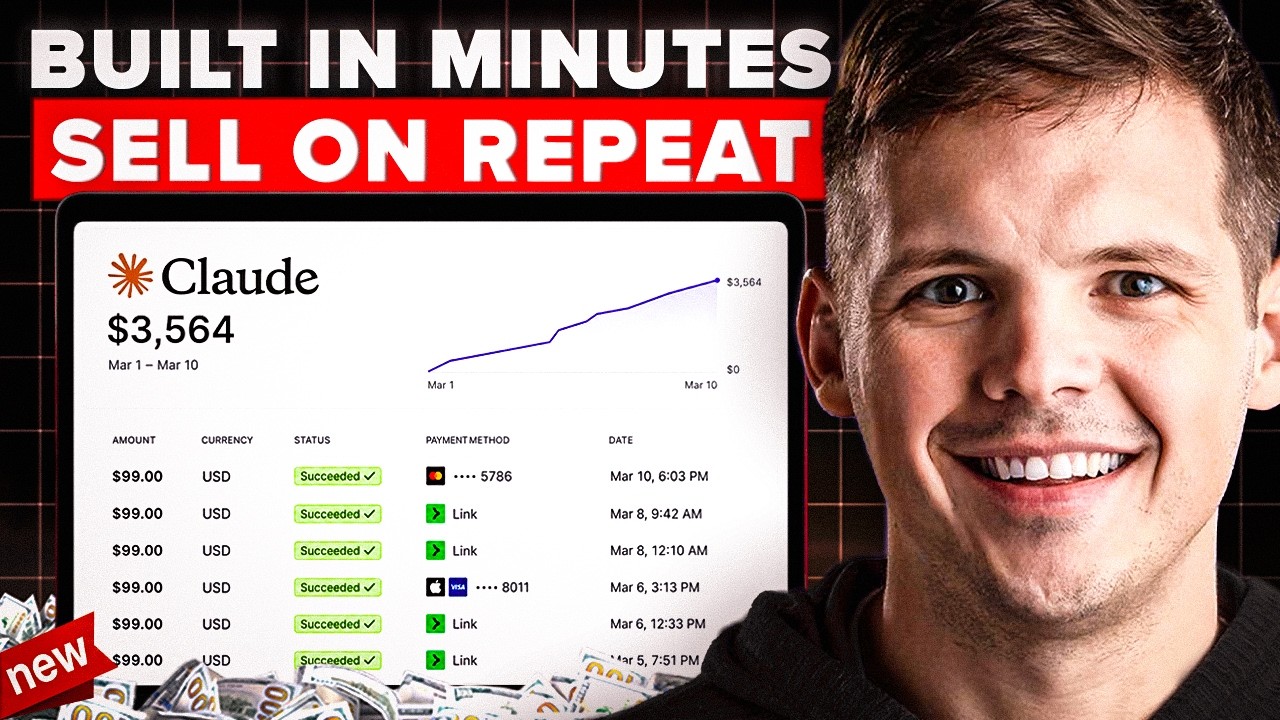
Sounds Too Simple, But One Client Pays $15K/Month

Three college students built a $30M-client AI consulting firm by texting contacts for advice, then scaling to $15K/month retainers with mid-market companies.

Key Takeaways

  • Start with your existing network: asking friends and contacts for advice or referrals can generate high-value leads quickly.
  • Frame outreach as seeking advice rather than pitching to build trust and open doors.
  • Price tiers with an anchor option can steer clients toward a mid-range plan.
  • Move upmarket when smaller businesses lack budget; mid-market firms have more pain and spend.

What the video covers

  • Chris Koerner interviews James, Brendan, and Carter, 21-23 year old college students who run Certified AI Partners, an outsourced AI department service.
  • The founders were inspired by an episode with Cory Gunan about AI assessments for companies after starting with voice agents, AEO, and OpenClaw businesses.
  • They initially offered free 15-minute AI assessments to local small businesses such as orthopedic offices, dental offices, and insurance companies.
  • Small businesses had problems but lacked budget, so the team pivoted to mid-market companies where the owner is harder to reach.
  • Their biggest lead source was their existing network: they texted hundreds of contacts asking for advice on who owns a business needing AI help.
  • Asking for advice rather than money builds rapport and trust, leading to referrals and sometimes becoming clients themselves.
  • Pricing was tiered at $10K, $15K, and $25K per month, with clients closing on the $15K plan; the $25K tier acted as a price anchor.
  • Their service model positions them as a company's AI department, handling AI implementation end to end instead of one-off automations.
  • A proposal process that took an hour was reduced to about 5 minutes, improving efficiency.
  • Founders emphasize booking the next call before ending each conversation and overcoming awkwardness about selling to friends.

Answers

Questions about this video

How did the founders find their first clients?

They started by texting every contact in their phones asking for advice on which businesses needed AI help. This network became their number one source of leads, and they also offered free 15-minute AI assessments to local businesses.

Why did they move from small businesses to mid-market companies?

Small businesses had problems but not enough budget. Mid-market companies could afford retainers around $15K per month, though they were harder to reach, which pushed the team to rely on their personal networks.

What pricing structure did the company use?

They offered three tiers at $10K, $15K, and $25K per month. The $25K plan served as a price anchor, and the client ultimately chose the $15K option.

Full Transcript — Download SRT & Markdown

00:00
Speaker A
The smallest one was $10,000 a month. The medium plan was $15,000 a month. And the highest was $25,000 a month. And they ended up closing at $15,000 a month.
00:04
Speaker A
And the highest was 25 grand a month. And they ended up closing at 15 grand [music] a month.
00:08
Speaker A
We were looking at the $25,000 plan. And we were like, "Okay." You're like, "Yeah, I'm sorry, sir. That's actually not available. That's just a price anchor. I learned about it from Alex Hormozi. You're not actually supposed to pick that." This took their employees about an hour per proposal. It cut it down to about, more or less, 5 minutes.
00:23
Speaker A
an [music] hour per proposal. It cut it down to about like more or less 5 minutes. Ask for money and you get advice. But ask for [music] advice and you get money twice. I don't want people watching this to be like, "Oh, he had a rich uncle. How nice." Right. No. Yeah. No. Never met him. [music]
00:39
Speaker A
Ask for money and you get advice. But ask for advice and you get money twice.
00:54
Speaker A
And one of those texts turned into a $30 million construction company paying them $15,000 [music] a month. No office, no employees, no rich uncle, no connections, just college students. And one of them [music] dropped out of BYU to do this. And by the end of this episode, you're going to know
01:10
Speaker A
I don't want people watching this to be like, "Oh, he had a rich uncle. How nice." Right. No. Yeah. No. Never met him.
01:26
Speaker A
rather than locking things down, we unlock things and unlock their capacity to grow with AI. Okay.
01:32
Speaker A
Meet James, Brendan, and Carter. They are 21 to 23 years old, college students. And 4 months ago, James was on a treadmill listening to an episode of this podcast, and an idea hit him. So he called Brendan, and they texted every single contact in their phones asking for advice.
01:46
Speaker A
make more money because we were selling to small businesses. But I funny enough, like I said, I was listening to your podcast with Corey Ganon and he talked about doing an AI assessment for companies and like a light bulb just struck. I I remember I was working out in the gym. I was like,
02:02
Speaker A
And one of those texts turned into a $30 million construction company paying them $15,000 a month. No office, no employees, no rich uncle, no connections, just college students. And one of them dropped out of BYU to do this. And by the end of this episode, you're going to know the exact text they sent.
02:16
Speaker A
Why don't we do this for bigger fish?" So we kind of moved to like mid-market companies and from there from doing the AI assessments we're like well why don't we just become their AI team rather than selling oneoff automations and pricing each one let's just do everything for them
02:31
Speaker A
Please enjoy.
02:44
Speaker A
just here in Provo and it was any and all kinds of businesses like orthopedics, dental offices, insurance companies. It was like, "Hey, I'm James. He's Brandon. Can we do a free AI assessment for you? It takes 15 minutes." And then that kind of got our foot in the door and they're like, "Okay,
03:01
Speaker A
Why don't you guys tell me what you do? What is your business?
03:14
Speaker A
with these smaller businesses, we're walking in, we're able to find the owner easily, right? But with these mid-market companies, there's a little bit more of a barrier to entry, right? And so, what really has been working for us is using our existing networks. And so, like
03:27
Speaker A
Yeah, so we run Certified AI Partners. We become a company's AI department. So think like an IT department, kind of, that handles everything IT, but we just do everything AI. But rather than locking things down, we unlock things and unlock their capacity to grow with AI.
03:39
Speaker A
been our number one source of clients and leads is just using our existing network.
03:43
Speaker A
Okay. What gave you this idea?
03:49
Speaker A
Like I don't care if if you have a taco truck. I don't care what you're selling. Lemonade stand.
03:54
Speaker A
Funny enough, just super quick background, we all kind of did our own AI companies before. I was selling voice agents to HVAC companies. Brendan was doing AEO for companies, and Carter was selling OpenClaw. But we're all kind of looking for ways to grow and make more money because we were selling to small businesses. But funny enough, like I said, I was listening to your podcast with Cory Gunan, and he talked about doing an AI assessment for companies, and a light bulb just struck. I remember I was working out in the gym. I was like, "That is genius." I got home the next week. I was on a trip, and I called Brendan up. I was like, "We should do this." And so we started walking into local companies, offering AI assessments, identifying opportunities. And then from there, we're like, "Why are we going for small fish? Why don't we do this for bigger fish?" So we moved to mid-market companies, and from there, from doing the AI assessments, we're like, "Well, why don't we just become their AI team rather than selling one-off automations and pricing each one? Let's just do everything for them." And that's how it started. Just a little bit long-winded answer.
04:05
Speaker A
a business is simply solving problems for other people. So if you love your friends and if you have people that you want to do right by then try to solve their problems in this case with AI. So what did that actually look like? Are you sending text, LinkedIn DMs,
04:19
Speaker A
Okay. So when you say you started walking into small businesses, what did that actually look like? Were you physically walking into businesses, and what types of businesses were they?
04:34
Speaker A
them with AI, implementing AI in their company." And some of the texts would even say like, "Hey, we just want to get your feedback. We just want to get your advice on the business model, what you think." Right? There's a funny quote by Pitull where he says, "Ask for money and you get advice,
04:47
Speaker A
Yeah, it was just here in Provo, and it was any and all kinds of businesses, like orthopedics, dental offices, insurance companies. It was like, "Hey, I'm James. This is Brandon. Can we do a free AI assessment for you? It takes 15 minutes." And that got our foot in the door, and they're like, "Okay, well, how about we do a bigger one?" And then we kept hitting a wall with the smaller companies. They had the problems, but they didn't necessarily have the budget. So that's when we pivoted to bigger companies. We realized, with these smaller businesses, we're walking in, we're able to find the owner easily, right? But with these mid-market companies, there's a bit more of a barrier to entry. And what really has been working for us is using our existing networks. So reaching out to everyone we know in our contacts and saying, "Hey, who do you know that owns a business of this size that needs help with AI?" We literally sent out hundreds of messages to all of our contacts asking that question. That's been our number one source of clients and leads: our existing network.
04:52
Speaker A
Mr. Worldwide strikes again. It's in one of his songs, but basically by asking for advice, you build rapport, you build trust, and they're more willing to give you referrals or even themselves become a client of yours. Even in the LinkedIn DMs, we'll sometimes glaze the
05:06
Speaker A
That's such an obvious answer, but it's not. I'm not cutting you down. It's the answer.
05:18
Speaker A
are you DMing people on LinkedIn that you don't know as well or were you back then or just people that you were like already connected with? So, we started with our existing iMessage contacts and then once we went through all of those, then we just started going to LinkedIn and
05:30
Speaker A
Yes.
05:46
Speaker A
Carter and I are full-time. I dropped out. I'm working full-time on on this. Okay. All right.
05:51
Speaker A
I don't care if you have a taco truck. I don't care what you're selling. Lemonade stand. You start with the people that you know.
06:06
Speaker A
And again, we literally just asked for advice. We're like, "Hey, we're looking for advice." He reached out back to us and was like, "Hey, I actually think my company needs this. So, let's hop on a call and talk about it." And so, that was the beginning of our engagement with
06:18
Speaker A
Yeah. The people in your sphere of influence. And people, myself included, shrink from that because it's awkward. It's embarrassing. I don't want to sell to my friends. I don't want to ruin the relationship. But at the end of the day, a business is simply solving problems for other people. So if you love your friends, and if you have people that you want to do right by, then try to solve their problems, in this case with AI.
06:29
Speaker A
were kind of like, "Where do you see bottlenecks in your company?" He gave us a few areas. We're like, "Okay, give us all the people that we need to interview." And then we just sent a survey out to them. And at the end of the survey, they had to book a 30-minute call with us. And so what the
06:43
Speaker A
So what did that actually look like? Are you sending texts, LinkedIn DMs, Facebook messages?
06:57
Speaker A
have an AI noteaker in there. And then from there, we just kind of gathered all this information and made this clean, simple presentation for their seuite on ranking their AI opportunities, how much ROI it would give them based off of what the employees and the seuite had told us.
07:13
Speaker A
So it started off with just texts. Literally sending out iMessages to our contacts saying, "Hey, we just started this company. We're looking to help business owners between 10 million and 50 million a year in revenue, and we want to help them implement AI in their company." And some of the texts would even say, "Hey, we just want to get your feedback. We just want to get your advice on the business model, what you think." There's a funny quote by Pitbull where he says, "Ask for money and you get advice, but ask for advice and you get money twice." It's pretty good.
07:26
Speaker A
structure? Completely transparent with you. We would have been so happy at 10 grand a month. And I've done doorto-d dooror sales before. I I know a little bit about sales, but I'm like, "Okay, how about let's anchor super high so we have a lot of room to negotiate. Let's just throw up
07:41
Speaker A
I've never heard that.
07:59
Speaker A
us examples and we could build these mini working demos of it actually doing the work. And so they get really excited during the call like, oh, they've kind of already solved the problem. But getting back to the the question is we just kind of threw out those prices so we could
08:13
Speaker A
Mr. Worldwide strikes again. It's in one of his songs. But basically, by asking for advice, you build rapport, you build trust, and they're more willing to give you referrals or even become a client yourself. Even in the LinkedIn DMs, we'll sometimes flatter the experience. We'll say, "Hey, we noticed you have a ton of impressive experience in construction. We've been helping out some construction companies. Could we get your advice on what we're doing?" And that way we're able to book a call with them.
08:30
Speaker A
I [clears throat] learned about it from Alex Hormosi you're not actually supposed to pick that.
08:34
Speaker A
Now, are you DMing people on LinkedIn that you don't know as well, or were you back then just reaching out to people you were already connected with?
08:43
Speaker A
than that we wanted, right? Was this like your first big fish? This was the first big fish. Yeah.
08:49
Speaker A
So we started with our existing iMessage contacts, and once we went through all of those, we started going to LinkedIn and looking for our ideal customer and connecting with them. And once they accepted the connection, we sent out a DM.
08:59
Speaker A
So is he a family friend or how well did you know this person? No, he was just a connection that we knew in the the Utah County area. So, someone we didn't have like really previous connections to, but just a mentor in the area that we reached out to. Okay. So, it's not like I don't want people
09:13
Speaker A
Okay. And how old are you guys?
09:29
Speaker A
with AI for them? So, we just broke it out into areas, right, of the biggest operations that we we didn't interview everyone, but we interviewed a lot of people. And this is what it we like categorize it as. A good example to answer your question was this construction company. They do
09:45
Speaker A
So I'm 21. We're all in our early 20s.
10:01
Speaker A
how much that job is going to cost, send it off to the HOA or whatever property, and they either approve or deny it. And so, on average, this took their employees about an hour per proposal based off of everyone that we interviewed. And so, we just mapped out how they do it now. And then we
10:18
Speaker A
Yeah, I'm 23.
10:28
Speaker A
And so we built this demo with the examples that they sent to us of how they went through it. And this is a working working demo with the ones that they sent us. It just kind of goes through
10:39
Speaker A
A little bit old.
10:48
Speaker A
Were they just like floored? Oh, you should have seen their faces. They were like, "Oh my gosh, like this is working." like they gave us their problem and then in front of them they're seeing it being solved and so you can see like here was what the real employee got. They ended at 3575
11:05
Speaker A
I'm 23 as well.
11:22
Speaker A
I'm assuming like boomerowned or close to it. Been in business for a while. Yeah. Yeah. The owner is about in his like 40s and so Okay. How long have you been at this? Like a few months, right? Yeah.
11:34
Speaker A
Okay. And are you all in college right now?
11:44
Speaker A
Yeah, I would say. So, we're on our on track to sign like two more clients around this same size.
11:51
Speaker A
Yeah, Carter and I are full-time. I dropped out. I'm working full-time on this.
12:09
Speaker A
them the assessment, once we show them the things that's possible, they're very likely to sign up on another retainer just like these guys. What happens when you exhaust your all your iMessage contacts? [laughter] Move to LinkedIn, right? LinkedIn gives you 20 fresh connections every
12:23
Speaker A
Okay. All right. Love it.
12:39
Speaker A
to your network and to LinkedIn. Cold over warm outreach. Yeah. You get them on a call.
12:43
Speaker A
Hey, if you like this episode, please hit subscribe real quick. Thank you.
12:56
Speaker A
and then also asking like inspired questions to get some more information out of them to get like, okay, where are you seeing inefficiencies within your business? Where are where where does work slow down, right? And so that we can get more information to use later on. Yeah. I I would also
13:11
Speaker A
So what was your first big break when chasing these middle market businesses?
13:21
Speaker A
Quick word about today's sponsor, Beehive. They just launched something called community, and it does something that I've never seen on any other platform. Every newsletter and podcast you publish gets added to your feed automatically, sitting right in front of the people who already
13:34
Speaker A
Yeah. So our first big break is we reached out to the CEO of a construction company that covers Utah, Arizona, and California. And again, we literally just asked for advice. We're like, "Hey, we're looking for advice." He reached out back to us and was like, "Hey, I actually think my company needs this. So let's hop on a call and talk about it." And that was the beginning of our engagement with our first client.
13:49
Speaker A
can jump in. You can add community access to any subscription you already sell in about 5 minutes.
13:54
Speaker A
And how did that client end up going?
14:10
Speaker A
same place instead of renting that space on social media. Get more juice from everything you produce.
14:15
Speaker A
Yeah. From there, we got our foot in the door by doing a full paid assessment. It was $1,000. And from there, we were like, "Where do you see bottlenecks in your company?" He gave us a few areas. We're like, "Okay, give us all the people we need to interview." And then we sent a survey out to them. And
14:30
Speaker A
had this these conversations. It's like, "What are you struggling with in your business?" Oh, I don't know. As opposed to like, "When was the last time you had a sleepless night because of something that happened in your business?" And it's like, "Oh, this. What happened that?" And
14:42
Speaker A
then that just opens the floodgates of all the uh of all the things that they're struggling with.
14:47
Speaker A
Whereas if you just come straight at it, they're like, I don't know, you know, find more customers.
14:52
Speaker A
Like they give you lame answers. Yeah. I think uh one way that's very helpful, and this is for anyone, like just get the business owner talking about their business. So like imagine tell them, hey, imagine I have no idea what you do. Explain to me what you do on a day-to-day. What is your
15:08
Speaker A
business? Yeah. And then okay, how do you do that? How do you how do you fulfill that client's needs?
15:15
Speaker A
How many people do you have on your team? What do those people do? And so just the more you can understand the business, the more I think both of us, the business owner and us can understand, okay, maybe there maybe we should focus on this, maybe we should focus on the sales side
15:29
Speaker A
a little bit or maybe we should focus on your operations and then just asking questions one one step deeper. And so they don't have to be the super inspired questions right off the bat, but if you understand or get them talking about what their business is, it makes it easier.
15:43
Speaker A
Okay. So you have this call and it I'm assuming it lasts as long as you they would let it last, right? You want them to just keep talking as long as they want to talk. Yeah. Yep. You record
15:52
Speaker A
the whole thing, you upload it to Claude, you put your own brain power against it.
15:57
Speaker A
And are you striving to book a second call from the first one? Yeah. always before you end like you always want to set that next call with them like would next Tuesday or Wednesday work better to follow up on this or something like that. So if not, it becomes just followup and just chasing
16:13
Speaker A
the rabbit. Backf fact, right? Book a call from a call every time. Exactly. It's a true principal or it may be assessment like that's that may be the next step. Um and so starting the interview process of interviewing their leadership and then interviewing their employees. Okay. So are you
16:31
Speaker A
trying to get on more calls with more people in the business before you pitch them? At what point does that happen? Yeah, I'd say it goes like we hop on a call with the owner and they agree to do
16:40
Speaker A
an assessment, then we interview the employees and we present the assessment findings and the ranked opportunities and then from there that's where we pitch the retainer. And so it was like assessment, interview, retainer. Okay. Do you think it's important to reach out to people locally or does
16:56
Speaker A
it not matter? That's a good question. I think it helps with rapport for sure, but it could be done anywhere. Yeah. Like for example, with this one this first client that we signed, we said, "Hey, we're here in Utah County. We're here local." And yeah, it builds trust. Like James was saying,
17:10
Speaker A
it's one of those things that's it's kind of like survivorship bias. Like it's hard to know that it helps. No one is ever going to tell you, "No, I don't want to take that call because you're not local to me." It just means like if you're going to start somewhere geographically, might as well
17:23
Speaker A
start where you are. Yeah. Yeah. You have a lot more leverage. 100%. We started where we're at and now what we're we have the trust there. But another thing we figured out too is like in our circle of connections, if we say we know 500 people that trust us, if you reach out to
17:39
Speaker A
those 500 people, each one of those probably has 500 people that trust them. And so our way of branching out of that is starting with the people local to us, but then figuring out who they know and then the trust can instead be conveyed from the location, but through the people that we know.
17:56
Speaker A
And so like anyone if you think you don't know a lot of people like you probably have a couple hundred followers on Instagram, followers on LinkedIn, you got contacts in your phone and then those people don't all live next to you. And so that's how we can start growing outside of
18:11
Speaker A
just Utah County. Yep. What advice would you have for people wanting to start a business like this?
18:16
Speaker A
I think I think the best advice is just find something to sell like find a repeatable problem and then just send outreach. Honestly, it's just about taking action before thinking about it too much. I think too many people get stuck in the loop of like redefining business ideas over and
18:30
Speaker A
over. But honestly, when we started, like we didn't even have the idea fully formed out.
18:35
Speaker A
We just started reaching out to people. We just started sending a ton of texts every single day and it ended up with a huge client. And so, start sending those messages. I mean, there are over 1.2 million management consultants in the US alone. 10 years from now, how many AI consultants
18:53
Speaker A
will there be? Like probably more. More. [laughter] Yeah, probably more. So, the ocean is very very large when it comes to this type of business. Yeah. One thing I would just add to that is Corey Ganon kind of touches on this, but it can be daunting to feel like, you know, who am I
19:09
Speaker A
to know more about AI than these companies, but I mean, we're talking to business owners every week and it's very apparent that they're at the they're using it as like a search bar side of things. Like they're they're at the beginning right now. And if you know even just a little bit more than them,
19:24
Speaker A
like you could be going in and teaching them about here's how to use chat, here's how to connect it to your softwares. And that alone is invaluable. But then you start to identify all these other things that you can do. So just get started. There's a lot of places in life where it's
19:38
Speaker A
it's a mistake to be overconfident. Like if I walk into the gym and think I can bench 500 lb, I could kill myself. Yeah. But when it comes to AI and like selling AI consulting services, you need to assume that you are better at AI than the vast majority of people. Yeah. And if you're
19:55
Speaker A
just listening to this podcast right now, you're probably in that group. Exactly. It's when we think like what do I know? Who am I? Don't assume that people are better than AI. Yeah. Than you because that means you won't have the confidence to ever talk to them and do anything like even
20:09
Speaker A
if it's a false confidence at least just have it so you can start talking to people and learning as you go. Yeah. Because that that stuff alone is more than what 90% of people touching AI are doing. Like it may seem normal to us or because I've listened to your podcast for the past two
20:23
Speaker A
years and heard all the AI stuff. It kind of seems normal by now, but it's like then you step outside of it and you're like, "Oh, they're nowhere near where we are yet." Yeah. My brother-in-law works for a $60 million business in Alabama and it sounds like the type of business that you would
20:37
Speaker A
work with and he was in a board meeting and there were like 20 people in there and he asked them like, "How many of you guys use Chad GPT?" And I think three hands went up. Yeah. And this is like
20:49
Speaker A
this is in like 2026. Yeah. Like what are we doing? $60 million company. and he started showing them stuff and he's like an alien from another planet. He's like their god now. Yeah. And he's just like prompting Chad GPD. He's not making agents or anything. Like yeah, just don't assume.
21:06
Speaker A
No, do not assume at all. And I think that's why there's such a big opportunity for people like us. Like as far as like the industry, we are on the bottom of the totem pole. We have very little
21:17
Speaker A
experience in the business industry. We're young, but people are looking to us as the experts on AI just because we have a little bit more experience than them. And so I think like everyone listening to that can fit into that category. Like oh yeah, you just learn a little bit about AI, you can be
21:33
Speaker A
known as the expert in AI to these massive massive companies that are out there. What what tools out there are worth learning today? Like as of today that if people want to do what you do, they should learn these tools to better monetize. Yeah, I would say for you need to be on claude for
21:50
Speaker A
sure. I would say preferably cloud code or codecs and honestly the 8020 of it is you need to know how to use those tools and how to connect like MCPs and APIs. If you know those two things, you
22:01
Speaker A
have a lot of weight that you can throw around and things that you can do in the business because that unlocks a whole different world of things that you can do. Yeah, guys, in case you haven't heard me talk about this yet, these three guys, James, Brendon, and Carter, they're doing AI
22:13
Speaker A
consulting. I have a community and a course and a whole like 300 plus people doing this exact same thing. It's called Playmakers, playmakersai.com. And people are finding customers, paying them thousands to tens of thousands of dollars a month, doing exactly what we talk about on this
22:29
Speaker A
podcast. So if you want to join me and 23 other experts teaching, instructing, holding each other accountable, cheering each other on, then check out playmakersai.com. Link is in the description.
22:41
Speaker A
One that I really like is Railway. It's super easy to connect to and basically what it does is it hosts things. So you can host your website, you can host custom apps or agents that you build on it and also has database to store information. So essentially you could spin up an AI agent
22:59
Speaker A
that works like an employee in a company just with railway and it's all right there. So I would say railway another another tool that I've really been loving is called composio and it solves the problem of MCPS. So you can connect any number of MCPs to Composeio
23:16
Speaker A
and then it's one single MCP to your clock. And so like I have five Gmails connected to my one Composeio and it's one MCP for clock. That's cool. Oh, I've been looking for that actually.
23:28
Speaker A
It's amazing. I was going to say because you probably have lots of emails that you work with. Oh, I've got like seven and I'm over here like disconnecting MCPs like a Neanderthal and reconnecting because like go search for this now search for this.
23:40
Speaker A
Yep. Yeah. That's brilliant. When it comes to like doing AI audits or making these presentations, do you have any like prompting tips? Yeah, I would say or or model tips to use. I would say a lot of it comes from like obviously garbage in garbage out. So if you can make sure that your
23:57
Speaker A
interview with them and we we just have a simple survey that we send out to them that kind of identifies the bottlenecks, what softwares they're using and then that's before the interview.
24:07
Speaker A
And so if we can gather as much ammo as we can before we go to claude and say, "Okay, what are the opportunities?" Let's identify what's possible, what does that mean for them ROI-wise based off of what they told me, how how much hours they spend on XYZ task, how much they get paid,
24:24
Speaker A
or you know, how much they're paying this specific team. There's no special prompt. It's more just making sure you get as much ammo before you go to Claude and spin up your presentation. That will help you a lot in in the in the end. Okay. Yeah. Yeah, I would just add to that uh something that's
24:38
Speaker A
helpful to me because like I may not be an expert in sales or I may not be an expert in automating things, but other people are. And so one thing you can do like I know Elon Musk has a very has
24:50
Speaker A
a five-step process to automating things. And so you can tell your claude, hey, act like Elon Musk and apply his five-step automation process to this problem that we're trying to solve.
25:02
Speaker A
And then it thinks in a way that is using the expertise and wisdom of other people to be able to give you a really good output. And so like if it's sales like hey act like Alex Herozi here. How
25:13
Speaker A
would you draft this um proposal to a company? And so I think that's an easy way to prompt without having to follow like a specific prompt structure. Yeah, I agree. And I think that one line is so smart like act like so and so because it's if you don't tell it that it's going to get the average,
25:30
Speaker A
right? It's going to get the average of all the advice out there on the internet about the one thing. And average is just that. It's average. You have to ask it or it just won't know. It doesn't know what's in your head. Yeah. Yeah. Exactly. Guys, where can we find you if you want to learn
25:42
Speaker A
more? Yes. So, you can find us at certified partners.com. All three of us are on LinkedIn.
25:47
Speaker A
We're all active posting a lot on there. Also, the LinkedIn company page, Certified AI Partners.
25:52
Speaker A
Um, and we're also on every social out there. So, beautiful. Anything else that people should know about you? I think I'll say like just start. Like if we can do it, like we're all in our early 20s.
26:02
Speaker A
We don't have much career experience and if we're able to close these big of deals, like anyone can do it. Yeah. Love it. All right. Thank you guys. Yeah. Thank you, Chris. Hey, if you have an interesting business that made a lot of money in a short period of time, go to tkos.com,
26:18
Speaker A
fill out the form, and we'll have you right here in this chair. If you like this content, please share with a friend, hit a like or a comment below, and we'll see you next time on the Kerner
Topics:AI consultingAI agencybusiness developmentnetworkingmid-marketpricing strategylead generationentrepreneurshipoutsourced AI departmentChris Koerner

Get More with the SozAI App

Transcribe recordings, audio files, and YouTube videos — with AI summaries and speaker detection. 30 minutes free.

Or transcribe another YouTube video here →