Skip to content

The NEW Era of Personal Brands is Here (and you’re not … — Transcript

Learn the five pillars to build a premium personal brand that thrives in the AI era and gains a lasting competitive edge.

Key Takeaways

  • To survive and thrive in the AI era, personal brands must own a unique lane in their niche.
  • Having at least one of the five pillars of premium brand positioning is essential for long-term success.
  • AI will increase content cloning, making originality and unique positioning more valuable than ever.
  • Quality and consistency in content creation are critical to maintaining a premium brand.
  • Choosing the right platform and content type aligned with your strengths and audience is more effective than spreading thin.

Summary

  • Building a premium personal brand in 2026 is crucial for long-term success, especially in the AI era.
  • The biggest challenge is ensuring your brand has durability and doesn’t get lost in AI-generated content clones.
  • The creator shares insights from building two major personal brands with millions of followers and billions of views.
  • There are five core attributes or pillars that define a premium personal brand with defensibility against AI replication.
  • The five pillars are: unique one-of-one positioning, premium packaging, originality, tactical usefulness, rarity, and aura (personality).
  • Premium packaging refers to high-quality visuals and production that create a standout experience.
  • Originality means consistently sharing new, non-obvious, and contrarian ideas that cut through the noise.
  • Tactical usefulness ensures your content provides clear, actionable steps that help the audience achieve their goals.
  • Rarity combines unique background, skills, and proof to create a one-of-a-kind individual.
  • Aura encapsulates personality, making people want to be around you and engage with your content.

Full Transcript — Download SRT & Markdown

00:00
Speaker A
The most valuable thing you could build right now in 2026 is a premium personal brand. One that will actually survive and keep winning in the AI era. If you run a business, this should be your number one priority because it will give you a massive unfair advantage in the future.
00:13
Speaker A
you a massive unfair advantage in the future. Now, the biggest personal brand building question everybody's focused on right now is this. How do I know if I'm building a premium personal brand with real durability or a following that just
00:27
Speaker A
Now, the biggest personal brand building question everybody's focused on right now is this: How do I know if I'm building a premium personal brand with real durability or a following that just won't hold up in the AI world?
00:39
Speaker A
personally built two of the biggest personal brands in two different spaces, tech and marketing. I have a million followers. I've done billions of views.
00:47
Speaker A
And the answer is these five attributes. Now, I've studied hundreds of the top-tier personal brands across every niche, the ones that we'd all consider to be premium. And on top of that, I've personally built two of the biggest personal brands in two different spaces, tech and marketing. I have a million followers. I've done billions of views.
00:59
Speaker A
must be true in your personal brand if you want it to survive in the AI era.
01:04
Speaker A
And when I study personal brands and the behavior I ran myself, there is a clear pattern between the premium ones that will outlast and everyone else. So, in this video, I'm going to walk you through the five core attributes that must be true in your personal brand if you want it to survive in the AI era.
01:16
Speaker A
and compound their influence are the ones that own their own lane in a category. And here's why this is so important. As AI tools and AI content increases, more and more AI clones will emerge and the average of every niche
01:29
Speaker A
These will be the difference between winning and losing when it comes to content, marketing, and distribution in the future. All right, the first attribute of any premium personal brand is unique one-of-one positioning. The people that are going to keep winning and compound their influence are the ones that own their own lane in a category.
01:43
Speaker A
you don't have unique brand positioning, you're not going to be able to cut through because informational moes are trending to zero. Anything you say is going to be cloned instantly. any common advice that you give will be generic
01:54
Speaker A
And here's why this is so important. As AI tools and AI content increase, more and more AI clones will emerge and the average of every niche will converge towards sameness. And you're probably noticing this already. Lots of beginners will just copy-paste your exact information ripped word for word within hours of you posting it originally.
02:07
Speaker A
pillars of premium brand positioning. You must have at least one of these to survive in the long term. And of course, many of the top personal brands will have multiple. All right. The first pillar to unique brand positioning is
02:19
Speaker A
And this trend unfortunately is just going to keep happening. So if you don't have unique brand positioning, you're not going to be able to cut through because informational moes are trending to zero. Anything you say is going to be cloned instantly. Any common advice that you give will be generic instantly.
02:32
Speaker A
premium experience that someone has when they consume your content that makes up the packaging. Now, it's not that premium packaging is never replicable.
02:40
Speaker A
And that's just the reality of how things are unfolding in the AI world. Now, here's the good news. There are five ways to own a unique lane in a niche that have some degree of defensibility. I call these the five pillars of premium brand positioning. You must have at least one of these to survive in the long term.
02:51
Speaker A
Kyle Nut in the film making space. For all three of them, the level of visual quality and just the experience you have when you watch the content is on another level. And by the way, there is room for
03:00
Speaker A
And of course, many of the top personal brands will have multiple. All right. The first pillar to unique brand positioning is premium packaging. And when I say packaging, I don't mean the title and thumbnail from a YouTube sense. I mean the visuals, the polish, the production, the way the content shows up visually on screen.
03:14
Speaker A
And this is where your ideas are consistently new, non-obvious, and contrarian. You're just constantly putting things out in the world that nobody else has said before, and you do that routinely. Good examples of this would be someone like Naval Ravakan or
03:26
Speaker A
It's the encapsulation of the premium experience that someone has when they consume your content that makes up the packaging. Now, it's not that premium packaging is never replicable. It's just that it takes a high level of taste and consistency to be able to execute this over and over.
03:39
Speaker A
and non-obvious ideas, there will almost always be room for you to cut through no matter how much slop there is from the AI content. All right, the third pillar or way you could have unique positioning is tactical usefulness. Where
03:52
Speaker A
I like to think of Roberto in the AI space or Adrien Purr in the creator space or even Kyle Nut in the filmmaking space. For all three of them, the level of visual quality and just the experience you have when you watch the content is on another level.
04:04
Speaker A
tactically useful bucket. you just walk away from every one of his videos, especially the old ones, knowing exactly what to do to take a step forward towards what your objective is. This is why so many people show up at his events
04:15
Speaker A
And by the way, there is room for someone to be the premium-packaged version of every single niche. And there are a lot of niches that don't have anyone filling this role. But that's number one, premium packaging.
04:24
Speaker A
transformation agent. All right, the fourth personal brand positioning pillar or way that you can differentiate with unique positioning is being rare. And this is when your background, your skill set, and your proof combine together to create a oneofone unique individual. For
04:39
Speaker A
The second pillar or way you could have unique brand positioning is originality. And this is where your ideas are consistently new, non-obvious, and contrarian. You're just constantly putting things out in the world that nobody else has said before, and you do that routinely.
04:51
Speaker A
That is just a rare combination of abilities that you don't typically see in one person. Or you could say someone like Doug Deuro, carsandbids.com. He exited majority for 40 million. I think he was one of the rare people that had a
05:03
Speaker A
Good examples of this would be someone like Naval Ravikant or Balaji Srinivasan. They're kind of famous for being original thinkers. They both spend time in the crowded startup space, but their insights and content cut through because their takes are usually contrarian.
05:16
Speaker A
fifth and final pillar for how to differentiate would be aura. And aura is just a proxy for personality. We'll wrap all of personality in one bucket and call it aura. In this case, people just want to be in the room and around you,
05:28
Speaker A
If you're a consistent source of original thought and non-obvious ideas, there will almost always be room for you to cut through no matter how much slop there is from the AI content.
05:42
Speaker A
need to have all five, but you definitely need to have at least one in your niche to cut through. The good news is for most small niches, there are just so few players that are excellent across any of those vectors, you can pretty
05:53
Speaker A
All right, the third pillar or way you could have unique positioning is tactical usefulness. Where originality is "I've never heard that before," tactical usefulness is "I heard it and I know exactly what to do to get closer to the goal that I'm trying to accomplish."
06:05
Speaker A
visual packaging in all of podcasts, plus an incredible aura. Hormosi is probably a combination of originality and tactically useful. He comes up with a lot of new stuff and his stuff is super easy to implement. The reason why
06:16
Speaker A
I would say Horoszi is probably the gold standard in this tactically useful bucket. You just walk away from every one of his videos, especially the old ones, knowing exactly what to do to take a step forward towards what your objective is.
06:27
Speaker A
just going to be more and more and more people that trend to average. The fat part of the bell curve will get fatter.
06:33
Speaker A
This is why so many people show up at his events saying, "I already got from X to Y thanks to all your free content." Again, if you're the most tactically useful person in your category, you'll always be able to cut through because people will seek out your content as a transformation agent.
06:46
Speaker A
For example, when I came into the social media marketing space on YouTube, I said to myself, I want to be elite at visual packaging, originality, and tactical usefulness. And if I could dominate those three, or even two of the three,
06:58
Speaker A
All right, the fourth personal brand positioning pillar or way that you can differentiate with unique positioning is being rare. And this is when your background, your skill set, and your proof combine together to create a one-of-one unique individual.
07:09
Speaker A
go on to number two of the five core attributes in top personal brands, let me just zoom out, make sure everyone's on the same page because I kind of just went five and then a sub five in the
07:18
Speaker A
For example, Donald Glover or Childish Gambino has won an Emmy for TV show production, a Grammy for music production or music performance, and a Golden Globe for being an actor. The Golden Globe and Emmy might be reversed.
07:29
Speaker A
are five ways to attack unique positioning. You don't need all five of those. You just need one, but you must have at least one in unique positioning.
07:36
Speaker A
That is just a rare combination of abilities that you don't typically see in one person. Or you could say someone like Doug DeMuro, carsandbids.com. He exited majority for 40 million. I think he was one of the rare people that had a deep, deep nerd affinity for cars, but also enough charisma to be able to make content consistently.
07:46
Speaker A
avatar, define your target authority statement, and I find it's a really helpful exercise to map what your content strategy is before you dive in.
07:53
Speaker A
That combination is just kind of rare for this space. So that's bucket number four for how you could differentiate your unique positioning, you could be rare.
07:58
Speaker A
You can go through it. Super helpful. I'll link it down below. All right. The second attribute of premium personal brands that I think is really important for the future is called datadriven creativity. And I think this will determine whether or not your content
08:09
Speaker A
And the fifth and final pillar for how to differentiate would be aura. And aura is just a proxy for personality. We'll wrap all of personality in one bucket and call it aura. In this case, people just want to be in the room and around you, and your personal brand scales accordingly.
08:22
Speaker A
personal brands will guess on what topic to make and then copy paste the take from someone else. Premium personal brands use data to figure out what topics have been validated that viewers actually want to hear about and then
08:35
Speaker A
This is most famous podcasters: Joe Rogan, D'Angelo, you could even say Chris Williamson. These people just have differentiated aura on another level.
08:47
Speaker A
data or creativity. First, why should topics be driven by data? The truth is even the pro personal brands don't really know exactly what their audience wants to hear about. You know what you want to talk about and you know what you
09:00
Speaker A
Now, the key is in order to carve a unique brand positioning, you don't need to have all five, but you definitely need to have at least one in your niche to cut through. The good news is for most small niches, there are just so few players that are excellent across any of those vectors, you can pretty much become the top in any relatively easily.
09:12
Speaker A
the video, that topic will usually fall flat. The solve for this is to use data when you're picking which topics to talk about. The easiest way is to use sandcastles.ai. You literally can go and track all the top creators in your
09:25
Speaker A
But the most durable personal brands, I will say, tend to stack two, three, or four of these over time. You could say Chris Williamson is both packaging and aura. He has the best visual packaging in all of podcasts, plus an incredible aura.
09:38
Speaker A
the data to guide which topics are outperforming that the market said they liked and then come up with your own original take. And I made another video breaking down tactically how I use this sand castles plus clawed workflow to
09:50
Speaker A
Hormosi is probably a combination of originality and tactically useful. He comes up with a lot of new stuff and his stuff is super easy to implement. The reason why all this matters and why it's my first point is that when it comes to personal branding, the algorithm doesn't really punish you for being bad.
09:55
Speaker A
But this is how I use AI to speed up my research process. Now, here's the second half of the explanation. Why do we use creativity originality for the take? Why don't we just copy paste what the best performing videos have said and then
10:05
Speaker A
Yeah, you get no views, but it really punishes you for being average. And over time, there's just going to be more and more and more people that trend to average. The fat part of the bell curve will get fatter.
10:18
Speaker A
that makes you different is the angle. It's the way you see the world through the lens of that topic. The contrarian take, the non-obvious insight, connecting two things that don't typically go together. That's what makes you unique and let you cut through. The
10:32
Speaker A
Now, the best exercise to figure out where your unique brand positioning falls is to map your entire niche, plot where different people fall, and then figure out where there is white space and which vector you want to compete on.
10:44
Speaker A
the future. Not average, above average. And the only way to come up with that is novel contrarian insights. Here's the exercise. If you want to get better at this, stop just opening your phone and trying to guess what you should talk
10:56
Speaker A
For example, when I came into the social media marketing space on YouTube, I said to myself, I want to be elite at visual packaging, originality, and tactical usefulness. And if I...
11:09
Speaker A
datadriven topics and insight driven takeaways that will win every single time. All right, the third attribute of premium personal brands that I think is critical for the future is called violent volume. And this one will sound counterintuitive, but I think this is
11:23
Speaker A
where most premium personal brands will die in the future if they don't solve for this. It won't be because they posted bad content. it's going to be because they split their effort across so many platforms, posting so little on
11:34
Speaker A
each one that they just never make a dent and show up in front of the viewer.
11:38
Speaker A
The reality is the math of audience building in the post AI era just doesn't work if you're underposting. Anyone dominating with a premium personal brand should start with one platform first and then violently post. Most the advice you'll hear will be the opposite. People
11:54
Speaker A
will say repurpose, make once and clip everywhere. Be on Tik Tok and LinkedIn and Instagram and Facebook and X and Substack. Be everywhere. That's the advice you typically hear. That advice is a trap and a losing strategy until
12:06
Speaker A
you dominate your home platform because as AI content supply goes up, you're going to have to post more and more and more just to stay on the radar of the target viewers you're trying to reach.
12:17
Speaker A
If you post across five different platforms, that means five different algorithms with five different audiences with a fifth of your time and attention.
12:23
Speaker A
That's a losing strategy until you dominate one. One platform means one audience, one algorithm, one skill set compounding, always active until you dominate it. The way I like to explain this is a principle called content minutes. And if you watch my channel,
12:36
Speaker A
you've heard this before. How many minutes per week is your audience consuming your content? And typically, this doesn't really stretch from platform to platform until they know you pretty well. A premium personal brand in the future is going to have people
12:48
Speaker A
watching 30, 60, or even 90 plus minutes per week. That's a real relationship with the viewer. That is how you build trust at scale. You're just not going to get that by sprinkling five posts across different platforms every week. Your
13:02
Speaker A
best chance is to violently stack minutes on one core platform. Now, I've got a whole separate video on content minutes, why it should be your northstar, and how to approach it. I'll link it below if you guys want to watch
13:12
Speaker A
it. But the questions really should be, which platform should you make your home platform, and which content medium do you actually like making? Those are the two filters. Where are my viewers living? That should be your home platform. And then what type of video
13:25
Speaker A
content do I enjoy making and not get burnt out from? Ideally, you want the intersection of that ven diagram to be the same cuz that's where you'll play.
13:34
Speaker A
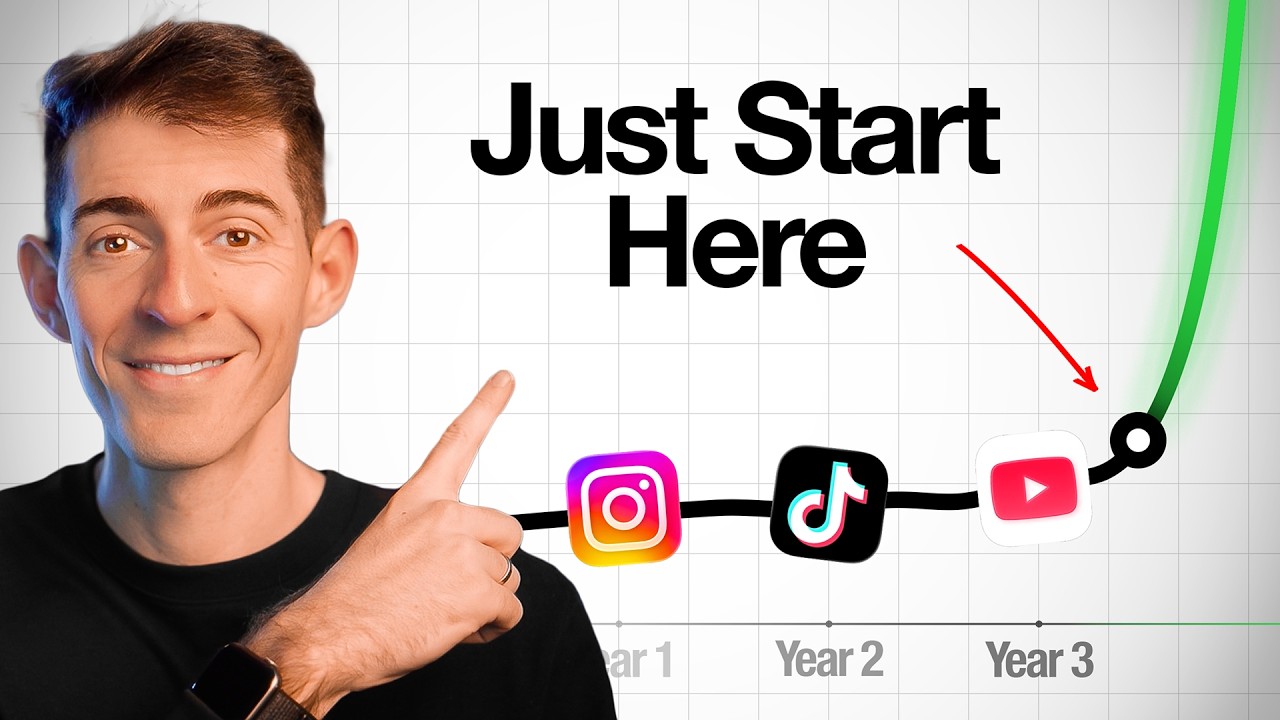
For example, for me, when I went to attack the social media marketing niche, I chose YouTube to be my home platform.
13:39
Speaker A
I knew this was where business owners needing marketing were spending time. So, that solved the where my viewers were. And then I knew I liked expanding my thoughts long form, so that solved the content I wanted to make. I started
13:50
Speaker A
just here, nowhere else on the marketing front for 18 months. Violent volume, relentless posting just here. It was only 2 weeks ago, literally 18 months in, where I started posting on Callaway Marketing on Instagram and Tik Tok. I
14:05
Speaker A
stayed on one platform until I dominated it and then expanded. I haven't really taken Twitter seriously. I haven't launched a podcast. I don't do Snapchat or anything like that. Not because those don't work, but because spreading myself thin would kill the compounding. and I
14:18
Speaker A
knew I needed to own my home platform before expanding. So, here's the tactic. I'm begging you. If you want to win in the future, pick one home platform and just violently attack it right now. For most people, that means 5 to seven posts
14:31
Speaker A
per week on short form or one to two posts per week on long form YouTube.
14:34
Speaker A
Pick one and just go. Whatever that cadence is, the rule is the same. Violent volume without sacrificing quality. And don't expand until you feel like you've owned one of those five lanes in this platform. All right. The fourth attribute of premium personal
14:47
Speaker A
brands that will win in the future is called the quality bar. And simply this just means quality over everything. Now, you're probably thinking, "Wait a second, didn't you just say violently post quantity? To do that, I'm going to
14:57
Speaker A
have to sacrifice quality, so these things are at odds." No, that's not what I meant. This is where most creators will get it wrong. Premium personal brands post violent quantity without lowering the quality bar. It's both quantity and quality. That combination
15:12
Speaker A
is the actual moat. Because if in order to increase quantity, you decrease quality, then you just become more noise. Here's the principle that kind of anchors all of this. When supply is constrained, speed wins. But when supply is infinite, quality wins. For the last
15:28
Speaker A
15 years on social media, supply was constrained. There just weren't that many creators in a given niche, so you could get away with midquality and just posting minimum volume. That era is over. AI is going to enable infinite
15:39
Speaker A
content. So, in a world of infinite supply, the only thing that will cut through is quality. And you need as much quantity at that quality as possible.
15:48
Speaker A
Here's the gut check that I personally use to validate if something has crossed my quality bar. Is that the best I could have done given my time and skills today? If yes, then it's passed my quality bar and I'm good with it no
16:00
Speaker A
matter how it does. If no, then I won't post it. And that sounds extreme because it is extreme. That's the point. The way I try to think of it is that I want to make the best video ever made on this
16:10
Speaker A
topic in history. Now, I'm not always going to hit that bar, but if that's my expectation, that raises my minimum floor above my quality standard every time. I think MKBHD is the cleanest example of this. He's been posting
16:22
Speaker A
videos for 13 years over YouTube and short form, and he never goes below a certain quality. He has a relentless commitment to this A tier, 10 out of 10 quality that he just does not drift below. That's why he's the default name
16:37
Speaker A
in his category, which is very competitive. So, before you go to post, ask yourself this. If this was the only thing people could see from me, would I be proud to put my name on it? If not, it's not above your quality bar. All
16:47
Speaker A
right. The last attribute for premium personal brands that are going to matter in the future is called the obsession factor. And this is the one that kind of determines whether or not everything else is going to work. Because the truth
16:58
Speaker A
is, every other attribute that we covered, unique positioning, datadriven creativity, violent volume, and quality bar, there's one similar thing underlying all of it. You have to actually love making what you're making.
17:10
Speaker A
Without that, I promise you, everything's going to fall apart over the long term. And here's why. In the AI era, making content is going to get cheaper and easier over time. You can clone someone's style. You can copy
17:21
Speaker A
someone's cadence. You can steal all their videos, compress it, and just regurgitate everything they say. But the one input AI cannot clone is a genuine obsession in the topic. And obsession really is the input that makes everything else work in the long run.
17:36
Speaker A
Think about what each of the previous attributes requires to make it work. For finding unique positioning, that's going to take obsession. You have to scan the entire landscape, map where everyone is, and then pick one of those categories to
17:47
Speaker A
be the best at. For data driven creativity, that takes obsession. To find those contrarian and non-obvious insights, you have to be obsessed with the topic. For violent volume, of course that takes obsession. You have to show up day after day for weeks and months
17:58
Speaker A
and years. Continue to post as much as you can. And for the quality bar, of course that takes obsession. You have to obsess over a minimum quality and never dip below it. The previous four attributes are kind of like the outputs
18:10
Speaker A
of your personal brand. The input is the obsession factor. And this is kind of where it all ties together and why it gets uncomfortable. Usually people chase picking niches and topics because they think it'll make them money. some hot
18:21
Speaker A
trend or everyone shifting to AI because that's the big thing. That logic works for the first 6 to 12 months. Trust me, I've been there. But what ends up happening as you get through and you grind, the cracks start to show. After
18:32
Speaker A
18 months, you just can't stick with something you're not genuinely obsessed with. You'll start dreading making the content. You will phone it in. It just will not work over time. So, the honest gut check when it comes to building a
18:42
Speaker A
premium personal brand with this last one, the obsession factor, arguably the most important. Are you genuinely excited to make the next 100 pieces of content about this topic? If yes, then that's a good proxy for obsession. If no, you might be building in the wrong
18:56
Speaker A
direction and you might need to retrace your steps and pick a different niche that you're more excited about. All right, guys. That is all I've got for this video. My goal is to try to map what attributes will need to be true for
19:07
Speaker A
a premium personal brand to cut through in the AI era. As always, guys, I'm trying my absolute best to cover things I haven't covered before and you just don't see online. I'm trying to bring new perspectives and frame these things
19:17
Speaker A
for you based on the data and examples that I'm seeing. If you're a business owner and you're trying to learn how to use content to grow faster, this is going to be the best channel you could possibly watch. Make sure to subscribe
19:26
Speaker A
and please leave a comment. If you're blocked anywhere in the content process, strategy positioning hook storytelling, whatever it is, leave a comment and let me know what you want to see next. I look at the comments to help
19:38
Speaker A
guide our video roadmap. So, anything you have would be great. And one last thing, I've got a bunch of free resources in the description. Of course, I'm trying to give away the sauce. My goal is 1 million business owners making
19:48
Speaker A
1 million from content. That's $1 trillion in market value. Not going to get there unless I give a lot of this stuff away. So, I've got a lot of it in the description. Please check that out if you guys want. And we will see you on
19:58
Speaker A
the next one. Peace.
Topics:personal brandAI erabrand positioningcontent marketingunique positioningpremium packagingoriginalitytactical usefulnessrarityaura

Answers

Frequently Asked Questions

What are the five pillars of a premium personal brand?

The five pillars are unique one-of-one positioning, premium packaging, originality, tactical usefulness, rarity, and aura (personality). Having at least one is essential to survive in the AI era.

Why is unique positioning important in the AI era?

As AI-generated content increases, many creators’ work will be cloned, making originality and unique positioning critical to stand out and maintain a durable personal brand.

How should I choose which platform to focus on for my personal brand?

You should pick a home platform where your viewers live and choose a content medium you enjoy creating, rather than trying to be everywhere at once.

Get More with the Söz AI App

Transcribe recordings, audio files, and YouTube videos — with AI summaries, speaker detection, and unlimited transcriptions.

Or transcribe another YouTube video here →


