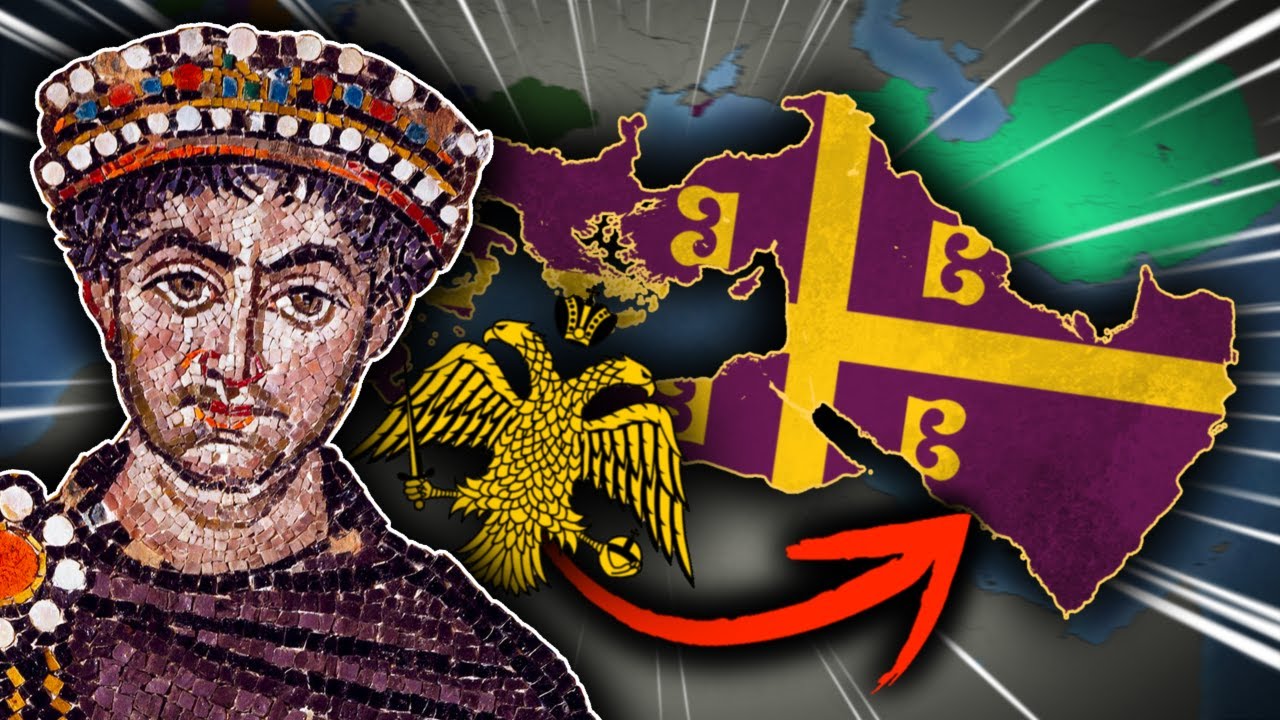
An alternate-history video imagining Napoleon restoring Rome, reshaping Italy, the Balkans and Greece, and reversing France's fall after his defeat.
Key Takeaways
- This is speculative alternate history, blending real events with fictional outcomes.
- Napoleon's Italian identity and Corsican origins are presented as central to the imagined ambitions.
- The video's premise centers on a Roman revival through military conquest and cultural restoration.
What the video covers
- The video opens with the sale of Corsica to France and the Buonaparte family's Italian roots, shaping Napoleon's identity.
- Napoleon's real early career is recounted: Toulon, the Italian Campaign, and his rise to First Consul and Emperor.
- In the alternate timeline, Napoleon redirects the Italian Campaign toward independent Italian unity, forming an Army of the Po and a Cisalpine Republic free of Parisian control.
- Napoleon fights Austrian and Neapolitan forces in Northern Italy, winning battles such as Milan and Marengo, while British-backed revolts in Sicily and Sardinia are suppressed.
- Italian forces campaign across the Adriatic into the Balkans, capturing Ragusa, Zagreb, Sarajevo and Belgrade with local insurgent support.
- Italian troops reach Constantinople and Athens is rebuilt as a monumental Roman-style city.
- Napoleon restores Rome's Forum and Palatine Hill and builds an Italian Roman identity tied to the Catholic Church.
- The Bourbons return after France collapses, ceding Corsica and lands east of the Rhone to the Romans.
- The narrative frames Napoleon's ambition as a dream of unifying Italy and reviving Roman glory, with several overreach and conflict elements.
- The video blends real historical figures and events with fictional developments, and invites viewer subscriptions and Patreon support.
Chapters
- 00:00Intro: Corsica and Napoleon's Italian Roots
- 01:59Napoleon's Early Career and Exile
- 03:31Family Ties and Cultural Identity
- 06:23Founding the Army of the Po
- 08:34Battles in Northern Italy
- 12:46Balkan Campaign and Adriatic Expansion
- 17:19Constantinople and the Restoration of Rome
- 18:59Reviving Italy's Heroes and Unification Dream
Full Transcript — Download SRT & Markdown
Speaker A
Intro
Speaker A
when it was conquered by the French as Corsica sold their claims to the Island. This sale subjected Corsica to French governance, yet its Italian cultural roots, tied to the language and traditions of nearby Tuscany, profoundly shaped Napoleon’s identity. His family, the Buonapartes,
Speaker A
Born in 1769 on the island of Corsica, Napoleon Bonaparte emerged from a land steeped in Italian heritage and turbulent history.
Speaker A
the 1793 Siege of Toulon. His 1796–1797 Italian Campaign, defeating Austrian and Italian forces, established the Cisalpine Republic and cemented his reputation as France’s rising star. By 1799, he seized power as First Consul, and in 1804, he crowned himself Emperor of the French,
Speaker A
Corsica was long under Genoese rule, but they constantly rose up.
Speaker A
return for 100 days, before the irrevocable Battle of Waterloo. Sent to St. Helena, he died in 1821.
Speaker A
Led by Pasquale Paoli, the Corsican Republic maintained power from 1755 to 1769, when it was conquered by the French as Corsica sold their claims to the island.
Speaker A
and pride had been trampled, and Corsican nationalists, led by the fiery Pasquale Paoli, viewed the Buonaparte family as traitors for their ties to the French.
Speaker A
This sale subjected Corsica to French governance, yet its Italian cultural roots, tied to the language and traditions of nearby Tuscany, profoundly shaped Napoleon's identity.
Speaker A
through Patreon to get the maps and other stuff from the videos. Thanks Historically, Napoleon brushed off their scorn, embracing the revolutionary cause and rising through France’s ranks. But here, the rejection stung deeper, igniting a fire in the ambitious
Speaker A
His family, the Buonapartes, claimed noble Tuscan ancestry, fostering his lifelong admiration for Italian culture.
Speaker A
By 1797, Napoleon’s brilliance on the battlefield had carved out a string of victories across Northern Italy, humbling the Austrians and their allies. Instead of molding the Cisalpine Republic as a French puppet, which served as a stepping stone to his rise as First Consul; here,
Speaker A
Trained at French military schools, Napoleon embraced French ideals while distancing his ties to Corsica, dropping the U from Buonaparte to sound more French.
Speaker A
power games. Yet the Directory miscalculated. Napoleon saw not a cage, but a canvas. Free from Parisian meddling, he poured his revolutionary zeal into transforming the Cisalpine Republic into a sovereign beacon of Italian unity. Drawing on the principles that would later birth the
Speaker A
Once the Revolutionary Wars broke out, he distinguished himself during the 1793 Siege of Toulon.
Speaker A
learning from the Papal States’ backlash against France’s anti-clerical fervor, he preserved Catholic traditions, winning over priests and peasants alike. To defend his vision, the Army of the Po, a disciplined force of 30,000 Italians trained in the lightning-fast tactics that had crushed Austrians at Lodi and Arcole was organized.
Speaker A
His 1796–1797 Italian Campaign, defeating Austrian and Italian forces, established the Cisalpine Republic and cemented his reputation as France's rising star.
Speaker A
patchwork states. The Army of Ticino, under the fearless General Louis-Charles-Antoine Desaix, whose valor had shone at Lauterbourg and Kehl, surged across the Po River, capturing Turin in a whirlwind campaign. The House of Savoy, weakened by years of French meddling, fled to Sardinia,
Speaker A
By 1799, he seized power as First Consul, and in 1804, he crowned himself Emperor of the French, consolidating French dominance across Europe.
Speaker A
its cultural heritage, earning the admiration of a people long exploited by foreign powers, spreading propaganda comparing his treatment to the Habsburgs continual rapes of their precious peninsula. Sparing the Vatican’s treasures, he allowed Pius VII to remain, seizing only wealth to
Speaker A
His military genius shone, but his ambition led to overreach.
Speaker A
Its green, white, and red tricolor, waved as a symbol of national awakening, though this defiance of French oversight strained ties with the Parisian Directory who believed them their puppet.
Speaker A
The Peninsular War and invasion of Russia cost millions of lives, destroying his unblemished reputation.
Speaker A
The campaign then pivoted to Egypt, where Napoleon scored victories at Alexandria and the Pyramids.
Speaker A
Defeated at Leipzig in 1813, Napoleon was exiled first to Elba, only to return for 100 days, before the irrevocable Battle of Waterloo.
Speaker A
and Melas, stormed Northern Italy, while Naples advanced from the south. At the Battle of Milan, Napoleon’s Army of the Po, repelled the invaders, exploiting their fractured command to push them back to Verona, though their sheer numbers prevented a knockout blow. In the south,
Speaker A
Sent to St. Helena, he died in 1821.
Speaker A
while his agents sparked a revolt in Sicily, forcing the Bourbons to flee to Malta under British protection. By July 4, 1799, Cagliari succumbed, completing Sardinia’s conquest.
Speaker A
POD
Speaker A
bypassing Habsburg forces in Romagna to seize Florence. Capturing Parma’s Austrian supply depot, he disrupted their logistics, setting the stage for the decisive Battle of Marengo on June 14, 1800. As Austrians gained the upper hand, Desaix’s relief force turned the tide, routing the enemy
Speaker A
But don't get down, you over 50k Bonapartists, and the 90% who have yet to subscribe.
Speaker A
Napoleon to rule Italy unchallenged. Britain, undeterred, armed rebels in Naples and Sardinia, prompting Napoleon to fortify coastal defenses and expand his navy, eyeing Mediterranean supremacy.
Speaker A
History was forever changed in 1791, as the young Napoleon Buonaparte returned to his native Corsica, a land still reeling from France's iron-fisted occupation.
Speaker A
rivaling Roman engineering, binding Italy’s fractious regions. In the Eternal City, he restored the Forum and Palatine Hill, not as mere relics but as potent symbols of a reborn Roman spirit. Museums in Florence and Venice showcased Renaissance masterpieces alongside ancient artifacts, igniting a cultural reawakening that rallied Lombards,
Speaker A
The island's culture, language, and pride had been trampled, and Corsican nationalists, led by the fiery Pasquale Paoli, viewed the Buonaparte family as traitors for their ties to the French.
Speaker A
as Austrian defenses fortified the Alps, wary of Napoleon’s past triumphs at Rivoli. Unwilling to be bogged down, he deployed Italy’s fledgling navy, forged in Genoa and Venice, to ferry 20,000 troops to Ragusa. There, he wooed Croatian leaders with promises of autonomy within an
Speaker A
Before we continue, please take a moment to subscribe if you haven't already done so.
Speaker A
culminating in the Battle of Brno in December, a crushing victory that rivaled Austerlitz’s glory. The Peace of Pressburg ceded Trento, Dalmatia, and Pola to Italy, boxing Austria in, though they clung to Trieste due to France, a move that strained Napoleon’s alliance with Desaix.
Speaker A
The channel is currently unsustainable, so I don't know how much longer I can keep this going.
Speaker A
Trajan, and Constantine. Pope Pius VII, was present yet sidelined by Bonaparte. Desaix was displeased by his imperial ascension, and privately began to view Napoleon as a rival, but publicly supported the measure as he further strengthened his own position as
Speaker A
Subscribing does help a lot.
Speaker A
Undeterred, Napoleon fanned the flames of Balkan liberation, bolstering Slavic and Greek rebels, sowing seeds for a Roman future. Yet the Franco-Spanish defeat at Trafalgar in 1805 left Italy’s coasts exposed to British raids, particularly in Naples and Sardinia, where London-backed rebels exploited local grievances. The War of the Fourth Coalition
Speaker A
You can also support me through Patreon to get the maps and other stuff from the videos.
Speaker A
internal unrest. His Grand Army swept through the Balkans, capturing Zagreb, Sarajevo, and Belgrade by April with the aid of Serbian and Croatian insurgents, much as Napoleon had rallied locals in Egypt. Durazzo fell too, securing the Adriatic coast, while the Italian navy,
Speaker A
Thanks.
Speaker A
though the city eventually fell amidst ethnic violence as Muslim refugees fled from the vengeful Slavs and Hellenes, who were all too eager to return the treatment to their old overlords. Italian troops reached Constantinople and took the city by July,
Speaker A
Historically, Napoleon brushed off their scorn, embracing the revolutionary cause and rising through France's ranks.
Speaker A
stunned Greeks, Serbs, and Bulgarians, signaling Italy’s imperial ambitions. The Treaty of Tilsit ended the War of the Fourth Coalition.
Speaker A
But here, the rejection stung deeper, igniting a fire in the ambitious Corsican.
Speaker A
under Louis Bonaparte, spanned from Epirus to the Nestos River; with Moesia, under Joseph Bonaparte, covering the remaining European Ottoman land. Yet this triumph sowed discord: integrating Croats, Serbs, Greeks, Bulgarians, and Turks into a Roman framework sparked resistance, as
Speaker A
Napoleon turned his gaze to the heroes of Italy's past: Scipio Africanus, Julius Caesar, Augustus Caesar, Niccolò Machiavelli, Francesco Sforza, Lorenzo the Magnificent, alongside the many others, with the dream of completing the mission: unify Italia, free from foreign yokes.
Speaker A
5. Roman Revival At home, Napoleon’s cultural renaissance revived the ancient office of Aediles to orchestrate lavish festivals celebrating Italy’s heritage, the Church, and his reign, evoking the pageantry of Rome’s golden age. Land grants in Dalmatia, Crete, and Thrace lured impoverished southern Italian farmers, spreading Italian culture while
Speaker A
By 1797, Napoleon's brilliance on the battlefield had carved out a string of victories across Northern Italy, humbling the Austrians and their allies.
Speaker A
His relationship with the Catholic Church, strained by his conquest of Rome demanded finesse, and the restoration of the Hagia Sophia to Catholic hands was a masterstroke by the Corsican. In 1808, negotiations with Pope Pius VII guaranteed the Catholic Church’s
Speaker A
Instead of molding the Cisalpine Republic as a French puppet, which served as a stepping stone to his rise as First Consul, here the French Directory, unnerved by his soaring popularity, sought to clip his wings.
Speaker A
Famous churches like the Duomo, St. Marks, St. Peters, and the Hagia Sophia were given directly to the Church. By appointing Italian bishops to Balkan dioceses, he wove a Roman Catholic identity linking Italians with their eastern subjects, aligning with the Church’s historic
Speaker A
Following the Treaty of Campo Formio, which handed Venice to Austria and birthed the Cisalpine Republic, they appointed Napoleon as its Director, a gilded exile, they thought, to keep him far from Paris's power games.
Speaker A
bolstered by Italian troops, clung to the Aegean coast but failed at further Anatolian conquests, frustrating Napoleon’s designs. Ottoman raids, armed by British gold, pushed his garrisons back to Smyrna. In 1808, France’s invasion of Portugal diverted British attention, so he pushed
Speaker A
Yet the Directory miscalculated.
Speaker A
East, Italian forces seized Tripoli in August, freeing European slaves held by Barbary pirates in a victory hailed throughout Europe. Yet, control beyond Tripoli faltered, as Cyrenaica’s Sufi orders resisted, underscoring the limits of imperial reach in the Maghreb’s unforgiving sands.
Speaker A
Napoleon saw not a cage, but a canvas.
Speaker A
with a far more prestigious title. “Dominus Noster Napoleon Caesar Pius Felix Invictus Augustus, Imperator Romanorum, Gratia Dei et Constitutionibus Rei Publicae”, "Our Lord Napoleon Caesar, Pious, Fortunate, Unconquered, Augustus, Emperor of the Romans, by the Grace of God and the
Speaker A
Free from Parisian meddling, he poured his revolutionary zeal into transforming the Cisalpine Republic into a sovereign beacon of Italian unity.
Speaker A
His family traced itself back to Charlemagne and his fateful coronation on Christmas 800 AD, and now some Corsican nobody swindled the Pope into legitimizing his farcical empire as Rome. The kingdoms of Napoleon’s brothers: Dalmatia, Moesia, and Rhōmanía were transformed into provinces of
Speaker A
Drawing on the principles that would later birth the Napoleonic Code, Liberté, Égalité, Fraternité, he began crafting a state that answered to Italians, not the French overlords.
Speaker A
apparent from Athens, which was the perfect city for Napoleon’s designs: by far the most famous Hellenic city with an ancient history, a small population easily supplanted by new settlers, and an effective blank slate. Construction soon began on rebuilding the Acropolis into one of
Speaker A
Feudal privileges were stripped while public works in Milan and Bologna with sanitation systems were constructed.
Speaker A
While the Bonapartes were prancing about in the Balkans, the War of the Fifth Coalition in 1809 shattered the Franco-Roman alliance, as Austria struck at France. Napoleon, choosing neutrality, secured Austrian recognition of his empire, though importantly not the title, and wed Archduchess
Speaker A
His deft touch extended to the Church: learning from the Papal States' backlash against France's anti-clerical fervor, he preserved Catholic traditions, winning over priests and peasants alike.
Speaker A
Augustine, after a clash with Algeria, expanding Italy’s African holdings. Tension with local Muslims flared as the empire encouraged European settlers, but Napoleon’s military acument proved sufficient to quell the rebels. In January 1811, a peace treaty with Britain formalized their
Speaker A
To defend his vision, the Army of the Po, a disciplined force of 30,000 Italians trained in the lightning-fast tactics that had crushed Austrians at Lodi and Arcole, was organized.
Speaker A
for Trento, expecting to sweep the Italian plains, where the Grand Army army seemed ripe for defeat.
Speaker A
Italian Campaign
Speaker A
Undaunted, the French marched south, their cannons pounding Roman defenses. In September, the armies clashed at Asola, a titanic struggle of 200,000 men that rivaled Leipzig’s apocalyptic scale. Napoleon’s artillery roared like thunder, while Desaix’s cavalry charges carved through Italian lines, as both sides lost 50,000 souls. The French ultimately retreated under cover
Speaker A
The French Directory, ever suspicious of Napoleon's meteoric rise and Corsican roots, sought to tighten their grip on Italy.
Speaker A
France, battered by Rome, Austria, Russia, and British advances in Spain, collapsed. The Bourbons returned, ceding all lands east of the Rhone as well as Corsica to the Romans, finally fulfilling Napoleon’s dream of liberating his homeland, a poignant triumph for the Emperor.
Speaker A
But Napoleon outmaneuvered both Paris and Vienna.
Speaker A
Rhomaic and Bulgarian forces eventually forced them back by the end of the year, and the status quo was returned. However, Napoleon’s hand was free for a conclusive campaign in 1814 against the Turks as Britain viewed Russia as their main rival. Blitzing across Anatolia,
Speaker A
In January 1798, he launched a daring offensive, exploiting the disunity of Italy's patchwork states.
Speaker A
troops then moved into Lebanon, where Maronite Christians hailed them as liberators, their banners fluttering like echoes of their Crusading forefathers. City after city fell to the Romans, with the capture of Jerusalem serving as a high point. Satisfied with his victories,
Speaker A
The Army of Ticino, under the fearless General Louis-Charles-Antoine Desaix, whose valor had shone at Lauterbourg and Kehl, surged across the Po River, capturing Turin in a whirlwind campaign.
Speaker A
through Napoleon’s reign, as his conquest cemented their control over Mesopotamia. In Rome, the victory was hailed with a grand triumph through the new Arco di Trionfo, crowds roaring as Napoleon, with his laurel crown gleaming under the Eternal City’s sun,
Speaker A
The House of Savoy, weakened by years of French meddling, fled to Sardinia, their defenses shattered by Desaix's relentless maneuvers as their lands were carved between Napoleon and Desaix.
Speaker A
and consider supporting me on Patreon to get access to maps and more. Special thanks to LongRain for helping, so if you want to turn your ideas into videos, email your scripts to [email protected]. Thanks for sticking around to the end, goodbye.
Topics:Napoleonalternate historyRoman EmpireItalian unificationCorsicaBattle of MarengoBalkansNapoleonic WarsWhat ifVidentis