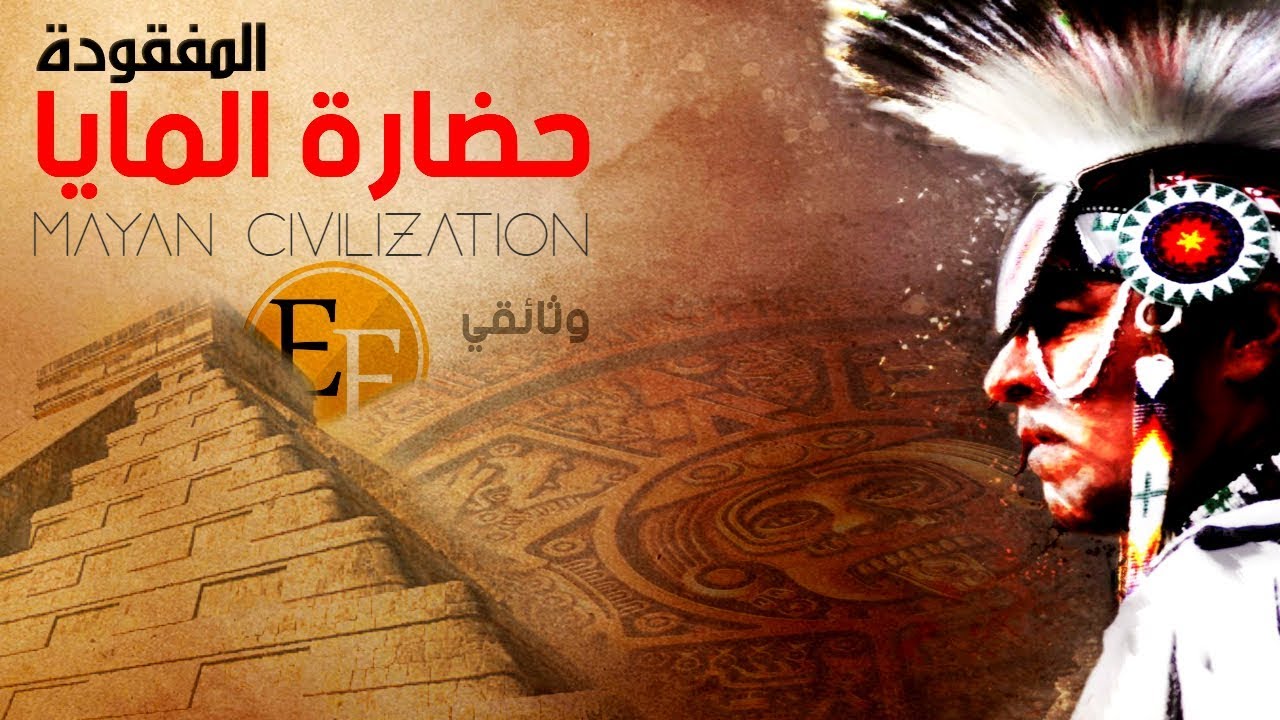
Explore the history, culture, and achievements of the ancient Maya civilization from 2000 B.C. to the Spanish conquest.
Key Takeaways
- The Maya civilization was one of the most advanced ancient cultures with significant achievements in astronomy, mathematics, and architecture.
- Their calendar system was unique, cyclical, and allowed prediction of future events based on past cycles.
- Maya pyramids like Kukulkan demonstrate sophisticated engineering aligned with astronomical phenomena.
- The civilization evolved through distinct historical stages before declining due to internal strife and Spanish conquest.
- Maya artifacts continue to fascinate scholars, revealing the depth of their cultural and scientific knowledge.
What the video covers
- The Maya civilization emerged around 2000 B.C. in southeastern Mexico and Central America, including present-day Guatemala, Belize, Honduras, El Salvador, and southern Mexico.
- The civilization developed through three historical stages: Pre-classic (agricultural and societal formation), Classical (urbanization, religious and political power, artistic and intellectual peak), and Post-classical (decline and Spanish conquest).
- The Maya calendar was complex, based on cyclical time, with 18 months of 20 days plus a 5-day holy month, and included the Long Count system tracking time from 3114 B.C.
- Maya astronomy was highly advanced, accurately predicting eclipses and tracking celestial bodies over centuries, with two calendars for long-term and religious use.
- Maya pyramids, especially the Kukulkan pyramid, showcase architectural and mathematical genius, with features like 365 steps corresponding to the solar year and equinox shadow phenomena.
- Temples and pyramids were periodically rebuilt every 52 years, reflecting political changes and the Long Count calendar cycles, with significant architectural modifications over 1500 years.
- The Maya society was ruled by a noble warrior class and priests, with strong social class divisions and a complex economic system based on agriculture.
- The civilization's decline involved internal revolutions and corruption, leading to abandonment of ceremonial centers and eventual Spanish colonialism.
- Maya artifacts, including gold items resembling modern aircraft, have intrigued researchers and sparked studies in various scientific fields.
- The video emphasizes the mystery and enduring significance of Maya achievements in history, architecture, astronomy, and culture.
Chapters
- 00:00Introduction and Geographic Scope of the Maya Civilization
- 00:49Maya Civilization Origins and Distribution
- 01:45Pre-classic Stage: Agricultural and Societal Development
- 02:45Classical Stage: Urbanization, Religion, and Social Structure
- 03:39Post-classical Stage and Spanish Conquest
- 04:31Maya Calendar and Timekeeping Systems
- 05:28Astronomy and Cyclical Time Beliefs
- 06:24Maya Pyramids and Architectural Marvels
- 07:06Equinox Phenomena and Pyramid Symbolism
- 08:05Architectural Modifications and Monumental Complexes
Full Transcript — Download SRT & Markdown
Speaker A
In the geographical area that extends from southeastern Mexico to Central America, and in the ancient historical period that began in the year 2000 B.C.,
Speaker A
a great civilization has arisen whose archaeological evidence remains to this day as one of the most important landmarks of human history in this geographical region and the most mysterious one. The people of that civilization had great knowledge and achievements in various fields
Speaker A
such as arithmetic, astronomy, medicine, architecture, and art. We welcome your suggestions and recommendations for topics which we can present that agree with the policy of our channel. It is the Maya civilization. The Maya people lived in a large part of Central America
Speaker A
that is now known as Guatemala, Belize, Honduras, and El Salvador, and in the range of five southern states in Mexico such as Campeche, Chiapas, Quintana Roo, Tabasco, and Yucatán. The Maya people were able to build a civilization that came to light in 2000 B.C.
Speaker A
This civilization extended for nearly 3000 years, and according to what historians and specialists returned to per the chronology of Central America, the Maya civilization went through three historical stages from its inception until the arrival of the Spanish conquest to the coasts of Southern America
Speaker A
after the discovery of Columbus. These stages are: 1- Pre-classic Stage. This stage in the history of the Maya people is called the agricultural stage, which began (according to the Long Count Calendar of Central America) in 3114 B.C.
Speaker A
This stage was marked by the appearance of civilized societies, the development of language, and the people's acquisition of some experiences that made them start making pottery and small statues which were made of burnt clay. This stage extended until the year 320 A.D.
Speaker A
2- Classical or Religious Stage. It was called by this name because in the beginning it was believed that a group of Maya people carried out political power, priesthood, and economic, social, and cultural life in a religious frame. Priests had great importance in the government of Classical Maya's state.
Speaker A
But it did not take over full power, as it was the noble class of warriors who held the power. The general character of Maya society was that of a society ruled by priests. During that period, the Mayas witnessed the climax of urbanization and construction on a large scale
Speaker A
and the recording of inscriptions. It is considered an important period for intellectual and artistic development, especially in the low southern regions. Agriculture developed greatly and became a basic economic activity. It was carried out by a large number of farmers,
Speaker A
where the complex labor in the Maya community was divided among them, which led to a strong social class division. This period extended from 320 to 987 A.D. 3- Post-Classical Stage. The duration of this period was from 1000 to 1687 A.D.
Speaker A
When the authority of the priests and the corruption of the nobles increased, and the Maya people abandoned the ceremonial centers. During the classical period, a tendency of revolution appeared in the peasant class against the domination of the priests and the nobles,
Speaker A
which caused the fall of the Classical Maya and the end of its era. It is followed by the entry of the Maya people into the stage of external colonialism when the Spanish campaigns arrived successively on the beaches of Central America.
Speaker A
Wonders of the Maya civilization. Calendar or almanac of the Maya civilization. All ancient civilizations dealt with time as a constant linear development, while the complex Maya calendar was based on the idea that time is like circles, which briefly means that time repeats itself.
Speaker A
So from the past events that have already happened, future events can be predicted. And with full understanding of these strange and advanced facts in its time, and supporting them by using many other sciences, the Maya civilization believed that it could predict the events that would come in the future!
Speaker A
The calendar was considered one of the cultural aspects of the Maya civilization, and this calendar included 18 months. In every month, 20 days except for the holy month (Weip), which is a five-day month. And this calendar was adopted in 3114 B.C.
Speaker A
The Maya calendar included a system that is called the Long Count System that tracks time through different units ranging in their length from one day to millions of years. While in the field of astronomy, the Maya people were accurately aware of the dates and days,
Speaker A
and they were aware of the movements of the stars as well as the two phenomena of solar and lunar eclipse. The Maya people had two calendars in their astronomical calculations: one for long calculations and the other is for religious use or short time calculations.
Speaker A
And they calculated the locations of celestial bodies over hundreds of years because they believed that past events should be repeated in the future. The Mayas believed that humans are created and perished in cycles which increased just over 5,000 years.
Speaker A
Since the last human lineage, from their point of view, appeared before 3114 A.D., their end would be in 2012 (specifically on December 21 of that year). Maya pyramids. The Maya people are still an incomprehensible mystery to this day
Speaker A
because all that they left behind is nothing more than some silent evidence. The Maya pyramids are considered the most puzzling and mysterious witnesses of their civilization. And it remains a mysterious enigma that specialists are trying to decipher and reveal its mystery.
Speaker A
And perhaps the most famous one of these pyramids is the pyramid of the temple which is known as Kukulkan, which is considered one of the most famous monuments left by the Maya people. This pyramid was built of limestone
Speaker A
with an architecture that attests to the geniality and greatness of those who built it. On each side of the pyramid, stairs of 91 steps descend to lead the visitor up to the top of the pyramid. One of the strange mysteries in these side stairs
Speaker A
is that the total number of stairs on its four sides in addition to the base of the pyramid is 365 stairs, and this number corresponds to the number of days in the year. When night and day are equal,
Speaker A
this is known as the phenomenon of Spring and Autumn Equinox. Some special phenomena occur at the Kukulkan Pyramid. For example, at sunset, the shadow of the pyramid's platforms moves like a snake below the stairs and meets with the heads of stone snakes at the base of the pyramid.
Speaker A
And this reflects how the geometrical way in which this pyramid was built is the pinnacle of architectural miracles and mathematical creativity that the Maya people reached. Scholars and specialists believe that temples and pyramids were being formed and rebuilt every 52 years,
Speaker A
coinciding with the Maya's Long Count Calendar. And it seems that the reconstruction process takes place with every new ruler or due to political matters. However, the process of reconstruction of the highest ancient buildings was something mutual and most prominently, the Northern Acropolis in the Tikal region
Speaker A
that appears to have had 1500 years of architectural modification throughout the successive periods of Maya history. There are nine complexes of twin pyramids in Tikal and others in Yaxha and Lubaantun. And those that are in Tikal were used to commemorate the end of the 20-year Katun cycle.
Speaker A
By observing the many harmonized elements and distinctive styles of the Maya's monuments, the remains of Maya architecture became an important tool to understand the development of their ancient civilization. Monitors and Astronomy. The Maya people were known for their accurate astronomical observations,
Speaker A
as they used charts for the moon and planets’ movements to predict eclipses and other celestial events such as the pairing time of the planet Venus. The accuracy of their knowledge in astronomy, and the calendar that was derived from it,
Speaker A
was superior to any other known people from 1700 years ago. There are also some indications that the M
Speaker A
The constellation of Orion region in the sky that could see their traditional chimneys in the midst of a spot of their glowing fire that matches with the "Orion Nebula" And this is considered a strong evidence that the Maya's people discovered a widespread region in the sky
Speaker A
and not a specific region for the stars All of these were before the invention of the telescope!
Speaker A
The Maya’s people were also interested in the times, when the sun became perpendicular over the head and most of their cities are located under the Tropic of Cancer This phenomenon occurs twice a year in an equal period of solar solstice
Speaker A
The Antiques of the Golden Maya's aircrafts Another mystery that confused, for years, the minds of scientists and researchers who are interested in the Maya civilization Golden Antiques were found which is exactly identical in shape to the modern aircrafts
Speaker A
which are amulets made of pure gold in the form of winged bodies and they were anciently decorating the chests of the tribal leaders There are samples of these winged, aircraft-like figures which are found in several international museums including the Gold Museum in Colombia
Speaker A
the Museum of Anthropology in Berlin and the Museum of Natural History in Chicago, in the United States Their interests began to be focused on these strange gold artifacts in 1969 when some researchers noticed the great similarity between them and the contemporary aircraft models
Speaker A
In 1996, experts in aviation in the United States conducted experiments on aircraft models which they were made replicas of these gold models after doubling their size 16 times and the result was amazing!
Speaker A
They found that these copied models from the golden Maya's masterpieces and that are remotely controlled distinguished by its ideal ability to fly and by its smooth movement with the air and there are no similar designs to it that exist in nature
Speaker A
After that, many experts, specialized in aviation in several scientific European and Asian universities and institutions by conducting similar tests and the results were identical and surprising And it confirms that the designs of the golden Maya, regardless of their purpose
Speaker A
appear in the air as if they were carefully prepared, specially to fly The Maya civilization is considered one of the most mysterious civilizations and it provoked riddles that specialists are still trying to solve and uncover the mystery of its secrets
Speaker A
Perhaps one of the main reasons for the demise of the Maya civilization is that the Spanish invaders burned almost all the manuscripts of these people because the priests who accompanied the military campaigns ordered to burn all the Maya books that was found
Speaker A
which, in their opinion, are books of the devil! Copyrights reserved for Atlas channel
Topics:Maya civilizationMaya calendarMaya pyramidsancient astronomyCentral America historyMaya architectureMaya culturePre-classic MayaClassical MayaPost-classical Maya


![‘풋살’ 실전 드리블 31가지 [쌈풋강좌 몰아보기2] — Transcript](https://i.ytimg.com/vi/mxy2Py15lgk/maxresdefault.jpg)
![풋살 입문자를 위한 기본기 총정리 [쌈풋강좌 몰아보기1] — Transcript](https://i.ytimg.com/vi/5wfzSxiWBxA/maxresdefault.jpg)