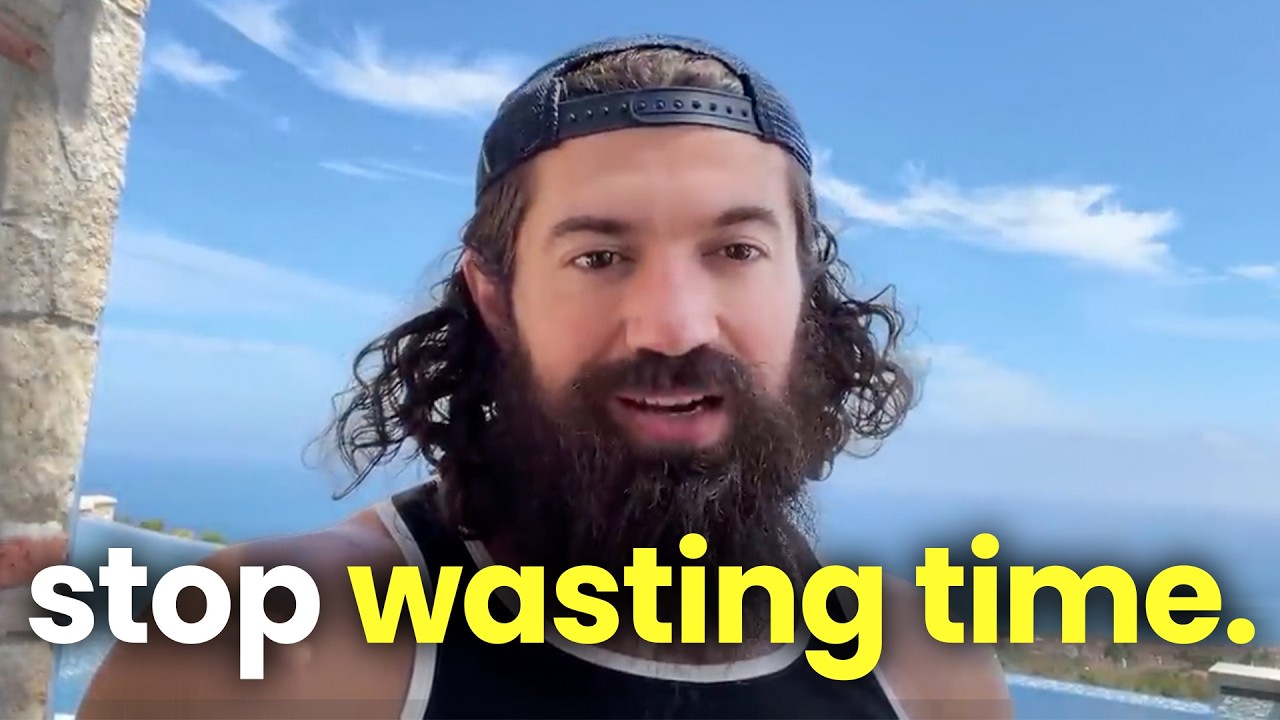
Alex Hormozi shares his top three questions to make smarter business decisions and maximize profits in just 11 minutes.
Key Takeaways
- Ask 'What problem are you trying to solve?' to maintain focus on impactful actions.
- Use 'What would it take?' to uncover true requirements and avoid premature no's.
- Clarify desired outcomes with 'What do you want to have happen?' to move beyond emotions.
- Challenge assumptions by asking deeper follow-up questions to evaluate thinking rigor.
- Avoid intellectual laziness by staying focused on difficult tasks that lead to meaningful results.
What the video covers
- Alex Hormozi reveals three essential questions he uses to evaluate business decisions and investments.
- The first question is 'What problem are you trying to solve?' to ensure focus on real issues rather than distractions.
- He explains how many people take action on things they know how to do instead of addressing the core problem.
- The second question is 'What would it take?' which assumes success and helps clarify resources or conditions needed.
- This question helps avoid premature rejections and opens up possibilities by understanding actual requirements.
- The third question is 'What do you want to have happen?' to clarify desired outcomes beyond emotional reactions.
- Alex demonstrates how to dig deeper by asking 'What does that mean?', 'How do you know that?', and 'So what?' to assess thinking quality.
- He emphasizes intellectual diligence and avoiding intellectual laziness in business decision-making.
- The video encourages prioritizing high-return activities and questioning the real impact of proposed actions.
- Overall, the approach helps entrepreneurs make better, data-driven decisions and avoid wasted effort.
Chapters
- 00:00Introduction to Three Key Business Questions
- 00:50Question 1: What Problem Are You Trying to Solve?
- 02:30The Problem with Intellectual Laziness and Focus
- 03:37Question 2: What Would It Take?
- 04:36Applying 'What Would It Take?' to Business Decisions
- 05:32Question 3: What Do You Want to Have Happen?
- 06:06Evaluating Desired Outcomes and Deeper Inquiry
- 07:14Assessing Impact and Prioritizing High-Return Actions
- 09:03Conclusion and Final Thoughts
Full Transcript — Download SRT & Markdown
Speaker A
I'm going to give you my three favorite questions that I ask when I'm making bets in the business to make the most money.
Speaker A
And I have these as almost like my treasured prized possessions because of how useful and how valuable the thinking frames they provide are.
Speaker A
And so I'll give you conditions for each using each of these three. So the first is when someone wants me to do something or they want me to approve of an action, I will almost always respond with, "What problem are you
Speaker A
trying to solve?" And what's really interesting about that question is that a lot of times people have this emotional discomfort, there's a problem that happens or they just don't feel good, which they determine is a problem. And then as a
Speaker A
result their actions skew all over the place. They're like, "Hey, I think we should do this employee engagement program." I'm like, "Okay, what problem are you trying to solve?" Um, well, I just thought it'd be good for the employees. So I'm like, "Well, do we
Speaker A
have a retention issue? Do we have an attraction issue? Are we unable to attract talent? Like let me know, 'cause that's very important." And they're like, "No, no, no, we don't have any retention issues or we don't have any
Speaker A
attraction issues." And it's like, "Okay, then why are we doing this?" Well, I think it's good.
Speaker A
What problem are we trying to solve? And so I would say that I've learned this problem question because people are erratic. They want to do stuff. And so what ends up happening is well-intentioned people,
Speaker A
nothing wrong with that, um, they will just take action on things that they know how to do when they are confronted with things that they do not know how to do. And so a lot of lack of focus is actually
Speaker A
intellectual laziness. So what I mean is I think most people in their business know on some level what needs to happen. But, because they don't know how to solve that thing, they then just find something they can solve
Speaker A
because that makes them feel better and more competent, even though it makes no difference. And so, like I would encourage you to think, "If I am being distracted, it means I'm being intellectually lazy because I can't stay on this task that I don't know how to
Speaker A
accomplish and be incompetent for any period in order to get what I want, right? And so, it's a great suss out of the thinking diligence that the person who's asking you to do something or about your willing to make or that
Speaker A
they're asking you to make or take. Um, whether they actually really thought it through. So, number one, someone asks you or me to do something, what problem are you trying to solve?
Speaker A
If I'm asking someone to do something, so I want something now, I ask the question instead of giving the statement. I'll say, "What would it take?" And so, I almost always wrap my questions with what would it take
Speaker A
because it assumes success. And what happens is when I used to ask, and this is something I did earlier in my career, "Can we? Could we?" Um, I would get no's from people and they would do a calculus in their mind of
Speaker A
what they thought something was worth without complete context on my business like I have or complete context for the plans that I have long term for the business. And then they would basically make a decision on my behalf by saying
Speaker A
no. So, I actually have, I'm actually working off of incorrect data. Like this is really important. Even though I like, I'm, you know, just making a little webcam version here, but like really, really important. This is how my brother
Speaker A
and I got a conversation about this. Um, if I asked, "What would it take?" someone can then just tell me what it would take and then I can make the decision of whether I think it's worth it.
Speaker A
And so, that the amount of things that have been unlocked in my business of me just saying, like, someone says no, I'm like, stop. What would it take for us to do it? Obviously, if I had a billion
Speaker A
dollars, could I do it? They're like, well, yeah. I'm like, okay, does it take a billion dollars? Like, no. Okay, does it take a million dollars? Okay, no. All right, what does it actually take? We probably need to hire somebody. Okay.
Speaker A
Well, it's going to make us an extra million dollars this year, and it's this, you know, whatever, 100 grand for this person.
Speaker A
Okay, then let's do that. So, you're just saying that we can't do it with our existing infrastructure. Or, or specifically, that the existing infrastructure is prioritized against other things, which I can then say, let's deprioritize those and prioritize
Speaker A
this. Right? So, if someone asks me, let's do this thing, I like to ask, what problem are we solving?
Speaker A
If I want something, I ask other people, what would it take? What would it take for us to do this in half the time? What would it take for us to deliver this in 24 hours instead of, uh, 30 days? What would it take for us to
Speaker A
buy this company? What would it take for us to do this deal? What would it take for you to get started today? What would it take for me to get you to believe that you should shut down one of
Speaker A
your businesses, uh, and go all in on the other? What would it take for me, or what would it take for you to take our content from 10 things a day to 20 things a day? What would it take?
Speaker A
It is one of the most powerful questions in entrepreneurship. Now, the third question that I'll give you is related to question number one, which is when people ask me, you know, like, hey, I think we should do this thing.
Speaker A
Um, I would say my first follow-up to whatever the response is, 'cause sometimes people don't know the problem they're trying to solve.
Speaker A
Um, is I just ask, so, this is question three, what do you want to have happen?
Speaker A
And I'm saying these questions, and I feel like my team, you know, will be listening to this and be like, yeah, I mean, he says those questions a lot.
Speaker A
What do you want to have happen? Because it just gets around all of the like emotional hullabaloo to just what do you want to see?
Speaker A
And the reason this is important, you know, like let's say, let's use a different example. Uh, someone says, "Hey, I think we should make a video about whatever. Or not. Let's use a better example.
Speaker A
Um, I think we should start doing our quarterly release in person. Okay. Let's say you're a remote company.
Speaker A
Someone says, "I think we should start doing our quarterly in person." I say, "Okay, what do you want to have happen?" Well, I mean, I want, you know, the quarterly to be in person. Yeah, yeah, but like as a result of these quarterly
Speaker A
in person, what do you want to have happen? What different outcome will occur as a result of in-person versus remote quarterlies?
Speaker A
Well, I think, you know, I think it'll be more fun. Okay, so the argument would be that you think that people will be more engaged in person versus online. Okay, no argument there.
Speaker A
Do we think that their engagement in terms of how much fun they're having has anything to do with their output afterwards? Again, I ask these questions not because they're loaded or because I disagree with them. I'm curious 'cause I
Speaker A
want to hear the other person's thinking. And so when I'm questioning these lines of thinking, I will typically ask three in succession, which is what does that mean?
Speaker A
How do you know that? And so what? So if I say, "Hey, you want to get, you know, the employees to be more engaged." I'm like, "Okay, what does engaged mean? What does that mean?" I'm like, "Oh, well, I just, you know, I
Speaker A
think they'll be happier at work." Okay, what does that mean? Okay, like tell me. Like, like what does that even, what does that even mean? Like, we're going to their subjective well-being scores are going to go up?
Speaker A
Okay. Question two, how do you know that? Do we want to give them a subjective well-being test where they rate their happiness before and then we have them rate their happiness afterwards and then we see if this made a demonstrable
Speaker A
difference? Yeah? Okay, I understand. You want them to be happier and you want this. O
Speaker A
So what? Let's say we do this. Then what happens? Do we think that it'll have to dim like it'll diminish once once they leave?
Speaker A
Maybe. Do we think this is going to have something on worker output? Okay, I have this research that suggests that worker output goes up by X, Y, and Z. And so it's like, "Okay.
Speaker A
Now, the final question for me would be like, what else could we do with this time and energy that would yield a higher return to the business?" And to be clear, I obviously want my people to be happy. I don't think that
Speaker A
these one-off things are actually what make people happy. I think that having an ongoing work environment that rewards high effort and removes people who suck is a much more effective way of getting people to enjoy their work uh than kind of, you know, Kumbaya
Speaker A
Um but I say this as as just a just to equip you cuz I see I see questions like weapons. Like it's like it shows it shows how sharp your thinking is.
Speaker A
On both sides. Like if someone asks me these questions just what I mean. I've had some some people on my team uh ask me like, "Well, uh well, what do you mean by that?" And they're they're trying to use my weapons at me and I'm
Speaker A
like, "Bro, I can tell you what I mean because I thought about it." And so like these questions, though they appear difficult, allow you to suss out or determine the quality or depth of someone's thinking around a problem or
Speaker A
solution set. And I would say that I use these on a regular basis when making bets in the business where I think we will get high returns.
Speaker A
And if I want this to happen and then I say, "What would it take for this to happen?" I get a very different set of answers from people that tends to create more divergent thinking processes, as in they try to solve
Speaker A
for success and reverse engineer it. And when I open up the blue ocean of like, let's say we had unlimited money and unlimited time, what would it take?
Speaker A
And then all of a sudden you go from unlimited time to unlimited money, and then what it would actually would take is, you know, well, unlimited is unlimited, right? But like, there are small percentages uh in relation to
Speaker A
that. And so anyways, this was top of mind because I had a handful of conversations yesterday that were that were in relation to this, where people would say, "I want to do this thing." It's like, "What problem are we trying to
Speaker A
solve?" What do you want to have happen? What does that mean? How do you know that's going to happen when you do that?
Speaker A
And even if we do, so what? Who cares? What What does this affect? How does this connect to a business outcome?
Speaker A
And what you'll find is a lot of these questions lead to maybe we shouldn't do this, and that's usually the right answer. And so one of my internal uh jokes that I have is the undefeated heavyweight champion of the world is do
Speaker A
nothing. Like when I have like three doors of action, do A, you know, you know, do A, do B, and then do nothing.
Speaker A
Do nothing so commonly is the correct answer. As in, nope, continue to re- you know, continue to allocate resources towards the things that are getting the highest return. This is a thing that might get us a return, but we have this
Speaker A
other thing that we know will get us a return, and the return that we get here might be as good, but this one is certainly will be, and so we should just do more of that.
Speaker A
So, right now, when you're contemplating uh you know, should I should I do this thing, this you know, somebody on my team or I I'm the one who's suggesting these things, you might have suggested it because you are emotionally
Speaker A
uncomfortable with your existing moment and just want something to do rather than the thing that you know is going to work. So anyways, uh Uh, those are a of questions that I use like weapons that have helped me make better bets. Uh, I
Speaker A
hope they help you. If you like this video and you're a business owner who wants to break through your current revenue ceiling, I just did every lesson from scaling 10 businesses past 10 million and three businesses past 100 million into a
Speaker A
completely free scaling roadmap that I've used to go from zero to one, zero to 10, and zero to 100 plus. And so you can click here and you can check it out.
Speaker A
Again, absolutely free. And since you're a business owner, appreciate you and enjoy.
Topics:Alex Hormozibusiness strategyentrepreneurshipdecision makingproblem solvingbusiness growthproductivityfocusinvestmentsbusiness questions