Skip to content

Elon Musk’s 50 Greatest Motivational Speeches | Best Mo… — Transcript

Elon Musk shares insights on hard work, innovation, and the future of humanity in this motivational compilation.

Key Takeaways

  • Relentless hard work and long hours are crucial for startup success.
  • Innovating for a sustainable future and space exploration are vital missions.
  • Facing criticism is part of challenging the status quo and driving change.
  • Fear is normal but should not prevent pursuing important goals.
  • Maximizing usefulness and impact should guide one’s efforts.

Summary

  • Elon Musk discusses his intense work schedule, often working 100+ hours a week to achieve his goals.
  • He emphasizes the importance of sustainable energy and Tesla's role in accelerating electric vehicle adoption.
  • Musk highlights SpaceX’s mission to make humanity a multi-planetary species to ensure long-term survival.
  • He shares personal stories of hardship, including living in a small office and working tirelessly to start his companies.
  • Musk reflects on his early realization of being different due to his constant flow of ideas and reasoning.
  • He addresses criticism from established figures in aerospace and his motivation to prove doubters wrong.
  • The video covers Musk’s philosophy on fear, perseverance, and the necessity of working 'super hard' when starting a company.
  • He stresses the importance of focusing on meaningful work and maximizing the probability of a positive future.
  • Musk talks about the challenges of balancing personal life with his demanding career and constant mental activity.
  • The compilation inspires viewers to embrace hard work, innovation, and visionary thinking to impact the future.

Full Transcript — Download SRT & Markdown

00:00
Speaker A
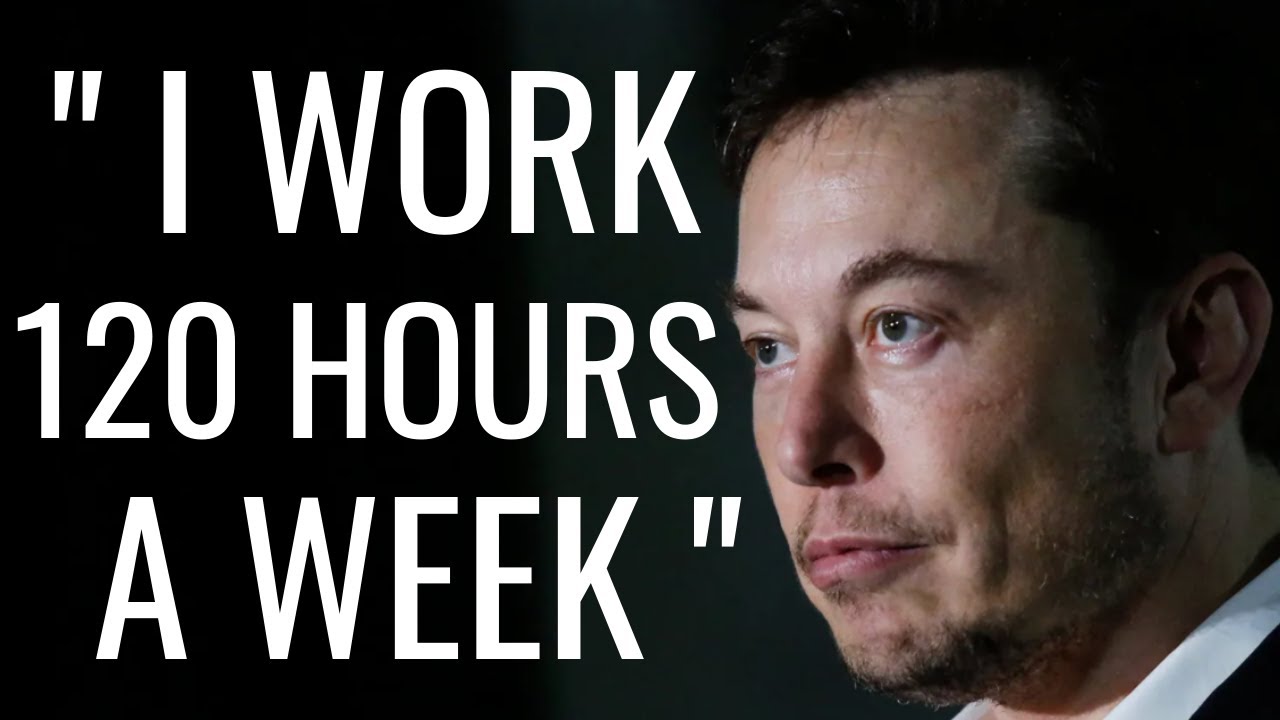
My workload went up from about, I don't know, 70 to 80 hours a week to probably 120.
00:07
Speaker A
Um, so yeah, I go to sleep, I wake up, I work, go to sleep, wake up, work, do that seven days a week. I'll have to do that for a while. No choice.
00:25
Speaker A
Uh, and you do 16-hour days and you work seven days a week and you fly all over the place and you go to these meetings constantly, and uh, people constantly criticize you for everything.
00:37
Speaker A
It's amazing to me when you're changing the world and you're giving yourself, why do you do this?
00:52
Speaker A
So my wife says to me, "Why are you still working? Why are you still working? What are you doing here?"
01:07
Speaker A
Well, I think what I'm working on has an important effect on the future.
01:21
Speaker A
You know, in the case of Tesla, I think it's fair to say that Tesla has significantly, significantly accelerated the advent of sustainable energy.
01:31
Speaker A
You know, before Tesla, no one was doing electric cars.
01:47
Speaker A
And now, as a result of Tesla, I think almost every major car company in the world is building electric cars, and that's, I think, that's a pretty big deal.
02:06
Speaker A
Um, but there's still a long way to go to transition the world to a sustainable energy economy.
02:19
Speaker A
So, we still have a lot of work ahead of us at Tesla, but that's our goal there. And then
02:33
Speaker A
for SpaceX, um, I think it's important for the future to be exciting and for humanity's existence to be ensured over the long term.
02:52
Speaker A
I think we must become a multi-planet species and a space-bearing civilization. We're here like 4 1/2
03:03
Speaker A
billion years after Earth got started, 13.8 billion years into the age of the universe. And it's only now recently, in the last 5,000 years, that we even invented writing.
03:15
Speaker A
I would say date the first civilization by when there was the first writing, which was in ancient Sumeria around five or six thousand years ago.
03:25
Speaker A
So we've basically just been here for a very brief instant.
03:36
Speaker A
A blink, a blink. All of human civilization is a blink of an eye, if there was an eye on an evolutionary time scale.
03:40
Speaker A
So, I think it's important we take the actions to ensure that the light of consciousness continues, and because we should really view consciousness as a small candle in a vast darkness, easily going out.
03:53
Speaker A
I was working, doing research in Silicon Valley on a completely different subject and trying to start this company at the same time. And when it came time to decide, do I want to do graduate studies or do I want to start this company, I decided to start the company. I had no money.
04:05
Speaker A
So we found that an office was actually cheaper than an apartment in Silicon Valley. So we got this dinky little office that had a leaky roof.
04:18
Speaker A
Um, it was just the nastiest place you can imagine.
04:27
Speaker A
And you lived in it, too. And I lived in it, too, and showered at the YMCA.
04:36
Speaker A
Um, this lasted for about three or four months. And the reason we chose this office, in addition to it being really cheap, was that there was an internet service provider on the floor below.
04:46
Speaker A
So, we were able to get really cheap internet access by drilling a hole in the floor and connecting to their server directly.
04:59
Speaker A
Depending upon how well you want to do, particularly if you're starting a company, you need to work super hard.
05:06
Speaker A
So, what does super hard mean? Um, well, when my brother and I were starting our first company, instead of getting an apartment, we just rented a small office and we slept on the couch.
05:10
Speaker A
We were so hot up, we had just one computer, so the website was up during the day, and I was coding at night, seven days a week, all the time.
05:15
Speaker A
So, I briefly had a girlfriend in that period, and in order to be with me, she had to sleep in the office.
05:23
Speaker A
So, work hard like it, I mean every waking hour, that's the thing I would say, particularly if you're starting a company.
05:29
Speaker A
And I mean, if you do the simple math, say like, okay, if somebody else is working 50 hours and you're working 100, you'll get twice as much done in the course of a year as the other company.
05:37
Speaker A
At what point, as you were raising him, did you think there might be something different about this little boy?
05:44
Speaker A
Um, from the age of three, really.
05:49
Speaker A
I just, he just reasoned with me so well and I didn't know how he could figure out things. I mean, he was three.
05:59
Speaker A
And then I sent him to school early because he, and they said you can't send him, you know, as the youngest person in the class, and I said he really needs other stimulation as well.
06:04
Speaker A
And the nice thing is that he took what he could do and actually implemented it.
06:20
Speaker A
Any genius kids, they stay in a basement because they can't actually move ahead.
06:30
Speaker A
I don't think you'd necessarily want to be me. What's the worst part about it?
06:41
Speaker A
I don't think people would like it that much. Well, most people wouldn't, but they can't be you.
06:55
Speaker A
That's like some superhero type stuff. You know, you wouldn't want to be Spider-Man. Rather just sleep tight in Gotham City. I hope he's out there doing his job.
07:07
Speaker A
It's very hard to turn it off. Yeah. What's the hardest part? Might sound great if it's turned on.
07:22
Speaker A
But what if it doesn't turn off? So when everybody leaves, it's just Elon sitting at home brushing his teeth.
07:29
Speaker A
Just a bunch of ideas bouncing around your head. Yeah. All the time. When did you realize that that's not the case with most people?
07:38
Speaker A
I think when I was, I don't know, five or six or something. I thought I was insane.
07:52
Speaker A
Why did you think you were insane? Because it was clear that other people did not, their mind wasn't exploding with ideas all the time. They weren't expressing it. They weren't talking about it at all.
07:58
Speaker A
And you realize by the time you were five or six, like, oh, they're probably not even getting this thing that I'm getting.
08:12
Speaker A
No, it was just strange. It was like, hmm, kind of strange. Where I grew up was extremely violent. I never, I never started a fight.
08:25
Speaker A
Except with my brother, actually, one exception. I did, I did beat my brother up. That's just, I don't know, that's how it goes.
08:37
Speaker A
All the time. South Africa, when I was growing up, was just an inherently very violent place. I got punched in the face many times.
08:48
Speaker A
I almost got beaten to death once. So, many times. And I think if you have not been punched in the face with a fist, you have no idea what it's like.
08:56
Speaker A
There are people who've been in the rocketry business for decades who say about you that you don't know what you don't know.
09:09
Speaker A
Well, I suppose that's true of anyone. How can anyone know what they don't know?
09:14
Speaker A
When critics say you can't do this, your answer to them is, "We've done it."
09:28
Speaker A
Now is the time to overrule this administration's pledge to mediocrity.
09:38
Speaker A
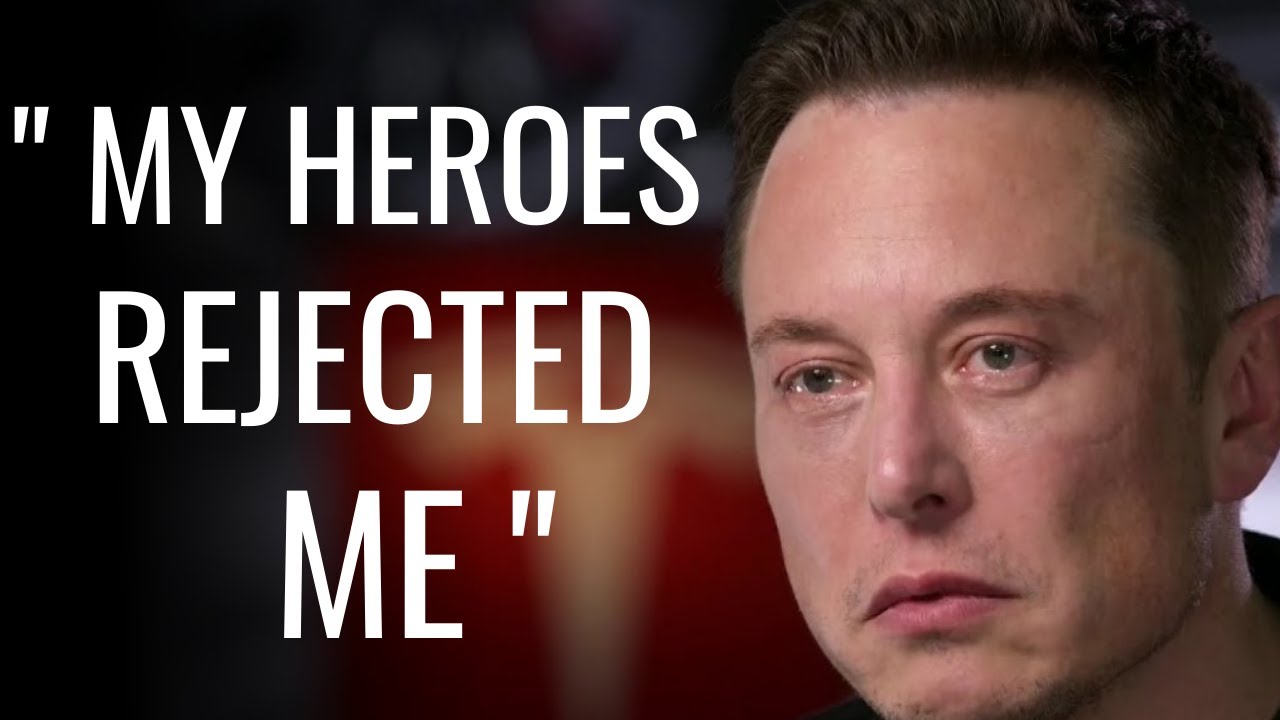
You know, there are American heroes who don't like this idea. Neil Armstrong, Gene Cernan have both testified against commercial space flight in the way that you're developing it. And I wonder what you think of that.
09:46
Speaker A
I was very sad to see that. Um, because those guys are, yeah, you know, those guys are heroes of mine.
10:01
Speaker A
So, it's really tough. You know, I wish they would come and visit and see the hardware that we're doing here, and I think that would change their mind.
10:11
Speaker A
They inspired you to do this, didn't they? Yes. And to see them casting stones in your direction, it's difficult.
10:25
Speaker A
Did you expect them to cheer you on? Certainly hoping they would. What are you trying to prove to them?
10:38
Speaker A
What I'm trying to do is to make a significant difference in space flight and help make space flight accessible to almost anyone.
10:45
Speaker A
And I would hope for as much support in that direction as we can receive.
10:56
Speaker A
I like to get things done. I like to be useful. Um, that is one of the hardest things to do, doing something useful for other people that I like doing.
11:09
Speaker A
You know, my goal is to try to do useful things, try to maximize the probability the future is good, make the future exciting, something you look forward to, you know.
11:21
Speaker A
You know, with Tesla, we li...
11:32
Speaker A
their money. I thought was like you know I'd rather lose my own money. And then um we we almost did die at SpaceX actually. So we I budgeted for for three flights. Um I mean technically I I did
11:44
Speaker A
have a plan where I I had a had the money for PayPal. I had like about 180 million for PayPal and I thought you know I'll allocate half of that to SpaceX and Tesla and Solar City and um
11:56
Speaker A
that should be fine. I'll have 90 million like lots you know. Uh but but then what happened is um things cost more and took longer than than I thought. So I had a choice of either put the rest of the money in or the
12:10
Speaker A
companies are going to die like so I put I ended up putting all the money in and borrowing money for rent from France.
12:17
Speaker A
SpaceX is alive by the skin of its teeth. So is Tesla. If if things had just gone a little bit the other way, both companies would be dead. And I and I like one of the most difficult choices I have ever faced uh
12:29
Speaker A
in life was was in 2008. I think I had uh maybe $30 million left or 30 or $40 million left in 2008. I had two choices.
12:38
Speaker A
I could put it all into one company and then the other company would definitely die um or split it between the two companies. And but if I split it between two companies, then both might die. And you know, when you put your blood,
12:53
Speaker A
sweat, and tears into creating something and building something, it's like a child. And so it's like which one am I going to let one starve to death? I couldn't bring myself to do it. So I put I I split the money between the two.
13:06
Speaker A
Fortunately, thank goodness uh they both came through. When you had that third failure in a row, did you think I need to pack this in?
13:15
Speaker A
Never. Why not? I don't ever give up. I mean, I'd have to be dead or completely incapacitated.
13:24
Speaker A
If that fourth launch hadn't worked, that would have been it. Um, we would have not had the resources to mount a fifth.
13:30
Speaker A
You couldn't have gone on at that point. We Yes. Death would have been, I think, inevitable because we did not have the resources to to mount a fifth launch.
13:39
Speaker A
I'm probably not the guy that most people would bet on. Um, usually who wins?
13:43
Speaker A
It's it's it's like a a little kid fighting a bunch of sumo wrestlers. Usually the sumo wrestlers win. We're little scrappy company. Every now and again, little scrappy company wins. And I I I I think this will be one of those
13:57
Speaker A
times like what are the set of things that can be done to make the future better like you know like so I think that a future where we are a space fairing civilization and out there among the stars
14:12
Speaker A
this is very exciting. This makes me look forward to the future. This makes me want that future.
14:19
Speaker A
You know, they're things they need to be things that make you look forward to waking up in the morning. You wake up in the morning, you look forward to the day, forward to the future, and a future where we are a space
14:32
Speaker A
fairing civilization and out there among the stars. I think that's very exciting. That is a thing we want. Whereas, if if you knew we would not be a space fairing civilization, but forever confined to Earth, this would not be a good future.
14:43
Speaker A
That would be very sad. I think there there are two futures and one future is we're out there among the stars and the things we read about and see in science fiction movies, the good ones are true.
14:54
Speaker A
We have these starships and we're going to see what other planets are like and we're a multilanet species and the scope and scale of consciousness has expanded across many civilizations and many planets and many star systems. This is a
15:09
Speaker A
great future. This is a wonderful thing to me and that's what we should strive for.
15:15
Speaker A
So when everybody leaves, it's just Elon sitting at home brushing his teeth, just bunch of ideas bouncing around your head. When did you realize that that's not the case with most people?
15:26
Speaker A
I think when I was, I don't know, five or six or something. I thought I was insane.
15:31
Speaker A
It was just strange because it was clear that other people do not their mind wasn't exploding with ideas.
15:44
Speaker A
It was like H strange. I don't think I don't think you'd necessarily want to be me. People would like it that much.
15:57
Speaker A
It's very hard to turn it off. It's like a never- ending explosion all the time.
16:06
Speaker A
Now is the time to overrule this administration's pledge to mediocrity. Listen, Tesla's a sell, sell, sell. You don't want to own this stock. You shouldn't even rent the darn thing. Why?
16:19
Speaker A
Because beyond the hype, there's just not much going on here. Tesla still has yet to turn a profit. That would be a $ 1.5 billion company with no profit. It most recent quarter, it actually lost more money than it did the year before.
16:29
Speaker A
for $1.5 billion, losing more money than the year before. This is a company with limited visibility.
16:35
Speaker A
You put $90 billion, like 50 years worth of breaks into into solar and wind to to Celindra and Fisker and Tesla and Enter one. I mean, I had a friend who said, "You don't just pick the winners and losers, you pick the
16:48
Speaker A
losers." Private enterprise will not ever lead a space frontier. Not because I don't want them to, but my read of history tells me they can't. It's not possible.
17:02
Speaker A
You know, there are American heroes who don't like this idea. Neil Armstrong, Jean Cernin have both testified against commercial space flight in the way that you're developing it. And I wonder what you think of that.
17:17
Speaker A
I was very sad to see that. Uh because those guys are Yeah. You know, those guys are heroes of mine.
17:24
Speaker A
So, it's really tough. No. I I wish they would come and visit and and see the hardware that we're doing here and and I think that would change their mind.
17:33
Speaker A
They inspired you to do this, didn't they? Yes. And to see them casting stones in your direction.
17:47
Speaker A
Did you expect them to cheer you on? Certainly hoping they would. What are you trying to prove to them?
17:55
Speaker A
What I'm trying to do is is to make a significant difference in in space flight and and and help make space flight accessible to to almost anyone.
18:05
Speaker A
One of the most difficult choices I ever faced uh in life was was in 2008. Um and um I think I had uh like maybe $30 million left or 30 or $40 million left in 2008. I had two choices.
18:24
Speaker A
I could put it all into one company and then the other company would definitely die um or split it between the two companies. And but if I split it between two companies, then both might die. Um and you when you put your blood, sweat,
18:41
Speaker A
and tears into creating something or building something, it's like a child. And so it's like which one am I going to let one starve to death? I couldn't bring myself to do it. So, I put I I split the money between the two.
18:55
Speaker A
Fortunately, thank goodness, uh they both came through. What was your biggest failure and how did that change you?
19:02
Speaker A
Well, there's a ton of failures along the way, that's for sure. As I said, for for SpaceX, the first three launches failed and uh we were just barely able to scrape together enough parts and and money to do the the fourth launch. That
19:17
Speaker A
fourth launch had failed, we would have been dead. So multiple failures along the way. Tesla really faced a severe uh threat threat of death uh due to the Model 3 production ramp. Essentially the company was bleeding money like crazy
19:31
Speaker A
and and just if if we didn't solve these problems in a very short period of time uh we would die. Uh and it was extremely difficult to solve them.
19:40
Speaker A
How close to death did you come? We singledigit weeks. I went to Russia three times to to look at buying um a refurbished ICVM. And uh I can tell you it was very weird going there in in 2000
19:55
Speaker A
late 2001 2002 going to the Russian rocket forces and saying I'd like to buy two of your biggest rockets. U but you can keep the nuke. They thought I was crazy but but I did have money so that
20:08
Speaker A
was that was okay. Uh um and after making several trips to to Russia, I came to the conclusion that my initial thought was well that that there's not enough will to explore and expand beyond Earth and have a Mars base
20:23
Speaker A
and that kind of thing. But I came that that that was wrong. Um in fact, there's plenty of will particularly in the United States. Uh because the United States is a nation of explorers of people who came here from from other
20:36
Speaker A
parts of the world. I think the United States is really a dist distillation of the the spirit of human exploration. So a after my third trip I said okay what we really need to do here is try to
20:48
Speaker A
solve the the space transport problem and uh and started SpaceX. Um and uh this this was against the advice of pretty much everyone I talked to. Uh the thing it was it was tough going there in the beginning because I'd never built
21:04
Speaker A
anything physical. I mean, I built like little model rockets as a kid and that kind of thing, but um I never had a company that built anything physical.
21:12
Speaker A
So, I had to kind of figure out how to how to do all these things and and bring together the right team of people. It it it was tough tough going. Um because thing about a rocket is that the the
21:23
Speaker A
passing grade is 100%. You you don't get to actually test the rocket in the real environment that it's going to be in. So I think so the best analogy for for rocket engineering is is like if you want to create a really comp
21:37
Speaker A
complicated bit of software um you you can't run the software as an integrated hole and you can't run it on the computer it's intended to run on. But the first time you put it all together and run it on that computer it must run
21:47
Speaker A
with no bugs. The first launch I was picking up bits of rocket near the near the launch site. It was a bit sad but but we we we learned with with each successive flight and uh and were able
22:00
Speaker A
to with uh eventually with the fourth flight in 2008 uh reached orbit. I I tried very hard to to get the right expertise in for for SpaceX. I tried hard to to find a great chief engineer for the rocket but not the good chief
22:14
Speaker A
engineers wouldn't join and the bad ones well there was no no point in hiring them. So I ended up being chief engineer of the rocket. Um, so if I could have found somebody better, then we would have maybe had less than three failures.
22:26
Speaker A
How did you get the expertise to be the chief technology officer of a rocket ship company?
22:32
Speaker A
Um, well, I do have a physics background. That's helpful as a foundation. Um, and then I read a lot of books and talked to a lot of a lot of smart people.
22:40
Speaker A
You're self-taught? Yeah. Well, well, self taught, yes. Meaning, um, I didn't I don't have an aerospace degree.
22:47
Speaker A
So, how how did you go about acquiring the knowledge? Well, uh, I like I said, I read a lot of books, talked to a lot of people, and and have a great team.
22:56
Speaker A
When you had that third failure in a row, did you think I need to pack this in?
23:02
Speaker A
Never. Why not? I don't ever give up. I mean, I'd have to be dead or completely incapacitated.
23:12
Speaker A
So many people try to talk me out of starting a ride company. It was It was crazy. What did they tell you? One good friend of mine collected a whole series of of uh videos of rockets blowing up
23:24
Speaker A
and made me watch those. He just didn't want me to lose all my money.
23:28
Speaker A
How did you figure you were going to start a car company and be successful at it?
23:32
Speaker A
Well, I I didn't really think Tesla would be successful. I thought we would most likely fail. But I thought that we at least could address the false perception that people had that an electric car had to be ugly and slow and
23:43
Speaker A
and boring like a golf cart. But you say you didn't expect the company to be successful. Then why try?
23:50
Speaker A
If something's important enough, you should try even if the probable outcome is failure. Were you a little naive when you thought I'll just I can easily build build an electric car and and a rocket?
24:01
Speaker A
I didn't think it would be easy. Um I like I said, I thought they would probably fail. Um but you know, like creating a company is almost like having a child. So it's sort of like how do you
24:14
Speaker A
say your child should not have food. So on once you have the company you have to feed it and nurse it and take care of it even if it it ruins you.
24:26
Speaker A
Yeah. But uh suppose there was some tough times in uh 2008 end of 2008. How did you get through that period of crisis?
24:44
Speaker A
Yeah. Can we just break for a second? Sure. Sure. Of course. You want to wait a little while?
24:57
Speaker A
Man, I sure hope it was worth it. Sure hope so. Sure hope it was worth it.
25:02
Speaker A
Where does that come from? Or how do you think about making a decision when everyone tells you this is a crazy idea?
25:07
Speaker A
Or where do you get the internal strength to do that? Well, first of all, I'd say I I actually think I I I think I fear feel fear quite strongly. Um, so it's not as though I just have the absence of fear. I I feel
25:19
Speaker A
it quite strongly. Um, but there are just times when something is important enough, you believe in it enough that you you do it in spite of the fear.
25:29
Speaker A
People shouldn't think, well, I feel fear about this and therefore I shouldn't do it. Um, it's normal to be to feel fear. like you'd have to there'd have to be something mentally wrong if you didn't feel fair.
25:41
Speaker A
Particularly if you're starting a company, you need to work super hard. So, what what does super hard mean? Um well, when my brother and I were starting our first company, uh in instead of getting an apartment, we just
25:52
Speaker A
rented a a small office and we slept on the couch. Um and we we showered at the the YMCA and uh we're we're so hot up we had just one computer. So the this the the the website was up during the day uh
26:06
Speaker A
and I was coding at night 7 days a week all the time. Um and I I uh sort of briefly had a girlfriend in that period and in order to be with me she'd have to sleep in the office. So uh work hard
26:22
Speaker A
like it I mean every waking hour that's that's the the thing I would I would say if if you particularly if you're starting a company and I mean if you do the simple math say like okay if somebody else is working 50 hours and
26:34
Speaker A
you're working 100 uh you'll get twice as done as much done in the course of a year as the as uh the other company. I think certainly uh being focused on something that you're confident will have high value to someone else um and
26:48
Speaker A
just being really rigorous in making that assessment. Um because people are tend to a natural human tendency is wishful thinking. Um so a challenge for entrepreneurs is to say well what's the difference between really believing in your ideals and sticking sticking to
27:04
Speaker A
them versus pursuing some unrealistic dream that doesn't actually have merit and it's it's that is a that is a really difficult thing to to tell you can you tell the difference between those two things you know so you need to be sort
27:17
Speaker A
of very rigorous um in your self self analysis and then just work like hell I mean you just have to put in you know 80our 80 to 100 hour weeks every week.
27:29
Speaker A
All those things improve the odds of success. I think it's important that you really like whatever you're doing. Um if you don't like it, life is too short. If you like what you're doing, you think about it even when you're not working. I mean,
27:42
Speaker A
it'll just it it's it's something that your mind is drawn to. Even if you're if you're the best of the best, there's always a chance of failure. And and if you don't like it, you just really can't make it work. I think
27:55
Speaker A
if you're creating a company or if you're joining a company, uh the most important thing is to uh is to attract great people. So either be with join a group that's amazing that you really respect or if you if you're building a
28:09
Speaker A
company, you've got to gather great people. I mean all a company is is a group of people that have gathered together to create a product or service.
28:15
Speaker A
And so depending upon how talented and hardworking that group is and the degree to which they are focused uh cohesively in in a good direction that will determine the success of the company. So do everything you can to to gather great
28:29
Speaker A
people. Uh if if you're creating a company then I'd say focus on on signal over noise. Um a lot of companies get get confused. They they spend money on things that don't actually make the product better. So, for example, at at
28:46
Speaker A
Tesla, we've we've never spent any money on advertising. Um, we we put all of the money into R&D and and manufacturing and design to try to make the car as good as possible. Um, and uh I think that's
29:02
Speaker A
that's that's the way to go for for any given company. just can keep thinking about are these efforts that people are are expending are they resulting in a better product or service and if they're not stop those efforts
29:16
Speaker A
don't don't just follow the trend. So um you may have heard me say to that it's good to think in terms of the physics approach of first principles uh which is rather than reasoning by analogy you boil things down to the most fundamental
29:32
Speaker A
truths you can imagine and you reason up from there. And this is a good way to figure out if if if something really makes sense or if it's just what everybody else is doing. It's hard to think that way. You can't think think
29:46
Speaker A
that way about everything. takes a lot of effort. Uh but if you're trying to do something new, it's the best way to think. Um and that framework was developed by by physicists to figure out counterintuitive things um like quantum
30:01
Speaker A
mechanics. So it's really a powerful powerful method. The final thing I would encourage you to do is now is the time to take risk. U you don't have Yeah. You don't you don't have you don't have kids.
30:15
Speaker A
As you get older, your obligations increase. So you the and once you have a family, you start taking risk not just for yourself but for your family as well. It gets much harder to uh do things that might not work out. Um so
30:29
Speaker A
now is the time to do that uh before you before you have those obligations. So I would I would encourage you to take risks now. Do something bold. Um you won't regret it.
30:42
Speaker A
What's your mission life? why you do whatever you do. When when I was a kid, I was wondering kind of what's the meaning of life? Like why are we here? What's it all about?
30:54
Speaker A
And um I came to the conclusion that uh what what really matters is trying to understand the right questions to ask.
31:05
Speaker A
the more that we can increase the scope and scale of uh human consciousness, the better we are able to ask these questions.
31:15
Speaker A
So, so I think that there's certain things that are necessary to ensure that the future is good. Um and uh some of those things are in the long term having long-term sustainable transport and sustainable energy generation.
31:33
Speaker A
um and uh to be a space fairing civilization and for humanity to be out there among the stars and be a multilanetary uh species. Um, I mean, I think the being a multilanet species and being out there among the stars is important for
31:53
Speaker A
uh the long-term survival of humanity and uh that's one reason kind of like life insurance for life collectively, life as we know it.
32:04
Speaker A
Um, but then the part that I find personally most motivating is that it creates a sense of adventure and it makes people excited about the future.
32:15
Speaker A
Um, if you consider two futures, one where uh we are forever confined to Earth until eventually something terrible happens or another future where we are out there on many planets, maybe even going beyond the solar system.
32:31
Speaker A
How many how many things can you buy that you really love that really give you joy? So rare. So rare. I wish there were more things. That's what we try to do. just make things that somebody loves.
32:46
Speaker A
I think that second version is incredibly exciting and inspiring and there need to be reasons to get up in the morning. You know, life can't just be about solving problems. Otherwise, what's the point? There's got to be things that people find inspiring um and
33:01
Speaker A
make life worth living. The universe as we know it will dissipate into a fine mist of cold nothingness eventually.
33:14
Speaker A
I don't want to sound like like things are too dark cuz I think like you kind of have to be optimistic about the future. There's no point in being pessimistic.
33:24
Speaker A
It's just too negative. Doesn't help, you know? I think you want to be I mean my theory is like I'd rather be optimistic and wrong than pessimistic and right like what are the set of things that can be done to make the future better. I
33:39
Speaker A
think that a future where we are a space fairing civilization and out there among the stars.
33:46
Speaker A
This is very exciting. This makes me look forward to the future. This makes me want that future.
33:53
Speaker A
There need to be things that make you look forward to waking up in the morning. You wake up in the morning, you look forward to the day, look forward to the future.
34:03
Speaker A
A future where we are a space fairing civilization and out there among the stars. I think that's very exciting.
34:08
Speaker A
That is a thing we want. Whereas if if you knew we would not be a space fairing civilization but forever confined to Earth, this would not be a good future.
34:16
Speaker A
That would be very sad. I think if there are two futurists and one future is we're out there among the stars and the things we read about and see in science fiction movies, the good ones are true.
34:28
Speaker A
We have these starships and we're we go and see what other planets are like. And we're a multilanet species and the scope and scale of consciousness is expanded across many civilizations and many planets and many star systems. This is a
34:46
Speaker A
great future. This is a wonderful thing to me and that's what we should strive for.
34:55
Speaker A
People look like they have a much better life than they really do. People are posting pictures of when they're really happy. They're modifying those pictures to be better looking. Um even if they're not modifying the pictures, they're at
35:09
Speaker A
least selecting the pictures for the best lighting, the best angle. So people basically seem uh they're way better looking than they basically really are.
35:20
Speaker A
Um and they're way happier seeming than they really are. So if you look at everyone on Instagram, you might think, man, they're all these happy, beautiful people, and I'm not that good-looking and I'm not happy, so I'm a suck, you
35:36
Speaker A
know, and that's going to feel sad. when in fact those people you think are super happy actually not that happy.
35:45
Speaker A
Some of them are really depressed. They're very sad. Some of the happiest seeming people actually some of the saddest people in reality. So I think I think things like that can make people quite sad.
35:58
Speaker A
This may sound corny but love is the answer. Wouldn't hurt to have more love in the world. I think, you know, I think people should be nicer to each other and give people and give give more credit to
36:12
Speaker A
to others and don't assume that they're mean until you know they're actually mean. You know, just it's easy to demonize people. You're usually wrong about it. People are nicer than you think.
36:26
Speaker A
Give people more credit. I work 7 days a week, but but I I'm not expecting others to do that. Um, how much sleep do you get, by the way?
36:36
Speaker A
Uh, about 6 hours. You do? 6 hours typically? Yes. No, that's not bad. I thought it would be less.
36:42
Speaker A
I've tried less, but uh I uh my productivity my even though I'm awake more hours, I get less done.
36:46
Speaker A
Okay. And and the brain pain level is bad if if I get less than 6 hours.
36:54
Speaker A
When you had that third failure in a row, did you think I need to pack this in?
37:01
Speaker A
Never. Why not? I don't ever give up. I mean, I'd have to be dead or completely incapacitated.
37:11
Speaker A
Work like hell. I mean, you just have to put in, you know, 80 hour 80 to 100 hour weeks every week. That that all those things improve the odds of success. If if other people are putting in 40-hour
37:23
Speaker A
work weeks and you're putting in 100 hour work weeks, then even if uh you're doing the same thing, you know that in in one year you will achieve what they achieve, you you will achieve in 4 months what it takes them a year to
37:38
Speaker A
achieve. You need to work if depending upon how well you want to do and particularly if you're starting a company, you need to work super hard. So what what does super hard mean? Um well, when my brother and
37:50
Speaker A
I were starting our first company, uh in instead of getting an apartment, we just rented a a small office and we slept on the couch. Um and we we showered at the the YMCA and uh we're we're so hot up we
38:03
Speaker A
had just one computer. So the the the website was up during the day uh and I was coding at night, 7 days a week, all the time. Sort of briefly had a girlfriend in that period. And in order
38:15
Speaker A
to be with me, she has to sleep in the office. So work hard like it I mean every waking hour that's that's the the thing I would I would say if if you particularly if you're starting a company
38:28
Speaker A
you have to apply a lot of hours to actual working actually working. So the the way I generally do it is I'll be uh working at SpaceX on Monday and then Monday night flight to the Bay Area. Uh spend Tuesday and
38:46
Speaker A
Wednesday at the Bay Area then at at Tesla and then fly back on Wednesday night. Spent Thursday and Friday at SpaceX.
38:54
Speaker A
um in in in the last several months, then I I would fly back here on a Saturday um and either spend Saturday and Sunday at Tesla uh or spend Saturday at Tesla and Sunday at SpaceX.
39:08
Speaker A
I was living in the in the in the factory in Fremont um and and the one in in Nevada for 3 years straight. It was my primary residence. I I actually slept well I slept in a couch at one point on
39:21
Speaker A
a in a tent on the roof. Um, and then but but for a while there I was just sleeping uh under my desk which is out in the open in the factory. Um, and and for an important reason and it was damn
39:34
Speaker A
uncomfortable sleeping on that floor and always when I woke up I'd smell like metal dust. So during shift change, the entire team could see me. And this is important because if they think that the the sort of the leader is is off
39:48
Speaker A
somewhere having a good time, you know, drinking my ties on a tropical island, which I could definitely have have been doing and would much have preferred to do, but but the thing is that since the team could see me sleeping on the floor
40:00
Speaker A
during shift change, they knew I was there and that made a huge difference and then they gave it their role.
40:07
Speaker A
What's your mission life? Why you do whatever you do? When when I was a kid, I was wondering kind of what's the meaning of life? Like why are we here? What's it all about?
40:20
Speaker A
And um I came to the conclusion that uh what what really matters is trying to understand the right questions to ask.
40:30
Speaker A
And the more that we can increase the scope and scale of uh human consciousness, the better we are able to ask these questions. So, so I think that there's certain things that are necessary to ensure that the future is
40:43
Speaker A
good and some of those things are in the long term having long-term sustainable transport and sustainable energy generation.
40:53
Speaker A
um and uh to be a space fairing civilization and for humanity to be out there among the stars and be a multilanetary uh species. Um I mean I think the being a multilanet species and being out there among the stars is important for uh the
41:13
Speaker A
long-term survival of humanity and uh that's one reason kind of like life insurance for life collectively life as we know it. Um, but then the part that I find personally most motivating is that it creates a sense of adventure and it
41:31
Speaker A
makes people excited about the future. There are a lot of negative things in the world. There's a lot of terrible things that happening all over the world all the time. Uh there are lots of problems that need to get solved.
41:46
Speaker A
There's lots of things that are yeah that are miserable and kind of get you down. But that life cannot just be about solving one miserable problem after another. Can't that can't be the only thing. They need to be they need to be
41:58
Speaker A
things that inspire you that make you glad to be to wake up in the morning and be part of humanity. It is time to go forth become a starfaring civilization.
42:10
Speaker A
Be out there among the stars. Expand the scope and scale of human consciousness. I I find that incredibly exciting.
42:20
Speaker A
that makes me glad to be alive. I I hope you feel the same way.
42:26
Speaker A
I think um I think certainly uh being focused on something that you're confident will have high value to someone else. Um and just being really rigorous in making that assessment. Um because people are tend tend to a natural human tendency is wishful
42:44
Speaker A
thinking. Um, so a challenge for entrepreneurs is to say, well, what's the difference between really believing in your ideals and sticking sticking to them versus pursuing some unrealistic dream that doesn't actually have merit? And it's it's that is a that is a really
43:01
Speaker A
difficult thing to to tell you. Can you tell the difference between those two things, you know? So, you need to be sort of very rigorous um in in your self self analysis.
43:10
Speaker A
If if you're creating a company or if you're joining a company, uh the most important thing is to uh is to attract great people. So either be with join a group that's amazing that you really respect or if you if you're building a
43:24
Speaker A
company, you've got to gather great people. I mean all a company is is a group of people that have gathered together to create a product or service.
43:30
Speaker A
And so depending upon how talented and hardworking that group is and the degree to which they are focused uh cohesively in in a good direction that will determine the success of the company. So do everything you can to to gather great
43:44
Speaker A
people. Uh if if you're creating a company, focus on on signal over noise. Um a lot of companies get get confused.
43:53
Speaker A
They they spend money on things that don't actually make the product better. So, for example, at at Tesla, we've we've never spent any money on advertising. Um, we we put all of the money into R&D and and manufacturing and
44:09
Speaker A
design to try to make the car as good as possible. Um, and uh I think that's that's that's the way to go. So for for any given company just can keep thinking about are these efforts that people are are expending are they
44:26
Speaker A
resulting in a better product or service and if they're not stop those efforts. I think a lot of people think I'm kind of a business person or something which is fine like business is fine but um like I uh but really it's you know like
44:42
Speaker A
at SpaceX uh Gwen Shotwell is chief operating officer. She kind of manages um uh legal, finance, um sales um and kind of general business activity. And then my time is almost entirely with the uh engineering team working on improving
44:59
Speaker A
the Falcon 9 and the uh Dragon spacecraft and developing the Mars colonial architecture. Um and then at Tesla, it's working on the Model 3 and the some in the design studio.
45:14
Speaker A
um half a day a week um dealing with aesthetics and and uh look and feel things and and then most the rest of the week is just going through engineering of of of the car itself as well as
45:28
Speaker A
engineering of the the factory. I think um if somebody is doing something that is useful to the rest of society, I think that's a good thing.
45:38
Speaker A
like it doesn't have to change the world. Like, you know, um if you're doing something that has high value to to people, um and and frankly, even if it's something if it's like um just a little game um or you know the some
45:54
Speaker A
improvement in photo sharing or something, if it if it has if it has a small amount of of good for a large number of people, um that's I mean, I think that's that's fine. Like stuff doesn't need to be changed the world
46:05
Speaker A
just to be good. So many young people actually from across the globe. If you have an advice to them, young people globally who want to be like Elon Musk, what's your advice to them?
46:18
Speaker A
Advice I mean if you want to make progress in things, I think that the best analytical framework for understanding the future is physics. Um, I'd recommend studying the the the thinking process around physics like not not just not not the equations. I mean
46:36
Speaker A
equations certainly they're helpful but the the the way of thinking in physics is the it's the best framework for understanding things that are counterintuitive.
46:46
Speaker A
Um and um and you know always taking the position that you are some degree wrong and your goal is to be less wrong over time. I one of the biggest mistakes people generally make and I'm guilty of it too is wishful thinking. you know,
47:02
Speaker A
like you want something to be true even if it isn't true. Um, and so you ignore the things that uh you you ignore the real truth because of what you want to be true. Um, this is a very difficult
47:16
Speaker A
trap to avoid. Um, and like I said, certainly one that I find myself in having problems with. But if you just take that approach of you're always to some degree wrong and your goal is to be less wrong. Try to be useful. Um, you do
47:34
Speaker A
things that are useful to your fellow human beings, to the world. It's very hard to be useful. Um, very hard, you know. Are are you contributing more than you consume? you know like uh try to have a positive net contribution to
47:51
Speaker A
society. I think that's the thing to aim for you know not not to try to be sort of a leader for just for the sake of being a leader or whatever. Um the people you want as leaders are the
48:01
Speaker A
people who don't want to be leaders. So if you can live a useful life that is a good life a life worth having lived.
48:10
Speaker A
Now is the time to take risk. You don't have Yeah. Yeah, you don't you don't have you don't have kids, but as you as you get older, your obligations increase. So you the and once you have a family, you start taking risk, not just
48:25
Speaker A
for yourself, but for your family as well. It gets much harder to uh do things that might not work out. Um so now is the time to do that uh before you before you have those obligations. So I
48:37
Speaker A
would I would encourage you to take risks now. Do something bold. Um you won't regret it.
48:46
Speaker A
I think when I was, I don't know, five or six or something, I thought I was insane.
48:52
Speaker A
It was just strange because it was clear that other people do not would their mind wasn't exploding with ideas. It was like, hm, that's strange.
49:07
Speaker A
I don't think I don't think you'd necessarily want to be me. people would like it that much.
49:14
Speaker A
It's very hard to turn it off. It's like a never- ending explosion all the time.
49:26
Speaker A
You've said that this has been the toughest year for you, the most sort of taxing year for you. Like why?
49:33
Speaker A
Well, I mean Tesla really faced a severe uh threat threat of death uh due to the Model 3 production ramp. Essentially the company was bleeding money like crazy and and just if if we didn't solve these problems in a very short period of time
49:47
Speaker A
uh we would die uh and it was extremely difficult to solve them. How close to death did you come?
49:53
Speaker A
We within singledigit weeks 22 hours a day or like what how many I was working yeah 7 days a week sleeping in the factory uh worked everywhere from the I worked in the I worked in the paint shop general
50:05
Speaker A
assembly body shop. Do you ever worry about yourself imploding like it's just too much?
50:09
Speaker A
Absolutely. No one should put this many hours into work. This is not good and people should not work this hard.
50:20
Speaker A
I'm not they should not do this. This is too very painful. Painful in what sense?
50:26
Speaker A
It's because my it hurts my brain and my heart. So it's this is not recommended for anyone. I just did it because if I didn't do it then Tesla good chance Tesla would die.
50:40
Speaker A
What was your biggest failure and how did that change you? We we almost did die at SpaceX actually.
50:46
Speaker A
So we I budgeted for for three flights. Um I mean technically I I did have a plan where I had I had a had the money from PayPal. I had like about 180 million from PayPal and I thought, you
50:57
Speaker A
know, I'll I'll allocate half of that to SpaceX and Tesla and Solar City and um that should be fine. I'll have 90 million like that's lots, you know. Uh but but then what happened is um things cost more and took longer than than I
51:14
Speaker A
thought. So I had a choice of either put the rest of the money in or the companies are going to die. Um, and it's like so I put ended up putting all the money in and borrowing money for rent
51:26
Speaker A
from friends. When we started Tesla, I thought maybe our chance of success was 10%.
51:34
Speaker A
That's not a lot considering you invested a lot of money in the in the company.
51:40
Speaker A
Uh, yeah. Um, well, I mean, I can tell you my original plan, um, was I thought, okay, I I had like $180 million from my my portion of the sale of of uh, PayPal.
51:52
Speaker A
And I thought, you know, if I invest half of that uh, in creating these companies, then I still have the other half to be fine.
52:01
Speaker A
Yeah. But, of course, that's not how it worked out. We used up all the that the you know you invested 100 million then still needed more money uh and then there was the big recession of 2008 and 9 and in the end I had to
52:18
Speaker A
invest everything and um I had was borrowing money from fence to pay the rent. You were on the edge of actually I didn't even own a house.
52:29
Speaker A
Were you a little naive when you thought I would just I can easily build build an electric car and and a rocket?
52:35
Speaker A
I didn't think it would be easy. Um I like I said, I thought they would probably fail. Um but you know, like creating a company is almost like having a child. So it's sort of like how do you
52:49
Speaker A
say your child should not have food. So on once you have the company you have to to feed it and nurse it and take care of it even if it it ruins you.
53:01
Speaker A
Yeah. But uh I suppose there was some tough times in uh 2008 end of 2008. How did you get through that period of crisis?
53:18
Speaker A
Yeah. Can we just break for a second? Sure. Of course. You want to wait a little while, man? I sure hope it was worth it.
53:33
Speaker A
Sure hope so. Sure hope it was worth it. If you have an advice to them, young people globally want to be like Ellen Musk, what's your advice to them?
53:46
Speaker A
I think that probably they shouldn't want to be you. It it I think it sounds better than it is. Um yeah, it's uh not as much fun being me as you'd think. There's definitely it could be worse for sure, but it's um I
54:06
Speaker A
I'm not sure I would I'm not sure I want to be me. depending upon how well you want to do, particularly if you're starting a company, you need to work super hard.
54:16
Speaker A
So, what what does super hard mean? Um, well, when my brother and I were starting our first company, uh, in instead of getting an apartment, we just rented a a small office and we slept on the couch. Um, and we we showered at the
54:30
Speaker A
the YMCA and, uh, we're we're so hot up we had just one computer. So the this the the the website was up during the day. Uh and I was coding at night, 7 days a week, all the time. Um and I I uh
54:45
Speaker A
sort of briefly had a girlfriend in that period. And in order to be with me, she have to sleep in the office. So uh work hard like it I mean every waking hour.
54:57
Speaker A
That's that's the the thing I would I would say if if you particularly if you're starting a company, just work like hell. I mean, you just have to put in, you know, 80 hour 80 to 100 hour weeks every week
55:11
Speaker A
and then a lot of work that all those things improve the odds of success.
55:15
Speaker A
Um, I mean, if if if other people are putting in 40-hour work weeks and you're putting in 100hour work weeks, then even if uh you're doing the same thing, you know that in in one year you will achieve what they achieve. you you will
55:30
Speaker A
achieve in 4 months what it takes them a year to achieve. Trying to build a company and have it succeed is like eating glass and staring into the abyss. I mean what tends to happen is it's sort of quite exciting
55:42
Speaker A
for the first several months of starting a company and then then reality sets in.
55:47
Speaker A
Things don't go as well as planned. Customers aren't signing up. The technology or the product isn't working as well as you thought. Um and um and then that can some be compounded by a recession. Um and uh it can be very very
56:02
Speaker A
painful for several years. Um so I think um frankly starting a company I would advise people to have a high pain tolerance.
56:14
Speaker A
When you had that third failure in a row did you think I need to pack this in?
56:21
Speaker A
Never. Why not? I don't ever give up. I mean, I'd have to be dead or completely incapacitated.
56:31
Speaker A
So many people tried to talk me out of starting a ride company. It was it was crazy. What did they tell you? One good friend of mine collected a whole series of of uh videos of rockets blowing up
56:43
Speaker A
and made me watch those. She just didn't want me to lose all my money.
56:47
Speaker A
How did you figure you were going to start a car company and be successful at it?
56:51
Speaker A
Well, I didn't really think Tesla would be successful. I thought we would most likely fail, but I thought that we at least could address the false perception that people had that an electric car had to be ugly and slow and and boring like
57:03
Speaker A
a golf cart. But you say you didn't expect the company to be successful, then why try?
57:09
Speaker A
If something's important enough, you should try even if the probable outcome is failure. It has actually been a very difficult journey, I have to say. Um, my priority right now is to try to add some more u management uh
57:25
Speaker A
bench strength to Tesla in particular so that um I can take a vacation. In the last 12 years, I've only tried to take a week off twice. The first time I took a a week off, the Orbital Scienc's rocket
57:39
Speaker A
exploded and Richard Branson's rocket exploded in that same week. Second time I took a week off, my rocket exploded.
57:47
Speaker A
The lesson here is don't take a week off. You know, there are American heroes who don't like this idea. Neil Armstrong, Jean Cernin have both testified against commercial space flight in the way that you're developing it. And I wonder what
58:02
Speaker A
you think of that. I was very sad to see that. Uh because those guys are Yeah.
58:10
Speaker A
You know, those guys are heroes of mine. So, it's really tough. You know, I I wish they would come and visit and and see the hardware that we're doing here and and I think that would change their mind.
58:21
Speaker A
They inspired you to do this, didn't they? Yes. And to see them casting stones in your direction.
58:35
Speaker A
Did you expect them to cheer you on? Certainly hoping they would. What are you trying to prove to them?
58:42
Speaker A
What I'm trying to do is is to make a significant difference in in space flight and and and help make space flight accessible to to almost anyone.
58:55
Speaker A
Where does that come from or how do you think about making a decision when everyone tells you this is a crazy idea or where do you get the internal strength to do that?
59:03
Speaker A
Well, first of all, I'd say I I actually think I I I think I fear feel fear quite strongly. Um so it's not as though I just have the absence of fear. I feel it quite strongly. Um but there are just
59:16
Speaker A
times when something is important enough, you believe in it enough that you you do it in spite of the fear.
59:22
Speaker A
People should think, well, I feel fear about this and therefore I shouldn't do it. Um it's normal to be to feel fear.
59:29
Speaker A
Like you'd have to have to something mentally wrong if you didn't feel fear. So So I think that there's certain things that are necessary to ensure that the future is good. Um, and some of those things are in the long term having
59:45
Speaker A
long-term sustainable transport and sustainable energy generation. Um, and uh to be a space bearing civilization and for humanity to be out there among the stars and be a multilanetary uh species. Um I mean I think being a multilanet species and being out there
60:07
Speaker A
among the stars is important for uh the long-term survival of humanity and uh that's one reason kind of like life insurance for life collectively life as we know it. Um but then the part that I find personally most motivating is that
60:26
Speaker A
it creates a sense of adventure and it makes people excited about the future. Um if you consider two futures, one where uh we are forever confined to Earth until eventually something terrible happens or another future where we are out there on many planets, maybe
60:45
Speaker A
even going beyond the solar system. Um I think that second version is incredibly exciting and inspiring and there need to be reasons to get up in the morning.
60:56
Speaker A
There's a lot of terrible things that happening all over the world all the time.
61:02
Speaker A
Uh there are lots of problems that need to get solved. There's lots of things that are yeah that are miserable and kind of get you down. But that life cannot just be about solving one miserable problem after another. Can't that can't be the only
61:17
Speaker A
thing. They need to be need to be things that inspire you that make you glad to be to wake up in the morning and be part of humanity.
61:27
Speaker A
That's why we did this.
Topics:Elon Muskmotivationhard workTeslaSpaceXsustainable energyspace explorationstartup adviceinnovationperseverance

Answers

Frequently Asked Questions

How many hours a week does Elon Musk say he works?

Elon Musk mentions working up to 120 hours a week, often doing 16-hour days seven days a week.

What is Elon Musk’s vision for SpaceX?

Musk’s vision for SpaceX is to make humanity a multi-planetary species to ensure long-term survival and expand consciousness across the universe.

How does Elon Musk suggest dealing with fear when pursuing big goals?

He acknowledges fear as normal but advises not to let it stop you from doing important things that you believe in.

Get More with the Söz AI App

Transcribe recordings, audio files, and YouTube videos — with AI summaries, speaker detection, and unlimited transcriptions.

Or transcribe another YouTube video here →