Skip to content

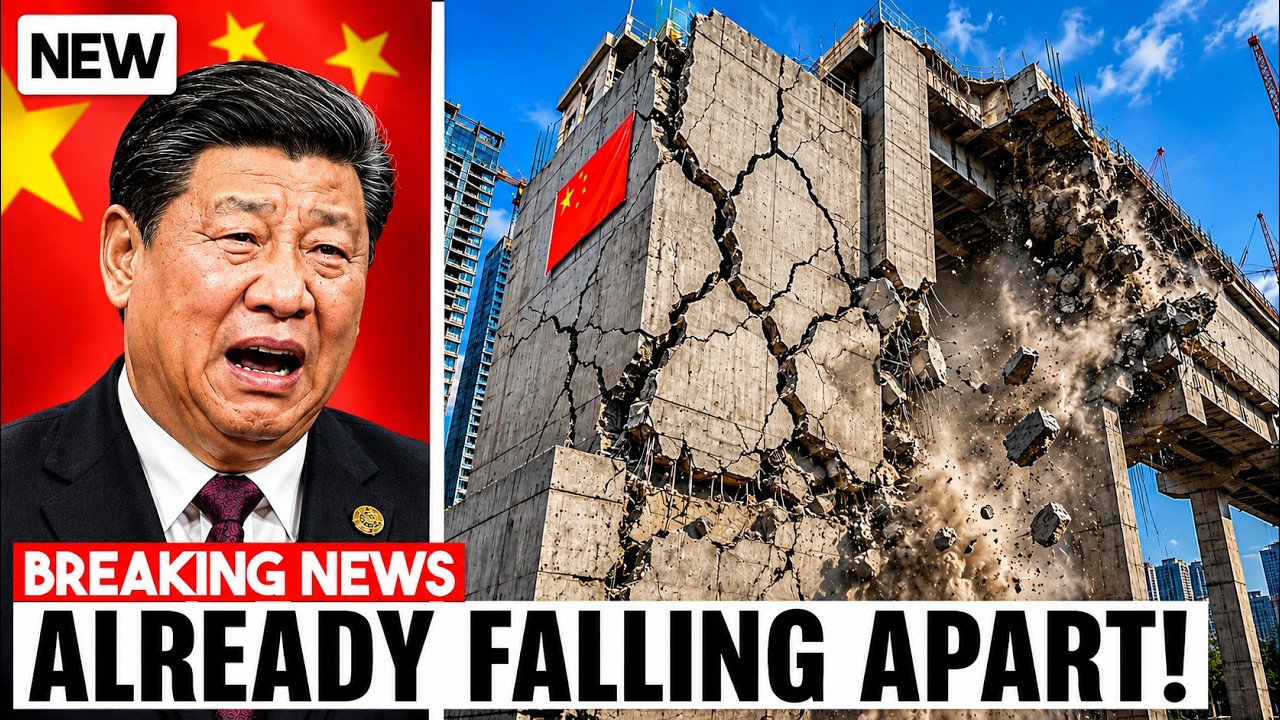
China Printed Entire Buildings Like Lego — And It's Already Falling Apart

China's 3D printed buildings promised revolution but face structural failures due to material shortages and substitutions.

Key Takeaways

  • China's 3D printed and modular buildings represent genuine engineering advances but face real-world material challenges.
  • High-speed construction on a massive scale requires industrialized processes and high-performance concrete chemistry.
  • Material shortages led to compromised concrete quality, causing structural failures despite advanced printing methods.
  • The promise of 3D printed housing to solve global shortages is undermined by supply chain and quality control issues.
  • China's construction boom has environmental and logistical impacts that are critical to understanding the failures.

What the video covers

  • In 2014, a Chinese company claimed to 3D print 10 houses in a day, sparking global excitement about ending housing crises.
  • Chinese engineers successfully built a 57-story tower in under three weeks using advanced concrete recipes designed to last 100 years.
  • China's rapid construction scale consumed cement at unprecedented rates, surpassing US 20th-century consumption in just a few years.
  • To sustain this pace, China industrialized ready-mix concrete production and developed high-performance concrete with supplementary materials.
  • Extensive field studies tested concrete durability in harsh environments, demonstrating serious scientific effort behind the materials.
  • WinSun used a large 3D printer extruding a mix including recycled construction waste, claiming major reductions in materials, time, and labor.
  • Despite technological breakthroughs, material shortages forced substitutions that compromised building integrity.
  • Prefabricated modular construction also enabled rapid assembly of high-rises, contributing to the 'Lego brick' perception.
  • Some printed buildings are now deteriorating from within, not due to printing technology but due to inferior or substituted materials.
  • A major scandal involved demolition orders for dozens of towers on a massive man-made island, highlighting systemic issues in construction supply chains.

Answers

Questions about this video

Did China really 3D print entire buildings like Lego bricks?

Yes, Chinese engineers used large-scale 3D printing and prefabricated modular construction to rapidly assemble buildings, including a 57-story tower in under three weeks.

Why are some of the 3D printed buildings in China falling apart?

The deterioration is mainly due to material shortages forcing substitutions in concrete ingredients, not the printing technology itself.

What makes China's construction scale unique compared to other countries?

China consumed more cement in three years than the US did in the entire 20th century, requiring industrialized concrete production and new chemical formulations to build at such speed.

Full Transcript — Download SRT & Markdown

00:00
Speaker A
In 2014, a Chinese company said it printed 10 houses in a single day. Not built, printed out of a nozzle like toothpaste. The world called it the end of the housing crisis. Ten years later, the printers are gone. The buildings are still standing. And some of them are coming apart from the inside. And the reason has nothing to do with printing.
00:16
Speaker A
still standing. And some of them are coming apart from the inside. And the reason has nothing to do with printing.
00:22
Speaker A
It has to do with what they printed with. Here's what makes this story better than the headline, though.
00:26
Speaker A
Because the part everyone laughs at now, the printed houses, the buildings that went up like Lego bricks, that part was mostly real. Chinese engineers genuinely did stack a 57story tower in under 3 weeks. They genuinely did develop concrete recipes engineered to last a
00:42
Speaker A
Because the part everyone laughs at now, the printed houses, the buildings that went up like Lego bricks, that part was mostly real. Chinese engineers genuinely did stack a 57-story tower in under three weeks. They genuinely did develop concrete recipes engineered to last a hundred years. They genuinely did solve materials problems that Western labs were still writing papers about. The breakthrough wasn't fake. The problem is that the same country then started building faster than the planet could supply the ingredients. And when you run out of the right ingredients, you don't stop, you substitute. Stay with me to the end because you'll also see where this ends up. An island shaped like a flower, dredged out of the ocean floor, bigger than anything Dubai ever attempted, where 60,000 families bought homes, and where three days before New Year's Eve in 2021, the local government gave the developer 10 days to tear 39 finished towers back down. Let's get into it. First, you have to understand the scale because you cannot understand the failure until you understand how enormous the thing that's failing actually is. Between 2011 and 2013, China consumed roughly 6.4 gigatons of cement. For comparison, the United States across the entire 20th century used around 4.4 gigatons. That's the century where America built the interstate highway system, the Hoover Dam, the Empire State Building, Los Angeles, the suburbs, all of it. China used about 50% more than that in three years. When Bill Gates published that statistic, a lot of people assumed it was a typo. Analysts went back and recalculated it independently. It held up. And by more recent figures, China now burns through roughly America's entire 20th century cement consumption every two years. Now, here's the part that actually matters, and it's the part almost nobody thinks about. You cannot pour a continent using 1950s methods.
00:56
Speaker A
out of the right ingredients, you don't stop, you substitute. Stay with me to the end because you'll also see where this ends up. An island shaped like a flower, dredged out of the ocean floor, bigger than anything Dubai ever
01:08
Speaker A
It's not a question of working harder or hiring more people at that volume. The old process physically doesn't function.
01:23
Speaker A
the scale because you cannot understand the failure until you understand how enormous the thing that's failing actually is. Between 2011 and 2013, China consumed roughly 6.4 gatons of cement. For comparison, the United States across the entire 20th century
01:39
Speaker A
So to move that fast, China didn't just build more. It had to reinvent how building works. And it did in three separate ways. The first was industrializing ready-mix concrete at a scale nobody had ever attempted anywhere. Instead of mixing on site, a guy, a barrow, a pile of sand, batching plants went up by the thousands, feeding trucks that fed cranes that fed a construction sector employing tens of millions of people.
01:56
Speaker A
statistic, a lot of people assumed it was a typo. Analysts went back and recalculated it independently. It held up. And by more recent figures, China now burns through roughly America's entire 20th century cement consumption every 2 years. Now, here's the part that
02:12
Speaker A
Concrete stopped being something you made at a building. It became something delivered to a building like water or electricity or gas. Remember that word, delivered, because the moment concrete becomes a delivery, the person pouring it stops being the person who mixed it.
02:18
Speaker A
It's not a question of working harder or hiring more people at that volume. The old process physically doesn't function.
02:25
Speaker A
And that gap is where this entire story lives. The second was chemistry. Ordinary concrete is four things.
02:41
Speaker A
guy, a barrerow, a pile of sand, batching plants went up by the thousands, feeding trucks that fed cranes that fed a construction sector employing tens of millions of people.
02:52
Speaker A
Cement, water, sand, and gravel. High-performance concrete adds what engineers call supplementary cementitious materials. Fly ash, silica fume, ground slag. These aren't cheap filler. They're active ingredients. They react inside the mix and tighten the microscopic pore structure of the hardened concrete until it becomes dramatically denser and far more resistant to water, salt, and chemical attack. Done properly, high-performance concrete can be engineered for service lives of a century or more, even in genuinely brutal environments.
03:06
Speaker A
And that gap is where this entire story lives. The second was chemistry. Ordinary concrete is four things.
03:13
Speaker A
And Chinese researchers went deep on this. There are Chinese field studies that parked concrete samples out in the salt flats of the Qinghai Salt Lake region for eight straight years, testing which exact combinations of fly ash and silica fume survive one of the most corrosive natural environments on Earth. Eight years of watching blocks of concrete sit in salt. That is serious, patient, deeply unglamorous science and it deserves more respect than it usually gets. And then there was the third piece, the one that made the entire world lose its mind. In 2013 and 2014, a company called WinSun, Chinese named Yingchuang, announced they had printed 10 houses in 24 hours. Their machine was reportedly 150 meters long, 10 meters wide, over 6 meters tall, and it extruded a paste the company called Ink, a mix of cement, sand, glass fiber, a proprietary hardening agent, and this is the genuinely clever part, up to half recycled construction waste and mine tailings, rubble from demolished buildings, ground up, and fed back into new ones. They followed it with what they presented as the world's tallest 3D printed building, a multi-story apartment structure at Suzhou Industrial Park and an 11,000 square foot mansion that reportedly cost around $160,000 to produce. And the numbers they published were staggering. 30 to 60% less raw material, 50 to 70% less construction time, 50 to 80% less labor. Sit with what that promises for one second.
03:32
Speaker A
it becomes dramatically denser and far more resistant to water, salt, and chemical attack. Done properly, high performance concrete can be engineered for service lives of a century or more, even in genuinely brutal environments.
03:44
Speaker A
Because if those numbers are real, it doesn't just make houses cheaper, it ends the housing shortage as a category of human problem forever, everywhere, for everyone. And this wasn't the only version of that promise, either. In the same era, a different Chinese firm was doing something arguably more impressive and far less discussed. Building high-rises out of pre-fabricated modules manufactured in a factory and bolted together on site. Broad Group assembled a 30-story tower in Chongqing in roughly 15 days. Then in 2015, a 57-story building, the one nicknamed Mini Sky City in about 19 days of on-site assembly. Time-lapse footage of it went around the world. Floors appearing like someone was pressing fast forward on reality. That is the Lego image, and it's the honest one. Not a nozzle squirting a house out of nothing. A factory producing standardized structural pieces and a crane clicking them together. The Chinese government leaned into it, too, setting national targets to push a large share of new construction toward pre-fabricated methods because WinSun would not let anyone see the machine. Not journalists, not researchers, not competitors. The stated reason was protecting intellectual property, which is a completely normal thing for a company to say and not remotely suspicious on its own. But the consequence is worth stating plainly. The single most important construction claim of the decade was by design unverifiable. And then a professor spoke up. Dr. Behrokh Khoshnevis at the University of Southern California had spent years developing a concrete 3D printing method called contour crafting. Works substantial enough that it earned a major award from NASA. He watched WinSun's footage and he said the technique looked strikingly like his own and that the similarity was no accident. Now, I want to be fair here because this distinction gets flattened constantly. Factory printed structural components are a real advance. That's genuine manufacturing progress and it deserves credit. But it is not the thing the world thought it was watching. The world thought it was watching a machine conjure a finished house. What it was actually watching was a very sophisticated parts factory. And the gap between those two descriptions is the entire theme of this video. Hold on to it because it's about to repeat at a scale that isn't about one company at all. Because here's what happened next. The revolution didn't scale. Ten years on, 3D printed concrete has not replaced conventional construction anywhere on Earth. It exists as demonstration projects, pavilions, footbridges, showpieces. The technology was real. The transformation wasn't. But honestly, the printers were never the problem. The printers were a sideshow. The shiny thing.
04:00
Speaker A
corrosive natural environments on Earth. Eight years of watching blocks of concrete sit in salt. That is serious, patient, deeply unglamorous science and it deserves more respect than it usually gets. And then there was the third piece, the one that made the entire
04:15
Speaker A
world lose its mind. In 2013 and 2014, a company called Windson, Chinese named Ying Chuang, announced they had printed 10 houses in 24 hours. Their machine was reportedly 150 m long, 10 m wide, over 6 m tall, and it extruded a paste the
04:31
Speaker A
company called Ink, a mix of cement, sand, glass fiber, a proprietary hardening agent, and this is the genuinely clever part, up to half recycled construction waste and mine tailings, rubble from demolished buildings, ground up, and fed back into
04:46
Speaker A
new ones. They followed it with what they presented as the world's tallest 3D printed building, a multi-story apartment structure at Suju Industrial Park and an 11,000 square foot mansion that reportedly cost around $160,000 to produce. And the numbers they published
05:01
Speaker A
were staggering. 30 to 60% less raw material, 50 to 70% less construction time, 50 to 80% less labor. Sit with what that promises for one second.
05:12
Speaker A
Because if those numbers are real, it doesn't just make houses cheaper, it ends the housing shortage as a category of human problem forever, everywhere, for everyone. And this wasn't the only version of that promise, either. In the same era, a different Chinese firm was
05:28
Speaker A
doing something arguably more impressive and far less discussed. Building highrises out of pre-fabricated modules manufactured in a factory and bolted together on site. Broad group assembled a 30-story tower in Chong Sha in roughly 15 days. Then in 2015, a 57story
05:46
Speaker A
building, the one nicknamed mini sky city in about 19 days of on-site assembly. Time-lapse footage of it went around the world. Floors appearing like someone was pressing fast forward on reality. That is the Lego image, and it's the honest one. Not a nozzle
06:01
Speaker A
squirting a house out of nothing. A factory producing standardized structural pieces and a crane clicking them together. The Chinese government leaned into it, too, setting national targets to push a large share of new construction toward pre-fabricated methods because Winson would not let
06:18
Speaker A
anyone see the machine. Not journalists, not researchers, not competitors. The stated reason was protecting intellectual property, which is a completely normal thing for a company to say and not remotely suspicious on its own. But the consequence is worth
06:33
Speaker A
stating plainly. The single most important construction claim of the decade was by design unverifiable. And then a professor spoke up. Dr. Baro Koshnavas at the University of Southern California had spent years developing a concrete 3D printing method called
06:49
Speaker A
contour crafting. works substantial enough that it earned a major award from NASA. He watched Windon's footage and he said the technique looked strikingly like his own and that the similarity was no accident. Now, I want to be fair here
07:03
Speaker A
because this distinction gets flattened constantly. Factory printed structural components are a real advance. That's genuine manufacturing progress and it deserves credit. But it is not the thing the world thought it was watching. The world thought it was watching a machine
07:18
Speaker A
conjure a finished house. what it was actually watching was a very sophisticated parts factory. And the gap between those two descriptions is the entire theme of this video. Hold on to it because it's about to repeat at a
07:30
Speaker A
scale that isn't about one company at all. Because here's what happened next. The revolution didn't scale. 10 years on, 3D printed concrete has not replaced conventional construction anywhere on Earth. It exists as demonstration projects, pavilions, foot bridges, showpieces. The technology was real. The
07:50
Speaker A
transformation wasn't. But honestly, the printers were never the problem. The printers were a sideshow. The shiny thing that pulled every camera in the world toward a machine while the actual disaster was assembling itself somewhere much more boring. In the ingredient
08:05
Speaker A
nobody thinks about when you picture concrete, you picture cement. Gray powder, dusty bags, mixers turning. But cement is only about 10 to 15% of a concrete mix. The overwhelming majority of what you're looking at when you look at a concrete wall, roughly 2/3 to 3/4
08:22
Speaker A
of it by volume, is aggregate. Sand and gravel. Cement is the glue. Sand is the building. And here's the thing that surprises almost everyone. Not all sand works. Desert sand is useless for structural concrete because wind tumbled grains get too round and too smooth to
08:40
Speaker A
lock together. That's why countries surrounded by desert have imported sand. What concrete needs is angular sharpedged sand and the best source is river sand. So, let me explain exactly what chloride does inside reinforced concrete because this single mechanism
08:56
Speaker A
explains every remaining thing in this video. And once you understand it, you'll never look at a stained concrete wall the same way again. Normal concrete is highly alkaline. That alkalinity forms an invisible chemical film on the surface of the steel rebar buried inside
09:11
Speaker A
it. Engineers call it a passive layer. And that film protects the steel from ever rusting. That is the entire reason reinforced concrete works at all. Steel and concrete shouldn't be a good marriage. Chemistry is what holds them together. Chloride ions destroy that
09:27
Speaker A
film. They migrate through the concrete's microscopic pore structure, reach the rebar, and strip the protection away. And once the steel starts rusting, you enter a feedback loop that cannot be stopped. Because rust occupies significantly more volume than the steel it came from. So the
09:43
Speaker A
rebar swells and it's swelling inside a rigid material with nowhere to go. That pressure cracks the concrete outward from within. Those cracks let in more water, more oxygen, more salt which accelerates the corrosion which widens the cracks which lets in more. The
10:00
Speaker A
surface starts flaking away in sheets. Engineers call it spalling. Eventually, you get rust orange steel exposed to open air in a building that was signed off as sound. And here's the line I keep coming back to. The building is not
10:13
Speaker A
being damaged by its environment. The building is tearing itself apart using its own skeleton. Which is exactly why unprocessed sea sand is not legal to use in structural concrete. It can be used, but only after it's washed thoroughly
10:27
Speaker A
with fresh water until the chloride content drops below strict limits. that washing costs money. And river sand, the clean alternative, has historically run around twice the price of sea sand. And in China, it has been in genuine short
10:40
Speaker A
supply. So, put yourself in a contractor's shoes for a second because this is the part people skip when they get angry about it. You are being squeezed on schedule and on margin at the same time. And there is a material
10:52
Speaker A
sitting on the beach that is free, that looks completely identical to the legal version the second it's poured, that passes visually, that hardens normally, that holds up a building on day one exactly the same way good concrete does,
11:05
Speaker A
and that starts dying about a decade later when you are long gone. Now, hold that mechanism in your head because in March of 2013, inspectors in one Chinese city went looking for it. And what they found stopped construction on what was
11:19
Speaker A
going to be the tallest building in the country. Then a Chinese television investigation aired a report on seaand in the construction supply chain and the city's housing and construction bureau moved. The results were not subtle.
11:32
Speaker A
Inspectors identified 31 readymixed concrete production companies in violation of quality regulations. Eight of them were ordered to suspend business for a full year. At least 15 buildings under construction in the city were flagged as having received the substandard concrete. And then they
11:48
Speaker A
found something at the sand pits that tells you everything about how casually this was being handled. Two large operations were rinsing sand using seawater instead of freshwater. Then came the name that made it international news. Construction was halted on the
12:02
Speaker A
Pingan Finance Center, a 660 me super tall that when finished would be the tallest building in China and among the tallest on the planet. At the time, it was only about 80 m out of the ground, which given the mechanism we just walked
12:17
Speaker A
through, was genuinely fortunate timing. The responses were measured. China State Construction Engineering Corporation, the contractor, stated that materials used in its projects met quality standards. The building's owner, the insurance group, Pingan, ordered its own investigation into where the concrete
12:34
Speaker A
had come from. And I want to be careful and completely fair here because this matters and because the internet is very bad at it. The tower was tested. The project resumed. The Pingan Finance Center was completed and opened in 2017.
12:47
Speaker A
It stands in Shenzen today, fully occupied, one of the most recognizable buildings in Asia. Nobody has demonstrated that it is unsafe. If you're watching this thinking the punch line is that a famous skyscraper is secretly rotting, it isn't. That's not
13:00
Speaker A
the story. A building poured with contaminated sand does not fail an inspection. It does not look wrong. It does not sound wrong. It passes. It gets certified. Families move in and hang pictures on the walls and the clock
13:14
Speaker A
quietly starts running underneath the plaster. If you're finding this as unsettling as I did while researching it, hit the like button. It genuinely helps this channel more than you'd think because Shenzen was a scandal and scandals get caught. The next one wasn't
13:28
Speaker A
a scandal at all. It was a math problem and the math didn't work at a national scale. For this one, we have to go back to that second piece of the breakthrough. High performance concrete.
13:37
Speaker A
Remember fly ash? It's the fine powder captured from the chimney stacks of coal fired power plants. And it's chemically similar to volcanic ash mixed into concrete in the right proportion.
13:47
Speaker A
Highquality fly ash doesn't just sit there. It reacts. It densifies the pore structure and it can push a concrete track bed toward a design service life of around a hundred years. And that wasn't a marketing number. That was the
13:59
Speaker A
engineering specification for China's high-speed rail network. The concrete bases the trains would run on were specified to last a century. Now, here's the arithmetic, and it is the single most quietly alarming thing in this entire video. In 2008, the first survey
14:15
Speaker A
and design institute of China railways ran a study on supply. Their finding the coal fired power plants on the Chinese mainland could produce enough highquality fly ash for roughly 100 km of high-speed railway track per year.
14:30
Speaker A
100 km. In the years that followed, China was laying more than 1,500 km of track annually. In 2011 alone with the Beijing Shanghai line completing the figure ran toward 4 and a half thousand km. That is not a shortfall. That is a
14:47
Speaker A
supply gap of 15 to 45 times. And the South China Morning Post reported an even starker version of it. To build the 1318 km Beijing Shanghai line to specification, the required volume of highquality fly ash would have exceeded
15:02
Speaker A
the output of every coal fired power plant on the planet. Not in China, on Earth. Which leaves exactly one question, and it's the only one that matters. What went into the track beds instead? Professor Wong Lan, lead scientist at the Cement and New Building
15:18
Speaker A
Materials Research Institute under the China Building Materials Academy, was blunt about it. Given the quality control environment on the mainland, he said the use of lowquality fly ash and other low-grade materials in high-speed rail construction was almost inevitable.
15:33
Speaker A
Wang's summary was that without an adequate reaction, high-speed rail wasn't sitting on a concrete foundation at all. It was sitting on sand. His estimate was that the design life would be cut roughly in half from a 100red years down to about 50. Zuing, a
15:50
Speaker A
researcher at Southwest Jaoong University's School of Civil Engineering, who had run fly ash experiments at a Beijing Shanghai construction site, was reportedly more pessimistic. Still, the surrounding context is its own story. Lu Ji Jun, the railways minister who championed the
16:06
Speaker A
entire high-speed network, was removed from his post in 2011 amid a corruption investigation. Joe Yimn, a retired deputy chief engineer within the ministry, went public accusing leadership of covering up operational incidents, and overstating the technical capabilities of Chinese-built trains.
16:24
Speaker A
Chinese media carried allegations about cheap chemical hardening agents in track bed concrete. An internal ministry report cited by the 21st Century Business Herald logged 168 glitches across the network in a single month in 2011. Now, the honest part, and I'm not
16:40
Speaker A
skipping it, because a story this good doesn't need exaggeration to work. China's highspeed rail network today is the largest in the world by an enormous margin. It moves billions of passenger trips. It has an operational safety record that most transport systems
16:56
Speaker A
anywhere on Earth would envy. Nothing in this section is a claim that those trains are dangerous to ride tomorrow morning. And that's precisely what makes it eerie because chloride corrosion and disrupted hydration are not failure modes that announce themselves. They
17:10
Speaker A
don't show up as a dramatic collapse. They show up in year 30 or year 40 as maintenance costs climbing faster than anyone budgeted for. As sections needing replacement decades ahead of schedule.
17:22
Speaker A
as a network engineered for a hundred years, quietly becoming a network that needs rebuilding at 50. Off the northwestern coast of Hainan, the tropical island province people call China's Hawaii, there is a shape in the ocean you can see clearly from orbit.
17:36
Speaker A
It's a flower, a blossom roughly 8 square km across, made of five artificial islands. It is larger than Dubai's Palm Jumra. It is one of the largest man-made island projects ever attempted by anybody. It's called Ocean Flower Island and it was built by
17:52
Speaker A
Everrand at the time China's top selling property developer. The reported spend was around 81 billion yuan, roughly $13 billion. The plan included an international convention center, an exhibition center, hotels, a film and television production base, a fitness complex, an opera house, a museum, a
18:12
Speaker A
water park, and more than 60,000 homes. And here's the detail that turns this from a real estate story into the perfect ending for this particular video. You do not build an island out of nothing. You build it by dredging
18:26
Speaker A
enormous volumes of material off the seabed and piling it up until it breaks the surface. The island itself is made of sea sand. Now, that alone is not a scandal, and I want to be precise about it. Land reclamation using marine
18:40
Speaker A
sediment is standard practice worldwide from Singapore to the Netherlands. And it is an entirely different engineering question from what goes into structural concrete. Those are two separate things and it would be dishonest to blur them together for drama. In 2021, in a poll
18:55
Speaker A
of China's ugliest buildings, Ocean Flower Island took the top spot. And the reasons cited weren't purely aesthetic.
19:03
Speaker A
Reckless capital investment, destruction of the marine ecosystem, chaotic and bizarre forms, and the project as a textbook example of ostentatious tourism development. Then came December 30th, 2021. Authorities in Danjou City revoked the building permit for a section of the
19:20
Speaker A
project on the grounds that it had been obtained illegally. And they issued an order. 39 residential buildings covering roughly 434,941 m and amounting to around 3,900 homes were to be demolished. Within 10 days, Everrand's shares were suspended from
19:37
Speaker A
trading in Hong Kong. The company, by then carrying liabilities in excess of $300 billion and already in default to international bond holders, said it would handle the matter in accordance with the order, while stressing that the ruling affected only those 39 buildings
19:52
Speaker A
and not the homes already delivered to more than 60,000 buyers. The towers weren't torn down in 10 days. Workers wrapped them in blue metal sheeting, and they stood there sealed off in limbo. By April 2022, the demolition order had
20:07
Speaker A
been converted into confiscation instead. The human wreckage kept spreading outward from there. The former Communist Party secretary of Danjo is serving a life sentence for bribery. Shu Jayin, the founder of Everrand, once the richest man in China, has since faced
20:22
Speaker A
prosecution over financial fraud and disorderly financial management. So, step back now because those three stories are actually one story told at three different speeds. Level one is the failure that got caught. Shenzen 2013.
20:37
Speaker A
31 companies in violation. Eight shut down. A super tall halted mid construction. Tested, cleared, finished.
20:44
Speaker A
The system worked. Proof that when scrutiny actually arrives, the problem is fixable. Level two is the failure nobody can see yet. A rail network engineered for a hundred years built during a period when the required materials mathematically could not exist
20:58
Speaker A
in sufficient quantity anywhere on the planet with the country's own senior material scientists saying on the record that substandard substitution was almost inevitable. A verdict that won't arrive for another 30 years. And level three is the failure that arrived early. Ocean
21:14
Speaker A
Flower Island where the debt collapsed, the permits were revoked, the executives were prosecuted, and the concrete reportedly started coming apart while the buyers were still living inside it.
21:24
Speaker A
All three come from the same pressure. More than 20 million people moving into Chinese cities every year, an urbanization faster than any country has ever attempted in human history. A growth model where construction itself was the economic engine, and local
21:39
Speaker A
governments funded themselves through land. Contractors squeezed on schedule and margin at the same time in a market where river sand cost double and inspection was uneven. So were the engineers right to call it a disaster?
21:51
Speaker A
Some of them said yes publicly in their own words using their own names while the concrete was still being poured.
21:58
Speaker A
That took real courage and it should be said out loud. The disaster is what happens when a real breakthrough meets a deadline it can't survive. The printers were never the story. The Lego towers were never the story. The story is that
22:11
Speaker A
when you build faster than the world can supply you, something always gets swapped in and the swap is invisible on the day it happens and only speaks up decades later. And let me know in the comments if you found out the building
22:24
Speaker A
you live in was poured during a boom with nobody really checking. Would you actually want to know, or is that one of those things you'd rather never find out? Because honestly, after everything I read making this video, I'm still not
22:36
Speaker A
sure which answer I'd
Topics:China3D printed buildingsconstruction technologyconcrete chemistryhousing crisisprefabricated constructionbuilding materialsWinSunindustrialized concretestructural failure

Get More with the SozAI App

Transcribe recordings, audio files, and YouTube videos — with AI summaries, speaker detection, and unlimited transcriptions.

Or transcribe another YouTube video here →