B Vitamins | B1, B2, B3, B5, B6, B7, B9, B12 — Transcript

Comprehensive overview of B vitamins, their active forms, and roles in metabolism by Dr. Mike.

Key Takeaways

  • B vitamins are essential micronutrients that must be obtained through diet as the body cannot synthesize them.
  • Each B vitamin has an active coenzyme form critical for specific metabolic pathways.
  • B vitamins play vital roles in carbohydrate, protein, and fat metabolism, contributing to energy production.
  • Folate is crucial for DNA and RNA synthesis, highlighting its importance during pregnancy.
  • Intrinsic factor is necessary for B12 absorption, and stomach issues can impair this process.

Summary

  • Introduction to B vitamins and their importance in metabolic processes.
  • Explanation of vitamins as essential micronutrients that must be obtained from diet.
  • Distinction between water-soluble (B vitamins and vitamin C) and fat-soluble vitamins.
  • Listing and naming of B vitamins: B1 (thiamine), B2 (riboflavin), B3 (niacin), B5 (pantothenic acid), B6 (pyridoxine), B7 (biotin), B9 (folate), B12 (cobalamin).
  • Discussion on why some B vitamins (B4, B8, B10, B11) were removed from the group.
  • Description of active coenzyme forms of B vitamins and their biochemical roles (e.g., TPP for B1, FAD for B2, NAD for B3).
  • Detailed explanation of how B vitamins participate in carbohydrate, protein, and fat metabolism.
  • Role of B vitamins in the Krebs cycle and electron transport chain for ATP production.
  • Importance of folate for nucleotide synthesis and DNA/RNA production, especially in pregnancy.
  • Explanation of intrinsic factor's role in B12 absorption and implications of stomach damage.

Full Transcript — Download SRT & Markdown

00:05
Speaker A
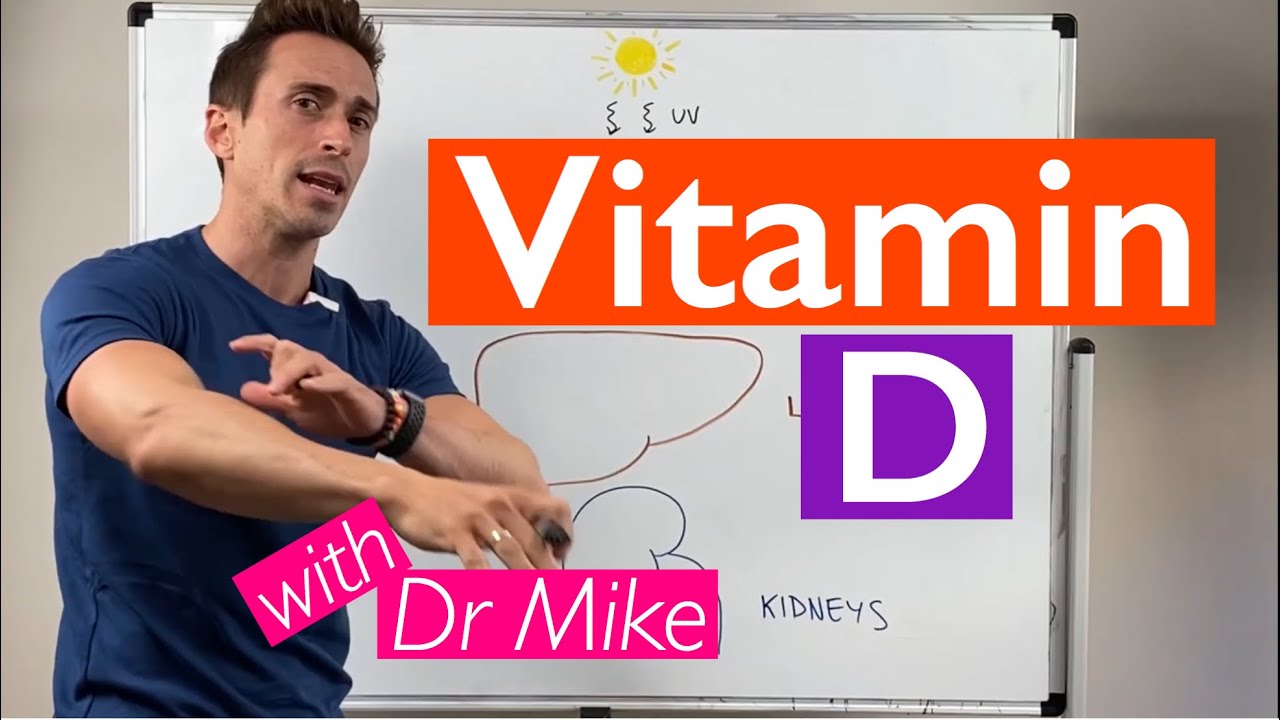
Hi everybody, Dr. Mike here. In this video, I'm going to take a look at the B vitamins. I'm going to show you how these B vitamins fit into various metabolic processes of the body. Now, the reason why I'm doing this video is because I think
00:18
Speaker A
lecturers and professors do a pretty poor job of actually explaining how these vitamins fit into various biochemical processes they like to say vague comments like it's important for metabolism carbohydrate metabolism it's important for the nervous system and skin integrity and it doesn't really
00:36
Speaker A
lecturers and professors do a pretty poor job of actually explaining how these vitamins fit into various biochemical processes. They like to say vague comments like, "It's important for metabolism, carbohydrate metabolism. It's important for the nervous system and skin integrity," and it doesn't really
00:50
Speaker A
very small doses and we must get them from our diet and the reason why and this is the Clincher when it comes to the definition of vitamins is because we cannot produce them out celles now there's water soluble vitamins which are
01:03
Speaker A
mean anything without showing you exactly what they do and how they fit in. Now, I think the best place to begin is a definition of vitamins. Vitamins are essential micronutrients, so we need them for our survival, and we need them in
01:16
Speaker A
can store them which means you can OD or overdose and get quite toxic doses of these if you ingest too many water soluble means it's readily dissolvable in our blood and therefore our urine and therefore we pee out any excess so it's
01:31
Speaker A
very small doses, and we must get them from our diet. And the reason why, and this is the clincher when it comes to the definition of vitamins, is because we cannot produce them ourselves. Now, there's water-soluble vitamins, which are
01:44
Speaker A
what happened to eight and what happened to 10 and 11 so there were those B vitamins but they got removed because they no longer fit within the definition of a B vitamin and the main definition being that that we can't synthesize it
01:57
Speaker A
all the B vitamins and vitamin C, and then there's the fat-soluble vitamins, which are vitamins D, E, K, and A. Now, the fat-soluble vitamins can be stored in fat in the body, so if we have excess of them, we
02:11
Speaker A
so B1 is also known as thomine B2 is known as ribo flaven B3 is known as nin B5 is known as pantothenic acid B6 is known as PID doxine B7 is known as biotin B9 is folate and b12 is cobalamin
03:03
Speaker A
can store them, which means you can OD or overdose and get quite toxic doses of these if you ingest too many. Water-soluble means it's readily dissolvable in our blood and therefore our urine, and therefore we pee out any excess, so it's
03:18
Speaker A
carbohydrate metabolism protein metabolism and fat metabolism is true it's very true but how do they fit in now the thing is in order for them to fit in they don't necessarily work in this form so they need an active form
03:31
Speaker A
more difficult to overdose on the water-soluble vitamins. Now, you can see when it comes to the B vitamins, we've got B1, 2, 3, 5, 6, 7, 9, and 12, and you're probably thinking, "Well, what happened to four and
03:54
Speaker A
Google thyine pyrophosphate also written as TP P riboflavin produces the flavenoids and the flavonoids include flaven adenine dinucleotide which is often written as f a d it can also produce flavor mono nucleotide which is known as fmn so that's the riboflavin active forms
04:33
Speaker A
what happened to eight and what happened to 10 and 11?" So, there were those B vitamins, but they got removed because they no longer fit within the definition of a B vitamin, and the main definition being that we can't synthesize it
05:02
Speaker A
protons negative things and positive things when they're an equal number they balance each other out and there's no charge but if something's lost an electron L EO Leo lost an electron is oxidation so it's oxidized so NAD is
05:16
Speaker A
ourselves. And we found that most of those that fit within B4, for example, and B10, we could synthesize ourselves, so they were removed. So these are our water-soluble B vitamins. What we need to do now is talk about their names.
05:49
Speaker A
works as biotin folate works as tetrahydro folate Tetra Hydro folate known as th HF and celin works as celin the reason why I'm telling you this is because the way they fit in to these biochemical processes is as these forms and if you
06:12
Speaker A
So B1 is also known as thiamine. B2 is known as riboflavin. B3 is known as niacin. B5 is known as pantothenic acid. B6 is known as pyridoxine. B7 is known as biotin. B9 is folate, and B12 is cobalamin.
06:25
Speaker A
to show you what I've written up here so I've basically written up firstly a summarized form of glycolysis which is going from glucose to pyrovate that's glycolysis and going from pyruvate to acetal COA and then through this very
06:45
Speaker A
So these are our B vitamins. Now, the thing is that when we need to talk about what they do, particularly in metabolism, so that vague comment that your lecturer makes or professor makes that these B vitamins are all important for
07:02
Speaker A
that and they travel to the electron transport chain that ultimately produce a bunch of ATP all right so now that we've got this how do these fit in all right B1 thiamine thyine pyrophosphate it is an important coenzyme which allows
07:17
Speaker A
carbohydrate metabolism, protein metabolism, and fat metabolism is true. It's very true, but how do they fit in? Now, the thing is, in order for them to fit in, they don't necessarily work in this form, so they need an active form
07:34
Speaker A
another color let's draw it in green we've got B1 working at this point in the form of t p p now in addition to that B1 TPP also works at this point here now I haven't spoken about what is going on
07:53
Speaker A
that they work in. So let's have a look at what the active forms of each are. So thiamine works as thiamine pyrophosphate, thiamine pyrophosphate. So if you want to know more about how B1 works within the body,
08:08
Speaker A
this well this is how you should remember it you can feed in amino acids into Alpha bate that's important amino acids and you can feed fatty acids into propinal COA fatty acids now so what's this telling you it's telling you that you can
08:35
Speaker A
Google thiamine pyrophosphate, also written as TPP. Riboflavin produces the flavonoids, and the flavonoids include flavin adenine dinucleotide, which is often written as FAD. It can also produce flavin mononucleotide, which is known as FMN. So those are the riboflavin active forms.
08:55
Speaker A
so we got this process now in order for alphabate to turn into propine or COA we we also need B1 TPP B1 fits into Alpha ketoglutarate going into sual COA and so you can see that B1 thyine in
09:21
Speaker A
The niacin active forms produce the nicotinamides, and the nicotinamides include nicotinamide adenine dinucleotide, which is NAD, and in actual fact, it works almost actively in its oxidized form. Now, remember oxidized means it's lost an electron. Usually, things will have electrons and
09:36
Speaker A
sec maybe we'll get to that when we talk about penic acid next is riboflavin in the form of flaven Adine dinucleotide fad don't worry about fmn at the moment let's just focus on fad this plays a really important role going from
09:49
Speaker A
protons, negative things and positive things. When they're an equal number, they balance each other out and there's no charge, but if something's lost an electron, LEO, Leo lost an electron, is oxidation, so it's oxidized. So NAD is
10:16
Speaker A
here quickly is we have fad what fad does is it steals two hydrogen now think about it two hydrogen if you if you got an hydrogen it's got an electron it's got a proton so if it steals two hydrogen it's
10:37
Speaker A
functional in its oxidized form because it's lost an electron. Pantothenic acid works basically as coenzyme A. You may have heard that before, often written as CoA. Pyridoxal phosphate works as pyridoxal phosphate, also known as PLP. Biotin
10:59
Speaker A
when we talk about nicotinamide adid dinucleotide so that's where it's working here stealing two hydrogen from succinate to form fumerate now let's talk about NY B3 nicotinamide Adon dinucleotide in its oxidized form NAD plus it's working importantly here
11:17
Speaker A
works as biotin. Folate works as tetrahydrofolate, tetrahydrofolate known as THF, and cobalamin works as cobalamin. The reason why I'm telling you this is because the way they fit into these biochemical processes is as these forms, and if you
11:44
Speaker A
d h but what it releases is a spare hydrogen let's Draw It Up N a D+ takes two electrons and two hydrogens but one of those hydrogens it spits off so it throws away a hydrogen so what it's left
12:06
Speaker A
want to know more about them, Googling B1 and thiamine, for example, won't give you much info, but these will give you heaps of information. All right, now let's talk about how they fit in. Let's go one by one, but before we begin with that, I need
12:23
Speaker A
produce fadh2 and nadh so we're producing nadh here we're producing nadh here so again that's B B3 B3 we're doing it here as well n+ n a d h B3 and we're producing it here as well nad+ nadh B3 and we're producing it here as
13:12
Speaker A
to show you what I've written up here. So I've basically written up, firstly, a summarized form of glycolysis, which is going from glucose to pyruvate. That's glycolysis, and going from pyruvate to acetyl CoA, and then through this very
13:30
Speaker A
strict here three just in the KB cycle alone and one fadh2 why is this important now I need to show you the importance here no one really explains everyone says oh it does this but how is this important so both fadh2 and the
13:44
Speaker A
important cycle known as the Krebs cycle, also known as the tricarboxylic acid cycle, also known as the citric acid cycle. This process produces a whole bunch of what we call NADH, maybe something to do with that, and FADH2, maybe something to do with
14:02
Speaker A
proteins associated with the electron transport chain right all these various proteins don't worry about the specifics nadh so we got fad H2 fad H2 and we've got nad+ which is turned into nadh what they do is they release their VAR elect
14:31
Speaker A
that, and they travel to the electron transport chain that ultimately produces a bunch of ATP. All right, so now that we've got this, how do these fit in? All right, B1 thiamine, thiamine pyrophosphate, it is an important coenzyme which allows
14:55
Speaker A
them across it's playing hot potato with the electrons now as it plays hot potato with the electrons it then creates this ability to take the hydrogens and pump them across and we pump a whole bunch of hydrogens across the membrane now in
15:21
Speaker A
for, to begin with, pyruvate to turn to acetyl CoA, a very important process. This requires an enzyme called pyruvate dehydrogenase, and what TPP does, it helps play around with carbon dioxides. So what we have is, let's draw it in
15:38
Speaker A
hydrogen then move through I'll continue this here this particular Channel and diffuse down it allows for energy right energy is being used here well energy in actual fact is being produced because the energy gradient of going from high hydrogen
16:03
Speaker A
another color, let's draw it in green. We've got B1 working at this point in the form of TPP. Now, in addition to that, B1 TPP also works at this point here. Now, I haven't spoken about what is going on
16:22
Speaker A
of fadh2 and nadh which is produced by this process and importantly because of B2 and B3 is we produce a butt ton of ATP 32 to 36 ATP molecules for every glucose molecule all right so that's super important so
16:39
Speaker A
with this little side group that's feeding into the Krebs cycle. Alpha-ketobutyrate turns to propionyl CoA, which turns to methylmalonyl CoA, which then turns to succinyl CoA, which can then work in the Krebs cycle. But what is
16:53
Speaker A
has co-enzyme a or COA on the back that's because of penic acid in the form of of cola so B5 and I got to choose a color now what color should I use I'll do blue so B5 is going to be working
17:08
Speaker A
this? Well, this is how you should remember it. You can feed in amino acids into alpha-ketobutyrate, that's important, amino acids, and you can feed fatty acids into propionyl CoA, fatty acids. Now, so what's this telling you? It's telling you that you can
17:26
Speaker A
COA B5 but also Al penic acid in the form of COA is important to turn fatty acids into propinal COA so here as well very important all right so as you can see any place in which we've got
17:43
Speaker A
actually bring in non-carbohydrate-based sources into the Krebs cycle. So here's the carbohydrate-based source, glucose, Krebs cycle. Non-carbohydrate-based sources are amino acids and fatty acids into the Krebs cycle to again produce NADH and FADH2, which again helps us produce ATP.
18:00
Speaker A
important role when it comes to amino acid production or at least as an amino transferase so it transfers Amino groups from amino acids so let me show you what I mean here I'm going to do this in Pink So alphac glutarate
18:21
Speaker A
So we got this process. Now, in order for alpha-ketoglutarate to turn into succinyl CoA, we also need B1 TPP. B1 fits into alpha-ketoglutarate going into succinyl CoA, and so you can see that B1 thiamine in
18:41
Speaker A
this because it's an amino acid nh3+ it takes that aing group gives it to PLP and what it can do is it can produce from alpha glutarate something really important called glutamate and as a byproduct in this process it
19:03
Speaker A
the form of TPP is important for pyruvate to acetyl CoA, alpha-ketoglutarate to succinyl CoA, and for keto alpha-ketoglutarate into propionyl CoA. Now, all of them have this CoA snapped onto them. We'll get to that in a
19:24
Speaker A
glutamate into something called Gaba Gaba is an inhibitory neurotransmitter again PLP plays this role B6 can turn glutamate into Gaba Gaba inhibitory transmitter I want you to think about this you've got excitatory neurotransmitters and inhibitory neurotransmitters so if
19:46
Speaker A
sec, maybe we'll get to that when we talk about pantothenic acid. Next is riboflavin in the form of flavin adenine dinucleotide, FAD. Don't worry about FMN at the moment, let's just focus on FAD. This plays a really important role going from
20:03
Speaker A
that's where B6 fits in by glutamate Gaba it also can actually turn uh uh fxy tryptophan into serotonin and histadine into histamine really important what are we up to now we're up to B7 biotin okay so where does biotin fit in this process
20:23
Speaker A
succinate to fumarate. So let's do this in blue. We've got FAD here, and what it does is FAD comes along and produces FADH2. So this is again B2, and why is this important? What's it doing? Well, simply put, I'll draw it up
20:47
Speaker A
rate limiting step here is enough biotin so if somebody is deficient in biotin what do they accumulate they accumulate fatty acids in the blood and amino acids in the blood they're both acids they're both organic acids so they result in
21:02
Speaker A
here quickly, is we have FAD. What FAD does is it steals two hydrogens. Now think about it, two hydrogens. If you got a hydrogen, it's got an electron, it's got a proton, so if it steals two hydrogens, it's
21:19
Speaker A
nervous system disorders and again systemwide disorders skin so forth okay that's B7 B9 and B12 we should talk about together because they're really important in the process of producing DNA synthesizing DNA so let me talk about something which I haven't spoken
21:40
Speaker A
actually stealing two electrons and two protons. Now, if it does this, what do you think it produces? It produces FADH2, two hydrogens, because at the end of the day, it's stealing two hydrogens. Now, why is this important? I'll get to that in a
22:01
Speaker A
pathway this pathway where we turn glucose 6 phosphate into ribos 5 phosphate is known as the pentos phosphate pathway pentos phosphate pathway and it's a pathway that's important to produce nucleotides which we know is important for DNA synthesis
22:29
Speaker A
when we talk about nicotinamide adenine dinucleotide. So that's where it's working here, stealing two hydrogens from succinate to form fumarate. Now, let's talk about niacin, B3, nicotinamide adenine dinucleotide in its oxidized form, NAD plus. It's working importantly here,
22:50
Speaker A
called transex all right so transex is playing a role or is it trans kealas sorry trans kealas transas is somewhere else so ketas and TPP allow for glucose 6 phosphate to start moving down the pentos phosphate pathway now what ribos
23:06
Speaker A
pyruvate to acetyl CoA. So we've got B3 working here, and what's it doing? NAD, let's do another color so you can see a bit better. NAD plus, NAD plus steals, just like FAD does, two hydrogens and forms NADH.
23:36
Speaker A
adenine and guanine and P pyrimidines are going to be thyine cytosine and uracil and for those of you who know your biochemistry your nucleotides you've got A's C's G's and T's for DNA and you've got A's whoops A's C's G's and U's for RNA that's the
24:04
Speaker A
Adine guine thyine cytosine and uracil units all right they can obviously be turned into adenosine guanosine and so forth all right so this phosphate pentos phosphate pathway produces the nucleotides which are important in DNA and RNA synthesis what
24:21
Speaker A
were we talking about we were talking about B9 folate folate in the form of tetrahydrofolate thf this will only occur if thf is present so we need thf here which again is B9 so what does that tell you it tells
24:42
Speaker A
you that folate is important for nucleotide synthesis and therefore DNA and RNA synthesis this is why pregnant women need to supplement with folate because they've got a child which is growing and developing and the cell cycle is occurring and new DNA and RNA
24:59
Speaker A
are synthesizing and that's why we need enough folate because it's important for this process now we need to bring in Calamine B12 because B9 and b12 work together and this is the reason why tetrahydro folate its job is to trans
25:14
Speaker A
transfer single carbon groups right so anything with one carbon and something that it really likes to transfer that has one carbon is that of methyl so methyl is a single carbon with three hydrogen all right it really likes to
25:30
Speaker A
transfer that but here's the thing when thf is floating R in the cell it will get methylated by amino acids like histadine and Serene for example so I'm running out of room here but let me see if I can fix it up I'm going to have
25:47
Speaker A
to do it here so we got thf and histadine and Serene for example can come along and give it a methyl group ch3 if it does this it's not functioning it's not going to do anything it can't participate in nucleotide synthesis DNA
26:08
Speaker A
synthesis so it's just sitting there it becomes a sync for thf methyl tetrahydrofolate is what it's called so we need B12 B12 is its best friend B12 says don't worry thf give me that methyl group I'll take it off your hands and so
26:24
Speaker A
B12 comes along B12 calaman comes along and steals that methyl group off it it says I will carry this burden for you and that's important because it now means that you've got fre thf dropping pens everywhere you got fre thf that can
26:47
Speaker A
now participate in DNA synthesis but what does B12 do well importantly B12 takes homosysteine homosysteine gives it that methyl group to produce methionine and methionine is very important for a whole range of uh things in the body so B12 gives homosysteine
27:13
Speaker A
the ch3 to produce methine which is a whole bunch of stuff in the body and in doing so frees up tetrahydrofolate to work in DNA RNA synthesis which means both B9 and b12 are important in DNA RNA synthesis let's write it down both are
27:30
Speaker A
important in DNA and RNA synthesis and if you think about it what cells are most susceptible to this process any cell that's going to be rapidly being produced or dividing like red blood cells because we make like a
27:48
Speaker A
kajillion of them every second are going to be very susceptible so in order to make or undergo the process of erythropoesis the production of new red blood cells we need both B9 fol and b12 cobalamin people who lack B12 so here's
28:02
Speaker A
an important point with B12 most of the B12 we have is produced by gut bacteria so it's synthesized synthesized by gut bacteria and that gut bacteria synthesizes the B12 and we need to absorb it but we can only absorb it if
28:26
Speaker A
we've got something called intrinsic fact Factor present intrinsic intrinsic factor now intrinsic factor is produced by the stomach so if somebody has chronic gastritis or damage to their stomach and they don't produce intrinsic factor it means they can't absorb B12
28:44
Speaker A
particularly that from the diet and they become B12 deficient and their red blood cells are being produced and they can get B12 deficiency induced anemia called pernicious anemia if it's because of this issue with the intrinsic factor or
28:58
Speaker A
an issue with not enough B12 so B12 bacteria can produce it and we can get it from our diet both B12 and B9 are important for DNA synthesis this is a lot of stuff but hopefully I've helped you out now and you know from B1 down to
29:11
Speaker A
B12 its role and where they fit within metabolism
Topics:B vitaminsthiamineriboflavinniacinpantothenic acidpyridoxinebiotinfolatecobalaminmetabolism

Frequently Asked Questions

Why are B vitamins essential and how do we obtain them?

B vitamins are essential micronutrients required for survival and must be obtained from the diet because the human body cannot synthesize them.

What are the active forms of B vitamins and why are they important?

B vitamins function primarily in their active coenzyme forms, such as thiamine pyrophosphate (B1) and flavin adenine dinucleotide (B2), which enable them to participate effectively in metabolic processes.

How does vitamin B12 absorption depend on intrinsic factor?

Intrinsic factor, produced by the stomach, is necessary for the absorption of vitamin B12; damage to the stomach or lack of intrinsic factor can lead to B12 deficiency.

Get More with the Söz AI App

Transcribe recordings, audio files, and YouTube videos — with AI summaries, speaker detection, and unlimited transcriptions.

Or transcribe another YouTube video here →