2021 Klion Forum: Beyond the Win-Win — Transcript

Panel discussion at Columbia Business School explores ethical leadership and the future beyond win-win business models.

Key Takeaways

  • Purpose and profit can be mutually reinforcing rather than trade-offs.
  • Companies have a significant role in addressing social, environmental, and governance challenges.
  • Ethical leadership requires bringing one’s full values and self to work.
  • Activist investing and corporate activism are powerful tools for systemic change.
  • Servant leadership fosters positive peer pressure and creates new leaders.

Summary

  • The 2021 Klion Forum at Columbia Business School focuses on the theme 'Beyond the Win-Win' in business and leadership.
  • Madupai Canola introduces the forum and panelists, highlighting the legacy of Stanley Cleon and the forum's mission.
  • Panelists include Laura Boudreau, Jonathan Duskin, Chris Miller, and Tony Chan, each bringing expertise in ethics, activism, investment, and leadership.
  • Discussions cover the intersection of purpose and profit, ethical leadership, social justice, and corporate responsibility.
  • Chris Miller shares his journey from activism to corporate sustainability and the role of companies in addressing societal challenges.
  • Jonathan Duskin discusses activist investing with a focus on ESG and improving governance in undervalued companies.
  • Tony Chan emphasizes the importance of values-driven leadership and people-first venture capital.
  • Laura Boudreau focuses on labor rights and productivity in developing countries, especially within global supply chains.
  • The forum addresses how businesses can move beyond traditional win-win frameworks to create deeper societal impact.
  • The conversation highlights the need for servant leadership and creating leaders who drive positive change within organizations.

Full Transcript — Download SRT & Markdown

00:05
Speaker A
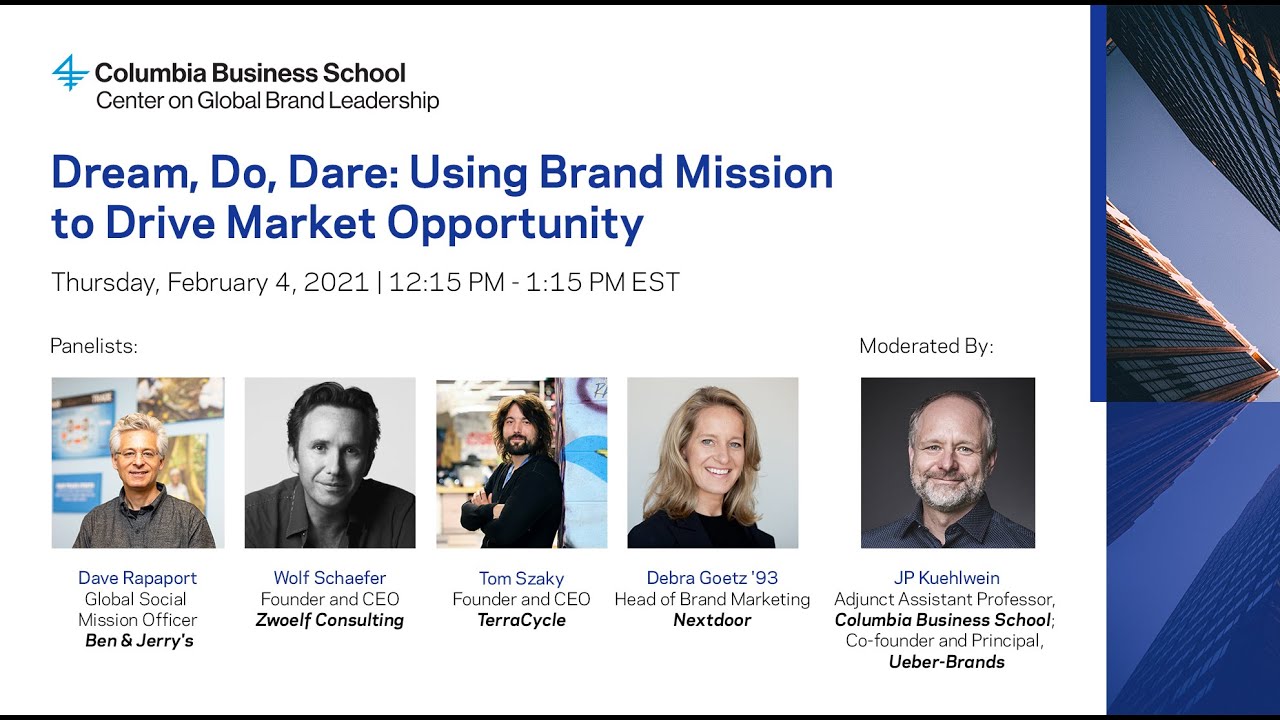
Good evening, everybody. I'm Madupai Canola, an associate professor of management at Columbia Business School, and I'm also the director of the Stanford C. Bernstein Company Center for Leadership and Ethics. I want to welcome you to the annual KPMG Pete Marwick Stanley Cleon Forum. Today, we're going to feature an exciting panel where we're going to ask the question: What is beyond the win-win? Yes, we throw around the term win-win all the time, but is there more?
00:23
Speaker A
kpmg pete marwick stanley cleon forum and today we're going to feature an exciting panel where we're going to ask the question what is beyond the win-win and yes we throw around the term win-win all the time but is there more
00:39
Speaker A
You will learn. But first, what is this Cleon Forum? It's the premier speaker series at Columbia Business School, and it features prominent leaders from a variety of different industries who are committed to resolving major ethical, social, political, and economic challenges of our times. Today, we are delighted to have four wonderful panelists whose careers truly are inspirational, and they're going to share their varying perspectives on how we can reimagine the role of business and leadership in the current landscape.
00:57
Speaker A
political and economic challenges of our times and today we are delighted to have four wonderful panelists whose careers truly are inspirational and they're going to share their varying perspectives on how we can reimagine the role of business and leadership in
01:14
Speaker A
So, we'll get to that in a minute, but I first wanted to tell you a little bit more about Stanley Cleon, the person after whom this forum is named. So, who was he? He served as executive vice chairman and chief operating partner of Pete Marwick International, which is one of the world's largest accounting and management consulting firms, now known as KPMG. He was also a prominent executive in residence at Columbia Business School from 1986 to 1994.
01:27
Speaker A
executive vice chairman and chief operating partner of pete marwick international which is one of the world's largest accounting and management consulting firms now known as kpmg and he was also a prominent executive in residence at columbia business school from 1986 to
01:47
Speaker A
Although he is no longer with us, we are so fortunate to have the unwavering support of his family, some of whom are joining us virtually today. They include his brother, daughters, son-in-law, and even his great nephews. We cannot thank the Cleon family enough for their continuous support of this forum and of the Bernstein Center. Thank you, thank you, thank you.
02:07
Speaker A
is on and we cannot thank the cleon family enough for their continuous support of this forum and of the bernstein center thank you thank you thank you now with that it is my pleasure to introduce our panelists for the evening
02:26
Speaker A
Now, with that, it is my pleasure to introduce our panelists for the evening. They have so many accolades that I'm going to just try my best to keep their introductions brief. Our first panelist is Laura Boudreau. She is a fellow Columbia Business School professor. Her research focuses on working conditions, labor rights, and firm productivity in developing countries. She's especially interested in how the intersection of global supply chains with local institutions affects firms and workers' outcomes. Welcome, Laura.
02:43
Speaker A
conditions labor rights and firm productivity in developing countries and she's especially interested in how the intersection of global supply chains with local institutions affect firms and workers outcomes welcome laura and then we also have jonathan duskin he is the ceo
03:05
Speaker A
Then we also have Jonathan Duskin. He is the CEO of McKellan Capital Management, a firm he founded in 2009. He has more than 20 years of experience investing in the consumer and retail sectors. McKellan is a value-oriented investment firm that works with undervalued companies to improve their governance and their performance. It is so great to have you today, Jonathan. Thank you.
03:23
Speaker A
governance and their performance it is so great to have you today jonathan thank you we also have chris miller who is the head of global activism at ben jerry's and in this role he focuses on advancing social justice and he's responsible for
03:41
Speaker A
We also have Chris Miller, who is the head of global activism at Ben & Jerry's. In this role, he focuses on advancing social justice and is responsible for the company's advocacy campaigns, supporting things like criminal justice reform, marriage equality, voting rights, climate change, and much more. Some of you might remember that last spring, the Bernstein Center bestowed upon Ben & Jerry's CEO Matthew McCarthy the Plotwanic Prize. Clearly, we're very obsessed with ice cream and this amazing Vermont-based company, and it'll be really nice to examine another angle, another aspect of ethical leadership at the company. Hi, Chris, thank you for joining us.
03:59
Speaker A
plotwanic prize and so clearly we're very obsessed with um ice cream and this amazing vermont based company and that'll be really nice to examine another angle another aspect of ethical leadership at the company so hi chris thank you for
04:13
Speaker A
Last but certainly not least is Tony Chan. He's the CEO of Cue Ball, a purpose-driven, people-first venture capital firm which he founded in 2005. Tony is also a writer. One of his books is called Hearts, Smarts, Guts, and Luck, and he most recently wrote Good People: The Only Leadership Decision That Really Matters. Yes, I agree with that. Hi, Tony, it's great to have you.
04:28
Speaker A
and tony is also a writer one of his books is called hearts smarts guts and luck and he most recently wrote good people the only leadership decision that really matters yes i agree with that hi tony it's great to have you and we
04:48
Speaker A
We are grateful to have all of you tonight, so let's go ahead and get started. As you know, we have so many questions to think about, topics to grapple with. Sometimes, I'll address a specific question to one of you or each of you, or sometimes have all of you address a question. But I guess maybe, Chris, my first question is: How did you get started in your career, and what is it about purpose-driven work that attracted you to your field, to what you're doing now? Could you tell us more?
05:03
Speaker A
to one of you or each of you or sometimes have all of you um address a question but i guess maybe chris my first question is how did you get started in your career and what is it about purpose-driven work
05:16
Speaker A
Yes, and let me start by just again thanking you for being able to participate in the Cleon Forum and for hosting the forum. The red thread through my career is really a commitment to bringing my values and my whole self to work. I have quite an eclectic resume. I started my career working for Bernie Sanders. I spent half a dozen years at Greenpeace US leading the climate change campaign there.
05:29
Speaker A
the red thread through my career is really a commitment to bringing my values and my whole self to work i have a quite an eclectic uh resume i started my career working for bernie sanders i spent half a dozen years at uh
05:47
Speaker A
I spent a good portion of my career focused on companies that were poisoning the environment, that were driving climate change—corporations as bad actors. I came to understand and believe that as a way to continue to advance my values and change in the world, perhaps I could do that from the for-profit corporate side. So, in fact, I left Greenpeace and went to a company called Seventh Generation, based here in Burlington, Vermont, and led the sustainability and advocacy work there.
06:13
Speaker A
and believe that as a way to continue to advance my values and change in the world that perhaps i could do that from the for-profit corporate side so i i in fact i left greenpeace and i went to a
06:26
Speaker A
I think there is a huge opportunity for companies to be a part of advancing and addressing some of the most serious problems that our society faces. I think we're at a time where we have a lack of faith, unfortunately, in many government institutions, and for better or worse, corporations are incredibly powerful entities. I see the work that I lead today and am a part of at Ben & Jerry's as a logical extension from my work at Greenpeace or on Capitol Hill working for Bernie Sanders—the opportunity to be a part of corporations being advocates for change and acting within the context of greater societal good, not just their own narrow self-interest.
06:44
Speaker A
problems that our society faces i think we're at a time where we have a lack of faith unfortunately in many government institutions and for better or worse corporations are incredibly powerful entities and and so you know i see
07:00
Speaker A
I think that is a really powerful opportunity that makes perfect sense. To see that progression and to be able to then make a difference in a different area must have been, or must continue to be, very fulfilling. I'm curious, Jonathan, what about you? You started this company, and it wasn't in existence, which means that maybe you were looking to create something that would then help you bring your full self. Can you tell us a little bit more about your journey?
07:16
Speaker A
corporations being advocates for change and acting within the context of greater societal good just not not just their own narrow self-interest is is i think a really powerful opportunity that makes perfect sense um and to see that progression and to be able to then
07:34
Speaker A
Yeah, sure. I'll start off by saying Chris and I have somewhat different backgrounds. I came up in a very traditional kind of Wall Street, corporate finance. I started as a banker. I worked in sales and trading, then worked in research, and then I went to the buy side. I guess I would say maybe I'm the poster child for it's never too late to get started to try to do some good.
07:49
Speaker A
were looking to create something that would then help you bring your full self can you tell us a little bit more about your journey jonathan yeah sure i'll start off by saying chris and i have somewhat different backgrounds um i
08:01
Speaker A
Maybe the first part of my career was climbing up Maslow's hierarchy of needs. I didn't really start with much, and finally got to a point in my career where I think it really started to matter. I echo a lot of what Chris said. From the corporate side, I think we can do so much better, and we can all do well by doing good. There's such a role for corporations to play.
08:14
Speaker A
guess i would say um maybe i'm the poster child for it's never too late you know to get started to try to do some good and you know maybe the first part of my career was you know climbing up maslow's hierarchy of needs
08:25
Speaker A
I will just make one quick clarification: I'm an activist. If anybody looks at my bio or website, in that context, I'm an activist. I find things that are broken in the public markets, I make the investment, and I try to fix them. More and more over recent years, that also has included ESG—making sure we have diverse candidates, making sure we're putting forward environmentally sensitive proposals.
08:34
Speaker A
corporate side i think we can we we can do so much better and we can all do um we can all do well by doing good and there's such a role for corporations to play um i i will just make one quick
08:45
Speaker A
Look at our Cole's campaign. We actually had a number of environmentally sensitive proposals that we were making to the company. It wasn't just about improving profitability, but again, it's very much for me in the theme of doing well.
08:57
Speaker A
that also has included esg making sure we have diverse candidates uh making sure you know we're putting forward the environmentally sensitive proposals uh look at our cole's campaign we actually had a number of environmentally sensitive proposals that we were making
09:11
Speaker A
to the company it wasn't just about um you know improving profitability uh but again it's very much for me in the theme of you know doing well by doing good and i do think there's a place for both in
09:21
Speaker A
the corporate world um this other venture that um adobe and i have talked quite a bit about um i'm working um in conjunction with one of the companies i'm the lead director of this company called city trends um
09:34
Speaker A
city trends serves the african-american community probably about 80 90 of our customers are african-american um mccallum in conjunction with city trends is launching a private equity fund and we will be investing in african-american-owned businesses that um that that
09:49
Speaker A
make product to sell into retailers so vendors manufacturers distributors um designers um anybody that makes a product that would ultimately be sold into retail so you know again we're trying to over serve the underserved and i mean it's when i heard about that
10:04
Speaker A
work that you were doing that i absolutely said you must be on this panel not only that but also just the other ways in which you've played an important role as an activist investor in changing the dynamics in existing
10:16
Speaker A
companies now one thing you mentioned jonathan is was this kind of like maslow's hierarchy and climbing up that and and before kind of starting your own i'm curious tony to hear a little bit more about your experience on that journey
10:30
Speaker A
hierarchy and then discovering what was right for you and what you're doing now unmute if you don't it had to happen once yeah of course okay yeah um yeah i've had a peripatetic career um you know growing up in
10:49
Speaker A
newfoundland canada as a first generation immigrant i had desperation ignorance as parents of entrepreneurship and they make for two pretty good parents so i think um the short version is fortunate to be a tech entrepreneur at the right time
11:04
Speaker A
um went on to help do the turnaround of uh of a newspaper company turning it into thompson reuters and then starting a venture fund and the logical thing to do after during that is open up the nail salon so that's kind of
11:18
Speaker A
my my my journey and trajectory and uh you know i i would say that the most important part of that maslow journey has been at the at the pinnacle of it is a search not for success but significance
11:33
Speaker A
um that's what i write about and a sense of wholeness and i would just you know double down on chris and jonathan by by saying that purpose and profit often when we use those terms there's an implicit um
11:47
Speaker A
bias or assumption that they are trade-offs that you know you can do one and you know you're trading off something i fundamentally um have never believed that purpose and profit are mutually reinforcing allies and in fact um i i feel that i am a
12:05
Speaker A
capitalist um at heart but believe so much that purpose must come before product and product before profit and if you do those things in that sequence um you can create enduring um value um the biggest thing in my career if
12:21
Speaker A
there was a a common thread like that chris pulled is a belief that the the the the force that's been against us towards doing that more often has been short-termism um and i i i believe that short-termism is killing us
12:36
Speaker A
um i think uh that i've had the flexibility to use permanent capital and think in very long time frames um you know um towards trying to create positive change of value but also possibly shift cultures forward now you did mention nail salon we will
12:52
Speaker A
get to that in a minute i know all of you are like what did he say did he slip in nail salon and yes we will get to that um and this idea of search for significance lauren could you tell us
13:03
Speaker A
more about your journey and how your research has unfolded in that search for significance for you too sure um so i actually did my undergrad degree in a business program at the wharton school at university of pennsylvania and when i was there i got
13:21
Speaker A
really interested in understanding um the social environmental kind of both impacts of kind of globalization and global production systems as well as kind of what global business and especially multinational companies were doing um to try to um you know
13:39
Speaker A
improve the social good and mitigate environmental impacts um and when i was there i kind of realized that one we didn't really know that much about these these questions there wasn't that much evidence or at least from my kind of naive undergrad
13:55
Speaker A
eyes evidence of research that i could find um and i also realized that i was more interested in studying the role of business in the world than actually going into it and so i had some great undergraduate research advisors that kind of set me on
14:10
Speaker A
a trajectory earlier on and then in my phd program you know i wanted to continue working on those themes but obviously we need to be very specific in academic research and so i really decided to kind of focus in on
14:26
Speaker A
relationships between multinational buyers and the global value chain for apparel and suppliers in bangladesh's apparel industry and focus specifically around kind of questions of labor rights working conditions in the apparel sector and think about the role of very large kind of
14:45
Speaker A
multinational corporations and influencing um those those labor standards upstream and developing countries um and so in thinking about kind of going beyond the win-win i think a lot about um you know what the role of these these very large companies are these very
15:01
Speaker A
large buyers are and how they can um actually have longer term kind of substantive influence on on these issues in the context of global production chains but we can yeah to talk a lot more i mean look so for those of you watching
15:17
Speaker A
we have an incredible set of panelists with such different backgrounds and they just shared all that they've done but let's i want to get tangible and i want to hear a little bit more about like what is something you're
15:30
Speaker A
doing right now that addresses some of the problems we're currently experiencing whether it's the pandemic dei systemic racism climate change there's so many more who wants to take a shot at that what are you doing that's tangible that we
15:45
Speaker A
can say oh my gosh or that you had an idea about it you said this is going to change something this is purpose product then profit i'm happy to jump in on nails oval roundus global short short short medium
15:58
Speaker A
long um look we we've been fortunate that over the last 12 or 15 years i've placed well over half of my capital with my partners in women and minority ventures at this point in time this past week the
16:18
Speaker A
new york times put forth as did many media channels that venture capitalism as a percentage of allocation actually went down again to women owned women focus and and that's astonishing given that it was well below three percent allocation and if you're at an
16:34
Speaker A
intersectional um you know it's it's unbelievable when we have black women founders and and and and black men founders and people say you know that's into the point x percent so we've placed over half and i'm proud to have placed about 12500 you know to
16:50
Speaker A
130 million behind these ventures over the past decade the the one that i'm perhaps closest to because i am a co-founder of and and chairman is a company mini lux where uh we have a belief that when you
17:05
Speaker A
place kaplan orphan areas of innovation you can create great things and the nail as many of you might have read in 2015 a new york times expose on the dangers of nail salons it is the largest vocational class of women
17:21
Speaker A
working today and it happens to be 96 asian and a tipping point for me to just make this a magnum opus make this a commitment for the next 10 20 years to make change were the atlanta georgia shootings of uh eight
17:36
Speaker A
eight women in those asian-oriented spas and um you know we we're proud to have survived the pandemic and thrive toward thrive out of it we're trying to starbuck and uberize that industry uplift it it's the most used beauty
17:50
Speaker A
service that's least regulated and we're out there putting standards of clean elevated self-care but most important empower this incredible class of micro entrepreneurs 450 000 women are working in that that's more than all uber taxi and lyft drivers in the country
18:08
Speaker A
and we ignore it we ignore it because it's usually you know 50 shades of beige and uh evaluating these kind of ventures placing no capital in these orphan areas of innovation and uh as consumers um we ignore um we ignore what's going on the
18:28
Speaker A
carcinogens the toxins and the exploitation of the women in the in that industry so that's something we're proud of and we're trying to change it one manny at a time i love it chris what about you tell us more about
18:43
Speaker A
some of the things that you've been working on at ben and jerry's that you're really proud of yeah well thank you i think you know we have been working on issues related broadly to kind of systemic and structural racism but but
19:00
Speaker A
focused over the last few years on the need to kind of rethink policing and public safety um the the work has come to life in a few different ways which we can chat about but i think edit what we've come to
19:16
Speaker A
understand at ben and jerry's is that the the the same tools and techniques that we use to really successfully sell ice cream to convince people that they really want to buy a pint of chunky monkey or cherry garcia are the same
19:35
Speaker A
tools and techniques that can be used to sell ideas and i mentioned to you that you know i i had spent half a dozen years at greenpeace and i'm really proud of that work and it was a great part of
19:45
Speaker A
my my career however sitting in a place like greenpeace in many ways we were preaching to the choir by definition the people that support greenpeace were people that you know supported taking action on the environment and understood that issues
20:01
Speaker A
like climate change were something that needed to be addressed where we sit today where i sit today at ben and jerry's i'm speaking to a much more general population audience and and and we are we are finding innovative ways to to to
20:18
Speaker A
sell ideas to help our fans and and citizens more broadly understand that the criminal justice system is broken and that we need to perhaps spend less money on mass incarceration and massive police budgets and more funds invested into the kinds of programs and
20:38
Speaker A
services that can create healthier and safer communities and sort of to whit um i am incredibly proud last week of a of an initiative that we kicked off um and you know because we're an ice cream company it it had to involve an ice
20:54
Speaker A
cream flavor uh but we kicked off a piece of work um around a new flavor called change is brewing and and the purpose of this flavor is to highlight a piece of legislation that congresswoman corey bush from the city of saint louis
21:06
Speaker A
has introduced in the congress called the people's response act uh that really makes the connection between public safety and public health and and would set up um essentially department of public safety within health and human services and and
21:21
Speaker A
would look at funding and building ways to respond to people who are having mental health crisis substance abuse issues um in a way that provides support as opposed to driving them into the criminal justice system and so it it's
21:40
Speaker A
it it is a great example of kind of the opportunity for a brand or a company like ben and jerry's to reach a new and different audience um we speak to people that likely congresswoman bush wouldn't um and so it is
21:59
Speaker A
it's fascinating to watch all of these um [Music] outlets media outlets that traditionally cover our latest ice cream watch eater delish talking about the people's response act and the need to look at the system of policing and public safety we're we're
22:20
Speaker A
bringing that message to a whole new audience so it's a it's a great example of our use of these tools and techniques to advance ideas to to promote solutions that address the root causes of some of these issues and it's
22:37
Speaker A
kind of a it's a great little sort of you know recent example of kind of one of the ways we do what we do at ben and jerry's that's fantastic you can't leave us hanging can you tell us if
22:48
Speaker A
there's brew in it is there like coffee it's a yeah it's a cold brew coffee flavor it's an exceptional black-owned business based out of iowa called black and bold and it has brownies from the graystone brownie and yonkers
23:02
Speaker A
um it's a it's a it is a fantastic flavor and finally when you see it in the store it has this exceptional packaging designed by a young uh black artist named lacey jordan and so we we tried to run the thread through all
23:17
Speaker A
elements of the flavor and it it's it's it's a great way to highlight this issue that's fantastic so jonathan you might not have a new ice cream flavor but certainly there are other things that you've done on your journey you talked
23:29
Speaker A
about michelle inventors but there's other stuff what are you the most proud of in terms of making change um you know i think it probably falls into a couple different buckets you know first as i think about making change at
23:42
Speaker A
a board level um you know i focus on the consumer retail space i don't know if i said that before but primarily all we do is in the consumer retail space of public companies in our activist world and you know you i look at so many
23:54
Speaker A
companies that are being poorly run and you know we have a lot of sayings in our business one of them is you know the fish things from the head you know something's bad it's usually because it's the leadership is you know is
24:03
Speaker A
rotten and that usually starts with the board and you look at some of these boards of companies that are have customers that are predominantly women and there are no women on the boards and you kind of scratch your head and say
24:15
Speaker A
no surprise they're failing they don't know what the end market is what their customers want and they don't have enough perspective so um for the last bunch of years i think we've run six or seven different campaigns and
24:26
Speaker A
um we've been responsible for putting 20 african-american uh women and um and or just just women so between african-americans women we've added 20 diverse uh candidates to boards and and you know the same obviously it goes you know for city trans i mentioned before
24:43
Speaker A
this was a board that had no african-americans on it 90 89 of their customers were african-americans we didn't have african-americans and senior leadership and since i've been on the board we've replaced the board added minorities to the board out of minorities into the
24:57
Speaker A
senior leadership team so it's been pretty pretty transformative and it's great to you know i i love what tony said earlier about you know the the profits in esg can coexist and i firmly believe that too and you know the idea of bringing that
25:11
Speaker A
perspective into your boardroom helps the company do better right so we've diversified we've focused on the dni and we've made the company more more profitable more successful than shareholders of one so that's a really important one also at city trends um we've been giving
25:27
Speaker A
back to the community this is a company that was very very poorly run for a number of years um didn't invest in the community did invest in the stores didn't invest in the people and um and really you know again for a company that
25:38
Speaker A
was so focused on the african-american community didn't really have any programs to address um this inequality that you know is happening before us and that's dramatically changed in the last couple years we do you probably remember the grant program we had this year uh we we
25:51
Speaker A
gave um we we had uh it was almost like a mini shark tank where people send out business proposals and um we gave out ten five thousand dollar grants we had seven thousand applicants um send in applications for
26:04
Speaker A
the grant so you know those are small things we're doing but giving back to the community and like i said trying to over serve the underserved um because this is a community that's been ignored for so long and it's really amazing when
26:16
Speaker A
we see you know from remodeling stores to bringing different products to having a focus on african american vendors within these stores it's really very well received within the in the various communities and then lastly you know we haven't um hasn't been formally launched
26:30
Speaker A
but um god willing we'll get this off the ground you know we'll be investing in african-american owned businesses and i think the important thing for me and i'm sure we'll get into a little bit later um and the common theme through so much of
26:41
Speaker A
this is not just making the investment or not just hiring the person but it's the development and the training and moving them up through the organization that i think is so critical and then mccallum ventures as we envision this
26:52
Speaker A
fund will not only be providing capital but also being their partner to help them you know work on the back end work on the supply chain work on the sourcing the distribution and and help them get past this you know a lot of these
27:03
Speaker A
entrepreneurs kind of hit a wall a couple million dollars in revenues because they can't break through to the next level because they don't have the institutional organization and infrastructure behind them and we're going to help them develop that
27:14
Speaker A
i mean one of the things in the three of you just speaking right now that is clear is this idea of alignment every piece being aligned and doing that well and then being able to have the good come with the profits
27:32
Speaker A
laura tell us more about how alignment has worked for you in your research as you kind of think through or think about some of things you're the most proud of producing or work that has had an impact yeah sure i mean i think actually maybe
27:47
Speaker A
i can take the opportunity to just mention one initiative that um i've just recently kind of started to do like discussions with around collaboration that i think is doing um really meaningful work and we don't have any kind of findings yet um but i'm but i
28:02
Speaker A
think this is the type of initiative that's really going in the right direction um so it's an initiative by global apparel buyers and by global labor unions and it's called action on living wages act and it's a very unique partnership
28:18
Speaker A
between very large global buyers and kind of these these very large labor unions that also have relationships with labor unions around the world um and these buyers it's about 20 buyers you know companies like h m um other major kind
28:32
Speaker A
of european brands that have signed on to do two i think kind of uh you know fundamentally important things in the way that this industry works which is one to couple their kind of social responsibility labor standards environmental
28:48
Speaker A
requirements for their suppliers with their purchasing policies so you know typically those are often siloed within the organization um and so this is a and this is you know they're they're learning here i don't think they they know exactly how to get
29:03
Speaker A
from a to b yet but the goal is to bring those two things together so in terms of alignment i think that's like an incredibly interesting and important direction and then the other thing that they're doing that you know thinking
29:14
Speaker A
about short versus long term um you know we may all be aware of the fact that a lot of you know globalization has been driven by looking for lower labor costs in particular but what the this initiative is doing is
29:30
Speaker A
actually um enforcing collective bargaining agreements and the ability for workers on the ground to at least have freedom of association rights um as part of their purchasing requirements um and this is also you know i think one of the only cases that i've seen of
29:47
Speaker A
this these are certainly not your kind of average buyers these are very specific leading buyers but in terms of pushing the frontier and moving from kind of short to long-term thinking um you know they are thinking about long-term partnerships um with
30:02
Speaker A
their suppliers and with workers in these settings um and so that's one initiative that um like i said unfortunately we don't have any research outputs uh on that work yet but i think in terms of the topic of today's
30:14
Speaker A
discussion um it's very relevant i mean this idea of long term short term i think earlier some uh someone was the short short-term ism and how do we get away from that in some ways but i i'm also cognitive of the fact
30:27
Speaker A
that we have a lot of students on this um here with us this evening who are like okay so what are some of the low-hanging fruit i'm gonna graduate soon i'm thinking of is there are there any opportunities that you think
30:40
Speaker A
more people with fewer obstacles opportunities not as many obstacles that are low-hanging fruit that people should start pursuing more well i i don't know i'm sure that the the um the rest of the panelists have a lot to say here i think one thing i'll
30:57
Speaker A
just mention that that i think is important and kind of in a lot of both social and environmental you know issues that i've seen companies become active in is participation in kind of multi-stakeholder so you know or multiple companies
31:11
Speaker A
multiple stakeholders involved so pushing organizations um to partner with other organizations outside of your company um and to you know make commitments um is something that i think um even you know employees and especially our mbas that at cbs are very well positioned to
31:31
Speaker A
do as one small comment i mean i might jump in there real quick as well i mean i i think a piece of low hanging fruit that that more companies should be engaged in sort of building off of laura's point here is
31:49
Speaker A
bringing sort of untraditional partners and allies into discussions inside our company so you know i i suggested to you that you know we've been working on these issues of racial justice broadly and specifically around criminal justice reform i'm
32:07
Speaker A
sitting in burlington vermont it's one of the second widest it is the second widest country uh state in the country um you know we are not experts at ben and jerry's on these issues but we bring people in who are and so to
32:26
Speaker A
help us guide our strategy for how we how we tackle equity issues inside the company and how we stand as allies in the fight for racial justice externally we want to bring in those who are on the front lines of
32:46
Speaker A
these issues and so we build a pretty wide network of stakeholders that that we consult with and it's not you know it isn't just you know the big well-known organizations that often play with corporations but we are working with and in touch with
33:12
Speaker A
you know grassroots groups working on the ground in communities to advance these issues and i would say you know something that that that companies who are um [Music] you know weighing looking to impact these issues that society is focused on to to take their
33:32
Speaker A
commitment to things like you know climate change better environmental practices or equity inside the company and translate it to work outside the company that bringing those kinds of voices to the table doesn't happen enough i mean i also hear you saying that then
33:51
Speaker A
also students should be building relationships because how else do you get to know about some of these people to bring to your organization um in terms of trying to create these great collaborations i'm also just cognizant of the fact that all
34:06
Speaker A
of you are kind of like retail consumer products how about other areas where more change is needed too any thoughts on that on how other areas our students could be focused on to really make a difference either outside of their companies or
34:21
Speaker A
within i mean i don't know that there's industries where this doesn't apply right i mean i don't i don't think commodities or healthcare or you know tech you know operate outside of these dynamics i think every company is dealing with this
34:39
Speaker A
problem you know the fact that we needed you know more african-american representation on the city trends board was certainly because we had african-american customers but it didn't need to be you know ever you know bed bath beyond wasn't predominantly an
34:50
Speaker A
african-american constituent nor was kohl's but we you know we had to add diversity to those boards too so you know i think the same would apply to an energy company or tech company or telecom company you know you know you
35:02
Speaker A
need diversity you need diverse perspective um in the board rooms you you know you need diverse hiring um and you need to kind of monitor that you know dei is taking place throughout the organization and again a big one for me personally is not
35:17
Speaker A
just monitoring it but the training and development of talent you know you know you've seen you know in my world a lot of the financial institutions have been hiring pro rata for years right but after that it's it stops short and their
35:32
Speaker A
ability to groom people and bring them up through the organization i think is what they have to focus on next right the hiring was easy but getting them to the vp and associate director and md level that's what is so important to really
35:44
Speaker A
bridge this gap yeah duvet i i you know for the students out there um i just remind them all they're they're graduating with an amazing cbs degree and that gives you a shelf life of credibility for at least two to three
36:00
Speaker A
years to do any damn thing you want so i suggest you go out and do what is true in your heart and if it doesn't work go back to the compromise that you're contemplating in your head now because it is like you you you you you
36:14
Speaker A
have you you've gotten this incredible insurance policy and you know i think we should encourage more for people to follow that passion whatever it is it doesn't matter if it's tech commodities working for a a global conglomerate that's purpose-driven like
36:31
Speaker A
unilever a venture firm um we we've had i think some of our best success recruiting actually doing a non-recruiting recruiting event at harvard business school we should do it at cvs where we really focus on what is meaningful to someone what are they
36:46
Speaker A
trying to do and i think the shift for corporations today and reid hoffman writes about this and i'm fortunate enough to be uh involved um with him on his um on his content on a content venture wait what but he writes about
37:02
Speaker A
you know the notion of tour of duty and the shift for corporations to move from a mindset of of a of a corporate employee bond of loyalty to one of mutual allies and we need to shift our mindset that we're
37:16
Speaker A
mutual allies we're not looking for a bond of indentured servitude and loyalty that that that world has gone past what we need to do is encourage that there's mutual benefit to encourage people learn as much as they can
37:29
Speaker A
um uh contribute positively and move on as mentors we need to encourage like to people to do what's in their heart whether it's in our corporation or outside and that actually creates great long-term benefit you know in in the long run um i i i found that
37:45
Speaker A
time and time again when you push people to what's in their heart um everyone wins um i'm sorry i don't know if you're gonna ask another question but i was gonna circle back you know maybe to the low hanging fruit question and and um
37:59
Speaker A
springboard from one of tony's observations i would say i think this is incredibly low hanging fruit yet i have no idea how to accomplish it and in the spirit of what tony's saying one of you bright you know starring kids go out and
38:10
Speaker A
figure this out one of the i think the biggest problems we have in wealth disparity in the country is ownership and equity ownership and so much of the wealth has been created from the stock market and i think we need to push ownership down
38:22
Speaker A
through organizations to lower and lower levels so people can participate in the growth of the stock market and the growth of the companies that they're serving right so if you have all these companies that active employees that act
38:32
Speaker A
and think like owners i think you you can start to break some of this gap right because they think like owners they're better employees the companies perform better the stocks perform better and the stock that you gave them is now
38:43
Speaker A
worth more right so i think this notion of ownership economy and and having more people act like going to feel like owners and the benefit from ownership is um is real low-hanging fruit uh but i don't know how to accomplish it so
38:57
Speaker A
hopefully uh someone in the uh in the audience is gonna uh come come to us in a couple years and tell us they figured it out we will hold you in the audience to that by the way to come back and share those
39:07
Speaker A
successes other pieces of advice laura do you have any advice and especially for people who might not be very hopeful who are kind of feeling like i'm so discouraged by this state of the world what how can i make a difference
39:23
Speaker A
yeah i mean so i i you know completely second tony's advice on you know following your heart and doing what you're most passionate about because you will be you know not only most fulfilled but also probably most productive in
39:36
Speaker A
terms of uh you know what you actually accomplish um i'll just mention you know one trend i think is interesting is that we've been seeing a lot of very high skilled uh employees so you know people that look
39:49
Speaker A
like our mbas and also who who are employees at companies that may not be mission or purpose driven um especially in the tech sector really starting to kind of organize and push their employers and i think that's a super
40:00
Speaker A
interesting trend um and you know it doesn't have to be they're forming a union or going you know going to to an extreme it's it's you know they're putting petitions together they're staging walkouts they're they're advocating um they're
40:14
Speaker A
giant they're forming you know giant slack channels where the it just forces the employer they can't ignore uh the the sentiment of their employees and especially because our employees do have these super valuable you know cvs diplomas that are
40:29
Speaker A
real soon they're well positioned to kind of work with their co-workers in order to push for the change that they want to see in their organizations and so hopefully even if things feel a little grim you know they'll be able to
40:45
Speaker A
find other people around that they can work with on on important issues social movements selective action and and to this point of like moments of grimness does anyone have any exam an example from your personal experience where you did feel that moment of grimness and
41:02
Speaker A
not sure and then you used that yeah as energy yeah i'll go back to mini lex our nail concept on march 13th about a year and a half ago we had grown to 575 uh team member base in that business which i'm very proud of
41:21
Speaker A
within two weeks we had to shut down everything and we went down to six employees um you know knowing as much preparation as you can have uh and i know jonathan must think about this in addition to that i i you know
41:36
Speaker A
with my partners held about a hundred other leases across the country through various retail restaurant um trade and no one expects you to go from you know x millions to zero um in a matter of weeks and how you focus and treat the people
41:53
Speaker A
at that time is a moment of truth um how we thought about what we needed to do with our hourly workers and um you know and and set up the emergency resiliency fund and so i would say that they gave great
42:08
Speaker A
hope people gave great hope i found um an amazing silver lining in the pandemic to see the humanness of so many people we had a client come into a studio salon give a thousand dollars um we suddenly that went to 2000 we then had 55 000 or
42:25
Speaker A
something in a resiliency fund we had employees helping each other people volunteering to help people get benefits with government so i i saw great humanness in a moment of despair and with all the um negativity that's happened and greatness
42:42
Speaker A
that we've witnessed those are very much undercurrents that i think have been there as part of society with all these various movements and i think that i'm an optimist and i believe that bringing them forward in greater force is going
42:54
Speaker A
to be greater for change and you know i'm proud to say that you know from that time we're back up to positive comps going to double that employee size um rising out of pandemic as one of the most resilient brands and preparing for
43:10
Speaker A
a public listing so i think that there is uh you know going from the darkest dark of night to to uh you know famine to to hopefully uh you know some better times ahead there is a silver lining
43:27
Speaker A
um i want to make sure to have some time for questions from the audience because we already have some so i'll post this one to you um do you see any growth in interest in companies becoming public benefit corporations
43:44
Speaker A
allowing them to take into account multiple stakeholders not just shareholders chris you want to share i feel like yeah yeah i'll briefly address it because we are a certified b corporation that you know we're a wholly owned subsidiary of
44:01
Speaker A
unilever but but we were um the first wholly owned sub to become a certified b corporation i mean i think big picture yeah the there is a a pretty sizable growth year over year and the number of companies that are
44:18
Speaker A
um either a b corps are incorporated as a for benefit corporation or are certified b corporations you know i think there are still very big structural challenges to kind of beating back this this notion of shareholder primacy and i think you know
44:37
Speaker A
beelab and the team at b corp are working at the policy level uh uh to really elevate this idea of stakeholder primacy um but but i i i do think it is a trend that is growing i think it will
44:52
Speaker A
require policy change and structural change to this notion of you know around short-termism and and and shareholder primacy you know but i will tell you from being a part of the b corp community some of the biggest publicly traded corporations
45:11
Speaker A
are talking with the team at b lab to figure out how to take that framework and apply it to these larger publicly traded entities and so uh you know that that gives me hope and i think is a sign that
45:28
Speaker A
that this is something that's not going away and is going to increasingly become an expectation for corporations yeah look i you know as a person that fights for sure holder rights all the time it's you know basically the core of
45:41
Speaker A
activism i would tell you um and i'll you know draw from tony's original comment that they're not mutually exclusive and if it's done properly it should be both beneficial to the shareholder and beneficial to all stakeholders um you know nobody benefits from a
45:55
Speaker A
company that's not healthy right if ben and jerry's you know can't make money they can't buy milk they can't make ice cream then they can't get the profits to do what chris does right so there's got to be a symbiosis here where you know
46:08
Speaker A
the companies are allowed to survive and generate return for the shareholders but can also provide back to the community and in doing so can i think enhance the value of the company and then create more shareholders about it so i actually
46:20
Speaker A
i do i do see much more symbiosis here than i think the question might imply me throw another question to you from our audience how does a dei focused c-suite executive influence other leaders in the firm especially ceos and cfos who may not
46:41
Speaker A
always be aligned with dei goals i'll take a crack at it i mean i don't i don't think you can have a leader that's not focused on those things i mean it just i don't think in this day and age
46:59
Speaker A
it can happen if there's disparity um you know we're all inspecting what we expect now and you know every company in their 10ks and then their proxy statements have diversity tables and income you know quality tables and i
47:14
Speaker A
just you know i'm sure some exist and there's always going to be some some bad players but i think you know we have this term in retail inspect what you expect and i think more people are inspecting this
47:24
Speaker A
and want to see the numbers and want to peel back the onion and i think it's probably really hard for a leader that doesn't want to drive those values to you know stay in that seat chris did you want to share too
47:37
Speaker A
i mean i would just say right i mean that's the risk is that when you bring in and we're in the process of bringing in a uh uh executive level equity person and they will be responsible for driving
47:51
Speaker A
this work at the company and so the the tension is if if the ceo and other members leadership team aren't devoted this what i would say is you have to set goals right you manage what you measure and you do what you disclose so i think
48:04
Speaker A
you got to make public commitments around this stuff you have to be transparent about where you are in that journey and look you know c-suite level executives are really wonderful at managing to goals and kpis where they're where it's
48:20
Speaker A
tied to their their compensation and their bonuses and i think you know if this stuff is important it ought to be incented and it ought to be connected to the compensation packages and you know as laura said then and
48:33
Speaker A
collectively act if you can to try to ensure that that's happening i mean i know it sounds easier said than done but we've got to try somewhere in some ways i'm curious i would just say that for the younger folks too i mean the c-suite
48:48
Speaker A
and and i agree with some of the you know analogies that jonathan said put forth you know fish rots are on the head sweeps sweet sweet stairs from the top but at the same time every single person in
49:02
Speaker A
an organization is an agent for change we've had some of our most successful businesses businesses like shape up and partnering with richard branson on virgin pulse where it was peer-to-peer accountability and two examples of startups that backed actually by
49:18
Speaker A
african-american founders one landed with lisa ski tatum and another one chopwell um are really trying to encourage to shift cultures throughout the entire talent base through personalized career pathing and i i think the very best leaders it's a larger philosophical discussion at
49:35
Speaker A
least my take is is wholeheartedly servant leadership it is one where the leaders responsibilities create other leaders not just to create followers and everyone in the organization has the ability to effectuate positive peer pressure um towards positive change and
49:52
Speaker A
we we know that is that is effective so you know um it has to it has to start from all levels um of the organization and realistically culture change is just gonna take a lot of time um but it will accelerate if it's both
50:09
Speaker A
top down and bottoms up i mean clearly to be doing the work all of you are doing there are certain values that drive you and i'm curious to hear um what a couple of your top values are and
50:23
Speaker A
how they've contributed to kind of the success of the work you do and i'll throw that first to you laura uh sure thanks um yeah i mean i think one one value that's very important and a kind of key theme running through my
50:39
Speaker A
research is dignity so um the idea that all people have dignity and that everyone deserves to be treated with dignity whether you're a poor worker in bangladesh you know sewing a shirt or you're a c-suite executive um you know we should acknowledge that
50:57
Speaker A
we're all human beings and deserve the medium respect um and so i think a lot of the aspects of my research you know while i'm an economist and i think very carefully about trade-offs and incentives and um the economics of the
51:12
Speaker A
incentive of you know a context or situation um i tend to try to keep that at the at the center of my research um yeah i'll stop there and let the other panelists go good one dignity others infectious learning and
51:36
Speaker A
i uh i i i'm an optimist like i said so just constant willingness suspension of disbelief if you can listen to an idea and try to think of every reason why it might work before criticizing why it won't um you'll live
51:49
Speaker A
a lot happier and some of those ideas might actually work so those two things have served us pretty well jonathan what about you you know i i would um i would give it tony curiosity is one of the um one of the values we
52:08
Speaker A
made is as high as any um you know to do what we do takes you know you always have to peel back the onion where am i wrong what's where can i be wrong what do i miss what
52:17
Speaker A
am i missed it's a constant nagging you know sense that you have to try to fulfill and keep pulling on that threat of the sweater center center so you find it um i think another interesting one maybe along the lines of what laura's
52:28
Speaker A
saying is um i feel like you know and we all work with smart people you know finance has certainly probably gotten their share of you know high iq people but not often high eq people and i think the emotional quotient
52:42
Speaker A
um is so much more valuable in my world because anybody can crunch the numbers and everybody's good at math and you know we're not splitting atoms here so it's not like higher math and the emotional quotient the ability to
52:53
Speaker A
communicate and motivate and kind of understand and empathize with people and i think is is so much more valuable than just having a lot of horsepower um what we do again we're not we're not launching a mission to mars you know
53:06
Speaker A
we're trying to make some companies better and you know can cut costs and raise margins and you know get the better brand whatever it is but emotional quotient is uh really important to us one of the things i want to say really
53:18
Speaker A
quickly on jonathan's uh sorry chris uh you know intellectual curiosity it it's really important and i feel this again in such a divided country to foster productive discourse it is one of the most important elements um for good investing but you know being
53:35
Speaker A
able to listen to sides and one of the things we tried to really cultivate a mindset of all new mba associates or young people coming through is can you argue both sides because when you argue both sides um of a position
53:51
Speaker A
at least we feel like you you understand it a little bit more um and and we're not seeking consensus in any of our investments we're seeking conviction but part of conviction is being able to argue productively two sides so i would
54:05
Speaker A
just say that's another tenant to try to practice i love it you you're plugging the course i teach hello leadership by the way negotiation there you go they didn't even get the memo yeah i didn't even send that i didn't even tee you up for
54:20
Speaker A
that uh what about you chris a value that that drives what you do for me it's a commitment to wherever i sit being a small part of advancing a long struggle for economic and social justice and i've found a way
54:35
Speaker A
to do that from you know hanging banners on coal plants to being a part of you know wonderful ice cream company and that's what has motivated me personally and has really driven my kind of career growth and and i and i i i also want to say
54:54
Speaker A
you know i'm i'm i'm very much like tony an an optimist throughout all the struggles and stresses and the issues that we have to deal with i'm i'm always thinking about how do we you know how do we solve
55:11
Speaker A
these problems how do we think about solutions and and innovations that we haven't thought about before so uh you know i am an eternal optimist in our last few minutes i wanted to cover some fun stuff so laura and tony question for you
55:29
Speaker A
if you weren't if activism wasn't in your blood those values were what would you be doing instead laura ah well i think i always think if i if i weren't an academic i'd probably be like off in the woods somewhere so being a
55:45
Speaker A
nature guide or water rafting or something i my heart is is like on a trail somewhere i'm so enjoying the great outdoors tony i i i hate to say it i think i'm just i i'm doing just what i want to be doing
56:03
Speaker A
and i i i really am i i gotta say um you know i i think the only reason i get asked to sometimes speak at these things because uh at least uh the dean of my my former business school
56:15
Speaker A
said well you're one of the happiest graduates you're actually happy with what you do so i said having gone to multiple five-year reunions and watched that decline it kind of scares me to do something different but obviously on the personal
56:30
Speaker A
front i try to spend more time with family and try to find other ways of giving back but you know from a professional standpoint i'm pretty happy chris and jonathan if there's one national global prop problem that you
56:47
Speaker A
could snap your fingers to fix would it be what is your global national problem of choice chris why don't you i mean in my mind there's you know it's the big one right it's climate change it's it is an existential threat to
57:06
Speaker A
humanity it is that it's heart a justice issue the the people who will pay the steepest price for this are the ones least responsible and so you know this this is the issue that keeps me up at night
57:21
Speaker A
what about you jonathan yeah i mean it's hard not to acknowledge the climate is the existential threat that we're all facing and um chris said it very well that the people who have the least impact today are gonna you know
57:34
Speaker A
be hurt the most down the road and um you asked a question about low-hanging fruit before and by the way i'm not an expert in this field at all but like it just appears to me that you know
57:43
Speaker A
one of the answers is nuclear you know why why are we pursuing you know the nuclear answer more aggressively you know you look at france i think 75 percent of france is electric grid is generated by nuclear power and it just
57:55
Speaker A
seems you know between electric cars and nuclear power it seems like there's a lot of carbon that could be taken out of the atmosphere um but um yes clearly if i could snap my fingers and change you know the climate problem
58:08
Speaker A
that would be that'd be an easy one well listen thank you all for your time for sharing your wisdom your insights your experiences um because i know we all learned a ton and um to all of you who
58:24
Speaker A
tuned in thank you so much for taking out the time to be here today hope you got a nugget um that you will use tomorrow and in future in the future and i hope you all enjoy the rest of
58:35
Speaker A
your night thank you on behalf of the bernstein center and thank you for joining the cleon forum
Topics:Columbia Business SchoolKlion Forumethical leadershipcorporate social responsibilityactivist investingsocial justiceESGpurpose-driven businessStanley Cleonwin-win business

Frequently Asked Questions

What is the main theme of the 2021 Klion Forum?

The main theme is exploring what lies beyond the traditional 'win-win' concept in business, focusing on ethical leadership and deeper societal impact.

Who are the panelists featured in this forum?

The panelists are Laura Boudreau, Jonathan Duskin, Chris Miller, and Tony Chan, each with expertise in management, investment, activism, and leadership.

How does Chris Miller describe his career path?

Chris Miller describes his career as a commitment to bringing his values to work, transitioning from activism at Greenpeace to corporate sustainability roles to drive change from within.

Get More with the Söz AI App

Transcribe recordings, audio files, and YouTube videos — with AI summaries, speaker detection, and unlimited transcriptions.

Or transcribe another YouTube video here →